Indiana Owner's or Seller's Affidavit of No Liens
What this document covers
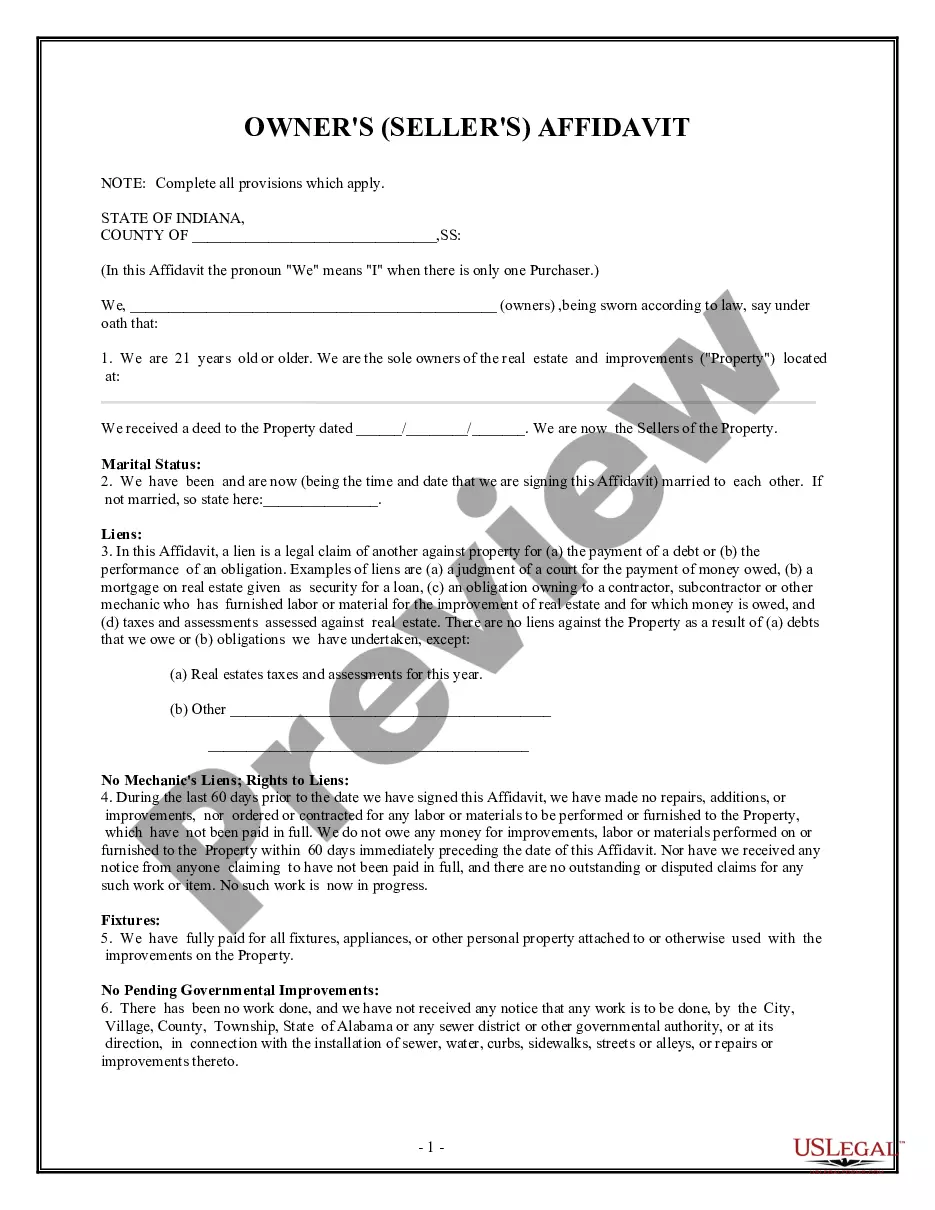
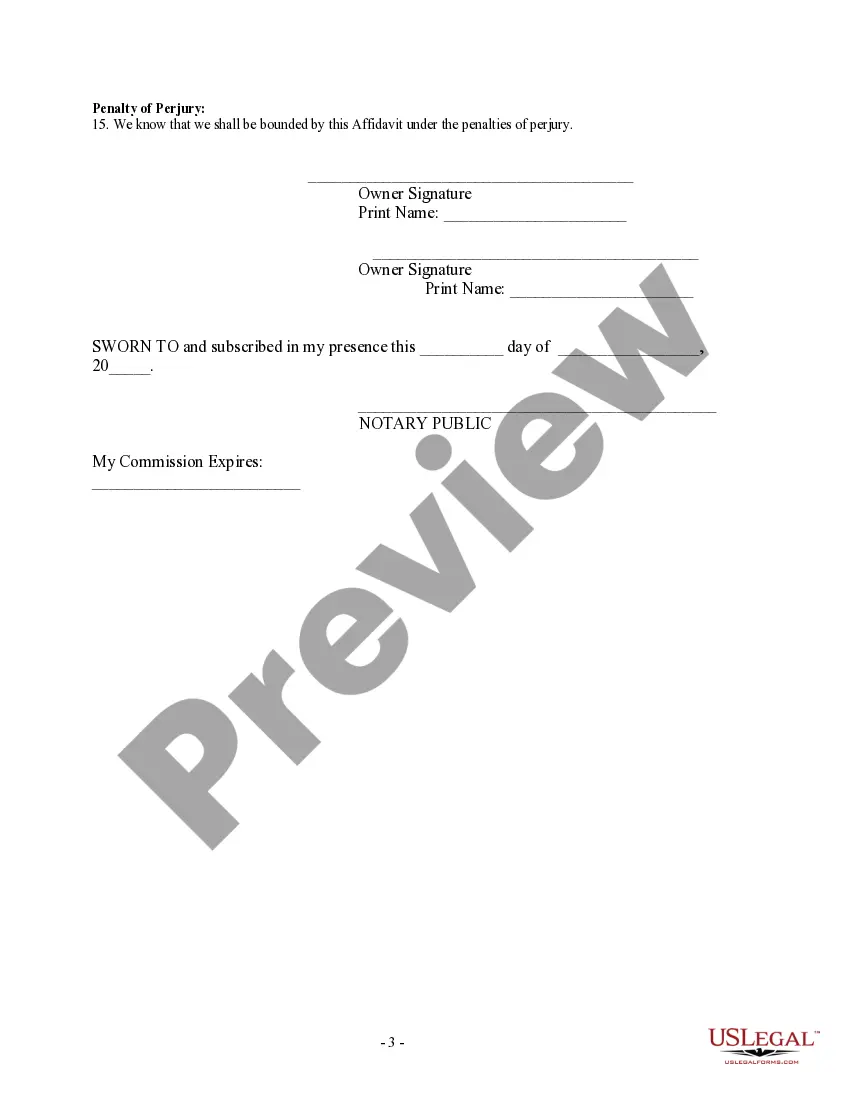
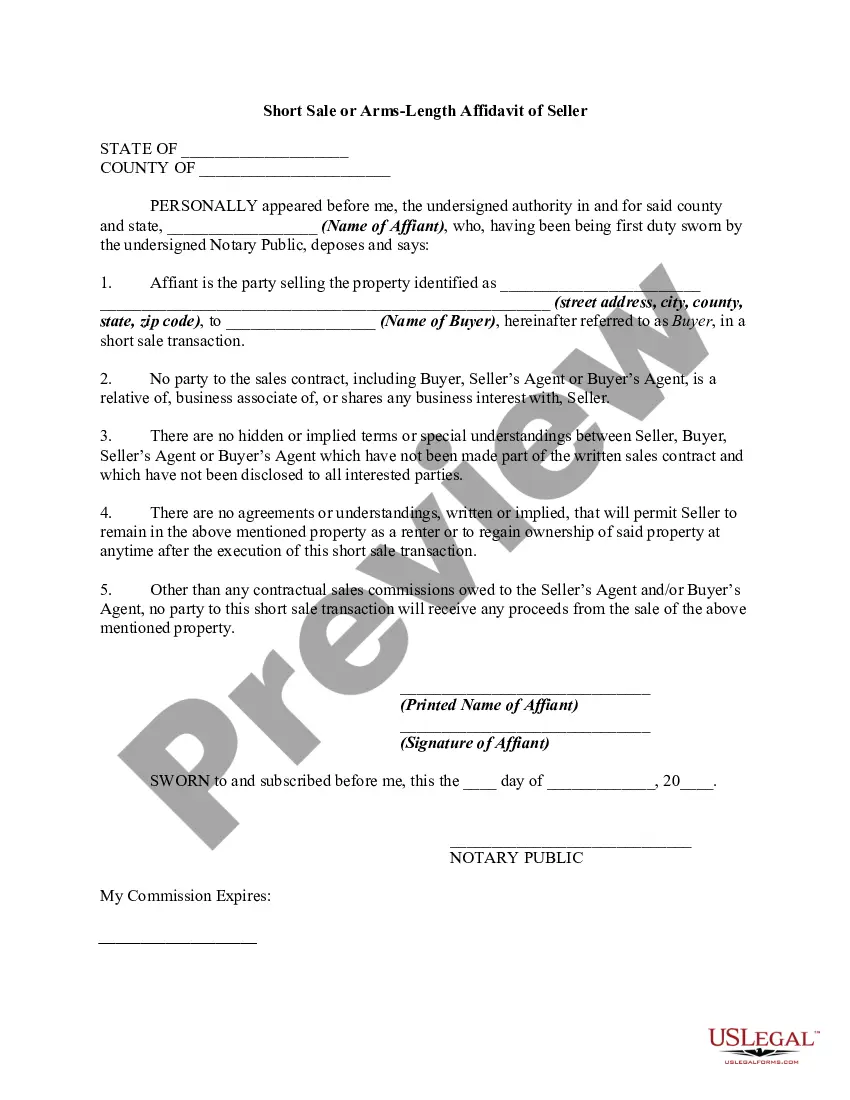
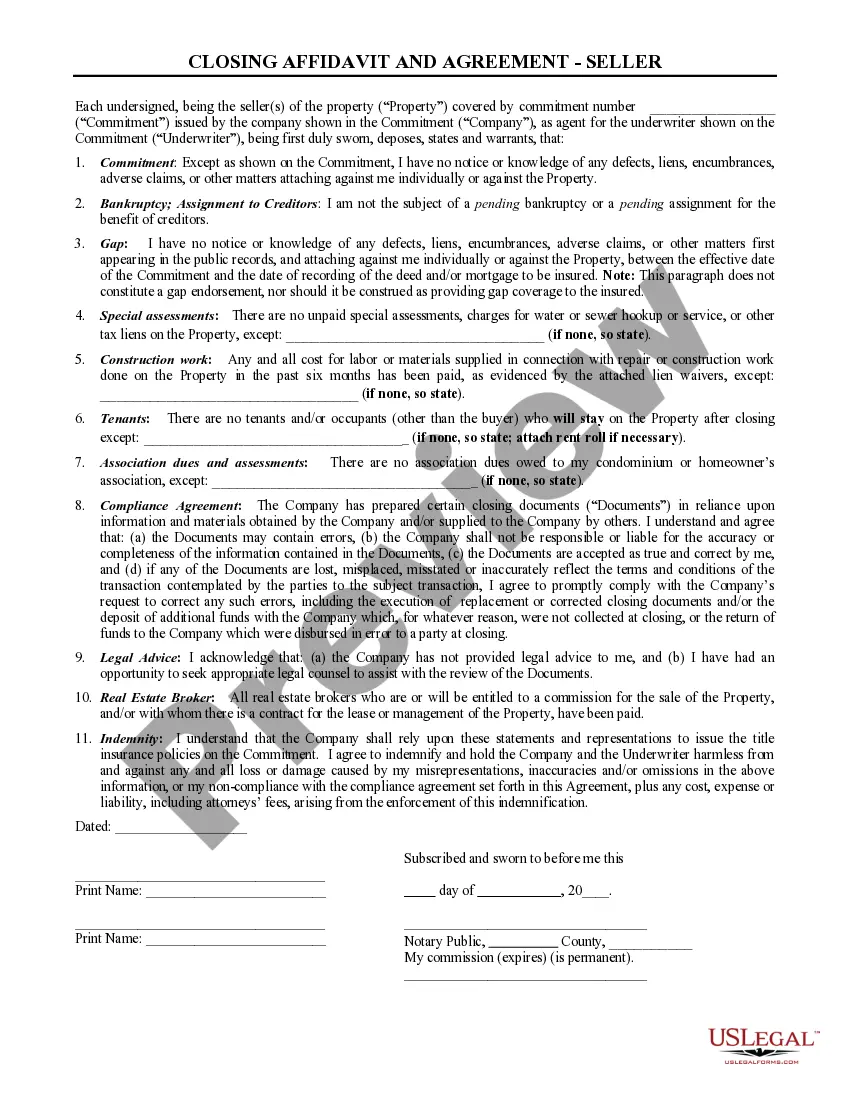
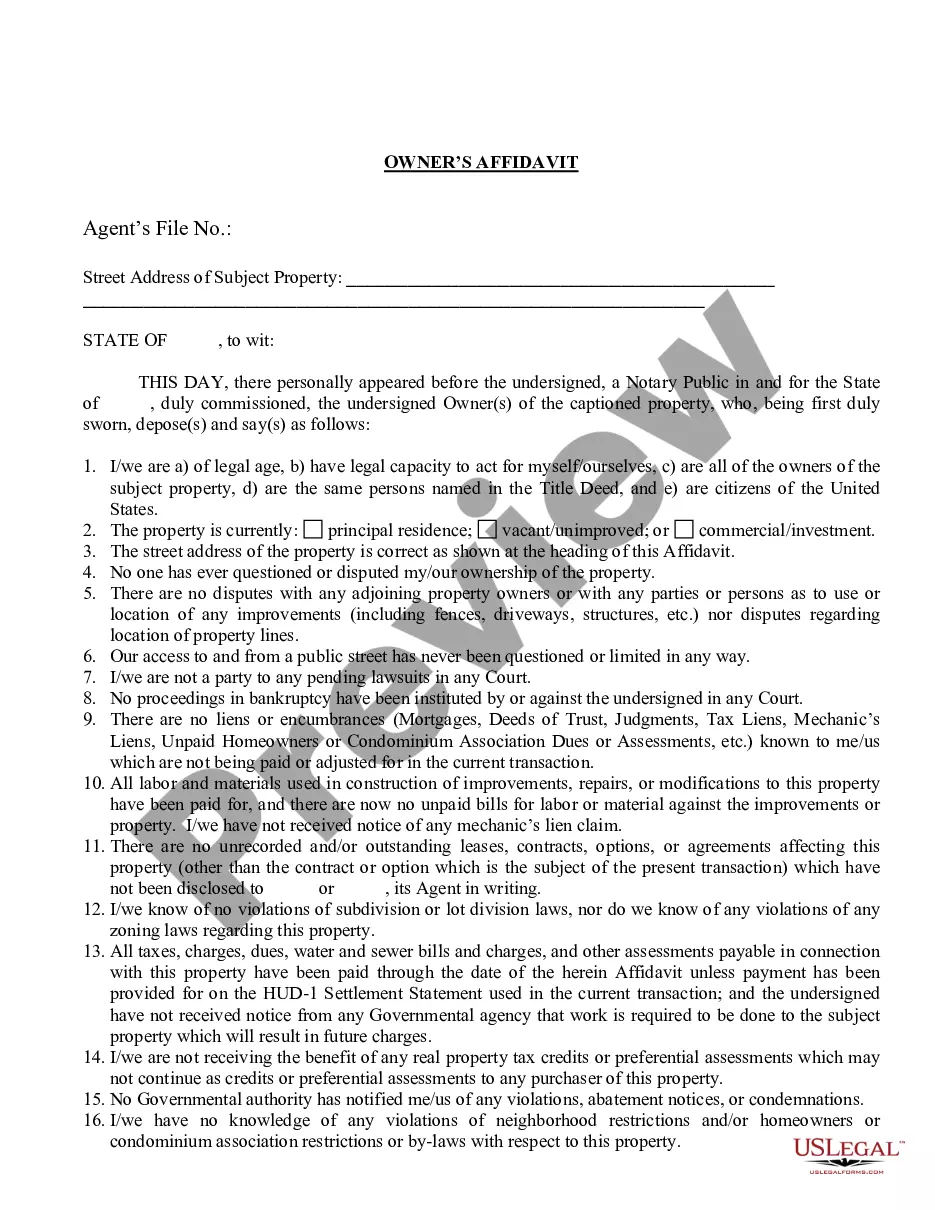
The Owner's or Seller's Affidavit of No Liens is a legal document used by sellers during the property closing process. It certifies that the seller is the rightful owner of the property and confirms that there are no outstanding liens against it. This form differs from other real estate documents by focusing specifically on lien status and seller ownership assertions, providing essential assurances to the buyer and the lender regarding the property's condition and the seller's legal standing.
Key components of this form
- Affirmation of age and ownership of the property.
- Marital status declaration of the sellers.
- Statement on the absence of liens against the property.
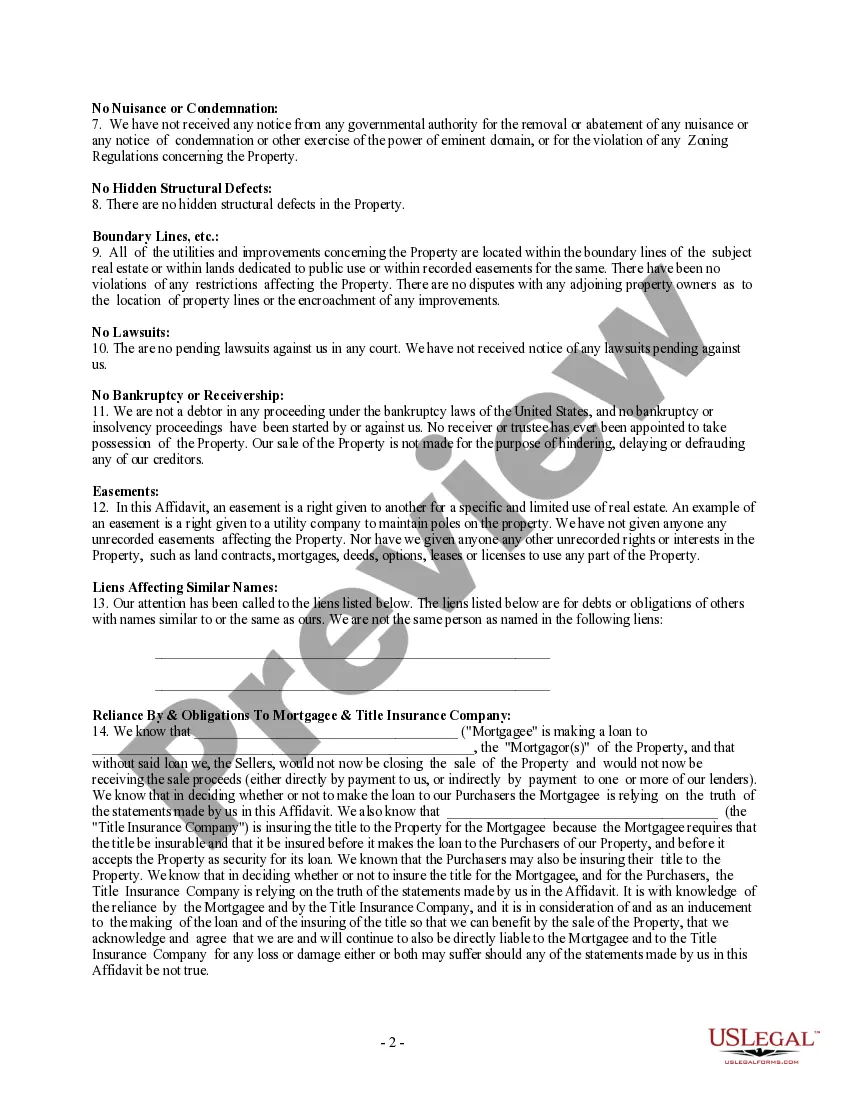
- Disclosure of any mechanic liens or outstanding debts related to property improvements.
- Confirmation of no pending governmental improvements or notice of condemnation.
- Assurances regarding structural defects and boundary lines.
- Disclosure of any pending lawsuits or bankruptcy status.
- Understanding of mortgagee reliance and title insurance implications.

When to use this document
This form should be used during the closing process of a real estate transaction when the seller needs to declare that there are no liens on the property being sold. It is essential when selling residential or commercial property to protect both the seller and the buyer from future claims regarding outstanding debts or legal obligations tied to the property.
Who can use this document
This affidavit is intended for:
- Property sellers who want to confirm their ownership and free title status.
- Real estate agents and brokers assisting clients in closing property sales.
- Buyers seeking assurance of lien-free property before completing the purchase.
- Title companies and lenders requiring verification of ownership and lien status.
How to prepare this document
- Identify the sellers and their marital status.
- Provide accurate details regarding the property, including the legal description and date of the deed.
- Clearly state any outstanding liens or debts related to the property.
- Complete sections regarding repairs and notices, ensuring all information is truthful.
- Have the affidavit signed by all sellers and notarized to make it legally valid.
Notarization requirements for this form
This form must be notarized to be legally valid. US Legal Forms provides secure online notarization powered by Notarize, allowing you to complete the process through a verified video call.
Get your form ready online
Our built-in tools help you complete, sign, share, and store your documents in one place.
Make edits, fill in missing information, and update formatting in US Legal Forms—just like you would in MS Word.
Download a copy, print it, send it by email, or mail it via USPS—whatever works best for your next step.
Sign and collect signatures with our SignNow integration. Send to multiple recipients, set reminders, and more. Go Premium to unlock E-Sign.
If this form requires notarization, complete it online through a secure video call—no need to meet a notary in person or wait for an appointment.
We protect your documents and personal data by following strict security and privacy standards.

Make edits, fill in missing information, and update formatting in US Legal Forms—just like you would in MS Word.

Download a copy, print it, send it by email, or mail it via USPS—whatever works best for your next step.

Sign and collect signatures with our SignNow integration. Send to multiple recipients, set reminders, and more. Go Premium to unlock E-Sign.

If this form requires notarization, complete it online through a secure video call—no need to meet a notary in person or wait for an appointment.

We protect your documents and personal data by following strict security and privacy standards.
Common mistakes to avoid
- Failing to disclose all liens or debts associated with the property.
- Not notarizing the document, which can lead to disputes over its validity.
- Providing incorrect property descriptions or owner information.
- Neglecting to detail marital status correctly if applicable.
- Assuming the form is not needed if no liens are apparent without proper verification.
Benefits of completing this form online
- Convenience of completing the form at your own pace, without requiring in-person visits.
- Editability allows for quick adjustments if information changes prior to submission.
- Access to professionally drafted forms ensures legal compliance and accuracy.
- Instant download capability saves time and provides immediate access to necessary documentation.
Looking for another form?
Form popularity
FAQ
An affidavit is a written statement that is notarized.The information in an affidavit must be first-hand information. It cannot be second-hand information or speculation. Affidavits can be written in your own handwriting or typed.
In the sentence, the person writing the statement must state that he or she is stating that the information is accurate. (Example: I, Jane Doe, solemnly swear that the contents of this document are true and correct, and that I agree to abide by the terms in this affidavit.)
Full name of the deponent and their signature. Statement indicating whether the affidavit has been sworn or not. Date and place where the affidavit is being signed. Designation and full name of the Notary or Magistrate (person attesting the affidavit)
An affidavit is a written statement that is considered made under oath. It is only valid when made voluntarily and without coercion. When you sign an affidavit, you are asserting that the information is true and that you have personal knowledge of the facts contained in the affidavit.
Address of the property; Full names of the owner and the transferee, who will receive the property; Personal details of both parties; All costs the new proprietor assumes.
The affidavit is a sworn statement of fact that specifies the seller of a property holds the title to it. In other words, it's proof that the seller owns the property. It also attests that certain other facts about the property are correctas sworn to by the seller and duly notarized.
The general warranty deed is the standard instrument for home sales. Your notarized warranty deed is proof of ownership, and that the grantor transferred complete and clear title to you. A quitclaim deed also proves full land ownershipif the person who conveyed the interest to you had full ownership.
An Owner Affidavit is a document used by title and closing agencies to ensure that the current owner of a property is in ownership of the property free and clear of any encumbrances.The Owner Affidavit places the seller on the hook for any claims that may arise that are not covered by the title insurance policy.