Indiana Guaranty or Guarantee of Payment of Rent
What is this form?
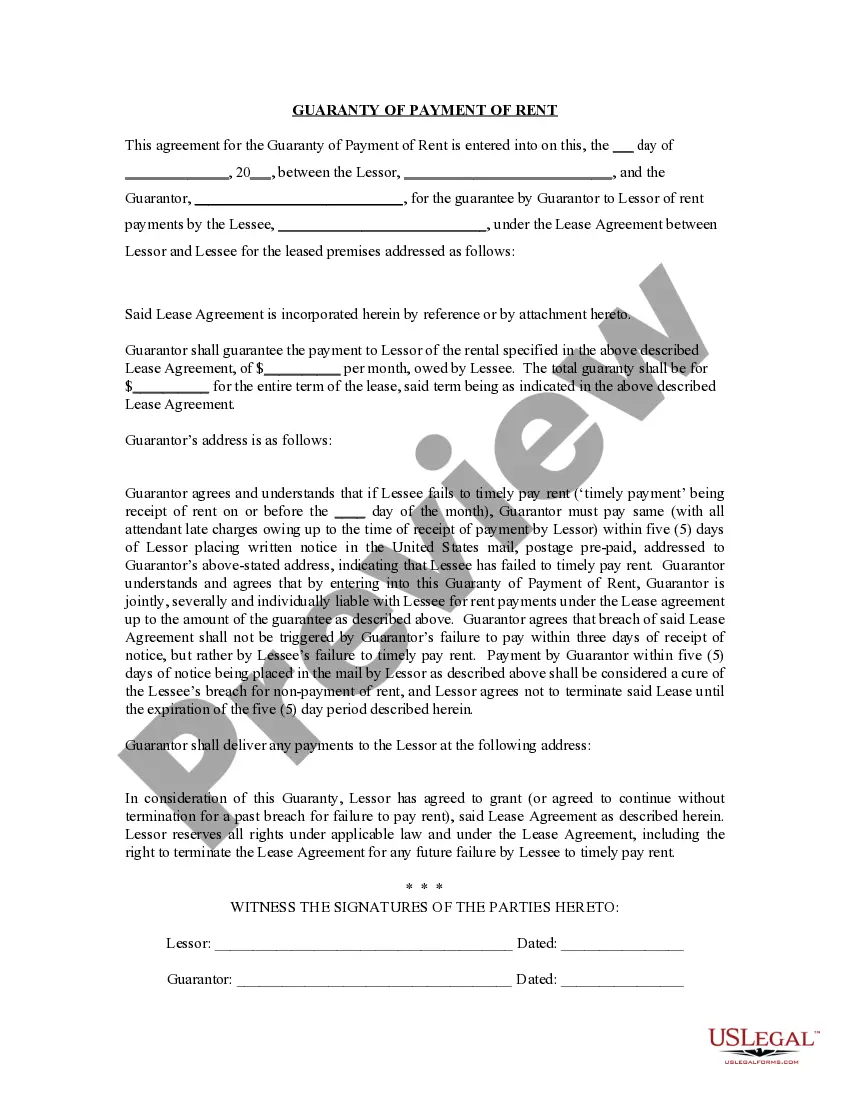
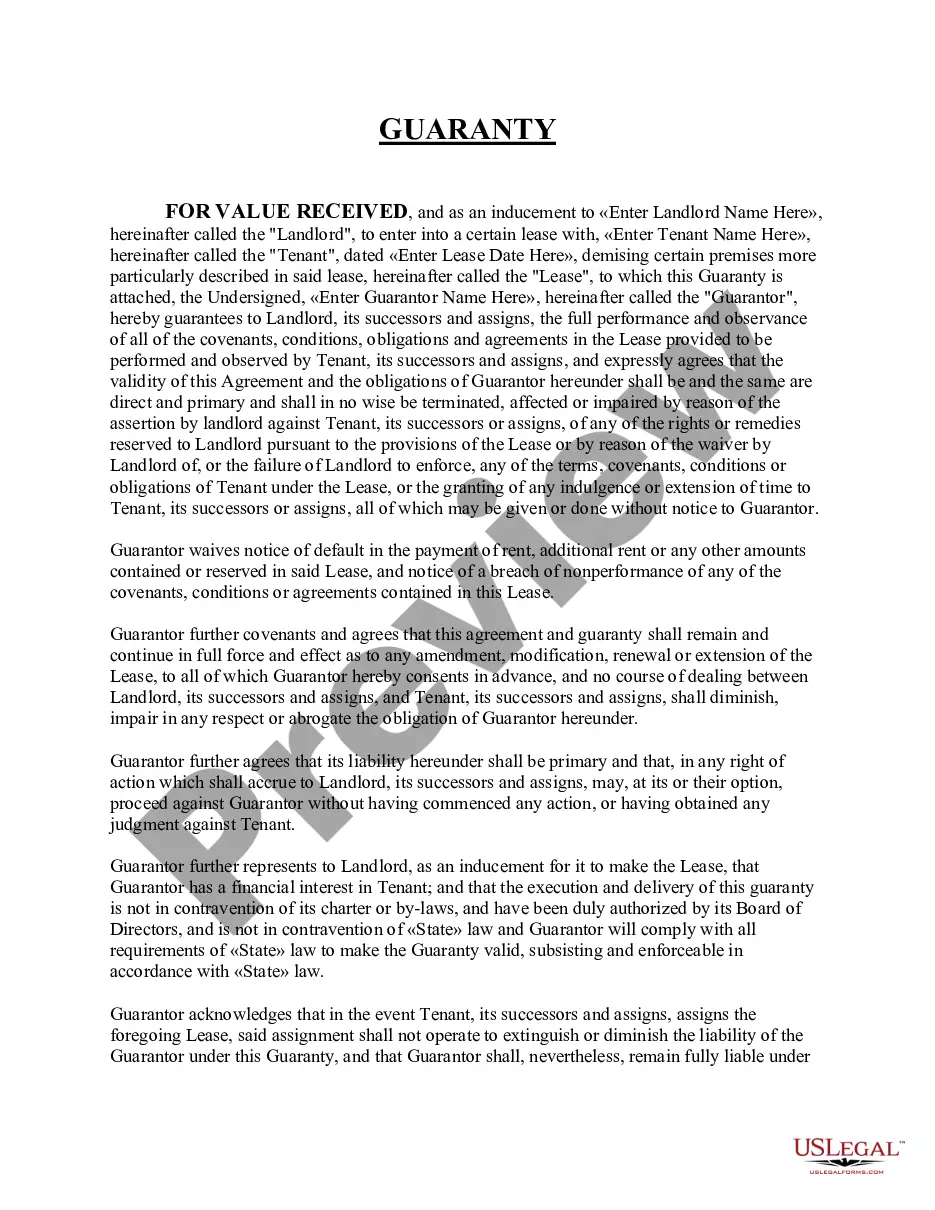
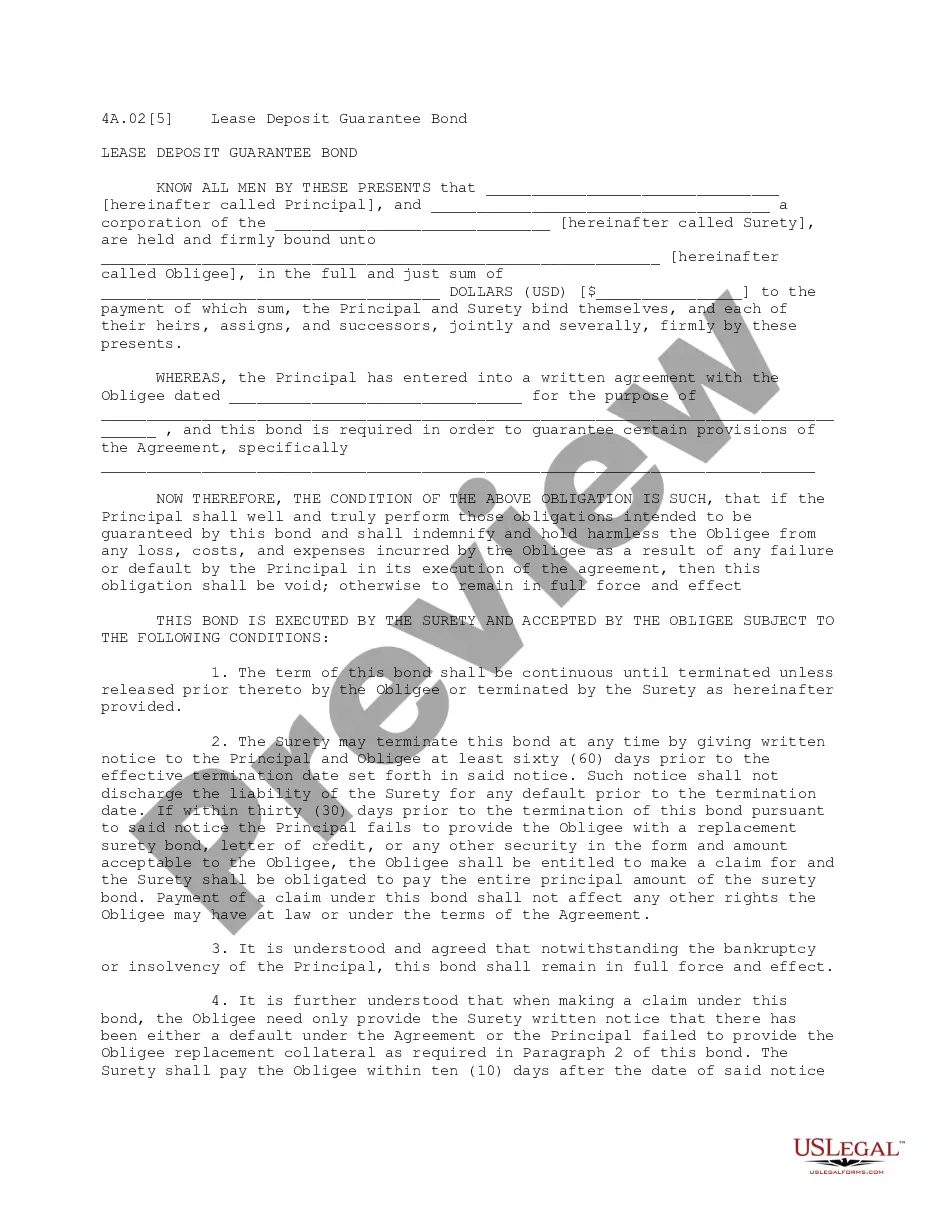
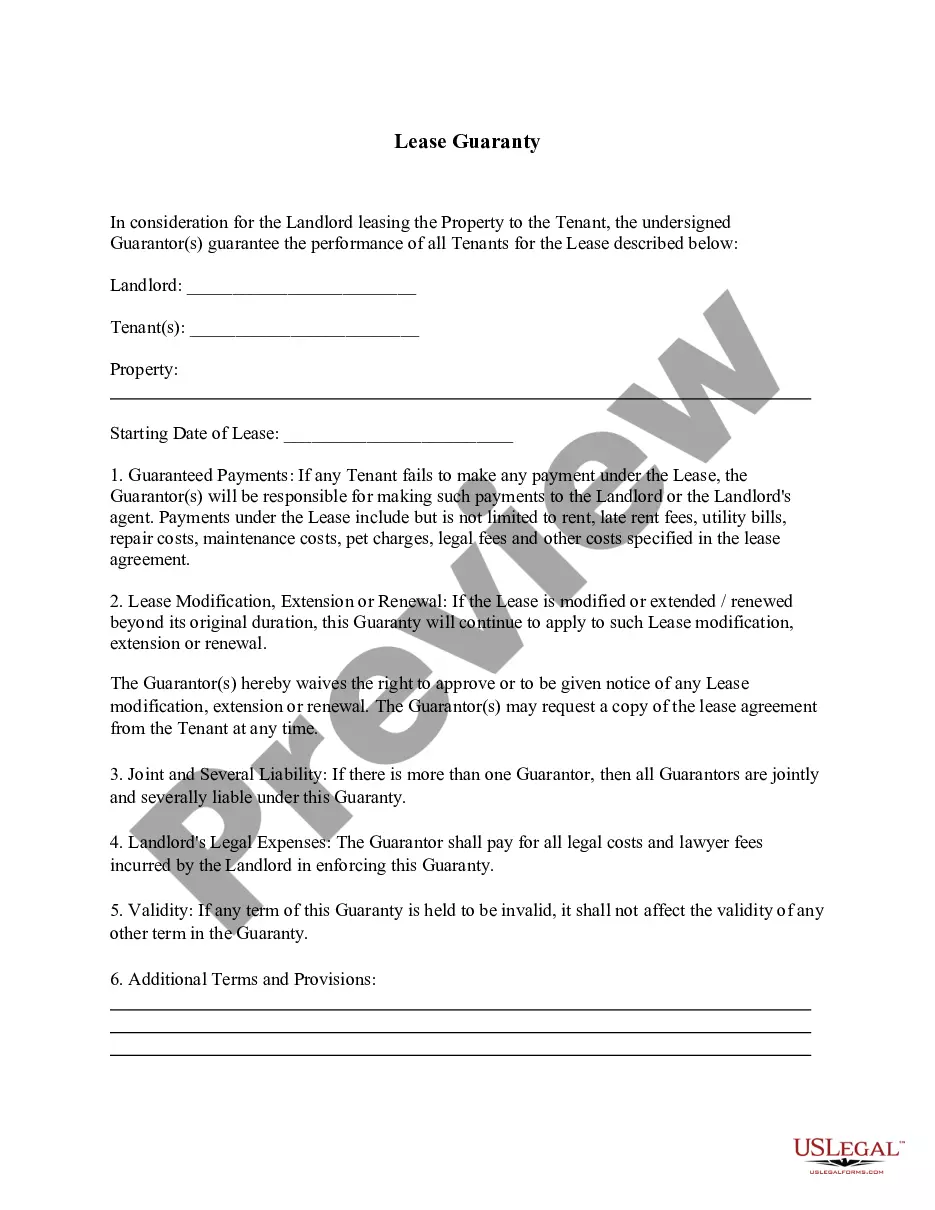
The Guaranty or Guarantee of Payment of Rent is a legal document that establishes a financial commitment from a guarantor to pay the rent on behalf of a tenant if the tenant is unable to do so. This form clarifies the roles and responsibilities of each party involvedâthe guarantor and the landlordâensuring that the landlord has a financial safety net. Unlike other rental agreements, this document focuses specifically on the guarantee of payment, making it essential for landlords who wish to avoid losses from tenant defaults.
Key components of this form
- Guarantor's address: Identifies the guarantor's contact information.
- Signature lines: Designated spaces for the lessor and guarantor to sign, along with the dates of signature.
Situations where this form applies
This form is particularly useful when a tenant is perceived as having insufficient creditworthiness or rental history to secure a lease without additional financial assurance. Landlords may require this form during lease negotiations to ensure they have recourse should the tenant fail to pay rent.
Who should use this form
- Landlords seeking a guarantor to secure rental payments.
- Guarantors who agree to back the financial obligations of a tenant.
- Tenants with limited credit history who are required to find a guarantor for rental agreements.
How to prepare this document
- Identify the parties: Clearly state the names and addresses of the tenant and the guarantor.
- Specify the property: Provide details about the rental property covered by the guaranty.
- Enter dates: Fill in the date on which the agreement is signed.
- Signatures: Both the lessor and the guarantor must sign and date the form to make it legally effective.
Is notarization required?
This form does not typically require notarization unless specified by local law. However, having the signatures notarized can add an extra layer of security and formality to the document.
Get your form ready online
Our built-in tools help you complete, sign, share, and store your documents in one place.
Make edits, fill in missing information, and update formatting in US Legal Forms—just like you would in MS Word.
Download a copy, print it, send it by email, or mail it via USPS—whatever works best for your next step.
Sign and collect signatures with our SignNow integration. Send to multiple recipients, set reminders, and more. Go Premium to unlock E-Sign.
If this form requires notarization, complete it online through a secure video call—no need to meet a notary in person or wait for an appointment.
We protect your documents and personal data by following strict security and privacy standards.

Make edits, fill in missing information, and update formatting in US Legal Forms—just like you would in MS Word.

Download a copy, print it, send it by email, or mail it via USPS—whatever works best for your next step.

Sign and collect signatures with our SignNow integration. Send to multiple recipients, set reminders, and more. Go Premium to unlock E-Sign.

If this form requires notarization, complete it online through a secure video call—no need to meet a notary in person or wait for an appointment.

We protect your documents and personal data by following strict security and privacy standards.
Mistakes to watch out for
- Leaving the guarantor's contact information incomplete or incorrect.
- Failing to have both parties sign and date the document.
- Not including specific details of the rental property, which can lead to disputes.
Why complete this form online
- Convenience of instant access and download at any time.
- Editability to customize the form to suit individual circumstances.
- Reliability with professionally drafted templates reviewed by licensed attorneys.
Main things to remember
- The Guaranty or Guarantee of Payment of Rent provides security for landlords by ensuring rent is paid even if the tenant defaults.
- It is essential to accurately identify all parties and specify the rental amount and conditions.
- This form is useful for both landlords and tenants who may face challenges in securing a lease independently.
Looking for another form?


Form popularity
FAQ
Typically, a guarantor is anyone with a good credit history and stable income. They can be family members, friends, or colleagues who trust you and agree to cover your rent in case of default. It's crucial that your guarantor understands their responsibilities under the Indiana Guaranty or Guarantee of Payment of Rent. Make sure to discuss this thoroughly before proceeding.
Unfortunately, if you have signed the loan agreement and the loan has been successfully paid out, you cannot stop being someone's guarantor. So the answer is simply, 'no. '
Landlords often require a personal or corporate lease guarantee, a separate document executed simultaneously with the lease, which makes the guarantor liable for the tenant's defaults.Landlords want an unconditional and unlimited guarantee, holding the guarantor liable for all of the tenant's defaults.
What is a Personal Guarantee? A personal guarantee is a written promise from a guarantor (business owner or other person) guaranteeing commercial lease payments in the event the business does not pay. In the event of non-payment the landlord can go after the guarantor personally for payment.
A lease guaranty is a separate contract under which a third party guarantor agrees to meet the obligations of the Tenant to the Landlord.If the Tenant fails to pay rent, the Landlord can recover the arrears from the guarantor, usually before seeking damages from Tenant.
A guarantor on an apartment lease agrees to pay the rent if the tenant can't.The landlord can evict the tenant and initiate collection action against the guarantor. This may include a lawsuit, negatively affecting the guarantor's credit.
A guaranty of lease is a covenant by the guarantor to be responsible for the obligations of the tenant.In these examples, a selective landlord would not enter into the lease without the tenant offering a creditworthy guarantor.
If the Deed of guarantee contains a termination provision (allowing the guarantor to withdraw on say two months' notice)- the provision can allow the termination during the fixed term. If any term of the tenancy changes (e.g. rent increase) the guarantee will automatically come to an end.
Yes, a guarantor to a loan can sue the principal debtor if he defaults and the guarantor had to pay on his behalf.
It's very common for a guarantee to last as long as the tenancy lasts. So, if the tenant remains in the property for four years, you will continue to be responsible for any arrears or damages during that entire period. Most tenancies will run for a fixed term and will then continue on a month-by-month basis.