Indiana Letter from Tenant to Landlord about Fair Housing Reduction or Denial of services to Family with Children
What is this form?
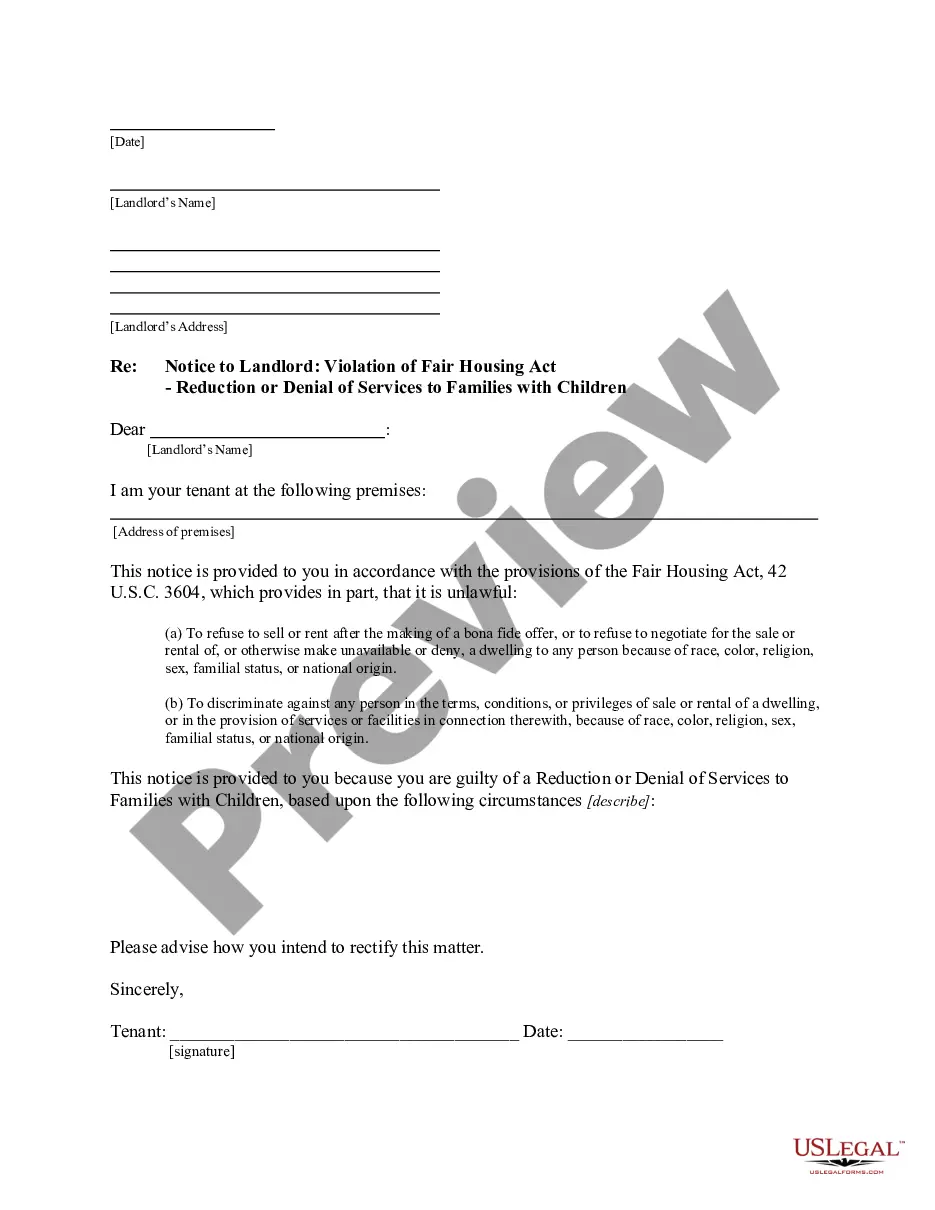
This form is a letter from a tenant to a landlord addressing fair housing violations related to the reduction or denial of services to families with children. It helps tenants assert their rights under the Fair Housing Act, which prohibits discrimination based on familial status, among other factors. This letter is distinct from other forms of tenant-landlord communication as it specifically focuses on discriminatory practices against families with children.
Key parts of this document
- Statement of discrimination based on familial status.
- Details about the specific circumstances of the alleged reduction or denial of services.
- Assertion of the tenant's rights under fair housing laws.
- A request for resolution or rectification of the issue.

When to use this form
Use this form when you believe your landlord has unlawfully denied services or reduced your rental options due to having children in the household. This could arise in situations where access to housing is restricted, or services that accommodate families are not provided. It serves as a formal notice to your landlord about the violation and requests action against discrimination.
Intended users of this form
- Tenants who have children and feel discriminated against by their landlord.
- Individuals seeking to assert their rights under the Fair Housing Act.
- Families who have faced reductions in housing services based on their familial status.
Instructions for completing this form
- Identify the parties involved: provide your name, address, and contact information as the tenant, as well as the landlordâs name and address.
- Describe the issue: clearly outline the specifics of the suspected reduction or denial of services based on your familial status.
- State your rights: reference the applicable fair housing laws that relate to your situation.
- Request a resolution: specify what action you would like your landlord to take to rectify the situation.
- Sign and date the letter to formalize your complaint.
Does this form need to be notarized?
This form does not typically require notarization unless specified by local law. Ensure you follow any additional requirements set by your state to enhance the validity of your complaint.
Get your form ready online
Our built-in tools help you complete, sign, share, and store your documents in one place.
Make edits, fill in missing information, and update formatting in US Legal Forms—just like you would in MS Word.
Download a copy, print it, send it by email, or mail it via USPS—whatever works best for your next step.
Sign and collect signatures with our SignNow integration. Send to multiple recipients, set reminders, and more. Go Premium to unlock E-Sign.
If this form requires notarization, complete it online through a secure video call—no need to meet a notary in person or wait for an appointment.
We protect your documents and personal data by following strict security and privacy standards.

Make edits, fill in missing information, and update formatting in US Legal Forms—just like you would in MS Word.

Download a copy, print it, send it by email, or mail it via USPS—whatever works best for your next step.

Sign and collect signatures with our SignNow integration. Send to multiple recipients, set reminders, and more. Go Premium to unlock E-Sign.

If this form requires notarization, complete it online through a secure video call—no need to meet a notary in person or wait for an appointment.

We protect your documents and personal data by following strict security and privacy standards.
Typical mistakes to avoid
- Failing to provide specific details regarding the discrimination faced.
- Not referencing specific fair housing laws.
- Neglecting to keep a copy of the letter for personal records.
- Not sending the letter through a traceable method.
Advantages of online completion
- Convenient access to a legally vetted template that can be filled out quickly.
- Editable format allows for customization based on individual circumstances.
- Reliable resource drafted by licensed attorneys, ensuring compliance with legal standards.
Legal use & context
- This letter serves as a formal complaint under Fair Housing laws.
- It helps to document the situation in case further legal action is necessary.
- While it establishes a record of communication, actual enforcement of Fair Housing rights may require additional steps.
Main things to remember
- This form addresses specific Fair Housing violations linked to familial status.
- Using this letter can formally document your concerns and initiate a response from your landlord.
- Ensure you personalize the form by detailing your individual circumstances.
Looking for another form?
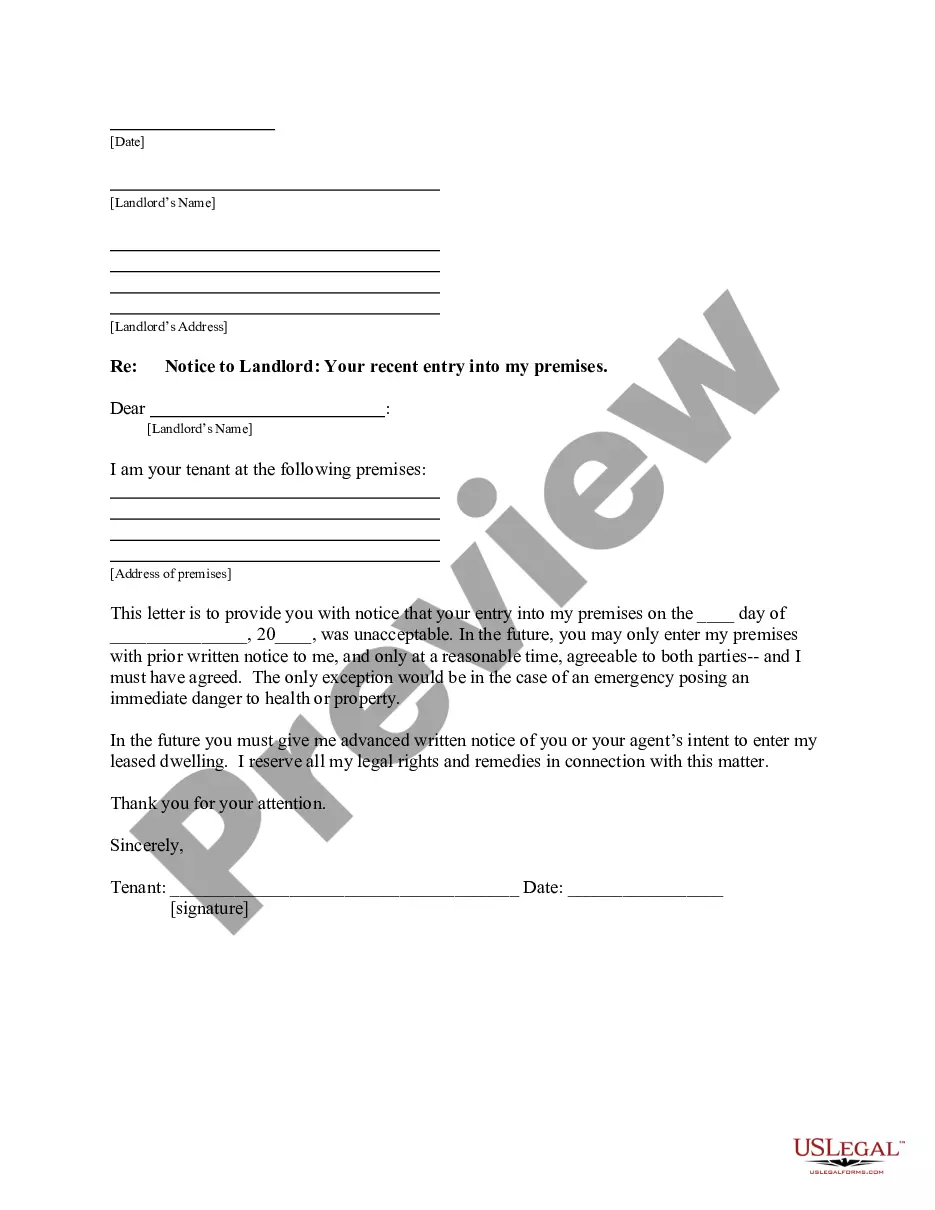
Form popularity
FAQ
Which family is NOT protected under the familial status provisions of the Fair Housing Act? The answer is a 55-year-old father, 40-year-old mother, and 17-year-old son who want to purchase a home in an age-restricted adults-only community.
While tenants cannot unreasonably deny access to a landlord, landlords must also follow all of the state and local rules regarding access to tenants' apartments. Roughly half of states have rules governing landlord entry into tenants' apartments.
Yes, there are four important exceptions to the Fair Housing Act: Single family homes, as long as the home is also rented or sold by the owner, the owner does not own more than 3 such homes at a time, the advertising for the sale or rental was not discriminatory, and the owner did not use a real estate agent or broker.
The Fair Housing Act (FHA) outlaws discrimination against tenants based on certain personal characteristics, commonly known as protected classes. The FHA added familial status as a protected class in 1989 to make sure that families with children aren't treated differently when renting.
What does "familial status" mean? Familial status means the makeup of your family. The FHA prohibits discrimination on this basis including: children under the age of 18 living with parents/guardians, pregnant women, and people seeking custody of children under 18.
HUD Settles Disability Discrimination Fair Housing Act Case For $80,000.
Examples of familial status discrimination include: Refusing to rent to families with children. Evicting families once a child joins the family through, e.g., birth, adoption, custody. Requiring families with children to live on specific floors or in specific buildings or areas.
Under the FHA, familial status discrimination occurs when a landlord, property manager, real estate agent, or property owner treats someone differently because they have a family with one or more individuals who are under 18 years of age.
If the tenant refuses, you are permitted to send them a notice to agree or quit the property. The tenant refusing you access constitutes a breach in the lease agreement, so they could be evicted if they continue to deny access.