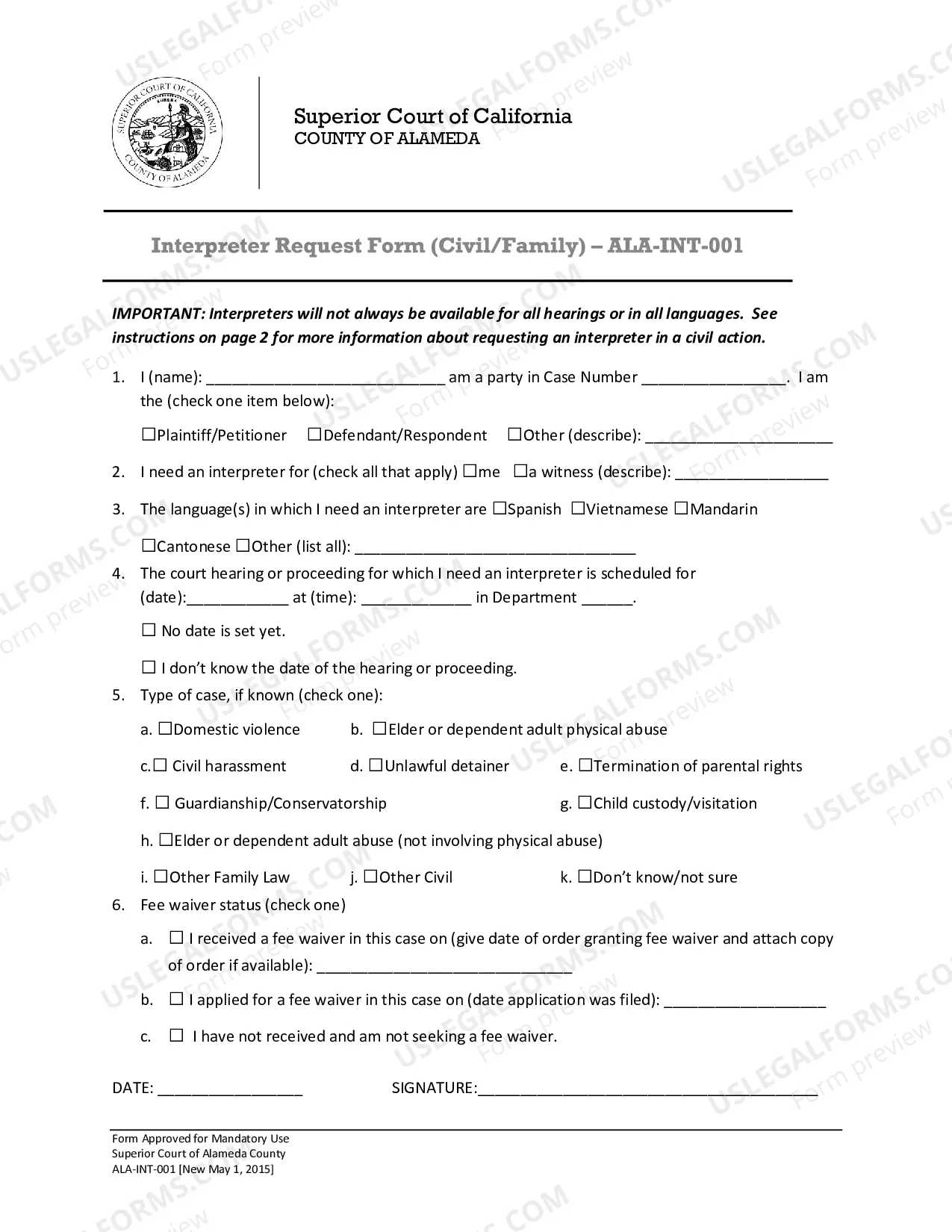
Illinois Horse Equine Forms Package
What is this form?
The Illinois Horse Equine Forms Package is a comprehensive collection of legal forms related to horse ownership, care, and transactions in the state of Illinois. This package includes various agreements and waivers that address different aspects of equine management, making it distinct from other legal forms by specifically catering to the needs of horse owners, trainers, and boarding facilities. These forms help ensure clear agreements and legal protection for both parties involved in equine activities.
What’s included in this form
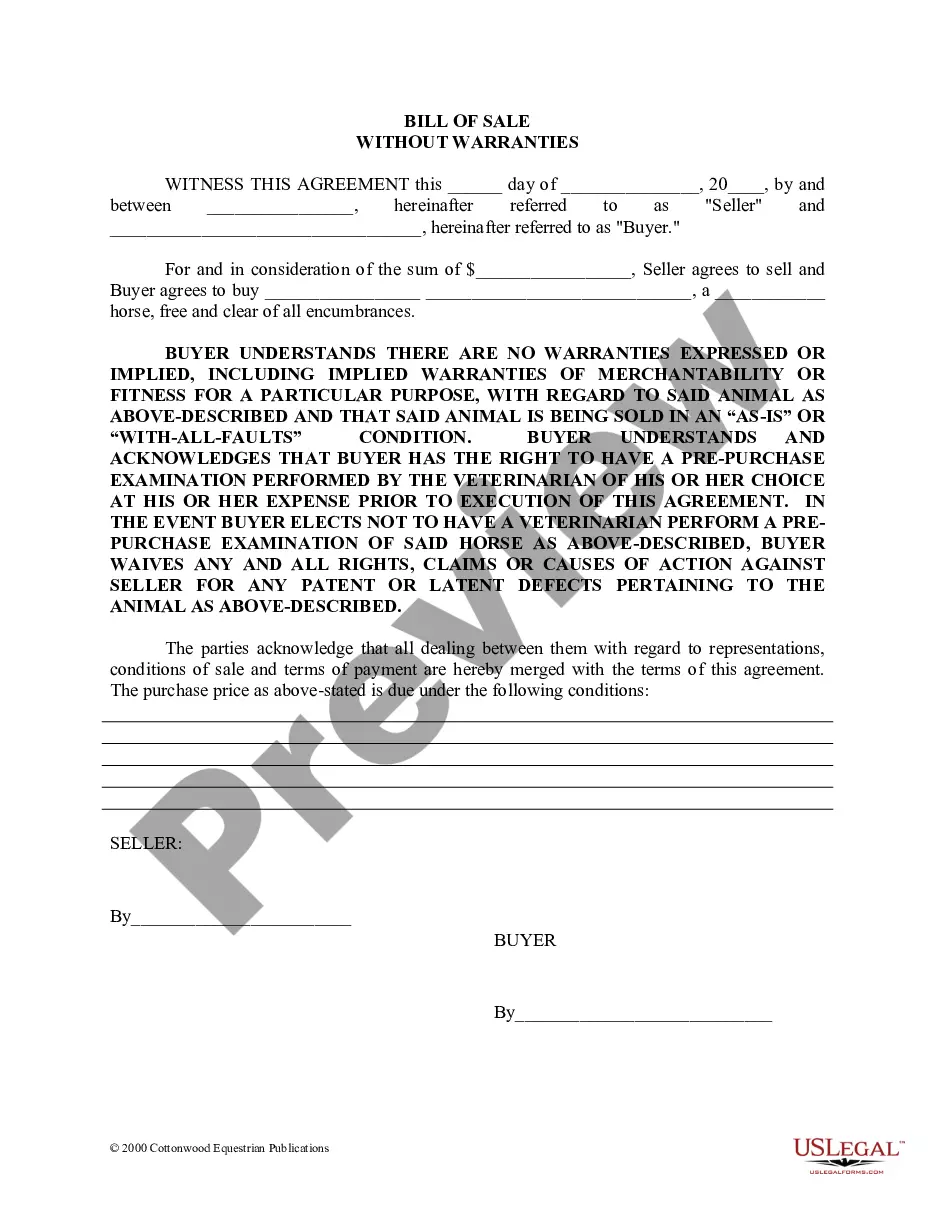
- Bill of Sale Without Warranties
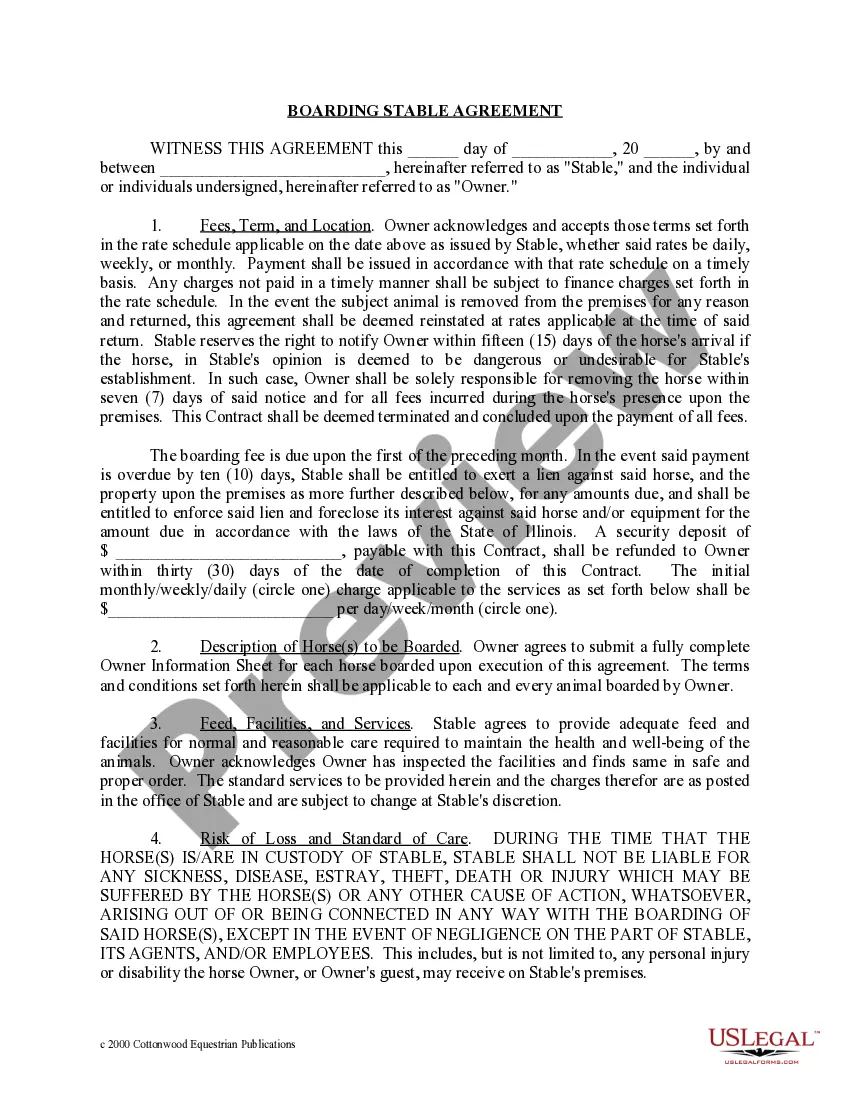
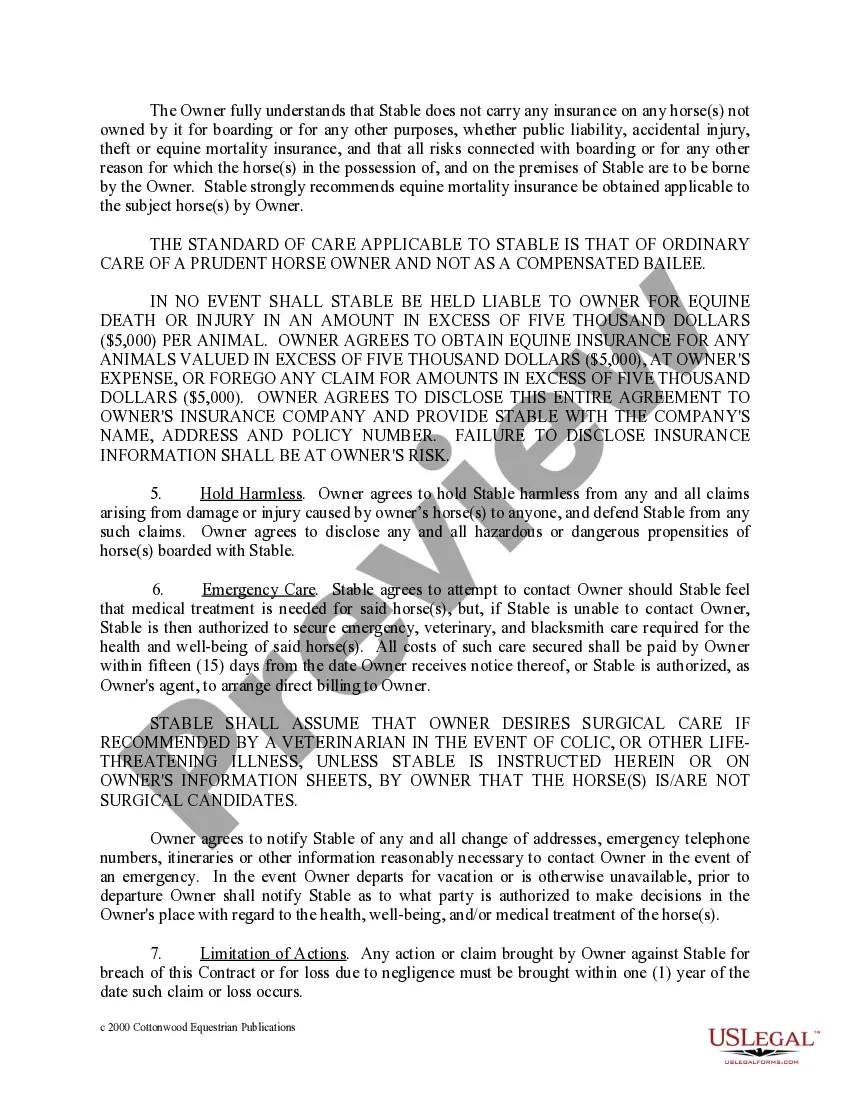
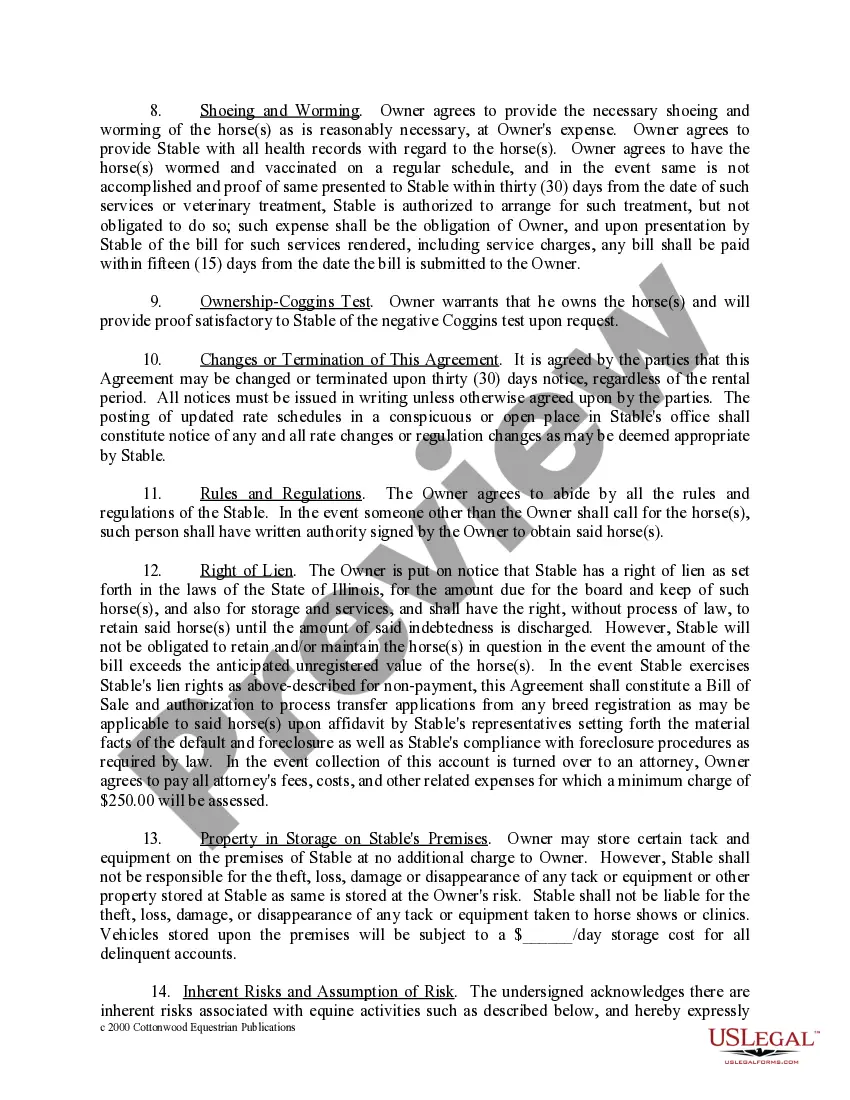
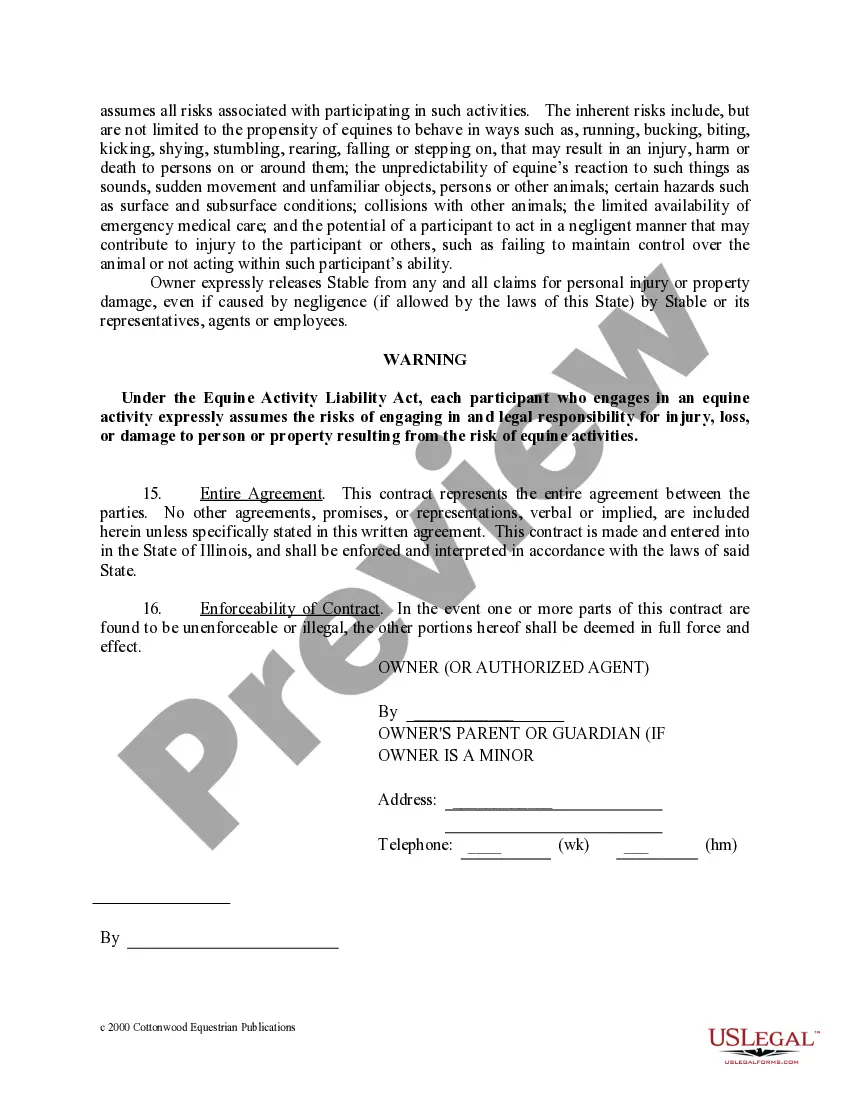
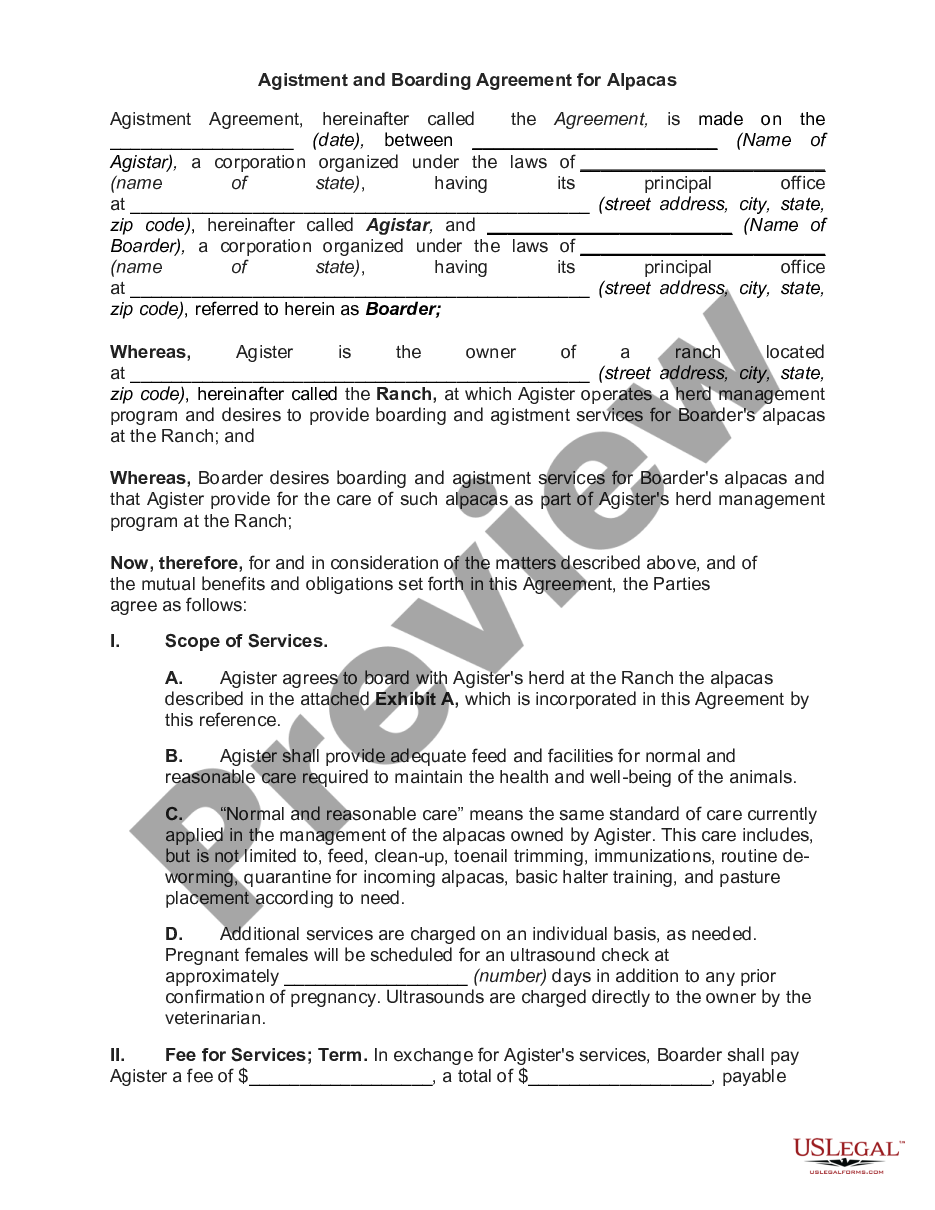
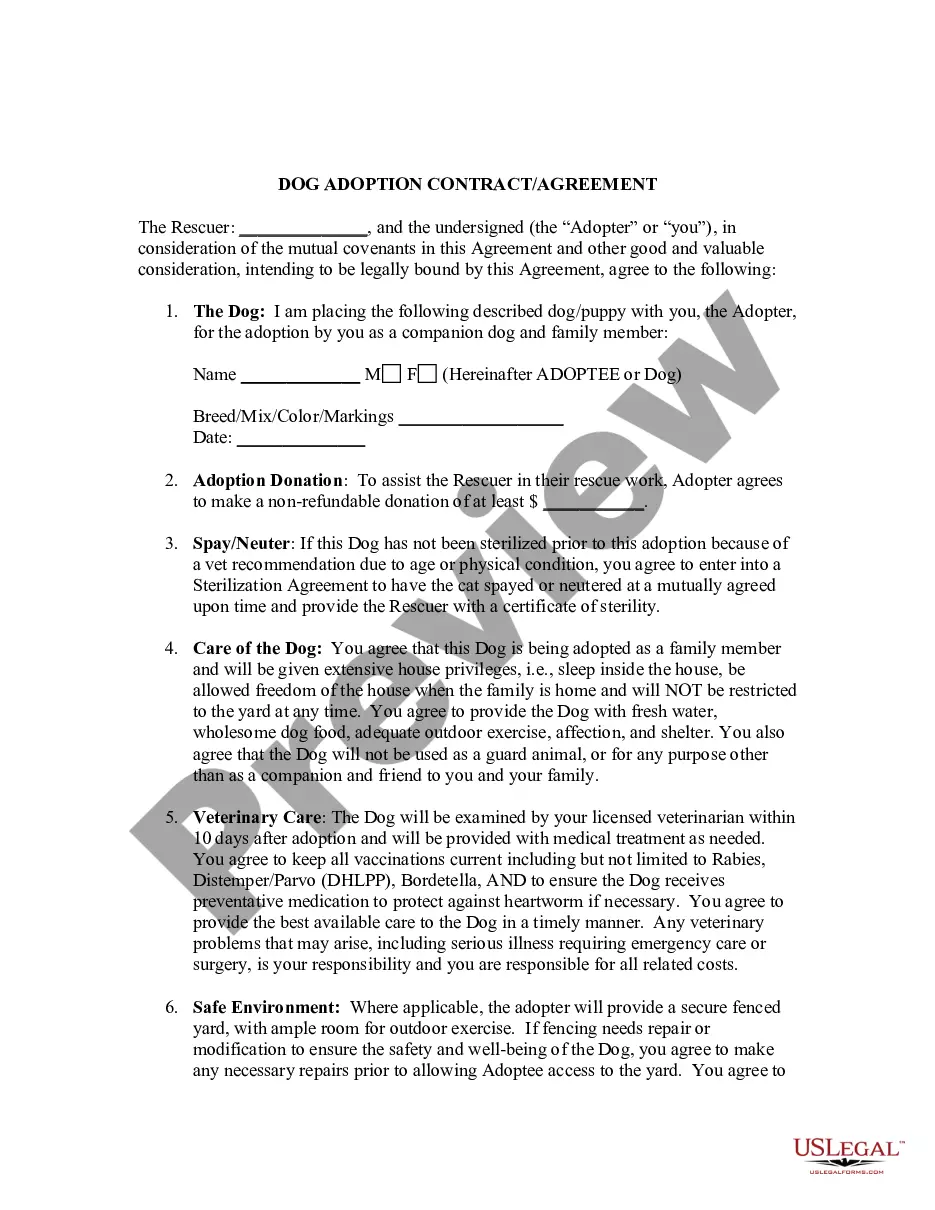
- Boarding Stable Agreement
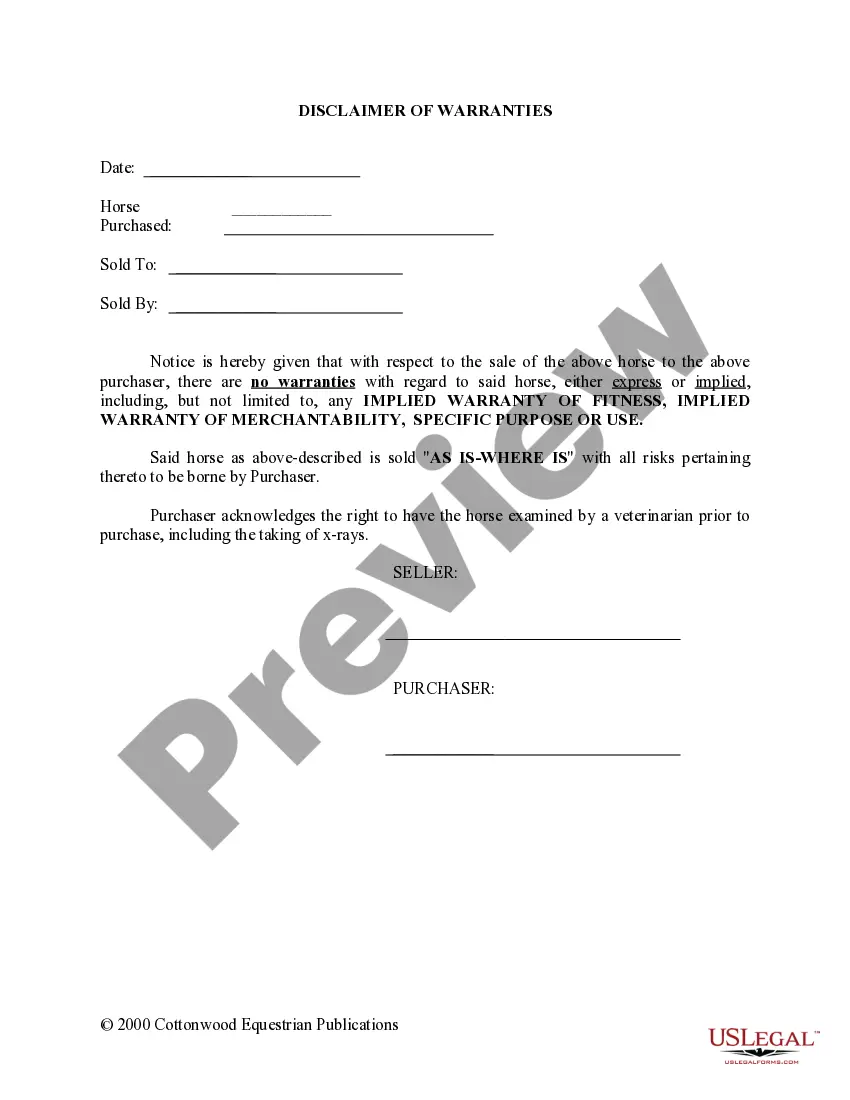
- Disclaimer of Warranties
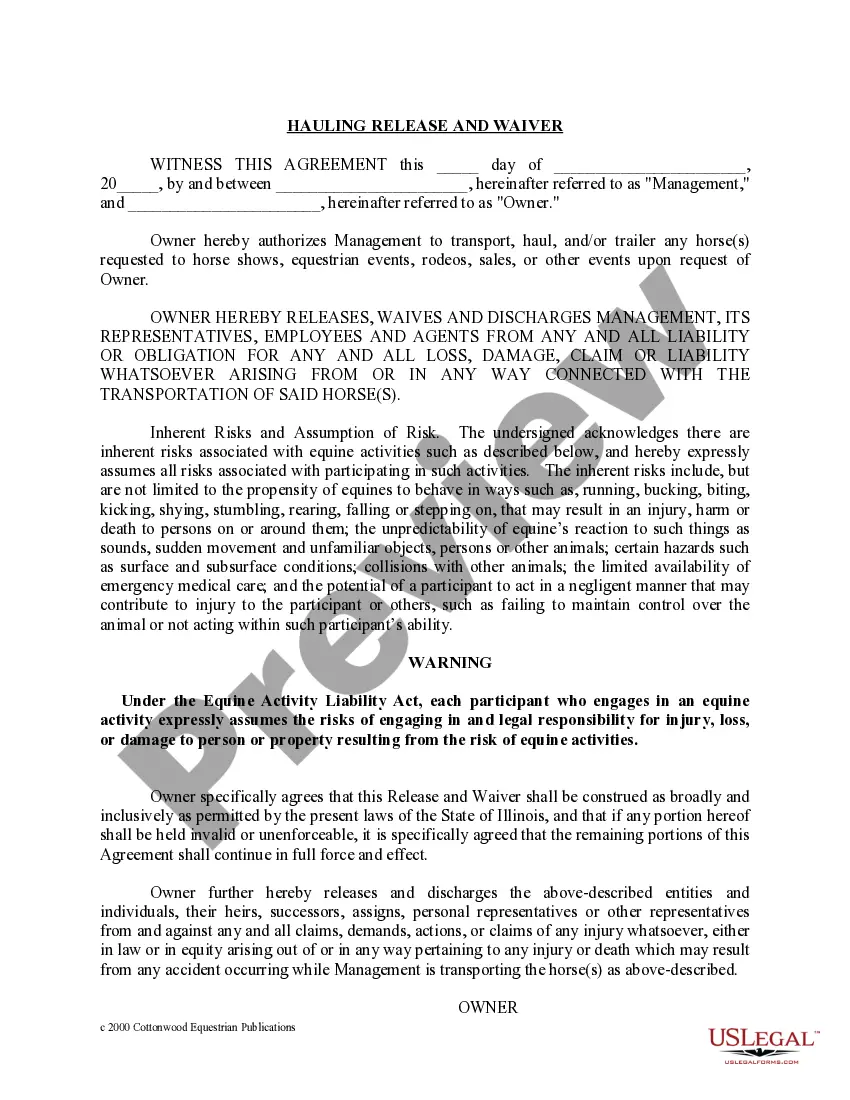
- Hauling Release and Waiver
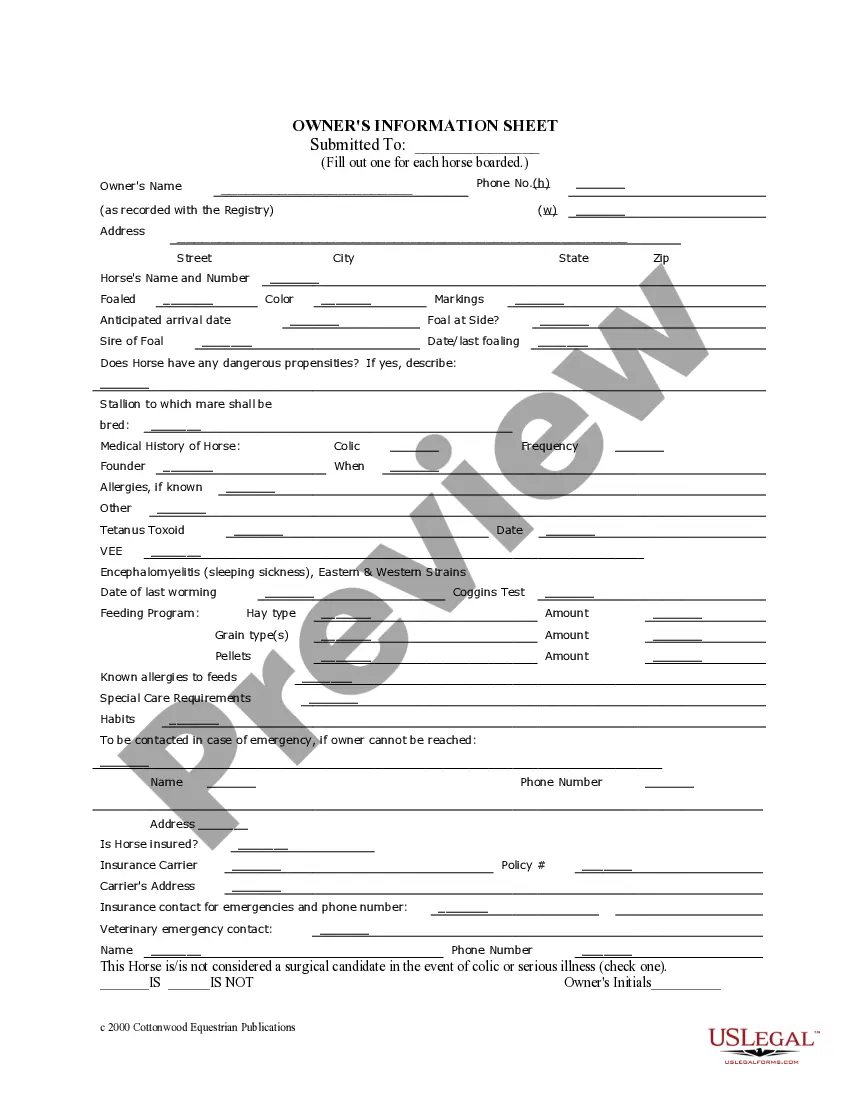
- Owner's Information Sheet
- Lesson, Horse Rental, and Arena Use Release
- Mare Information Sheet
- Authorization to Obtain Medical Treatment for Minor Child
- Release of Liability Owner/Rider
- Pre-Purchase Recommendations
- Promissory Note
- Facility Use Agreement - Show or Clinic
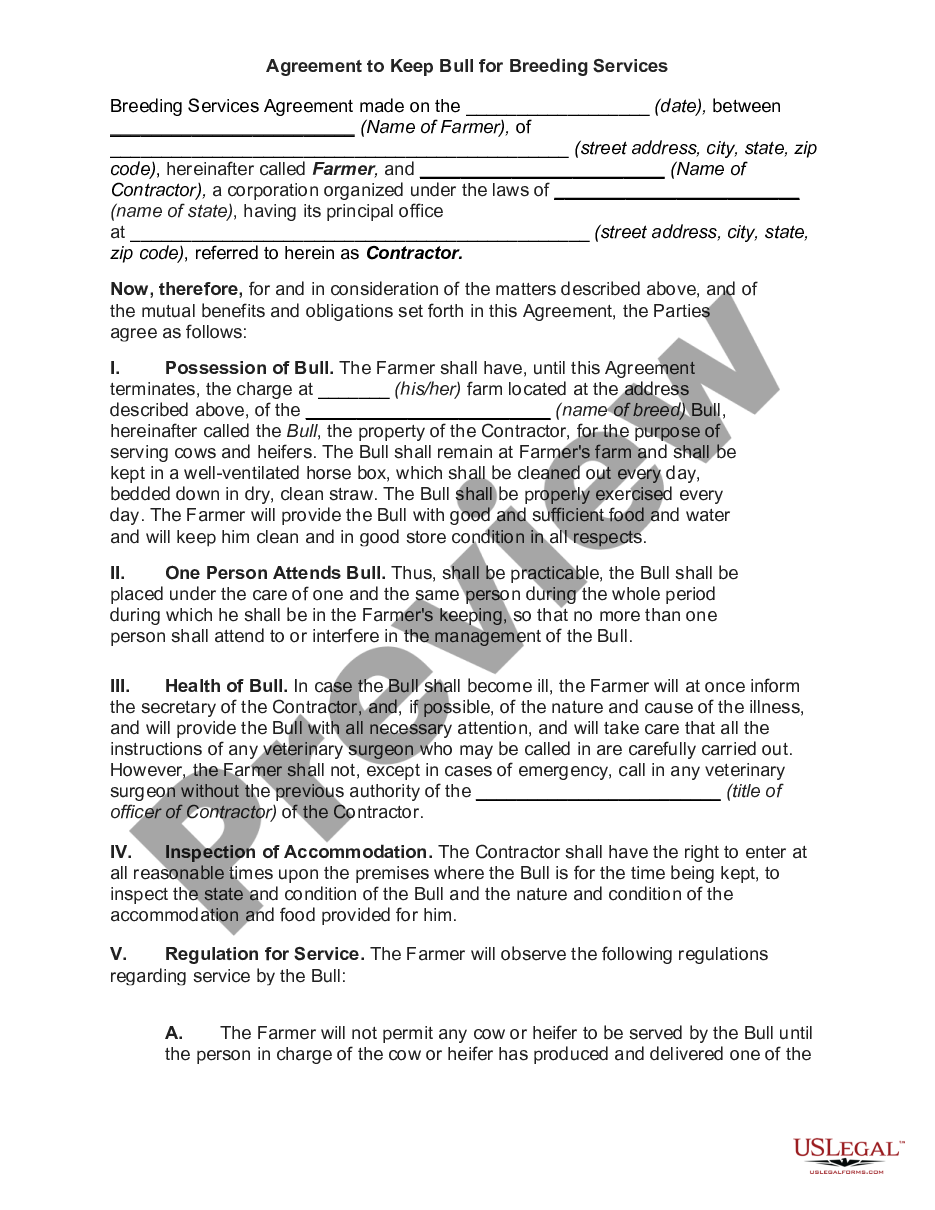
- Stallion Service Contract
- Trainer's Facility Use Agreement
- Training Contract



Common use cases
This package is essential when engaging in horse-related transactions or services, such as buying or selling a horse, boarding a horse at a facility, organizing riding lessons, or participating in equine events. It is particularly beneficial in situations where legal agreements are needed to clarify rights, responsibilities, and liabilities between horse owners, trainers, and facilities.
Who should use this form
This forms package is intended for:
- Horse owners looking to buy or sell horses
- Facility operators offering boarding or training services
- Trainers providing training or lessons to riders
- Parents of minor children involved in equine activities
- Individuals participating in horse shows, clinics, or events
How to prepare this document
- Identify and provide the names of all parties involved in the agreement.
- Specify the horse's details, including name, registration, and other identifying information.
- Clearly outline the terms and conditions of the agreement, including payment details, liabilities, and responsibilities.
- Ensure all necessary signatures are obtained from involved parties, including any required witnesses or notarization.
- Keep copies of all completed forms for future reference and verification.
Does this form need to be notarized?
This form does not typically require notarization unless specified by local law. However, for certain agreements, such as those involving significant financial commitments or liability waivers, it is advisable to consult legal guidance to ensure compliance with any applicable notarization requirements.
Get your form ready online
Our built-in tools help you complete, sign, share, and store your documents in one place.
Make edits, fill in missing information, and update formatting in US Legal Forms—just like you would in MS Word.
Download a copy, print it, send it by email, or mail it via USPS—whatever works best for your next step.
Sign and collect signatures with our SignNow integration. Send to multiple recipients, set reminders, and more. Go Premium to unlock E-Sign.
If this form requires notarization, complete it online through a secure video call—no need to meet a notary in person or wait for an appointment.
We protect your documents and personal data by following strict security and privacy standards.
Make edits, fill in missing information, and update formatting in US Legal Forms—just like you would in MS Word.
Download a copy, print it, send it by email, or mail it via USPS—whatever works best for your next step.
Sign and collect signatures with our SignNow integration. Send to multiple recipients, set reminders, and more. Go Premium to unlock E-Sign.

If this form requires notarization, complete it online through a secure video call—no need to meet a notary in person or wait for an appointment.

We protect your documents and personal data by following strict security and privacy standards.
Typical mistakes to avoid
- Failing to specify clear terms and conditions in the agreements.
- Not obtaining signatures from all necessary parties.
- Neglecting to provide complete information about the horse in sales or boarding agreements.
- Overlooking required witness or notarization provisions.
- Not keeping copies of signed documents for future reference.
Why use this form online
- Convenient access to all necessary forms without the need to visit an office.
- Instant download, allowing for quick completion and use.
- Forms designed by licensed attorneys, ensuring legal adequacy and compliance.
- Editable templates, making it easy to customize for your specific situation.
- 24/7 availability, enabling you to complete forms on your schedule.
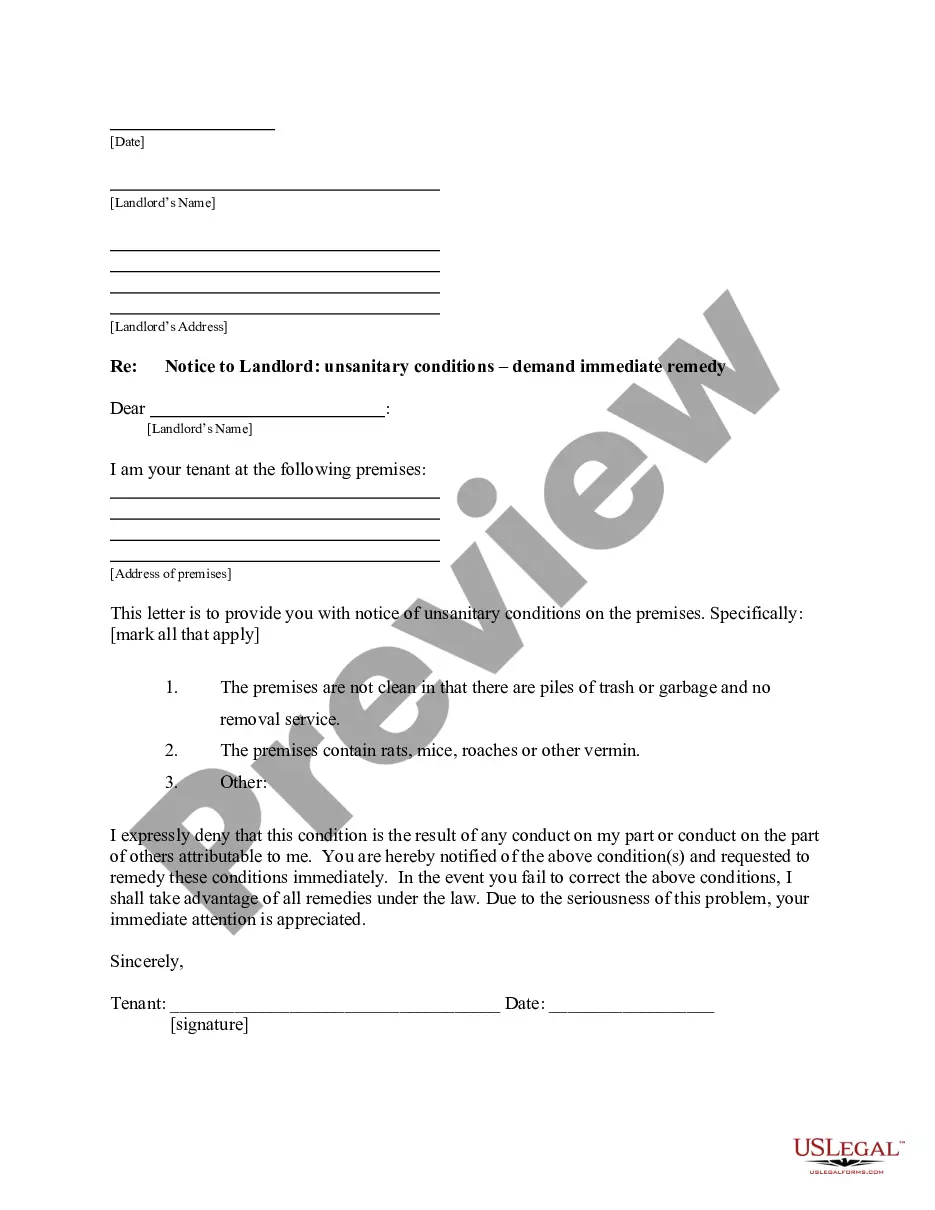
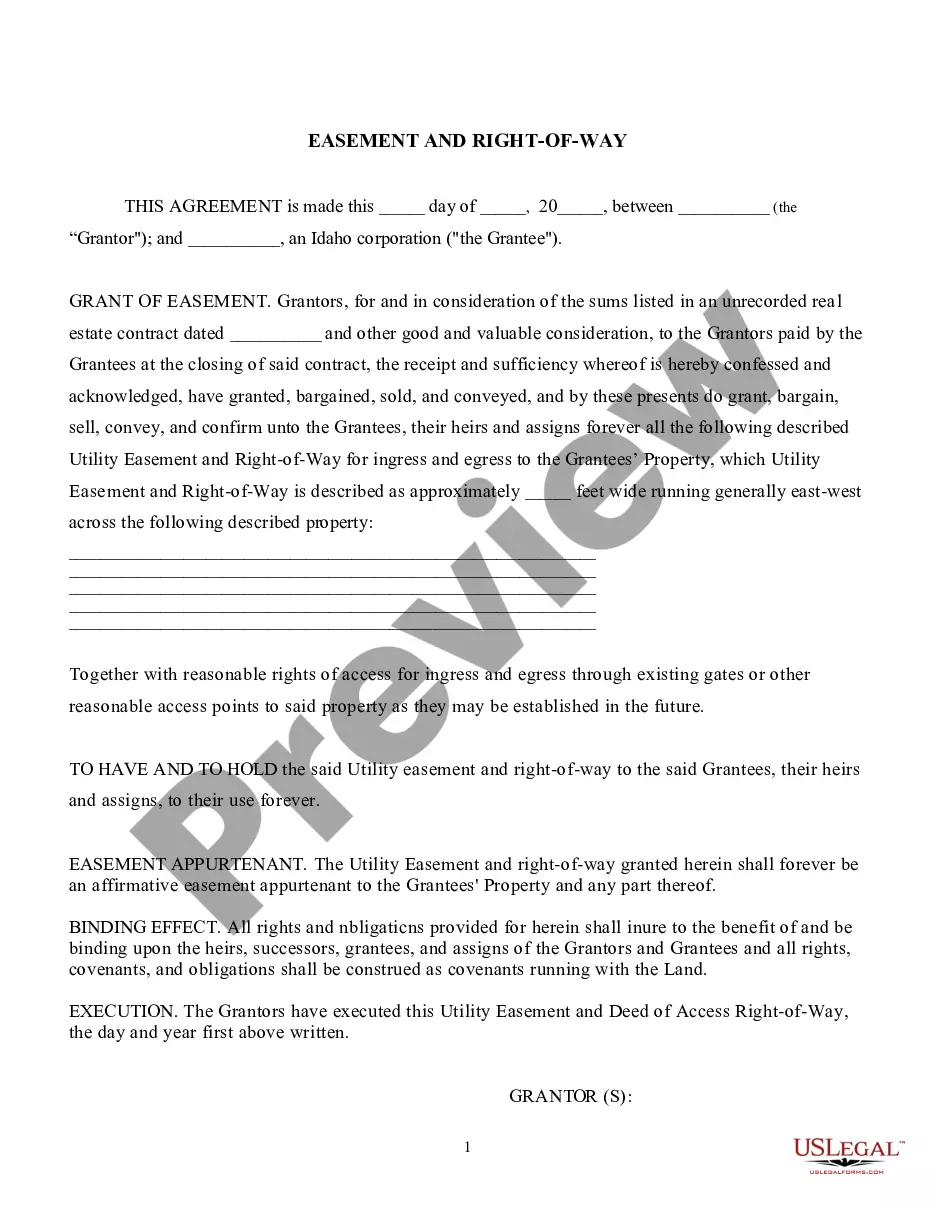
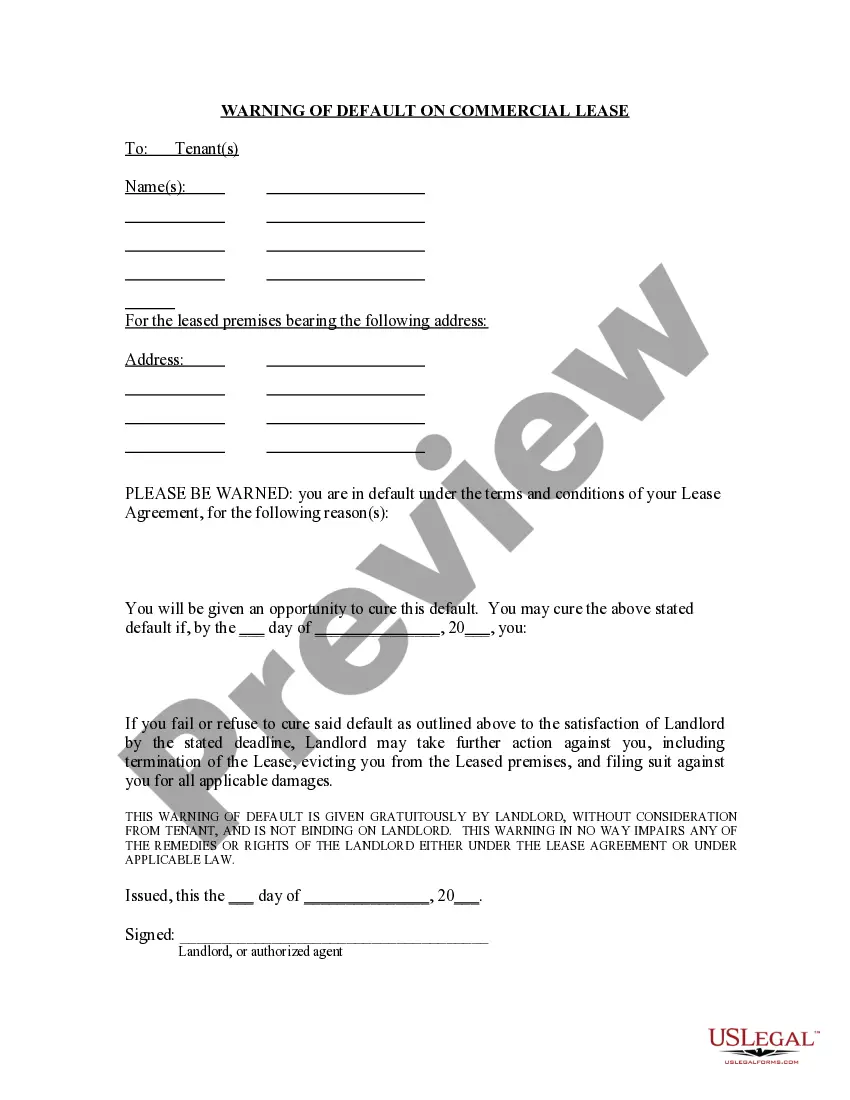
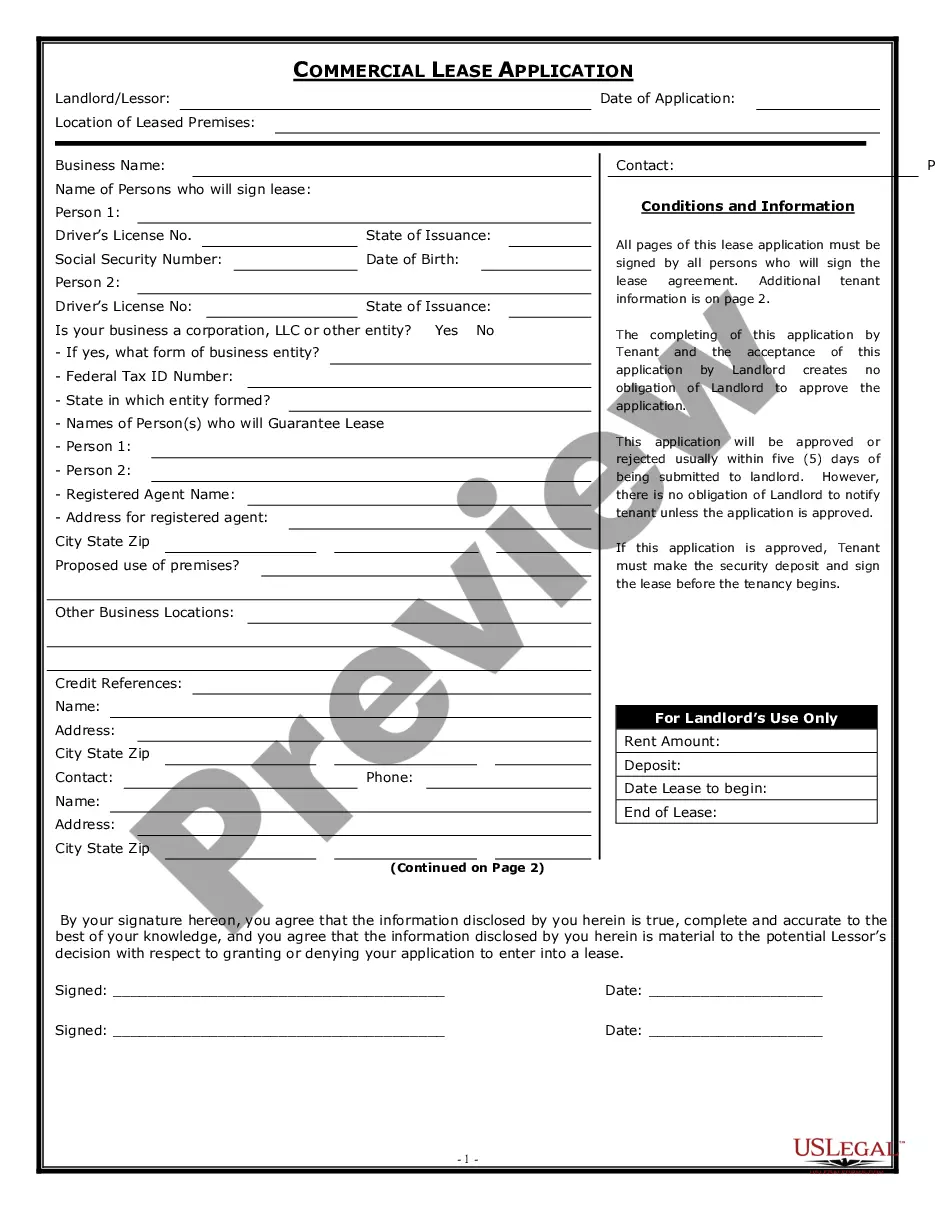
Looking for another form?


Form popularity
FAQ
Zebras are classified in the genus Equus (known as equines) along with horses and asses. These three groups are the only living members of the family Equidae.A 2013 phylogenetic study found that the plains zebra is more closely related to Grevy's zebras than mountain zebras.
Horses are ungulates mammals with hooves. They also have long tails, short hair, muscular torsos, long thick necks and elongated heads. Due to domestication, they are found all over the world. Horses have lived on Earth for more than 50 million years, according the American Museum of Natural History.
The deer (family Cervidae) comprises 43 species of hoofed ruminants in the order Artiodactyla.
Deer or true deer are hoofed ruminant mammals forming the family Cervidae. The two main groups of deer are the Cervinae, including the muntjac, the elk (wapiti), the red deer, the fallow deer, and the chital; and the Capreolinae, including the reindeer (caribou), the roe deer, the mule deer, and the moose.
Horses belong to a group of mammals with an odd number of toes. That rules out mammals with two toes, or "cloven hooves," like goats, pigs, cows, deer, and camels.They include rhinoceroses and tapirs, the horse's closest living relatives.
Vulgar. to have sexual intercourse.
Horses belong to a group of mammals with an odd number of toes. That rules out mammals with two toes, or "cloven hooves," like goats, pigs, cows, deer, and camels.They include rhinoceroses and tapirs, the horse's closest living relatives.
Equine, one of the mammal family of Equidae (order Perissodactyla) that includes the modern horses, zebras, and asses, as well as more than 60 species known only from fossils. North American wild horse (Equus caballus) standing in the sagebrush of the Granite Range, Washoe County, Nevada.