Illinois Mutual Wills containing Last Will and Testaments for Man and Woman living together not Married with No Children
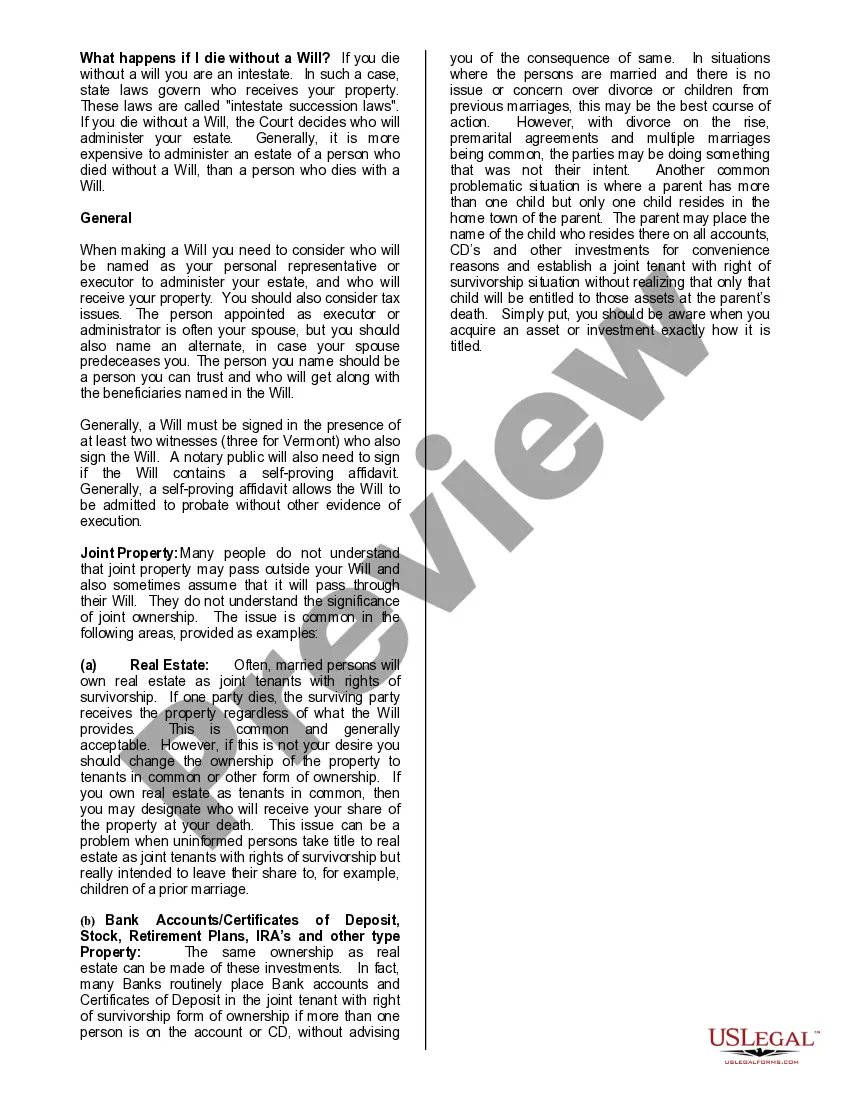
What is this form?
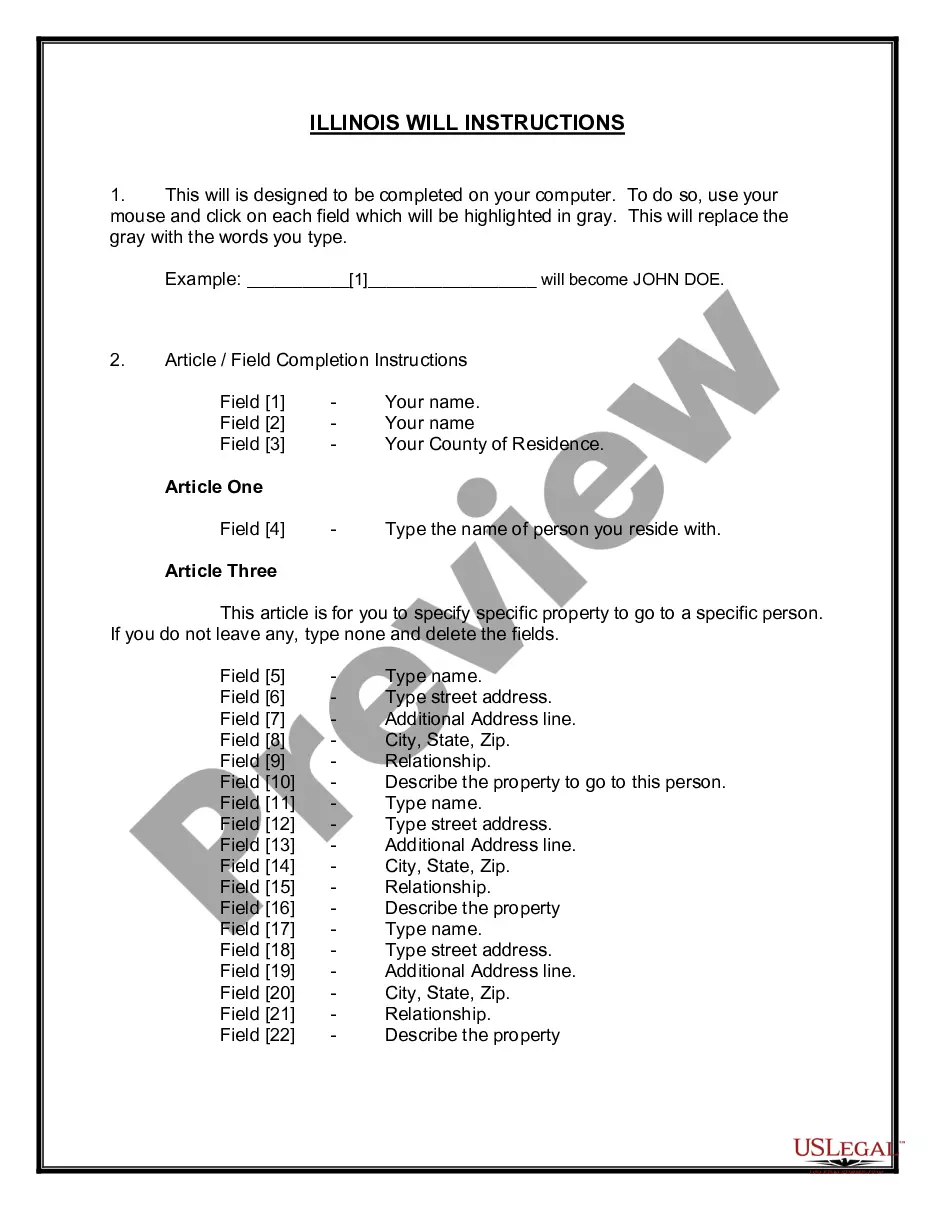
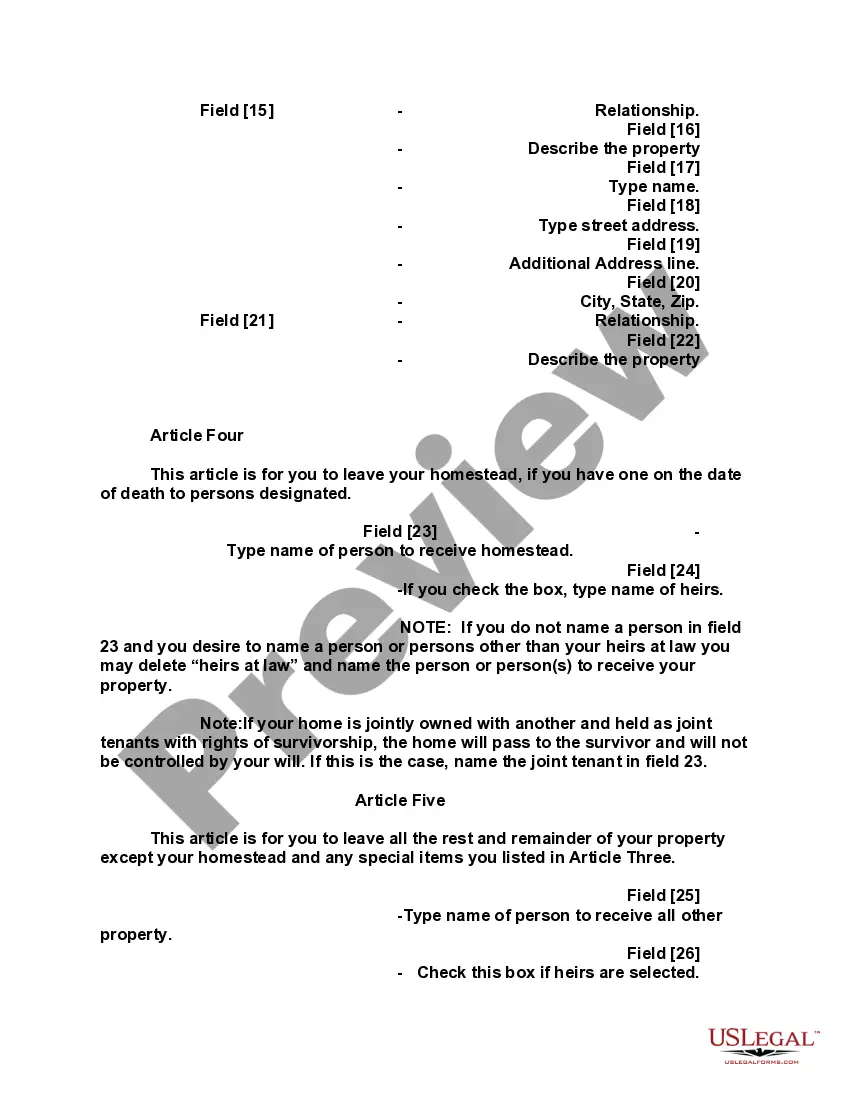
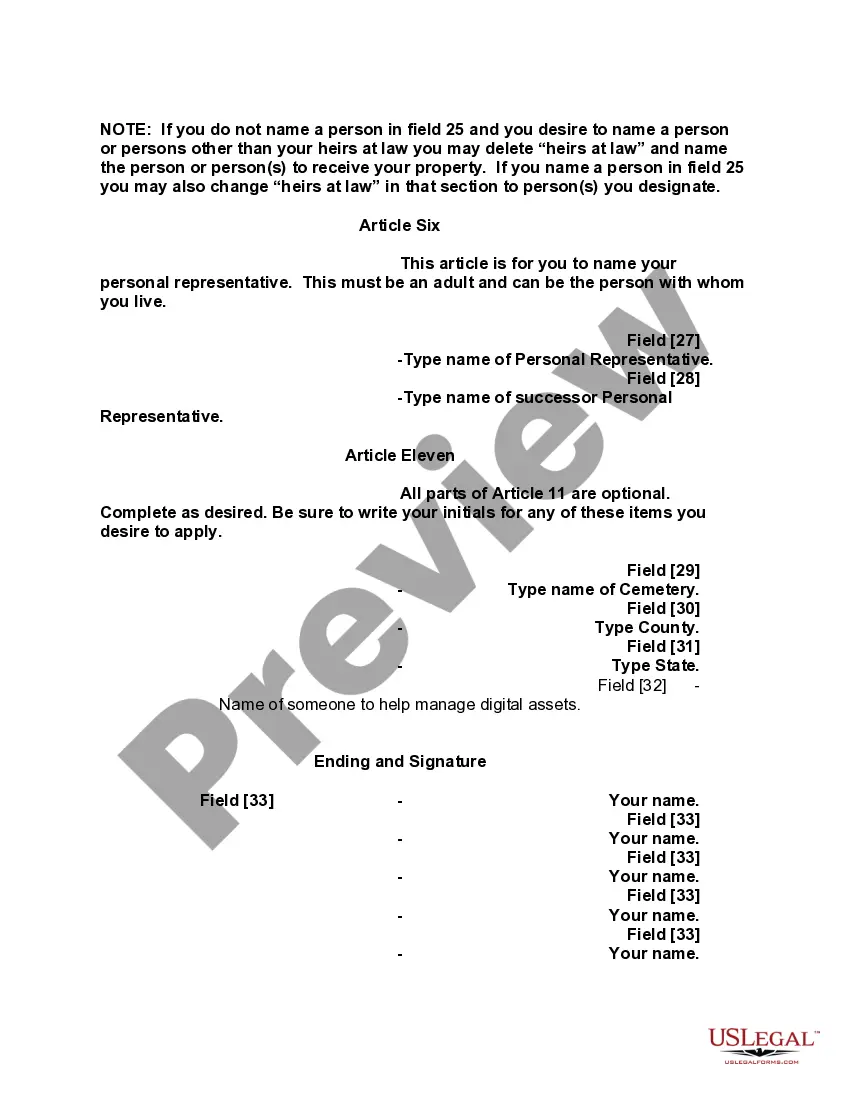
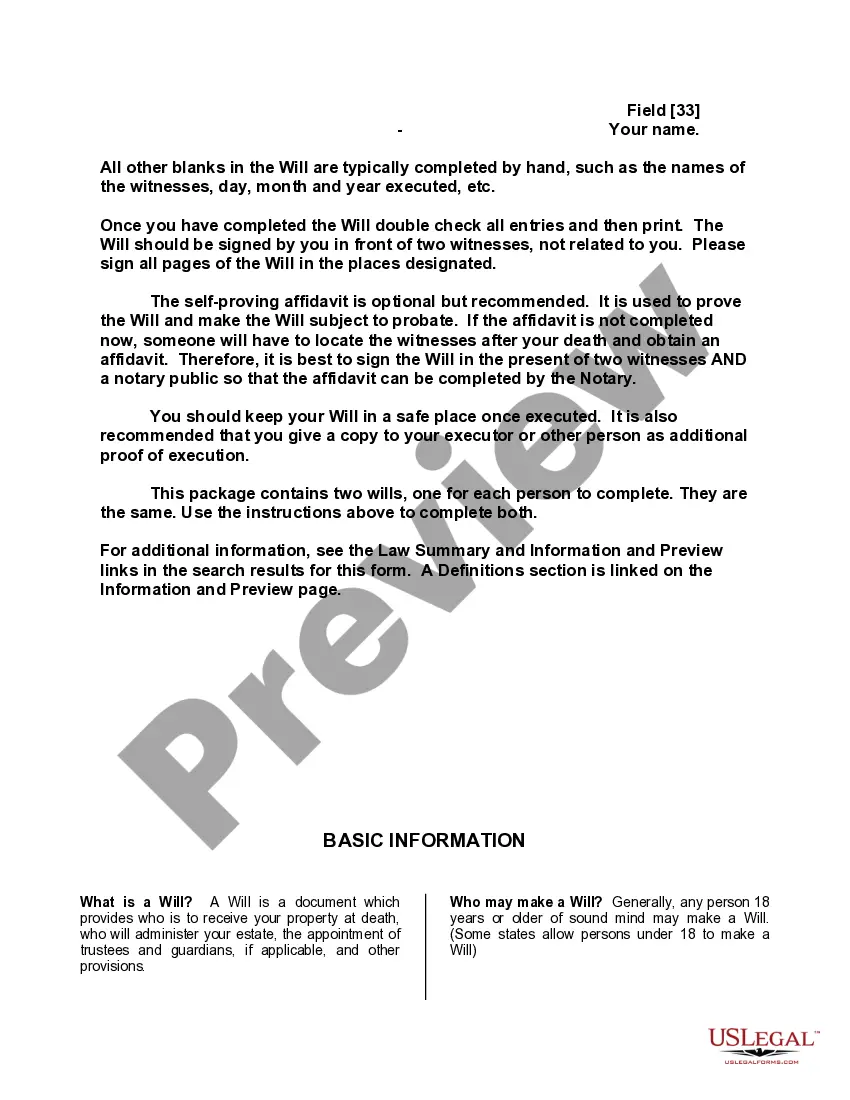
This Mutual Wills package includes Last Will and Testaments specifically designed for a man and woman living together but not married and having no children. This document enables both individuals to express their mutual intentions for property distribution after death, differentiating it from standard wills. State-specific instructions are provided to ensure proper execution.
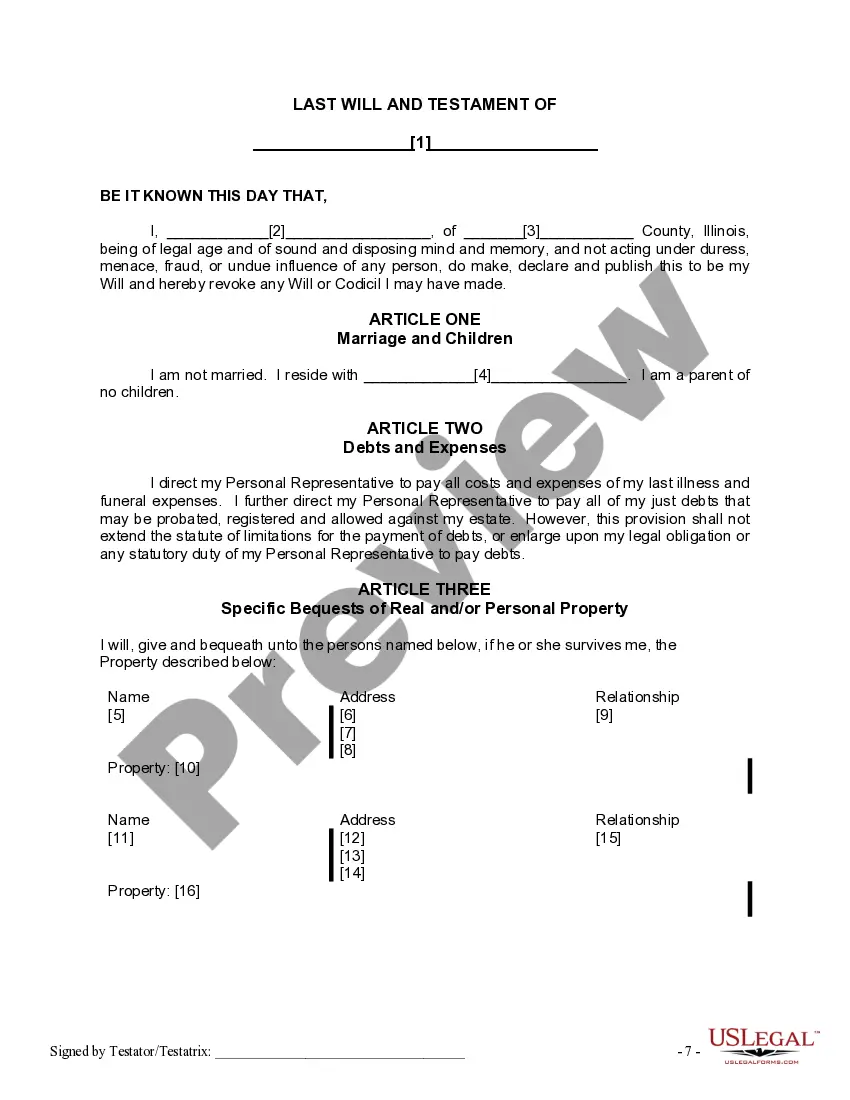
Key parts of this document
- Identification of the testators and their relationship.
- Provisions for payment of debts and funeral expenses.
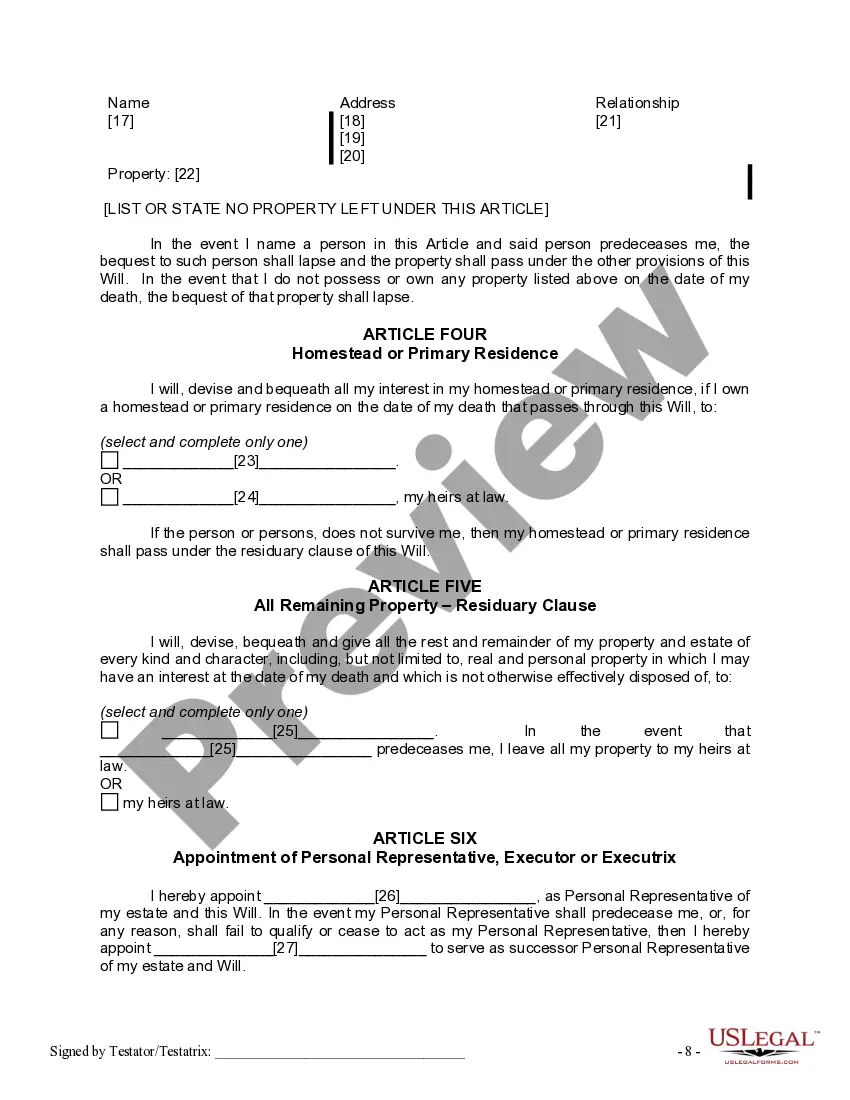
- Specific bequests detailing property distribution to beneficiaries.
- Residuary clause covering any remaining assets not specifically named.
- Appointment of a personal representative to manage the estate.
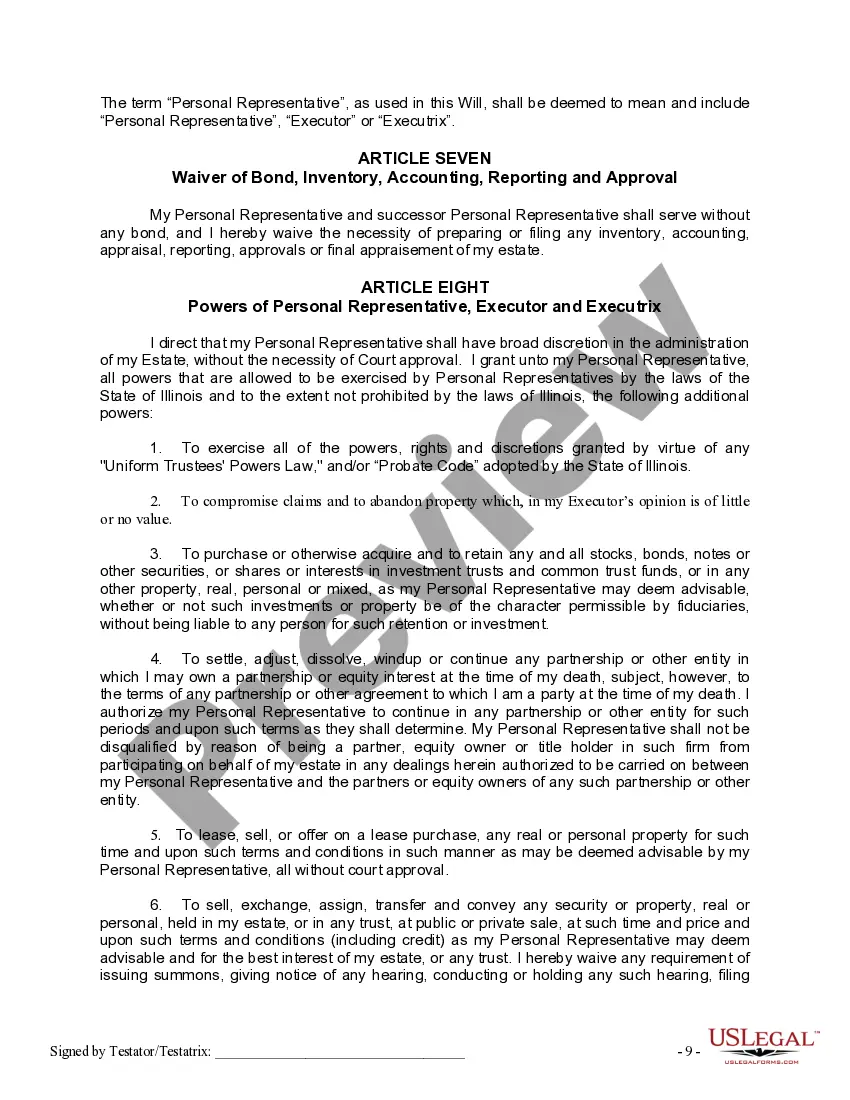
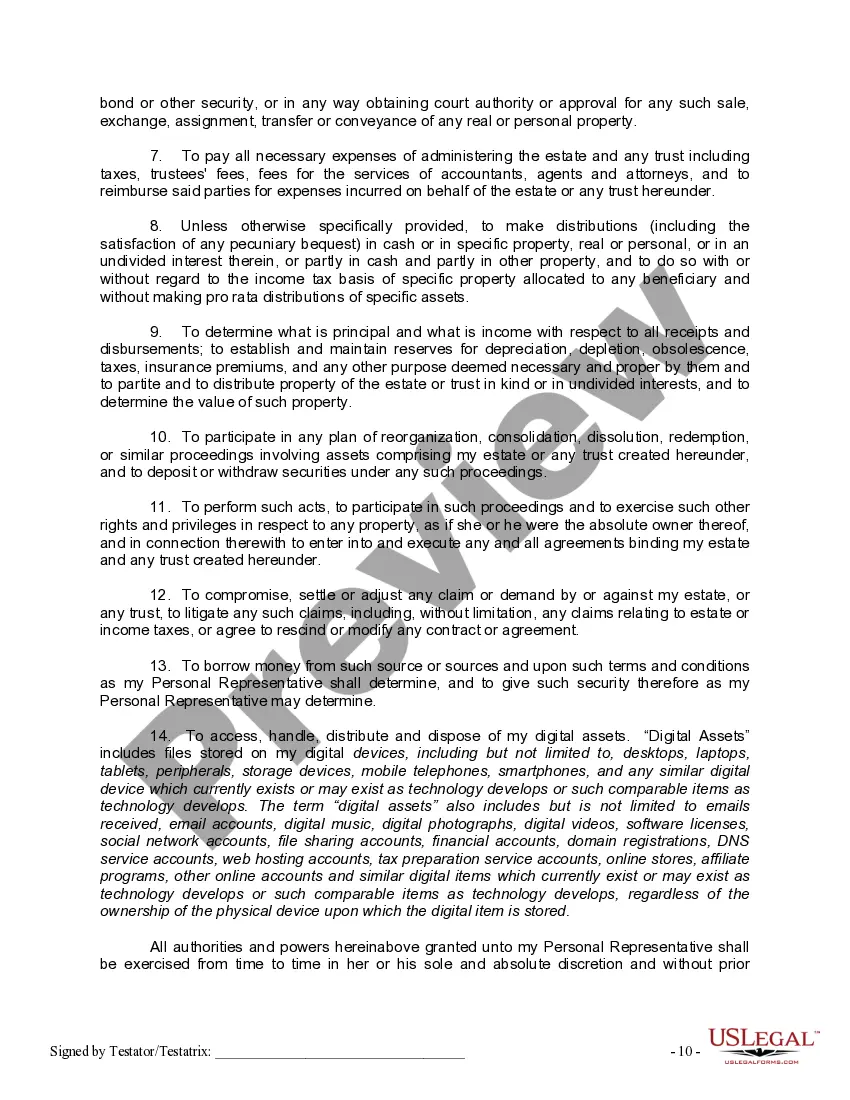
- Legal powers granted to the personal representative for estate administration.
- Instructions for witnessing and notarizing the will.



When to use this form
This form is suitable for couples who may not be legally married but wish to ensure that their assets are transferred to each other upon death. It is also applicable if they want to express specific wishes about their respective estates, thus eliminating potential disputes and fostering clarity among surviving friends or family members.
Who this form is for
- Couples living together without legal marriage.
- Individuals who wish to designate each other as beneficiaries.
- People who do not have children and wish to outline their wishes for property distribution.
Instructions for completing this form
- Clearly identify both individuals along with their relationship.
- Specify assets and property to be bequeathed to each other.
- Designate a personal representative to manage the estate.
- Provide witness signatures as required by state law.
- Consider notarizing the document to enhance legal validity.
Notarization guidance
Yes, this form must be notarized to be legally valid. This ensures authenticity and compliance with state laws. US Legal Forms offers integrated online notarization services available 24/7 through secure video calls, eliminating the need for in-person visits.
Get your form ready online
Our built-in tools help you complete, sign, share, and store your documents in one place.
Make edits, fill in missing information, and update formatting in US Legal Forms—just like you would in MS Word.
Download a copy, print it, send it by email, or mail it via USPS—whatever works best for your next step.
Sign and collect signatures with our SignNow integration. Send to multiple recipients, set reminders, and more. Go Premium to unlock E-Sign.
If this form requires notarization, complete it online through a secure video call—no need to meet a notary in person or wait for an appointment.
We protect your documents and personal data by following strict security and privacy standards.

Make edits, fill in missing information, and update formatting in US Legal Forms—just like you would in MS Word.

Download a copy, print it, send it by email, or mail it via USPS—whatever works best for your next step.

Sign and collect signatures with our SignNow integration. Send to multiple recipients, set reminders, and more. Go Premium to unlock E-Sign.

If this form requires notarization, complete it online through a secure video call—no need to meet a notary in person or wait for an appointment.

We protect your documents and personal data by following strict security and privacy standards.
Mistakes to watch out for
- Failing to have the wills signed in front of the required witnesses.
- Not specifying the exact beneficiaries or property clearly.
- Ignoring state-specific guidelines which could render the will invalid.
- Not updating the wills after significant life changes.
Why use this form online
- Easy editing to fit individual needs without the need for a lawyer.
- Convenient access to legal forms at any time, enhancing flexibility.
- State-specific instructions reduce the risk of errors and ensure compliance.
- Instant download for immediate use in estate planning.
Main things to remember
- This form is essential for individuals living together who wish to designate each other as beneficiaries in their wills.
- Proper execution, including witnessing and notarization, is crucial for the validity of the mutual wills.
- Utilizing this form can simplify estate planning and ensure your wishes are respected.
Looking for another form?

Form popularity
FAQ
However, creating a joint will is still an option in California, and while it might help a couple save some time and money on their estate plan, it can also lead to some complex problems. A couple who creates a joint will can usually only revoke or change the will together. One spouse cannot do it alone.
If each spouse has their own Will, California law allows them to make new Wills after the divorce has been filed and creating the new Will does not violate the Automatic Temporary Restraining Order (ATRO) against changing beneficiaries, selling assets, etc. during a California divorce.
As per the law, the joint assets are owned by both individuals hence both individuals i.e. husband & wife should make a Will either two separate Wills or one single Joint Will.Hence Joint Will is ideal for couple having same wishes for their succession planning.
The Supreme Court explained that a joint Will is a Will made by two or more testators contained in a single document, duly executed by each testator, disposing either their separate properties or their joint property.
The reality is, however, that both you and your spouse should each have your own will, and it should be planned as soon as possible. Some couples think that they can have one joint will together, but this is not a sound approach.
Fraud or Undue Influence A nonfamily caregiver forcing the testator to leave them an inheritance. A family member getting the testator to sign a will by pretending it is just a general legal document that needs a signature.
A will can also be declared invalid if someone proves in court that it was procured by undue influence. This usually involves some evil-doer who occupies a position of trust -- for example, a caregiver or adult child -- manipulating a vulnerable person to leave all, or most, of his property to the manipulator instead
An adult can make a valid will without notifying their wife or husband. Not telling a spouse would be unusual, but not illegal.
A joint will is a legal document executed by two (or more) people, which merges their individual wills into a single, combined last will and testament. Like most wills, a joint will lets the will-makers name who will get their property and assets after they die. Joint wills are usually created by married couples.