Illinois Letter from Landlord to Tenant as Notice to Tenant of Tenant's Disturbance of Neighbors' Peaceful Enjoyment to Remedy or Lease Terminates
Understanding this form
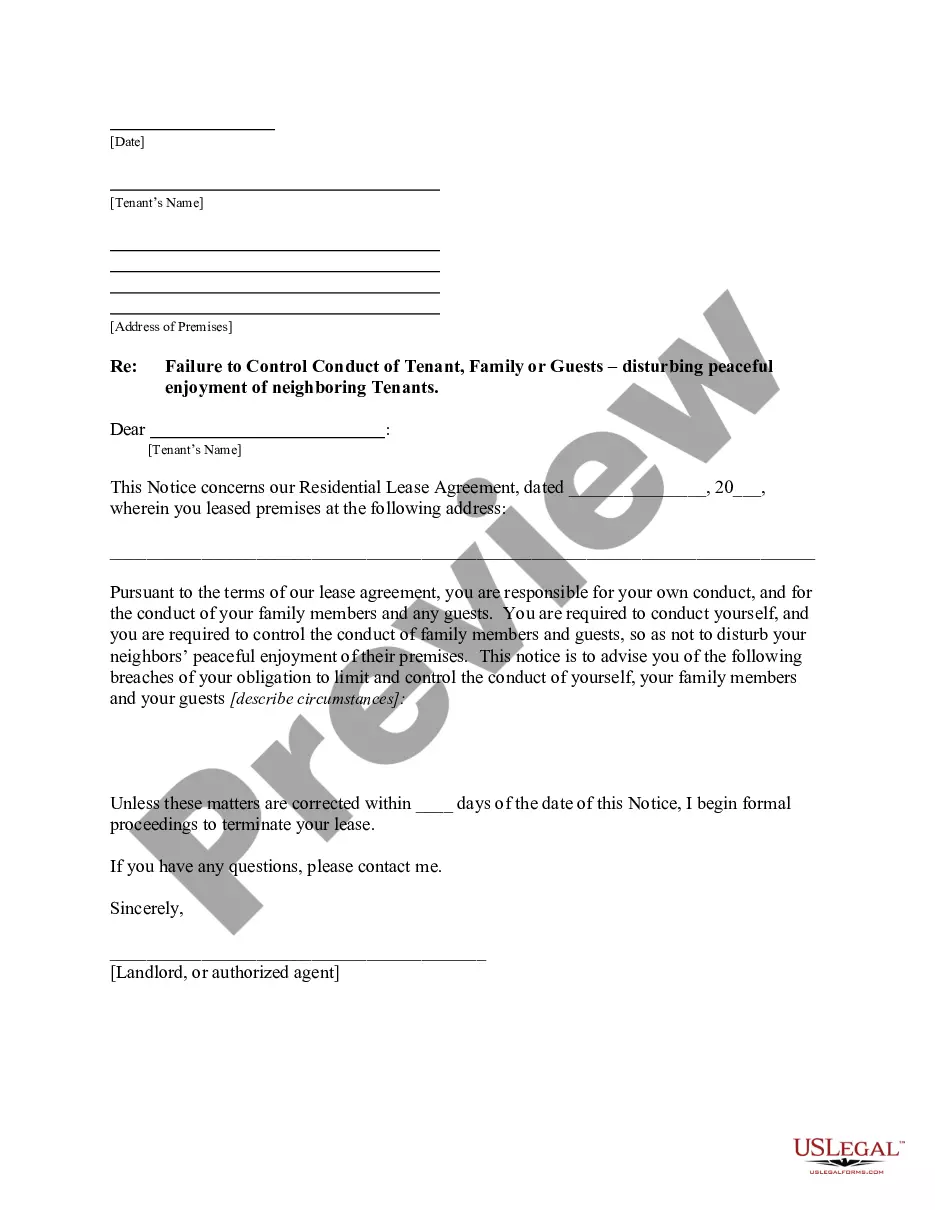
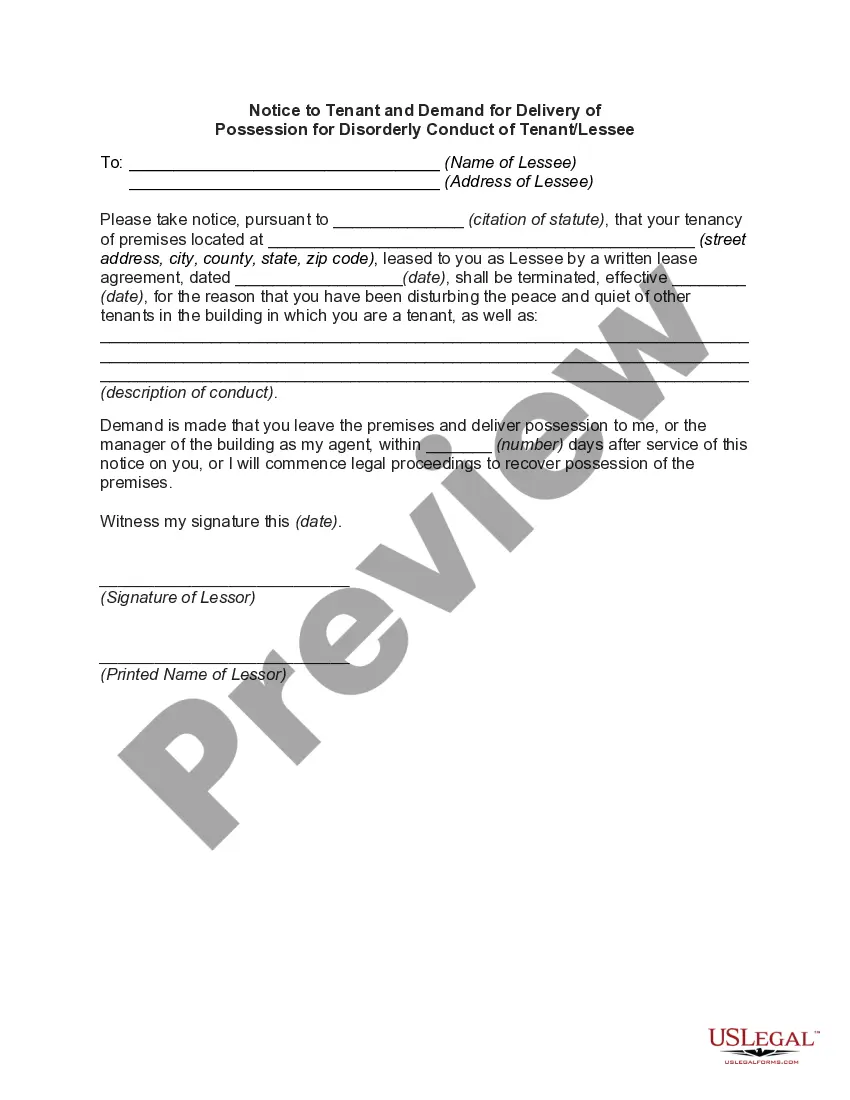
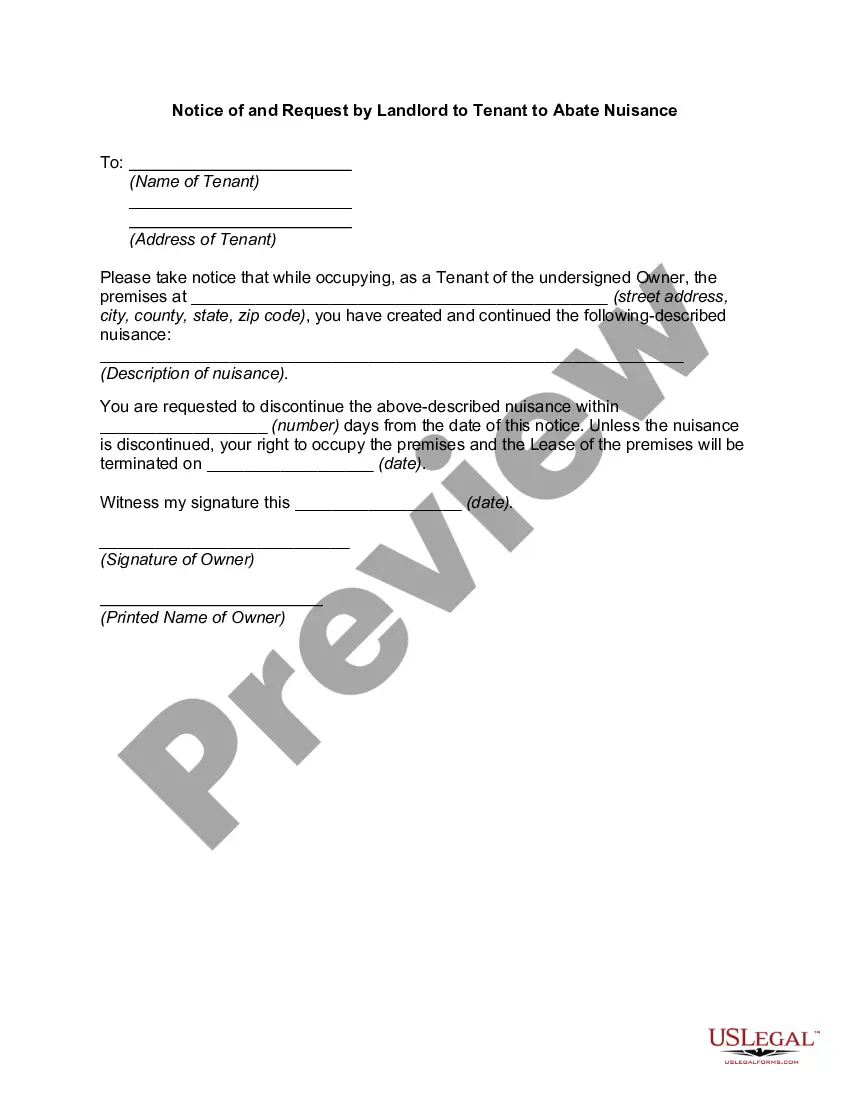
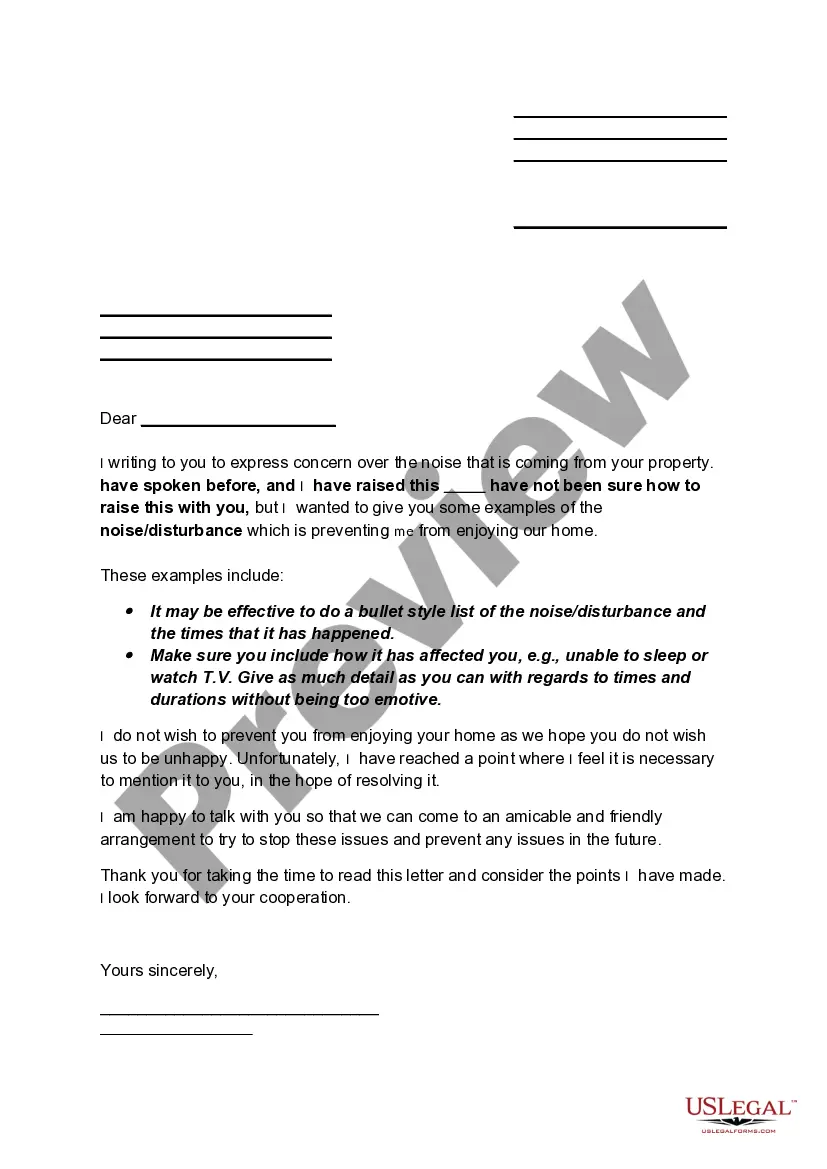
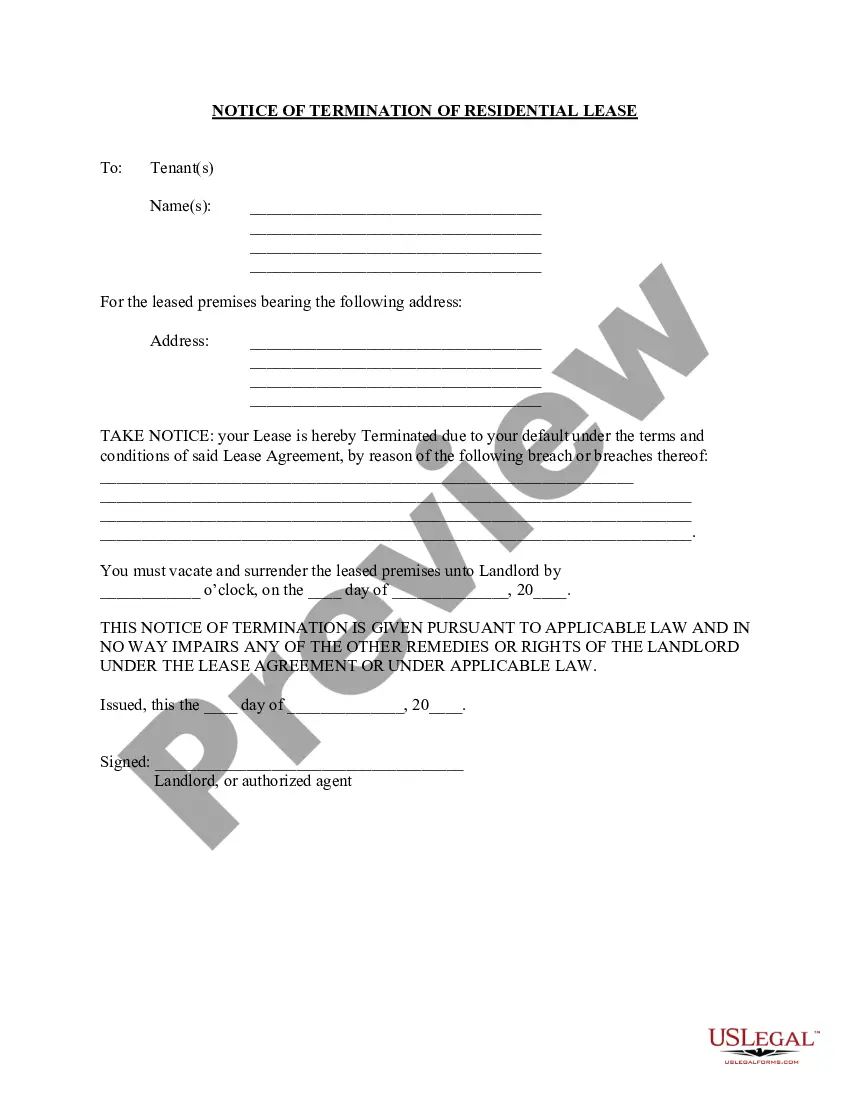
This form is a Letter from Landlord to Tenant as Notice to Tenant of Tenant's Disturbance of Neighbors' Peaceful Enjoyment to Remedy or Lease Terminates. It serves as a formal notification from the landlord to the tenant about their failure to maintain the peaceful environment of the property. The purpose of this notice is to address breaches related to quiet enjoyment, which is the tenant's right to enjoy their living space without disturbances. This form differs from other tenant notices by focusing specifically on the impact a tenant's actions have on neighboring properties.
Main sections of this form
- The name and contact information of the landlord or authorized agent.
- The tenant's name and address.
- A clear statement of the disturbances that have occurred.
- A request for the tenant to remedy the situation or face lease termination.
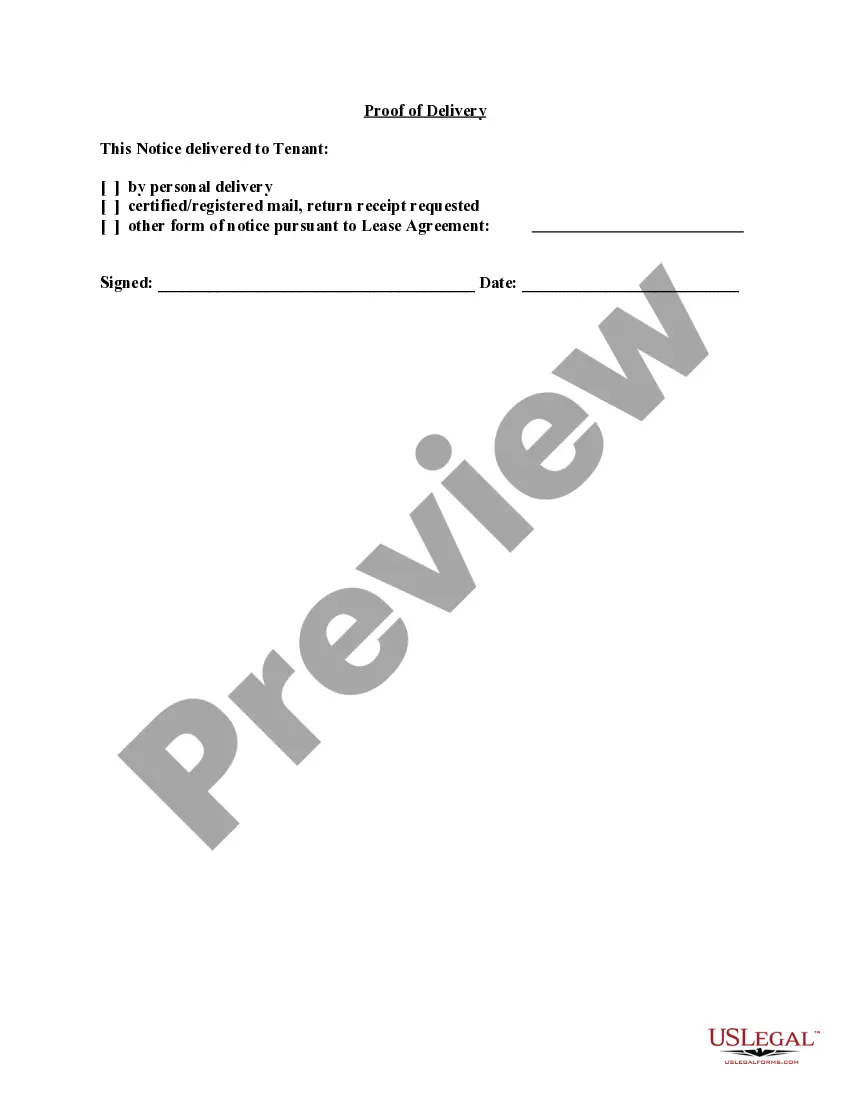
- Proof of delivery options to ensure the notice was received.

Situations where this form applies
Who this form is for
This form is intended for:
- Landlords who want to formally notify a tenant of breaches related to disturbances.
- Property managers acting on behalf of property owners.
- Legal representatives assisting landlords in managing tenant relations.
Completing this form step by step
- Identify the landlord or authorized agent by entering their name and contact information at the top of the notice.
- Enter the tenant's name and address in the designated fields.
- Clearly outline the nature of the disturbance and how it affects the peaceful enjoyment of the neighbors.
- Include instructions on what actions the tenant must take to remedy the situation or face lease termination.
- Choose the method of delivery for the notice and sign it to validate the form.
Is notarization required?
This form does not typically require notarization to be legally valid. However, some jurisdictions or document types may still require it. US Legal Forms provides secure online notarization powered by Notarize, available 24/7 for added convenience.
Get your form ready online
Our built-in tools help you complete, sign, share, and store your documents in one place.
Make edits, fill in missing information, and update formatting in US Legal Forms—just like you would in MS Word.
Download a copy, print it, send it by email, or mail it via USPS—whatever works best for your next step.
Sign and collect signatures with our SignNow integration. Send to multiple recipients, set reminders, and more. Go Premium to unlock E-Sign.
If this form requires notarization, complete it online through a secure video call—no need to meet a notary in person or wait for an appointment.
We protect your documents and personal data by following strict security and privacy standards.

Make edits, fill in missing information, and update formatting in US Legal Forms—just like you would in MS Word.

Download a copy, print it, send it by email, or mail it via USPS—whatever works best for your next step.

Sign and collect signatures with our SignNow integration. Send to multiple recipients, set reminders, and more. Go Premium to unlock E-Sign.

If this form requires notarization, complete it online through a secure video call—no need to meet a notary in person or wait for an appointment.

We protect your documents and personal data by following strict security and privacy standards.
Mistakes to watch out for
- Failing to document specific incidents of disturbance.
- Not including proper identification of all parties involved.
- Inadequate details on the requirements for remedying the disturbance.
- Neglecting to retain proof of delivery for legal records.
Benefits of using this form online
- Easy access to professionally drafted legal documents.
- Can be downloaded and customized to fit specific situations.
- Ensures compliance with legal standards, reducing the risk of errors.
- Provides convenience by allowing users to fill out forms at their own pace.
Legal use & context
- The form serves to inform tenants about their responsibilities regarding peaceful enjoyment.
- Failure to respond appropriately may lead to lease termination or legal action.
- The notice helps mitigate disputes by formally documenting grievances.
Quick recap
- This form is essential for landlords to address tenant disturbances legally.
- It outlines clear expectations for tenants to correct their behavior.
- Proper use of this notice can help maintain peace and prevent further legal issues.
Looking for another form?
Form popularity
FAQ
The covenant of quiet enjoyment states that a tenant has the right to enjoy his or her rental unit without substantial interference from the landlord. It ensures that tenants benefit from the full use and enjoyment of their rental unit.
Typical quiet hours are 11 p.m. to 7 or 8 a.m. on weekdays and 11 p.m. or midnight to 8, 9, or 10 a.m. on weekends and holidays. The quiet enjoyment clause for your apartment community may have tighter hours than your city ordinances to maintain a pleasant atmosphere for all residents.
Under common law tenants have a right to 'quiet enjoyment' of the property. This is an implied term, or covenant, which has been expressed or implied in conveyances and leases of English land for centuries.'Quiet enjoyment' is a term so often misunderstood.
According to Nolo, quiet enjoyment is The right of a property owner or tenant to enjoy his or her property without interference. Disruption of quiet enjoyment may constitute a legal nuisance.
It means with no interference from another party. Each sale carries the implication that it can be owned without any interference.
A covenant of quiet enjoyment insures an owner or tenant against a disturbance of his or her right to possess or use property. For example, a covenant of quiet enjoyment could prevent a tenant from being evicted by a person with superior title. Also called covenant for quiet enjoyment.
A Covenant that promises that the grantee or tenant of an estate in real property will be able to possess the premises in peace, without disturbance by hostile claimants. Quiet enjoyment is a right to the undisturbed use and enjoyment of real property by a tenant or landowner.
Dear (Name of landlord or manager), This letter constitutes my written (number of days' notice that you need to give based on your lease agreement)-day notice that I will be moving out of my apartment on (date), the end of my current lease. I am leaving because (new job, rent increase, etc.)