Illinois Warranty Deed from Corporation to Husband and Wife
About this form
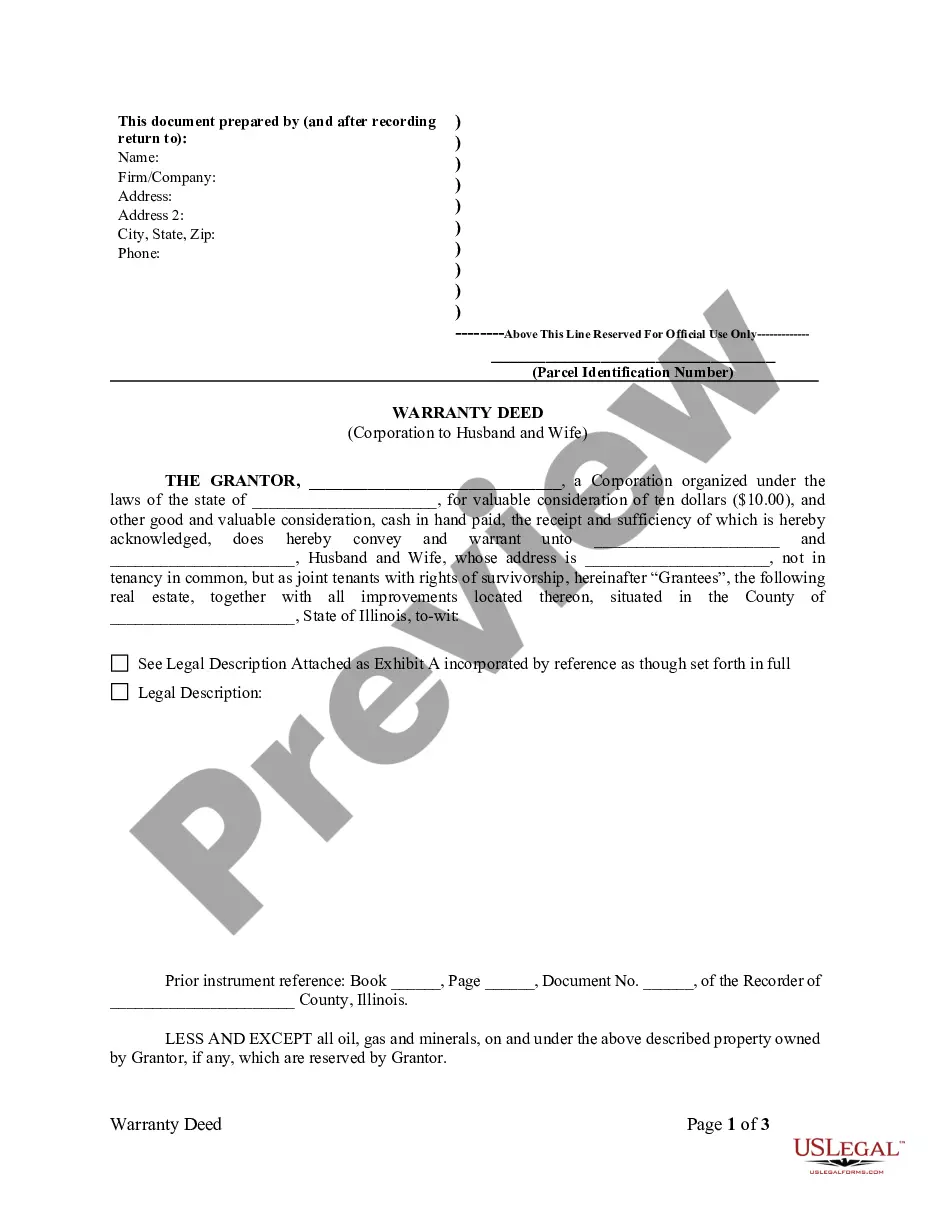
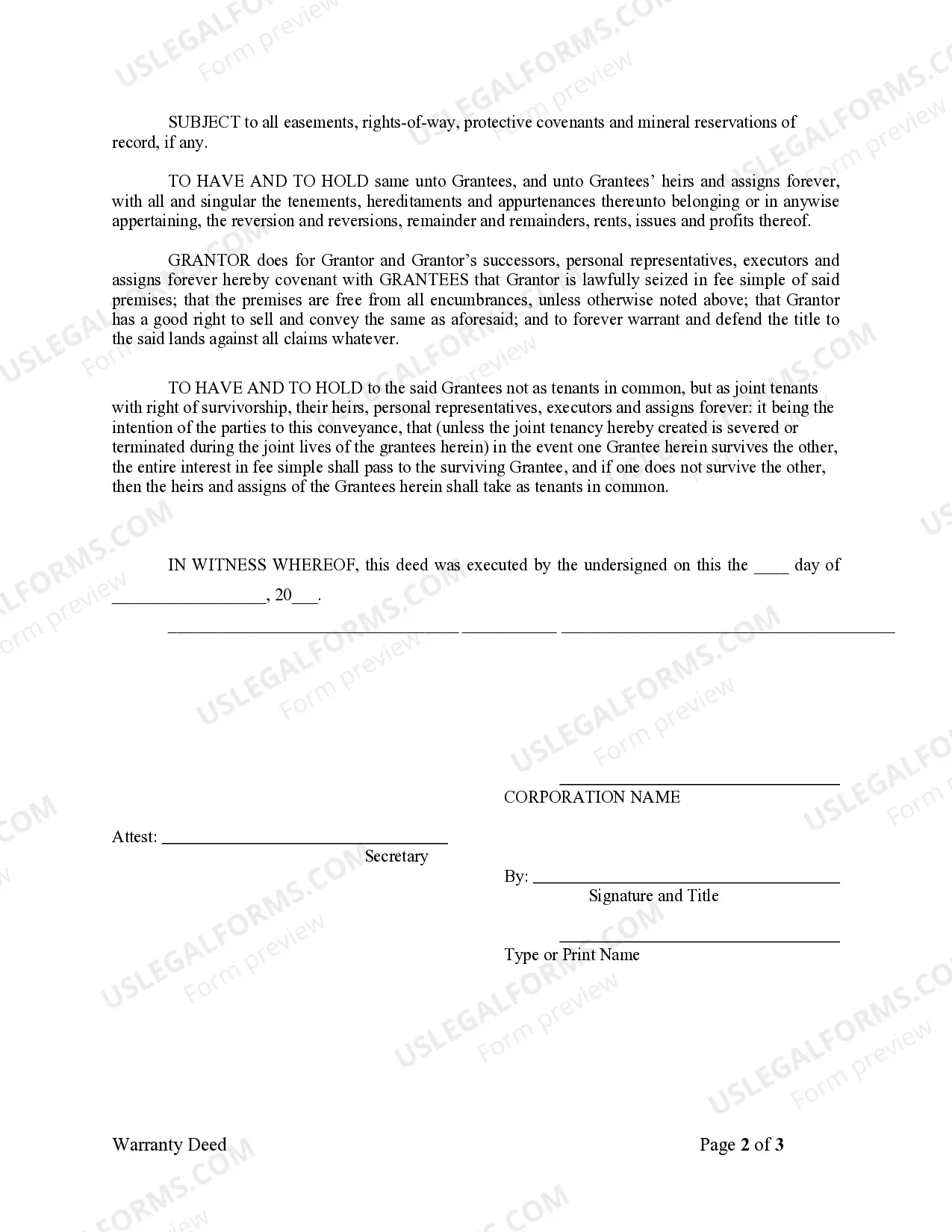
The Warranty Deed from Corporation to Husband and Wife is a legal document used to transfer ownership of real estate from a corporation to a married couple. This form ensures that the corporation (the Grantor) conveys the property securely, while detailing that certain rights, such as oil, gas, and mineral rights, are not included in the transfer. This form is essential for couples acquiring property through a corporation, distinguishing it from other types of deeds that may not specify corporate grantors or reservations.
Form components explained
- Identification of the Grantor (corporation) and Grantees (husband and wife).
- Legal description of the property being transferred.
- Reservation of rights for oil, gas, and minerals by the Grantor.
- Covenant by the Grantor assuring the title is free of encumbrances.
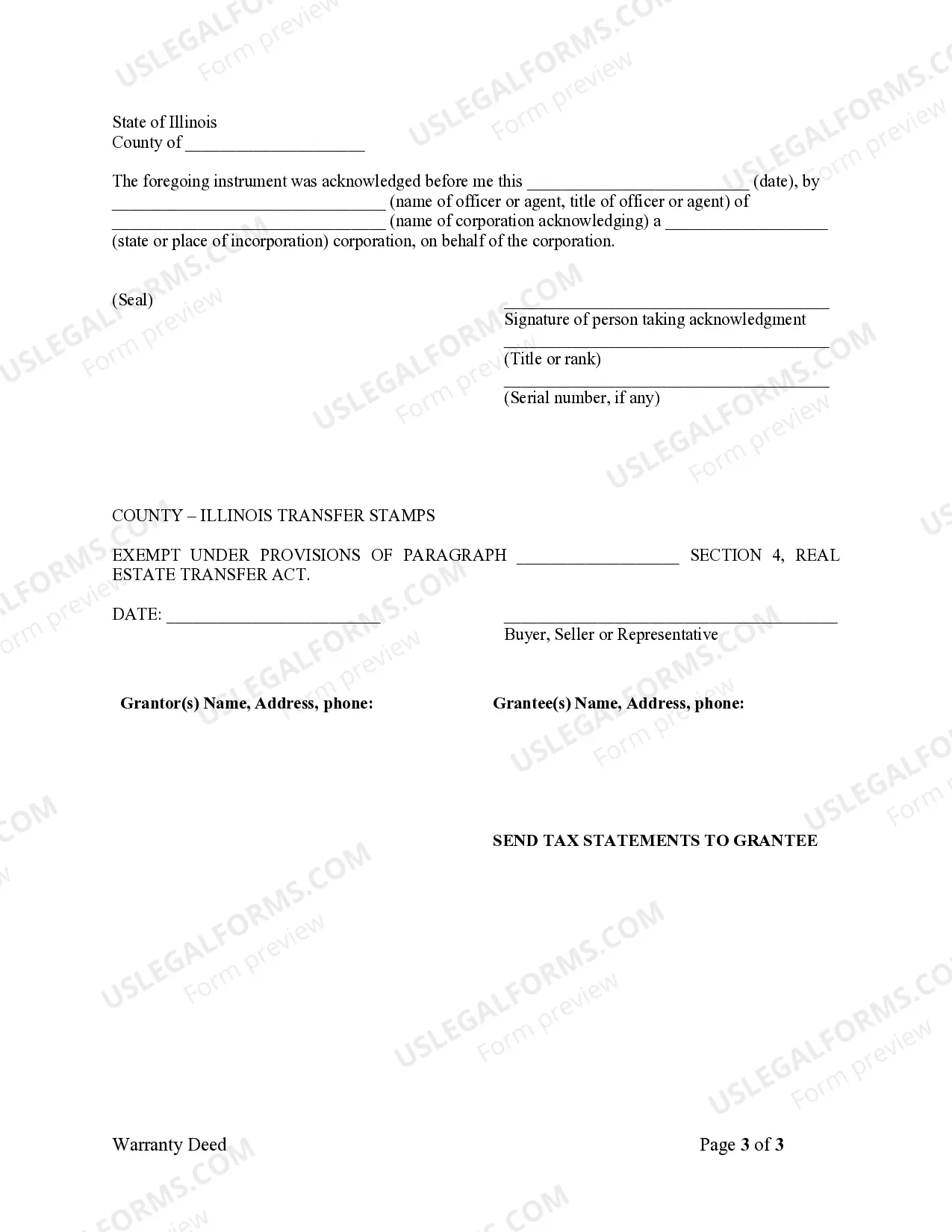
- Notarization section for legal validity.




Common use cases
This form is particularly useful when a corporation is transferring property ownership to a married couple. Scenarios include purchasing a home or land where the corporation was the previous owner or when estate planning involves property held by a corporation that needs to be distributed to spouses.
Who needs this form
This form is ideal for:
- Married couples looking to acquire property from a corporation.
- Corporations that want to transfer real estate to their employees or executives who are married.
- Individuals involved in estate planning or property gifting where a corporation is involved.
How to complete this form
- Identify the Grantor (the corporation) and the Grantees (husband and wife).
- Include a legal description of the property being transferred, often attached as Exhibit A.
- Specify any reservations, such as oil, gas, and mineral rights, that are not included in the transfer.
- Sign and date the form in the presence of a notary public.
- Ensure that all parties understand the terms and conditions included in the deed.
Is notarization required?
Notarization is required for this form to take effect. Our online notarization service, powered by Notarize, lets you verify and sign documents remotely through an encrypted video session, available 24/7.
Get your form ready online
Our built-in tools help you complete, sign, share, and store your documents in one place.
Make edits, fill in missing information, and update formatting in US Legal Forms—just like you would in MS Word.
Download a copy, print it, send it by email, or mail it via USPS—whatever works best for your next step.
Sign and collect signatures with our SignNow integration. Send to multiple recipients, set reminders, and more. Go Premium to unlock E-Sign.
If this form requires notarization, complete it online through a secure video call—no need to meet a notary in person or wait for an appointment.
We protect your documents and personal data by following strict security and privacy standards.

Make edits, fill in missing information, and update formatting in US Legal Forms—just like you would in MS Word.

Download a copy, print it, send it by email, or mail it via USPS—whatever works best for your next step.

Sign and collect signatures with our SignNow integration. Send to multiple recipients, set reminders, and more. Go Premium to unlock E-Sign.

If this form requires notarization, complete it online through a secure video call—no need to meet a notary in person or wait for an appointment.

We protect your documents and personal data by following strict security and privacy standards.
Common mistakes
- Failing to provide a complete and accurate legal description of the property.
- Not properly reserving rights for oil, gas, and minerals when applicable.
- Neglecting to notarize the deed, which is crucial for validity.
- Leaving out any required signatures from all parties involved.
Why use this form online
- Convenience of immediate access to the form for direct download.
- Editability allows customization to fit specific needs without legal jargon barriers.
- Reliability, as the forms are drafted by licensed attorneys ensuring legal compliance.
Legal use & context
- This warranty deed provides a guarantee from the Grantor regarding the title to the property.
- The Grantees receive full ownership rights, subject to specified exceptions.
- Proper execution of this deed ensures clear title transfer, minimizing future legal disputes.
Quick recap
- The Warranty Deed from Corporation to Husband and Wife is specifically designed for property transfers between corporations and married couples.
- Reservations regarding mineral rights should be clearly stated to avoid misunderstandings.
- Notarization is essential for the legal validity of the deed.
- Careful completion of the form prevents common errors that could affect the transfer process.
Looking for another form?
Form popularity
FAQ
Yes, when a corporation transfers ownership of property, the deed must be signed by the authorized representatives of the corporation. This step is vital to ensure that the Illinois Warranty Deed from Corporation to Husband and Wife is valid and enforceable. Properly executed signatures prevent potential legal disputes regarding ownership or authority.
In Illinois, a special warranty deed transfers title in fee simple to the grantee with warranties and covenants of title that are limited to only the acts of the grantor or that result from the acts of the grantor and is the form of deed customarily used in commercial real estate transactions.
If you live in a common-law state, you can keep your spouse's name off the title the document that says who owns the property.You can put your spouse on the title without putting them on the mortgage; this would mean that they share ownership of the home but aren't legally responsible for making mortgage payments.
Retrieve your original deed. Get the appropriate deed form. Draft the deed. Sign the deed before a notary. Record the deed with the county recorder. Obtain the new original deed.
Yes you can. This is called a transfer of equity but you will need the permission of your lender. If you are not married or in a civil partnership you may wish to consider creating a deed of trust and a living together agreement which we can explain to you.
One of the most common ways property owners add spouses to real estate titles is by using quitclaim deeds. Once completed and filed, quitclaim deed forms effectually transfer a share of ownership from the owners, or grantors, to their spouses, or the grantees.
Locate the most recent deed to the property. Create the new deed. Sign and notarize the new deed. Record the deed in the Illinois land records.
The first common requirement is that the deed must be in writing and signed by the grantor(s). 765 ILCS 5/1. Generally, deeds conveying a homestead estate must also be signed by the grantor's spouse, except where one spouse conveys to the other. A few other exceptions to this rule are set forth at 735 ILCS 5/12-904.
The easiest way to grant your spouse title to your home is via a quitclaim deed (Californians generally use an interspousal grant deed). With a quitclaim deed, you can name your spouse as the property's joint owner. The quitclaim deed must include the property's description, including its boundary lines.
When it comes to reasons why you shouldn't add your new spouse to the Deed, the answer is simple divorce and equitable distribution. If you choose not to put your spouse on the Deed and the two of you divorce, the entire value of the home is not subject to equitable distribution.