Idaho Living Trust for Individual Who is Single, Divorced or Widow or Widower with No Children
Understanding this form
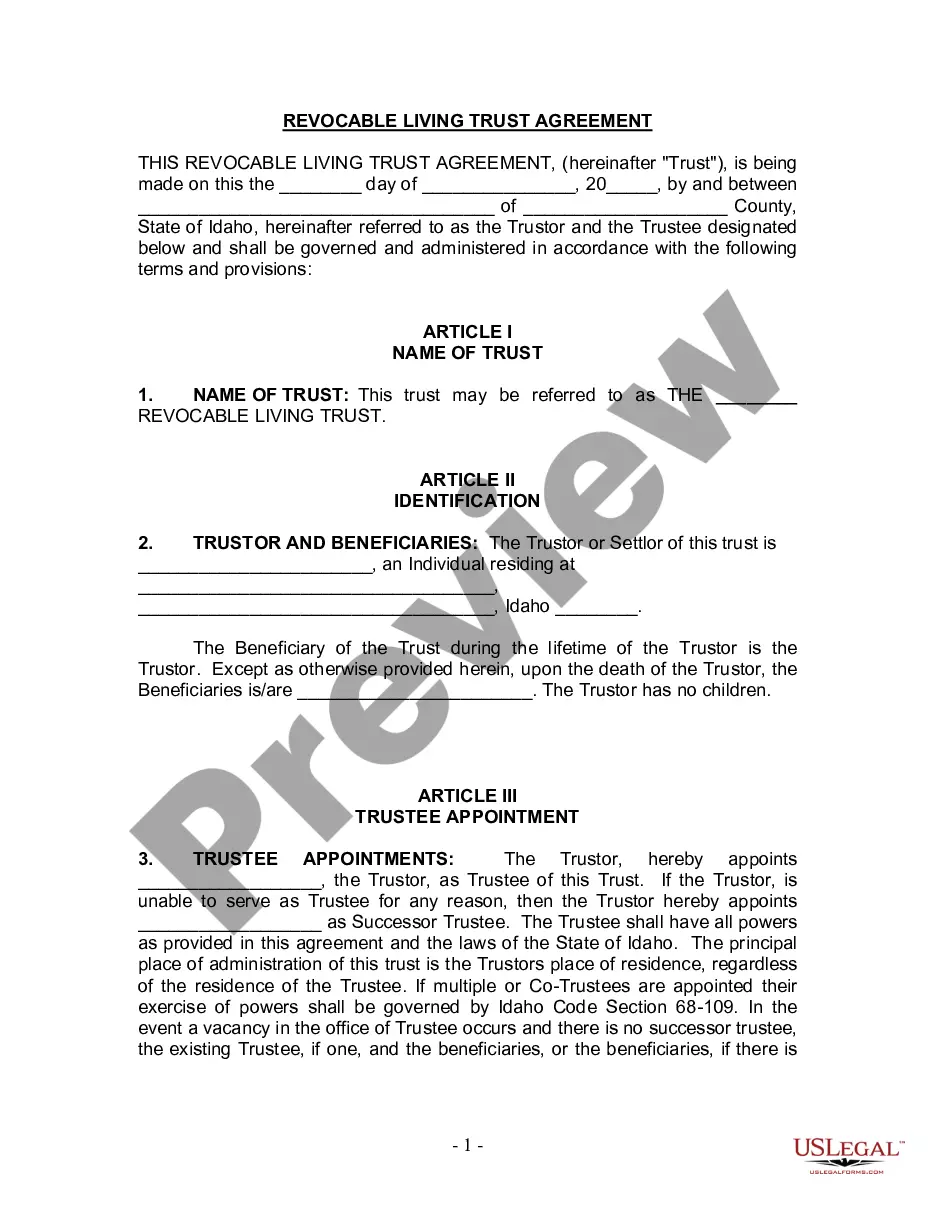
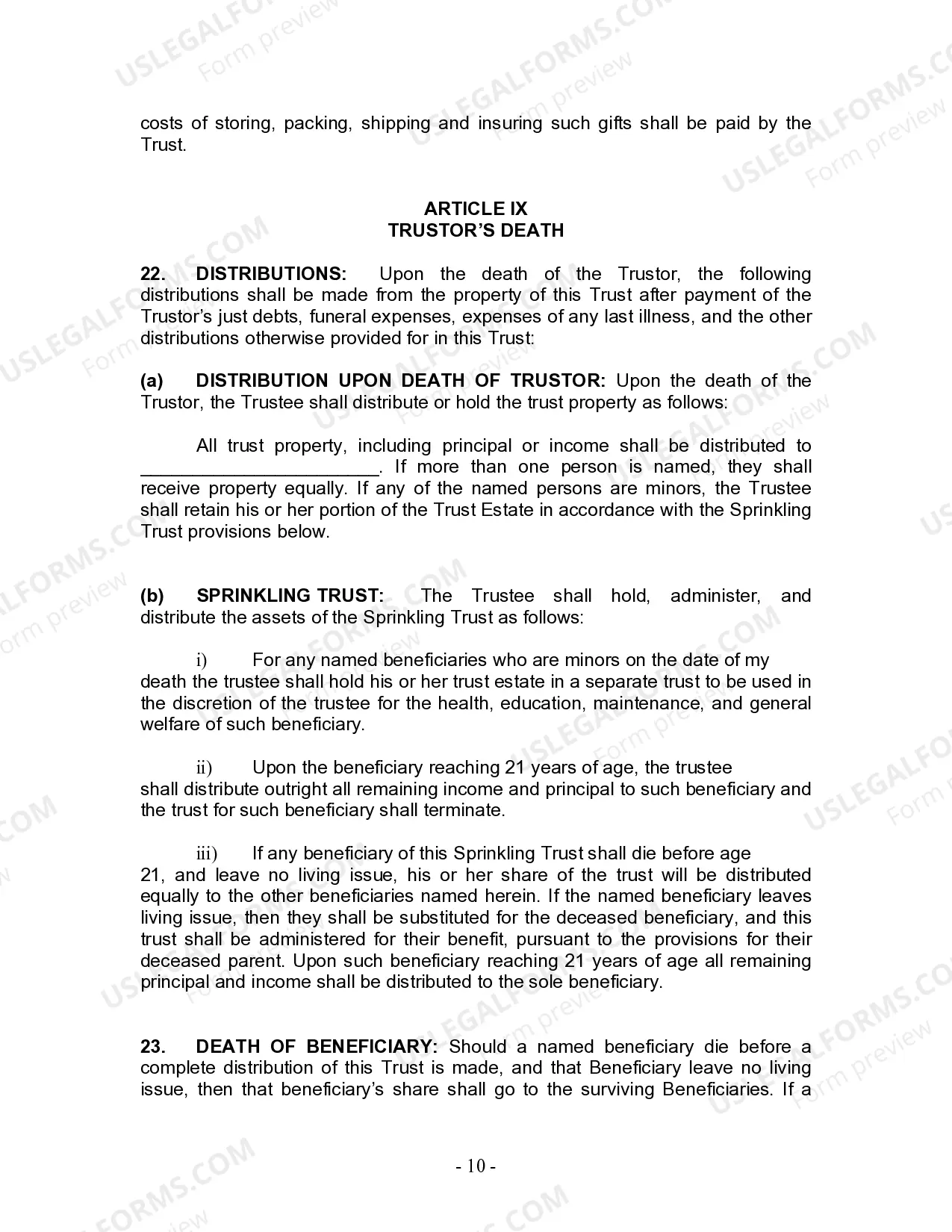
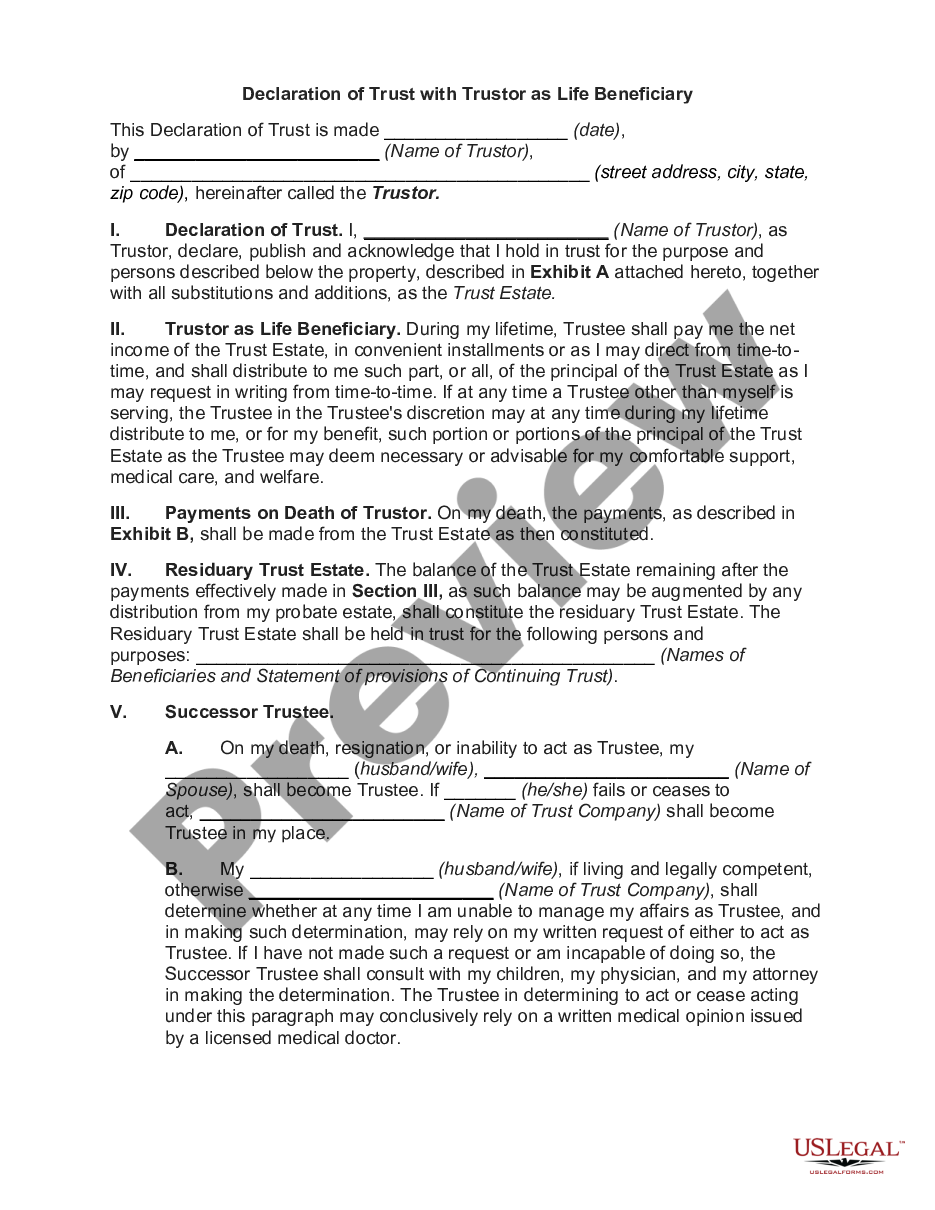
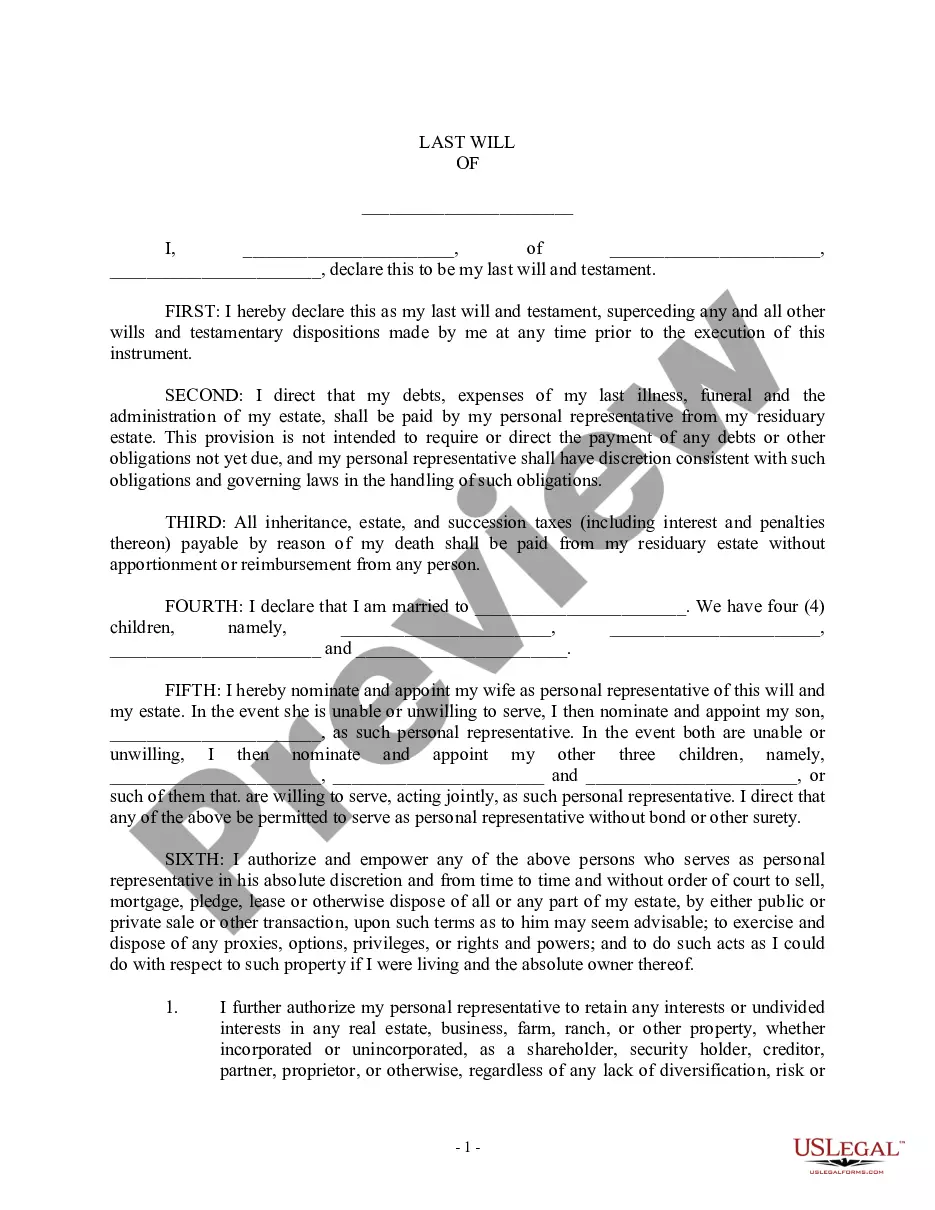
This Living Trust for an Individual Who is Single, Divorced, or a Widow or Widower with No Children is a legal document that helps manage your assets during your lifetime and provides a clear plan for their distribution after death. Unlike a Will, a living trust allows for quicker transfer of assets upon death without the need for probate, thereby simplifying the estate process. This trust is specifically tailored for individuals without children who wish to designate how their properties are to be managed and to whom they are to be passed on after their death.
Main sections of this form
- Name of the trust: Defines how the trust will be referred to.
- Identification of the trustor: Includes the name and residence of the individual establishing the trust.
- Trustee appointment: Allows the trustor to select themselves or another individual as trustee.
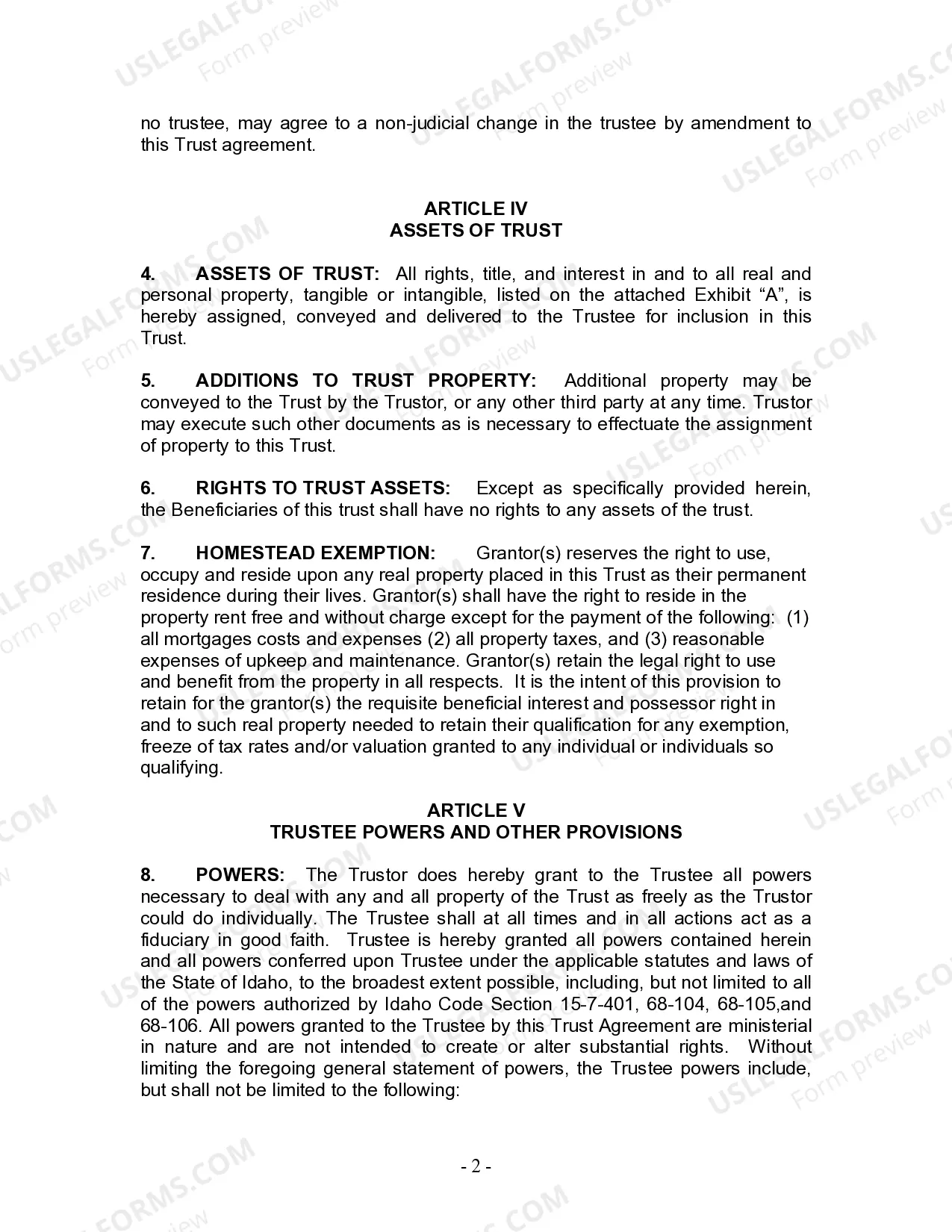
- Assets: Specifies what assets are included in the trust and their management.
- Distribution plan: Outlines how assets will be distributed upon the trustor's death.
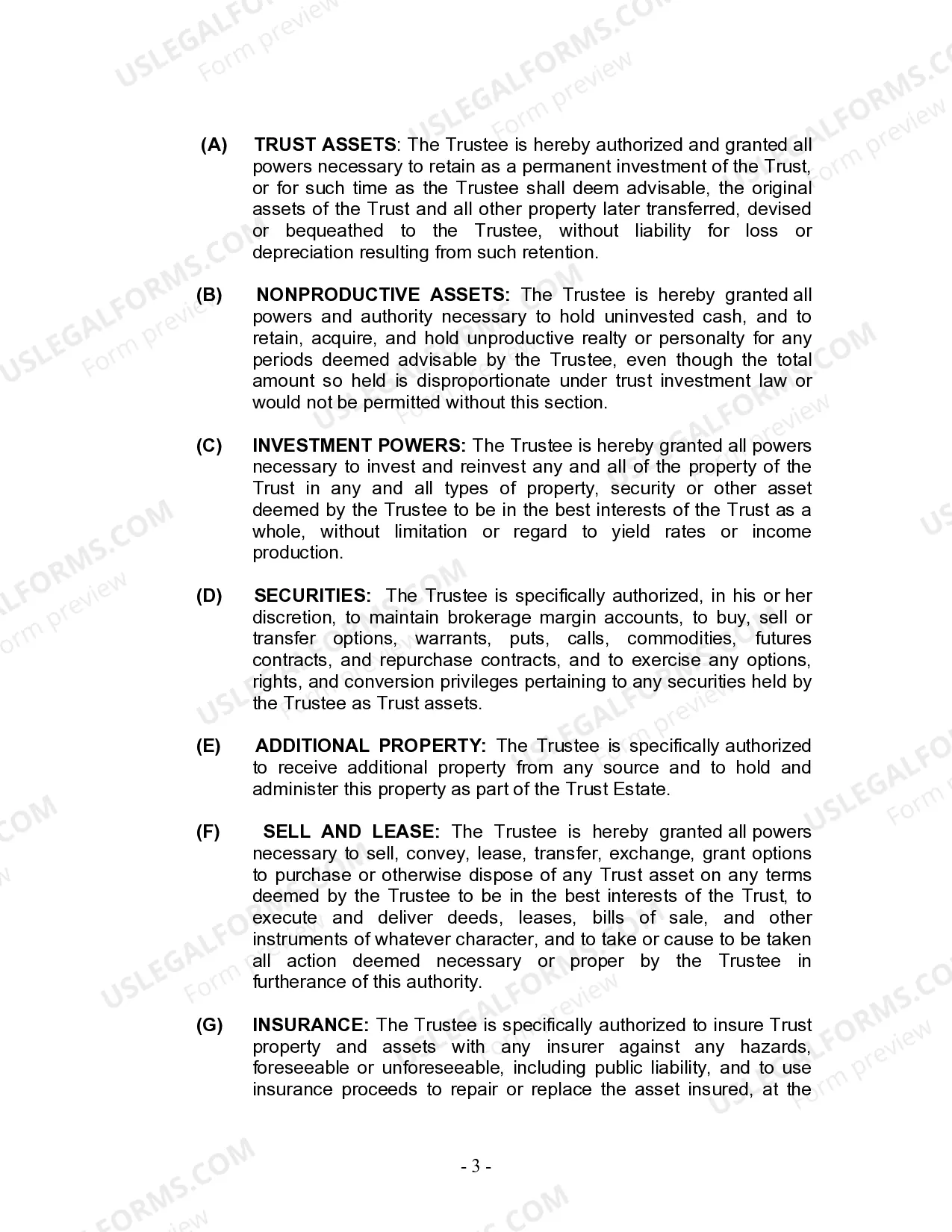
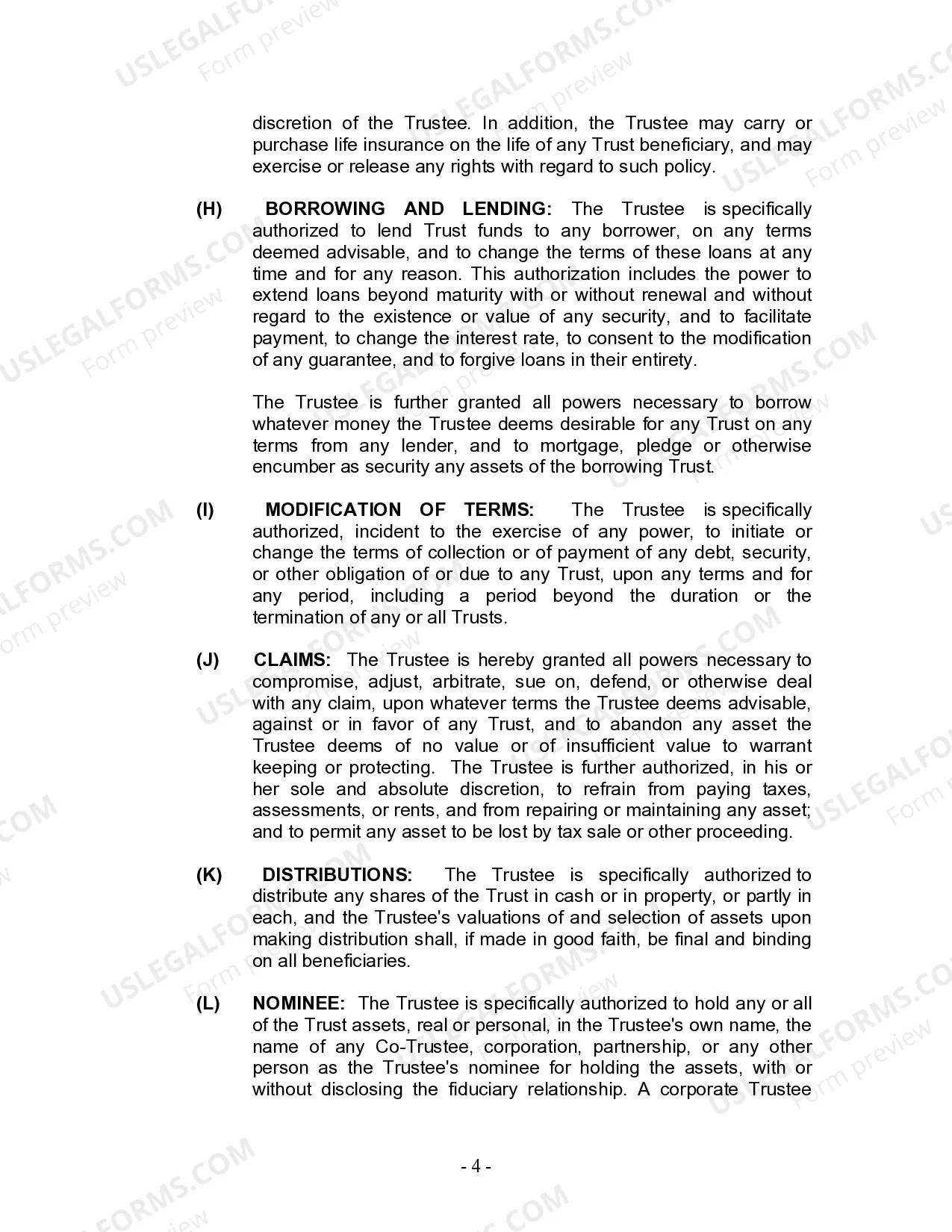
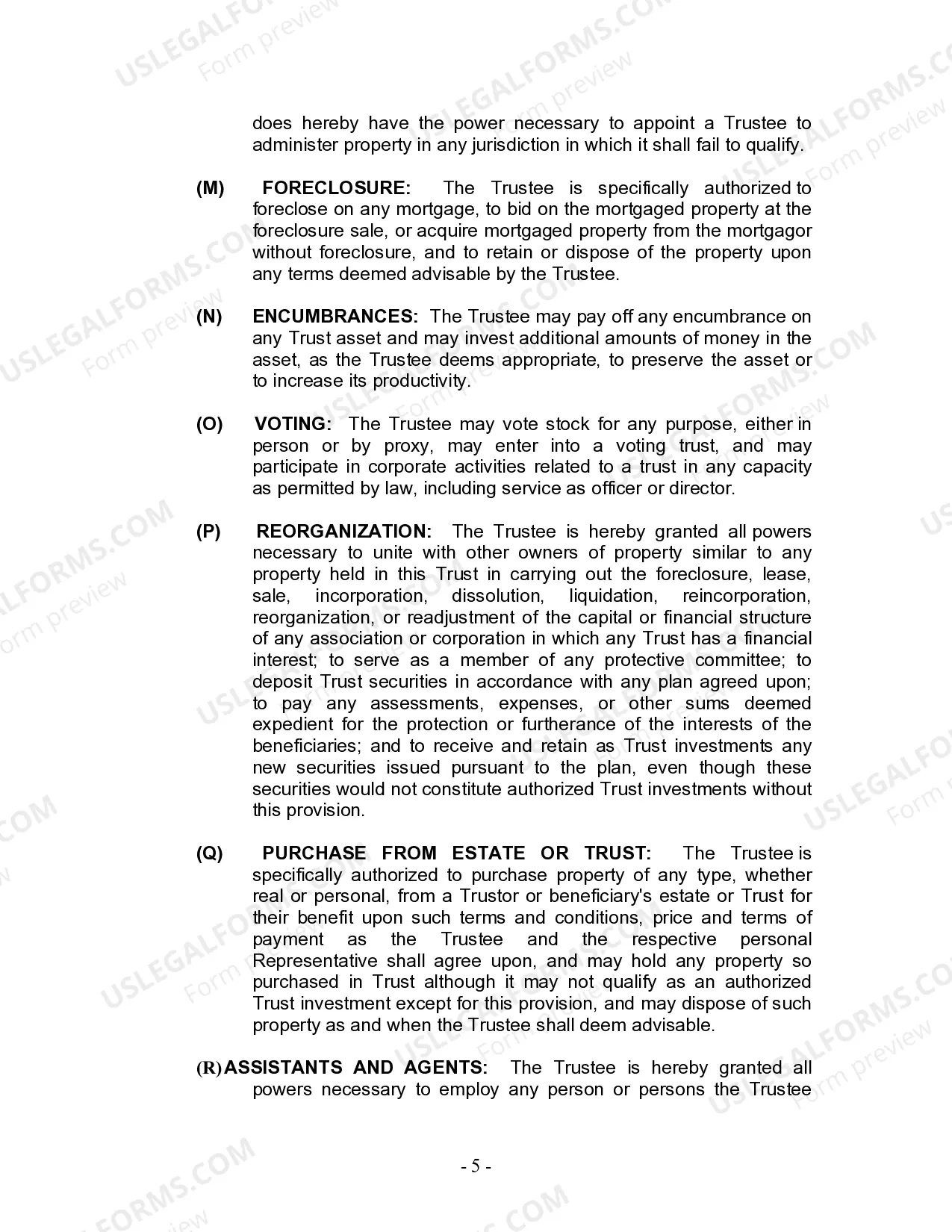
- Trustee powers: Details the authority granted to the trustee for managing the trust assets.


When this form is needed
This form is appropriate to use when an individual who is single, divorced, or a widow/widower wants to create a comprehensive plan for managing their assets during their life and after their death. It is especially useful when dealing with property that might otherwise require lengthy probate proceedings. If you wish to have control over your assets and designate the fate of your estate in a straightforward manner, this trust offers a practical solution.
Who should use this form
- Individuals who are single, divorced, or widowed without children.
- Those looking to avoid probate for their assets after death.
- People intending to manage their assets during their lifetime and designate their distribution after death.
Instructions for completing this form
- Identify the trustor by entering your name and address at the beginning of the form.
- Name the trust by filling in the desired title in the specified section.
- Designate yourself or another individual as the trustee, giving the necessary details.
- List all assets that will be included in the trust, ensuring they are properly described.
- Specify the distribution method for the assets after your death by completing the relevant sections.
- Sign and date the document in the presence of a notary if required.
Notarization guidance
Notarization is required for this form to take effect. Our online notarization service, powered by Notarize, lets you verify and sign documents remotely through an encrypted video session, available 24/7.
Get your form ready online
Our built-in tools help you complete, sign, share, and store your documents in one place.
Make edits, fill in missing information, and update formatting in US Legal Forms—just like you would in MS Word.
Download a copy, print it, send it by email, or mail it via USPS—whatever works best for your next step.
Sign and collect signatures with our SignNow integration. Send to multiple recipients, set reminders, and more. Go Premium to unlock E-Sign.
If this form requires notarization, complete it online through a secure video call—no need to meet a notary in person or wait for an appointment.
We protect your documents and personal data by following strict security and privacy standards.

Make edits, fill in missing information, and update formatting in US Legal Forms—just like you would in MS Word.

Download a copy, print it, send it by email, or mail it via USPS—whatever works best for your next step.

Sign and collect signatures with our SignNow integration. Send to multiple recipients, set reminders, and more. Go Premium to unlock E-Sign.

If this form requires notarization, complete it online through a secure video call—no need to meet a notary in person or wait for an appointment.

We protect your documents and personal data by following strict security and privacy standards.
Mistakes to watch out for
- Failing to list all assets intended to be included in the trust.
- Not properly designating a successor trustee.
- Leaving beneficiary details incomplete or ambiguous.
Advantages of online completion
- Convenient access: Download and complete at your own pace from anywhere.
- Editability: Easily modify the form as your situation changes.
- Reliable resources: Trusted legal templates prepared by licensed attorneys.
Looking for another form?
Form popularity
FAQ
The national average cost for a living trust for an individual is $1,100-1,500 USD. The national average cost for a living trust for a married couple is $1,700-2,500 USD. Part of the reason for this range in prices is the range of services that are available from various estate planning attorneys.
Choose whether to make an individual or shared trust. Decide what property to include in the trust. Choose a successor trustee. Decide who will be the trust's beneficiaries who will get the trust property. Create the trust document. Sign the document in front of a notary public.
Paperwork. Setting up a living trust isn't difficult or expensive, but it requires some paperwork. Record Keeping. After a revocable living trust is created, little day-to-day record keeping is required. Transfer Taxes. Difficulty Refinancing Trust Property. No Cutoff of Creditors' Claims.
No, you don't need a lawyer to set up a trust, but it might be a good idea to seek legal advice to ensure the trust is set up correctly and that you have considered all long-term financial and estate planning aspects of the trust.Some living trusts are revocable, which means the trust can be changed at any time.
How Much Does a Living Trust Cost in California? A common question that people ask when they're considering if a living trust is right for their family is how much it costs. On average, a living trust costs between $1000 and $5000 to put together.
Legally your Trust now owns all of your assets, but you manage all of the assets as the Trustee. This is the essential step that allows you to avoid Probate Court because there is nothing for the courts to control when you die or become incapacitated.
Funding a Trust Is Expensive... This is the major drawback to using a revocable living trust for many people, but it's not worth the time, money, and effort to create one if the trust isn't fully funded.
Compared to Simple Will Package, our office charges an additional $800 to upgrade to a Living Trust or Family Trust. In total dollars, the cost of a Family Trust or Living Trust package for an unmarried person would cost $1,895. For a married couple, the total cost would be just $2,295.
Administering a living trust after your death is not cost-free.Living trusts are much more expensive to set up and maintain than a will. Probate can often be avoided without using a living trust, by setting up "payable on death" accounts, making beneficiary designations, holding assets jointly, etc.