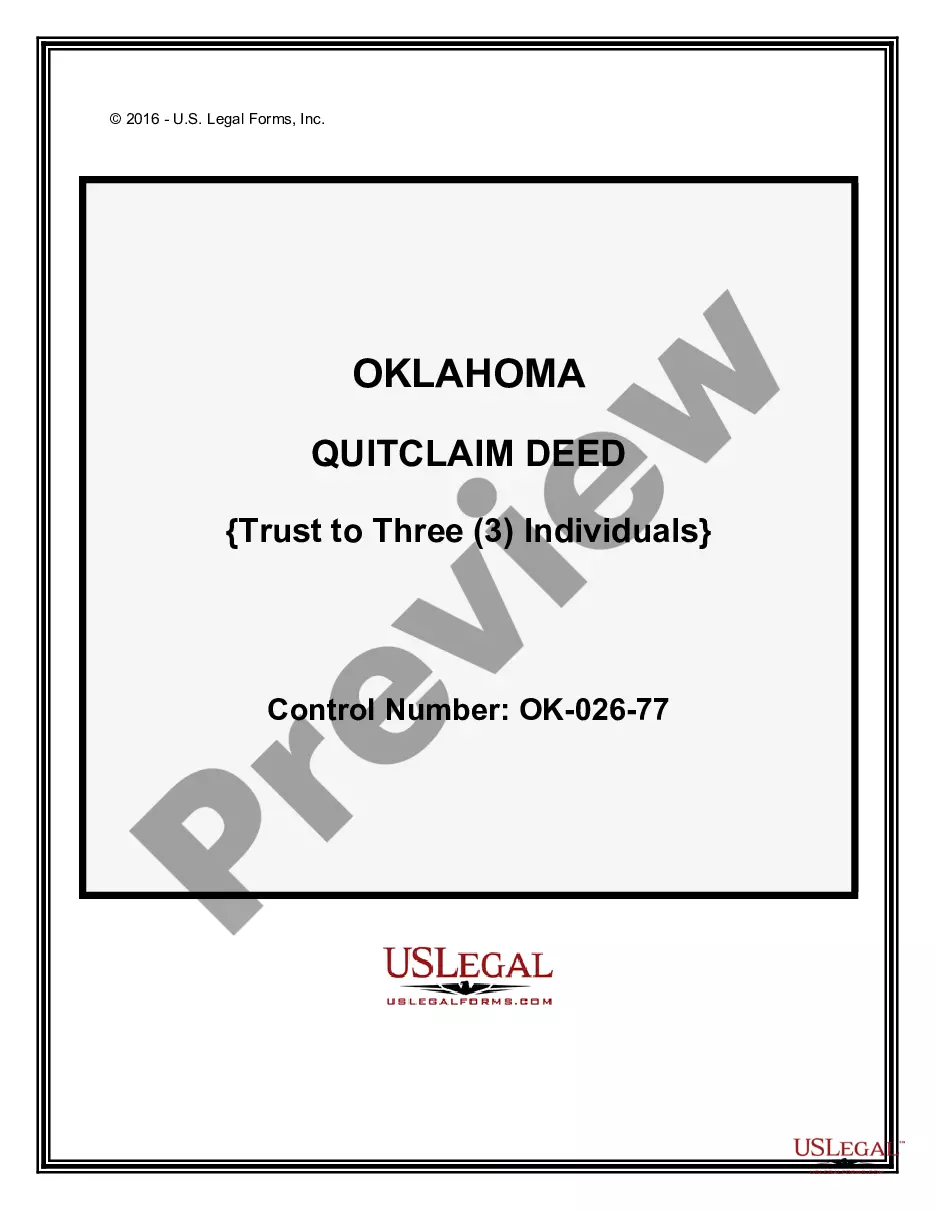
Idaho Renunciation and Disclaimer of Joint Tenant or Tenancy Interest
About this form
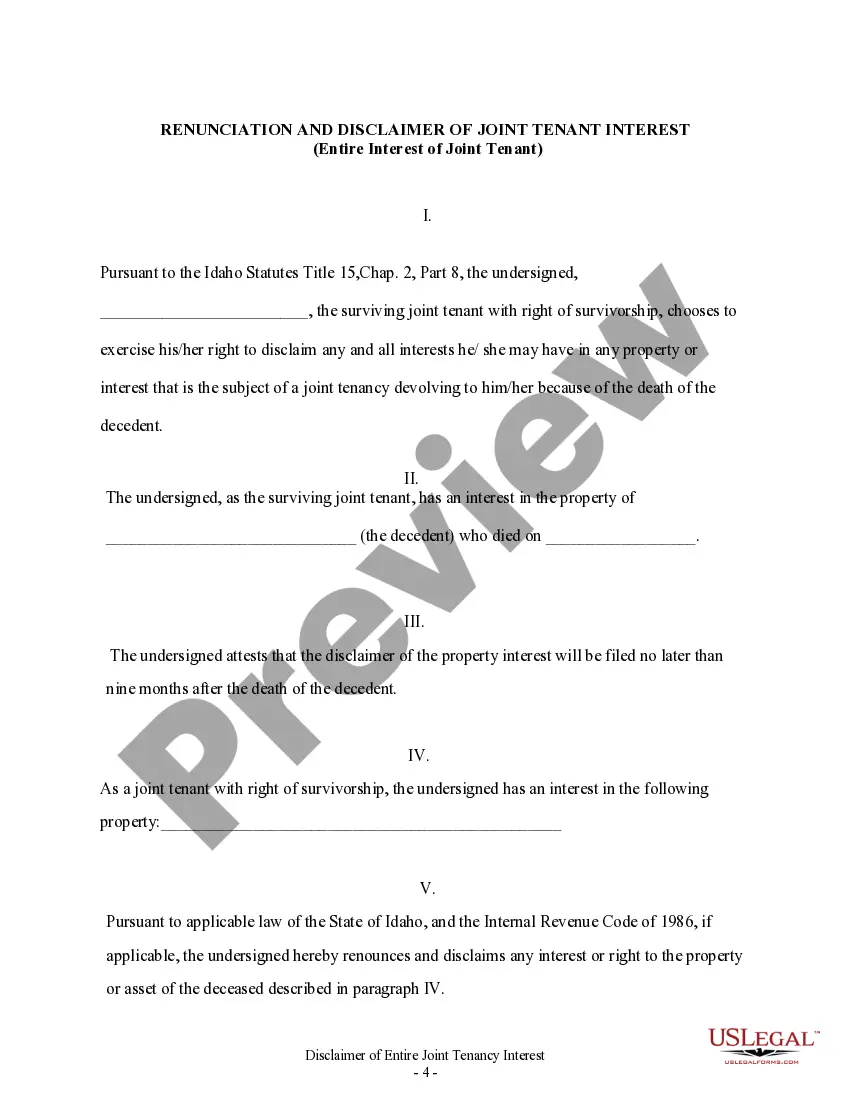
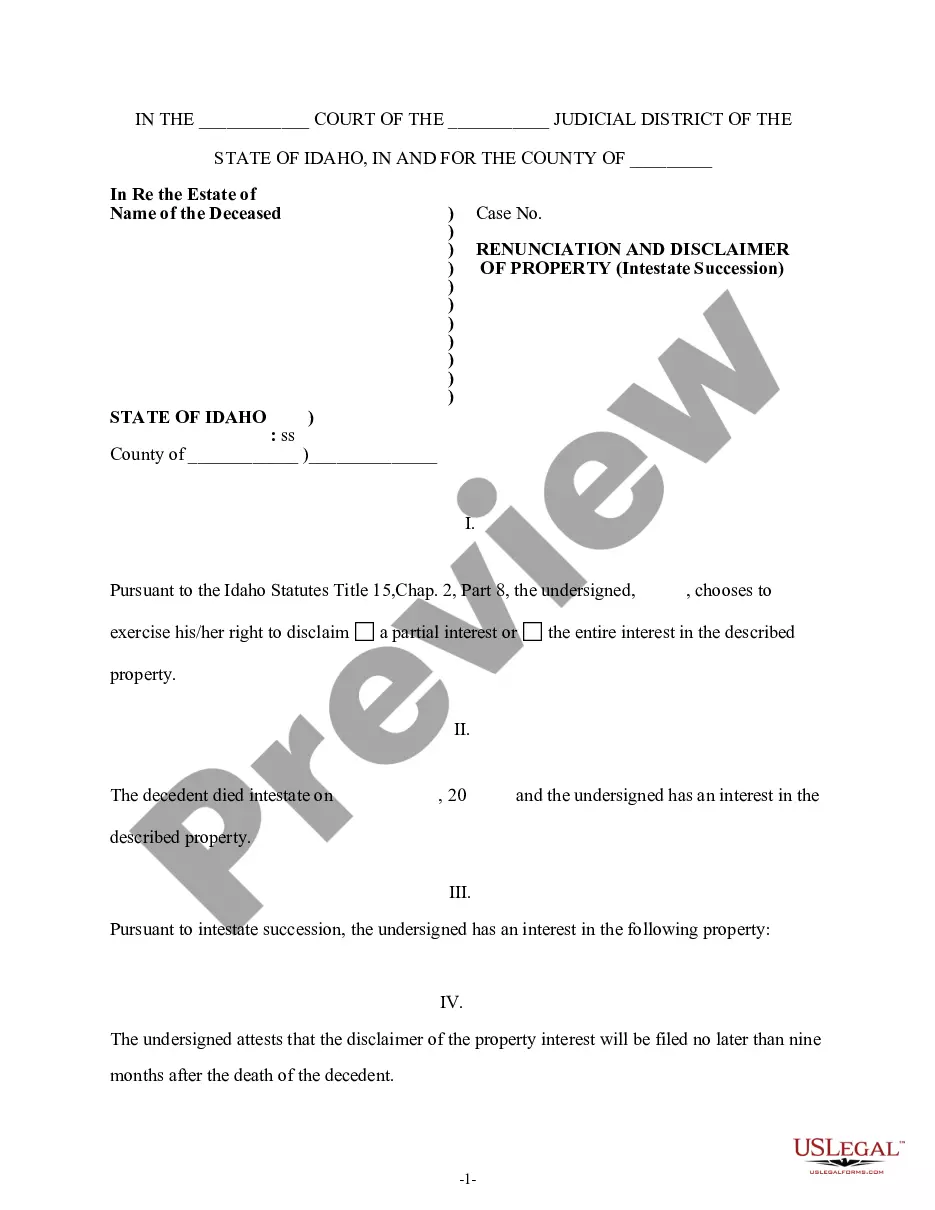
The Idaho Renunciation and Disclaimer of Joint Tenant Interest is a legal document that allows a surviving joint tenant to renounce their interest in a property upon the death of a co-tenant. This form is used specifically in Idaho and is important for legally declining rights to the property without assuming responsibilities or benefits associated with inheritance. This differs from a standard transfer of interest since it clearly states the intention to refuse any claims on the property inherited due to the joint tenancy.
What’s included in this form
- The identity of the surviving joint tenant.
- Details regarding the deceased joint tenant, including their name and date of death.
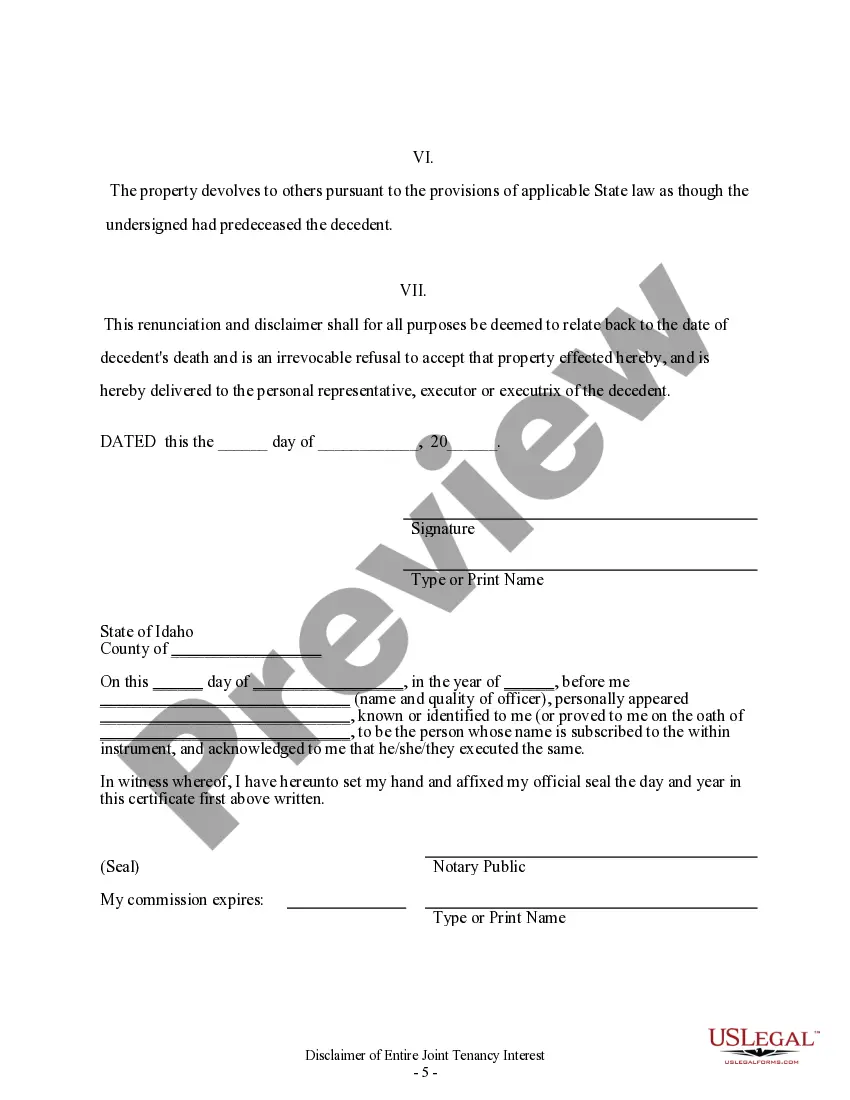
- A declaration of renunciation and disclaimer of interest in the property.
- Verification of the timely filing of the disclaimer within the allowed nine-month period.
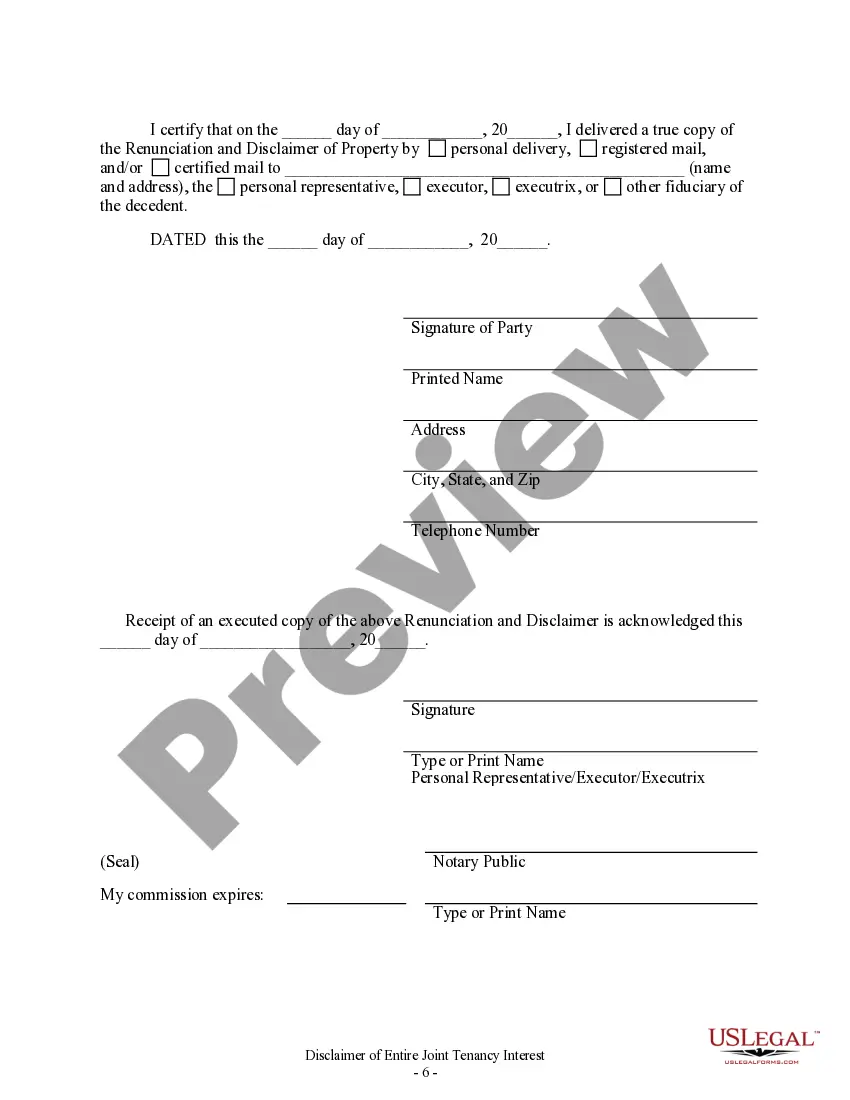
- Certification for delivery to the decedent's personal representative.

When to use this document
Intended users of this form
- Surviving joint tenants in Idaho who wish to disclaim their interest in inherited property.
- Individuals seeking to prevent any obligations tied to the property left by the deceased joint tenant.
- Those who are aware of Idaho's legal requirements for disclaiming inheritance.
Instructions for completing this form
- Identify the surviving joint tenant and fill in their name in the designated field.
- Provide the name and date of death of the deceased joint tenant.
- Clearly state the specific property interest being disclaimed.
- Ensure the form is signed and dated within the required timeframe to maintain legal validity.
- Deliver the signed form to the decedent's personal representative.
Notarization requirements for this form
This form needs to be notarized to ensure legal validity. US Legal Forms provides secure online notarization powered by Notarize, allowing you to complete the process through a verified video call, available anytime.
Get your form ready online
Our built-in tools help you complete, sign, share, and store your documents in one place.
Make edits, fill in missing information, and update formatting in US Legal Forms—just like you would in MS Word.
Download a copy, print it, send it by email, or mail it via USPS—whatever works best for your next step.
Sign and collect signatures with our SignNow integration. Send to multiple recipients, set reminders, and more. Go Premium to unlock E-Sign.
If this form requires notarization, complete it online through a secure video call—no need to meet a notary in person or wait for an appointment.
We protect your documents and personal data by following strict security and privacy standards.
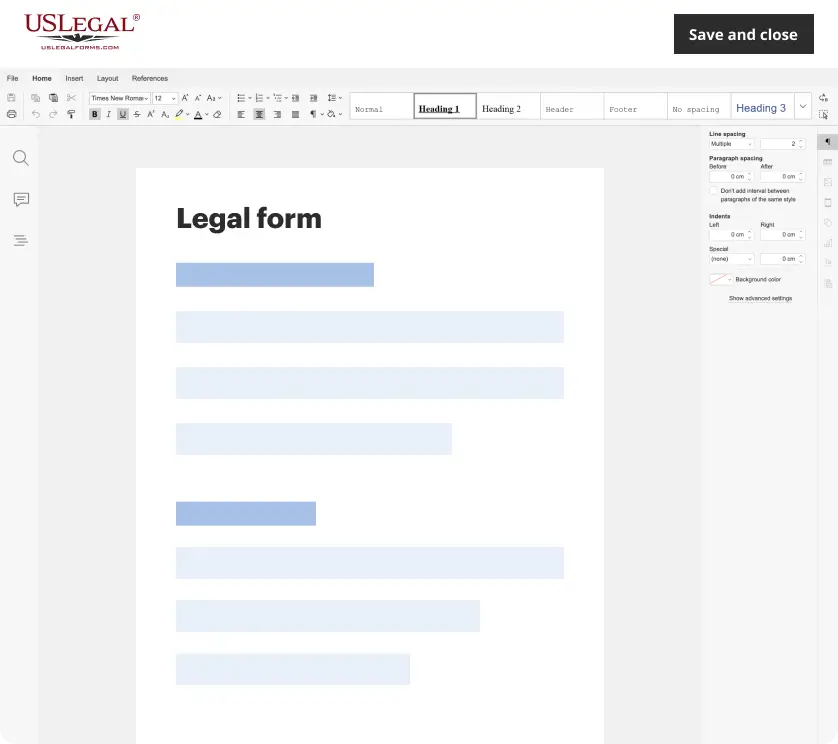
Make edits, fill in missing information, and update formatting in US Legal Forms—just like you would in MS Word.
Download a copy, print it, send it by email, or mail it via USPS—whatever works best for your next step.
Sign and collect signatures with our SignNow integration. Send to multiple recipients, set reminders, and more. Go Premium to unlock E-Sign.

If this form requires notarization, complete it online through a secure video call—no need to meet a notary in person or wait for an appointment.
We protect your documents and personal data by following strict security and privacy standards.
Mistakes to watch out for
- Failing to submit the form within the nine-month deadline.
- Not including all necessary identifying information for the parties involved.
- Leaving sections blank, especially regarding property details.
Benefits of completing this form online
- Convenient access to the form anytime and anywhere, eliminating the need to visit a lawyer.
- Editable fields allow customization and reduced chances of errors.
- Instant download for immediate use.
Looking for another form?
Form popularity
FAQ
Disclaim, in a legal sense, refers to the renunciation of an interest in, or an acceptance of, inherited assets, such as property, by way of a legal instrument. A person disclaiming an interest, right, or obligation is known as a disclaimant.
In the law of inheritance, wills and trusts, a disclaimer of interest (also called a renunciation) is an attempt by a person to renounce their legal right to benefit from an inheritance (either under a will or through intestacy) or through a trust.A disclaimer of interest is irrevocable.
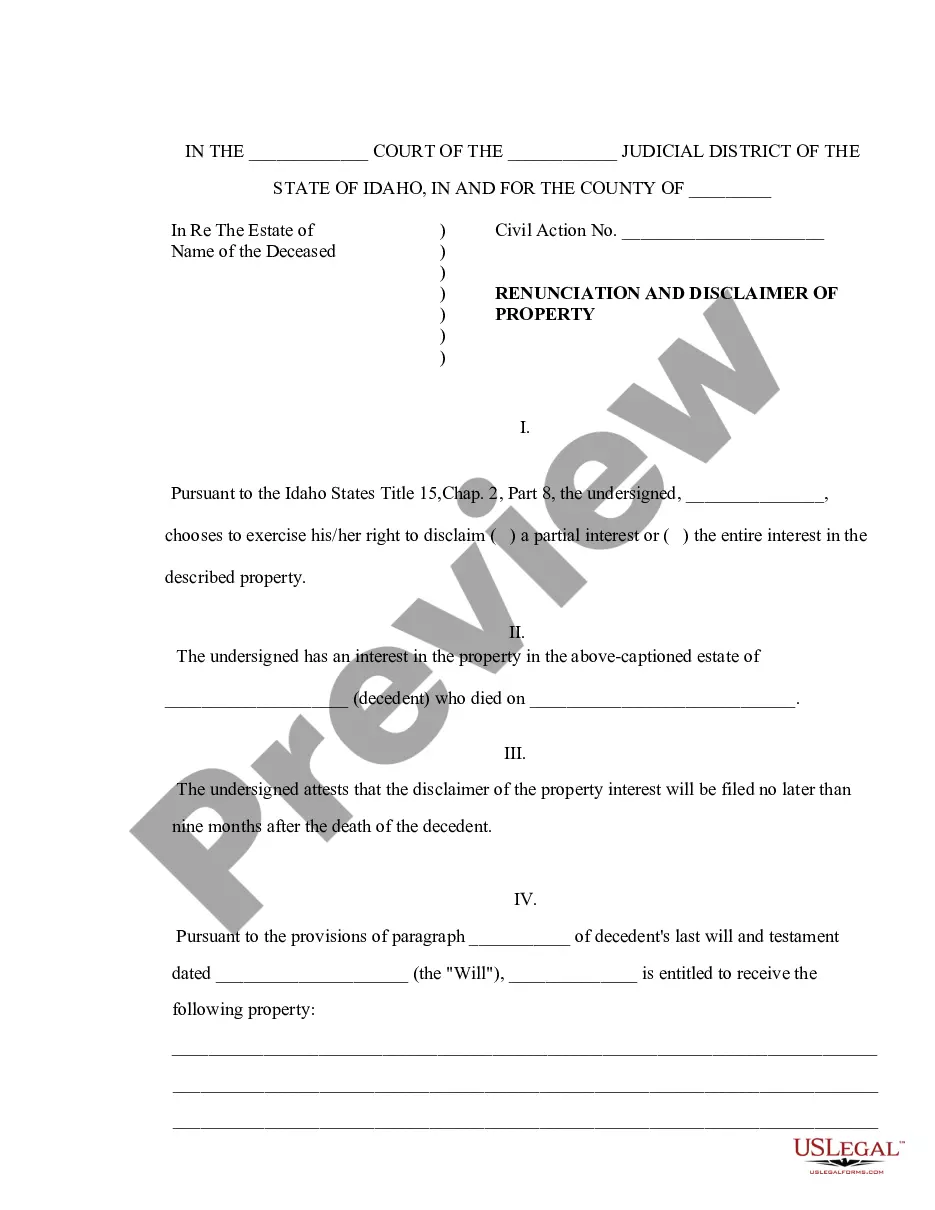
Put the disclaimer in writing. Deliver the disclaimer to the person in control of the estate usually the executor or trustee. Complete the disclaimer within nine months of the death of the person leaving the property. Do not accept any benefit from the property you're disclaiming.
Disclaim Inheritance, Definition In a nutshell, it means you're refusing any assets that you stand to inherit under the terms of someone's will, a trust or, in the case of a person who dies intestate, the inheritance laws of your state.
If you refuse to accept an inheritance, you will not be responsible for inheritance taxes, but you'll have no say in who receives the assets in your place. The bequest passes either to the contingent beneficiary listed in the will or, if that person died without a will, according to your state's laws of intestacy.
Disclaiming means that you give up your rights to receive the inheritance. If you choose to do so, whatever assets you were meant to receive would be passed along to the next beneficiary in line.
The disclaimer must be in writing: A signed letter by the person doing the disclaiming, identifying the decedent, describing the asset to be disclaimed, and the extent and amount, percentage or dollar amount, to be disclaimed, must be delivered to the person in control of the estate or asset, such as an executor,
A beneficiary of an estate, whether by Will or the laws of intestacy is perfectly within their rights to reject their inheritance. Beneficiaries may wish to vary dispositions of property following death in order to redirect benefits to other family members who are more in need or less well provided for and to save tax.
When you relinquish property, you don't get any say in who inherits in your place. If you want to control who gets the inheritance, you must accept it and give it to that person. If you relinquish the property and the deceased didn't name a back-up heir, the court will apply state law to decide who inherits.