Iowa Landlord Tenant Sublease Package
What is this form package?
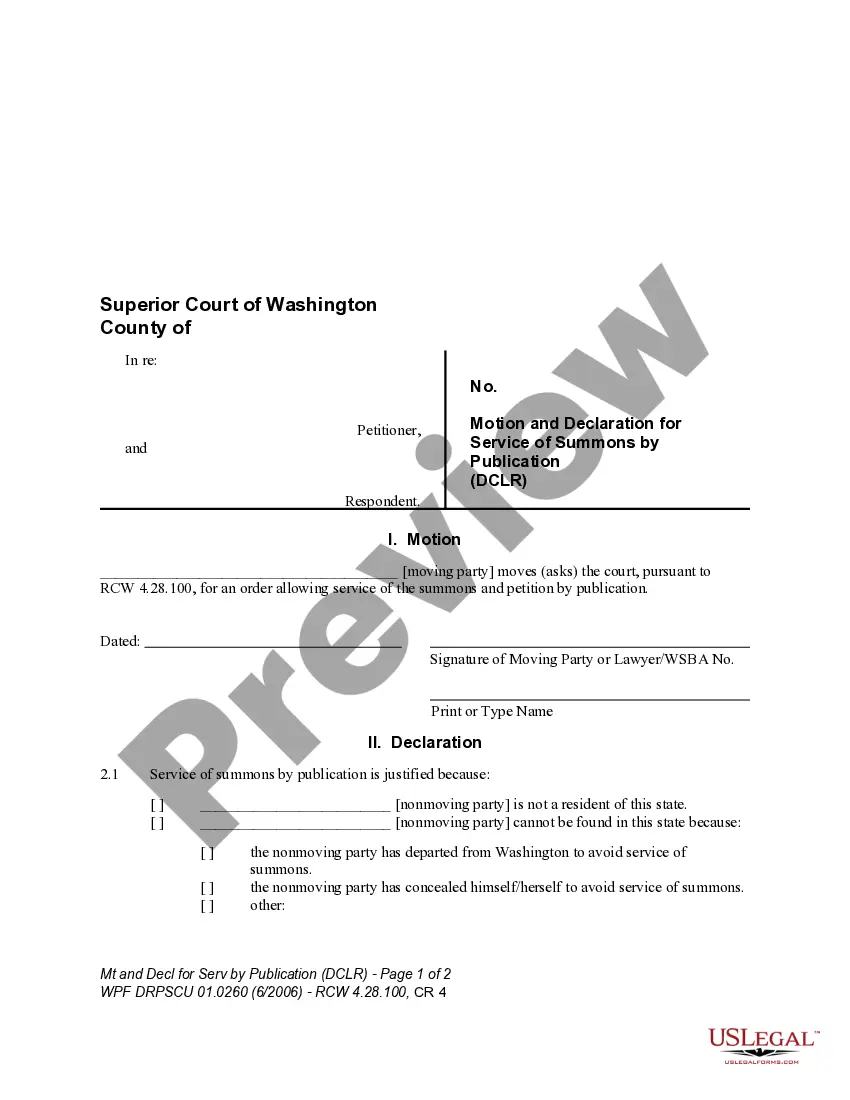
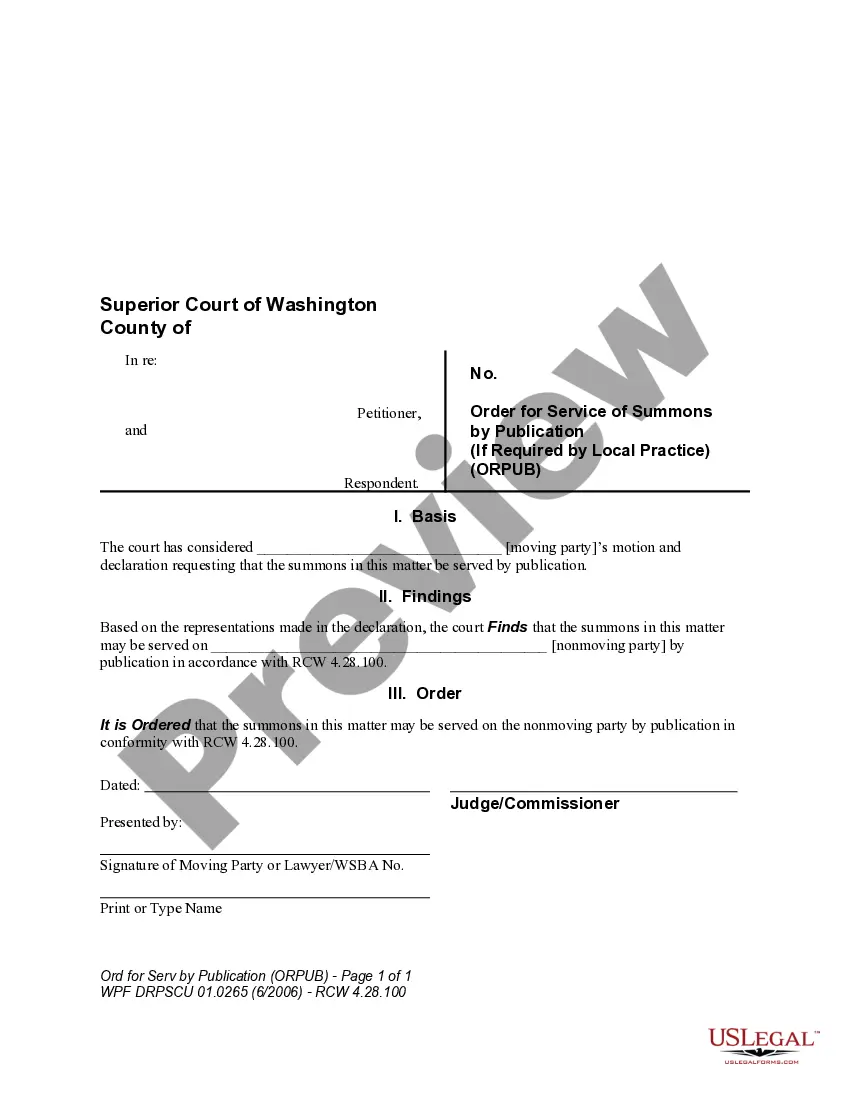
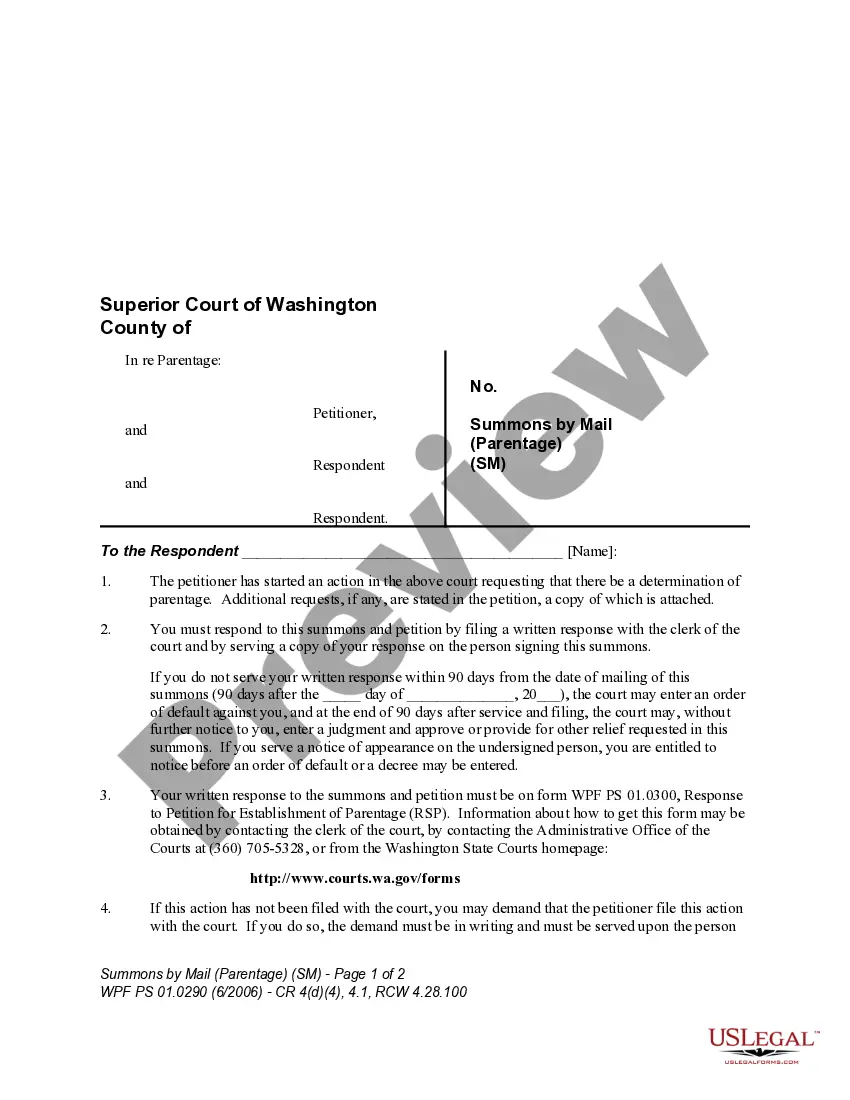
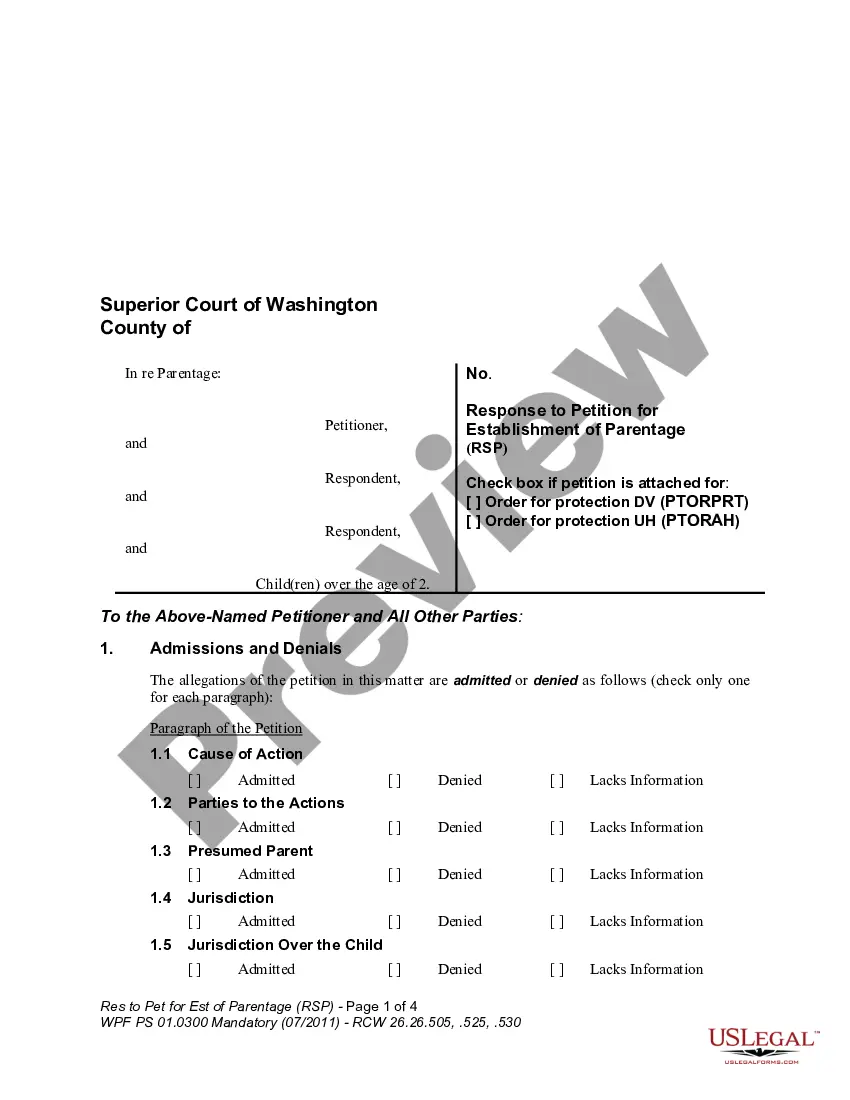
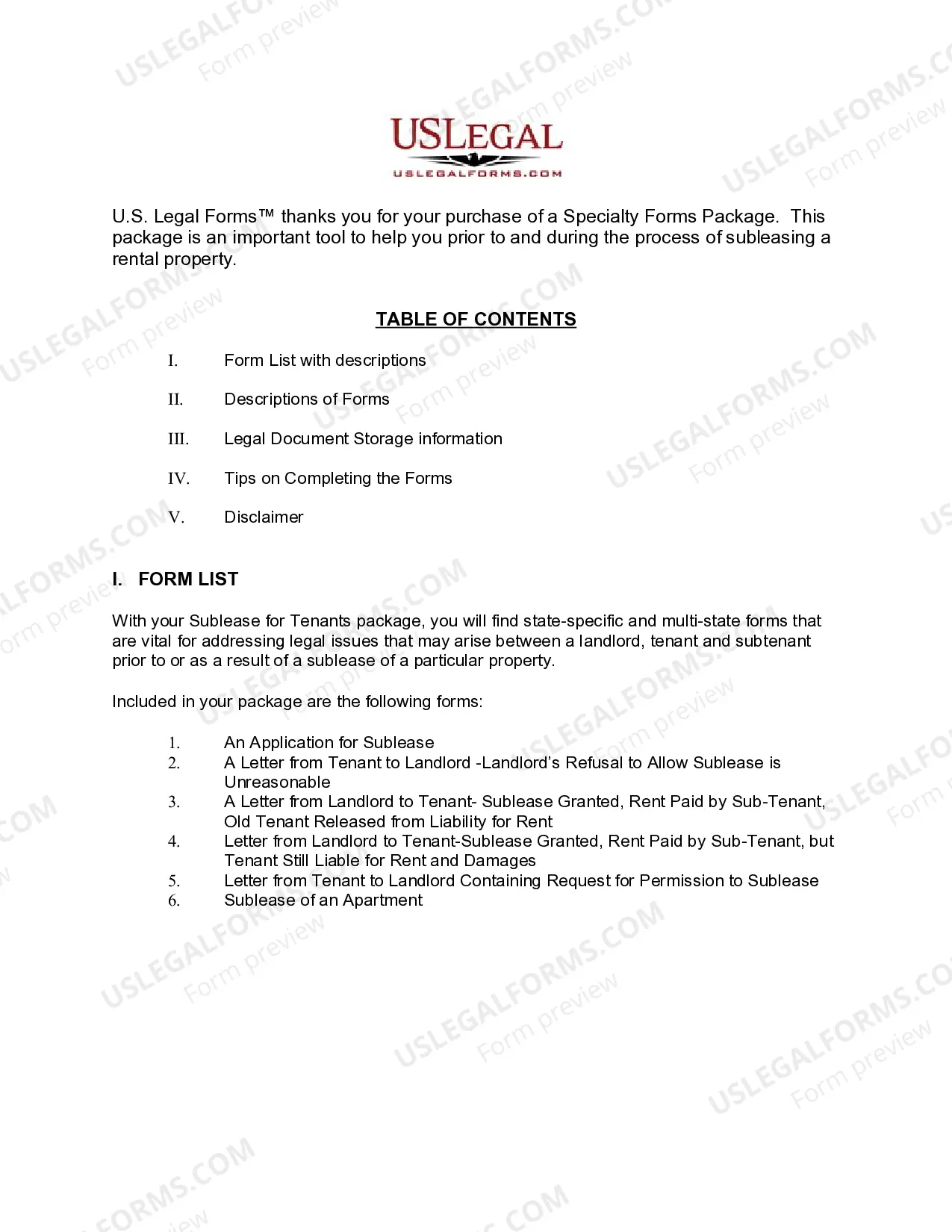
The Iowa Landlord Tenant Sublease Package provides essential legal documents tailored for individuals involved in subleasing a rental property. This package includes various forms crucial for managing the relationship between landlords, tenants, and subtenants, ensuring that all parties are protected and informed throughout the subleasing process. Unlike similar packages, our forms are specifically drafted by licensed attorneys to comply with Iowa laws, making them reliable and effective for your legal needs.
Documents contained in this package
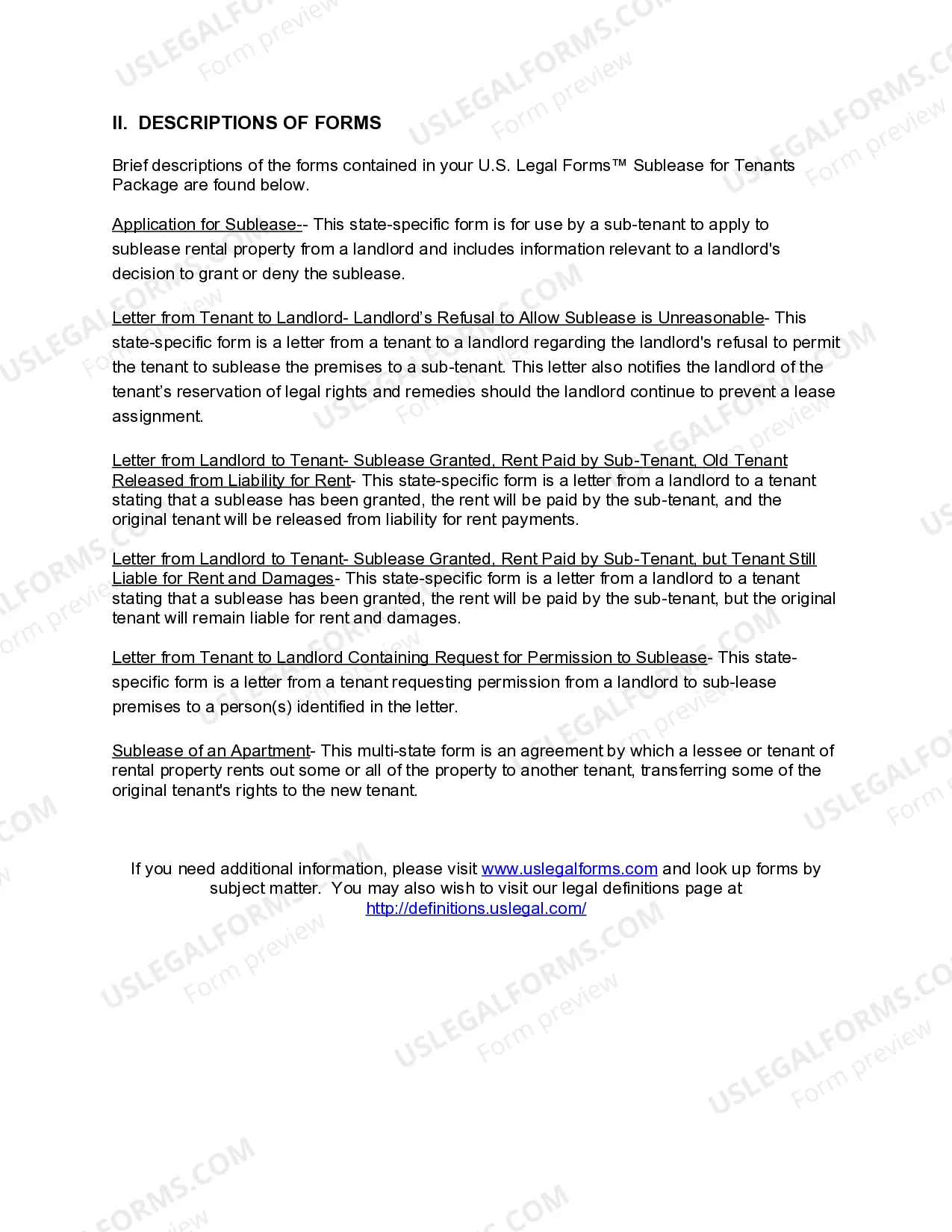
- Letter from Tenant to Landlord containing Request for permission to sublease
- Letter from Landlord to Tenant that Sublease granted - Rent Paid by Subtenant, but Tenant Still Liable for Rent and Damages
- Letter from Landlord to Tenant that Sublease granted - Rent Paid by Subtenant, Old Tenant Released from Liability for Rent
- Letter from Tenant to Landlord about Landlord's refusal to allow sublease is unreasonable
- Application for Sublease
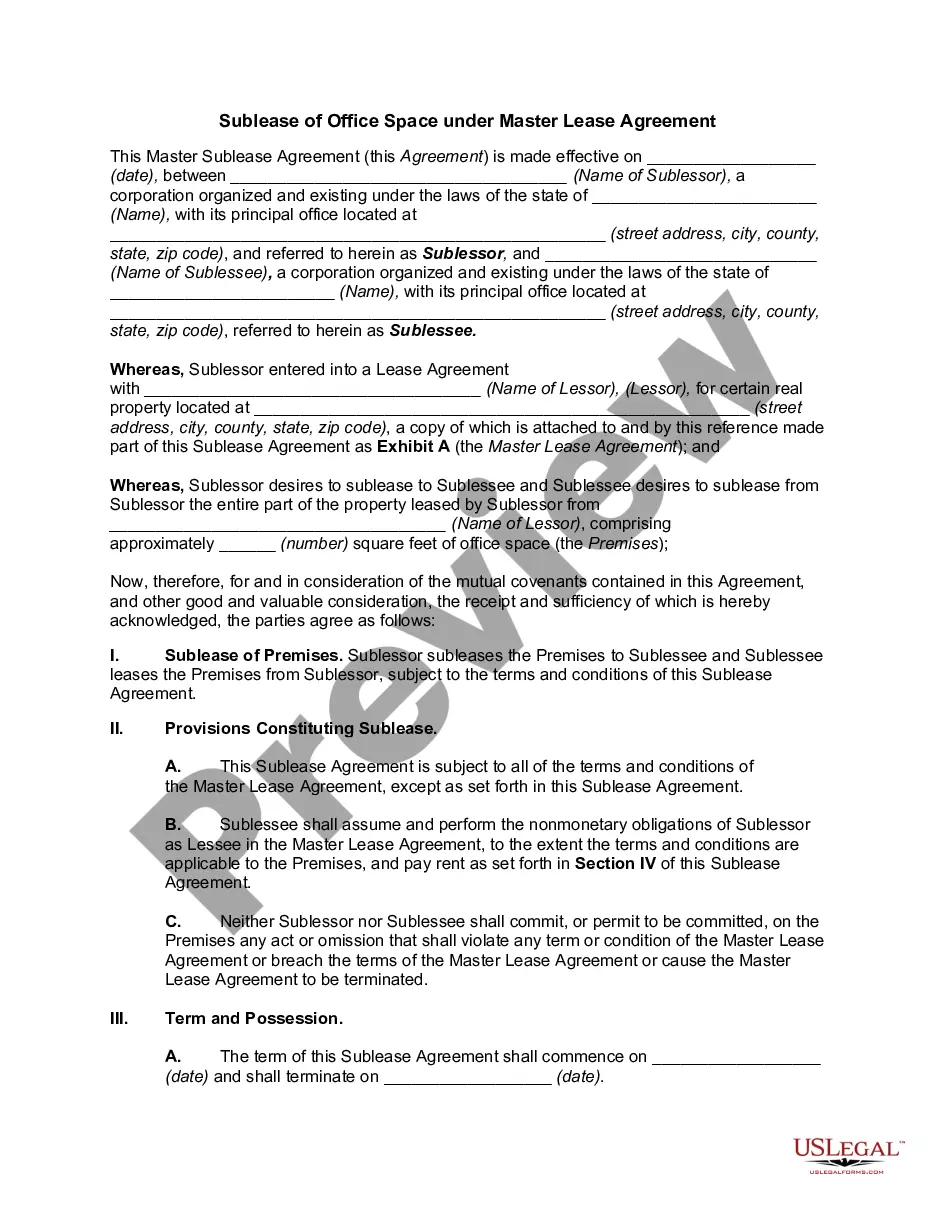
- Sublease of an Apartment - Real Estate Rental

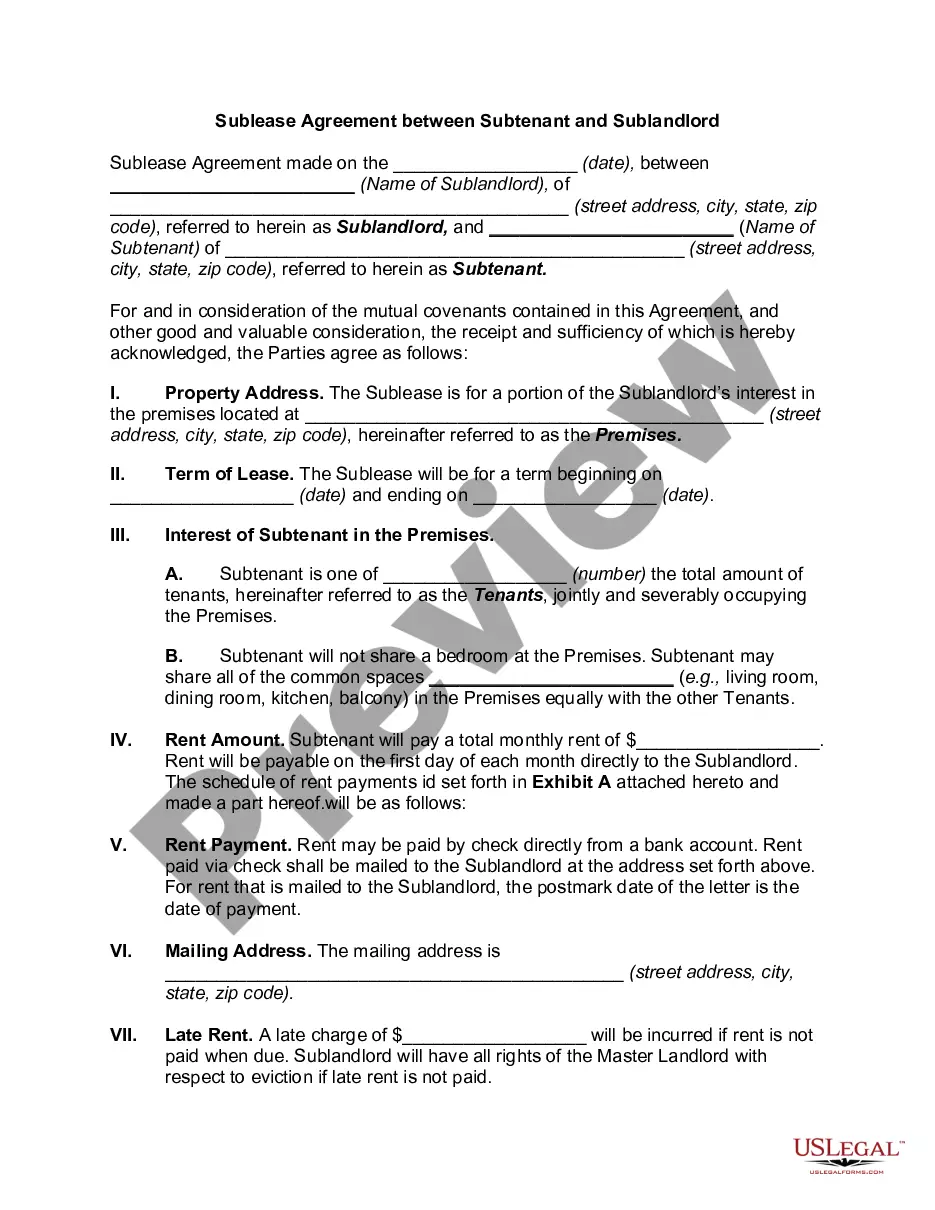
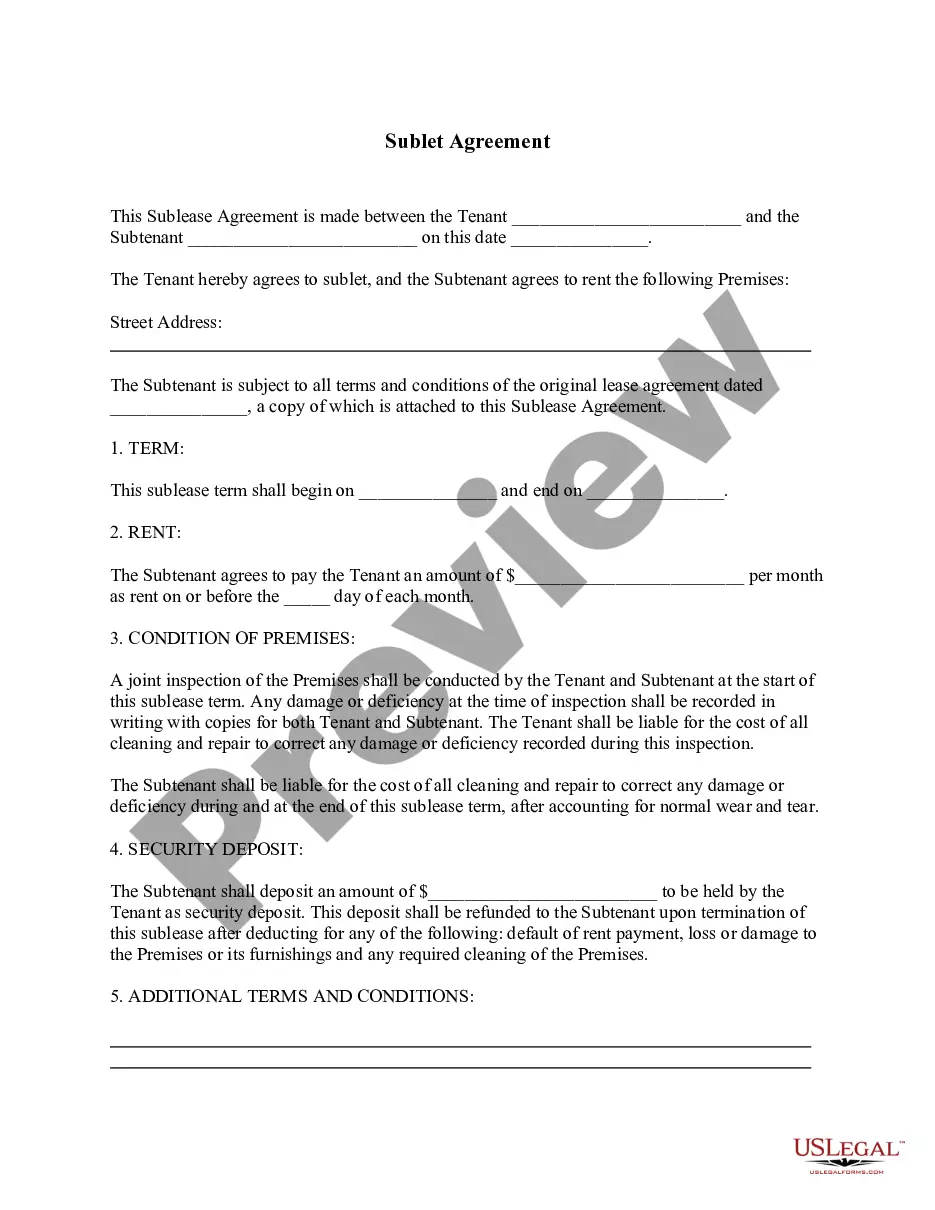
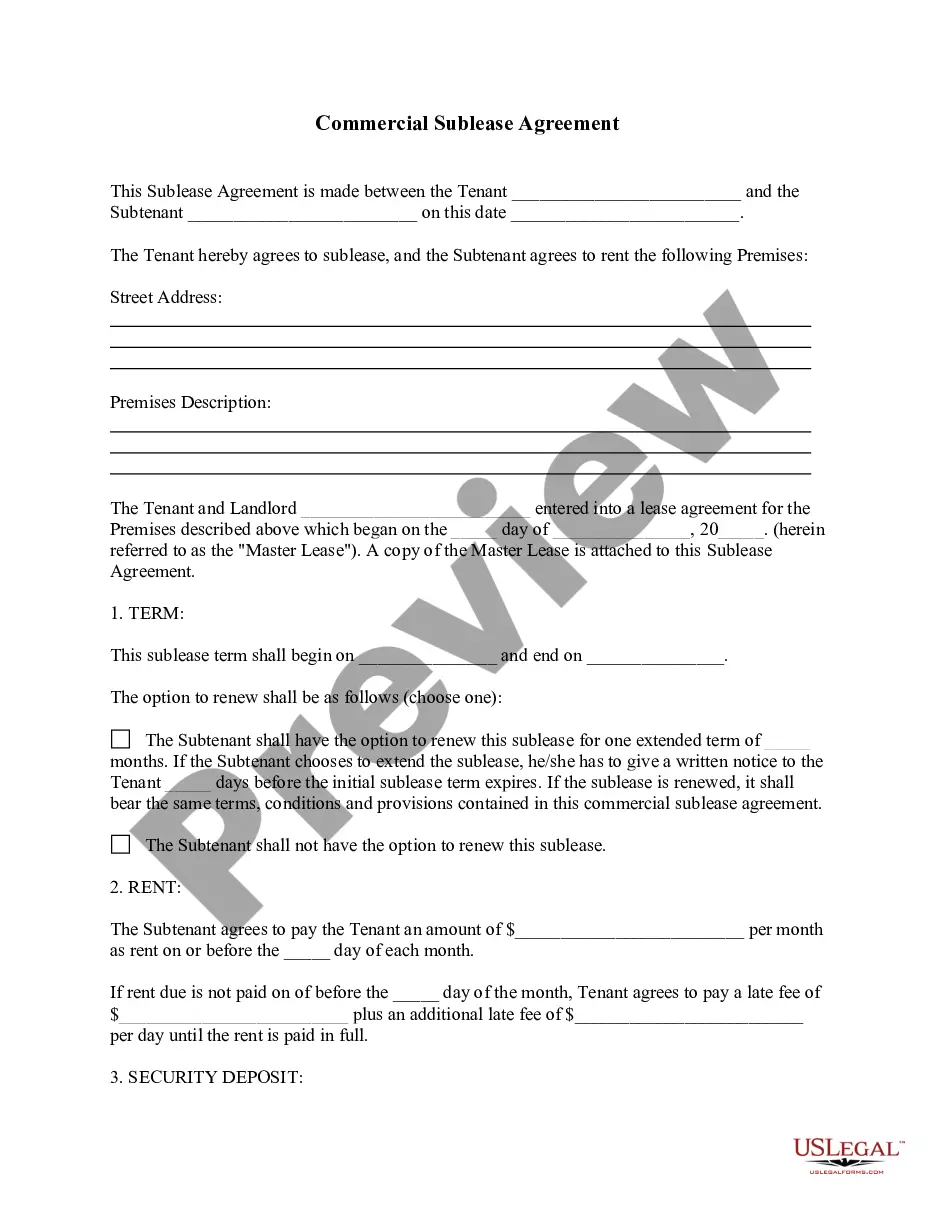
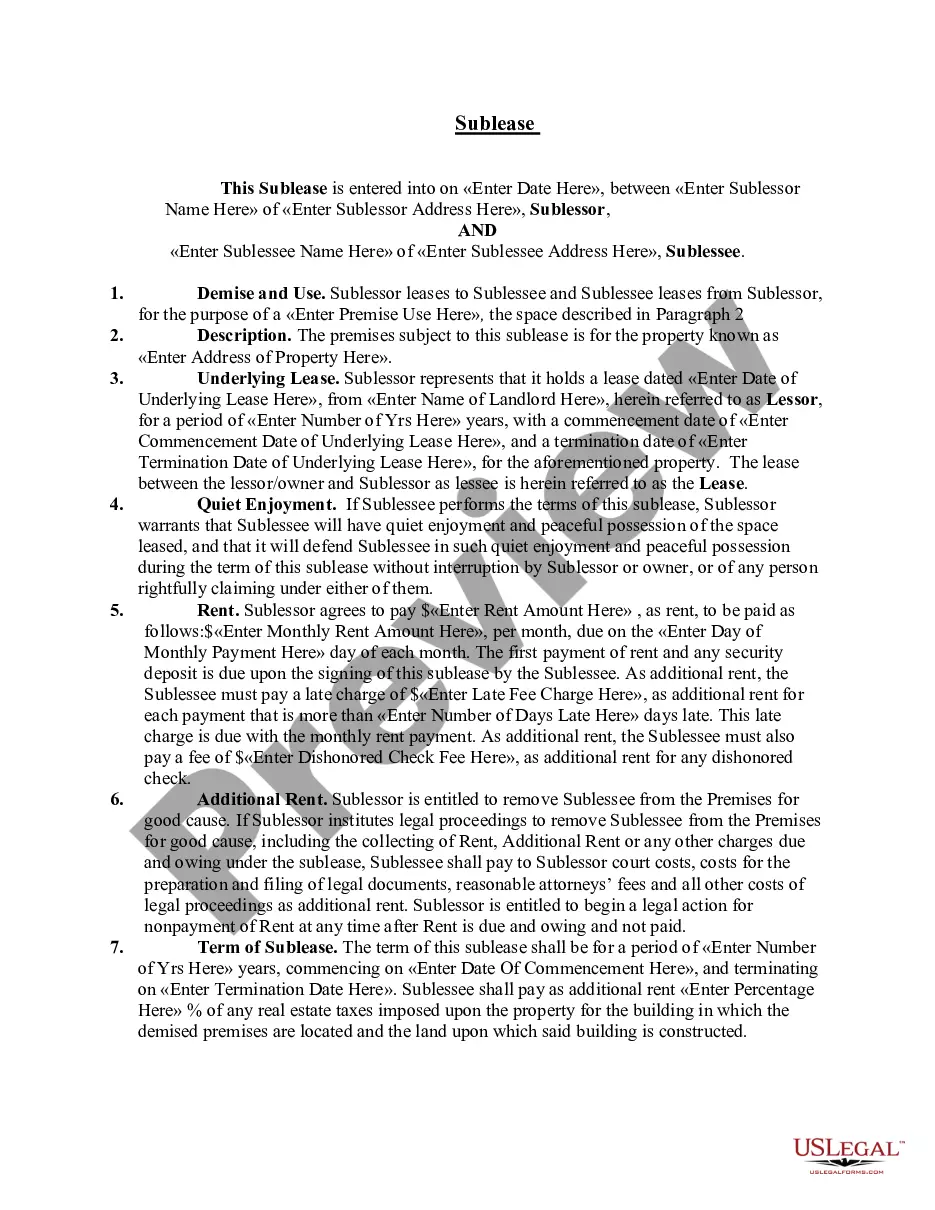
Situations where these forms applies
This form package is designed for situations such as:
- When a tenant wishes to sublease their rental property to another individual.
- When a landlord needs to formally approve or deny a sublease request from a tenant.
- When a tenant requires written confirmation of their liability status regarding rent payments after a sublease is granted.
- When legal issues may arise regarding permissions and rights related to subleasing.
Intended users of this form package
- Tenants planning to sublease their rental property.
- Landlords who must navigate sublease requests from tenants.
- Subtenants who are entering an agreement to rent a portion or all of a property.
- Individuals seeking to understand their rights and obligations under a sublease arrangement.
Instructions for completing these forms
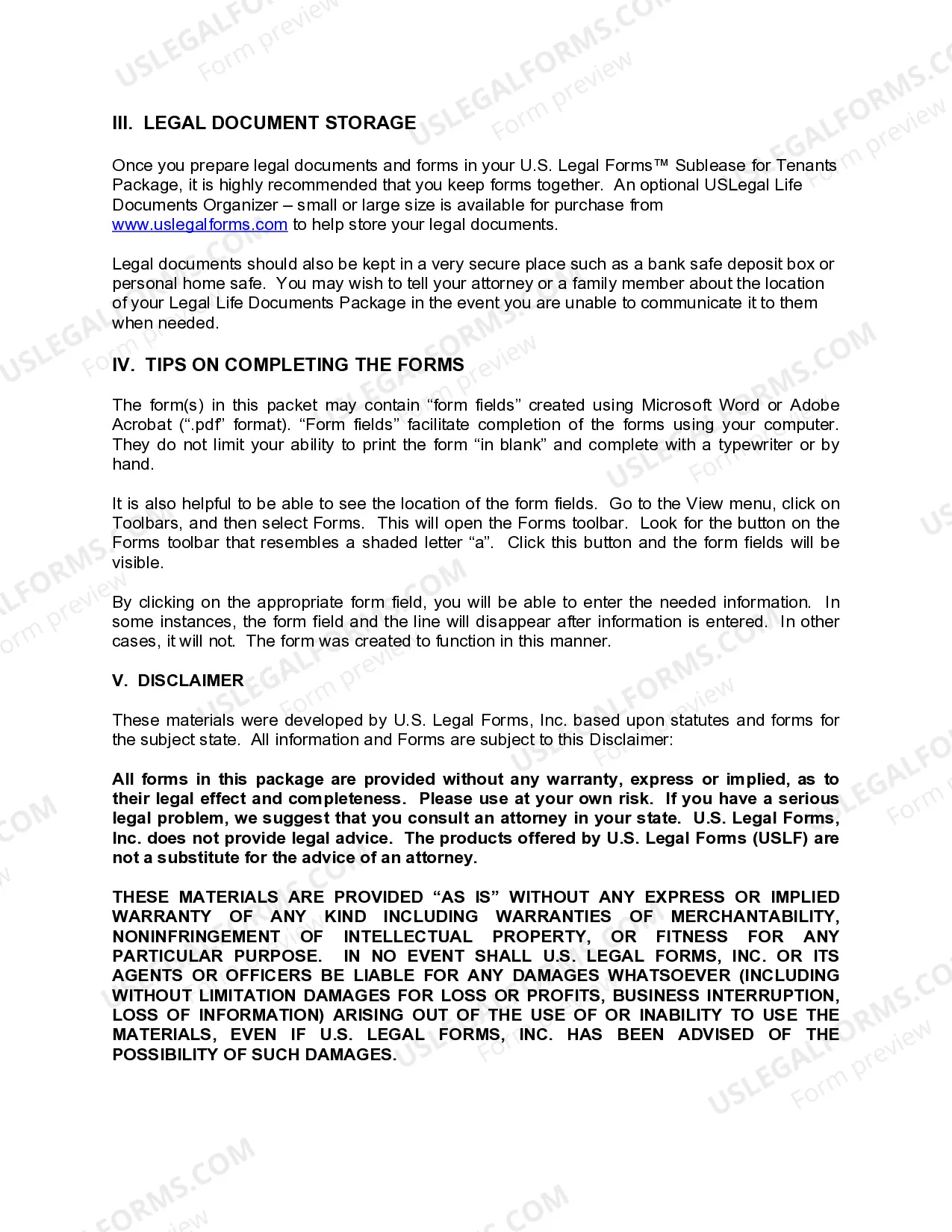
- Review all included forms to understand their purpose and requirements.
- Identify the parties involved, including the original tenant, landlord, and subtenant.
- Fill in the necessary information, ensuring accuracy in names, dates, and rental terms.
- Obtain all required signatures from involved parties.
- Store the completed documents securely for future reference.
Notarization guidance for this package
Most forms in this package do not require notarization. However, local laws or specific situations may demand it. Our online notarization service, powered by Notarize, lets you complete the process through a verified video call, available anytime.
Get your form ready online
Our built-in tools help you complete, sign, share, and store your documents in one place.
Make edits, fill in missing information, and update formatting in US Legal Forms—just like you would in MS Word.
Download a copy, print it, send it by email, or mail it via USPS—whatever works best for your next step.
Sign and collect signatures with our SignNow integration. Send to multiple recipients, set reminders, and more. Go Premium to unlock E-Sign.
If this form requires notarization, complete it online through a secure video call—no need to meet a notary in person or wait for an appointment.
We protect your documents and personal data by following strict security and privacy standards.

Make edits, fill in missing information, and update formatting in US Legal Forms—just like you would in MS Word.

Download a copy, print it, send it by email, or mail it via USPS—whatever works best for your next step.

Sign and collect signatures with our SignNow integration. Send to multiple recipients, set reminders, and more. Go Premium to unlock E-Sign.

If this form requires notarization, complete it online through a secure video call—no need to meet a notary in person or wait for an appointment.

We protect your documents and personal data by following strict security and privacy standards.
Common mistakes
- Failing to obtain the landlord's permission to sublease, leading to potential disputes.
- Not completing all required forms, which can leave gaps in legal protection.
- Misunderstanding the terms of liability after subleasing, especially regarding rent payments and damages.
- Providing incomplete or inaccurate information on the application for sublease.
Why complete this package online
- Convenience of downloading documents from anywhere at any time.
- Editability of forms allows for customization to fit your specific situation.
- Reliability, as the documents are created and reviewed by licensed attorneys.
- Cost savings, as purchasing the package is more affordable than obtaining forms individually.
Looking for another form?




Form popularity
FAQ
The landlord cannot refuse the assignment or sublet unless there is a good reason, such as the proposed tenant's inability to pay the rent or problematic behavior of this tenant. This is the case no matter what your lease or the building rules say.
On your sublease agreement, include a list of various areas of the property (including the subtenant's room, hardwood floors, walls, exterior, etc.) and note its condition. And since you and your subtenant will need to abide by the original lease that you signed, it's important to include this with your sublease.
Subleasing a Rental Property When a tenant whose name is on the lease rents a room, a portion of the property, or all of the property to another, it is referred to as subleasing (or subletting).So, if the subtenant owes back rent, the landlord has the option of suing the original tenant.
In short, subletting allows a new renter to take over the lease directly with the landlord, while subleasing involves renting all or part of the space to another renter through the original renter.
A sublease is the re-renting of property by an existing tenant to a new third party for a portion of the tenant's existing lease contract.Even if a sublease is permitted, the original tenant is still liable for the obligations stated in the lease agreement, such as the payment of rent each month.
California isn't the most tenant-friendly state when it comes to subletting. According to California law you must receive written consent from your landlord prior to subletting, and if your lease says no subletting, then that really means no subletting.
The names of the parties (the tenant, the subtenant and the landlord); information of the master/original lease; the term of the sublease and whether the sublease is fixed or periodic; and. the amount of rent payable (if different from the master lease).
Subleasing occurs when the tenant transfers a part of their legal tenancy to a third-party as a new tenant.That means that if a new subtenant does not pay rent for three months, the original tenant that subleased the property is liable to the landlord for the overdue rent amount and any late fees.
A lease is a rental contract between a property owner and a tenant; a sublease is a contract between a tenant and a third party who lives in the rental property during part of the tenant's lease term.