Iowa Satisfaction of Judgment
About this form
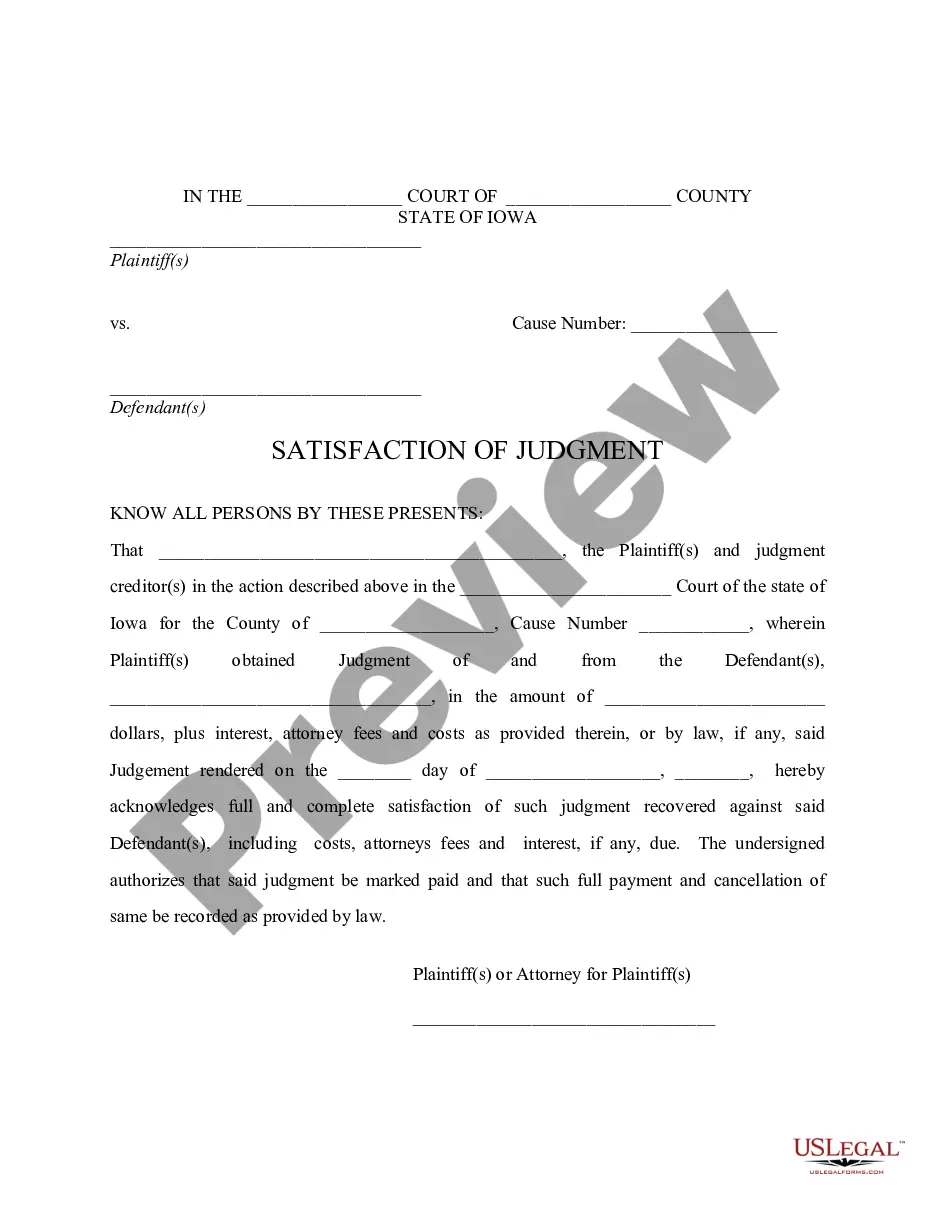
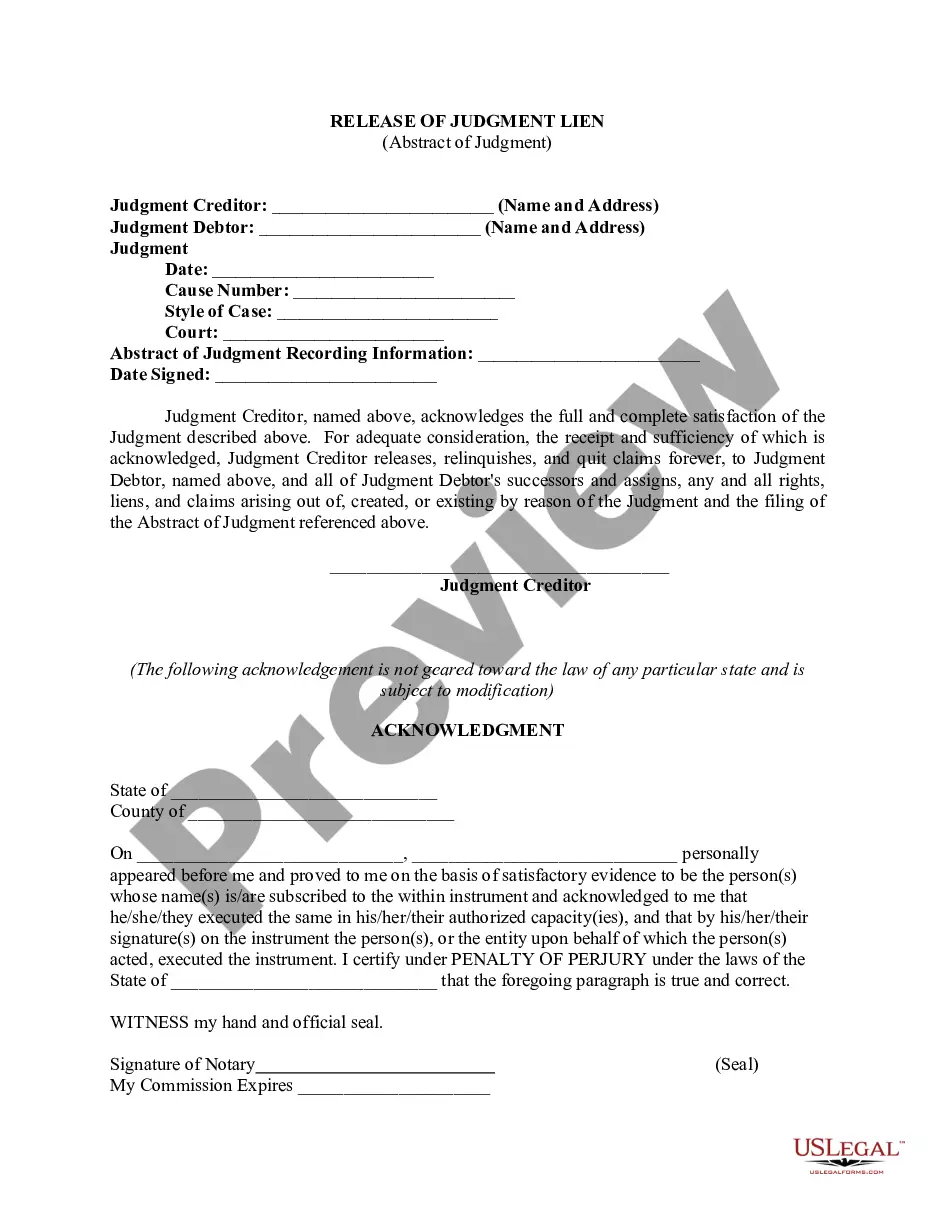
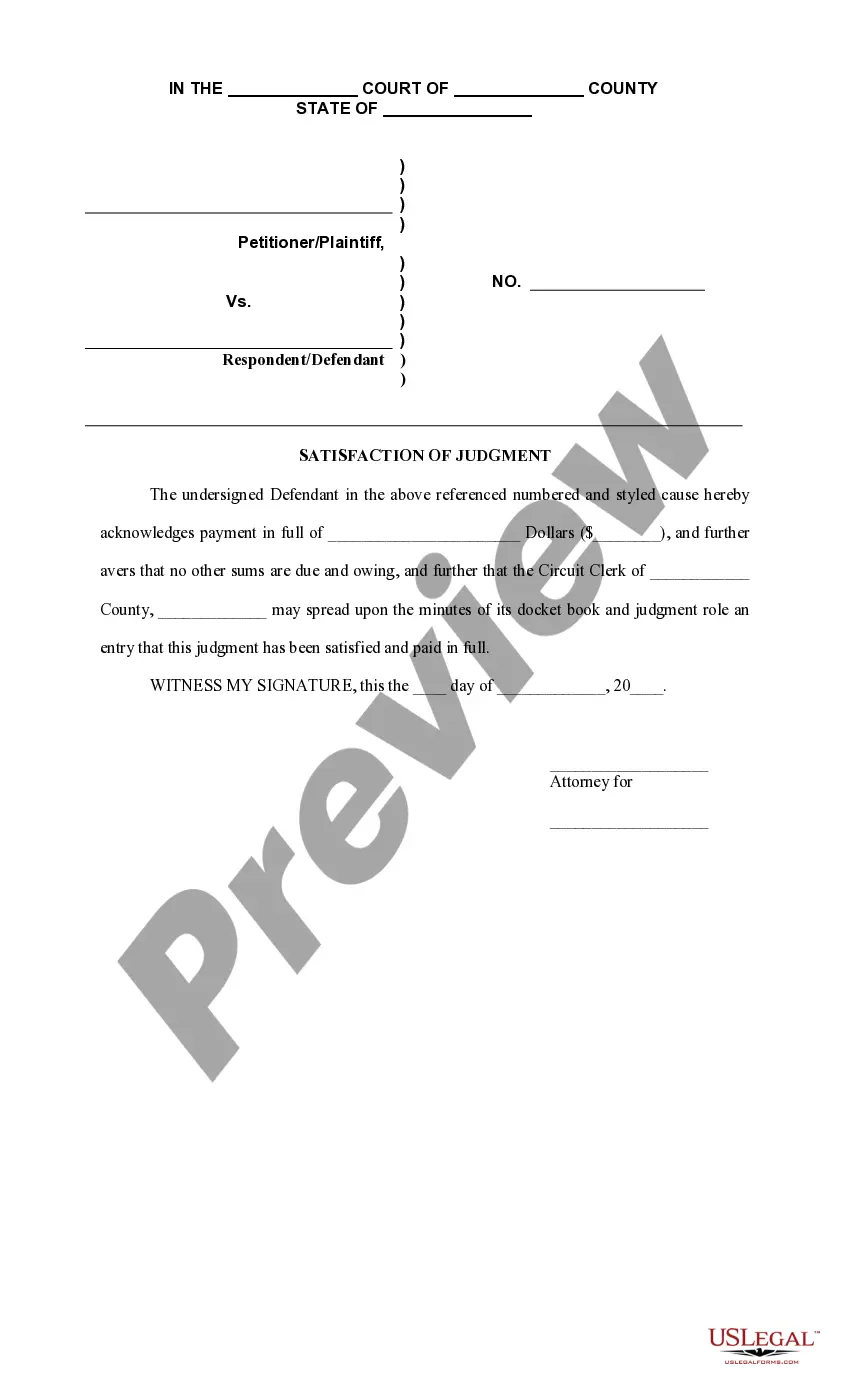
The Iowa Satisfaction of Judgment is a legal document that confirms a judgment has been paid in full. It serves as proof that all fees, costs, and interest associated with the judgment have been satisfied. Unlike other forms of judgment or enforcement documents, the Satisfaction of Judgment specifically indicates that all obligations under the judgment have been fulfilled, directing the court to mark the judgment as paid. This form protects both the creditor and debtor by formally closing the matter.
Main sections of this form
- Case information: Includes court name, county, cause number, and names of the parties involved.
- Amount of judgment: Specifies the total amount of the judgment, including interest and costs.
- Acknowledgment of satisfaction: A declaration confirming that the judgment has been fully paid.
- Authorization for recording: Instructions for marking the judgment as paid in court records.
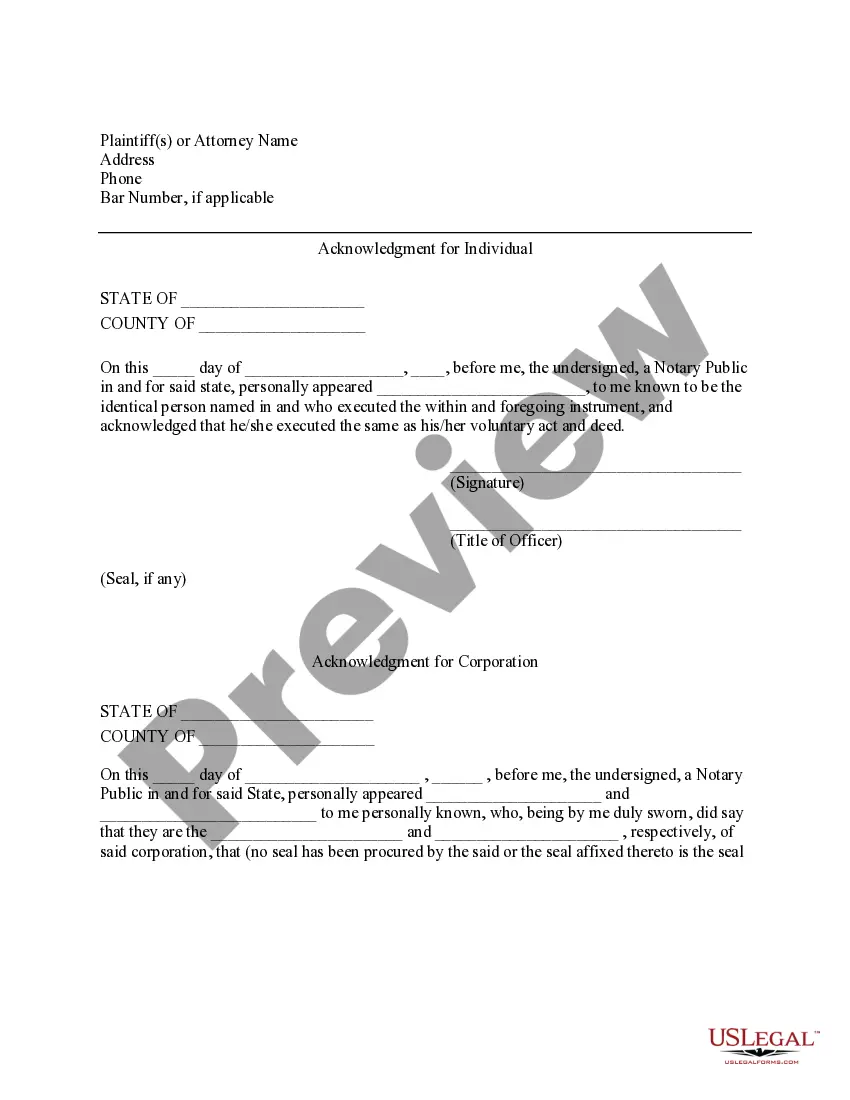
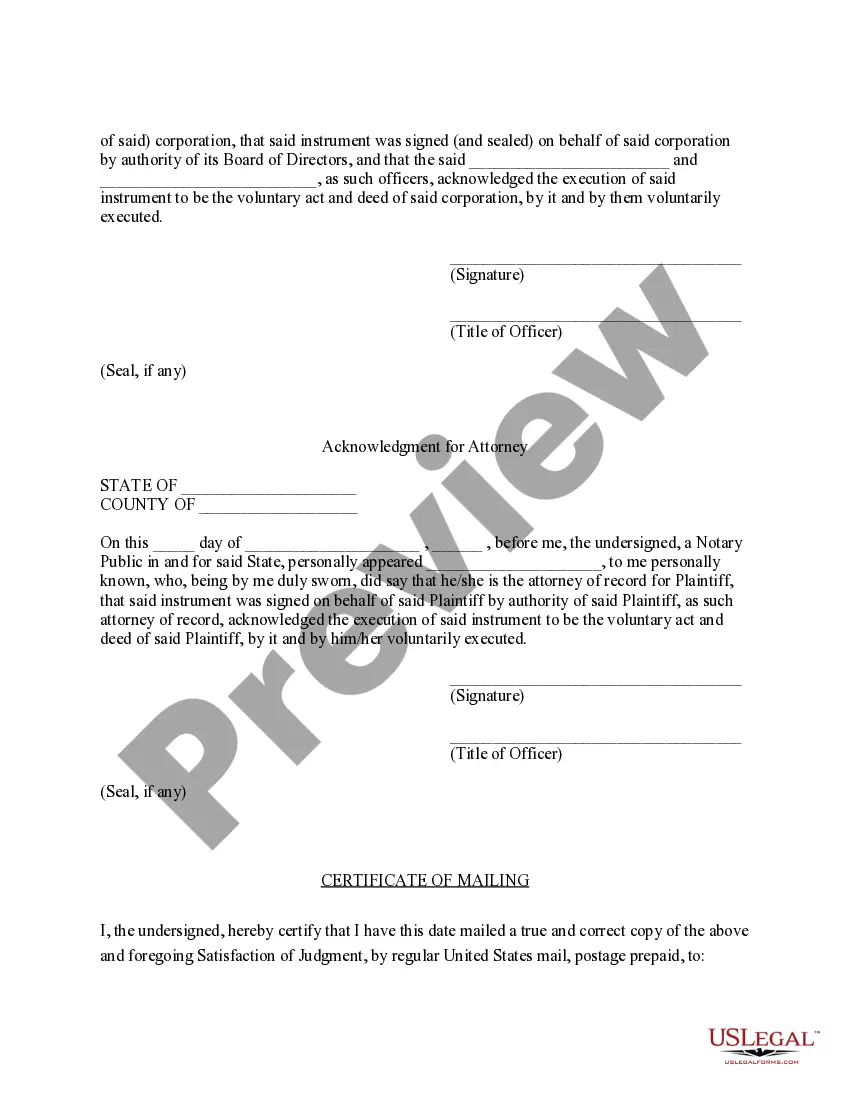
- Notarization section: Provides space for notarization for various parties including individuals, corporations, and attorneys.
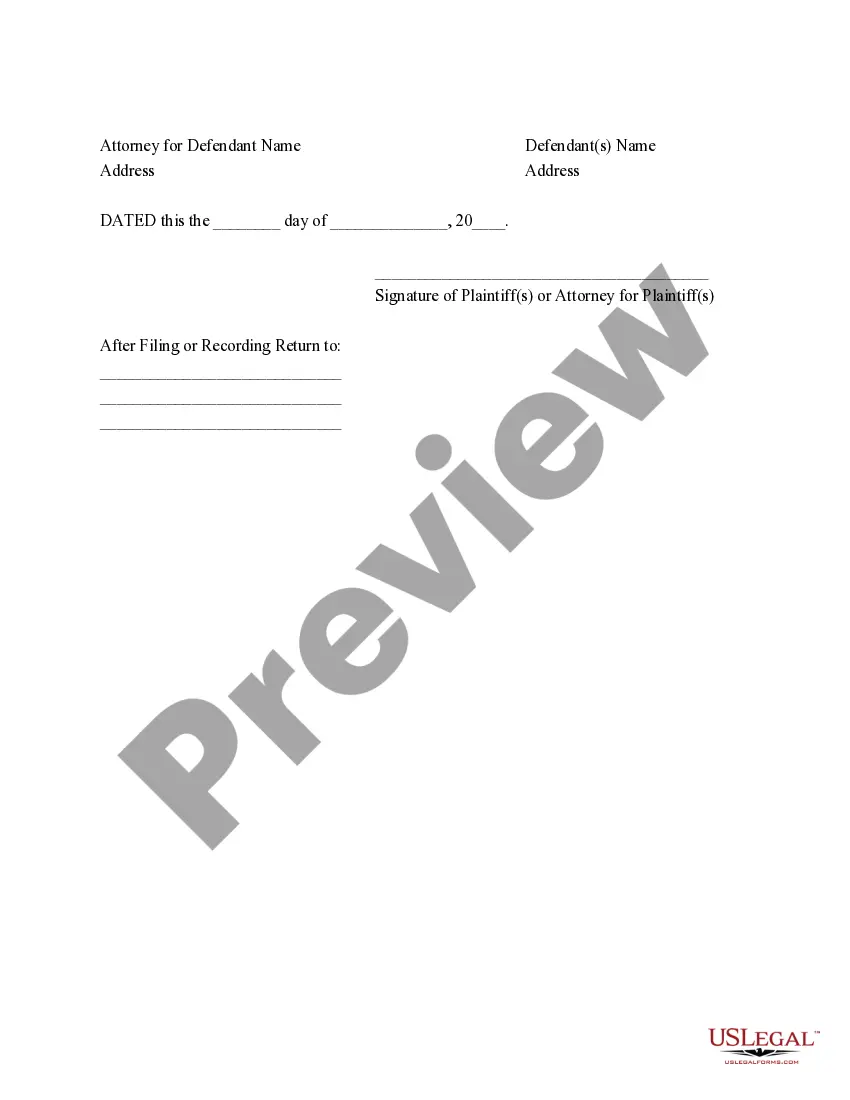
- Certificate of mailing: An area to certify that copies of the satisfaction have been sent to the defendant or their attorney.

When to use this document
This form should be used when a judgment has been paid in full, and the creditor wants to formally notify the court and the debtor that the obligation has been satisfied. It is appropriate in situations such as settling debts, resolving legal disputes, or concluding financial agreements where a court judgment was previously issued. Utilizing this form protects the creditorâs rights and provides peace of mind to the debtor that their financial obligations have been fulfilled.
Intended users of this form
- Creditors or plaintiffs who have received a judgment against a debtor.
- Debtors or defendants who have satisfied their court judgment obligations and need formal documentation.
- Attorneys representing either party in the judgment to facilitate the closure of the case.
Steps to complete this form
- Fill in the case information at the top of the form, including court name, county, and cause number.
- Provide the names of the plaintiff(s) and defendant(s) as they appear in the original judgment.
- State the total amount of the judgment, including any interest and costs incurred.
- Sign the document, ensuring that it is notarized to validate the acknowledgment of satisfaction.
- Complete the certificate of mailing to confirm the distribution of copies to the involved parties.
Is notarization required?
Yes, this form must be notarized to be legally valid. Proper notarization ensures that the acknowledgment of satisfaction is recognized by the court and protects the interests of both parties. US Legal Forms provides integrated online notarization services that are available 24/7, allowing you to complete this process securely via a video call, eliminating the need for travel.
Get your form ready online
Our built-in tools help you complete, sign, share, and store your documents in one place.
Make edits, fill in missing information, and update formatting in US Legal Forms—just like you would in MS Word.
Download a copy, print it, send it by email, or mail it via USPS—whatever works best for your next step.
Sign and collect signatures with our SignNow integration. Send to multiple recipients, set reminders, and more. Go Premium to unlock E-Sign.
If this form requires notarization, complete it online through a secure video call—no need to meet a notary in person or wait for an appointment.
We protect your documents and personal data by following strict security and privacy standards.

Make edits, fill in missing information, and update formatting in US Legal Forms—just like you would in MS Word.

Download a copy, print it, send it by email, or mail it via USPS—whatever works best for your next step.

Sign and collect signatures with our SignNow integration. Send to multiple recipients, set reminders, and more. Go Premium to unlock E-Sign.

If this form requires notarization, complete it online through a secure video call—no need to meet a notary in person or wait for an appointment.

We protect your documents and personal data by following strict security and privacy standards.
Common mistakes to avoid
- Failing to fill in the case number or relevant court details.
- Not providing the correct total amount that includes all fees and interest.
- Neglecting to obtain notarization, making the document invalid.
- Overlooking the requirement to send copies to the involved parties post-completion.
Advantages of online completion
- Convenience of downloading and completing the form at any time.
- Editability allows you to ensure accuracy before finalizing.
- Access to professionally drafted templates ensures compliance with legal standards.
Key takeaways
- The Iowa Satisfaction of Judgment confirms that a judgment has been paid in full.
- It serves both creditors and debtors by formally closing a judgment case.
- Ensure all case details and acknowledgments are accurately completed for validity.
- Notarization is required, and online options are available for convenience.
Looking for another form?


Form popularity
FAQ
The Iowa Satisfaction of Judgment form documents that a court judgment has been fully paid and satisfied. It directs the court to mark the judgment as paid, ensuring the case is closed, and provides a formal record for both the creditor and debtor that the obligation has been fulfilled.
Judgments' enforceability duration is set by Iowa law, not by this form. The Iowa Satisfaction of Judgment form is used after full payment to notify the court and record that the obligation has been satisfied, effectively closing the matter. For exact time limits, consult Iowa procedural rules or an attorney.
Signatures come from the parties involved in the judgment, typically the judgment creditor or their attorney, and the form includes a notary section for individuals, corporations, and attorneys. Notarization helps verify the authenticity of the acknowledgment of satisfaction before recording.
The form requires case information: court name, county, cause number, and names of the parties, and the amount of judgment including interest and costs, plus an acknowledgment of satisfaction. This ensures precise recording and prevents confusion about which judgment is being satisfied.
The form includes an authorization for recording to mark the judgment as paid in the court records, and a certificate of mailing to show that copies of the satisfaction were sent to the defendant or their attorney, ensuring proper notice.
The form is specifically used to confirm full payment and direct the court to mark the judgment as satisfied, effectively closing the case, whereas other enforcement documents focus on collection or ongoing procedures and do not record closing unless the debt is fully paid.