Hawaii Last Will and Testament for Widow or Widower with Minor Children
What this document covers
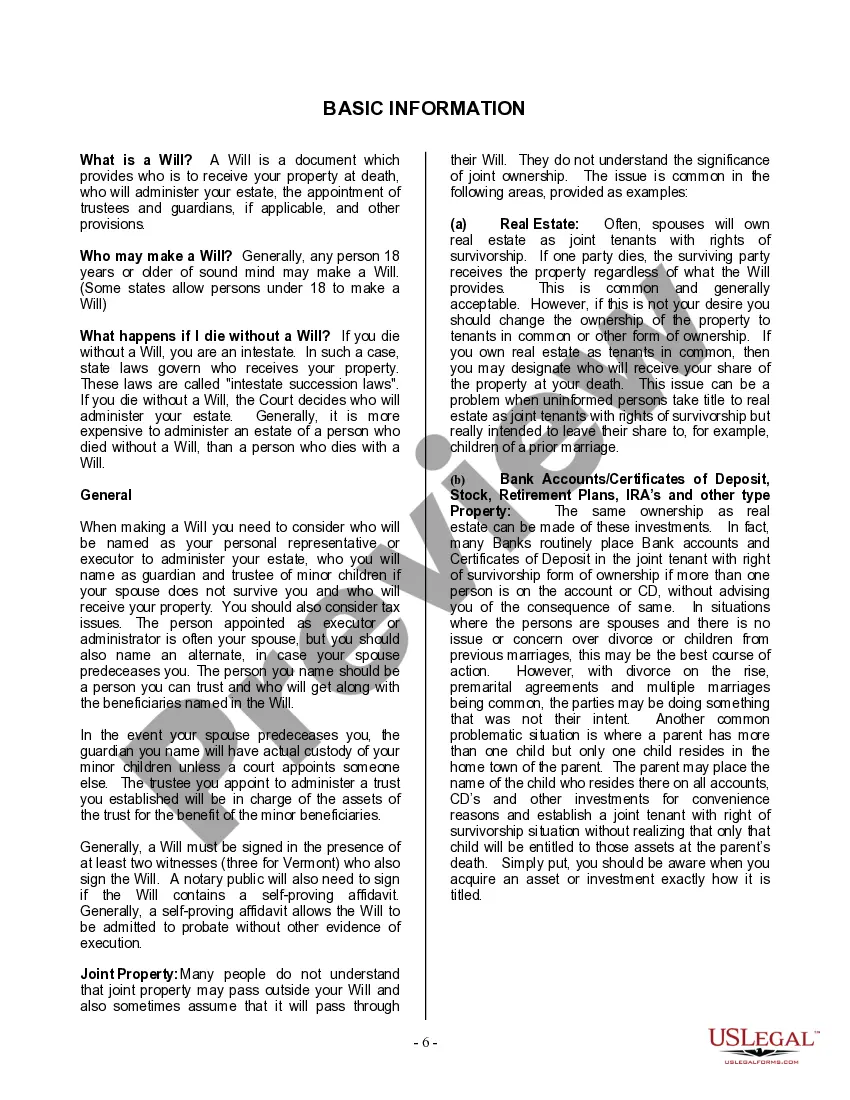
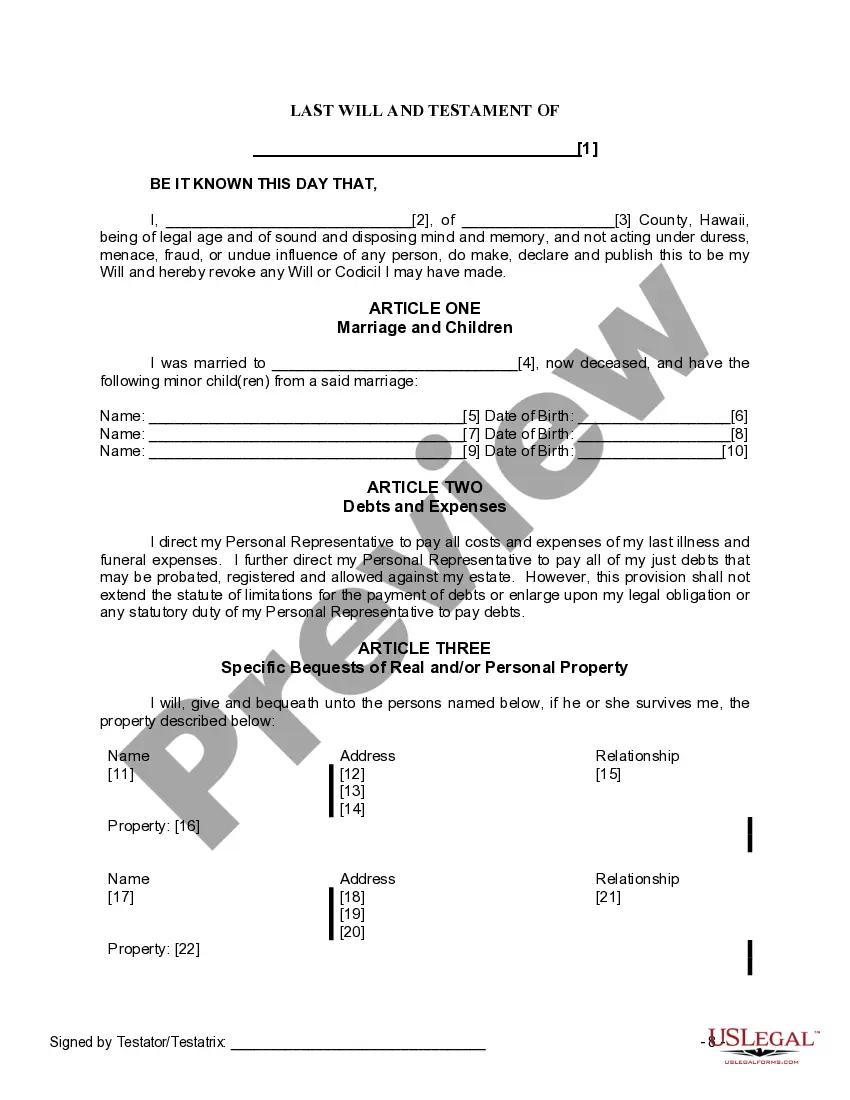
The Last Will and Testament for Widow or Widower with Minor Children is a legal document that outlines how a deceased personâs assets and responsibilities will be handled, particularly when the deceased is a widow or widower with minor children. This will includes essential provisions such as appointing a personal representative, designating beneficiaries for property, and establishing guardianship for minor children. It is specifically tailored to ensure that the wishes of the deceased are respected while providing for the care and financial support of any minor children involved. Unlike general wills, this form encapsulates the unique considerations a surviving spouse must address when managing an estate involving dependent children.
Key parts of this document
- Article addressing marital status and minor children.
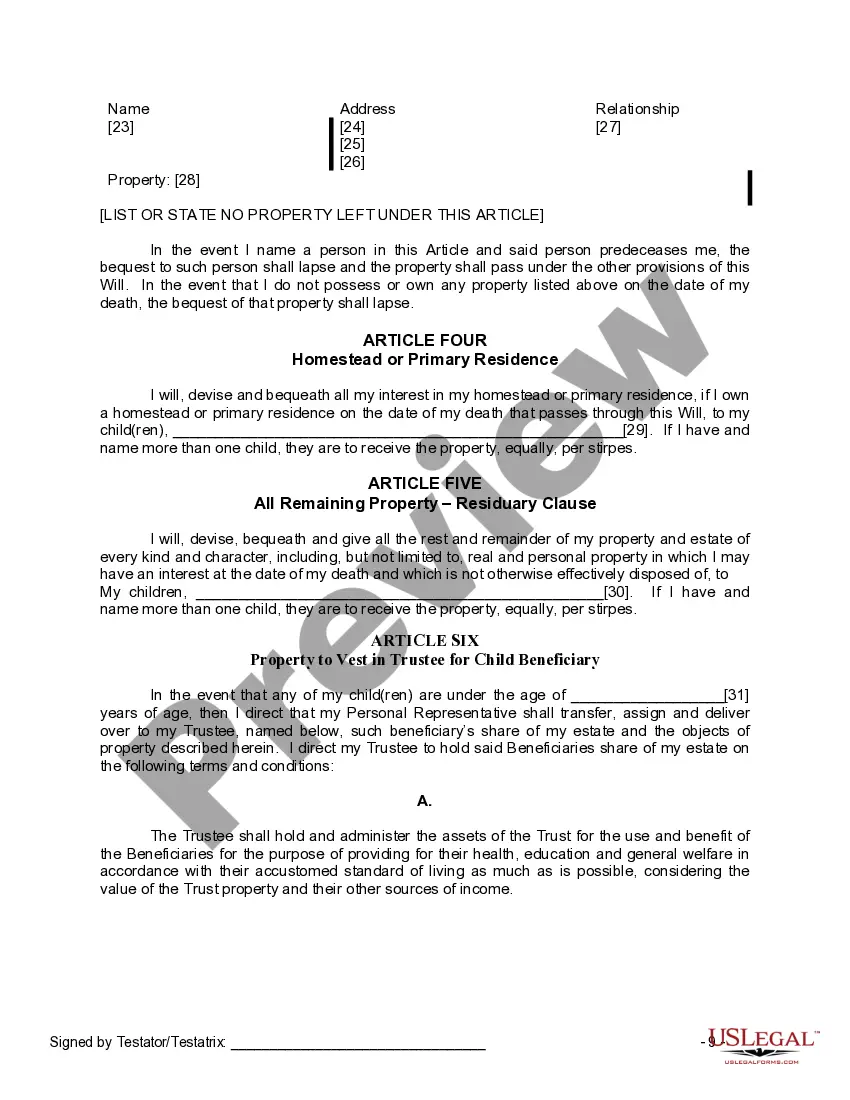
- Specific bequests of property to named individuals.
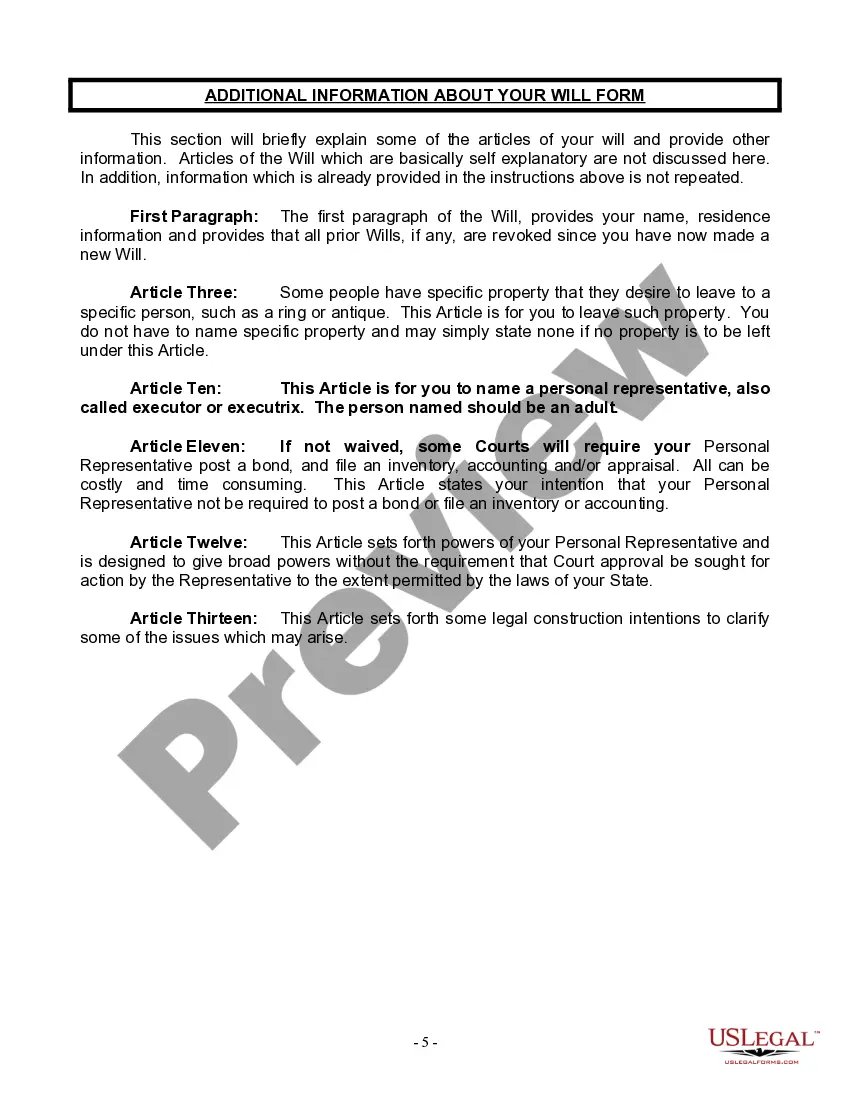
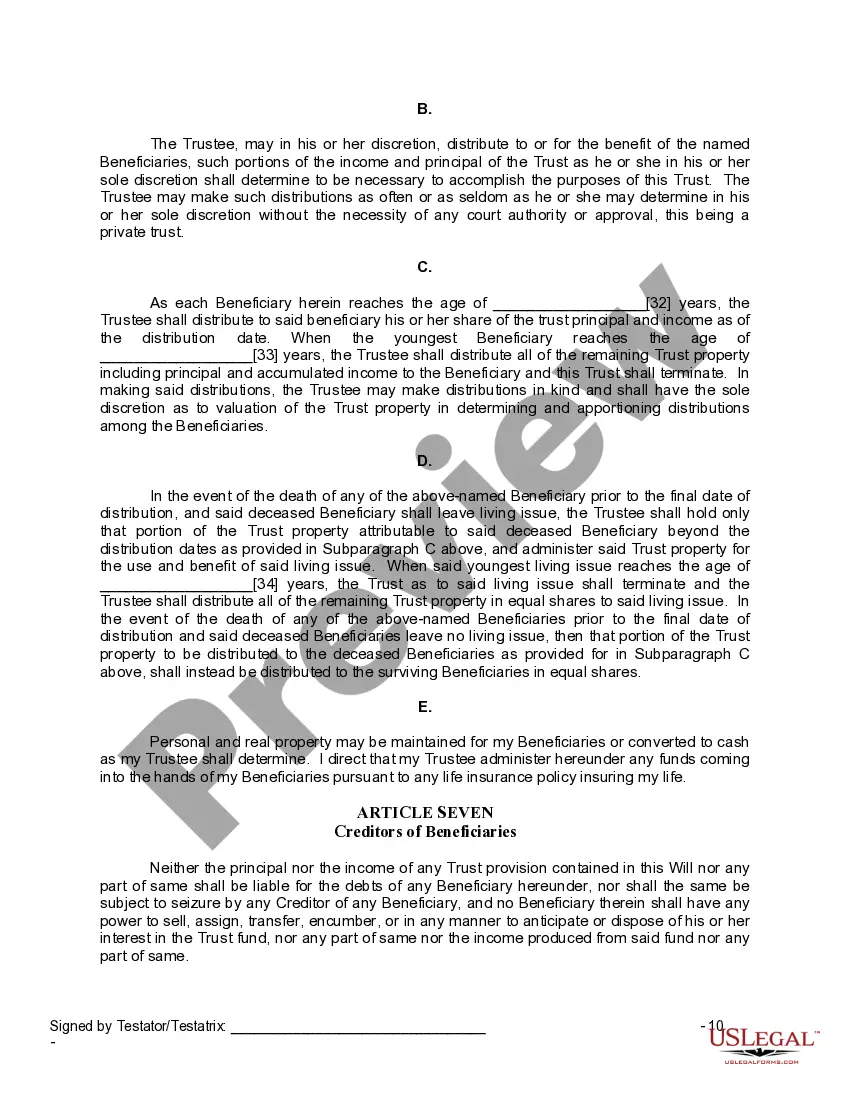
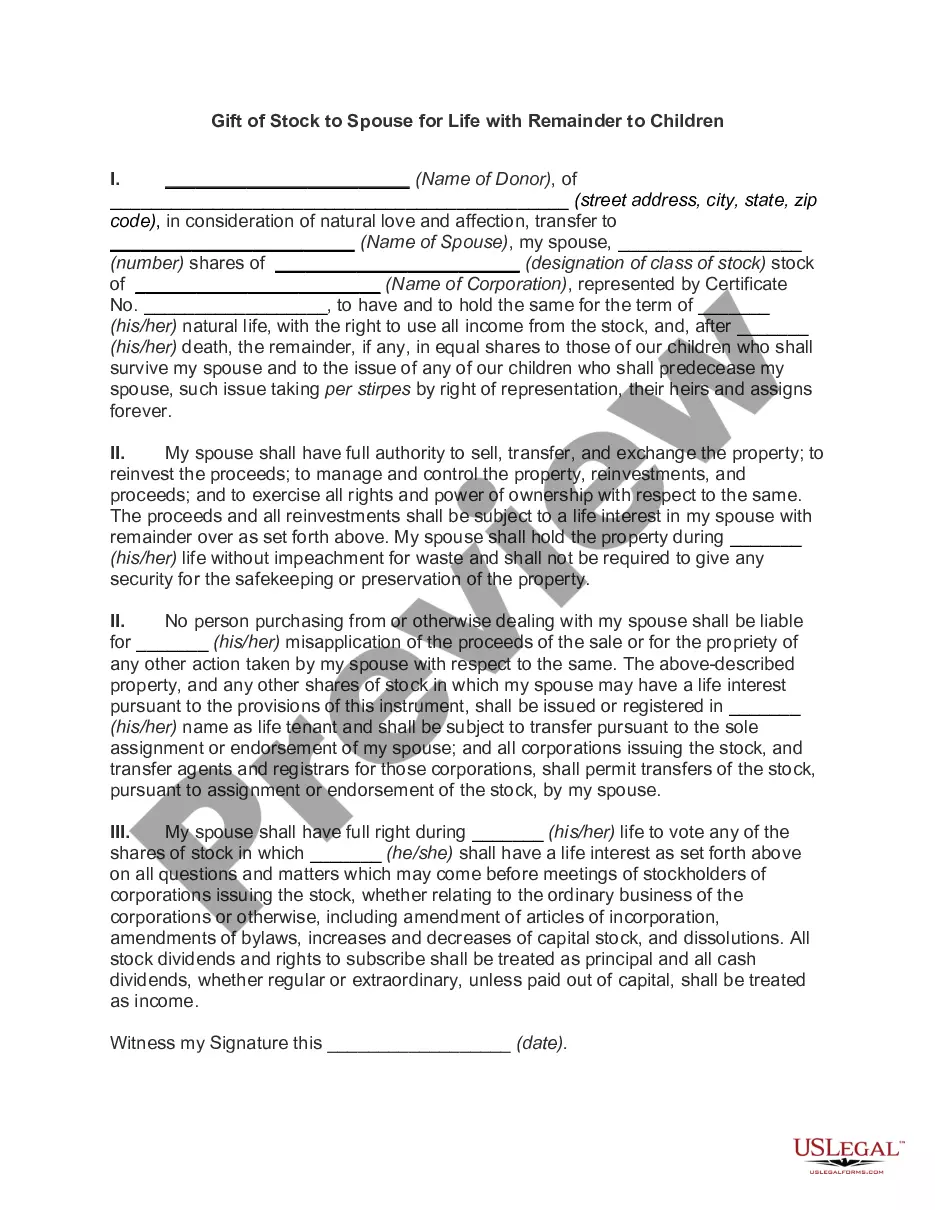
- Trust provisions for the benefit of minor children.
- Appointment of a guardian for minor children.
- Designation of a personal representative to administer the estate.
- Self-proving affidavit for easier probate processing, if applicable.




Common use cases
This form should be utilized when a widow or widower with minor children wishes to ensure that their estate is properly managed according to their wishes after their death. It is essential in scenarios where the individual has specific assets to bequeath, needs to address guardianship for their children, or wants to establish trusts for the financial benefit of minor beneficiaries. Use this will to protect your childrenâs interests and to facilitate a smoother estate administration process.
Who this form is for
- Widows or widowers who have minor children and wish to outline their estate plans.
- Individuals seeking to ensure the welfare of their children in the event of their death.
- Anyone wanting to specify how their assets should be distributed among beneficiaries.
- People who need to appoint a guardian for their minor children.
Instructions for completing this form
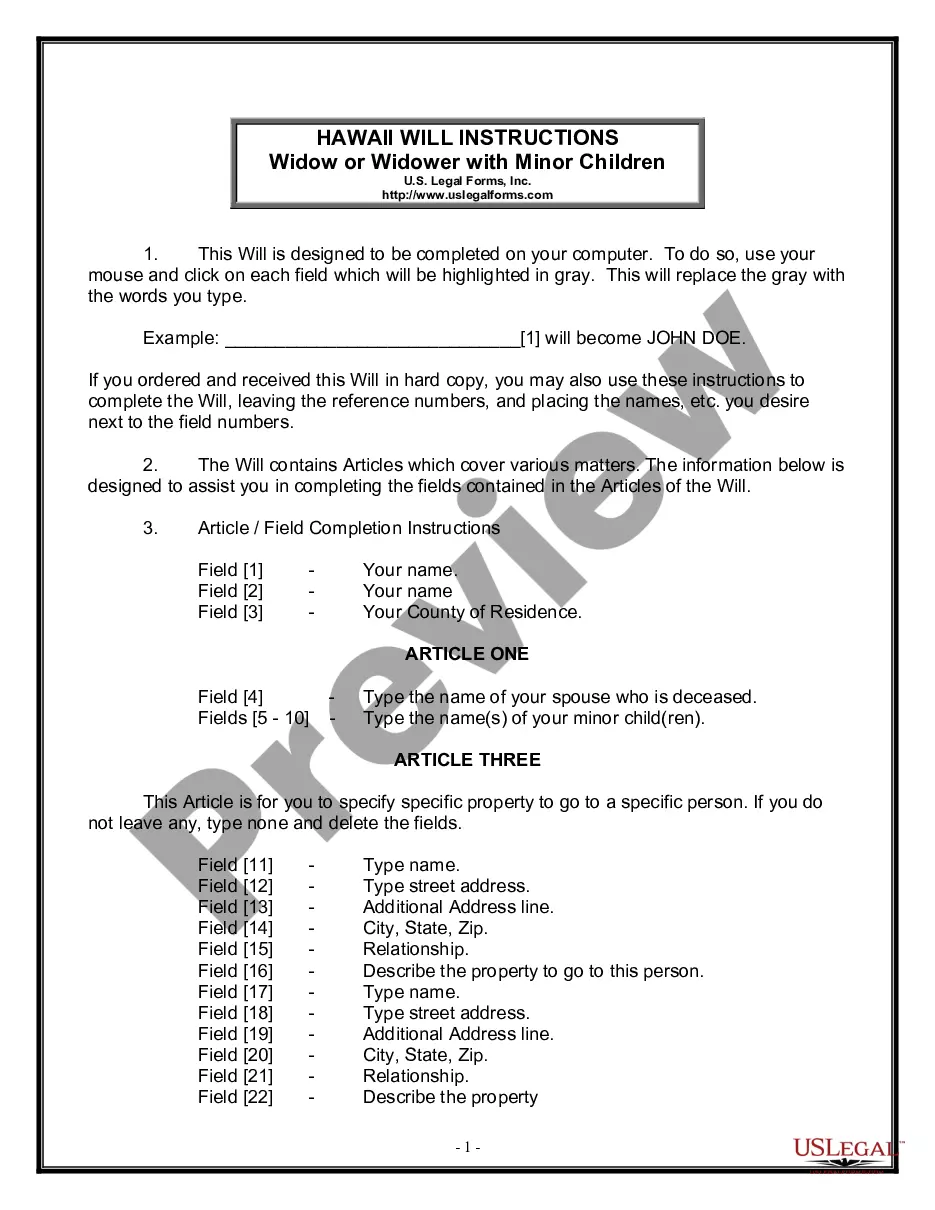
- Identify yourself and your deceased spouse, if applicable.
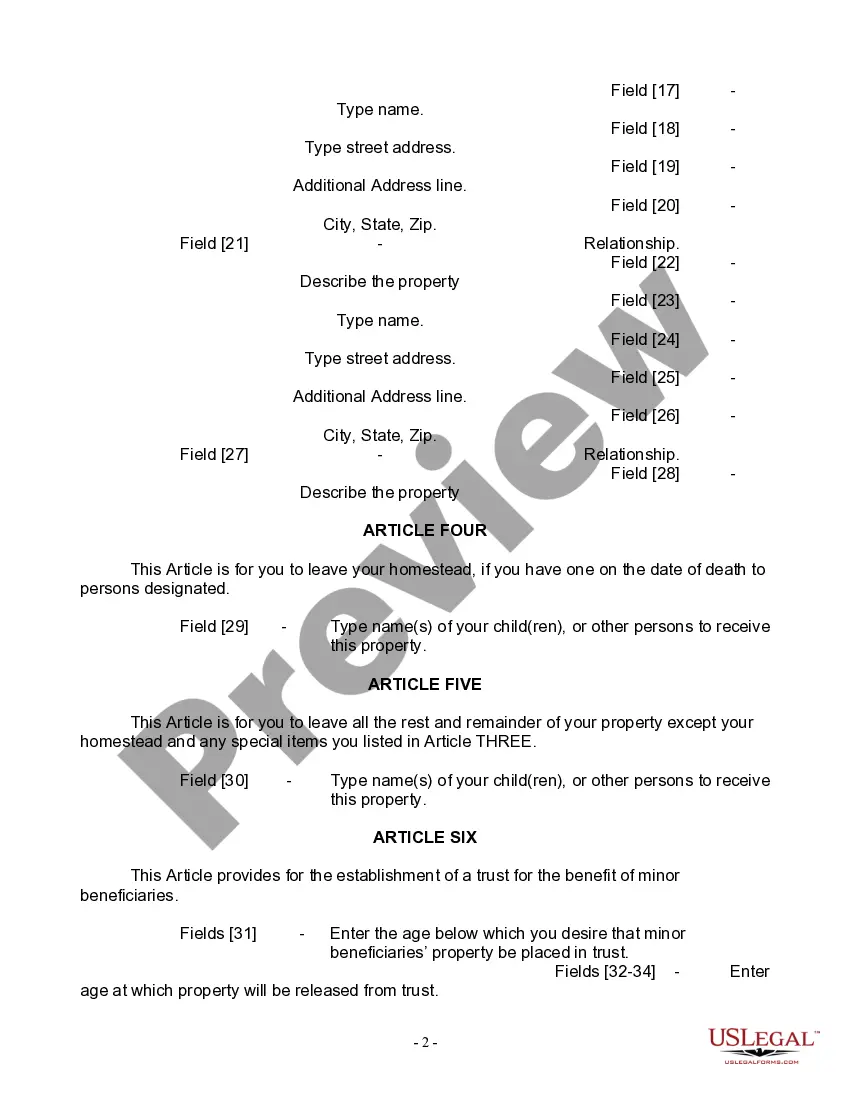
- List the names of your minor children and any specific assets you wish to bequeath.
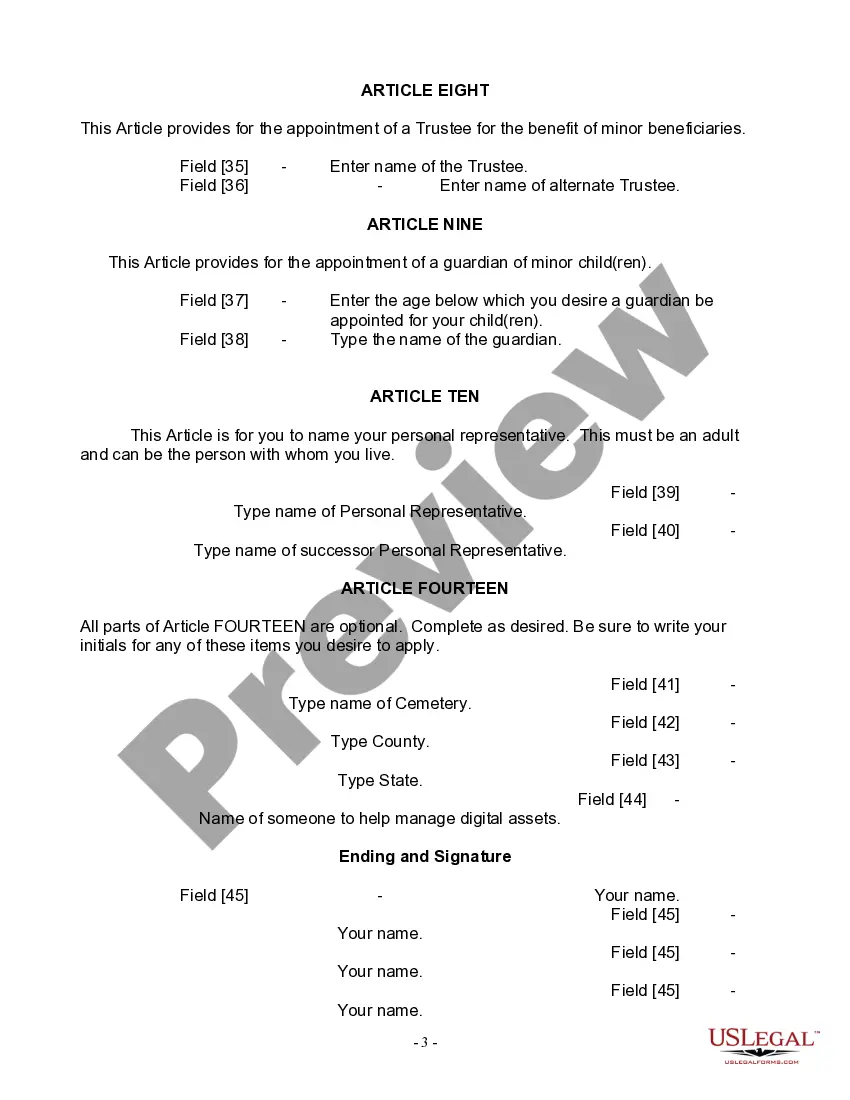
- Designate a guardian for your children and a personal representative to handle your estate.
- Fill in trust details for assets intended for minor beneficiaries.
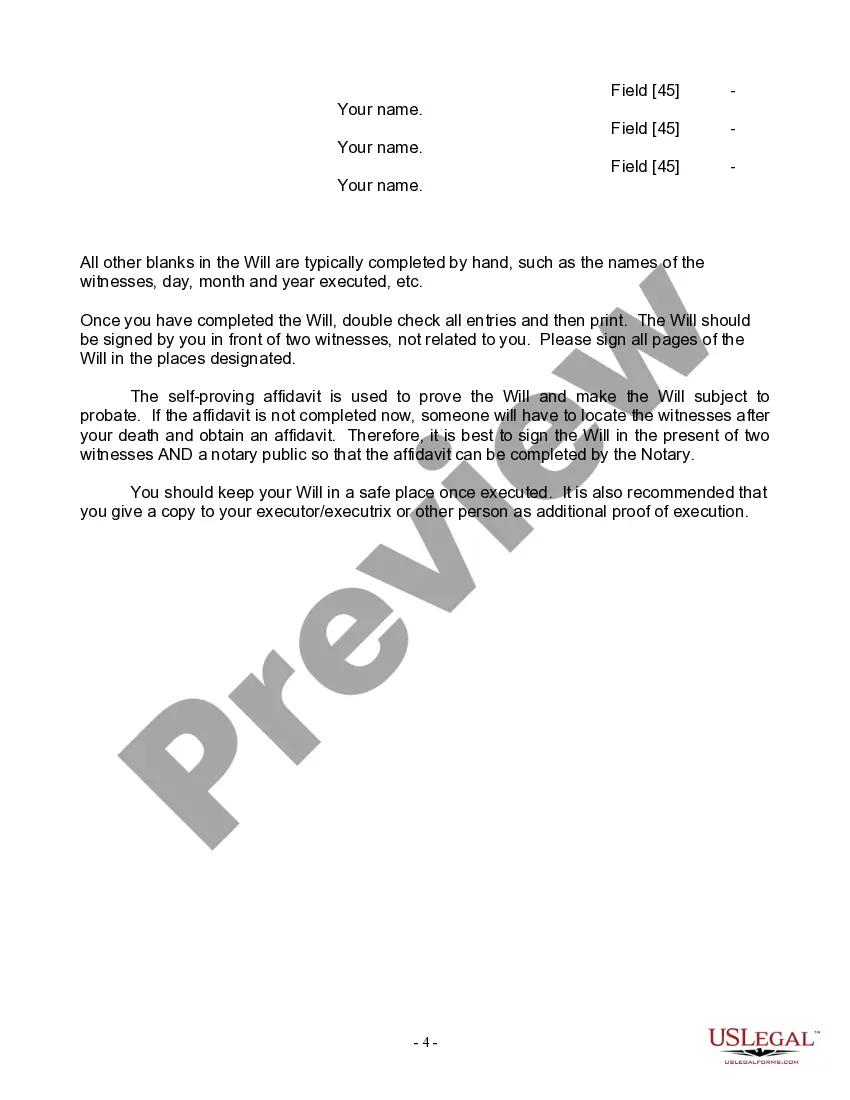
- Have the form signed in front of the required witnesses and, if needed, a notary public.
Notarization requirements for this form
Yes, this form must be notarized to be legally valid if you include the self-proving affidavit. Notarization helps streamline the probate process by providing evidence of authenticity upfront, reducing delays when submitting the will to the court. US Legal Forms offers integrated online notarization, available 24/7 through secure video calls.
Get your form ready online
Our built-in tools help you complete, sign, share, and store your documents in one place.
Make edits, fill in missing information, and update formatting in US Legal Forms—just like you would in MS Word.
Download a copy, print it, send it by email, or mail it via USPS—whatever works best for your next step.
Sign and collect signatures with our SignNow integration. Send to multiple recipients, set reminders, and more. Go Premium to unlock E-Sign.
If this form requires notarization, complete it online through a secure video call—no need to meet a notary in person or wait for an appointment.
We protect your documents and personal data by following strict security and privacy standards.

Make edits, fill in missing information, and update formatting in US Legal Forms—just like you would in MS Word.

Download a copy, print it, send it by email, or mail it via USPS—whatever works best for your next step.

Sign and collect signatures with our SignNow integration. Send to multiple recipients, set reminders, and more. Go Premium to unlock E-Sign.

If this form requires notarization, complete it online through a secure video call—no need to meet a notary in person or wait for an appointment.

We protect your documents and personal data by following strict security and privacy standards.
Common mistakes to avoid
- Failing to have the will signed by the required number of witnesses.
- Not specifying guardianship for minor children, leaving it up to the court.
- Overlooking the need for a notary if using a self-proving affidavit.
- Neglecting to review and update the will after significant life events.
Benefits of completing this form online
- Convenient digital completion saves time and allows for easy edits.
- Access to attorney-drafted templates ensures legal appropriateness.
- Downloadable and printable formats make it easy to execute the will correctly.
- Step-by-step guidance simplifies the will preparation process.
Legal use & context
- This will facilitates the smooth transfer of assets according to your wishes.
- It helps reduce potential disputes among family members regarding your estate.
- The self-proving affidavit allows for a simpler probate process.
Key takeaways
- This Last Will and Testament is specifically designed for widows or widowers with minor children.
- It is important to have a will to ensure your wishes are followed and your children are cared for.
- Witness and notarization requirements must be met for the will to be valid.
Looking for another form?


Form popularity
FAQ
A will becomes legally binding when it meets all the state's requirements, including being properly signed and witnessed. In Hawaii, this means the testator must sign the will in front of two witnesses who also sign it. Ensuring your Hawaii Last Will and Testament for Widow or Widower with Minor Children is compliant with these legal requirements guarantees the handling of your estate aligns with your wishes.
The three primary types of wills are simple wills, testamentary trusts, and living wills. A simple will outlines how you want your assets distributed after you pass away. For a Hawaii Last Will and Testament for Widow or Widower with Minor Children, choosing a simple will can effectively address the basic needs of asset distribution and guardian selection for your children.
To create a valid will, the testator must be at least 18 years old, must have the mental capacity to understand the implications of making a will, and must put the will in writing. Additionally, some witnesses should be present to sign the document, affirming the testator's intentions. For those creating a Hawaii Last Will and Testament for Widow or Widower with Minor Children, following these requirements ensures that your wishes regarding child guardianship and asset distribution are respected.
No, you do not need to register your will for it to be valid in Hawaii; however, it is important to ensure that the will complies with state requirements. A properly executed will is legally binding as long as it is created according to Hawaii laws. For those crafting a Hawaii Last Will and Testament for a widow or widower with minor children, securing the right documentation through uslegalforms can simplify your planning process and ensure your wishes are effectively communicated.
In Hawaii, you must file the will with the court within 30 days after the death of the testator. This process starts the probate proceedings, which allows for the proper distribution of the deceased's assets according to the will. If you're navigating the complexities of a Hawaii Last Will and Testament for a widow or widower with minor children, understanding this filing requirement is crucial for protecting your family’s interests.
Yes, you can write your own will in Hawaii, and having it notarized can add an extra layer of validation. However, a notarized will may still require witnesses to be fully compliant with state laws. When drafting a Hawaii Last Will and Testament for a widow or widower with minor children, using a template from uslegalforms can help you ensure that all necessary legal requirements are met.
In Hawaii, a will must be in writing, signed by the testator, and witnessed by at least two individuals. This legal framework ensures that your wishes are honored in the distribution of your assets. When creating a Hawaii Last Will and Testament for a widow or widower with minor children, it's essential to adhere to these guidelines, as they validate your intentions and protect your loved ones.
Hawaii does allow handwritten wills, also known as holographic wills. To ensure they are legitimate, these wills must include your signature and clearly established intentions for your estate. While you have the option to create one, leveraging a structured format can help in crafting a more precise and legally sound Hawaii Last Will and Testament for Widow or Widower with Minor Children. Using resources like US Legal Forms can assist you in this process.
Yes, a handwritten will is legal in Hawaii, as long as it fulfills the statutory requirements. This means it must be signed by you and clearly outline your wishes regarding your estate. However, to prevent complications, consider using a officially recognized format. This can provide peace of mind and clarity when managing your affairs concerning a Hawaii Last Will and Testament for Widow or Widower with Minor Children.
A handwritten will can be valid, provided it meets the laws of the jurisdiction where it is executed. In Hawaii, a handwritten will, or holographic will, must still contain vital components like your signature and clear directives about asset distribution. While they can be valid, it is often safer and clearer to utilize a formal template, especially for complex situations like a Hawaii Last Will and Testament for Widow or Widower with Minor Children. This reduces ambiguity and potential disputes.