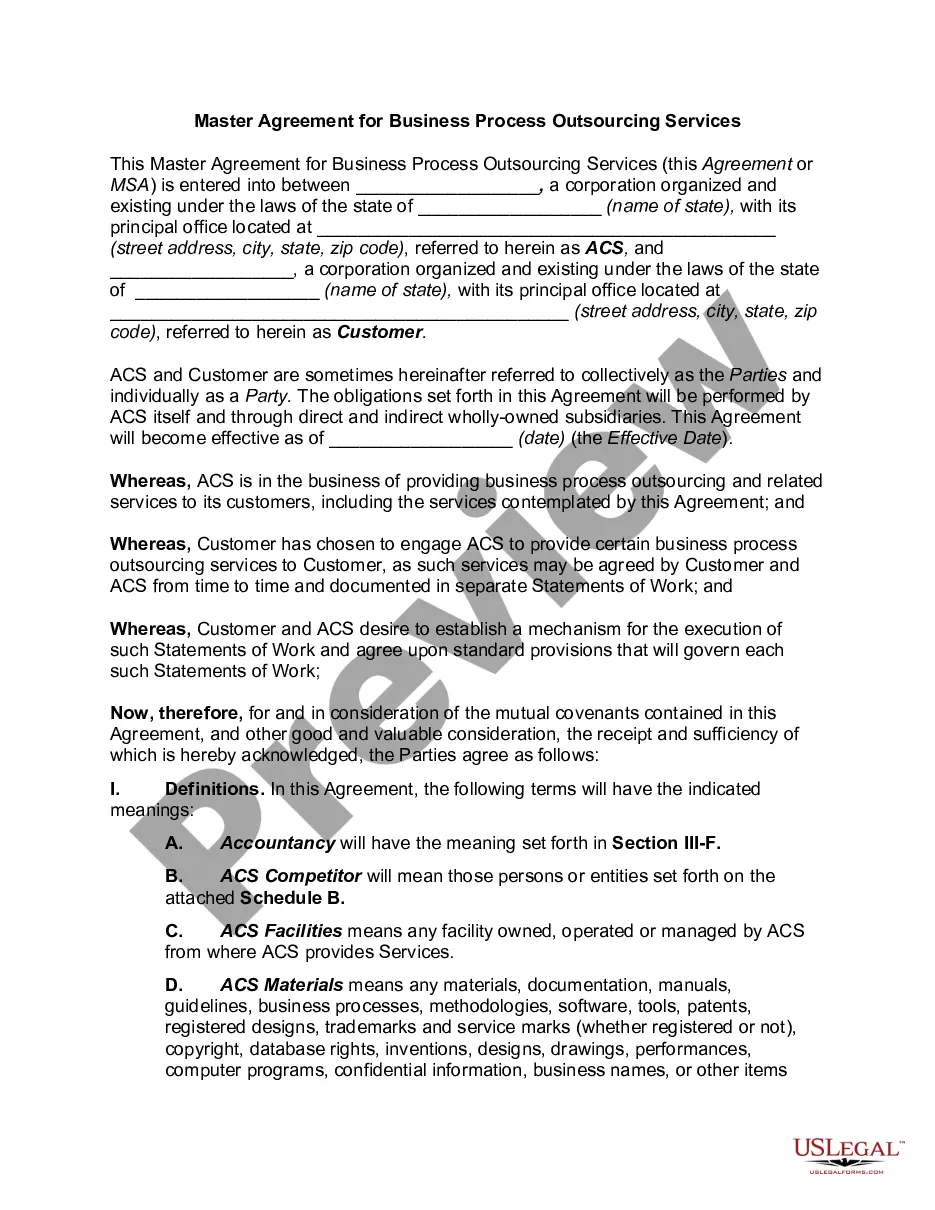
Georgia 7 Day Notice to Pay Rent - Residential
What is this form?
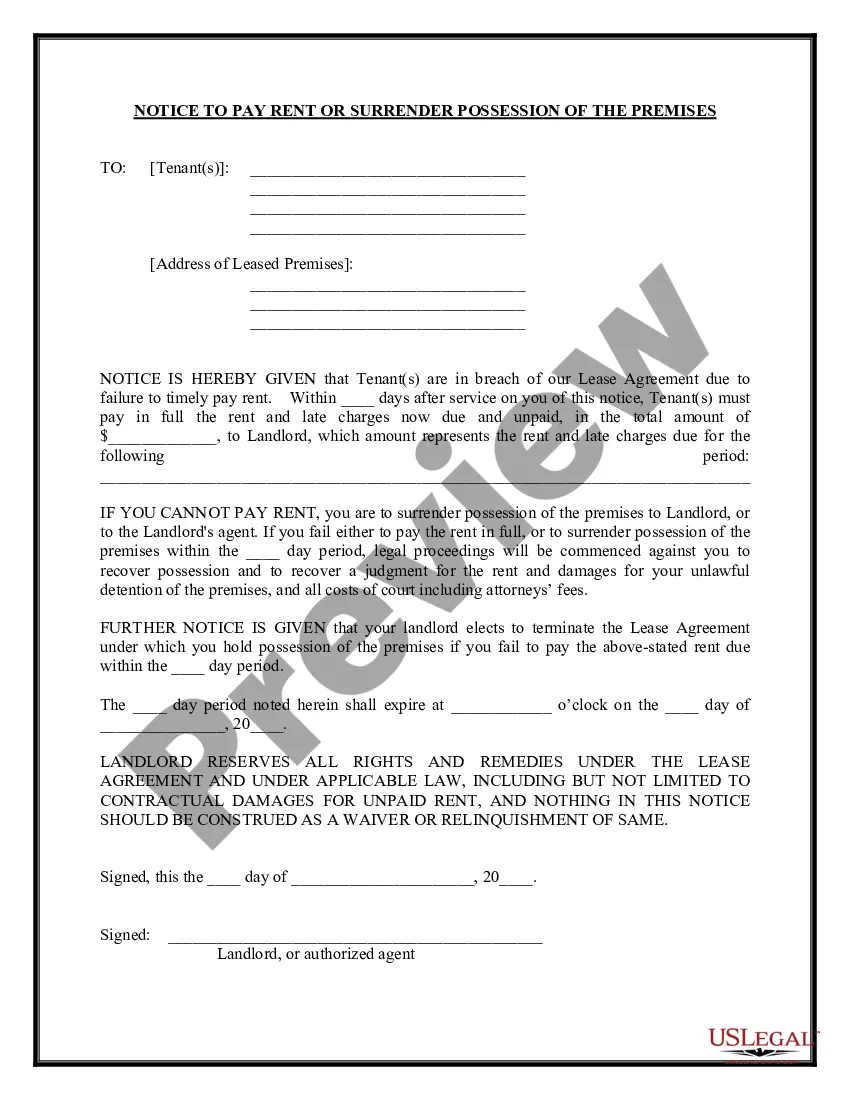
The 7 Day Notice to Pay Rent - Residential is a legal document used by landlords to formally request overdue rent from residential tenants. This notice informs tenants that they have seven days to pay the outstanding rent. If the tenant does not comply, the landlord may proceed with termination of the lease and initiate eviction proceedings. This form ensures that landlords follow proper protocol in demanding payment, thus protecting their rights under lease agreements and state laws.
Key parts of this document
- Parties involved: Identifies the tenant(s) and landlord.
- Property details: Specifies the address of the leased premises.
- Rental information: Lists overdue rent and any applicable late charges.
- Payment methods: Indicates acceptable forms of payment (e.g., cash, money order).
- Consequences of non-payment: Explains the potential lease termination and eviction process.
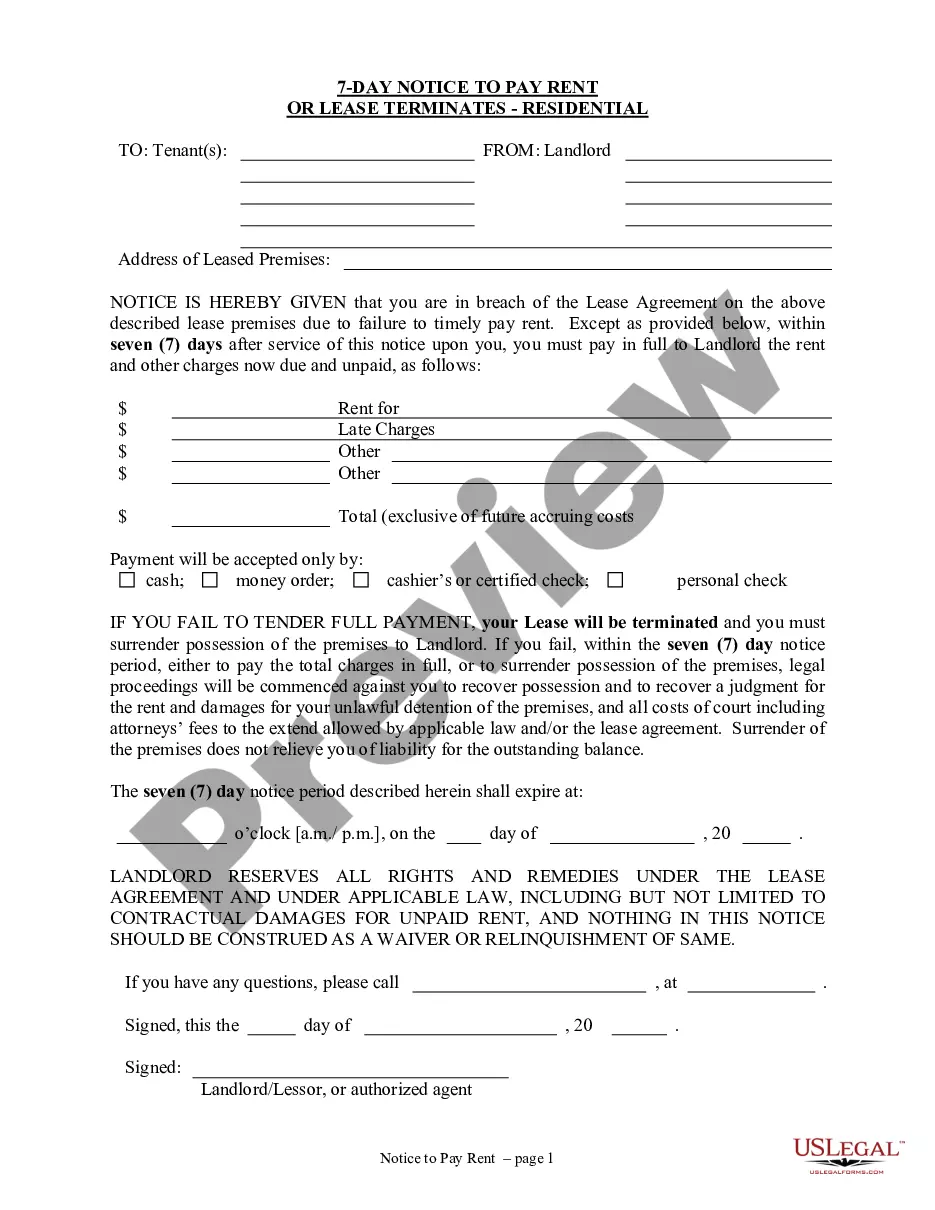
- Delivery proof: Describes how the notice was delivered to the tenant.

When to use this document
This form is used when a tenant has failed to pay rent by the due date. If the landlord wishes to formally notify the tenant of the overdue amount and demand payment, this notice serves as an official record. It is particularly relevant when the landlord intends to take legal action, such as eviction, if payment is not received within the specified time frame.
Intended users of this form
- Landlords of residential properties including houses, apartments, or condos.
- Property managers acting on behalf of landlords to enforce lease agreements.
- Landlords seeking to maintain a legal record of communication regarding overdue rent.
How to prepare this document
- Identify the parties: Fill in the names of the tenant(s) and the landlord.
- Specify the property: Enter the full address of the leased premises.
- Detail overdue payments: List the overdue rent amount and any late charges.
- Choose payment methods: Indicate which forms of payment will be accepted.
- Set the notice expiration: Specify the date by which payment must be made.
- Sign the notice: Ensure the landlord or authorized agent signs the document.
Notarization requirements for this form
Notarization is generally not required for this form. However, certain states or situations might demand it. You can complete notarization online through US Legal Forms, powered by Notarize, using a verified video call available anytime.
Get your form ready online
Our built-in tools help you complete, sign, share, and store your documents in one place.
Make edits, fill in missing information, and update formatting in US Legal Forms—just like you would in MS Word.
Download a copy, print it, send it by email, or mail it via USPS—whatever works best for your next step.
Sign and collect signatures with our SignNow integration. Send to multiple recipients, set reminders, and more. Go Premium to unlock E-Sign.
If this form requires notarization, complete it online through a secure video call—no need to meet a notary in person or wait for an appointment.
We protect your documents and personal data by following strict security and privacy standards.

Make edits, fill in missing information, and update formatting in US Legal Forms—just like you would in MS Word.

Download a copy, print it, send it by email, or mail it via USPS—whatever works best for your next step.

Sign and collect signatures with our SignNow integration. Send to multiple recipients, set reminders, and more. Go Premium to unlock E-Sign.

If this form requires notarization, complete it online through a secure video call—no need to meet a notary in person or wait for an appointment.

We protect your documents and personal data by following strict security and privacy standards.
Avoid these common issues
- Failing to deliver the notice properly as required by law.
- Not including all necessary details about the overdue payment.
- Leaving out the deadline for payment, which could weaken the notice's effectiveness.
Why complete this form online
- Convenience: Easily access and download the form at any time.
- Editability: Fill out the form digitally to ensure all information is accurate.
- Legal compliance: Form templates are drafted by licensed attorneys to meet legal standards.
Legal use & context
- This notice serves as a formal demand for payment and is essential for initiating eviction proceedings legally.
- Failure to use this form properly can affect the landlord's ability to enforce lease terms and recover unpaid rent.
Key takeaways
- The 7 Day Notice to Pay Rent - Residential is a crucial step in the rent collection process.
- Timely delivery and completion of this notice can prevent legal disputes.
- Understanding specific state laws is vital for proper enforcement of this notice.
Looking for another form?
Form popularity
FAQ
The time it takes to complete an eviction in Nevada can vary but typically lasts from a few weeks to a couple of months. After the notice period, if you do not respond or resolve the issue, your landlord can file for eviction in court. The court process includes hearings and can delay proceedings, but once a judgment is made, an eviction can occur quickly. If you're dealing with rental issues, consider resources like USLegalForms to guide you through eviction laws and procedures.
The new eviction law in Georgia offers more protections for tenants during tough economic times. It requires landlords to provide a written notice to tenants facing eviction, informing them of the reason and allowing them time to address the issue. This law aims to create a fairer process for both tenants and landlords, promoting timely communication and resolution.
In Georgia, a landlord must provide a 60-day written notice to a tenant if they wish to end a lease. However, this can vary depending on the specifics of the lease agreement. For a month-to-month tenancy, a 30-day notice is sufficient. Always consult the lease terms and local laws to confirm the correct notice period.
Bona fide house guests, known as invitees, have no rights under Georgia law and you can get them out very quickly. If, on the other hand, your guest pays some rent or helps with chores such as housework or babysitting, then he is properly considered a tenant. And tenants have renters' rights under Georgia law.
By not having signed a lease, you have no proof of rights. No signature means no peace of mind. Being in a roommate situation, without the lease, could always end at any second.Without a lease, the landlord would be free to increase rent at the end of every 30 days.
§ 44-7-50). Georgia law has no set time frame for how long a landlord must wait after giving the tenant an eviction notice and filing an eviction lawsuit. Best practice for landlords is to wait at least three days before filing the eviction lawsuit, to give the tenant time to pay the rent or move out of the apartment.
The person you sue must be served the Complaint and Summons by the Sheriff, and you pay a service cost of approximately $25.00 per Defendant. (Example: evict one Defendant - the cost is approximately $83.00; two Defendants - the cost is approximately $108.00- plus the online filing fee if applicable).
Notice Requirements for Georgia Landlords A landlord can simply give you a written notice to move, allowing you 60 days as required by Georgia law and specifying the date on which your tenancy will end.
You are a renter.If you have no lease agreement, and just pay your rent every month, you are considered a tenant-at-will. Under Georgia law, the landlord is required to give you a notice of at least 60 days before requiring you to move out. After that, you can be evicted.
If your roommate does not move out by the date specified in your letter, you must file an affidavit with the court stating your name, your roommate's name and the reason you are evicting him. You must show proof that you asked your roommate to move out and -- if he owes rent -- estate how much he owes.