Florida Letter from Tenant to Landlord containing Notice to landlord to withdraw retaliatory rent increase
What is this form?
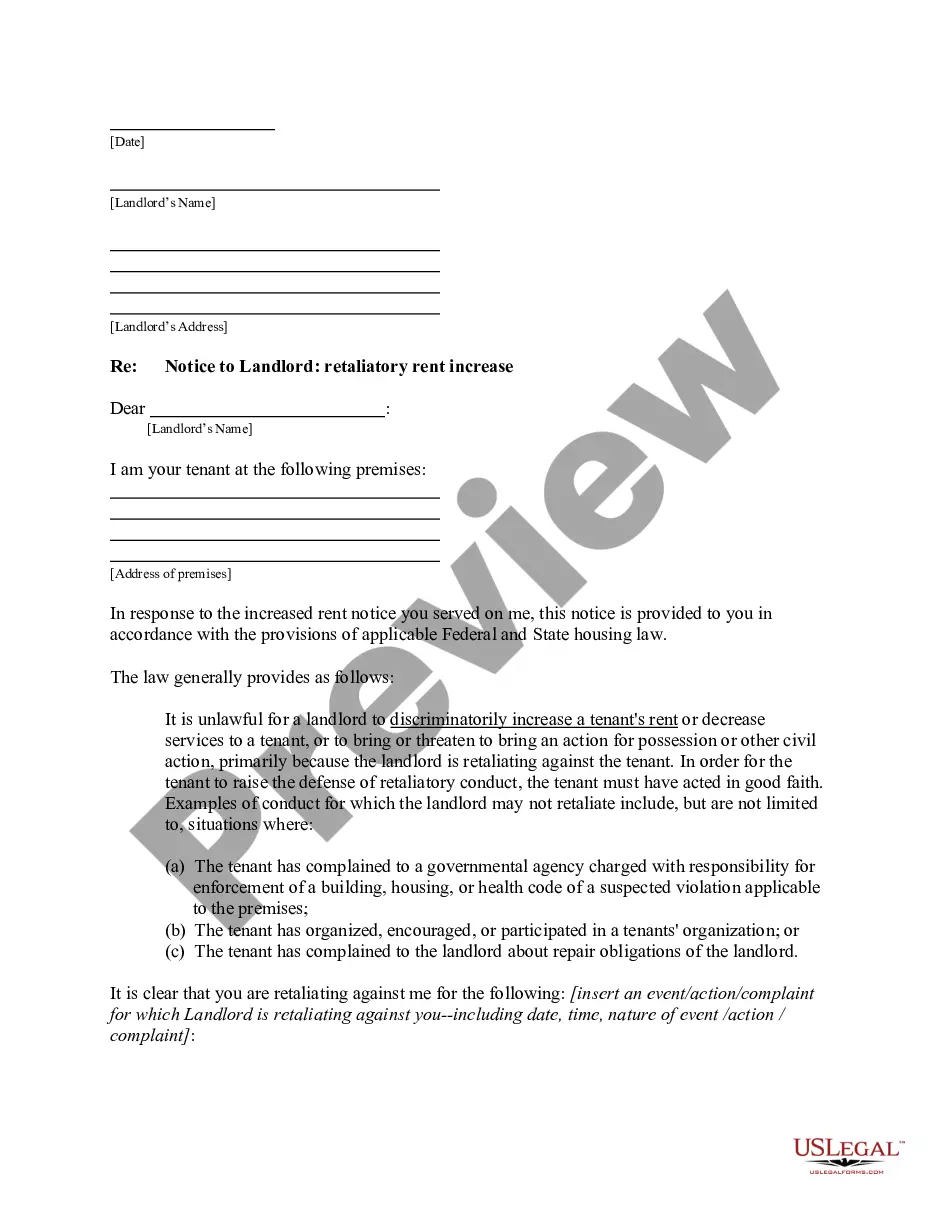
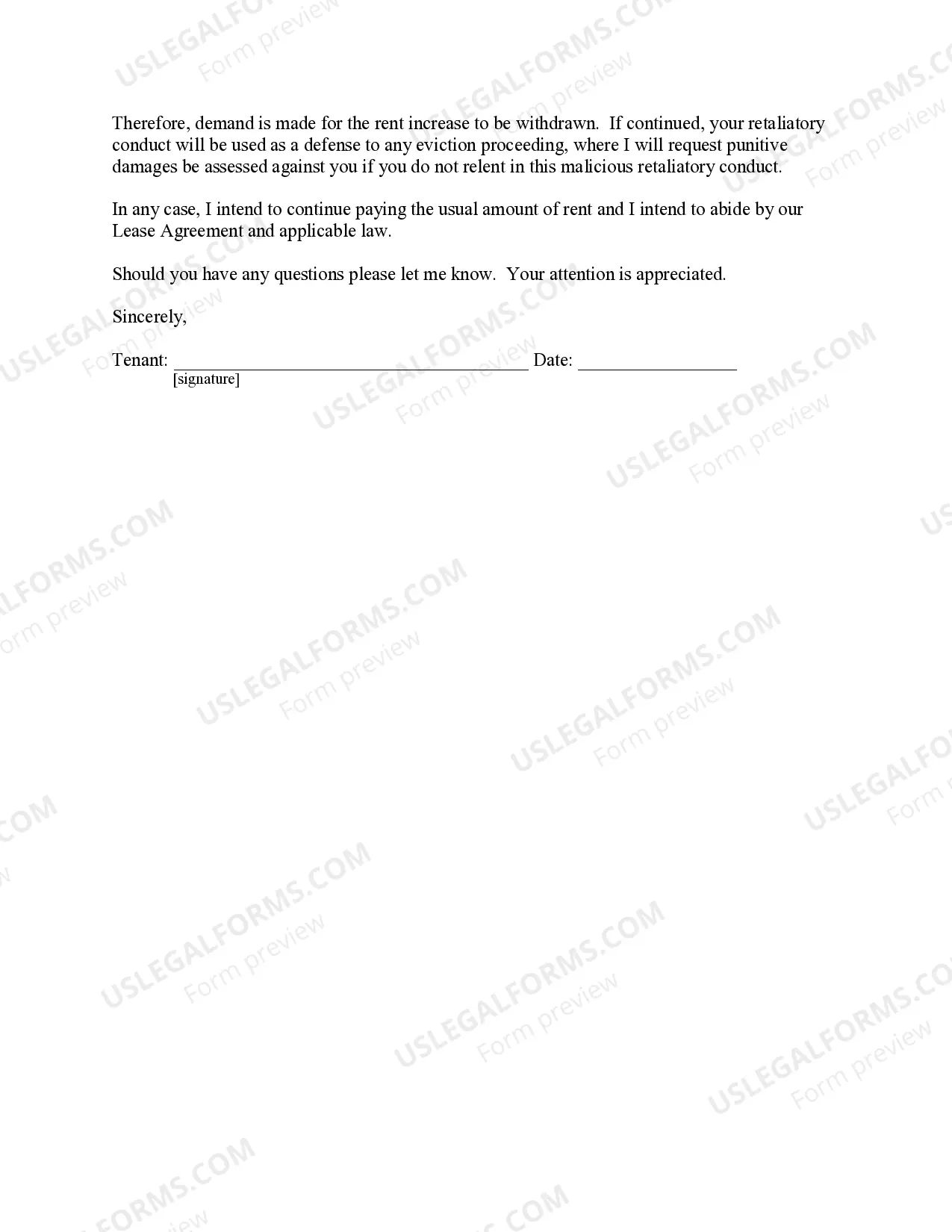
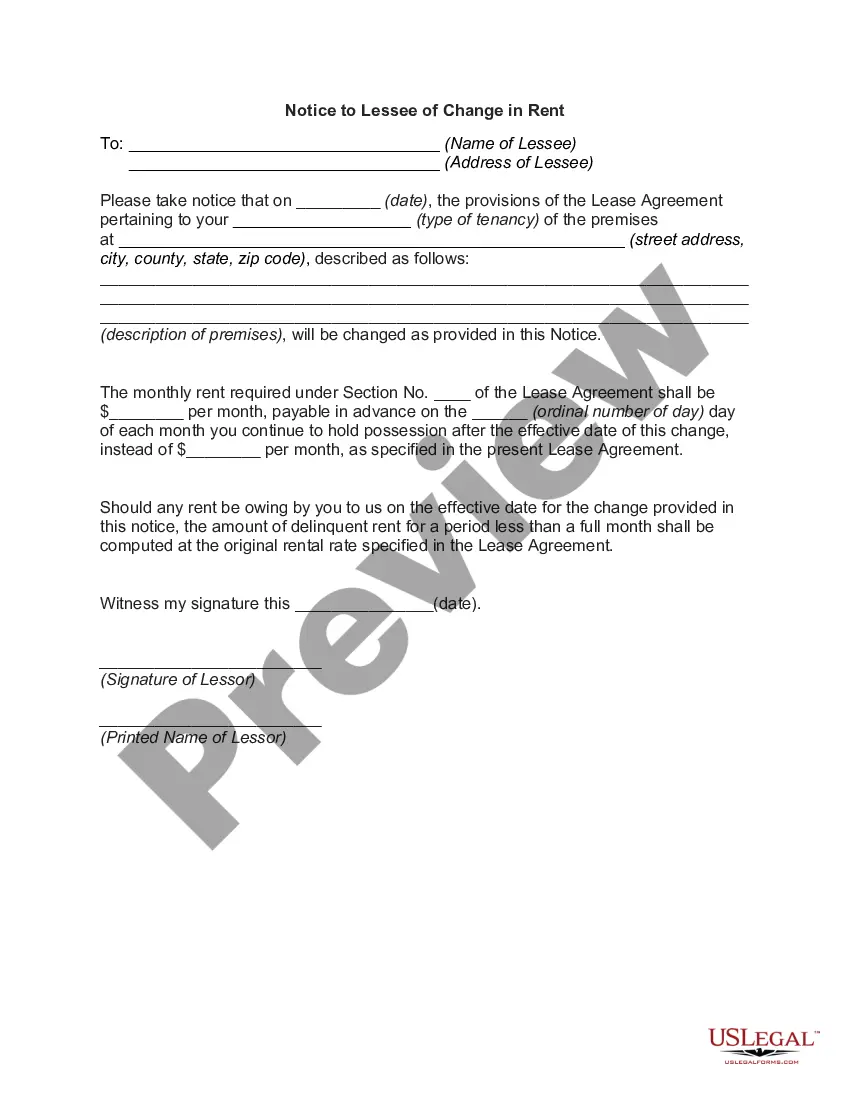
The Letter from Tenant to Landlord containing Notice to landlord to withdraw retaliatory rent increase serves as an official notice informing the landlord that a proposed rent increase is considered retaliatory and unlawful under state housing laws. This form helps protect tenants from unfair rental practices by affirming their rights against discriminatory actions by landlords.
What’s included in this form
- Identification of the tenant and landlord
- Clear statement regarding the retaliatory rent increase
- Reference to applicable state housing laws
- Confirmation of the tenant's intent to continue paying rent
- Date of the letter and signatures of both parties



When to use this document
This form should be used when a tenant believes their landlord has proposed a rent increase as retaliation for the tenant's lawful complaints, such as reporting health code violations or exercising their rights as a tenant. It is an essential step in documenting the issue and communicating with the landlord regarding the illegality of the proposed changes.
Intended users of this form
- Tenants facing an unjust rent increase due to complaints made to the landlord or relevant authorities
- Individuals involved in tenant organizations who have been targeted by landlords
- Anyone who feels their housing rights are being violated through retaliation
Completing this form step by step
- Identify the parties: Fill in your name as the tenant and the landlord's name as appropriate.
- Specify the property: Clearly indicate the address of the rental property.
- Detail the retaliatory increase: Describe the proposed rent increase and why it is considered retaliatory.
- Provide the date: Enter the date when you are sending this notice.
- Sign the letter: Ensure both you and the landlord sign and date the letter to validate the communication.
Does this document require notarization?
Notarization is generally not required for this form. However, certain states or situations might demand it. You can complete notarization online through US Legal Forms, powered by Notarize, using a verified video call available anytime.
Get your form ready online
Our built-in tools help you complete, sign, share, and store your documents in one place.
Make edits, fill in missing information, and update formatting in US Legal Forms—just like you would in MS Word.
Download a copy, print it, send it by email, or mail it via USPS—whatever works best for your next step.
Sign and collect signatures with our SignNow integration. Send to multiple recipients, set reminders, and more. Go Premium to unlock E-Sign.
If this form requires notarization, complete it online through a secure video call—no need to meet a notary in person or wait for an appointment.
We protect your documents and personal data by following strict security and privacy standards.

Make edits, fill in missing information, and update formatting in US Legal Forms—just like you would in MS Word.

Download a copy, print it, send it by email, or mail it via USPS—whatever works best for your next step.

Sign and collect signatures with our SignNow integration. Send to multiple recipients, set reminders, and more. Go Premium to unlock E-Sign.

If this form requires notarization, complete it online through a secure video call—no need to meet a notary in person or wait for an appointment.

We protect your documents and personal data by following strict security and privacy standards.
Common mistakes
- Failing to clearly state the reasons for considering the rent increase retaliatory.
- Not providing complete identification details for both tenant and landlord.
- Omitting the date of the notice.
- Neglecting to keep a copy of the letter for personal records.
Benefits of using this form online
- Convenient access to the form, allowing you to fill it out at any time.
- Editability ensures you can customize the form to fit your specific situation.
- Access to forms created by licensed attorneys, providing peace of mind regarding legal compliance.
Legal use & context
- This form is legally enforceable in jurisdictions where state laws prohibit retaliatory rent increases.
- Filing the notice can protect the tenant from eviction and other retaliatory actions.
- It serves as evidence in potential disputes regarding landlord-tenant relations.
Looking for another form?

Form popularity
FAQ
To give a tenant a notice to vacate in Florida, you must provide a written document detailing the reason for the move-out request. It's important to reference the Florida Letter from Tenant to Landlord containing Notice to landlord to withdraw retaliatory rent increase if applicable. Make sure to deliver this notice in a way that proves it was received, like hand delivery or certified mail. This process ensures clear communication and compliance with state regulations, protecting your rights as a landlord.
Unfair eviction refers to the wrongful removal of a tenant from their home without just cause or proper legal procedure. This can include actions such as ignoring lease terms or retaliating against tenants exercising their rights. Tenants in Florida can benefit from sending a Florida Letter from Tenant to Landlord containing Notice to landlord to withdraw retaliatory rent increase to assert their rights and prevent unfair eviction.
Retaliatory eviction includes any action taken by a landlord to remove a tenant because the tenant has asserted their rights under the law, such as filing a complaint or requesting repairs. This form of eviction is illegal in Florida, and tenants should be proactive in defending against it. A Florida Letter from Tenant to Landlord containing Notice to landlord to withdraw retaliatory rent increase serves as a vital tool for tenants facing this issue.
A retaliatory eviction occurs when a landlord attempts to remove a tenant from the property in response to the tenant exercising their legal rights. For instance, if a tenant complains about health and safety violations and the landlord subsequently issues an eviction notice, this could be classified as retaliatory eviction. Utilizing a Florida Letter from Tenant to Landlord containing Notice to landlord to withdraw retaliatory rent increase can help protect tenants from such actions.
A retaliatory notice is a communication from a landlord that indicates intentions to increase rent or initiate eviction after a tenant has exercised their rights, such as reporting violations. This notice may serve as evidence of retaliatory intent if the case were to go to court. Tenants can respond to such notices with a Florida Letter from Tenant to Landlord containing Notice to landlord to withdraw retaliatory rent increase.
In Florida, there is no statewide cap on how much a landlord can increase rent. However, the increase must comply with the terms outlined in the lease agreement and cannot be retaliatory in nature. For tenants facing potential retaliatory increases, drafting a Florida Letter from Tenant to Landlord containing Notice to landlord to withdraw retaliatory rent increase may help clarify their position.
Section 83.682 of Florida's landlord tenant law outlines the protections available to tenants against retaliatory actions by landlords. This section states that landlords cannot increase rent or retaliate against tenants for exercising their legal rights. It is important for tenants to be aware of this law when drafting a Florida Letter from Tenant to Landlord containing Notice to landlord to withdraw retaliatory rent increase.
In Florida, landlord retaliation can occur if a landlord increases rent, decreases services, or threatens eviction after a tenant has exercised their legal rights, such as filing a complaint about habitability issues. These actions aim to punish the tenant for asserting their rights. To address this issue, tenants may use a Florida Letter from Tenant to Landlord containing Notice to landlord to withdraw retaliatory rent increase.
Constructive eviction occurs when a tenant is forced to leave their rental property due to the landlord's actions that significantly disrupt the tenant's ability to enjoy the premises. Retaliatory eviction, on the other hand, happens when a landlord takes action against a tenant for exercising their legal rights, such as complaining about unsafe conditions. Understanding these differences is crucial for tenants in Florida, especially when considering a Florida Letter from Tenant to Landlord containing Notice to landlord to withdraw retaliatory rent increase.
Begin your letter with a friendly tone, and express gratitude for the tenant's time in your property. Politely explain the reason for the request, remaining positive and respectful throughout. Mention the case of needing a Florida Letter from Tenant to Landlord containing Notice to landlord to withdraw retaliatory rent increase if relevant, ensuring the process is clear and understanding.