Florida Letter from Landlord to Tenant for Failure to keep premises as clean and safe as condition of premises permits - Remedy or lease terminates
Overview of this form
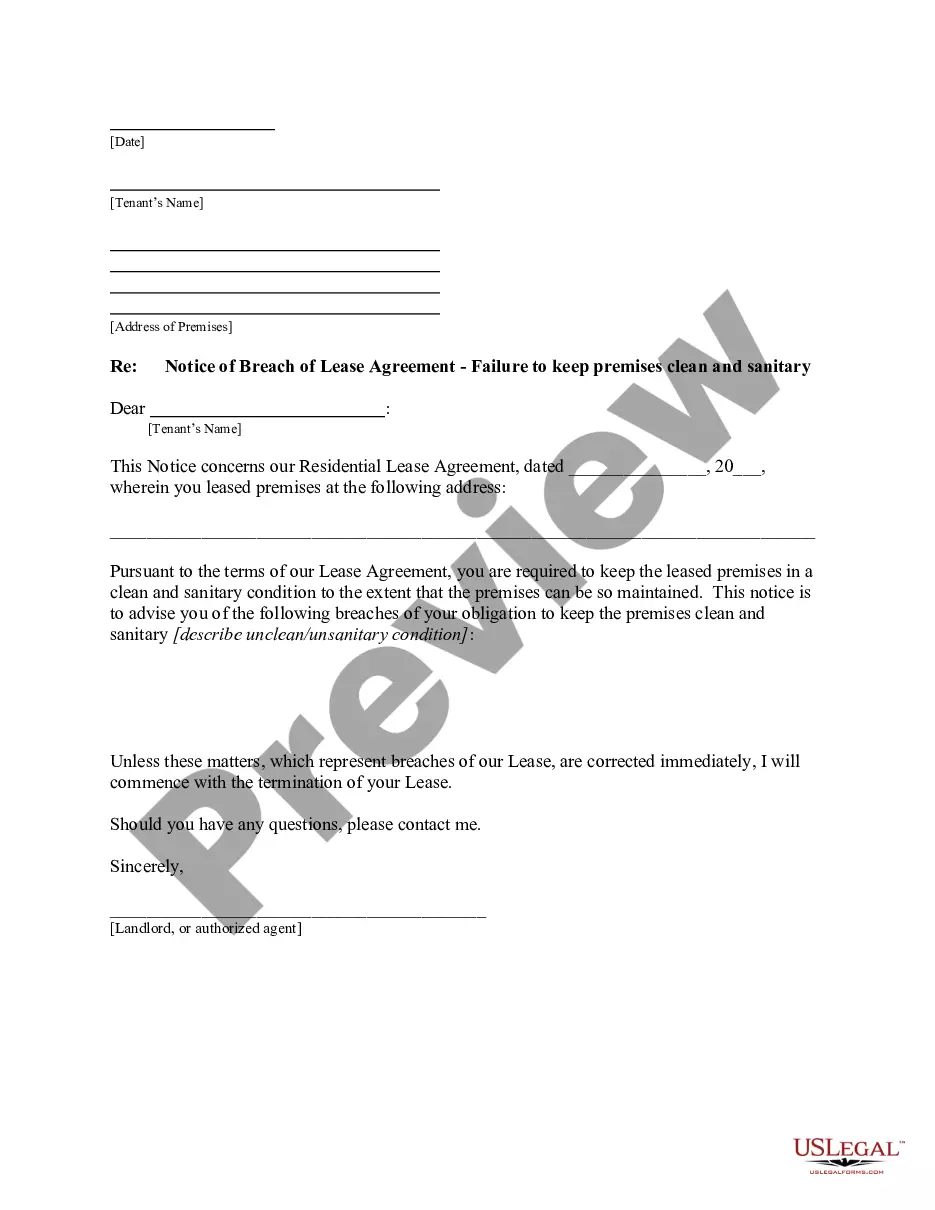
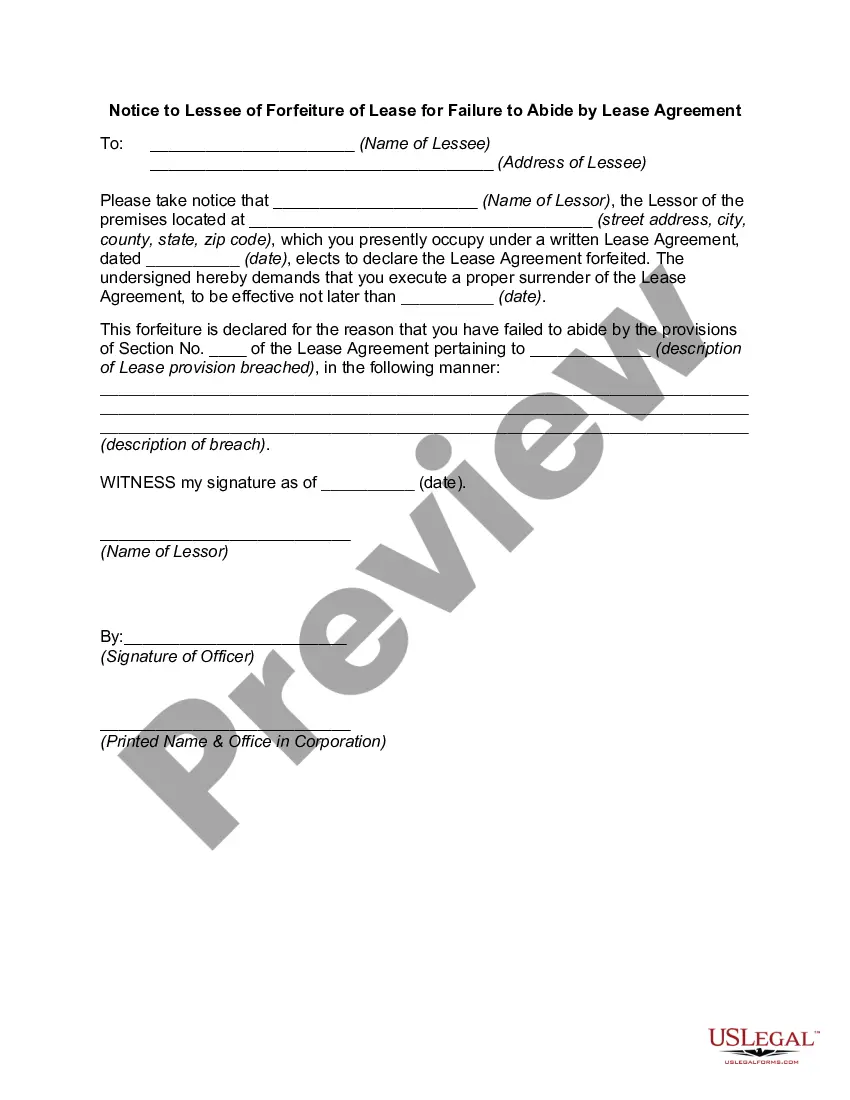
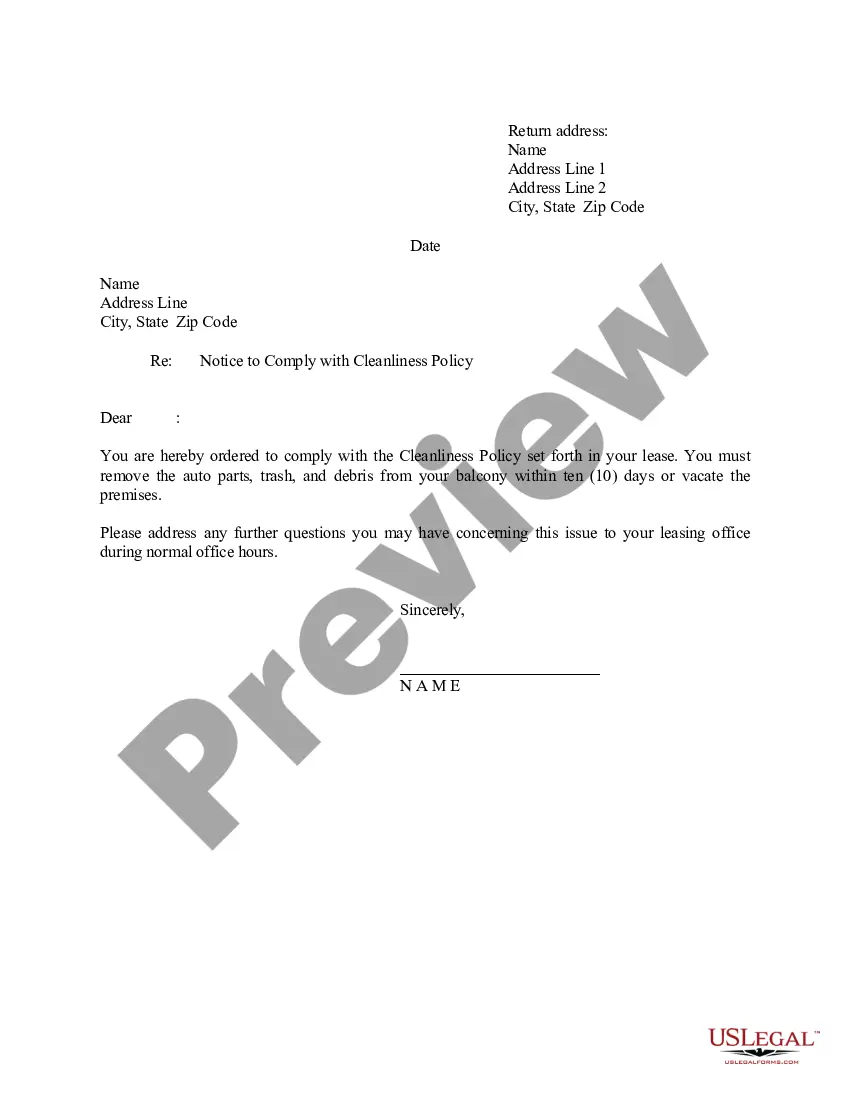
This form serves as a notice from a landlord to a tenant regarding the tenant's failure to maintain the leased premises in a clean and sanitary condition. The letter outlines specific breaches of the tenant's obligations under the lease agreement, offering a chance to remedy the situation or face potential lease termination. It is vital for landlords to address cleanliness issues promptly to ensure compliance and protect their property. This form is essential in communicating expectations and consequences clearly, distinguishing it from other landlord-tenant correspondence.
Key parts of this document
- Identification of the landlord and tenant involved.
- Specific details of the unclean or unsanitary conditions.
- Reference to the lease agreement obligations related to cleanliness.
- Notification of potential remedies or lease termination.
- Timeframe for the tenant to respond or correct the issues.


When to use this form
This form should be used when a landlord observes that a tenant is not maintaining the premises as required by the lease agreement. Situations may include accumulating trash, unsanitary living conditions, or failure to address pest infestations. Utilizing this form allows the landlord to formally notify the tenant of breaches and provides an opportunity for the tenant to rectify the issues before any further action is taken, such as lease termination.
Who this form is for
- Landlords or property managers overseeing rental properties.
- Tenants who have received notices and need to understand their obligations.
- Property owners seeking to enforce lease compliance.
Steps to complete this form
- Identify the landlord and tenant by entering their names and contact information.
- Describe the specific unclean or unsanitary conditions observed.
- Cite the obligations from the lease agreement related to cleanliness.
- Specify a reasonable timeframe for the tenant to remedy the situation.
- Sign the notice to confirm that it has been formally issued.
Does this form need to be notarized?
This form does not typically require notarization unless specified by local law. Ensure you check your stateâs requirements to confirm.
Get your form ready online
Our built-in tools help you complete, sign, share, and store your documents in one place.
Make edits, fill in missing information, and update formatting in US Legal Forms—just like you would in MS Word.
Download a copy, print it, send it by email, or mail it via USPS—whatever works best for your next step.
Sign and collect signatures with our SignNow integration. Send to multiple recipients, set reminders, and more. Go Premium to unlock E-Sign.
If this form requires notarization, complete it online through a secure video call—no need to meet a notary in person or wait for an appointment.
We protect your documents and personal data by following strict security and privacy standards.

Make edits, fill in missing information, and update formatting in US Legal Forms—just like you would in MS Word.

Download a copy, print it, send it by email, or mail it via USPS—whatever works best for your next step.

Sign and collect signatures with our SignNow integration. Send to multiple recipients, set reminders, and more. Go Premium to unlock E-Sign.

If this form requires notarization, complete it online through a secure video call—no need to meet a notary in person or wait for an appointment.

We protect your documents and personal data by following strict security and privacy standards.
Common mistakes to avoid
- Failing to include specific details of the cleanliness violations.
- Not providing a clear timeframe for the tenant to respond.
- Neglecting to cite the relevant sections of the lease agreement.
- Using vague language that could confuse the tenant.
Benefits of completing this form online
- Easy to download and customize for specific situations.
- Quick access to legally compliant language drafted by licensed attorneys.
- Convenient to complete and print from any device.
- Ensures consistency and support in legal communication with tenants.
Legal use & context
- This form serves as a formal notification to tenants regarding their responsibilities, which can be referenced in any potential legal disputes.
- It underscores the landlord's rights to terminate the lease if breaches are not rectified, establishing a clear legal basis for action.
- Using this document helps maintain a professional relationship while adhering to local housing laws.
Summary of main points
- Use this form to formally notify a tenant of sanitation issues.
- Clearly outline the obligations and violations involved.
- Provide a chance for resolution before seeking lease termination.
Looking for another form?
Form popularity
FAQ
The Tenant Protection Act in Florida aims to establish clear rights and responsibilities for both tenants and landlords. This act stipulates conditions where landlords may issue a Florida Letter from Landlord to Tenant for Failure to keep premises as clean and safe as condition of premises permits - Remedy or lease terminates. Understanding your rights under this act can empower you as a tenant to ensure safe living conditions. Utilizing resources from uslegalforms can help clarify these legal protections and guide you in communicating effectively with your landlord.
Writing a letter to terminate your lease involves stating your intent clearly while including the necessary details: names of both parties, property address, and the termination date. In your letter, you may mention compliance with the Florida Letter from Landlord to Tenant for Failure to keep premises as clean and safe as condition of premises permits - Remedy or lease terminates to establish grounds for your decision. Finally, keep a copy of the letter for your records, ensuring that both parties understand the next steps.
A 30-day lease termination notice should include your name, the tenant's name, the property address, and the specific date you want the lease to end. Don’t forget to mention the reasons for termination, like the Florida Letter from Landlord to Tenant for Failure to keep premises as clean and safe as condition of premises permits - Remedy or lease terminates, so there is clarity. Ensure you deliver this notice in accordance with local laws, typically through certified mail or personal delivery.
If you wish to sue your landlord for unsafe living conditions, first document all issues thoroughly, including photos and written communication. Next, attempt to resolve the matter by sending a formal letter, referencing the Florida Letter from Landlord to Tenant for Failure to keep premises as clean and safe as condition of premises permits - Remedy or lease terminates. If your landlord does not respond or rectify the problems, seek legal advice to ensure you understand the proper steps to take in filing a lawsuit.
An example of a lease termination notice includes a letter that identifies both the landlord and tenant, states the lease end date, and outlines specific reasons for termination. For instance, if the conditions of the premises are not being maintained, you can refer to the Florida Letter from Landlord to Tenant for Failure to keep premises as clean and safe as condition of premises permits - Remedy or lease terminates. This will provide clarity and legal grounds for your notice.
To write a letter of tenancy termination, start by clearly stating your intention to terminate the lease. Include your name, the tenant's name, the property address, and the date. It's crucial to reference the specific reasons for termination, such as the Florida Letter from Landlord to Tenant for Failure to keep premises as clean and safe as condition of premises permits - Remedy or lease terminates. Finally, ensure that you provide a specific date by which the tenant must vacate the property.
An unsafe living environment is defined by factors like exposure to toxic substances, inadequate emergency exits, or faulty appliances that may pose a danger. These conditions can lead to serious health risks for tenants. If you feel your living situation is unsafe, a straightforward approach is to write a Florida Letter from Landlord to Tenant for Failure to keep premises as clean and safe as condition of premises permits - Remedy or lease terminates. This letter can be vital in prompting necessary corrections.
You can report unsafe living conditions in Florida by contacting your local health department or housing authority. It's helpful to document the issues and inform your landlord of any hazards in writing. If they fail to respond adequately, consider utilizing a Florida Letter from Landlord to Tenant for Failure to keep premises as clean and safe as condition of premises permits - Remedy or lease terminates as a formal notice of your concerns.
Yes, a tenant may sue a landlord for unsafe living conditions if the landlord fails to address reported issues adequately. Legal actions often stem from a landlord's neglect to provide a safe living environment, which violates rental agreements. It's important to document all communications and use a Florida Letter from Landlord to Tenant for Failure to keep premises as clean and safe as condition of premises permits - Remedy or lease terminates as a formal step before taking legal action.
A house may be deemed unsafe if it presents potential risks to health or safety, such as carbon monoxide leaks, compromised roofs, or inadequate fire escapes. Local building codes often outline specific standards that must be met. Staying informed about these regulations can protect your interests; using a Florida Letter from Landlord to Tenant for Failure to keep premises as clean and safe as condition of premises permits - Remedy or lease terminates could be necessary if the landlord fails to comply.