Florida Boarding Stable Agreement - Horse Equine Forms
About this form
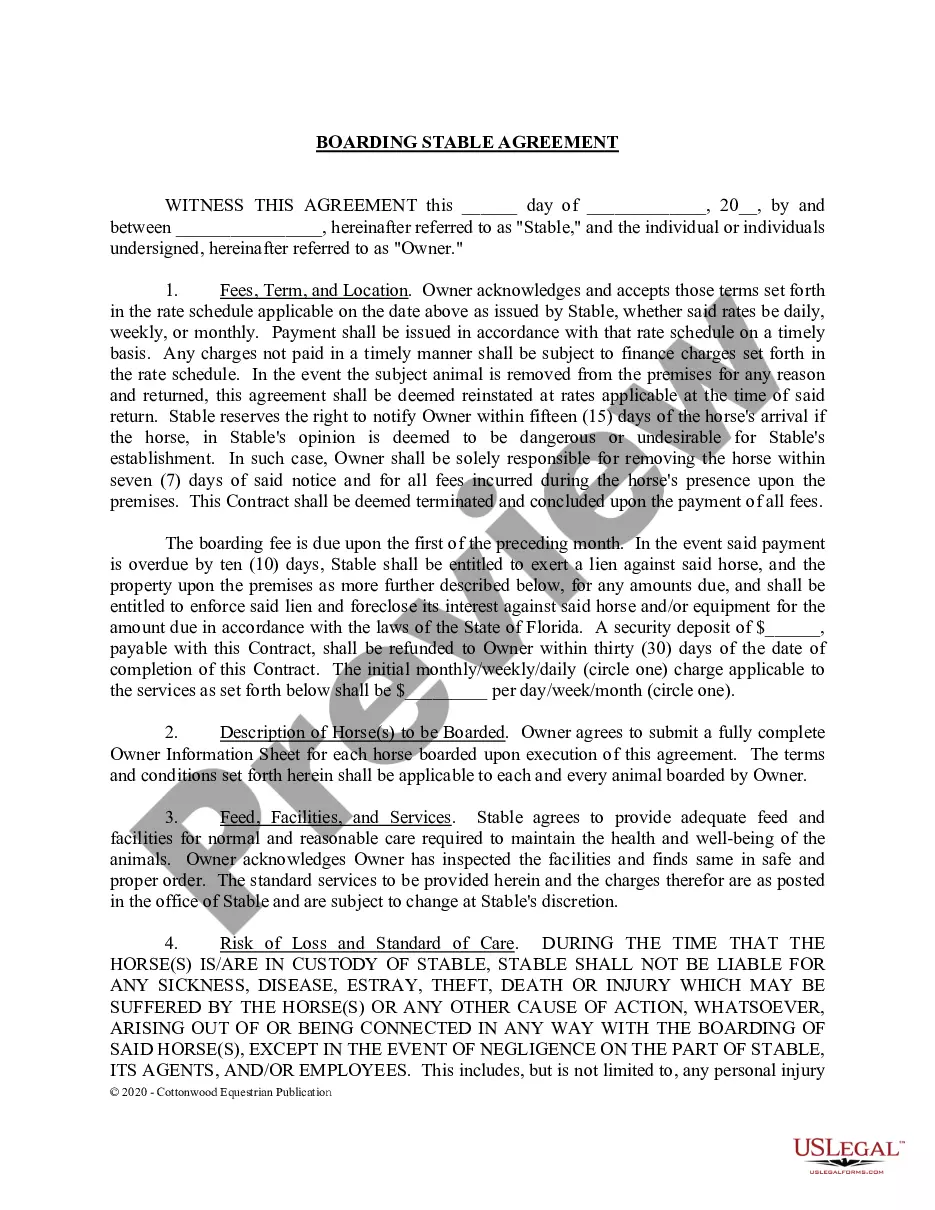
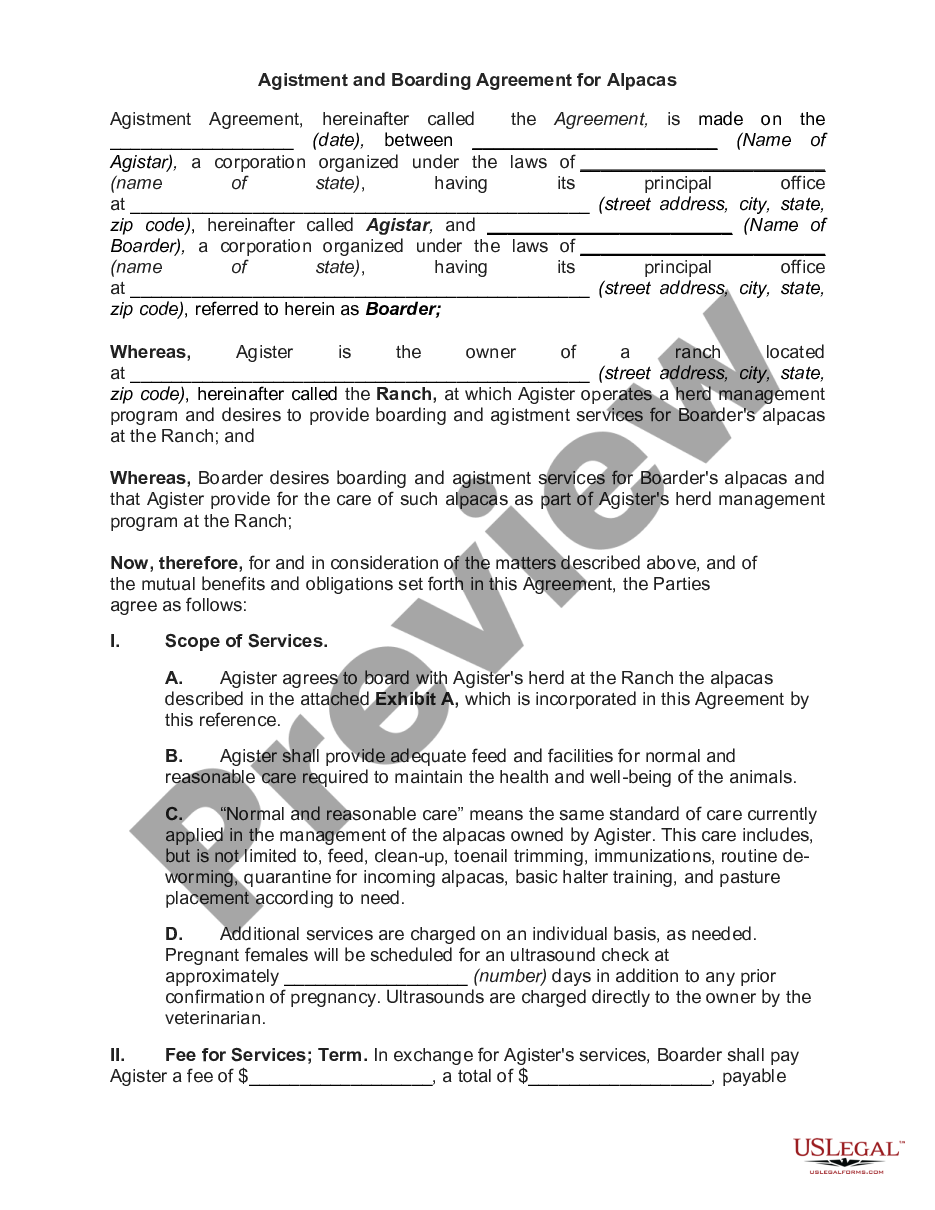
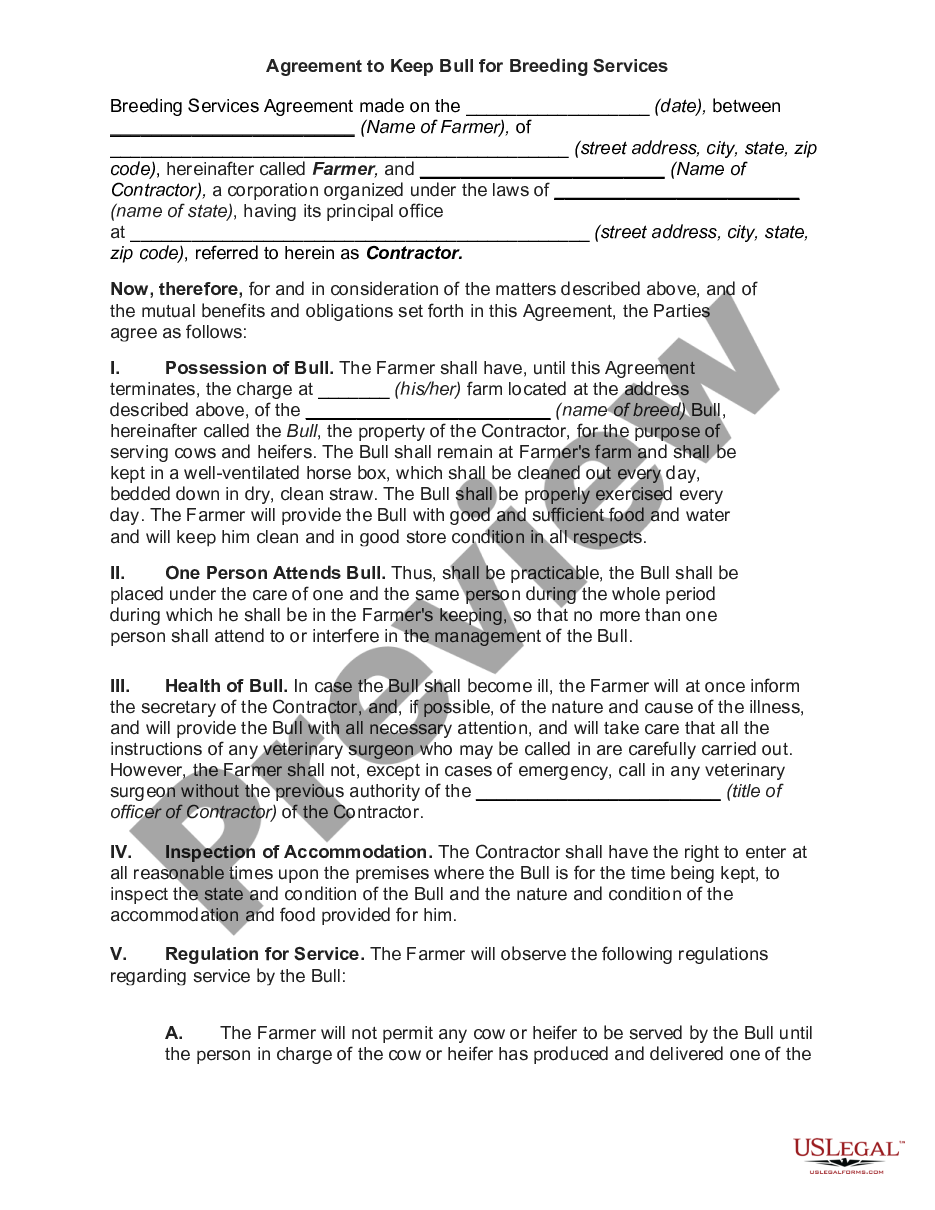
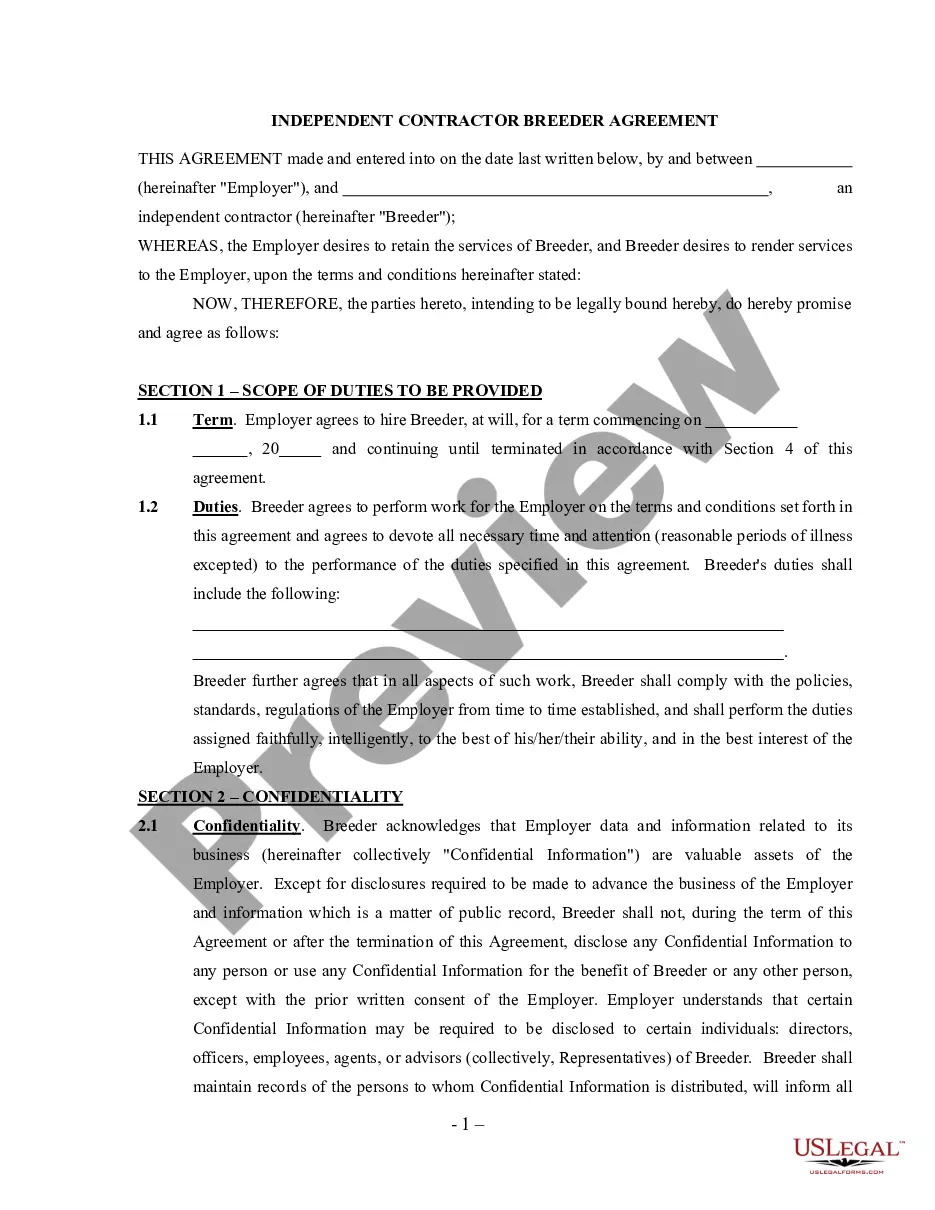
The Boarding Stable Agreement is a legally binding contract between a horse owner and a stable owner that outlines the terms and conditions for boarding horses. This form details key elements such as fees, care standards, and liability, distinguishing it from other horse-related agreements by its comprehensive provisions tailored for the unique needs of equine boarding arrangements.
Main sections of this form
- Fees, terms, and payment schedule for boarding services.
- Description of the horse(s) being boarded.
- Standards of care and risk of loss provisions.
- Emergency care authorization and notification procedures.
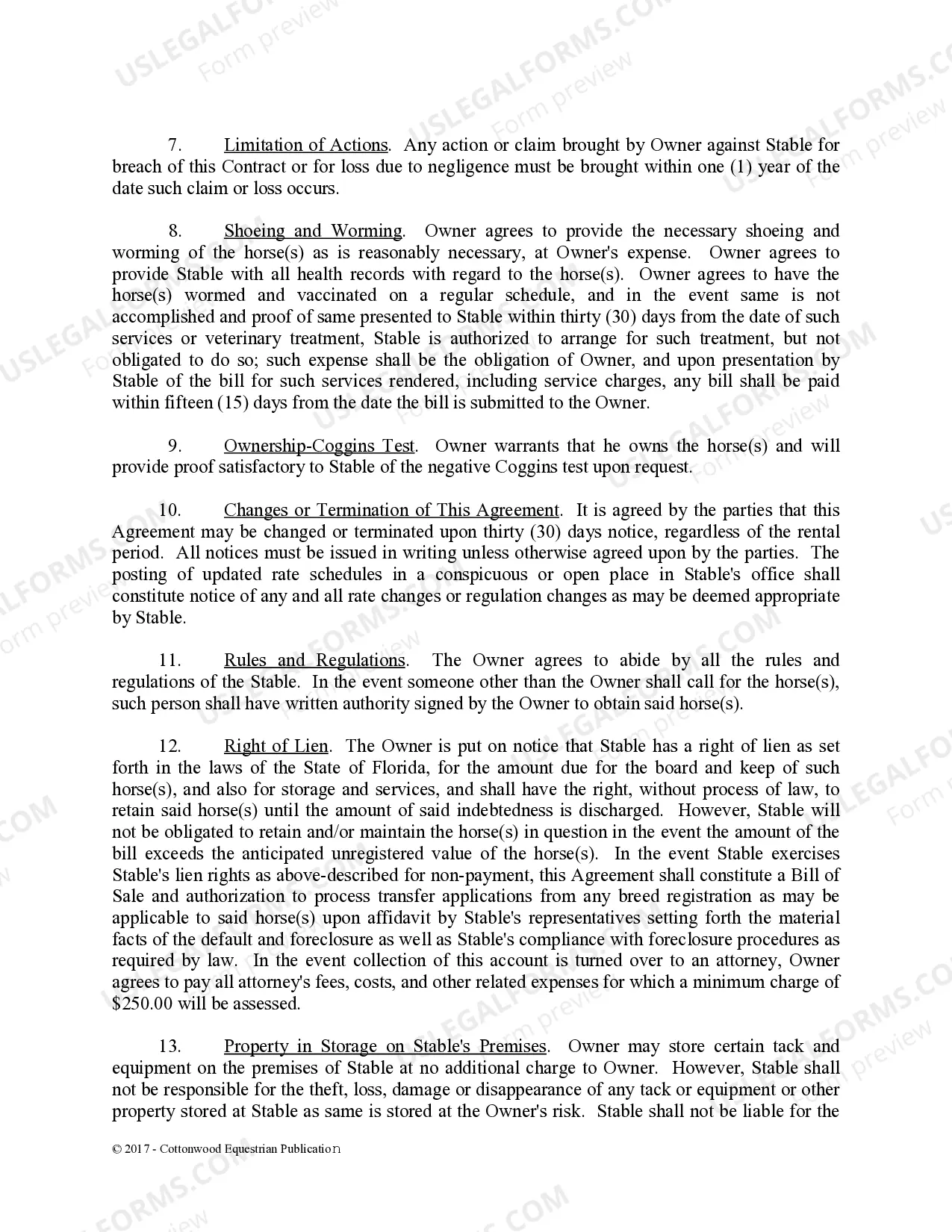
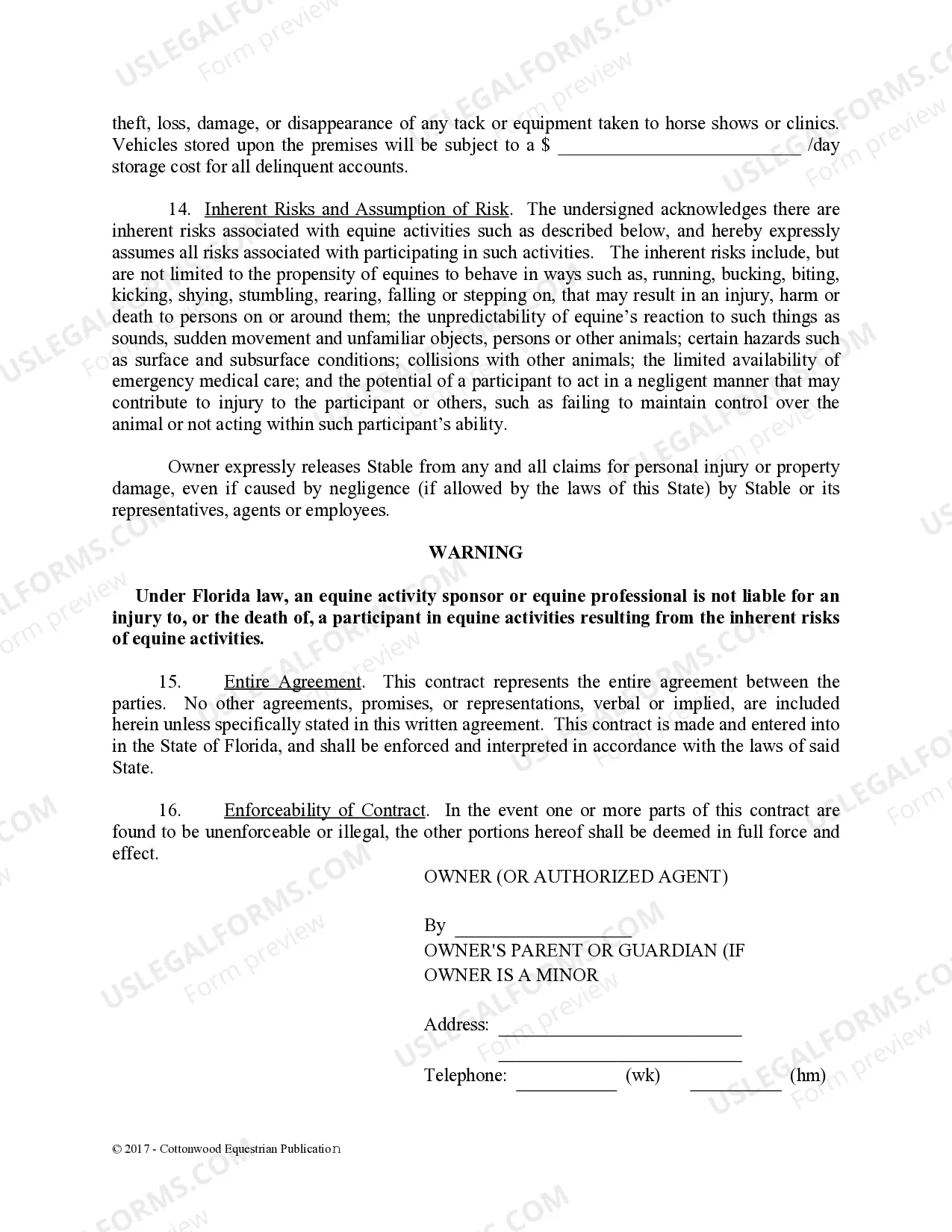
- Holds harmless and liability limitations for the stable.
- Conditions for termination and alteration of the agreement.


When to use this form
This form should be used when a horse owner wants to board their horse(s) at a stable. It is essential for establishing clear expectations regarding care, fees, and liability, thereby protecting both parties in the event of disputes or unforeseen circumstances related to the welfare of the horse(s).
Who this form is for
- Horse owners seeking to board their animals at a stable.
- Stable owners who require a formal agreement to outline terms with horse owners.
- Individuals or businesses involved in equine activities looking to mitigate liability risks.
Steps to complete this form
- Identify the parties involved: the stable owner and the horse owner.
- Enter the description of the horse(s) to be boarded, including any necessary health records.
- Specify the agreed-upon boarding fees and payment terms.
- Include any special provisions related to emergency care and liability agreements.
- Ensure all parties sign and date the document to validate the contract.
Notarization requirements for this form
In most cases, this form does not require notarization. However, some jurisdictions or signing circumstances might. US Legal Forms offers online notarization powered by Notarize, accessible 24/7 for a quick, remote process.
Get your form ready online
Our built-in tools help you complete, sign, share, and store your documents in one place.
Make edits, fill in missing information, and update formatting in US Legal Forms—just like you would in MS Word.
Download a copy, print it, send it by email, or mail it via USPS—whatever works best for your next step.
Sign and collect signatures with our SignNow integration. Send to multiple recipients, set reminders, and more. Go Premium to unlock E-Sign.
If this form requires notarization, complete it online through a secure video call—no need to meet a notary in person or wait for an appointment.
We protect your documents and personal data by following strict security and privacy standards.
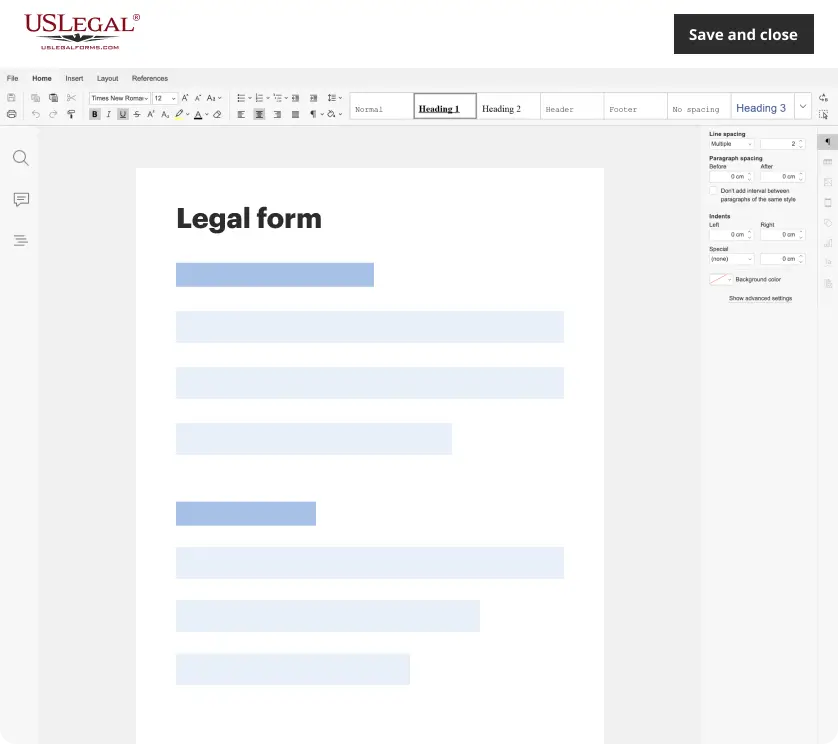
Make edits, fill in missing information, and update formatting in US Legal Forms—just like you would in MS Word.
Download a copy, print it, send it by email, or mail it via USPS—whatever works best for your next step.
Sign and collect signatures with our SignNow integration. Send to multiple recipients, set reminders, and more. Go Premium to unlock E-Sign.
If this form requires notarization, complete it online through a secure video call—no need to meet a notary in person or wait for an appointment.
We protect your documents and personal data by following strict security and privacy standards.
Typical mistakes to avoid
- Failing to provide accurate descriptions of the horse(s) being boarded.
- Overlooking the need for signatures from all parties involved.
- Neglecting to read and understand all liability and emergency care clauses thoroughly.
- Not maintaining updated contact information for emergency situations.
Why complete this form online
- Convenience of immediate access to a legally sound contract, customizable for individual needs.
- Editability to ensure all specific details related to the boarding arrangement are accurately captured.
- Reliability of having a form prepared by licensed attorneys, designed to comply with state regulations.
Legal use & context
The Boarding Stable Agreement is a legally enforceable document that protects both the horse owner and the stable owner. It outlines rights and obligations while addressing potential liabilities. It is crucial for both parties to understand the terms to mitigate risks effectively.
Main things to remember
- This form establishes a clear relationship between the horse owner and the stable owner.
- It includes critical clauses regarding fees, care standards, and liability.
- Properly completing this agreement can prevent disputes and ensure the well-being of the horse(s).
Looking for another form?
Form popularity
FAQ
It is a legally binding contract between a horse owner and a stable owner that sets the terms for boarding, including fees, care standards, and liability. It is used when a horse owner wants to board at a stable to establish clear expectations and protect both parties in disputes or unforeseen circumstances related to the horse’s welfare.
The hold harmless agreement in this form is a liability‑limitation clause that helps shift certain risks away from the stable. It typically outlines the owner’s agreement to release the stable from liability for specified losses or injuries, subject to any stated exceptions, and it defines the scope of protections included in the Florida Boarding Stable Agreement.
It establishes who can authorize emergency medical care for the horse and how the owner must be notified in an emergency. The section aims to protect the horse’s welfare by enabling timely decisions while outlining clear communication procedures if the owner cannot be reached.
It calls for a description of the horse(s) being boarded, ensuring the agreement applies to the correct animal. The description helps identify the boarded horse for care and the liability provisions outlined in the contract.
It sets the boarding service fees, the timing of payments, and the payment schedule. This section clarifies how much is charged for board, when payments are due, and any applicable terms, helping prevent disputes over fees and ensuring consistent compensation for services.
It is tailored for Florida and includes a complete package of provisions typical for boarding arrangements, such as a formal description of care standards, an emergency care authorization process, and a hold harmless/liability limitations section, plus a termination clause, to clearly allocate risk and responsibilities.