Florida Renunciation And Disclaimer of Property from Will by Testate
What this document covers
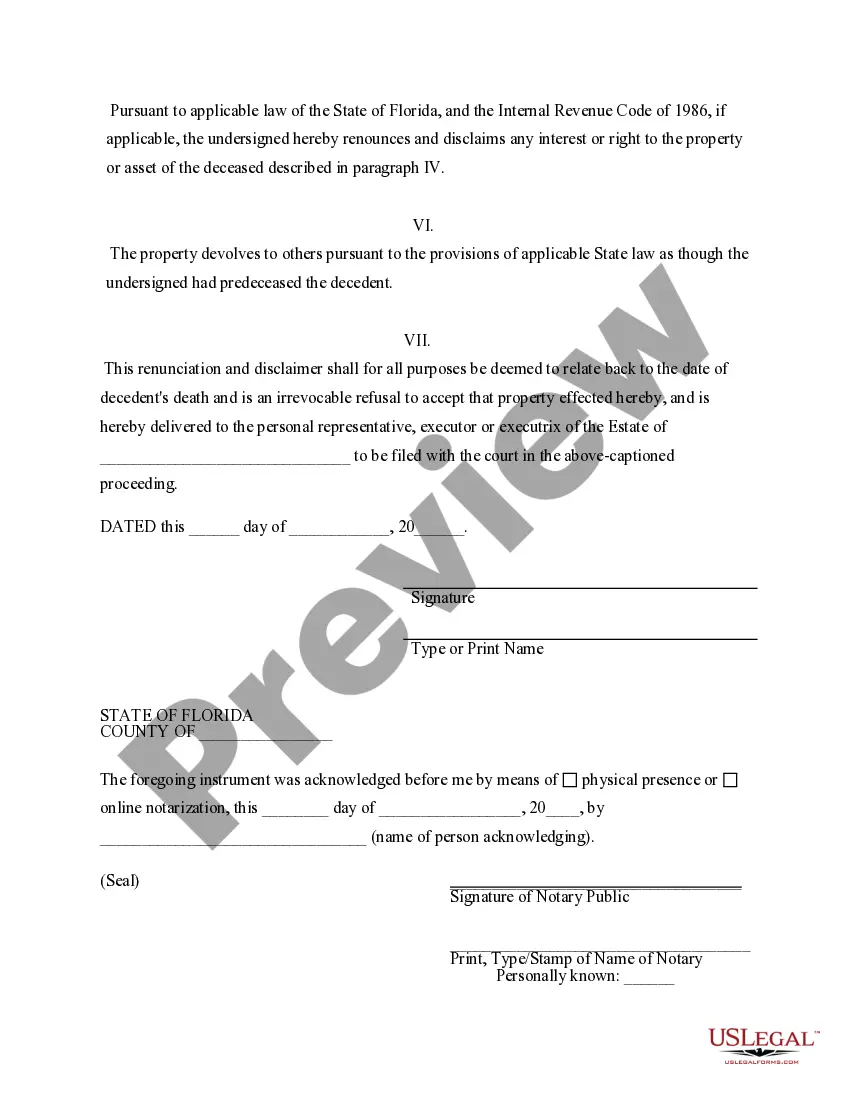
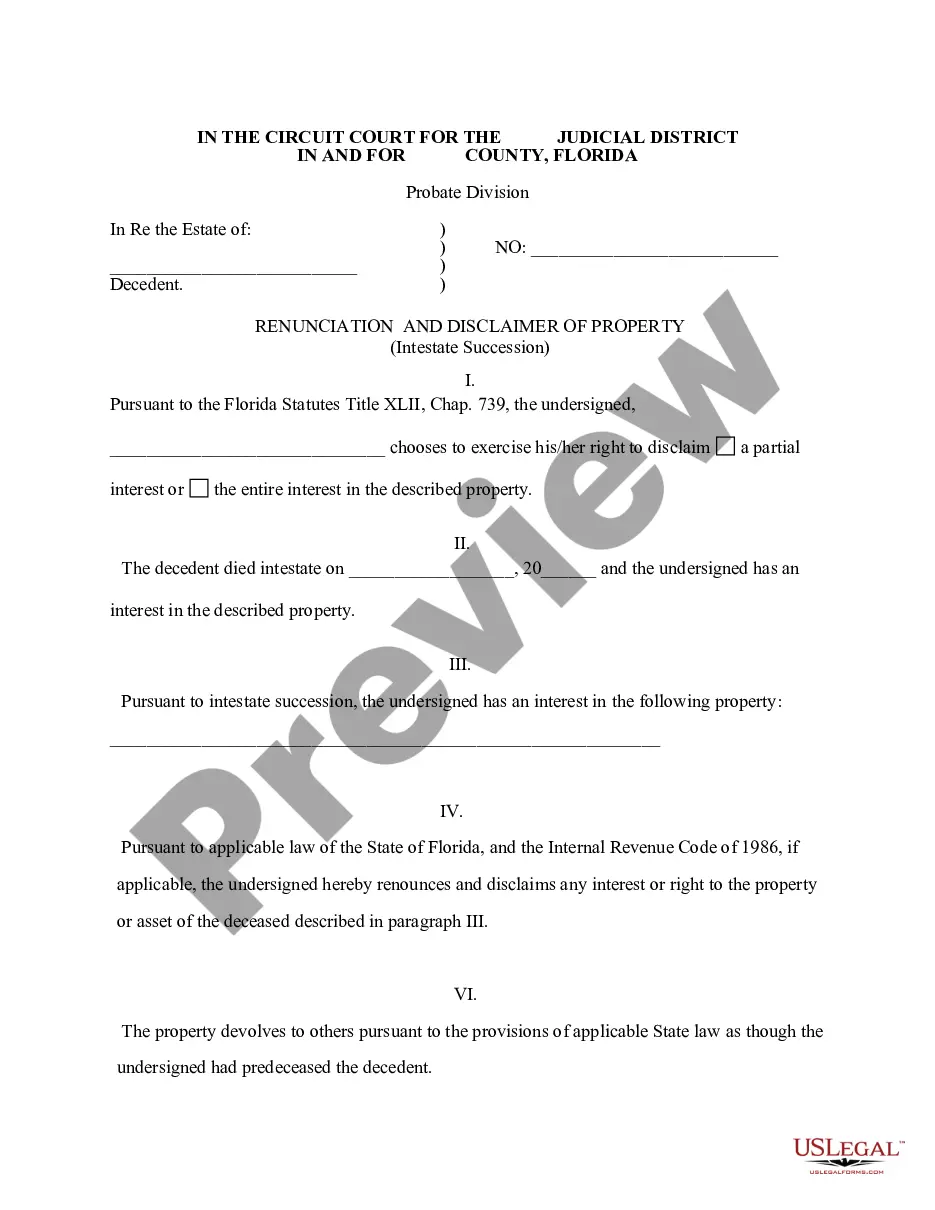
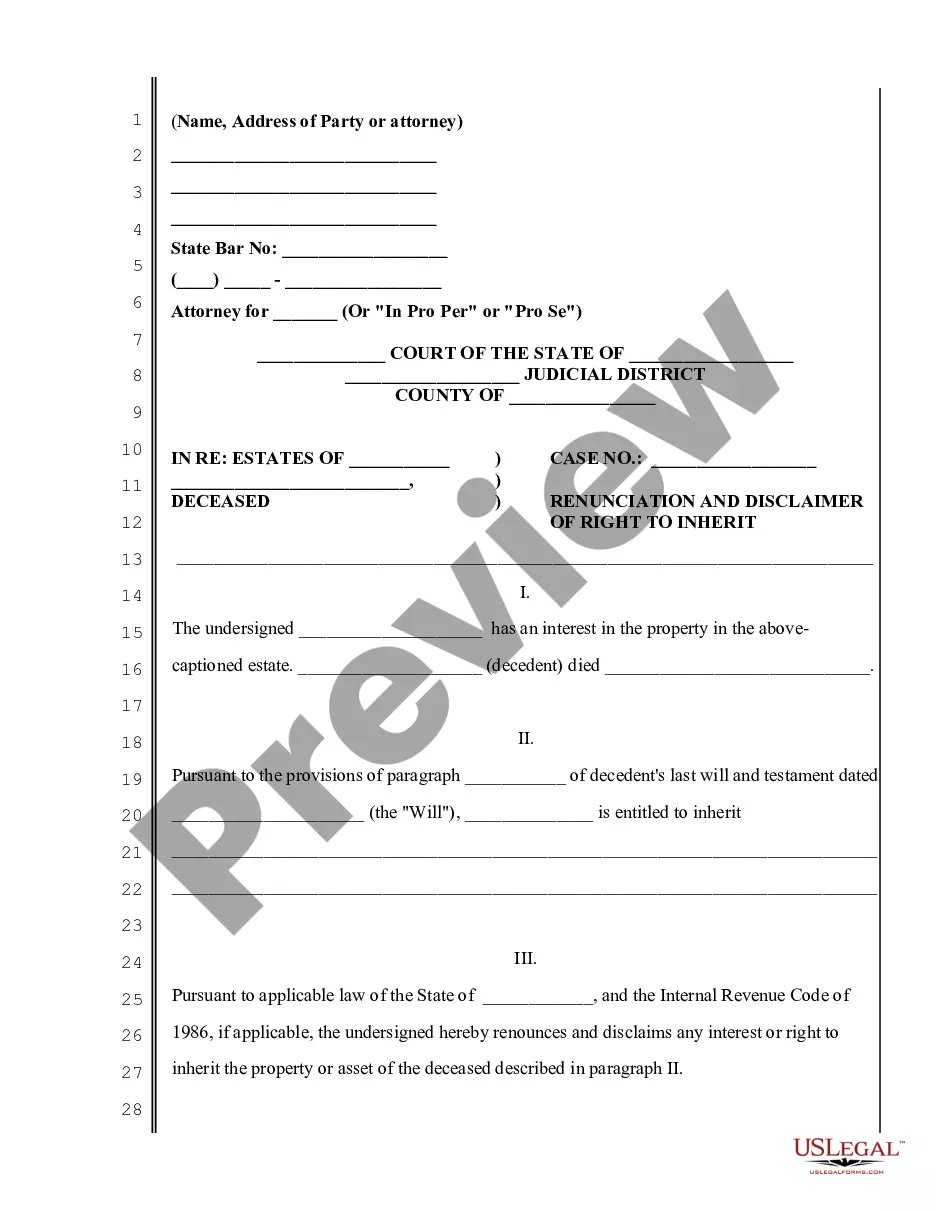
The Florida Renunciation and Disclaimer of Property from Will by Testate form allows a beneficiary to formally reject their inheritance as outlined in a deceased person's will. This legal document is essential for beneficiaries who wish to renounce all or part of their interest in the estate, making it clear that their decision is irrevocable and that the property will pass to other heirs as if they had predeceased the decedent. This form differs from a standard will because it specifically focuses on the renunciation of property received through a will.
Main sections of this form
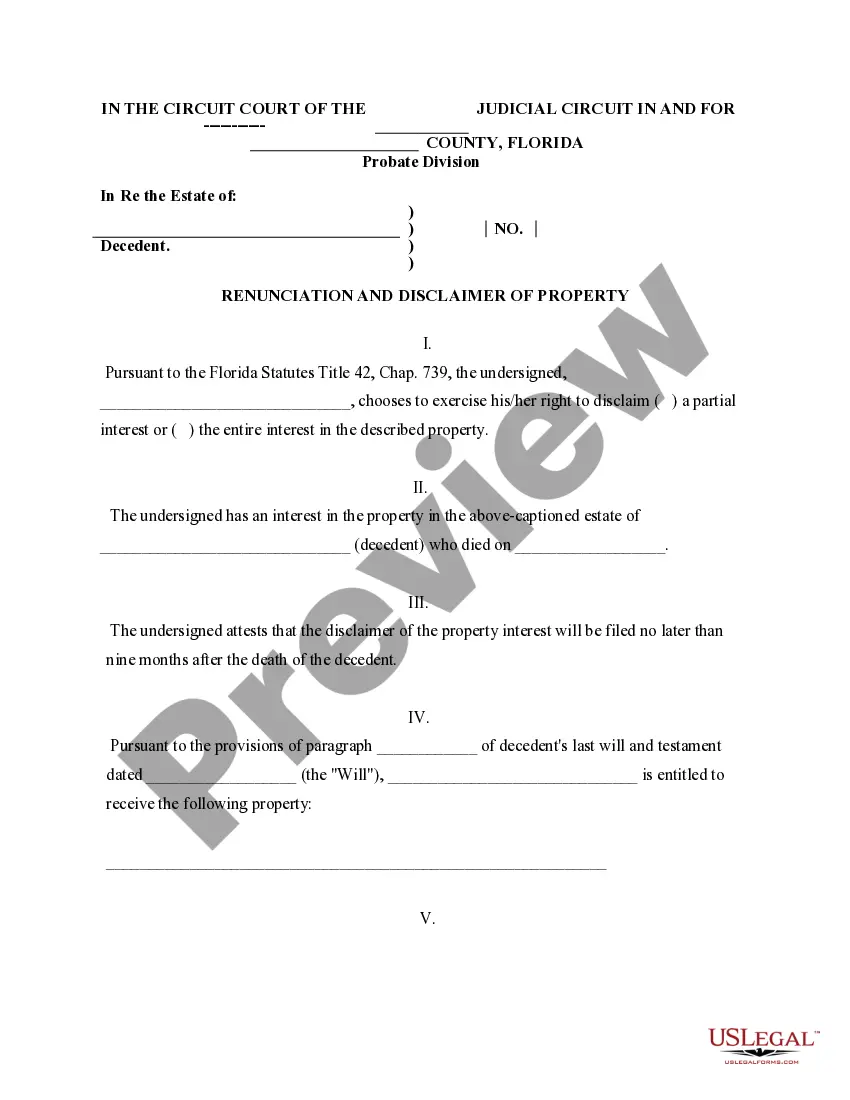
- The decedent's name and date of death.
- A statement indicating the interest in the property being renounced.
- A declaration that the renunciation is filed within the required nine-month period.
- Specific details about the property as specified in the will.
- A statement affirming that the renunciation takes effect as of the decedent's date of death.
- Signature and date from the renouncing party.


When to use this document
This form should be used when a beneficiary of a will in Florida decides to renounce their right to inherit property. Common situations include a desire to avoid potential tax implications, conflicts with other heirs, or personal reasons for rejecting the inheritance. It is critical to complete this form and file it within nine months of the decedent's death to ensure its validity.
Who this form is for
This form is intended for:
- Beneficiaries named in a Florida will who wish to disclaim their inheritance.
- Individuals seeking to avoid tax liabilities associated with inherited property.
- Heirs who may not want to deal with the responsibilities of managing an estate.
Steps to complete this form
- Identify the name of the decedent and enter their date of death.
- Clearly specify the property you wish to renounce by referencing the relevant section of the will.
- Complete the statement affirming the renunciation is within the nine-month filing limit.
- Sign and date the form, ensuring all necessary parties are listed if applicable.
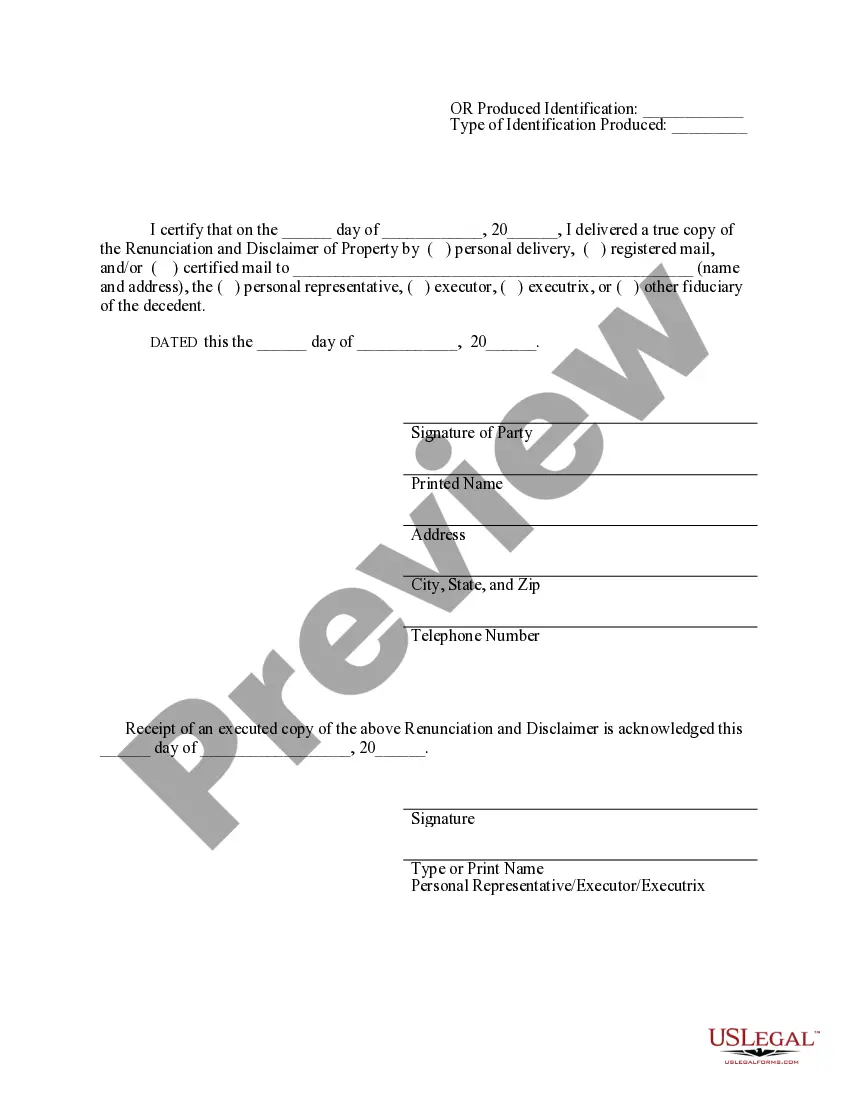
- Deliver the completed form to the estate's personal representative or executor for filing with the court.
Does this document require notarization?
This form does not typically require notarization unless specified by local law. However, having it notarized can provide additional assurance of authenticity and may be required in some instances when filing with the probate court.
Get your form ready online
Our built-in tools help you complete, sign, share, and store your documents in one place.
Make edits, fill in missing information, and update formatting in US Legal Forms—just like you would in MS Word.
Download a copy, print it, send it by email, or mail it via USPS—whatever works best for your next step.
Sign and collect signatures with our SignNow integration. Send to multiple recipients, set reminders, and more. Go Premium to unlock E-Sign.
If this form requires notarization, complete it online through a secure video call—no need to meet a notary in person or wait for an appointment.
We protect your documents and personal data by following strict security and privacy standards.

Make edits, fill in missing information, and update formatting in US Legal Forms—just like you would in MS Word.

Download a copy, print it, send it by email, or mail it via USPS—whatever works best for your next step.

Sign and collect signatures with our SignNow integration. Send to multiple recipients, set reminders, and more. Go Premium to unlock E-Sign.

If this form requires notarization, complete it online through a secure video call—no need to meet a notary in person or wait for an appointment.

We protect your documents and personal data by following strict security and privacy standards.
Common mistakes to avoid
- Failure to file the disclaimer within the nine-month period.
- Omitting required information about the property or decedent.
- Not signing and dating the form properly.
- Confusion about which property interests are being disclaimed.
Why complete this form online
- Convenience of completing the form at your own pace.
- Editability allows for corrections before finalizing the document.
- Immediate access to a legally compliant form designed by licensed attorneys.
Legal use & context
- This form serves as a legally binding document to negate any claims to property defined in a will.
- It is crucial to follow Florida's specific regulations to ensure the renunciation is recognized.
Main things to remember
- The Florida Renunciation and Disclaimer of Property from Will by Testate allows beneficiaries to reject property received from a will.
- Filing must occur within nine months of the decedent's passing for the disclaimer to be valid.
- Consulting an attorney is advised to navigate the complexities of renouncing property and ensure compliance with Florida law.
Looking for another form?
Form popularity
FAQ
To create a disclaimer of inheritance sample, start with a clear statement indicating your intention to disclaim specific property. Include your name, the decedent’s name, and a detailed description of the property. Using templates from resources like USLegalForms will help ensure you meet the necessary legal requirements for disclaimers in Florida.
An estate disclaimer refers to a formal refusal of inherited property, such as when an heir declines a portion of real estate left in a will. For example, if a beneficiary does not want to manage a rental property, they can disclaim it. It's crucial to understand the legal framework around this process, and USLegalForms can assist you in navigating the Florida Renunciation and Disclaimer of Property from Will by Testate.
An example of a disclaimer of estate occurs when an heir chooses not to accept their inheritance from an estate. For instance, if an individual inherits stocks from a relative but has no interest in them, they may opt to disclaim these assets. Ensure you understand the implications by utilizing resources like USLegalForms for accurate guidance.
To disclaim an inheritance in Florida, you need to draft a written disclaimer and submit it according to Florida's legal standards. It’s important to clearly express your intent to reject the property and follow the required timelines. If in doubt, using platforms like USLegalForms can guide you through the correct procedures and forms associated with the Florida Renunciation and Disclaimer of Property from Will by Testate.
To disclaim an inheritance, you must file a written disclaimer with the appropriate court or representative of the estate. The disclaimer should include specific information regarding the decedent and the property being disclaimed. Adhering to Florida’s timelines and forms is essential for validity, which can be easily managed through USLegalForms.
The statute of disclaimer in Florida is outlined in Chapter 739 of the Florida Statutes. This law details the requirements and procedures for disclaiming property received from a will or through intestacy. Understanding this statute is crucial for valid disclaimers, and consulting resources like USLegalForms can offer clarity on the necessary steps.
An example of a disclaimer of interest is when a beneficiary chooses to refuse their share of a property bequeathed in a will. For instance, if a relative inherits a house but does not wish to maintain it, they can issue a formal disclaimer. In Florida, this process is governed by specific laws, so using a service like USLegalForms can help ensure proper execution.
To write a disclaimer for an inheritance, you should clearly state your intention to refuse the inheritance. Include details like your name, the decedent's name, and a description of the property you are disclaiming. It is advisable to consult an attorney or use templates available on platforms like USLegalForms to ensure compliance with the Florida Renunciation and Disclaimer of Property from Will by Testate requirements.
Yes, you can disclaim an inheritance in Florida. A disclaimer allows an heir to refuse their share of an estate, which may be beneficial for various reasons, including tax implications. It's important to follow the proper legal procedures to ensure the disclaimer is valid under Florida law. The process can be simplified with resources such as USLegalForms.
The rules for disclaiming an inheritance in Florida under the Florida Renunciation And Disclaimer of Property from Will by Testate include submitting a written disclaimer within nine months of the decedent's death. The disclaimer must be irrevocable and unconditional to qualify. Additionally, it must identify the specific property being disclaimed. For a thorough understanding of these rules, refer to USLegalForms for useful resources and assistance.