Florida Subcontractor's Agreement
What is this form?
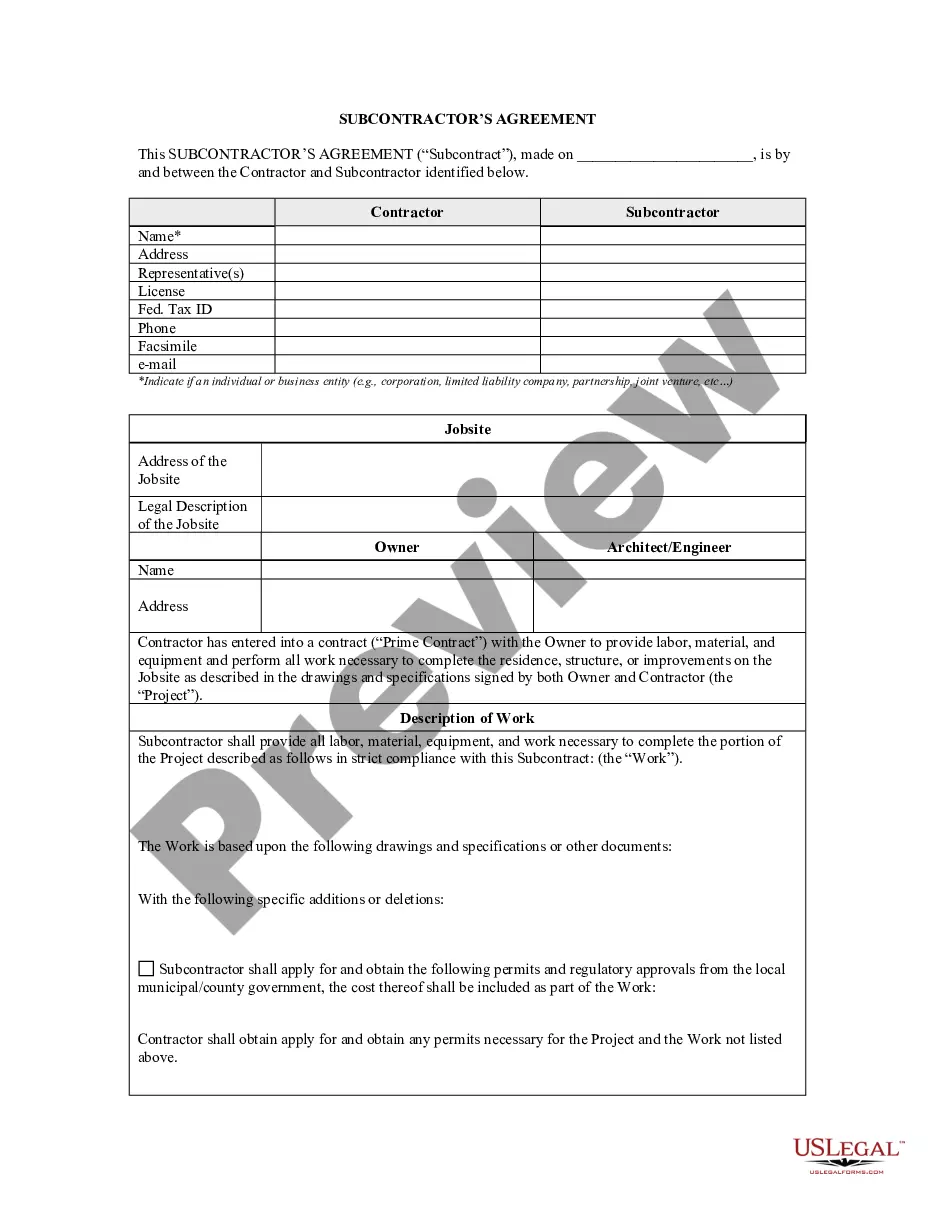
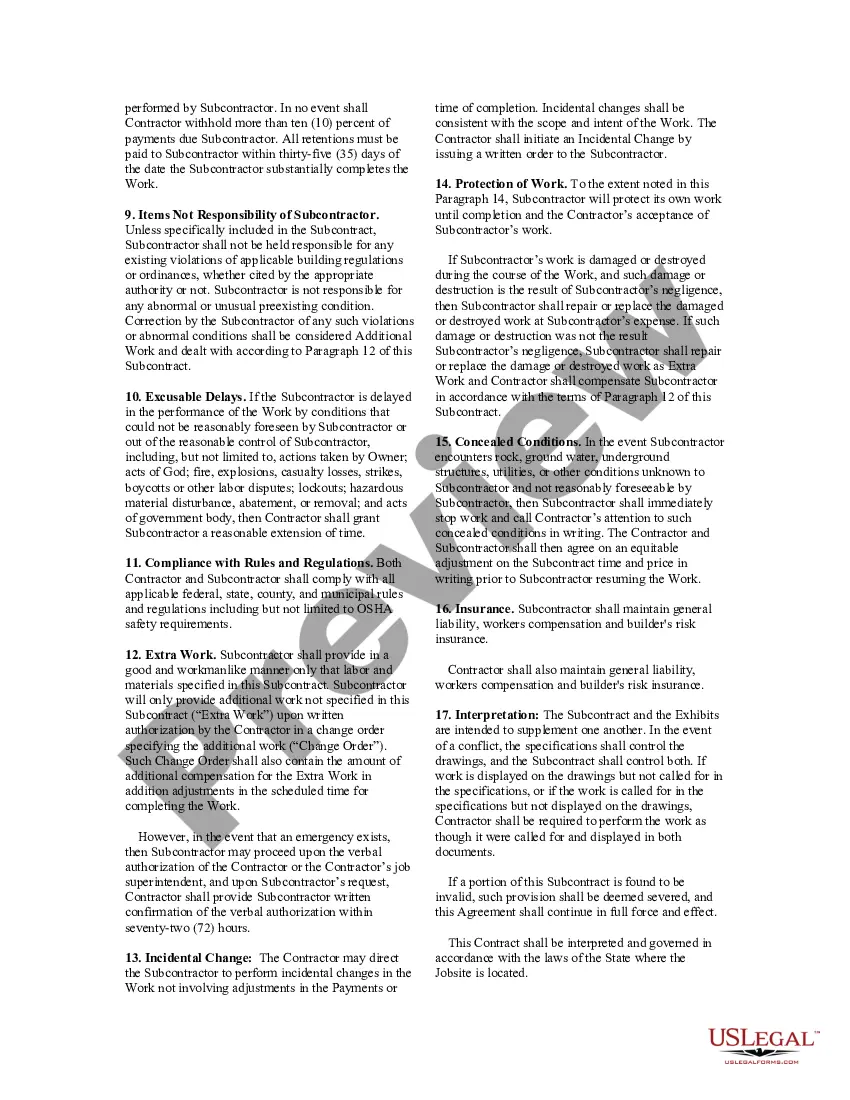
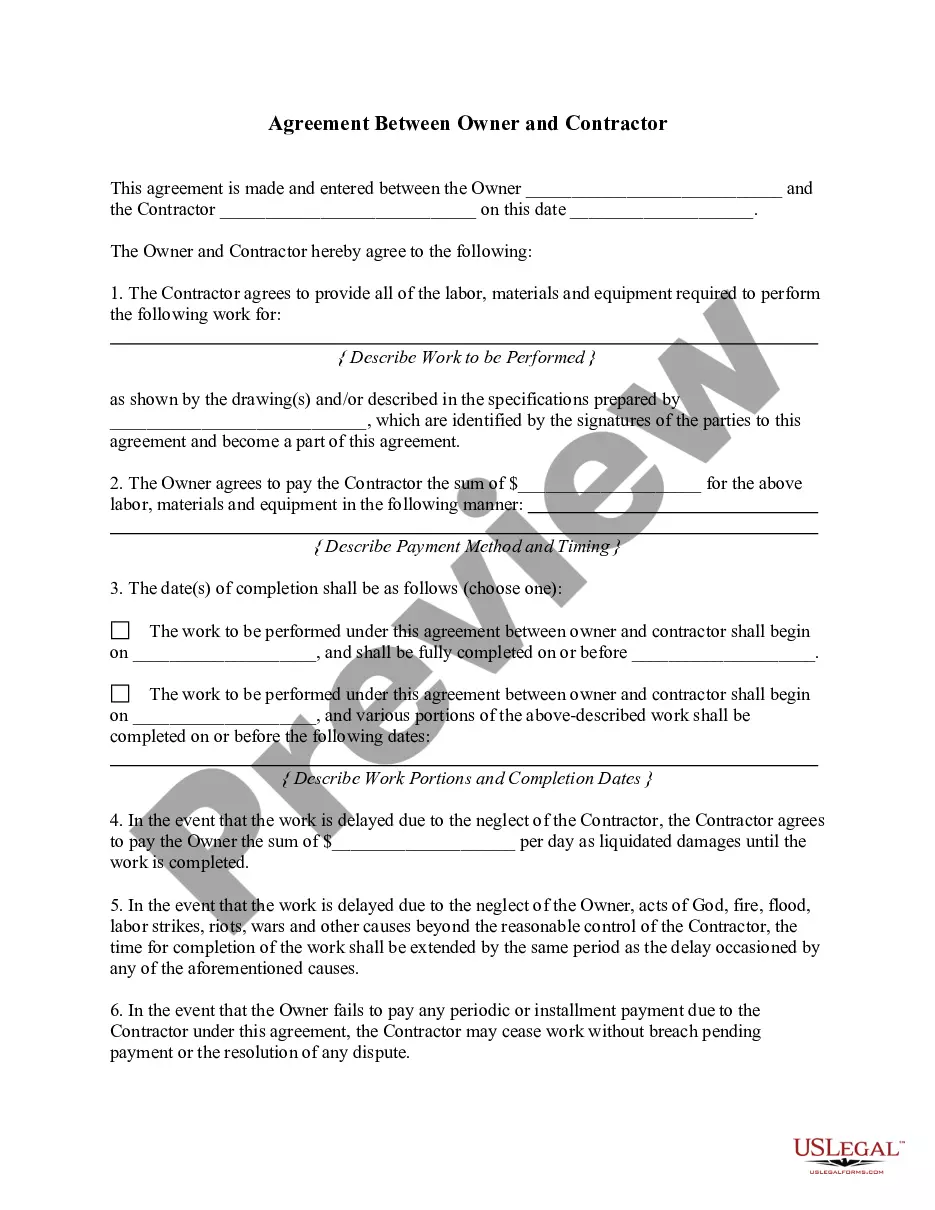
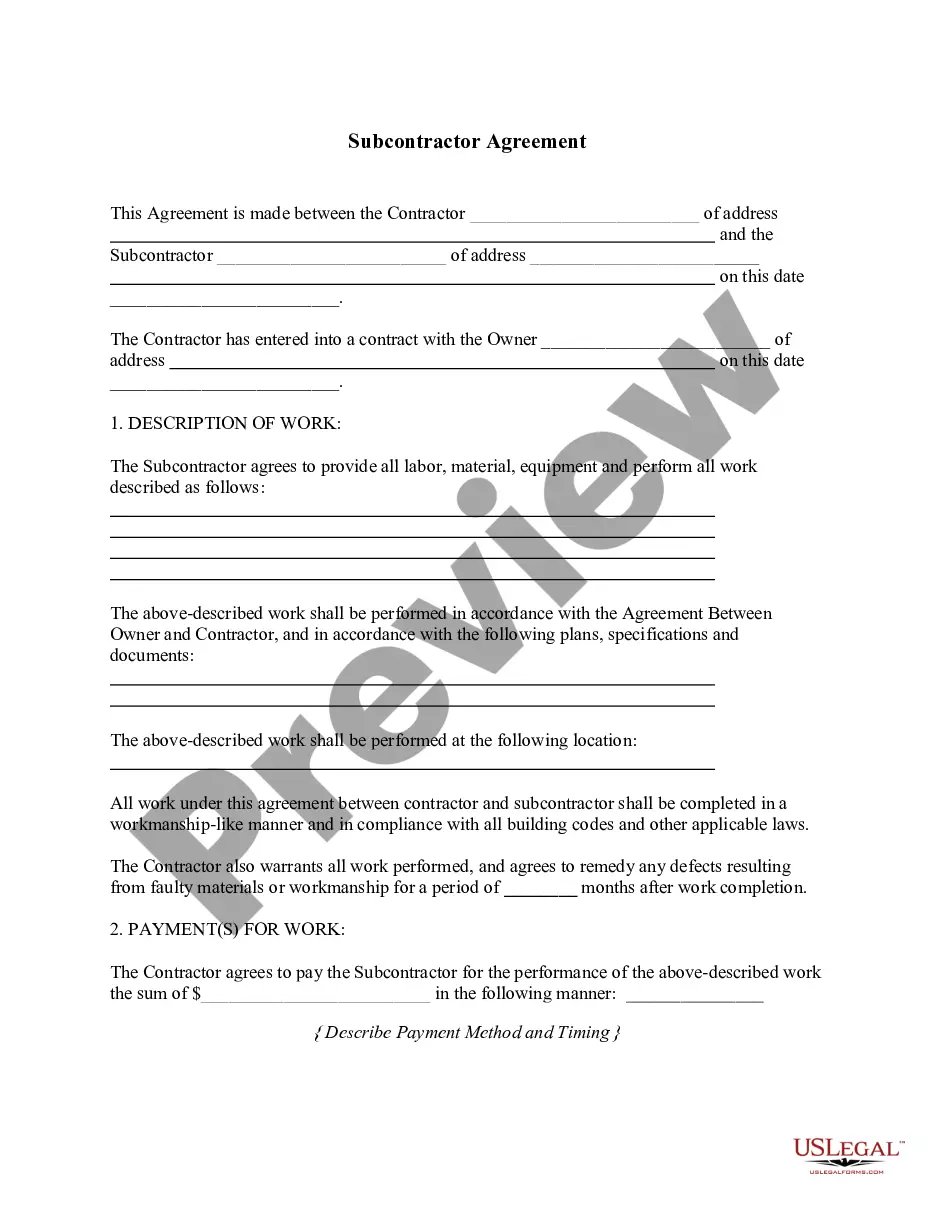
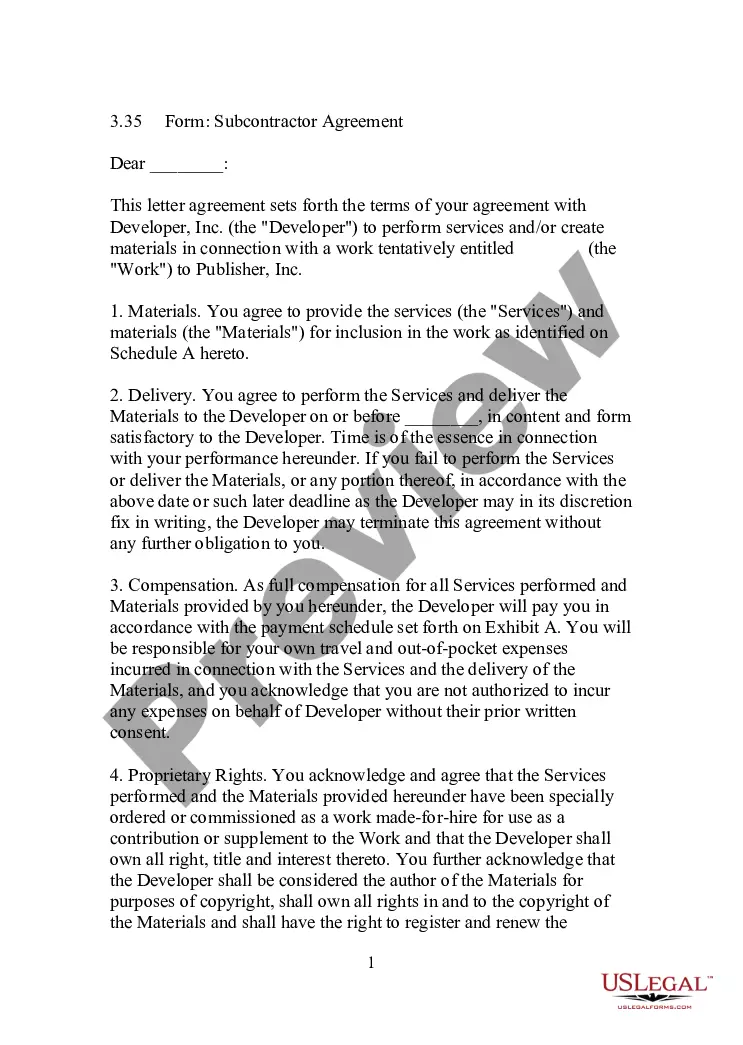
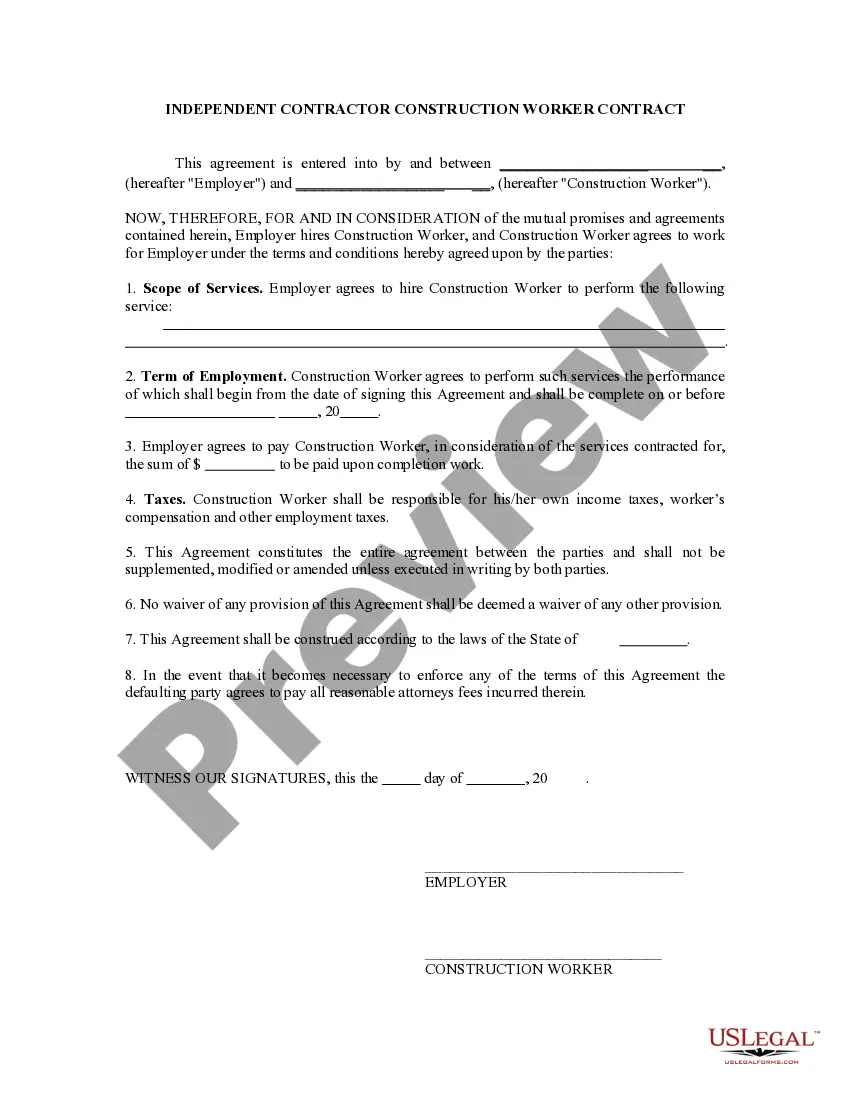
The Subcontractor's Agreement is a legally binding document designed for use between a contractor and subcontractor. It outlines the terms of the subcontracted work, ensuring clarity and reducing disputes. This form details essential aspects like project scope, scheduling, payment terms, and dispute resolution mechanisms, which distinguish it from other construction-related agreements.
Key components of this form
- Identification of the parties involved in the subcontract.
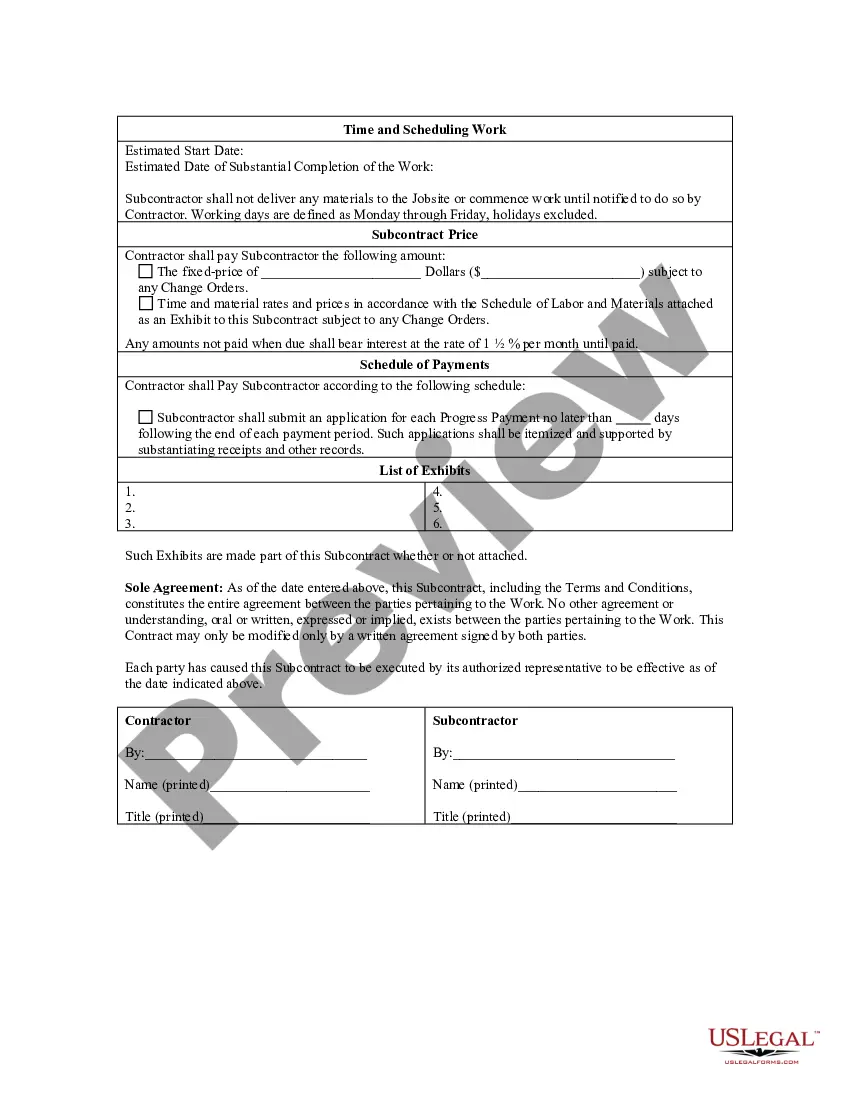
- Description of the work to be performed, location, and schedule.
- Payment details including total amount and schedule.
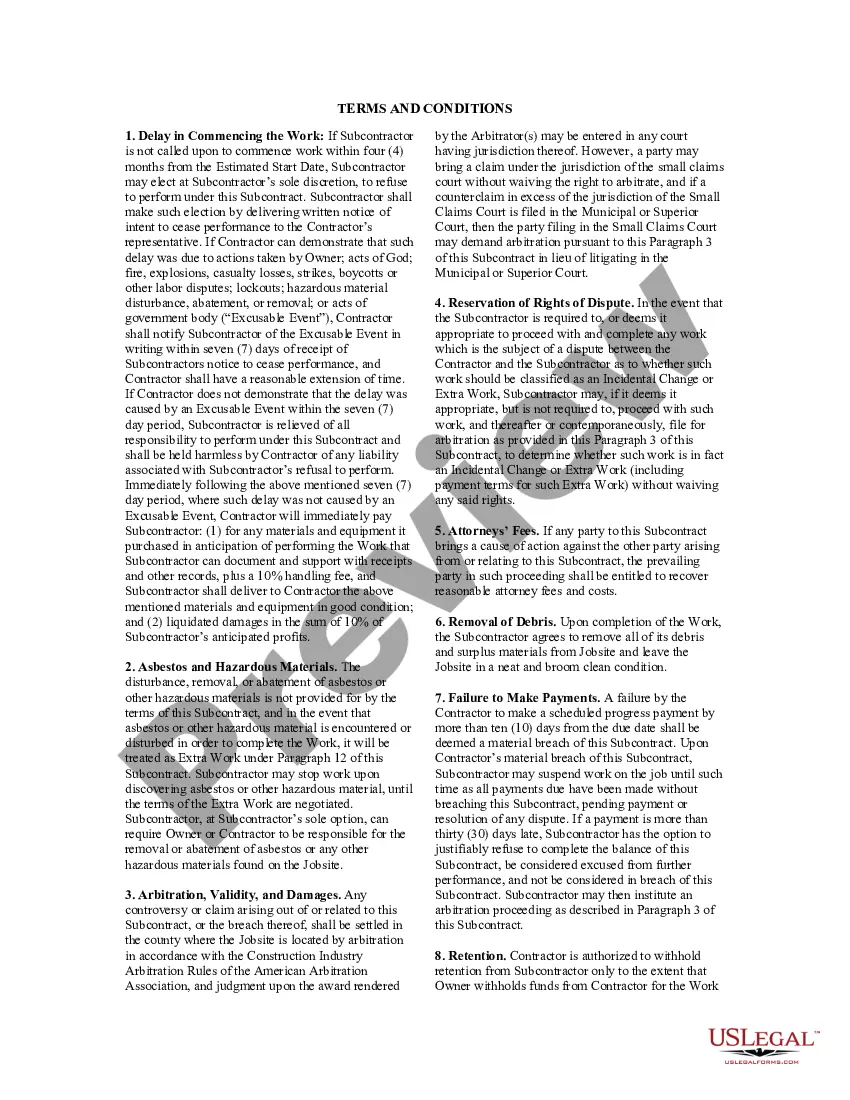
- Conditions regarding delays, insurance, and hazardous materials.
- Dispute resolution procedures, including arbitration protocols.
- Provisions for changes in work scope and extra compensation terms.

When to use this form
This Subcontractor's Agreement should be used when a contractor hires a subcontractor to perform specific tasks on a construction project. It is particularly useful in situations where the work scope is defined, such as renovations, building projects, or where specialized skills are required. Utilizing this form helps mitigate the risk of misunderstandings and provides a clear framework for operation.
Who can use this document
- Contractors looking to formalize agreements with subcontractors.
- Subcontractors who want to ensure their rights and obligations are clearly outlined.
- Construction project managers overseeing multiple contractors and subcontractors.
Completing this form step by step
- Identify and enter the names of the contractor and subcontractor.
- Specify the job site where the work will be performed.
- Describe the exact nature of the work to be completed.
- Fill in the payment details including total contract amount and schedule.
- Ensure all parties sign the agreement to validate the contract.
Does this document require notarization?
This form does not typically require notarization unless specified by local law. Ensure to review state regulations to confirm any specific notarization requirements that may apply.
Get your form ready online
Our built-in tools help you complete, sign, share, and store your documents in one place.
Make edits, fill in missing information, and update formatting in US Legal Forms—just like you would in MS Word.
Download a copy, print it, send it by email, or mail it via USPS—whatever works best for your next step.
Sign and collect signatures with our SignNow integration. Send to multiple recipients, set reminders, and more. Go Premium to unlock E-Sign.
If this form requires notarization, complete it online through a secure video call—no need to meet a notary in person or wait for an appointment.
We protect your documents and personal data by following strict security and privacy standards.

Make edits, fill in missing information, and update formatting in US Legal Forms—just like you would in MS Word.

Download a copy, print it, send it by email, or mail it via USPS—whatever works best for your next step.

Sign and collect signatures with our SignNow integration. Send to multiple recipients, set reminders, and more. Go Premium to unlock E-Sign.

If this form requires notarization, complete it online through a secure video call—no need to meet a notary in person or wait for an appointment.

We protect your documents and personal data by following strict security and privacy standards.
Common mistakes to avoid
- Failing to detail the work scope, leading to misunderstandings.
- Not including a clear payment schedule, resulting in delays.
- Overlooking insurance requirements which could expose parties to liability.
Advantages of online completion
- Convenience of instant download and editing.
- Access to templates created by licensed attorneys, ensuring legal accuracy.
- Ability to adjust and customize the terms as needed before finalization.
Legal use & context
- This form serves as a legally enforceable agreement, provided it is properly completed and signed.
- It is crucial for avoiding disputes and ensuring clear communication between parties.
- Understanding local laws regarding subcontracting may further enhance its enforceability.
Main things to remember
- The Subcontractor's Agreement clarifies responsibilities and expectations for subcontracted work.
- Using this form helps prevent disputes and ensures timely payments.
- Both contractors and subcontractors benefit from understanding and adhering to the terms outlined in the agreement.
Looking for another form?
Form popularity
FAQ
Start with procurement standards. Execute all subcontracts prior to starting your projects. Help those who help you. Award the job to the lowest fully qualified bidder. Use contract scope checklists. Make sure you have tight clauses. Meet to review the proposed subcontract.
A subcontractor agreement is a contract between contractors or project managers and subcontractors. This solidifies any agreement between the two parties and assures work. Subcontractors should read the subcontractor agreement and assure specifics to protect themselves from unfair risk.
Subcontractor agreements outline the responsibilities of each party, to ensure that if a claim were to arise, the responsible party is accountable. A subcontractor agreement provides protection to the company that hired the vendor or subcontractor by transferring the risk back to the party performing the work.
Each subcontractor should complete Form W-9 before they begin any work. On the form, the subcontractor identifies their business structure type (sole proprietorship, corporation, etc.). Form W-9 also asks for the subcontractor's name and Taxpayer Identification Number (TIN).
The disadvantages contractors doing this work lie in costs: The hourly expenses are high, and the professionals are independent in that they don't report to supervisors inside the company. These factors make it challenging to control the costs of these subcontracts.
Scope of the Project. Timing for Completion: Duration of Work Clause. Payment and Billing Clause. Independent Contractor Notice. Non-Disclosure Agreement. Non-Complete Clause. Work for Hire Inclusion. Responsibilities for Insurance for Accidental Damages.
A Notice to Owner (NTO) is a written notice prescribed by Florida Statute (713.06) that officially advises the owner of an improvement that the sender, usually a subcontractor or supplier not dealing directly with the owner, is looking to the owner to be sure the sender is paid before payment is made to the contractor
A subcontractor has a contract with the contractor for the services provided - an employee of the contractor cannot also be a subcontractor.