Delaware Letter from Landlord to Tenant about Intent to increase rent and effective date of rental increase
What this document covers
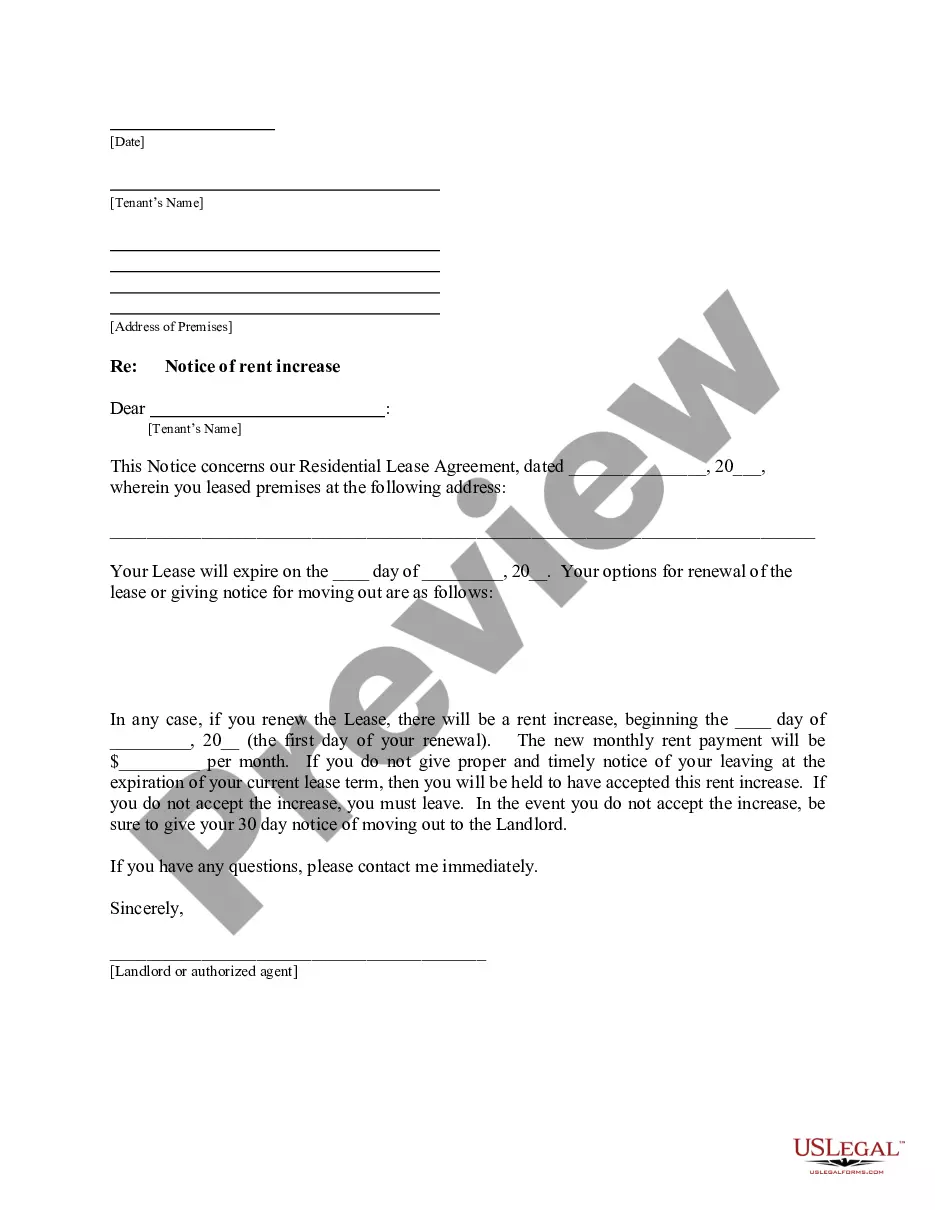
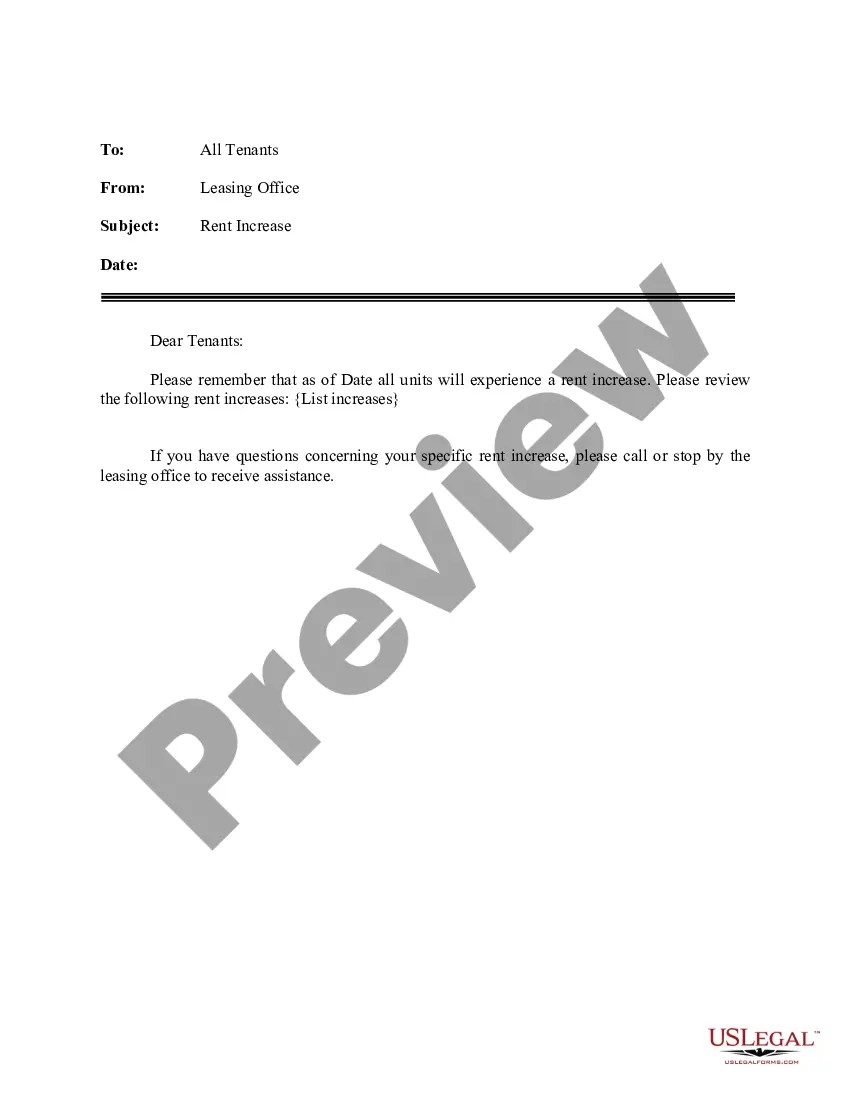
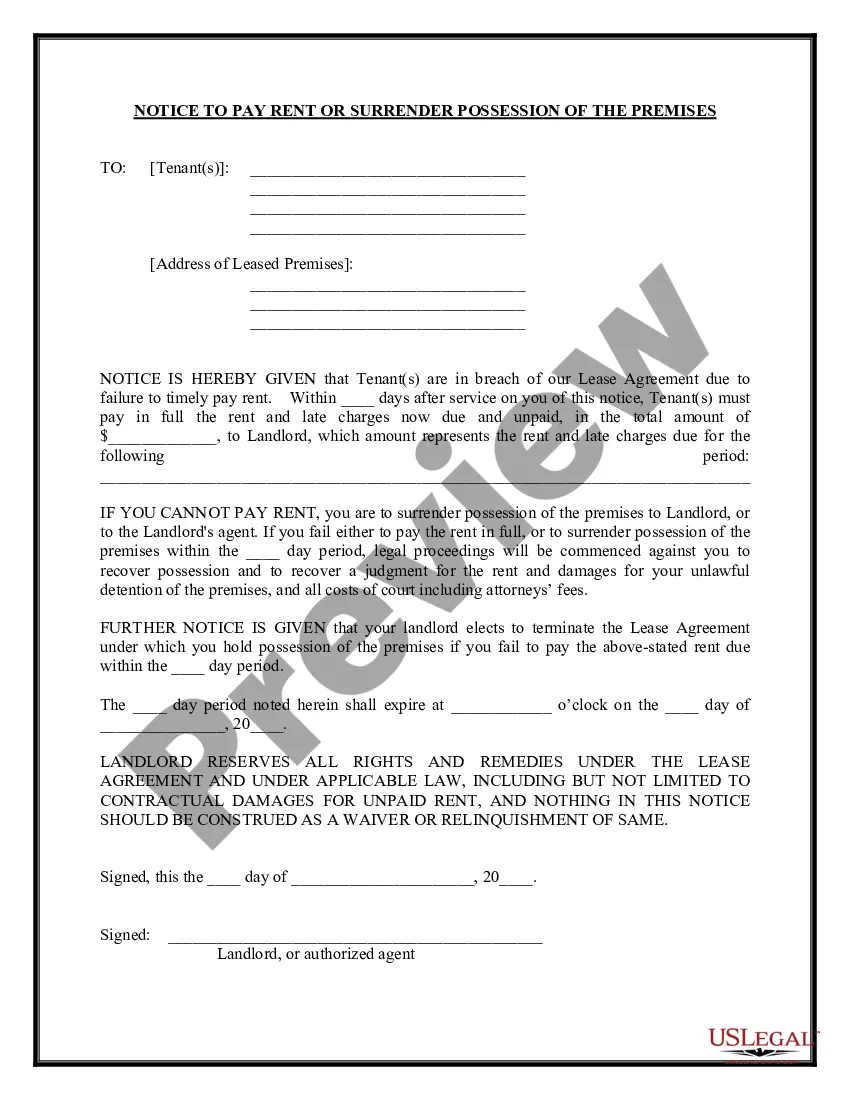
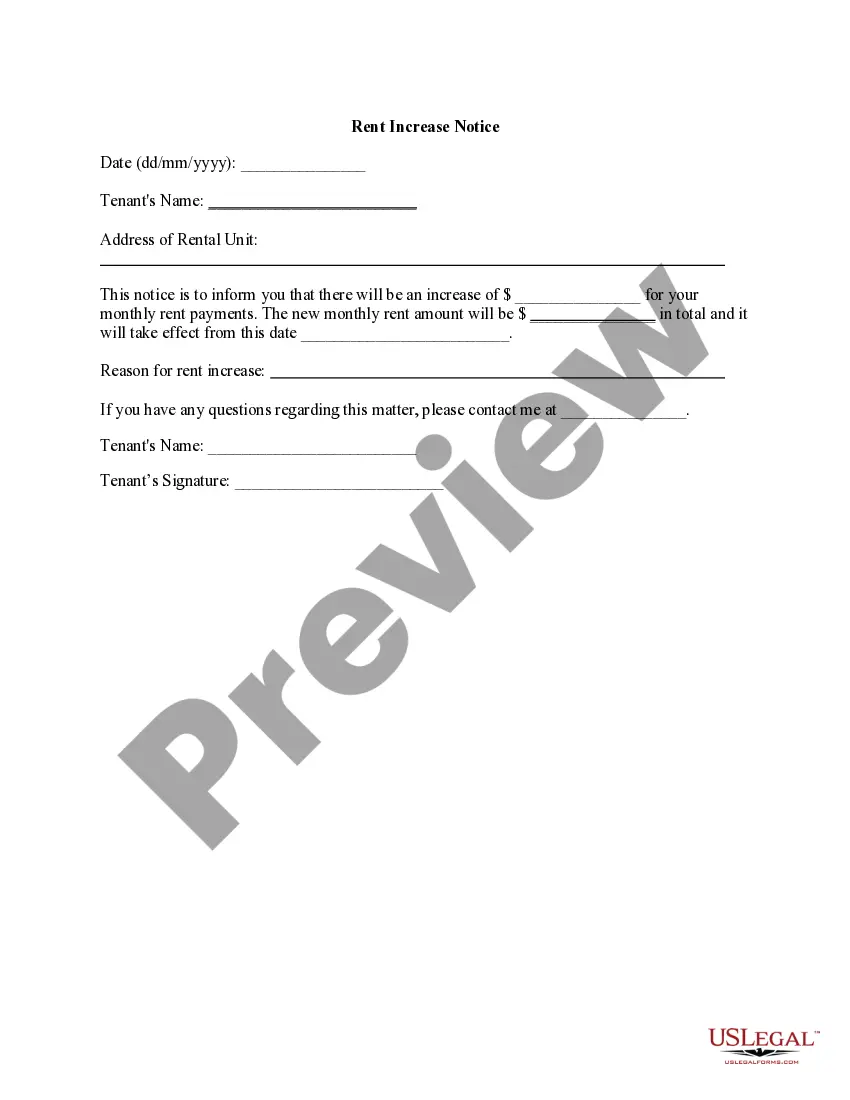
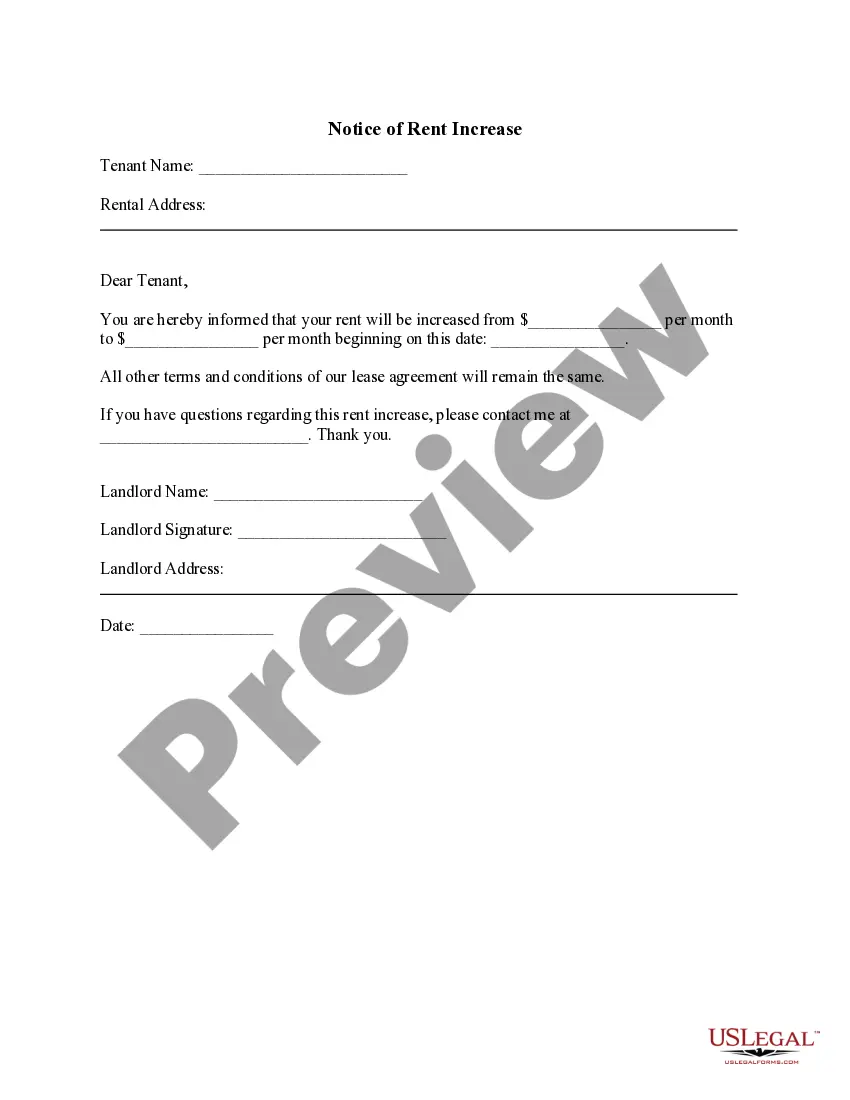
This letter from landlord to tenant about intent to increase rent serves as an official notice from the landlord to the tenant. It informs the tenant that the lease will expire soon and outlines the new rental terms upon renewal. This notice is crucial for maintaining clear communication regarding rental agreements and is distinct from general lease extension forms, as it specifically addresses rent changes.
What’s included in this form
- Date of the original lease agreement
- Address of the rental property
- Expiration date of the current lease
- Options for lease renewal or vacating the property
- Contact information for the landlord or authorized agent
When to use this form
This letter should be used when a landlord intends to increase the rent and must notify the tenant in writing before the lease expiration. It is particularly important in circumstances where the rental terms are changing, and the landlord wants to provide the tenant with options for either renewing the lease at the new rate or vacating the property.
Who this form is for
- Landlords who wish to notify tenants of a rent increase
- Property managers acting on behalf of the landlord
- Tenants who need to understand their rights regarding lease renewal and rent adjustments
How to complete this form
- Fill in the date of the original lease agreement.
- Provide the full address of the rental property.
- Specify the expiration date of the lease.
- Outline the tenant's options regarding the lease renewal or moving out.
- Sign the letter as the landlord or authorized agent.
Notarization guidance
This form does not typically require notarization to be legally valid. However, some jurisdictions or document types may still require it. US Legal Forms provides secure online notarization powered by Notarize, available 24/7 for added convenience.
Get your form ready online
Our built-in tools help you complete, sign, share, and store your documents in one place.
Make edits, fill in missing information, and update formatting in US Legal Forms—just like you would in MS Word.
Download a copy, print it, send it by email, or mail it via USPS—whatever works best for your next step.
Sign and collect signatures with our SignNow integration. Send to multiple recipients, set reminders, and more. Go Premium to unlock E-Sign.
If this form requires notarization, complete it online through a secure video call—no need to meet a notary in person or wait for an appointment.
We protect your documents and personal data by following strict security and privacy standards.

Make edits, fill in missing information, and update formatting in US Legal Forms—just like you would in MS Word.

Download a copy, print it, send it by email, or mail it via USPS—whatever works best for your next step.

Sign and collect signatures with our SignNow integration. Send to multiple recipients, set reminders, and more. Go Premium to unlock E-Sign.

If this form requires notarization, complete it online through a secure video call—no need to meet a notary in person or wait for an appointment.

We protect your documents and personal data by following strict security and privacy standards.
Typical mistakes to avoid
- Failing to provide adequate notice time to the tenant based on state laws.
- Not including contact information for follow-up questions.
- Omitting to mention consequences if the tenant does not accept the new terms.
Why use this form online
- Convenience of accessing and downloading forms at any time.
- Editability allows landlords to personalize notices for their specific situation.
- Reliability in ensuring the form meets legal standards and includes all necessary components.
Legal use & context
- This notice serves as an official record of the landlord's intent to increase rent.
- It provides a clear communication channel between the landlord and tenant.
- Adhering to proper notice requirements ensures compliance with local landlord-tenant laws.
What to keep in mind
- This form notifies tenants of a planned rent increase.
- Landlords need to inform tenants before the lease expires.
- Clear communication can prevent disputes and misunderstandings.
Looking for another form?
Form popularity
FAQ
A great tenant letter example effectively emphasizes reliability and respectfulness. It should include detailed evidence of fulfilling responsibilities, like timely rent payment and maintaining the property. These attributes demonstrate the tenant's value, creating a strong case for future rental applications. Providing context on your positive history can strengthen this letter.
Writing a formal letter to a tenant involves a structured approach. Start with the date, followed by the tenant's information, and then your greeting. Clearly state the purpose, such as a Delaware Letter from Landlord to Tenant about Intent to increase rent and effective date of rental increase, and ensure you provide sufficient details. Close with a polite statement, inviting dialogue or questions.
When approaching your landlord about a rent increase, choose a calm and respectful manner. Begin by expressing your appreciation for the property and the landlord’s efforts. Then, gently inquire about the Delaware Letter from Landlord to Tenant about Intent to increase rent and effective date of rental increase. Open dialogue fosters understanding and may lead to a favorable discussion.
A good reference letter for a tenant should highlight their strengths and reliability. Start by affirming your relationship with the tenant, then detail their positive behaviors, such as timely rent payments and taking care of the property. This letter can aid them in securing future housing. Always keep the tone professional and supportive.
Writing a letter to a tenant requires clarity and professionalism. Begin with a proper greeting and clearly state the purpose of your letter. If you are notifying them about a Delaware Letter from Landlord to Tenant about Intent to increase rent and effective date of rental increase, be specific about the changes to rent and the timeline. Always conclude with an invitation to discuss any concerns they may have.
When writing a Delaware Letter from Landlord to Tenant about Intent to increase rent and effective date of rental increase, it's best to communicate with empathy. You can start by expressing appreciation for the tenant's time in your property. Clearly state your intent to increase rent and provide ample notice about the expected changes. This approach helps maintain a positive landlord-tenant relationship.
Renters in Delaware have several rights, including the right to a habitable living environment, privacy, and protection against unfair eviction. It's crucial for tenants to be aware of these rights to navigate their rental agreements effectively. When facing issues such as a rent increase, a Delaware Letter from Landlord to Tenant about Intent to increase rent and effective date of rental increase can help clarify any new terms. Understanding these rights empowers tenants to advocate for themselves.
In Delaware, a landlord must provide written notice to a tenant regarding the need to vacate the property. The amount of notice generally ranges from 5 to 60 days, depending on the lease terms and circumstances. A Delaware Letter from Landlord to Tenant about Intent to increase rent and effective date of rental increase can serve as a formal communication tool in these situations. This ensures that both parties understand their obligations and timelines.
Explaining a rent increase to a tenant requires clarity and empathy. Start by providing a written Delaware Letter from Landlord to Tenant about Intent to increase rent and effective date of rental increase. Clearly state the reasons behind the increase, whether due to market trends, property maintenance, or rising costs. Open the conversation for any questions or concerns, creating an environment of mutual respect and understanding.
Section 5514 of the Delaware landlord/tenant code outlines the requirements for rent increases and the notice a landlord must give to a tenant. This section emphasizes the importance of providing a written Delaware Letter from Landlord to Tenant about Intent to increase rent and effective date of rental increase. Understanding this regulation helps both parties manage their expectations and responsibilities. Always refer to this section when discussing rent adjustments.