Delaware Quitclaim Deed from Individual to Corporation
What this document covers
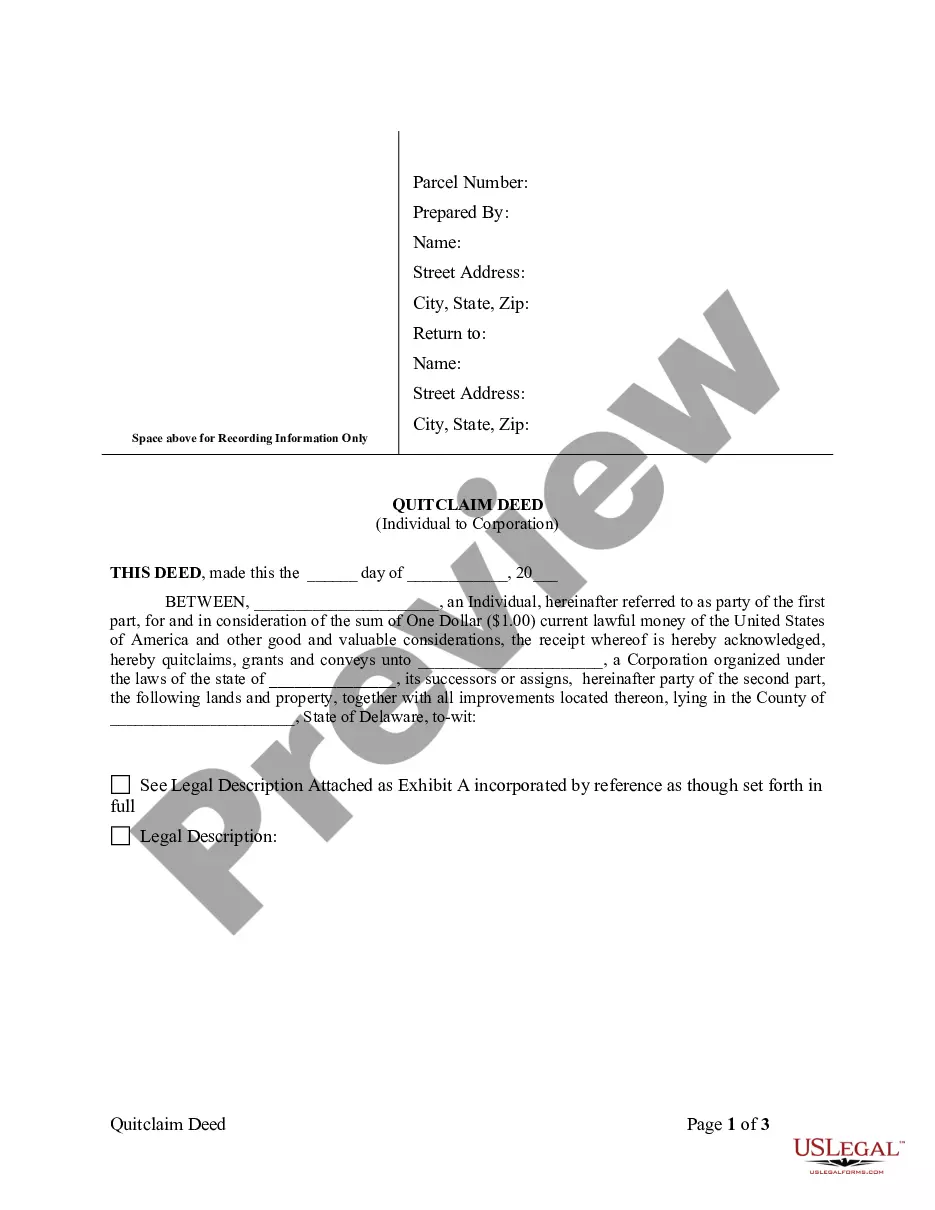
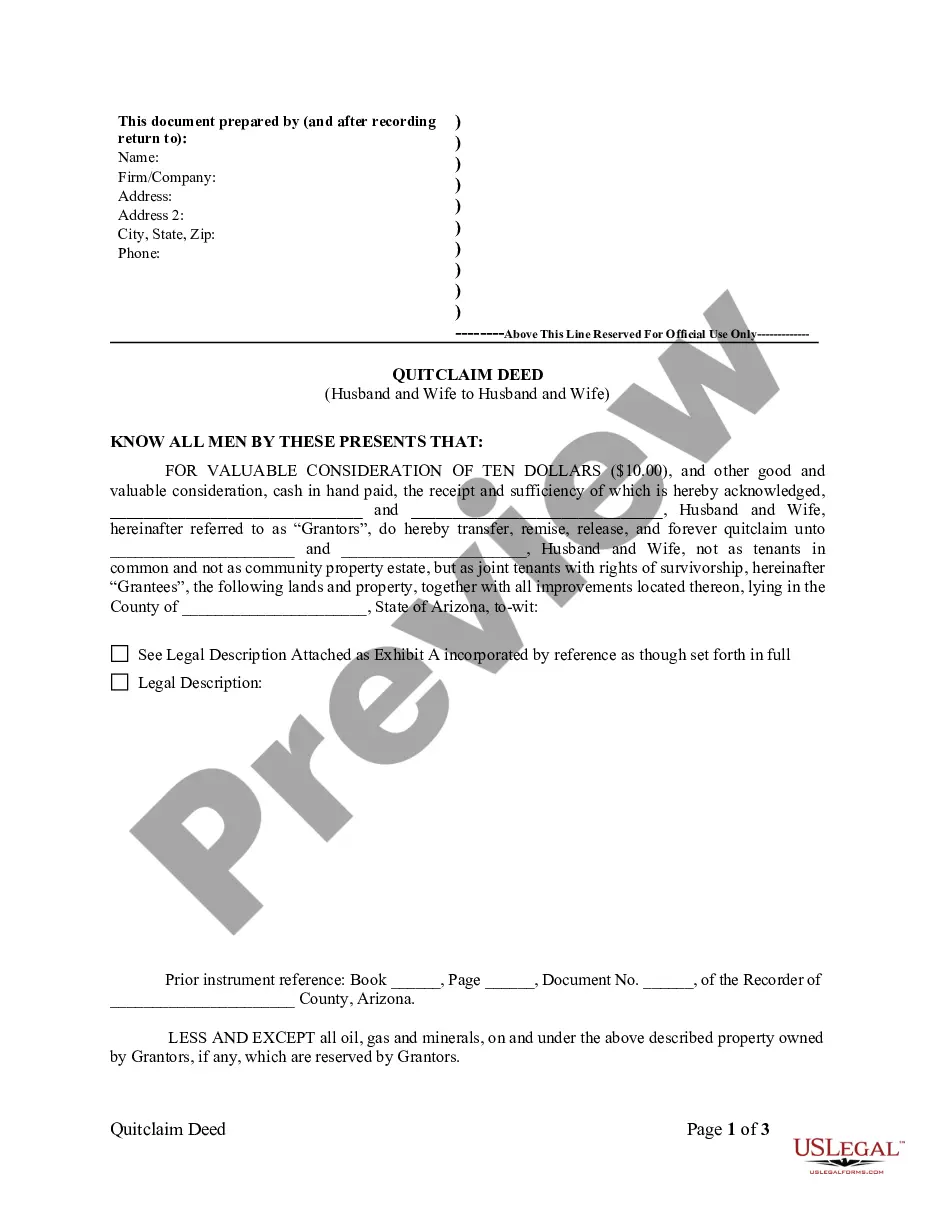
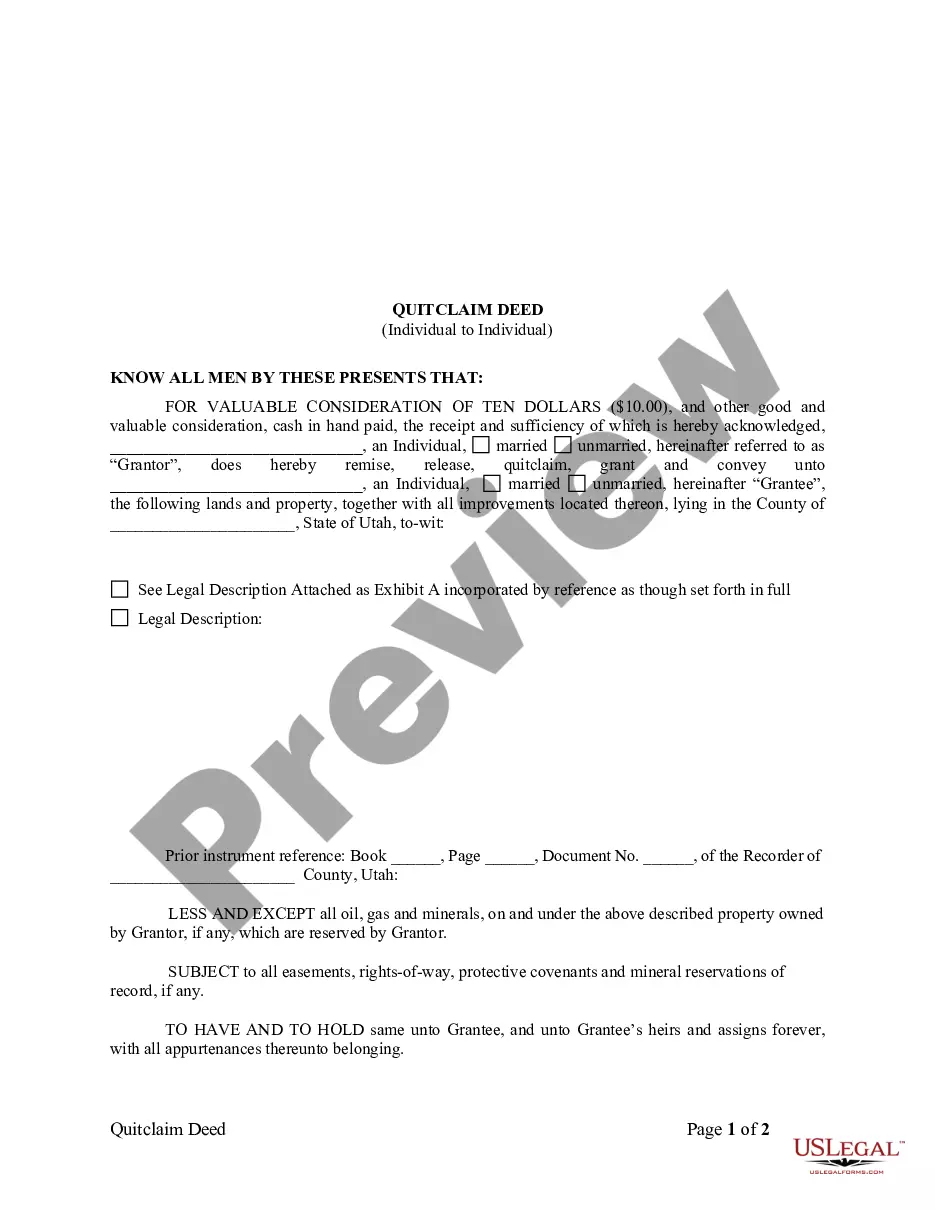
The Quitclaim Deed from Individual to Corporation is a legal document used to transfer property ownership from an individual (the grantor) to a corporation (the grantee). Unlike other deeds, this form conveys ownership without any guarantees about the property's title, making it a simpler but less secure option. This quitclaim deed specifically states that the grantor is transferring the described property while reserving any mineral rights, if applicable.
Main sections of this form
- Grantor and grantee information: Details about the individual transferring the property and the corporation receiving it.
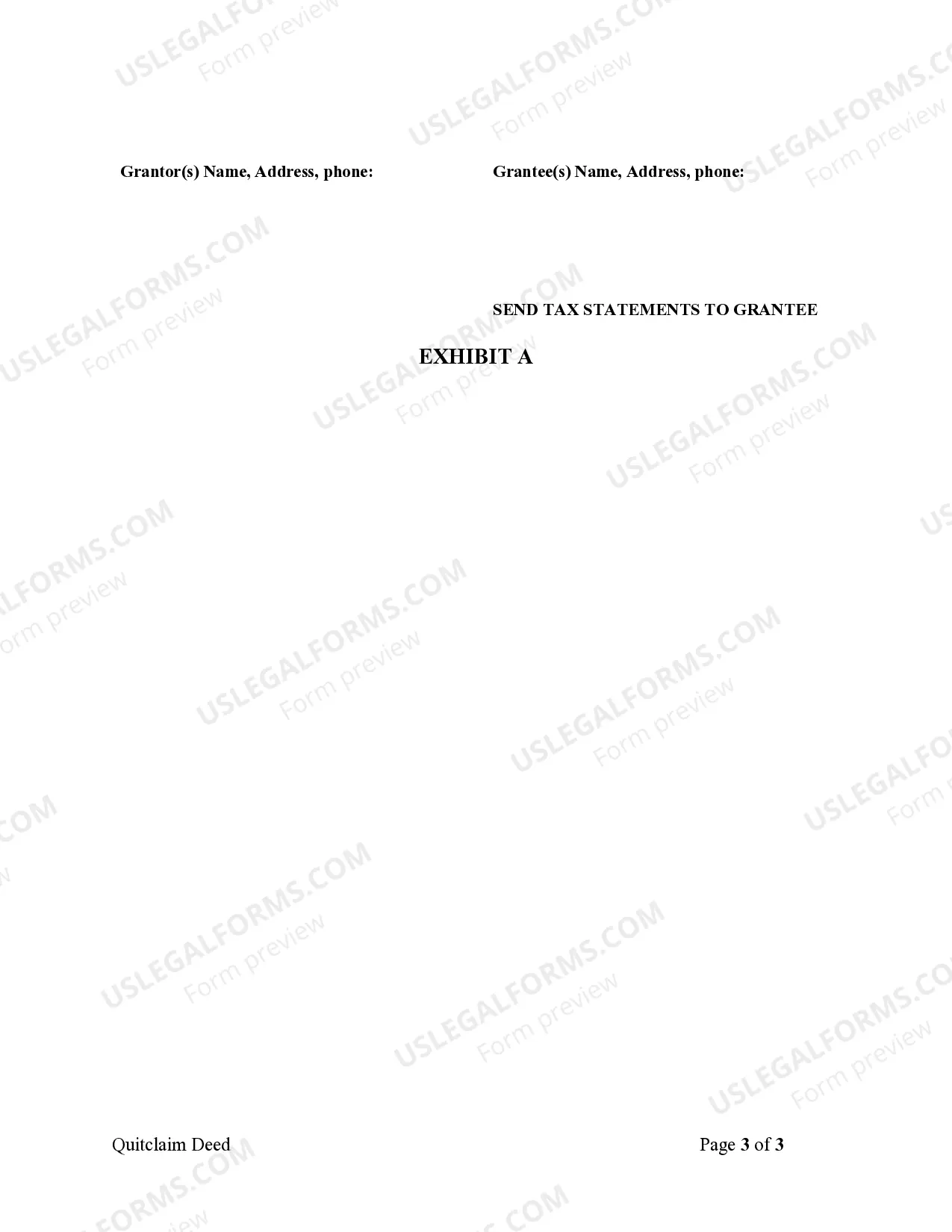
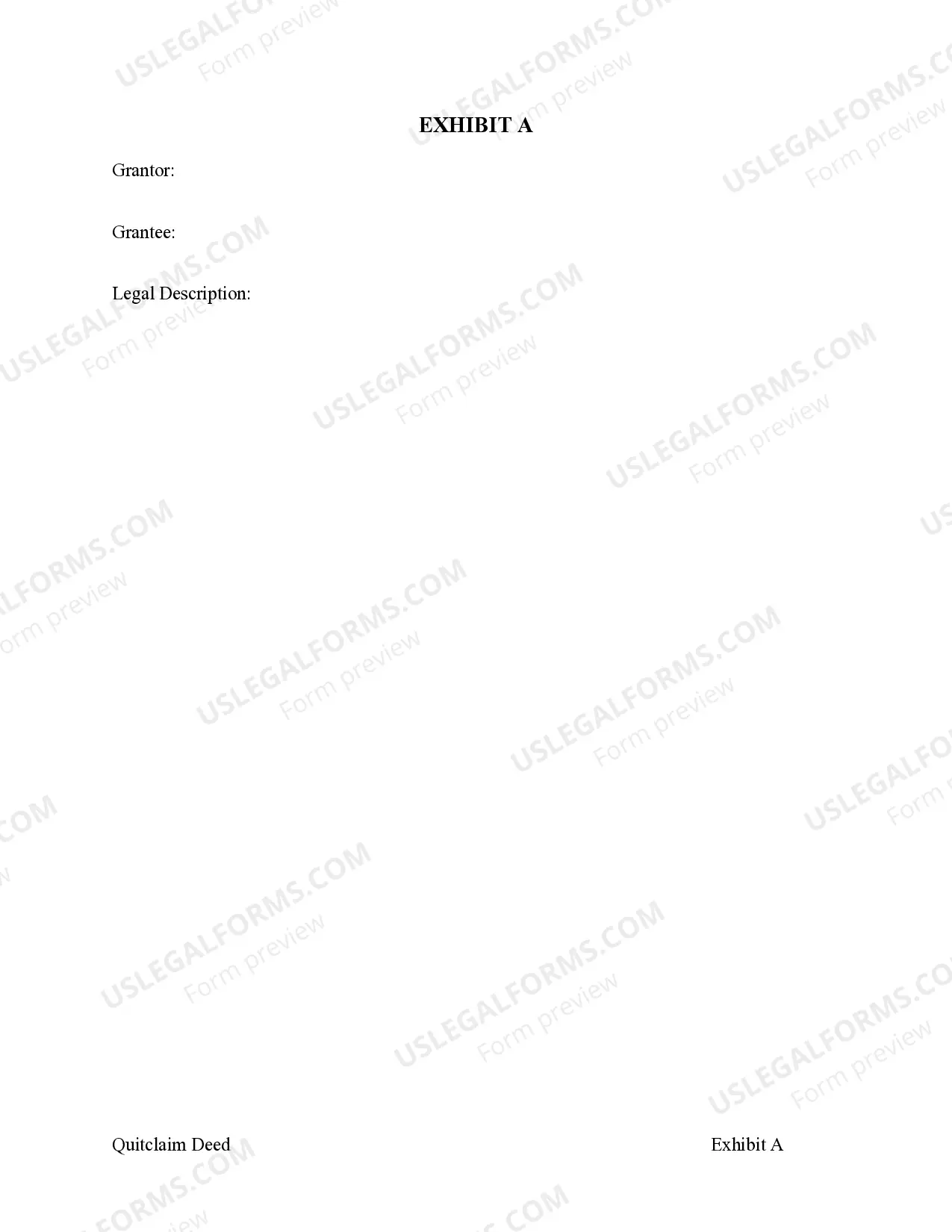
- Legal description of the property: A precise description of the property being conveyed, typically referenced as an attached exhibit.
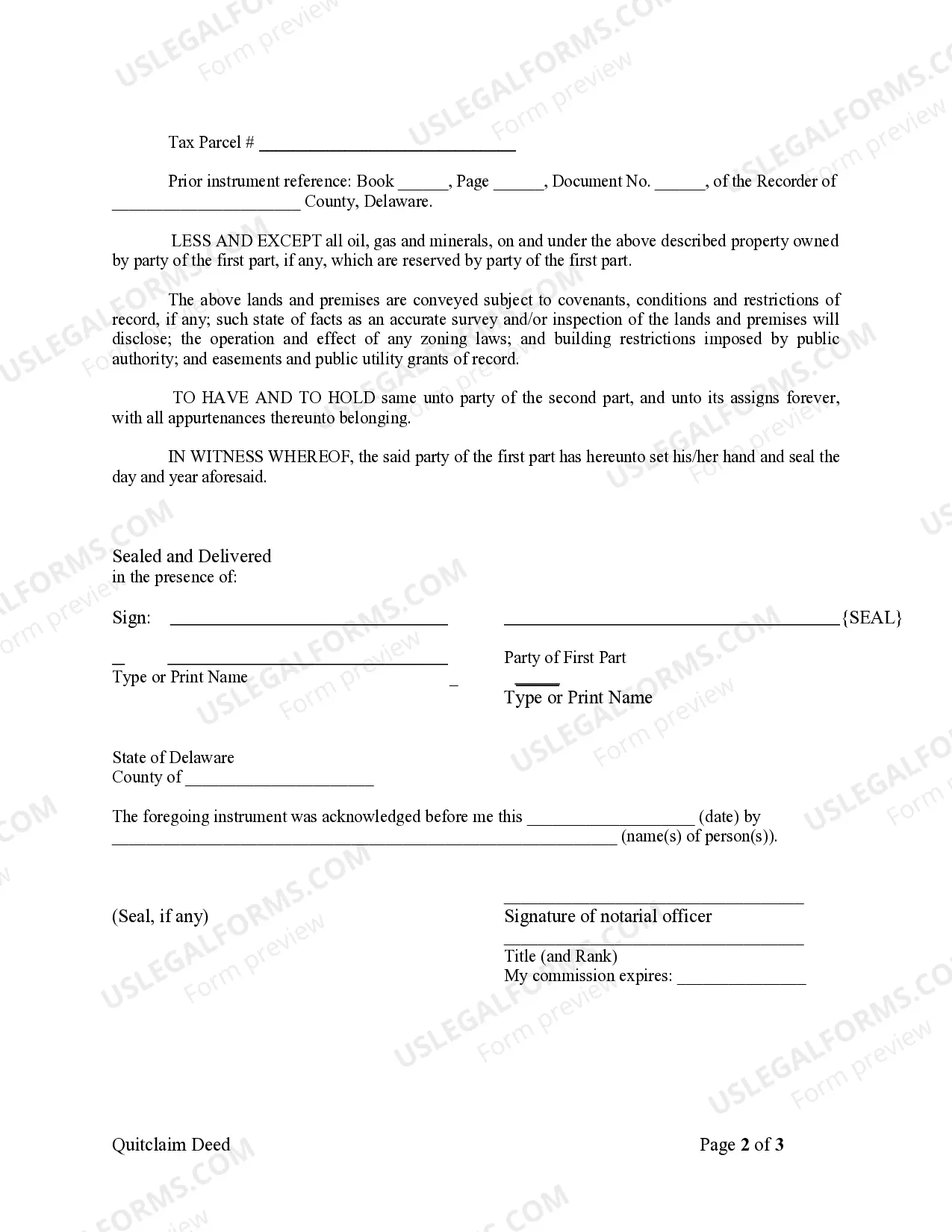
- Reservation of rights: A clause reserving all oil, gas, and mineral rights to the grantor.
- Covenants and restrictions: Information about any legal conditions affecting the property, such as zoning laws or easements.
- Signatures and notarization: Places for signatures of the grantor and witnesses, along with a notarization acknowledgment.


When this form is needed
This quitclaim deed should be used when an individual wants to transfer property ownership to a corporation without making any claims about the title. Common scenarios include situations where family members transfer property to a corporation for management purposes or when an individual wants to simplify the legal status of property ownership without engaging in a formal sales process.
Who needs this form
- Individuals looking to transfer property they own to a corporation.
- Corporations receiving property from a single individual.
- Real estate professionals managing simple property transfers.
- Legal representatives assisting clients in transferring property without warranties.
How to complete this form
- Identify the parties involved: Enter the names and addresses of the grantor (individual) and the grantee (corporation).
- Specify the property: Include the legal description of the property being conveyed, typically attached as an exhibit.
- Enter reservation details: Clearly state any rights being reserved, such as oil, gas, or mineral rights.
- Include necessary clauses: Ensure any conditions, restrictions, or covenants are accurately documented.
- Obtain signatures: Ensure the grantor signs and dates the document in the presence of a witness, if required.
- Notarize the document: Arrange for notarization, if your state requires it for validity.
Notarization requirements for this form
This form does not typically require notarization unless specified by local law. Always verify your stateâs regulations to ensure proper execution and validity.
Get your form ready online
Our built-in tools help you complete, sign, share, and store your documents in one place.
Make edits, fill in missing information, and update formatting in US Legal Forms—just like you would in MS Word.
Download a copy, print it, send it by email, or mail it via USPS—whatever works best for your next step.
Sign and collect signatures with our SignNow integration. Send to multiple recipients, set reminders, and more. Go Premium to unlock E-Sign.
If this form requires notarization, complete it online through a secure video call—no need to meet a notary in person or wait for an appointment.
We protect your documents and personal data by following strict security and privacy standards.

Make edits, fill in missing information, and update formatting in US Legal Forms—just like you would in MS Word.

Download a copy, print it, send it by email, or mail it via USPS—whatever works best for your next step.

Sign and collect signatures with our SignNow integration. Send to multiple recipients, set reminders, and more. Go Premium to unlock E-Sign.

If this form requires notarization, complete it online through a secure video call—no need to meet a notary in person or wait for an appointment.

We protect your documents and personal data by following strict security and privacy standards.
Avoid these common issues
- Failing to accurately describe the property, leading to confusion or disputes.
- Not reserving necessary rights, which can result in the loss of valuable property interests.
- Neglecting to obtain signatures or notarization, which can invalidate the deed.
- Overlooking local laws that may impose additional requirements.
Benefits of completing this form online
- Convenience: Easily access and fill out the form from anywhere at any time.
- Editability: Modify the template to meet your specific needs without starting from scratch.
- Reliability: Forms provided by licensed attorneys ensure legal compliance and accuracy.
Looking for another form?
Form popularity
FAQ
Individuals who benefit the most from a Delaware Quitclaim Deed from Individual to Corporation include those transferring property within a family, such as parents to children, where trust exists. It is also advantageous for simplifying property transfers during estate planning or quick sales where speed is important. Moreover, businesses transferring assets internally may find it efficient for their operations. Uslegalforms can help guide these scenarios with tailored forms and legal advice.
The primary danger of a Delaware Quitclaim Deed from Individual to Corporation is that it provides no warranties about the title's validity. This means you could inherit existing liens, debts, or claims against the property. If the grantor misrepresents their ownership, the grantee might face legal challenges. To mitigate risks, consult with legal professionals or utilize resources on uslegalforms for better understanding and protections.
To properly fill out a Delaware Quitclaim Deed from Individual to Corporation, start by including both the grantor's and grantee's names and addresses. Clearly describe the property by including its legal description and any relevant identification numbers. Ensure that the document is signed and notarized to validate the transfer. You can find various templates and guidance on platforms like uslegalforms to streamline the process.
Yes, a title company can prepare a Delaware Quitclaim Deed from Individual to Corporation. These companies have the expertise and resources to create a legally binding document that satisfies state requirements. By working with a title company, you can ensure accuracy and compliance, making the transfer process smoother. Consider using US Legal Forms for reliable templates and guidance to navigate this essential transaction.
To complete a quitclaim deed in Delaware, start by preparing the deed form with accurate details of the parties involved. Follow this by having both parties sign the document in front of a notary public. Finally, submit the deed to your local county's recorder's office for official recording, ensuring the transfer is recognized and valid.
Using a Delaware Quitclaim Deed from Individual to Corporation can lead to several issues, such as unresolved title disputes or hidden liens not disclosed during the transfer. Also, if the previous owner faces debt or legal issues, the new owner may inherit problems associated with the property. It's advisable to conduct due diligence before proceeding.
To transfer a deed from an individual to an LLC, you'll want to create a Delaware Quitclaim Deed from Individual to Corporation that lists the LLC as the recipient. Sign the deed with a notary present to witness the signatures. Finally, file the executed deed with the local county recorder to complete the transfer legally.
Yes, you can create a Delaware Quitclaim Deed from Individual to Corporation yourself, as long as you understand the necessary requirements. However, it's advisable to consult legal resources or templates to ensure compliance with state laws. Using the US Legal Forms platform can provide you with the right templates and guidance to make the process smoother.
One significant disadvantage of a Delaware Quitclaim Deed from Individual to Corporation is the lack of warranties, meaning the grantee cannot be assured of clear title or ownership. Additionally, if any title issues arise, the grantor isn't liable, which can lead to potential legal complications. It is crucial to weigh these risks against the benefits before proceeding.
To file a Delaware Quitclaim Deed from Individual to Corporation, first prepare the deed document with correct details, including the names of the grantor and grantee. Next, sign the deed in the presence of a notary public. Then, record the deed with the appropriate county recorder's office. This process ensures that the transfer is legally recognized.