Delaware Quitclaim Deed from Individual to Individual
Overview of this form
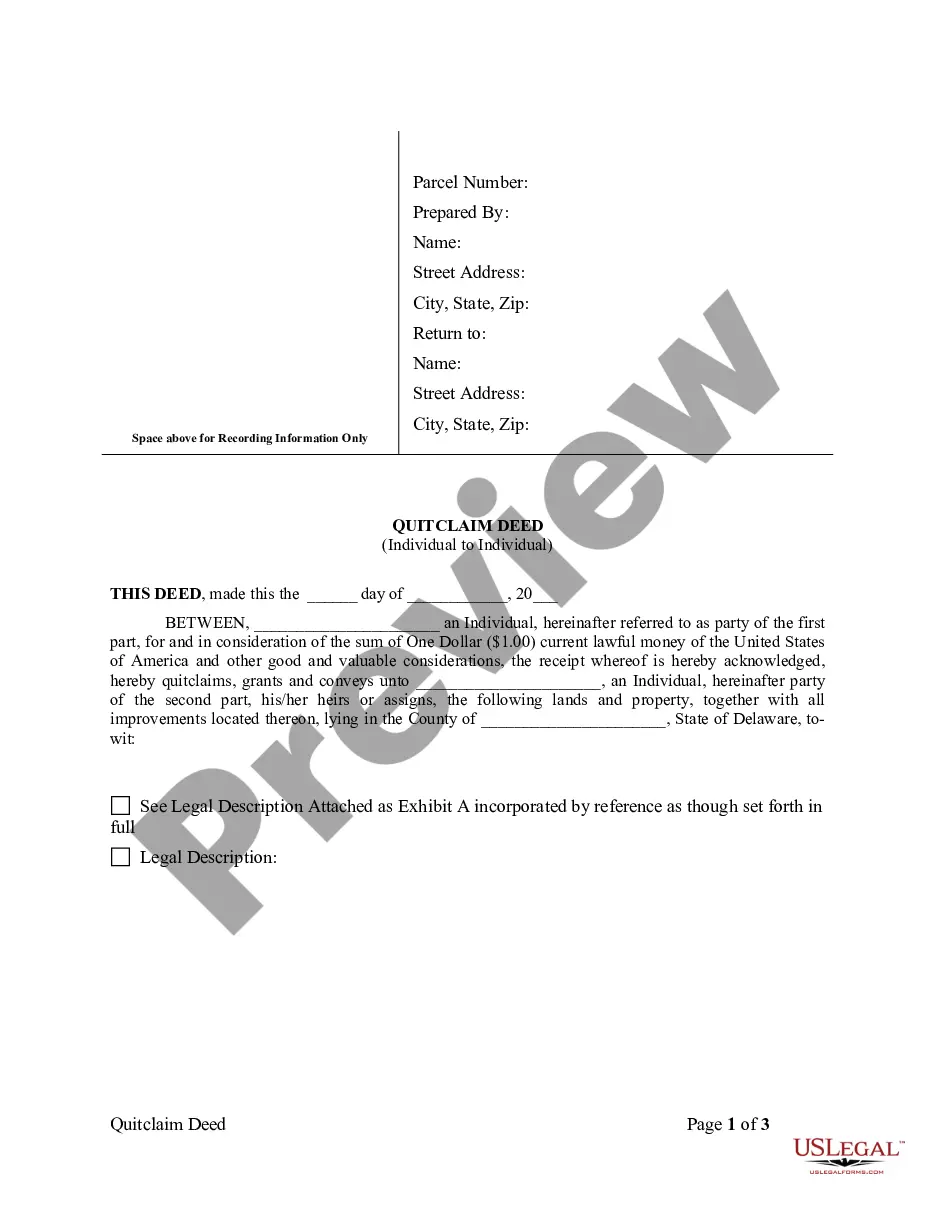
The Quitclaim Deed from Individual to Individual is a legal document used to transfer property ownership from one individual (the Grantor) to another (the Grantee) without any warranties regarding the title. This form is distinct from other deed forms, such as warranty deeds, because it does not guarantee that the Grantor holds clear title to the property. Instead, the Grantor simply conveys whatever interest they have in the property, if any. This type of deed is often used when property is transferred between friends, family members, or in situations where the Grantor does not want to be liable for any claims made against the property.
Main sections of this form
- Identification of the Grantor and Grantee parties.
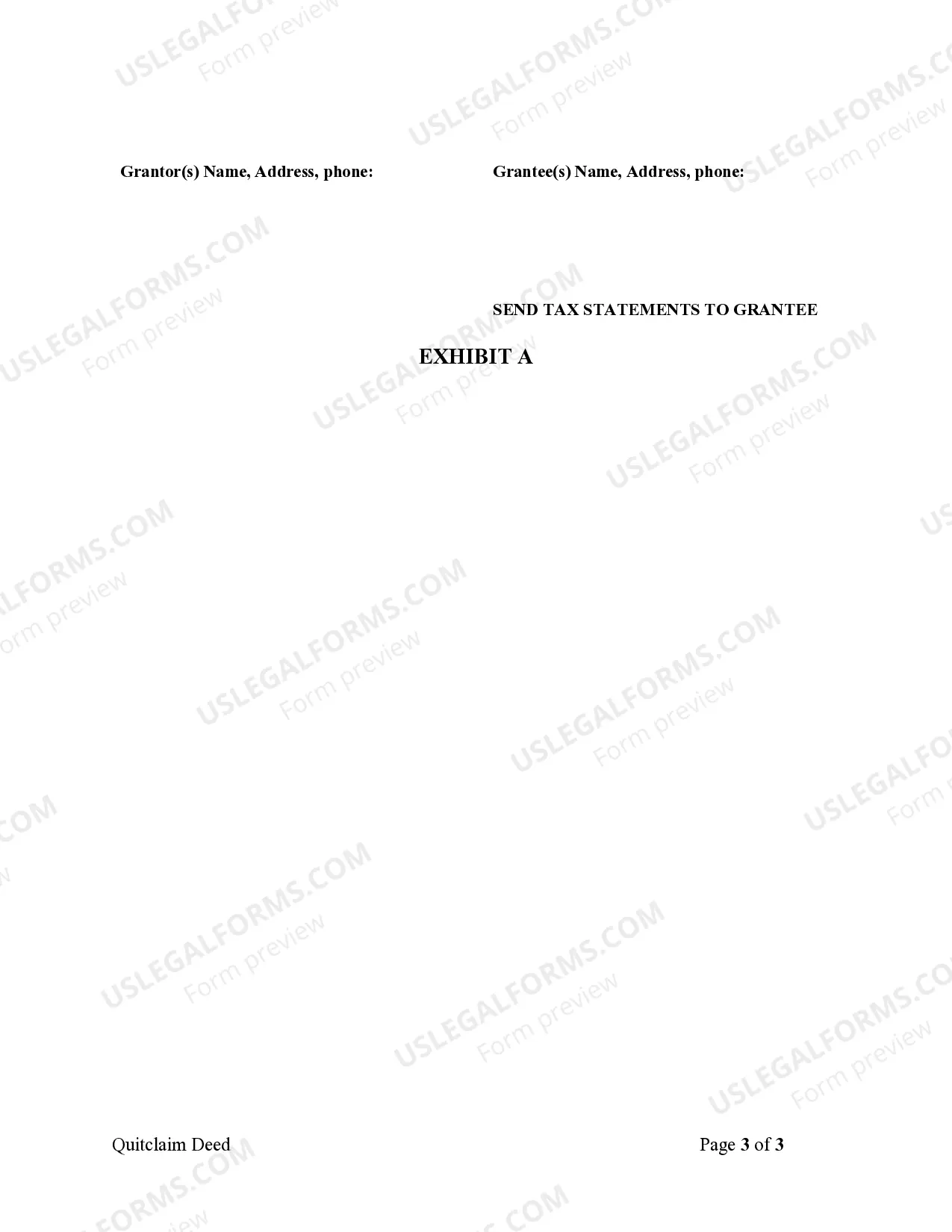
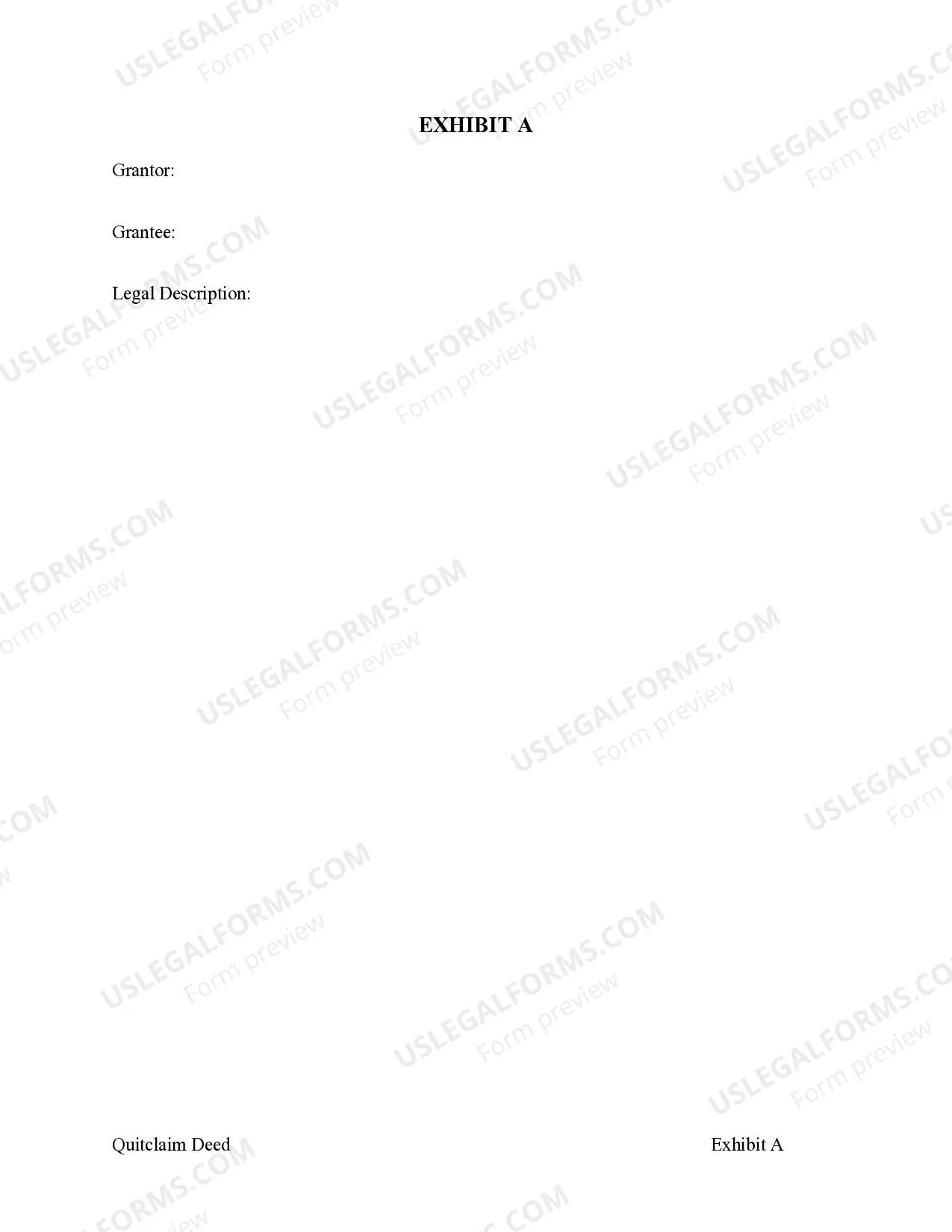
- Legal description of the property being conveyed.
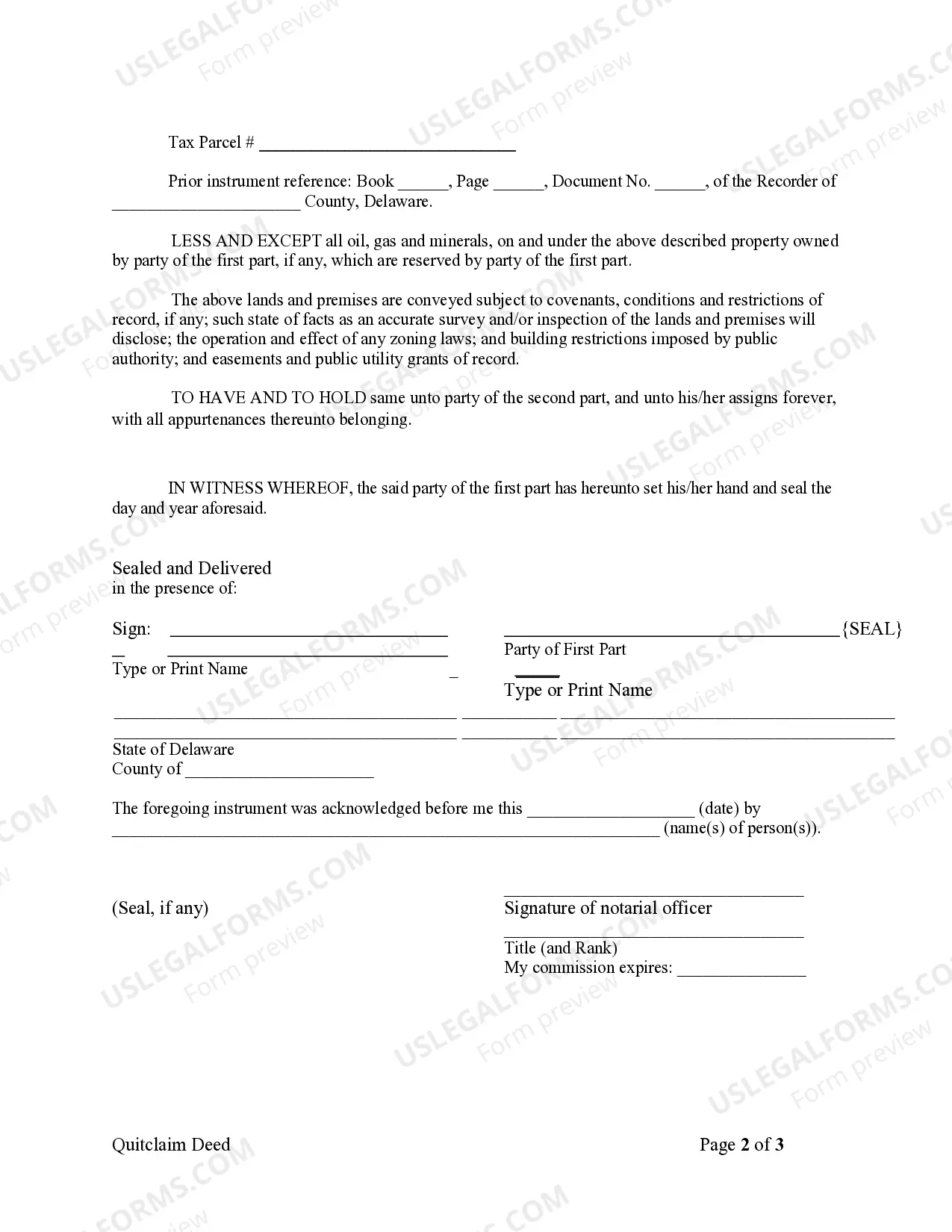
- Reservation of oil, gas, and minerals by the Grantor.
- Provision for existing covenants, conditions, and restrictions on the property.
- Signature and acknowledgment section for the Grantor.




Situations where this form applies
Use the Quitclaim Deed from Individual to Individual when transferring real estate ownership between individuals, especially in informal settings such as transfers between family members, friends, or partnerships. This form is ideal when the Grantor is uncertain about the clarity of their title or when the property is being gifted rather than sold.
Who should use this form
- Anyone transferring property ownership to another individual.
- Individuals wishing to clarify property rights in informal transfers.
- Family members or friends involved in property transactions.
- Individuals seeking to reserve rights to certain minerals or natural resources in the property.
Completing this form step by step
- Identify the Grantor (the individual transferring the property) and the Grantee (the individual receiving the property).
- Provide a detailed legal description of the property being transferred.
- Specify any reservations regarding oil, gas, and minerals if applicable.
- Have the Grantor sign the deed in the presence of a witness or notary, if required.
- Ensure all signatures are dated for legal compliance.
Does this document require notarization?
Notarization is required for this form to take effect. Our online notarization service, powered by Notarize, lets you verify and sign documents remotely through an encrypted video session, available 24/7.
Get your form ready online
Our built-in tools help you complete, sign, share, and store your documents in one place.
Make edits, fill in missing information, and update formatting in US Legal Forms—just like you would in MS Word.
Download a copy, print it, send it by email, or mail it via USPS—whatever works best for your next step.
Sign and collect signatures with our SignNow integration. Send to multiple recipients, set reminders, and more. Go Premium to unlock E-Sign.
If this form requires notarization, complete it online through a secure video call—no need to meet a notary in person or wait for an appointment.
We protect your documents and personal data by following strict security and privacy standards.

Make edits, fill in missing information, and update formatting in US Legal Forms—just like you would in MS Word.

Download a copy, print it, send it by email, or mail it via USPS—whatever works best for your next step.

Sign and collect signatures with our SignNow integration. Send to multiple recipients, set reminders, and more. Go Premium to unlock E-Sign.

If this form requires notarization, complete it online through a secure video call—no need to meet a notary in person or wait for an appointment.

We protect your documents and personal data by following strict security and privacy standards.
Common mistakes to avoid
- Failing to include a legal description of the property.
- Not having the deed signed before a witness or notary, if necessary.
- Omitting the reservation of rights for oil, gas, and minerals when applicable.
- Not recording the deed with the appropriate local government office after completion.
Advantages of online completion
- Convenient access to legally drafted forms without the need for an attorney.
- Edit and customize the form to your specific needs before downloading.
- Reliable, up-to-date forms that comply with current legal standards.
- Immediate download options allow for quick use and processing.
Looking for another form?
Form popularity
FAQ
To remove a person's name from a house deed, you can use a Delaware Quitclaim Deed from Individual to Individual. This document allows one owner to transfer their interest in the property to another. It is essential to ensure that all parties agree to the change. Consult with a legal expert to ensure the deed is completed correctly and filed as required.
Evicting someone whose name is on the deed can be complex. Typically, if both individuals are co-owners, you may need legal grounds to remove them, such as lease violations. A Delaware Quitclaim Deed from Individual to Individual, however, can transfer ownership and might allow you to proceed with eviction if one party relinquishes their rights. Seeking legal advice ensures you follow the correct process.
Yes, you can create a Delaware quitclaim deed from individual to individual on your own. However, it is essential to understand the proper requirements and ensure the deed includes all necessary information. A well-drafted deed can help avoid future disputes. You may find it helpful to use uslegalforms as it provides user-friendly templates and guidance to ensure accuracy.
To remove a name from a deed in Delaware, you can use a Delaware quitclaim deed from individual to individual. This process involves completing the deed form, stating the change clearly, and having it signed and notarized. Once the deed is executed, you must record it in the appropriate county office to finalize the change. Using uslegalforms can simplify this process, ensuring you have the correct documentation.
A Delaware quitclaim deed from individual to individual does not offer protection against claims on the property. If the person transferring the property has debts or liens, the new owner could face issues. Moreover, the quitclaim deed does not confirm ownership; it merely transfers whatever interest the grantor has. Therefore, it’s crucial to understand these risks when using a quitclaim deed.
While quitclaim deeds are simple to execute, they carry risks, primarily because they do not guarantee clear ownership of the property. If the grantor has outstanding debts or liens, those could affect the new owner. It is wise to research and ensure proper due diligence when using a Delaware Quitclaim Deed from Individual to Individual.
Yes, you can create a quitclaim deed yourself. Many individuals choose to do so to save on legal fees. However, it's essential to follow the specific requirements for a Delaware Quitclaim Deed from Individual to Individual to avoid complications. Utilizing templates from US Legal Forms can simplify this process.
To remove an individual from a deed, you can use a quitclaim deed, transferring the interest from the individual being removed to the remaining owner. This process requires accurate completion of the Delaware Quitclaim Deed from Individual to Individual. Once executed and filed, the individual will no longer have legal claims to the property.
To properly fill out a quit claim deed, start by entering the appropriate names and addresses of both the grantor and grantee. Make sure to include the property's legal description accurately. For a smooth process, consider using a template from US Legal Forms, which can help ensure your Delaware Quitclaim Deed from Individual to Individual meets state requirements.
To file a quitclaim deed in Delaware, you'll need to submit the completed form to the Recorder of Deeds in the county where the property is located. Ensure that the deed is signed in the presence of a notary. After submission, you will receive a copy for your records, marking the transfer of ownership under the Delaware Quitclaim Deed from Individual to Individual.