Delaware Quitclaim Deed from Individual to Husband and Wife
Overview of this form
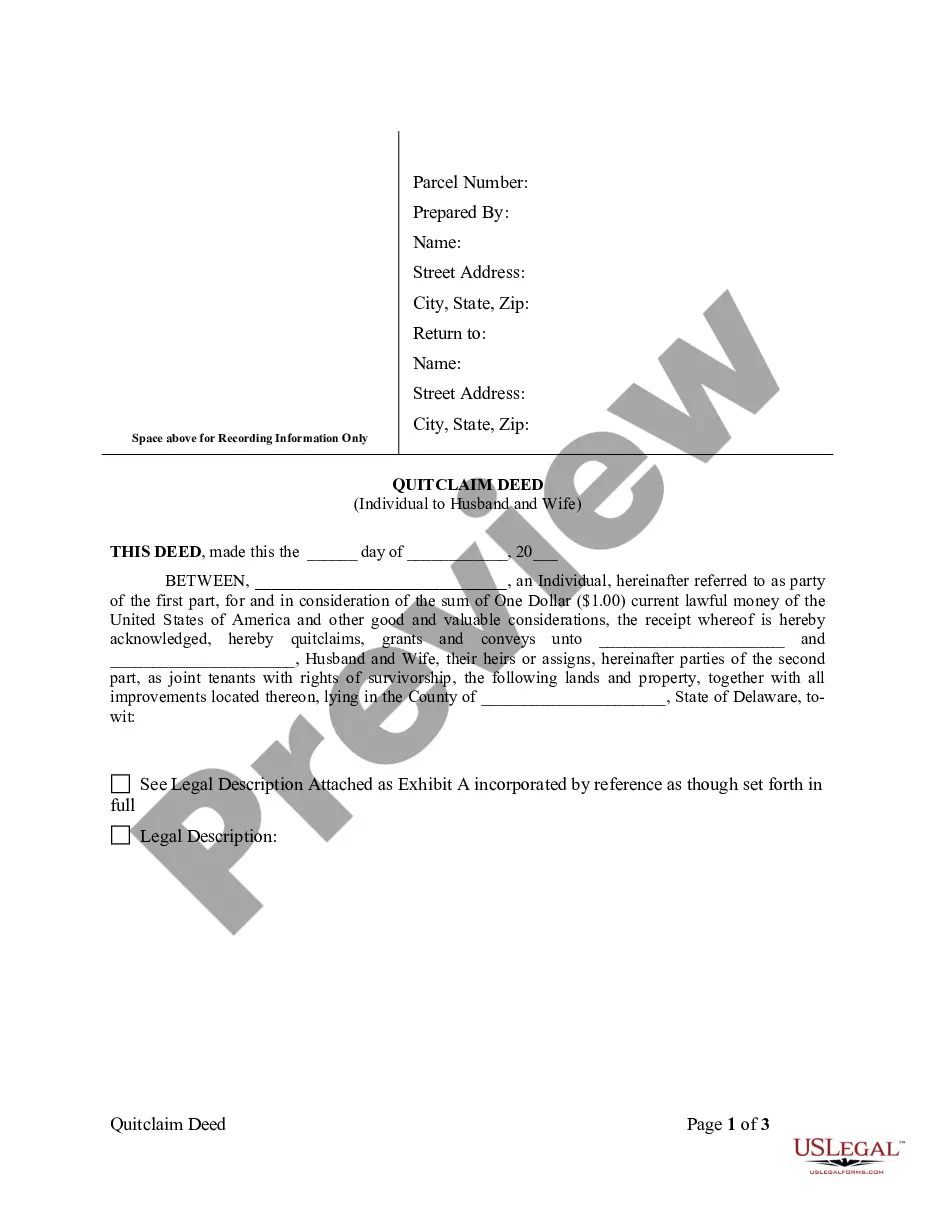
The Quitclaim Deed from Individual to Husband and Wife is a legal document used to transfer ownership of property from one individual (the Grantor) to a married couple (the Grantees). This form is distinct from a warranty deed, as it does not guarantee that the property is free from liens or claims. The Grantor conveys their interest in the property, but excludes any oil, gas, or mineral rights, which remain with the Grantor.
Main sections of this form
- Legal description of the property being transferred.
- Identification of the Grantor and Grantees.
- Statement of property rights being conveyed and any reservations (e.g., mineral rights).
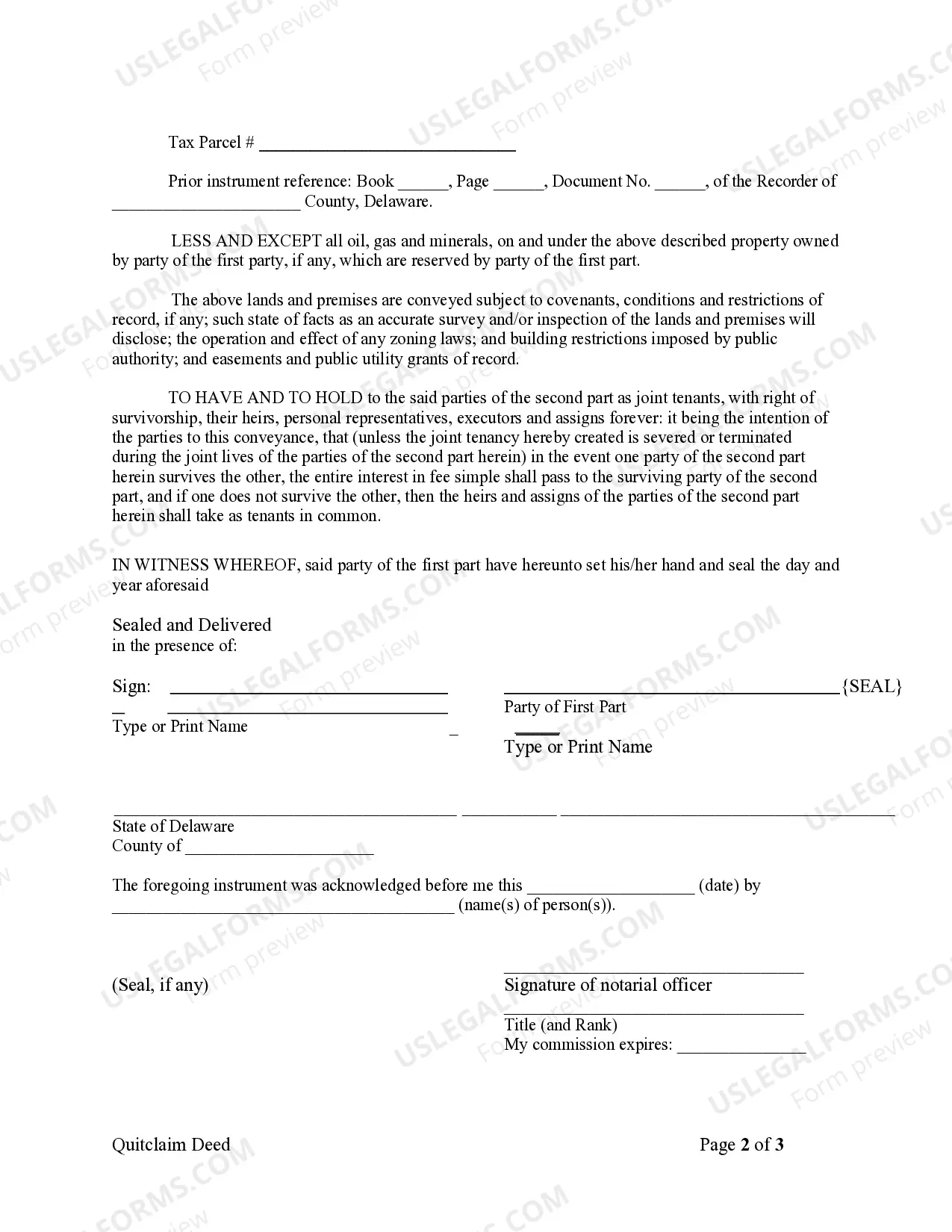
- Provisions for joint tenancy with rights of survivorship.
- Signatures of the Grantor and notary public for validation.





When this form is needed
This form is typically used when an individual wishes to transfer property ownership to their spouse. It can be relevant in situations such as marriage, estate planning, or property division in a divorce. Utilizing a quitclaim deed is a straightforward method for spouses to establish joint ownership of real estate.
Who needs this form
- Individuals who own property and wish to transfer ownership to themselves and their spouse.
- Married couples who want to clarify and document their joint ownership of a property.
- Homeowners involved in estate planning or transferring assets to their spouse.
Completing this form step by step
- Identify the parties involved: the Grantor (individual) and the Grantees (husband and wife).
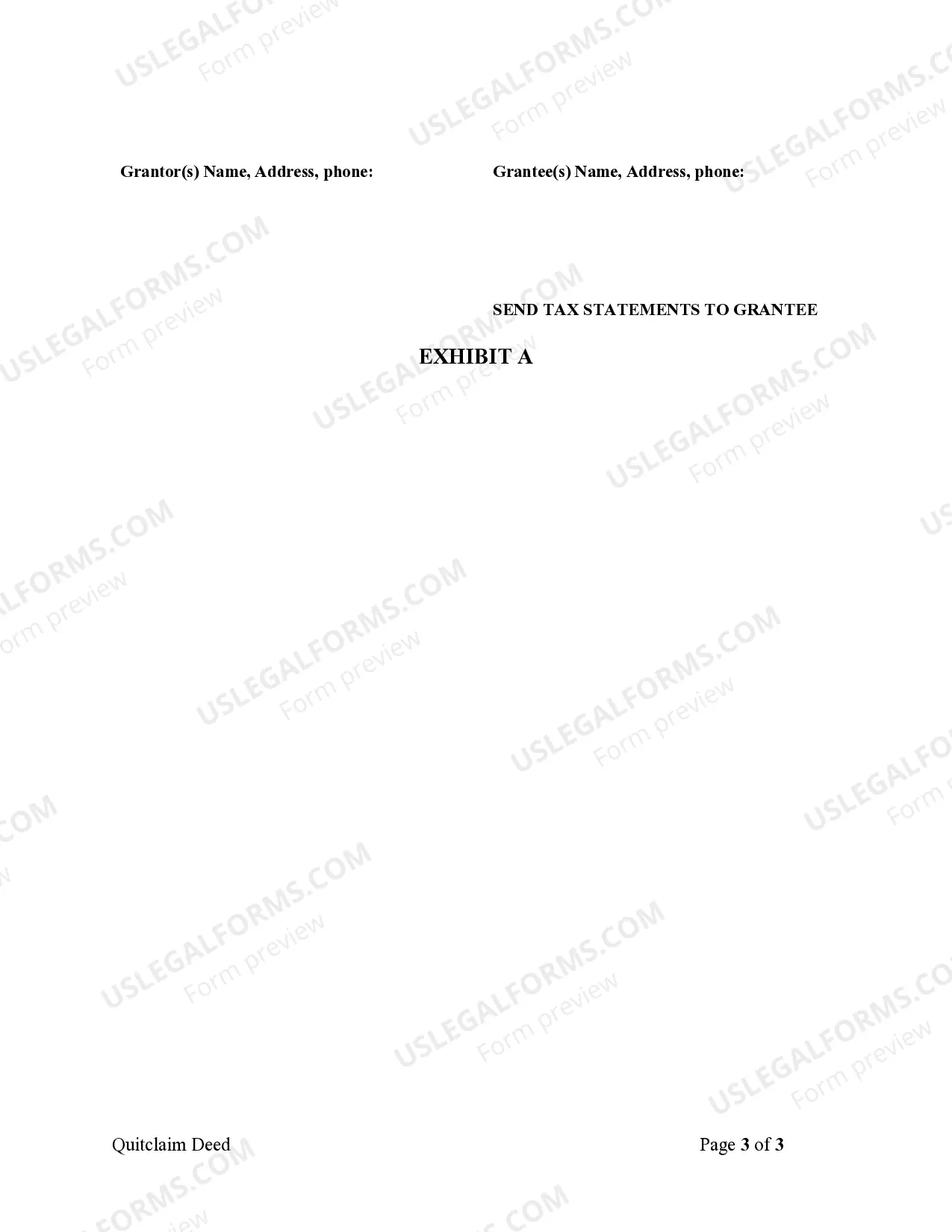
- Provide a legal description of the property being transferred.
- Specify any reservations for oil, gas, or mineral rights as needed.
- Include the date of the transaction and sign the document in front of a notary public.
- Ensure the notary public completes their section, verifying the signatures.
Notarization guidance
To make this form legally binding, it must be notarized. Our online notarization service, powered by Notarize, lets you verify and sign documents remotely through an encrypted video session.
Get your form ready online
Our built-in tools help you complete, sign, share, and store your documents in one place.
Make edits, fill in missing information, and update formatting in US Legal Forms—just like you would in MS Word.
Download a copy, print it, send it by email, or mail it via USPS—whatever works best for your next step.
Sign and collect signatures with our SignNow integration. Send to multiple recipients, set reminders, and more. Go Premium to unlock E-Sign.
If this form requires notarization, complete it online through a secure video call—no need to meet a notary in person or wait for an appointment.
We protect your documents and personal data by following strict security and privacy standards.

Make edits, fill in missing information, and update formatting in US Legal Forms—just like you would in MS Word.

Download a copy, print it, send it by email, or mail it via USPS—whatever works best for your next step.

Sign and collect signatures with our SignNow integration. Send to multiple recipients, set reminders, and more. Go Premium to unlock E-Sign.

If this form requires notarization, complete it online through a secure video call—no need to meet a notary in person or wait for an appointment.

We protect your documents and personal data by following strict security and privacy standards.
Common mistakes to avoid
- Failing to provide a complete legal description of the property.
- Not including the required reservations for oil, gas, or mineral rights.
- Neglecting to sign the form in front of a notary public.
- Using outdated or incorrect information about the property or parties involved.
Legal use & context
- This form is a legally recognized method for transferring property interests.
- It clarifies ownership between spouses but does not protect against claims from third parties.
- Using this form helps establish jointly held property for tax and inheritance purposes.
Summary of main points
- The Quitclaim Deed is essential for transferring property ownership to a spouse.
- Proper completion and notarization of the form are necessary for legal validity.
- Understanding the legal implications of joint tenancy is crucial for future property decisions.
Looking for another form?
Form popularity
FAQ
Adding a name to a deed, such as with a Delaware Quitclaim Deed from Individual to Husband and Wife, can have some disadvantages. It may affect your property's taxes, since adding a co-owner can change its assessed value. Additionally, you may face complications in case of a divorce or if the new co-owner incurs debts, impacting your financial standing. Always consider these factors before proceeding.
To add someone to a deed in Delaware, you need to fill out a Delaware Quitclaim Deed from Individual to Husband and Wife. This document requires details about the current owner and the person being added, along with a description of the property. Once completed, you must sign the deed in front of a notary and record it with the county recorder's office for it to be legally binding.
Yes, you can add a spouse to a deed without refinancing. This process usually involves creating a Delaware Quitclaim Deed from Individual to Husband and Wife. By using this form, you can transfer ownership rights without altering your existing mortgage. It's an efficient way to ensure your spouse is included on the property title.
A spouse may choose to execute a Delaware Quitclaim Deed from Individual to Husband and Wife for various reasons. Common reasons include simplifying the transfer of property ownership, adding a spouse’s name to the property title, or in situations of divorce or separation to facilitate asset division. This type of deed is an effective way to ensure both parties have clear ownership rights. It also allows couples to address changes in their real estate holdings conveniently.
To properly fill out a Delaware Quitclaim Deed from Individual to Husband and Wife, you need to start with the names of the grantor and grantee. Ensure that you clearly describe the property being transferred, including the address and any legal descriptions. It is also important to sign the deed in front of a notary public to validate the transfer. Lastly, file the completed deed with the county recorder’s office to finalize the process.
A quitclaim deed is a way to transfer property ownership without guaranteeing the title’s validity, while an interspousal transfer specifically refers to property transfers between spouses, often used in divorce settlements or estate planning. When using a Delaware Quitclaim Deed from Individual to Husband and Wife, the focus is primarily on the transfer process itself, which is quick and uncomplicated. In contrast, interspousal transfers may involve more legal stipulations or considerations based on marriage laws. Hence, understanding these distinctions is crucial when navigating property ownership.
Filing a Delaware Quitclaim Deed from Individual to Husband and Wife involves a few steps that you can easily follow. First, prepare the deed, including the necessary information such as names, addresses, and a legal description of the property. Next, sign the deed in the presence of a notary public, then file it with the appropriate county recorder's office to make the transfer official. Utilizing platforms like USLegalForms can simplify this process further by providing accurate templates and guidance.
Individuals transferring property, especially spouses, often benefit significantly from a Delaware Quitclaim Deed from Individual to Husband and Wife. This simple legal instrument allows one party to transfer ownership without complications. It is particularly useful in situations such as divorce or estate transfers, where quick and straightforward property adjustments are needed. By using this type of deed, you can streamline the transfer process and ensure clarity in ownership.
Adding a spouse to a deed in Delaware is relatively straightforward when using a Delaware Quitclaim Deed from Individual to Husband and Wife. You will need to prepare the deed, include both names, and ensure it is signed and notarized properly. Generally, with the right guidance or resources like those from uslegalforms, the process can be manageable and smooth.
One of the main problems with a quitclaim deed is that it does not guarantee the title's quality or the absence of liens on the property. When using a Delaware Quitclaim Deed from Individual to Husband and Wife, it’s essential to be aware that this deed transfers only the rights the grantor possesses. Additionally, if any disputes arise later, the grantee may face challenges in establishing clear ownership.