District of Columbia Letter from Landlord to Tenant as Notice to remove unauthorized pets from premises
What this document covers
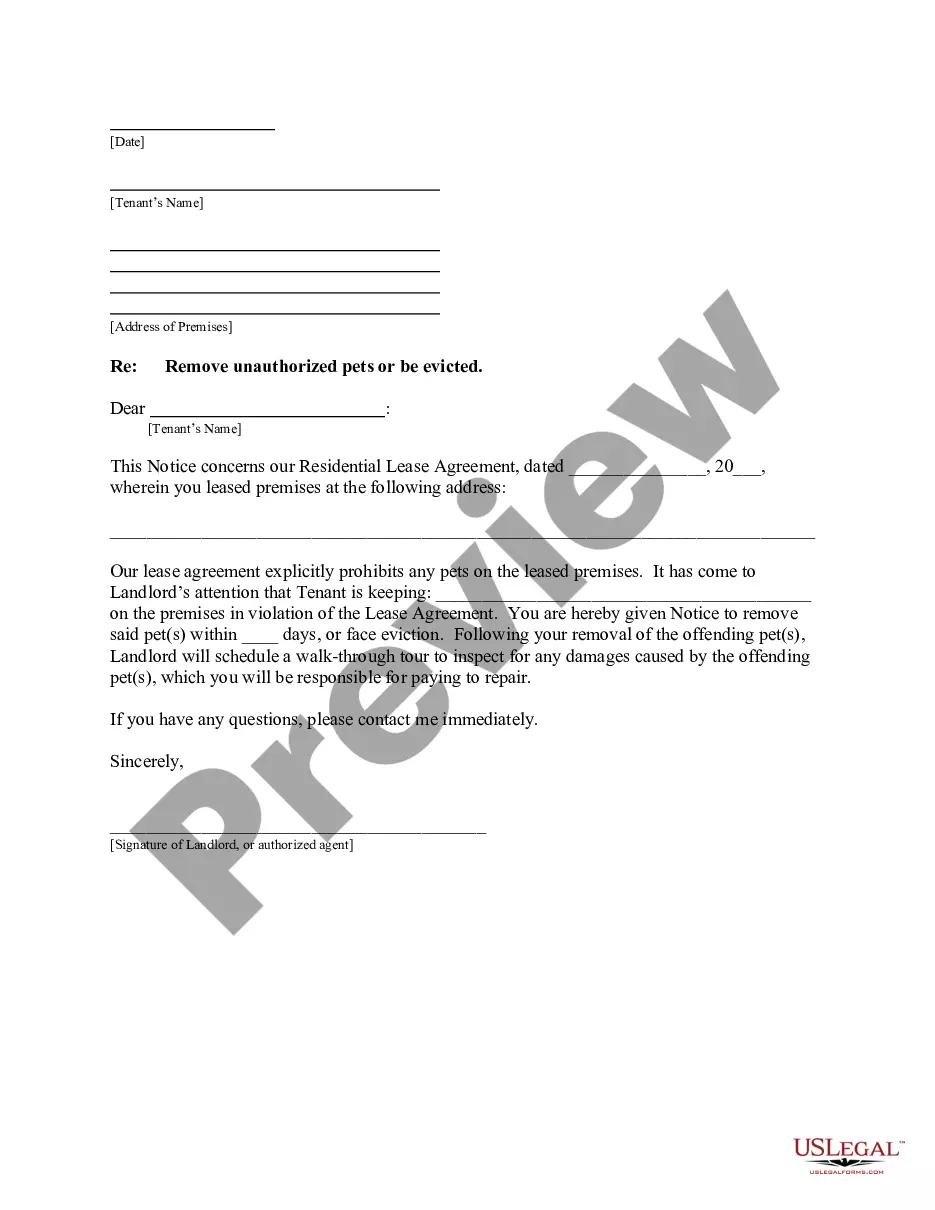
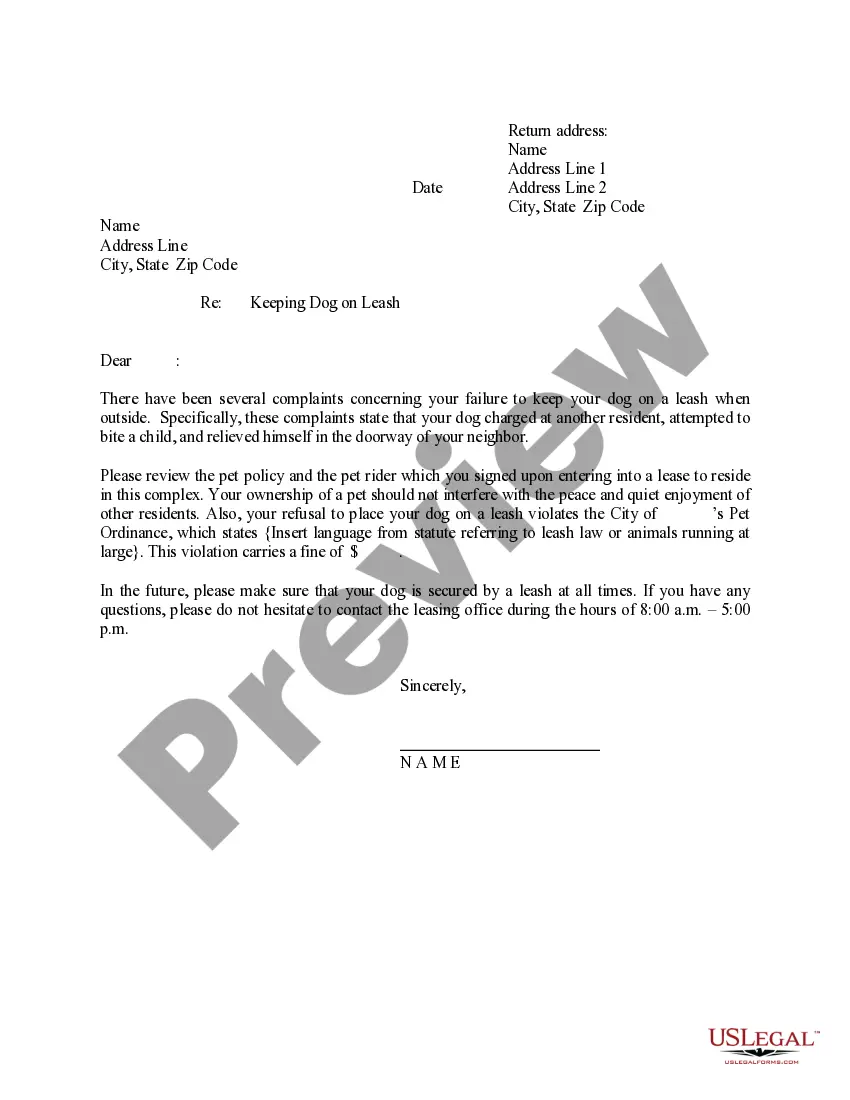
This form is a letter from the landlord to the tenant, formally notifying the tenant to remove unauthorized pets from the premises. It serves to inform the tenant that keeping pets violates the terms of the lease agreement, potentially leading to legal action such as eviction. This notice is an essential legal document that empowers landlords to uphold lease agreements and maintain control over their property.
Key components of this form
- Details of the Residential Lease Agreement, including the date and address of the premises.
- A clear statement of the lease clause prohibiting pets on the property.
- A description of the unauthorized pet(s) being kept by the tenant.
- A specified timeframe for the tenant to remove the pet(s).
- Instructions for a follow-up inspection of the property for damage.
- Contact information for the landlord or authorized agent.

When to use this document
You should use this form when you, as a landlord, have discovered that your tenant is keeping pets on the rental property despite a clear prohibition in the lease agreement. This notice is necessary to formally alert the tenant of the violation and to initiate compliance actions, which may include invoking the eviction process if the tenant fails to adhere to the notice.
Who needs this form
This form is intended for:
- Landlords who have rental agreements that explicitly prohibit pets.
- Property management companies acting on behalf of landlords.
- Landlords seeking to maintain the terms of their lease agreements.
- Anyone needing to formally document unauthorized pet situations.
Steps to complete this form
- Identify the parties involved, including the landlord and tenantâs full names.
- Specify the property address to clarify the location of the lease agreement.
- State the date the Residential Lease Agreement was signed.
- Detail the unauthorized pet(s) being kept, including type and any identifying characteristics.
- Enter the deadline for pet removal, ensuring it aligns with local laws.
- Sign the letter, including the landlord's name and any title if applicable.
Notarization requirements for this form
This form does not typically require notarization unless specified by local law. You should check your stateâs regulations to ensure compliance. US Legal Forms provides guidance on notarization if your jurisdiction has specific requirements.
Get your form ready online
Our built-in tools help you complete, sign, share, and store your documents in one place.
Make edits, fill in missing information, and update formatting in US Legal Forms—just like you would in MS Word.
Download a copy, print it, send it by email, or mail it via USPS—whatever works best for your next step.
Sign and collect signatures with our SignNow integration. Send to multiple recipients, set reminders, and more. Go Premium to unlock E-Sign.
If this form requires notarization, complete it online through a secure video call—no need to meet a notary in person or wait for an appointment.
We protect your documents and personal data by following strict security and privacy standards.

Make edits, fill in missing information, and update formatting in US Legal Forms—just like you would in MS Word.

Download a copy, print it, send it by email, or mail it via USPS—whatever works best for your next step.

Sign and collect signatures with our SignNow integration. Send to multiple recipients, set reminders, and more. Go Premium to unlock E-Sign.

If this form requires notarization, complete it online through a secure video call—no need to meet a notary in person or wait for an appointment.

We protect your documents and personal data by following strict security and privacy standards.
Common mistakes to avoid
- Failing to sign the notice, making it unenforceable.
- Not specifying the type or number of unauthorized pets.
- Overlooking state-specific regulations when drafting the notice.
- Not allowing a reasonable timeline for the tenant to comply.
- Sending the notice without proper proof of delivery.
Why complete this form online
- Convenience of instant access and download at any time.
- Editability allows for customization specific to your situation.
- Reliability, as the form is drafted by licensed attorneys to meet legal standards.
Looking for another form?
Form popularity
FAQ
If your landlord refuses to allow pets, your options may feel limited. Start by reviewing your lease agreement to understand the pet policy. You might try negotiating with your landlord or discussing your reasons for wanting a pet. If the situation remains unsatisfactory, consider using tools from uslegalforms to help draft a District of Columbia Letter from Landlord to Tenant as Notice to remove unauthorized pets from premises or explore moving to a more pet-friendly location.
Bringing a pet to a no-pet apartment can lead to several consequences. The landlord may send you a District of Columbia Letter from Landlord to Tenant as Notice to remove unauthorized pets from premises. This letter serves as a formal warning, and you might be required to remove the pet immediately. Failing to comply could result in penalties or even eviction.
If an apartment finds out you have a pet, the landlord may take action to enforce the lease agreement. Typically, they will issue a District of Columbia Letter from Landlord to Tenant as Notice to remove unauthorized pets from premises. This letter informs you of the violation and may set a deadline for you to comply. If you do not remove the pet, the landlord could initiate eviction proceedings.
Getting around a lease that says no pets can be tricky, but there are a few approaches worth considering. Open a dialogue with your landlord to discuss potential exceptions or compromises, such as a pet deposit. However, it’s essential to respect the lease terms to avoid conflicts. If you need further guidance, US Legal Forms can provide resources and templates to help navigate these discussions.
If a landlord finds out about a pet in a no pet apartment, they usually have several policies to follow. This may include issuing a District of Columbia Letter from Landlord to Tenant as Notice to remove unauthorized pets from premises. In some cases, they might seek to terminate the lease agreement or impose fines, so it's crucial to maintain transparency with your landlord.
If you have a pet in an apartment that does not allow pets, you may face various consequences. Landlords could issue a warning letter or a District of Columbia Letter from Landlord to Tenant as Notice to remove unauthorized pets from premises. Repeated violations could lead to eviction or financial penalties, so it's vital to adhere to tenant agreements to avoid these issues.
To remove a pet from a lease, first, review your lease agreement for clauses concerning pets. If the lease explicitly prohibits pets, communicate your requirement to the tenant directly. You might consider drafting a District of Columbia Letter from Landlord to Tenant as Notice to remove unauthorized pets from premises. This letter should clarify the expectation for compliance and outline any consequences of non-compliance.
To write a letter to remove a tenant, start with a clear subject line. Include the date, your name as the landlord, and the tenant’s name and address. State the reason for the letter, such as the presence of unauthorized pets, and reference the relevant lease terms. Conclude with the required next steps, and mention that this District of Columbia Letter from Landlord to Tenant serves as a notice to remove unauthorized pets from premises.
A no pets allowed apartment letter is a formal notification from a landlord to a tenant outlining the pet policy established in the rental agreement. This letter may inform tenants of the consequences if unauthorized pets are discovered on the premises, referencing the District of Columbia Letter from Landlord to Tenant as Notice to remove unauthorized pets from premises. Such a document provides clarity and can be crucial in avoiding misunderstandings between landlords and tenants. To find templates and ensure compliance with local laws, consider using uslegalforms for your needs.
If you need to report a landlord in Washington D.C., start by gathering all relevant documents, including your rental agreement and correspondence. You can file a complaint with the Department of Consumer and Regulatory Affairs (DCRA) or the Office of the Tenant Advocate. It's important to clearly document any issues related to unauthorized pets, especially if they violate the District of Columbia Letter from Landlord to Tenant as Notice to remove unauthorized pets from premises. Utilizing platforms like uslegalforms can help you draft necessary letters and complaints to effectively communicate your concerns.