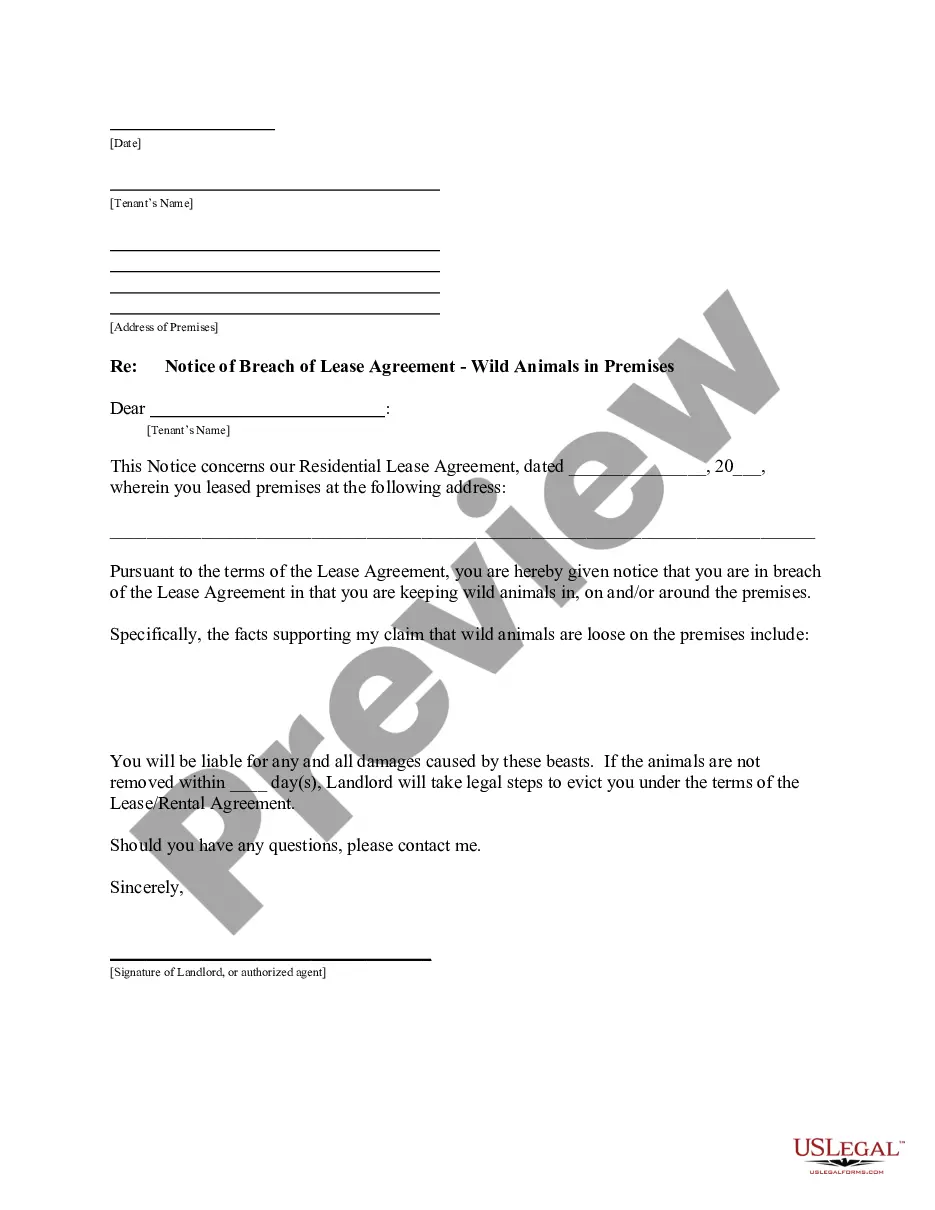
District of Columbia Letter from Landlord to Tenant as Notice to remove Wild Animals in Premises
What is this form?
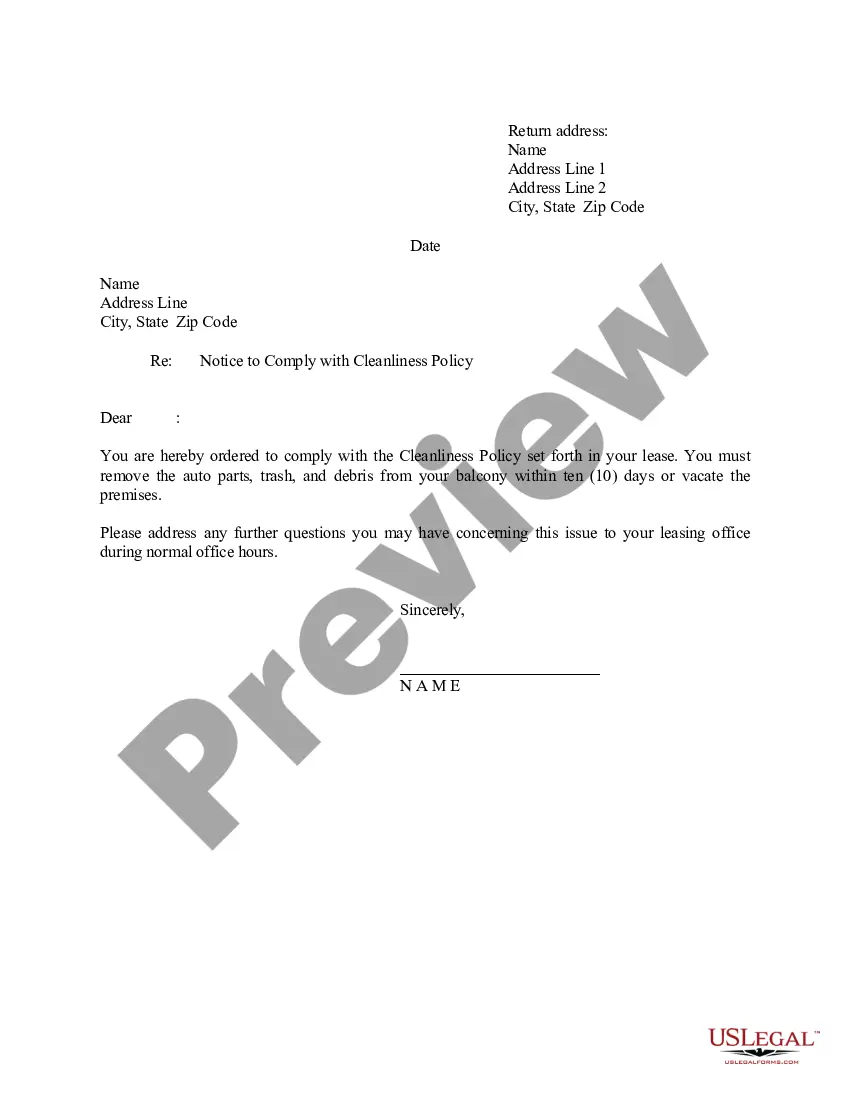
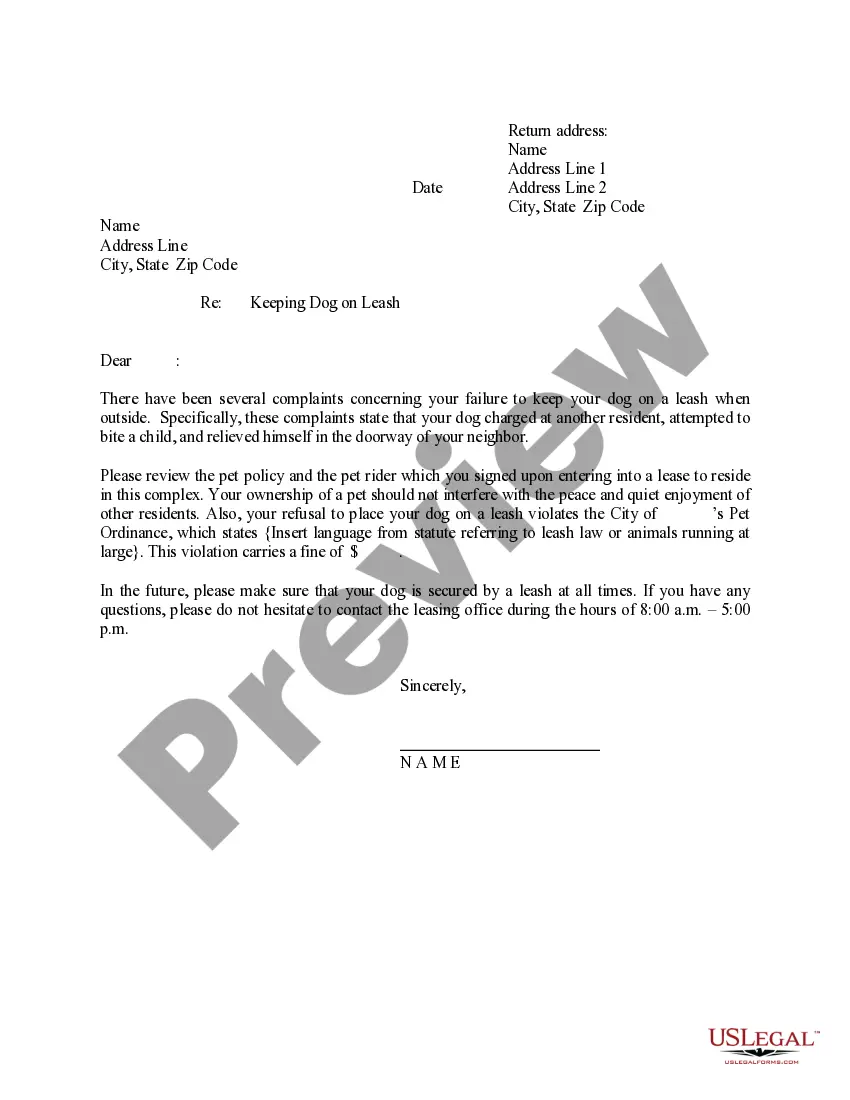
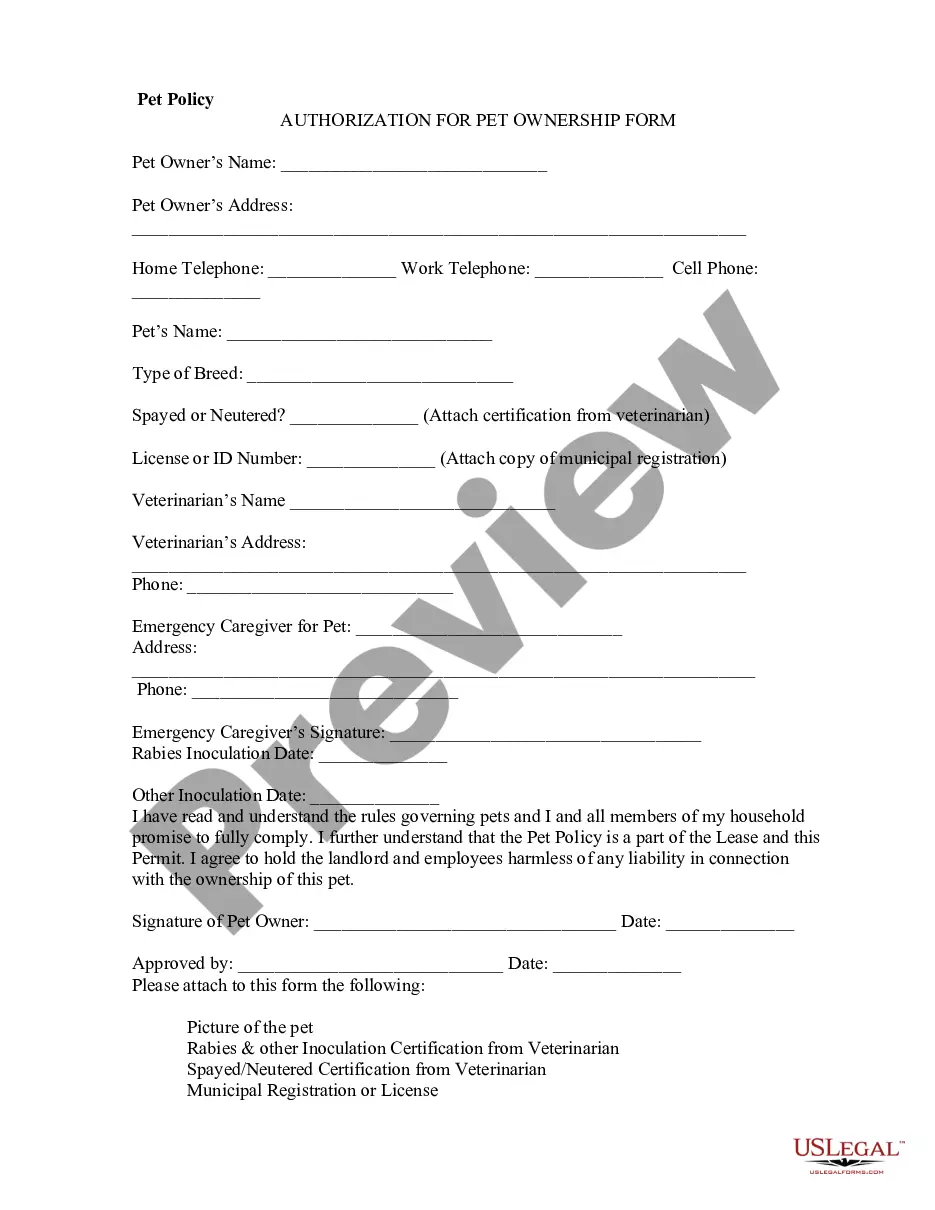
This Letter from Landlord to Tenant as Notice to Remove Wild Animals in Premises is a legal document used by landlords to inform tenants that they are violating lease terms by allowing wild animals on the property. This form serves as a formal notice detailing the specific lease violations and the circumstances surrounding them, differentiating it from general lease notices by its focus on the presence of wild animals.
Key components of this form
- Title: Clearly states the nature of the notice.
- Notification of Breach: Specifies that the tenant is in breach due to keeping wild animals.
- Lease Reference: Notes the specific terms of the lease that have been violated.
- Signature: Contains a space for the landlord or authorized agent's signature.
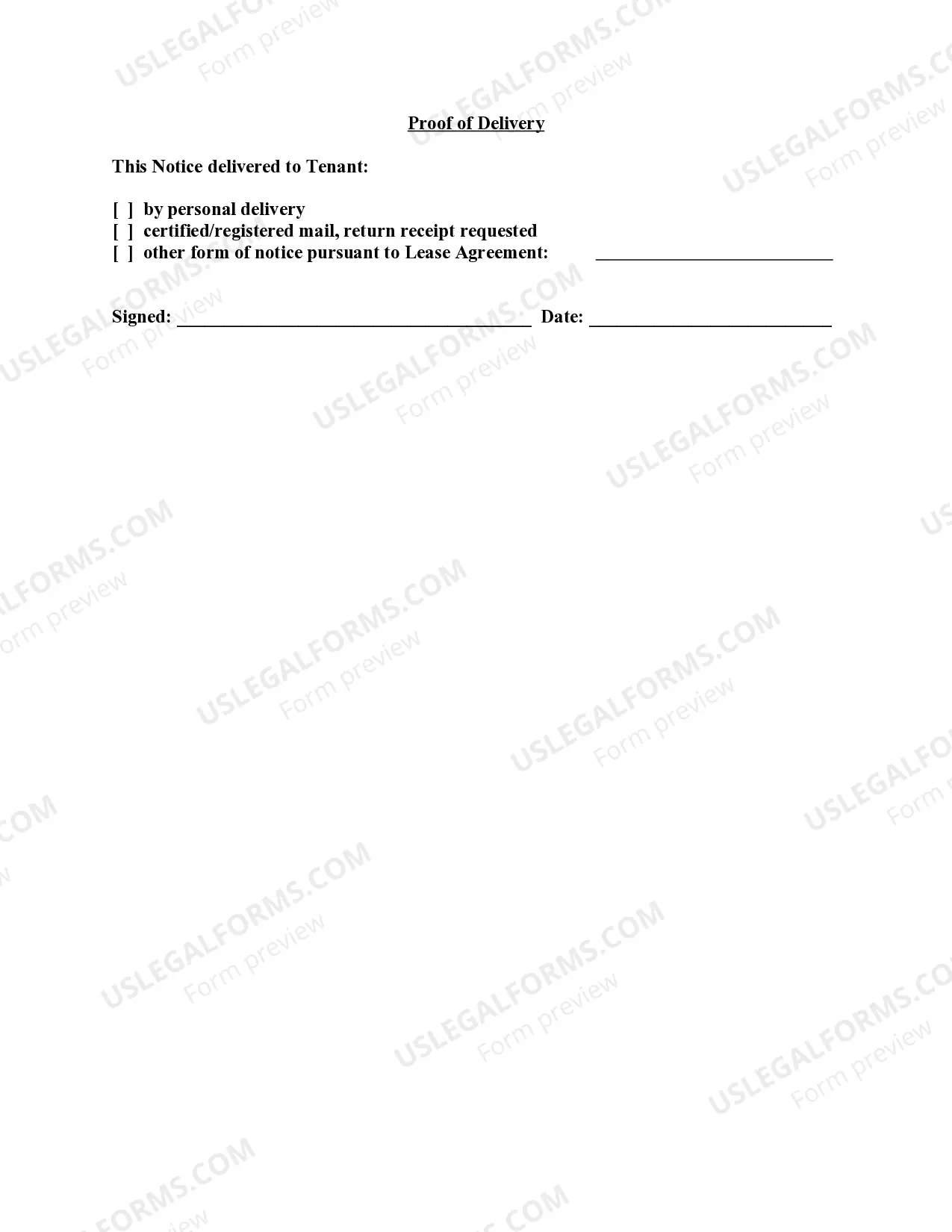
- Proof of Delivery: Indicates how the notice was delivered to the tenant.

Common use cases
This form should be used when a landlord discovers that a tenant is keeping wild animals on the property, which is against the terms of the lease. It is necessary to provide a formal notification to the tenant, allowing them to address the issue before further legal action may need to be taken.
Who can use this document
- Landlords who own rental properties.
- Property managers overseeing lease agreements.
- Tenants who have received notification and wish to understand the implications.
Instructions for completing this form
- Identify the parties involved: Include the landlord's name and the tenant's name.
- Specify the property: Clearly indicate the address of the rented premises.
- State the violation: Provide details about the wild animals being kept on the property.
- Sign the notice: The landlord or authorized agent must sign the document.
- Deliver the notice: Use certified mail or personal delivery to provide proof of receipt to the tenant.
Notarization requirements for this form
In most cases, this form does not require notarization. However, some jurisdictions or signing circumstances might. US Legal Forms offers online notarization powered by Notarize, accessible 24/7 for a quick, remote process.
Get your form ready online
Our built-in tools help you complete, sign, share, and store your documents in one place.
Make edits, fill in missing information, and update formatting in US Legal Forms—just like you would in MS Word.
Download a copy, print it, send it by email, or mail it via USPS—whatever works best for your next step.
Sign and collect signatures with our SignNow integration. Send to multiple recipients, set reminders, and more. Go Premium to unlock E-Sign.
If this form requires notarization, complete it online through a secure video call—no need to meet a notary in person or wait for an appointment.
We protect your documents and personal data by following strict security and privacy standards.

Make edits, fill in missing information, and update formatting in US Legal Forms—just like you would in MS Word.

Download a copy, print it, send it by email, or mail it via USPS—whatever works best for your next step.

Sign and collect signatures with our SignNow integration. Send to multiple recipients, set reminders, and more. Go Premium to unlock E-Sign.

If this form requires notarization, complete it online through a secure video call—no need to meet a notary in person or wait for an appointment.

We protect your documents and personal data by following strict security and privacy standards.
Mistakes to watch out for
- Failing to specify the exact lease terms violated.
- Not providing sufficient details about the wild animals involved.
- Neglecting to deliver the notice properly to ensure proof of receipt.
Benefits of using this form online
- Convenient access to the document at any time.
- Easy editing and customization to fit specific situations.
- Reliable templates drafted by licensed attorneys, ensuring legal compliance.
Legal use & context
- This notice serves as formal communication regarding lease violations.
- A timely and properly executed notice can help mitigate disputes and is often necessary before taking further action.
Main things to remember
- The form serves as a formal notice of breach of lease regarding wild animals.
- Proper completion and delivery of the form are essential for legal validity.
- Use this form to facilitate communication and resolution between landlords and tenants.
Looking for another form?
Form popularity
FAQ
Attempting to get around a lease that prohibits pets can lead to serious consequences, including eviction. Instead, consider discussing your situation with the landlord to explore possible alternatives or exceptions. It's essential to remember that the District of Columbia Letter from Landlord to Tenant as Notice to remove Wild Animals in Premises aims to clarify and enforce the agreement in place.
If a landlord discovers a tenant has a pet in violation of the lease agreement, they may issue a written notice requiring the tenant to remove the pet immediately. This action can lead to potential eviction if the violation persists. A District of Columbia Letter from Landlord to Tenant as Notice to remove Wild Animals in Premises can serve as the official communication necessary to initiate this process.
To remove a pet from a lease, start by communicating with the tenant about the violation of the no pets policy. Clearly outline the steps they need to take to comply with the lease agreement, which could include finding a new home for the pet. Utilizing a District of Columbia Letter from Landlord to Tenant as Notice to remove Wild Animals in Premises ensures that the message is delivered formally and legally.
When informing a tenant that no pets are allowed, it’s important to be direct yet courteous. You can remind them of the lease’s no pet clause and explain the reasons the policy exists. Mentioning the District of Columbia Letter from Landlord to Tenant as Notice to remove Wild Animals in Premises can help reinforce the necessity of compliance in a polite manner.
Writing a letter to remove a tenant requires a clear and concise approach. Begin by stating the reason for the eviction, ensure it aligns with legal requirements, and provide the necessary details like the lease agreement reference. Utilizing the District of Columbia Letter from Landlord to Tenant as Notice to remove Wild Animals in Premises may ensure the legality and effectiveness of your communication.
To communicate that pets are not allowed, deliver the message clearly and respectfully. You can state that the property follows a no pets policy as outlined in the lease agreement. Additionally, you may reference the District of Columbia Letter from Landlord to Tenant as Notice to remove Wild Animals in Premises to emphasize your commitment to maintaining the property standards.
A no pets allowed apartment letter is a formal notification from a landlord to a tenant that states pets are prohibited in the rental property. This letter typically outlines the lease terms regarding pet ownership and reminds the tenant of their responsibilities. If a tenant is housing a pet, the District of Columbia Letter from Landlord to Tenant as Notice to remove Wild Animals in Premises serves as an important reminder to comply with these rules.
If your apartment management discovers you have a pet, they may take action based on your lease agreement, which could range from fines to eviction notices. It's essential to know your rights and the specific terms regarding pets in your lease. Open communication is key, and understanding the importance of correspondence such as a District of Columbia Letter from Landlord to Tenant as Notice to remove Wild Animals in Premises can help protect your interests.
Yes, your landlord can request the removal of your dog if it violates the lease terms. They must follow specific procedures, which often include giving notice before pursuing further action. It’s important to respond promptly to any notice received, like a District of Columbia Letter from Landlord to Tenant as Notice to remove Wild Animals in Premises. This ensures you address the issue properly and maintain a good relationship with your landlord.
If your landlord catches you with a pet, they may take various actions depending on your lease terms. You could face fines, a request to remove the pet, or even legal action leading to eviction. Your best approach is to communicate openly with your landlord to avoid surprises. It may help to refer to a District of Columbia Letter from Landlord to Tenant as Notice to remove Wild Animals in Premises for clarity.