Connecticut Warranty Deed from Individual to a Trust
About this form
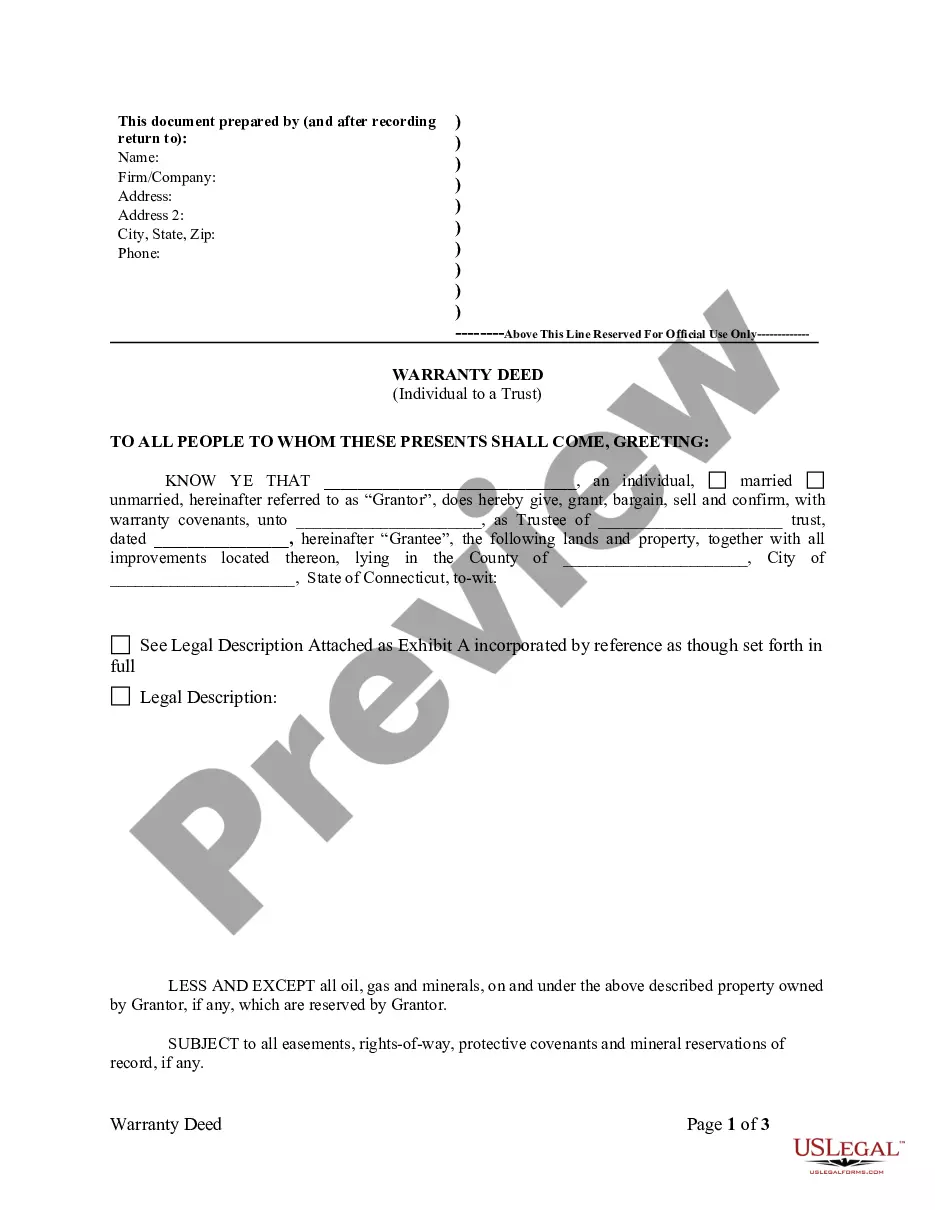
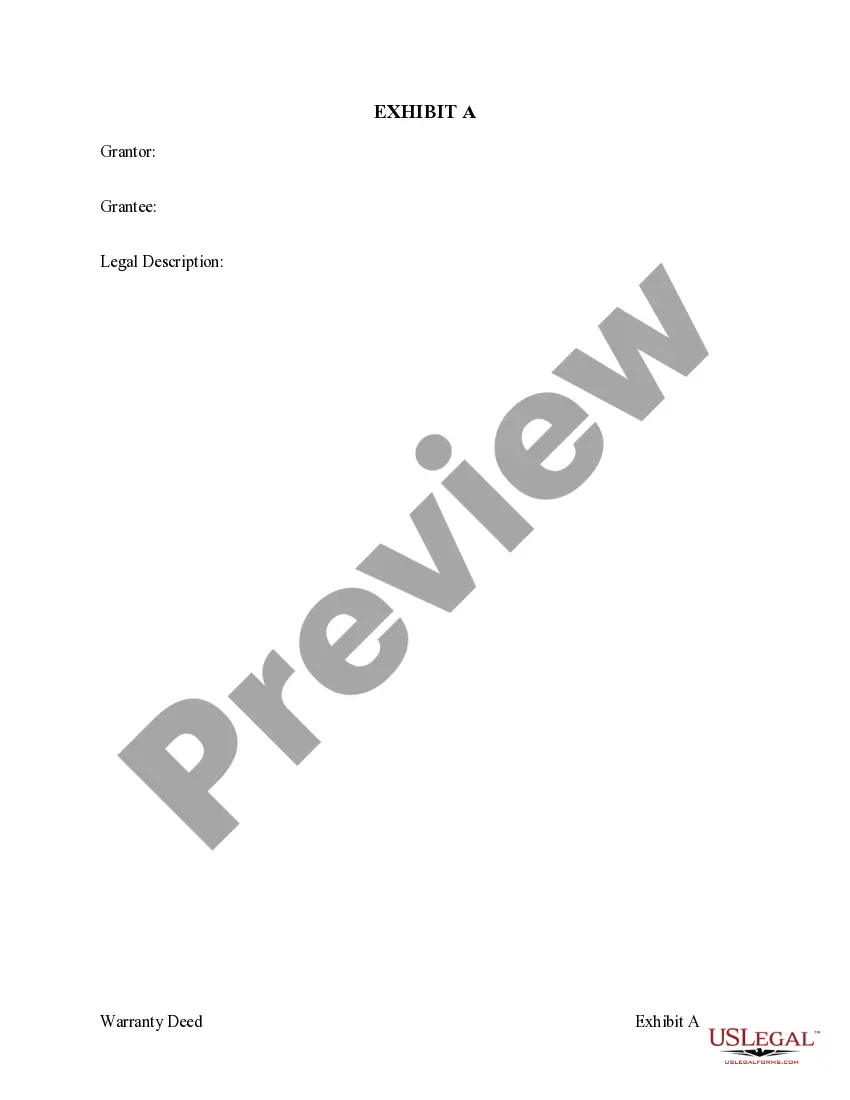
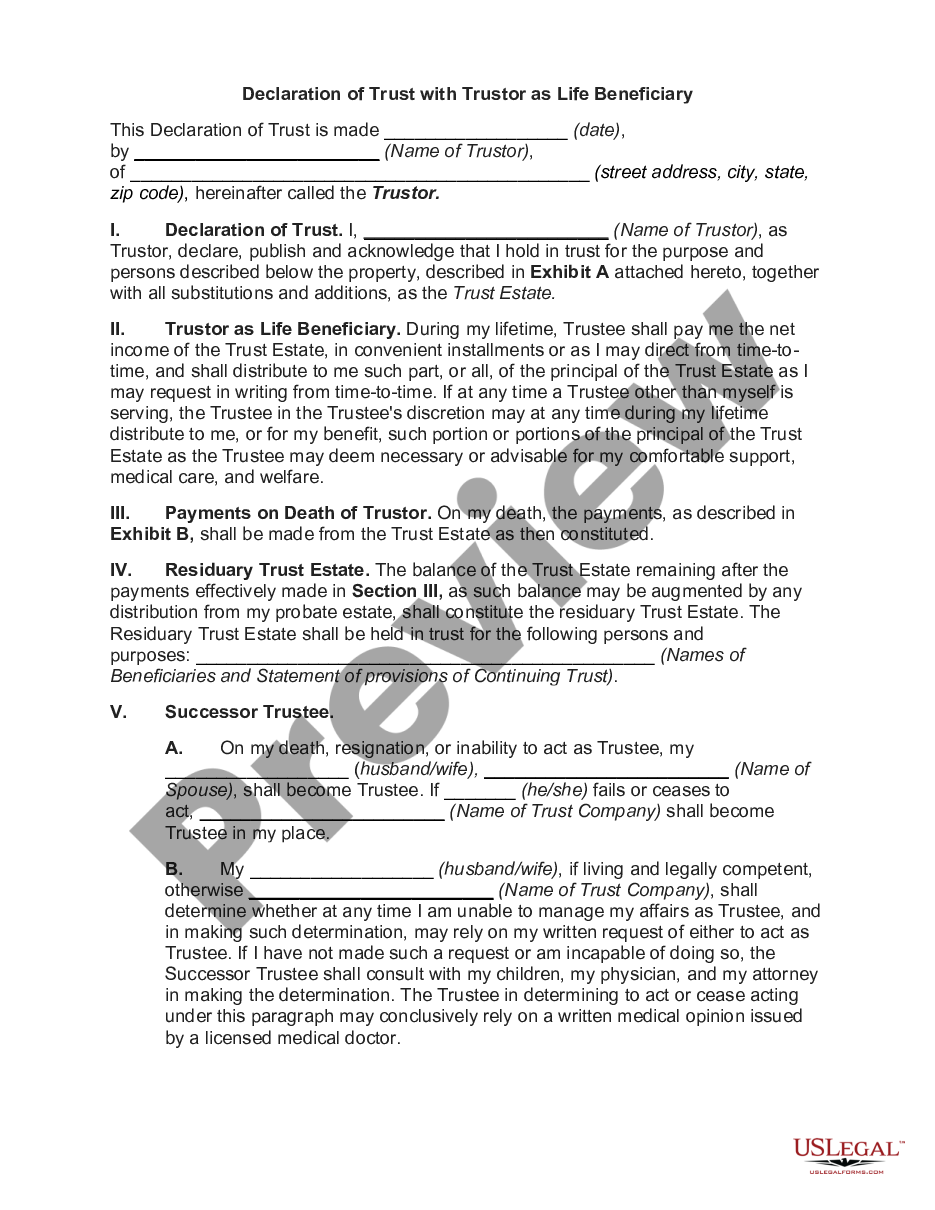
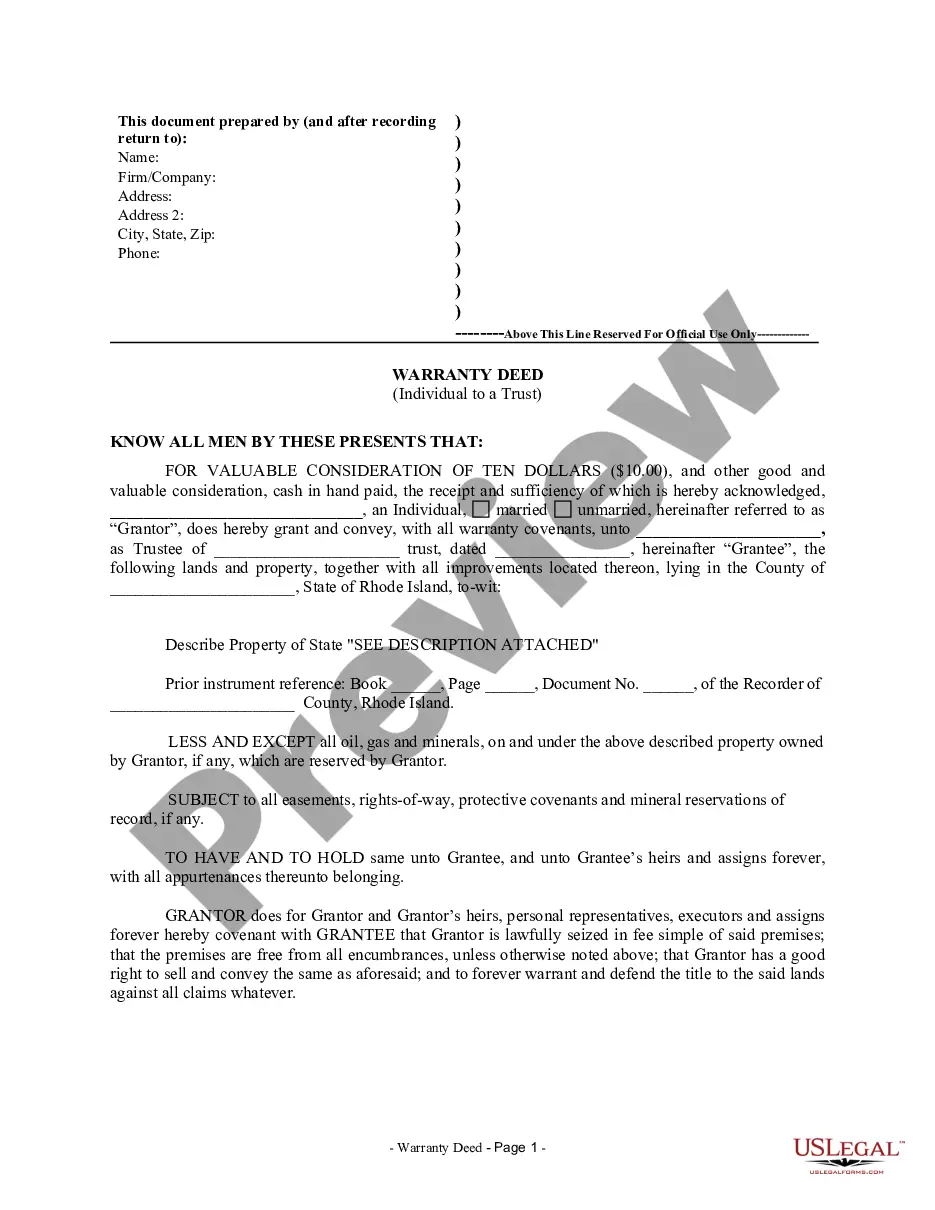
A Warranty Deed from Individual to a Trust is a legal document wherein an individual (the grantor) transfers real property to a trust (the grantee). This deed conveys the property while ensuring that the grantor retains specific rights, typically concerning the mineral rights of the land. This form differs from a standard warranty deed in that it specifically involves a trust as the recipient of the property, thus serving unique estate planning needs.
What’s included in this form
- Identification of the grantor and grantee along with their legal capacities.
- Description of the property being transferred, including any exceptions such as mineral rights.
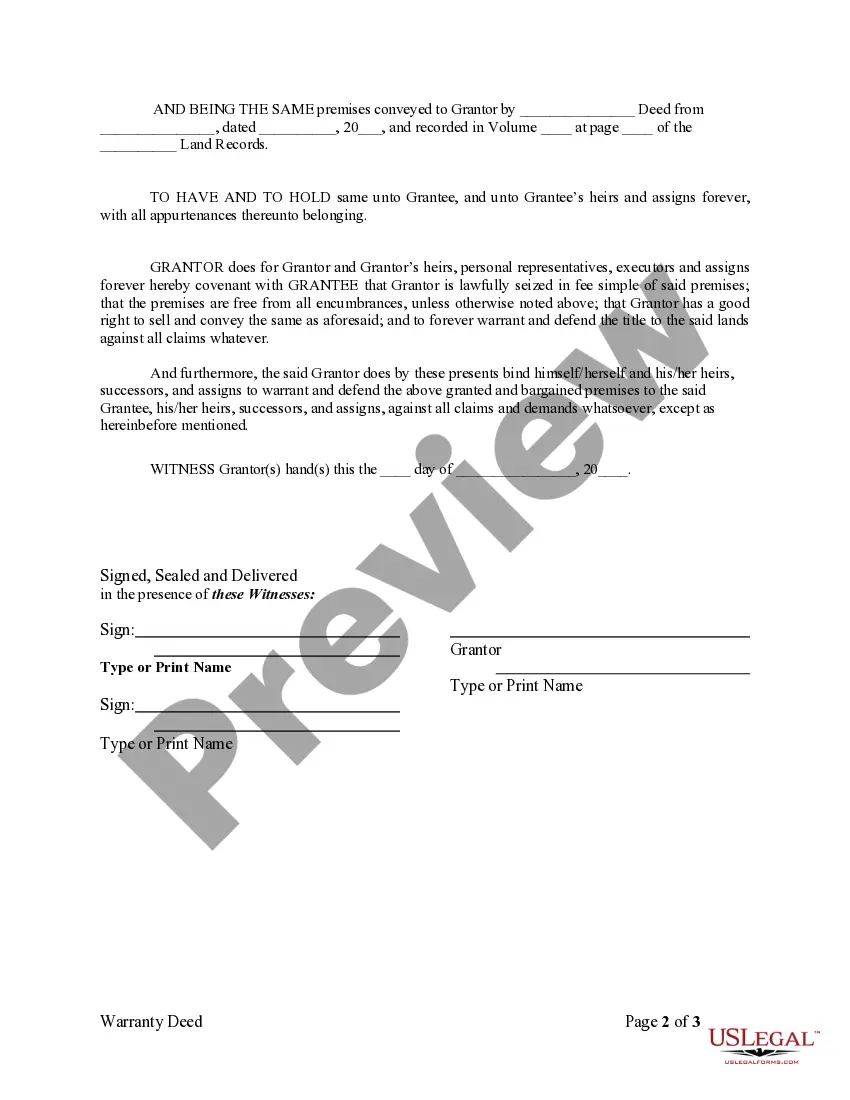
- Legal covenants assuring the grantee of clear title to the property, free of encumbrances, except those specified.
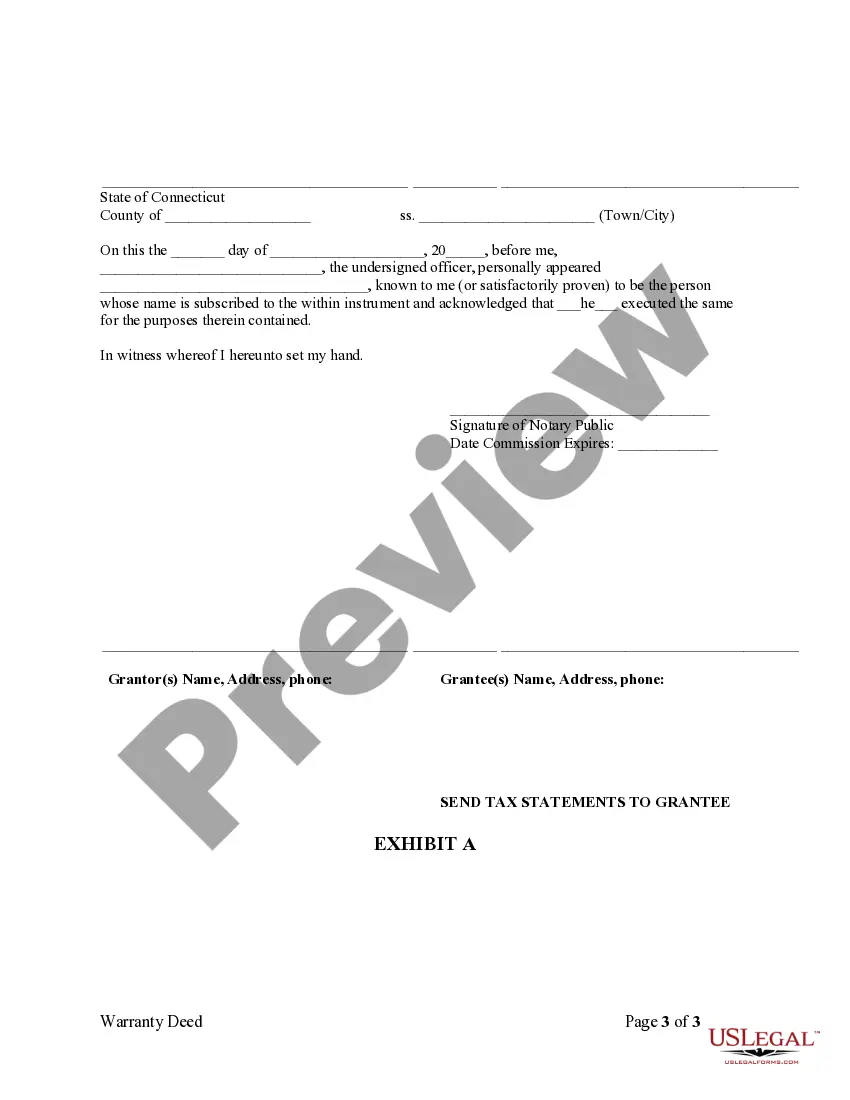
- Signature lines for the grantor and the notary public to validate the document.
- Date and jurisdiction where the deed is executed.




Situations where this form applies
This form is useful when an individual wants to transfer property into a trust for estate planning purposes. It might be used when establishing a living trust to manage assets or to help avoid probate. Additionally, using this warranty deed may be appropriate in situations involving the management of family assets or for protection of property against creditors.
Who needs this form
- Individuals looking to transfer ownership of property to a trust.
- Trustees who need to receive property on behalf of a trust.
- Estate planners managing families' assets and ensuring smooth transfers with minimal tax implications.
- Homeowners who are preparing to pass property to heirs through a trust.
How to complete this form
- Identify the parties involved: the grantor (individual) and the grantee (trust).
- Clearly specify the property being transferred, ensuring to mention any exceptions like mineral rights.
- Enter details about the previous conveyance, including the previous deed's date and recording information.
- Have the grantor sign the deed in the presence of a notary public.
- Complete any additional fields required for your jurisdiction and date the document.
Does this form need to be notarized?
To make this form legally binding, it must be notarized. Our online notarization service, powered by Notarize, lets you verify and sign documents remotely through an encrypted video session.
Get your form ready online
Our built-in tools help you complete, sign, share, and store your documents in one place.
Make edits, fill in missing information, and update formatting in US Legal Forms—just like you would in MS Word.
Download a copy, print it, send it by email, or mail it via USPS—whatever works best for your next step.
Sign and collect signatures with our SignNow integration. Send to multiple recipients, set reminders, and more. Go Premium to unlock E-Sign.
If this form requires notarization, complete it online through a secure video call—no need to meet a notary in person or wait for an appointment.
We protect your documents and personal data by following strict security and privacy standards.

Make edits, fill in missing information, and update formatting in US Legal Forms—just like you would in MS Word.

Download a copy, print it, send it by email, or mail it via USPS—whatever works best for your next step.

Sign and collect signatures with our SignNow integration. Send to multiple recipients, set reminders, and more. Go Premium to unlock E-Sign.

If this form requires notarization, complete it online through a secure video call—no need to meet a notary in person or wait for an appointment.

We protect your documents and personal data by following strict security and privacy standards.
Common mistakes to avoid
- Failing to accurately describe the property or omitting the reservation of rights.
- Neglecting to have the deed notarized, where applicable.
- Not including previous property transfer information, which can lead to issues with title clarity.
- Overlooking the need for witnesses if required by state law.
Why use this form online
- Convenience of downloading and completing the form at your own pace from anywhere.
- Editability allows you to customize the form for your specific needs easily.
- Forms drafted by licensed attorneys ensure reliability and compliance with legal standards.
Looking for another form?
Form popularity
FAQ
A trust often provides more robust protection than a simple gift. By using a Connecticut Warranty Deed from Individual to a Trust, you can maintain control over the property while assigning its benefits to your chosen beneficiaries. This arrangement helps avoid potential gift tax implications and provides clarity on management and distribution, which gifts may not offer. Trusts can also protect your property from creditors and ensure that your intentions are honored over time.
Deciding whether to gift a house or to place it in a trust involves various considerations. A Connecticut Warranty Deed from Individual to a Trust can help manage the property's future, providing clear guidelines for its use and control. While gifting may seem straightforward, putting the property in a trust allows for greater protection from creditors and simplifies the transfer of assets upon your passing. It's advisable to consult with a legal expert to weigh these options based on your circumstances.
Putting a house in trust in Connecticut begins with creating a trust document that outlines the terms and conditions of the trust. After the trust is established, you will need to execute a Connecticut Warranty Deed from Individual to a Trust to transfer the property legally. Engaging with uslegalforms can provide you with the necessary forms and guidance to complete this process efficiently and ensure compliance with state regulations.
To place your house in a trust in Connecticut, you need to establish a trust document and detail the property you wish to include. Next, execute a Connecticut Warranty Deed from Individual to a Trust to formally transfer ownership of the property into the trust. It is advisable to work with a legal professional to ensure all local laws are adhered to, and to navigate the specifics of the transfer process.
To transfer a warranty deed, you must complete the deed form and sign it in the presence of a notary. The next step is to file the form with your local land records office to make the transfer official. If you are moving property to a trust using a Connecticut Warranty Deed from Individual to a Trust, ensure you follow your state’s specific requirements for this type of deed. Consulting a legal professional can help ensure a smooth process.
While placing your home in a trust can offer benefits like avoiding probate, there are some disadvantages. You might face upfront costs for setting up the trust, as well as ongoing administrative fees. Additionally, transferring your property with a Connecticut Warranty Deed from Individual to a Trust could limit your access to certain tax benefits or create tax implications. It's essential to assess these factors before making a decision.
To place a house in a trust in Connecticut, you must first create a trust document that outlines the terms and beneficiaries of the trust. Then, you will execute a Connecticut Warranty Deed from Individual to a Trust, transferring the property title into the trust's name. This process may seem complex, but platforms like US Legal Forms provide resources and templates to help simplify the required steps and ensure legal compliance.
A trust deed allows a property owner to place their assets in a trust, ensuring they are managed and protected according to specific wishes. This arrangement can facilitate smoother property transfers and provide benefits like avoiding probate. Utilizing a Connecticut Warranty Deed from Individual to a Trust in this process can help streamline the transition and safeguard your assets effectively.
While a warranty deed provides strong protection for the buyer, it may also present disadvantages for the seller. If a title issue arises after the transfer, the seller is legally responsible for resolving it, which can lead to unexpected costs. Moreover, using a Connecticut Warranty Deed from Individual to a Trust without thorough legal guidance may not address specific needs or concerns, potentially resulting in complications down the road.
Yes, you can transfer a property with an existing mortgage into a trust. However, it is crucial to review the mortgage terms and conditions beforehand, as some lenders have specific requirements. Properly executing a Connecticut Warranty Deed from Individual to a Trust while considering the mortgage can help maintain goodwill with the lender and secure the property effectively within the trust.