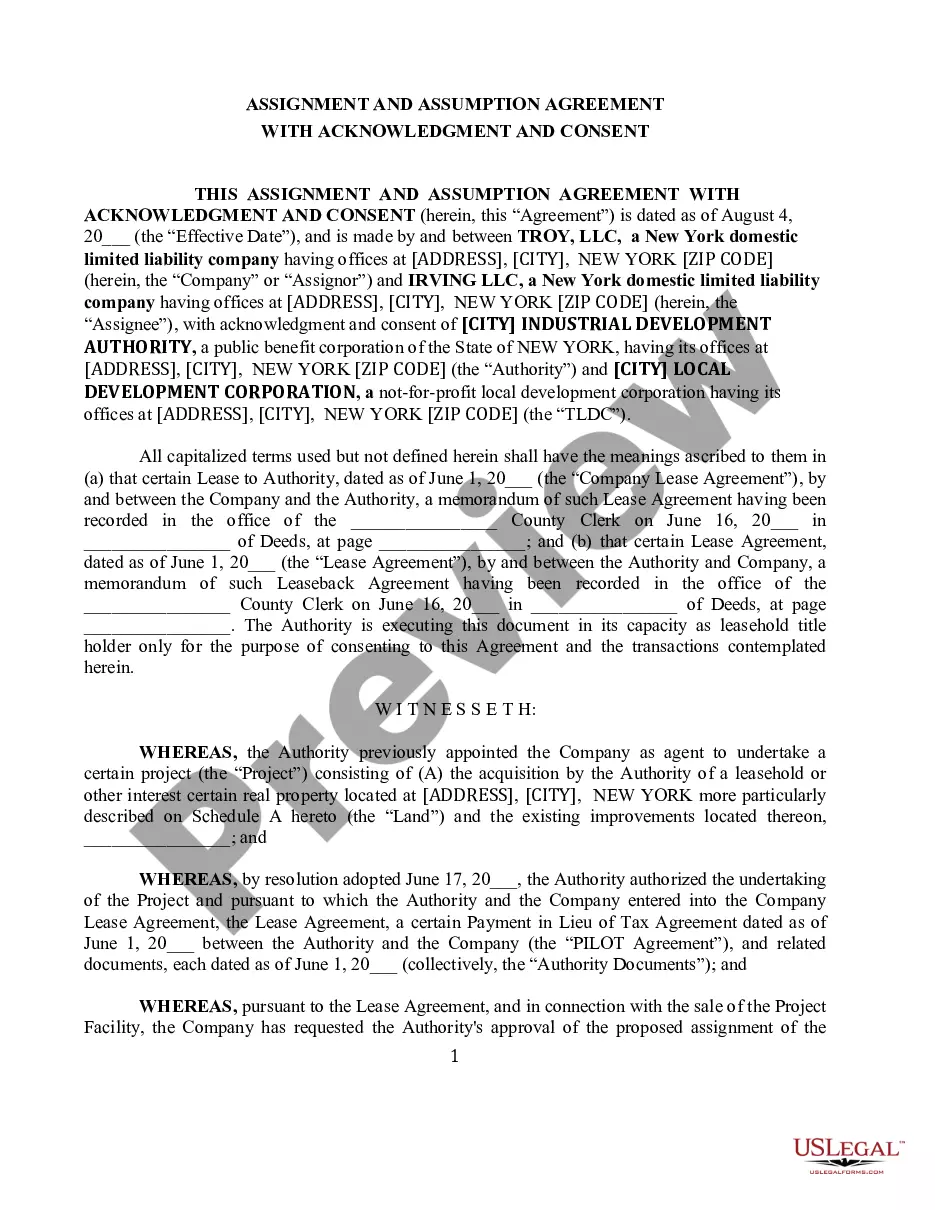
Connecticut Warranty Deed from Corporation to Corporation
About this form
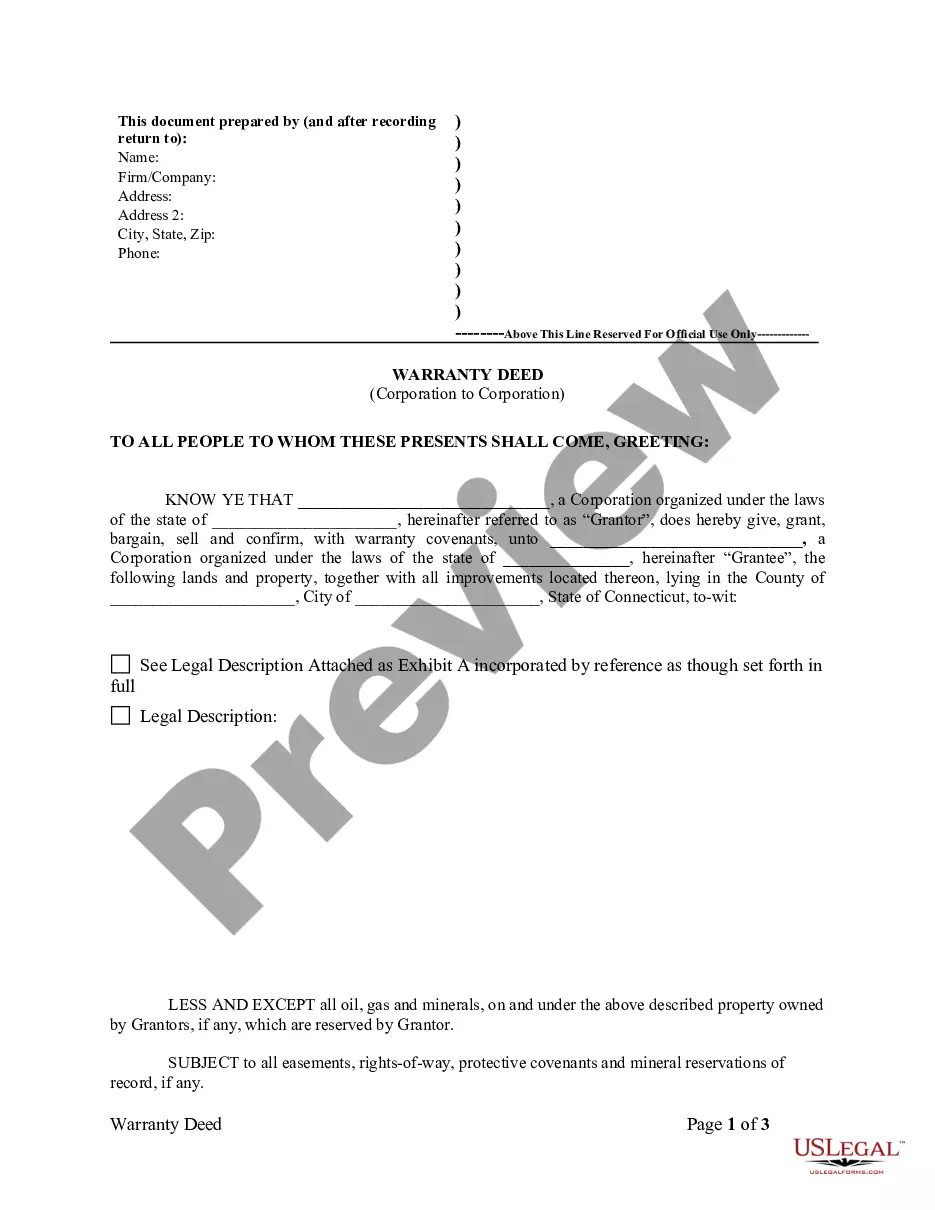
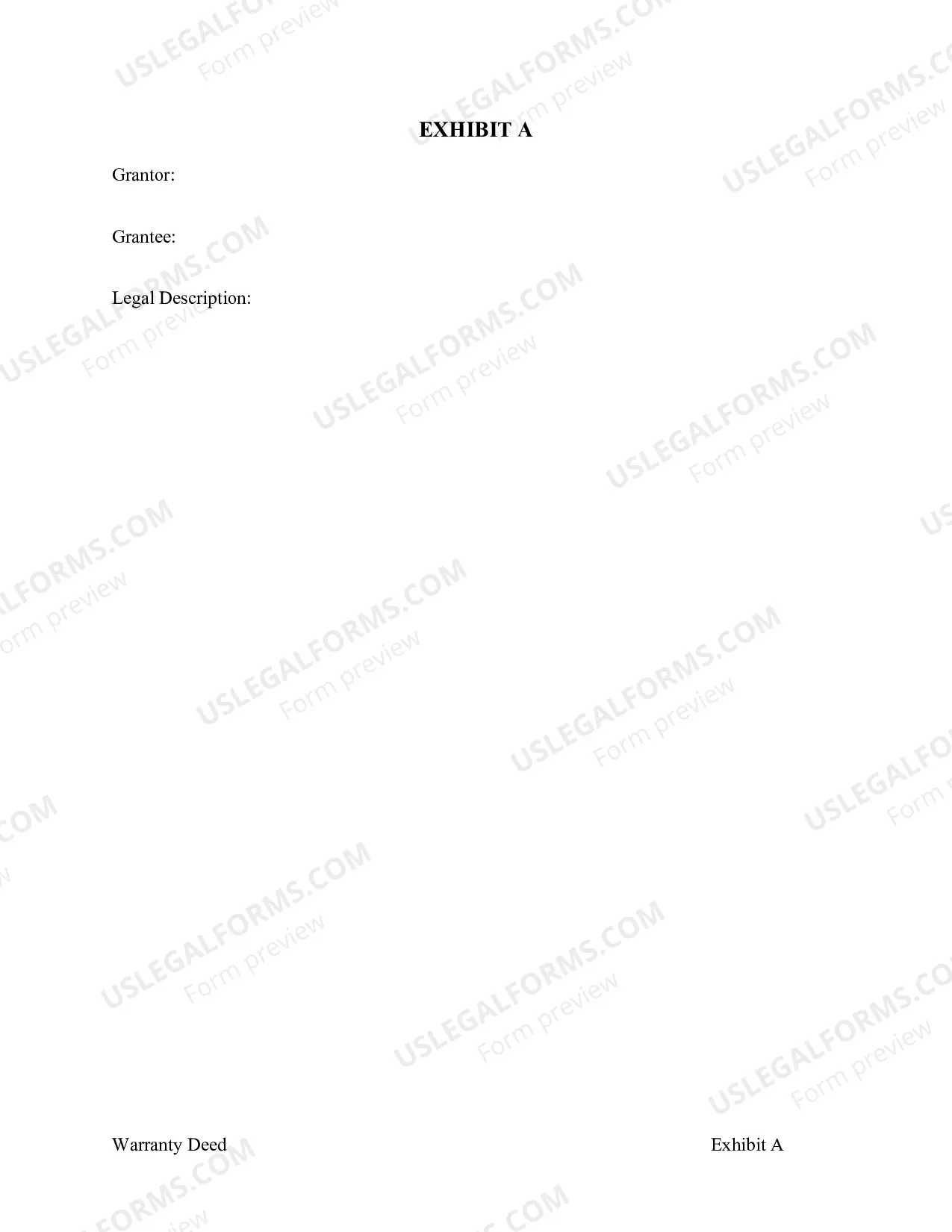
The Warranty Deed from Corporation to Corporation is a legal document used to transfer property ownership between corporations. It ensures that the grantor (the selling corporation) conveys clear title to the property to the grantee (the purchasing corporation), with warranties against future claims. This form specifically includes a reservation of oil, gas, and minerals, which distinguishes it from other types of warranty deeds that do not include such reservations.
Form components explained
- Identification of the grantor and grantee as corporations.
- Description of the property being transferred.
- Reservation clause for oil, gas, and minerals.
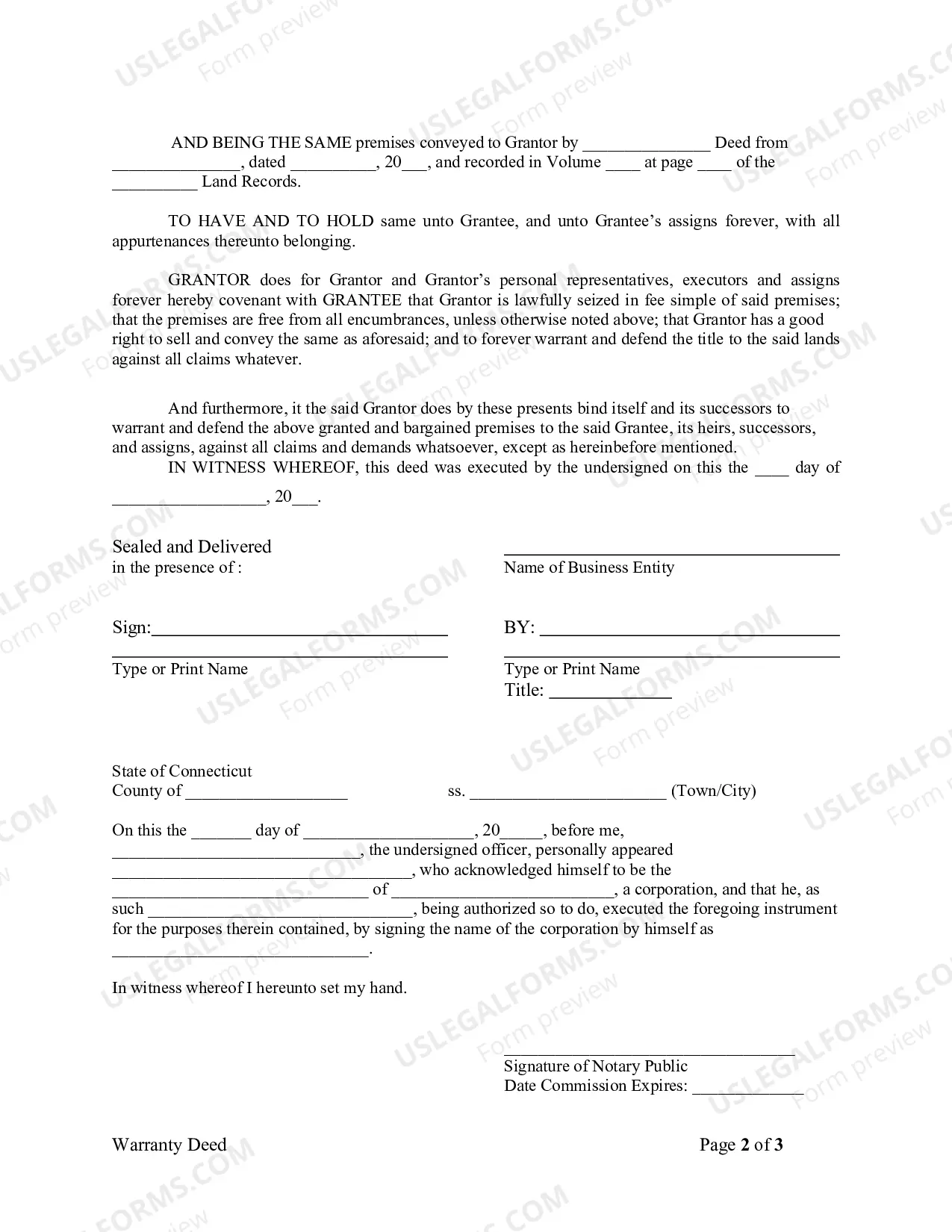
- Covenants about the title and any encumbrances.
- Execution and signature lines for the authorized representatives.


When this form is needed
This form should be used when a corporation wants to transfer property ownership to another corporation. This typically occurs during business transactions such as mergers, acquisitions, or asset sales. It is essential to use this specific Warranty Deed to provide legal assurance regarding the title and any reservations on the property.
Who should use this form
This form is intended for:
- Corporations that are transferring property to another corporation.
- Corporate legal representatives or real estate professionals involved in property transactions.
- Businesses engaging in mergers or acquisitions that involve property transfers.
Completing this form step by step
- Identify and enter the names of the grantor and grantee corporations.
- Provide a legal description of the property being conveyed.
- Insert the date of the original deed and the recording information for tracing ownership history.
- Specify any reservations regarding oil, gas, and minerals if applicable.
- Have the form executed by the authorized representatives of both corporations.
Is notarization required?
This form must be notarized to be legally valid. US Legal Forms provides secure online notarization powered by Notarize, allowing you to complete the process through a verified video call.
Get your form ready online
Our built-in tools help you complete, sign, share, and store your documents in one place.
Make edits, fill in missing information, and update formatting in US Legal Forms—just like you would in MS Word.
Download a copy, print it, send it by email, or mail it via USPS—whatever works best for your next step.
Sign and collect signatures with our SignNow integration. Send to multiple recipients, set reminders, and more. Go Premium to unlock E-Sign.
If this form requires notarization, complete it online through a secure video call—no need to meet a notary in person or wait for an appointment.
We protect your documents and personal data by following strict security and privacy standards.

Make edits, fill in missing information, and update formatting in US Legal Forms—just like you would in MS Word.

Download a copy, print it, send it by email, or mail it via USPS—whatever works best for your next step.

Sign and collect signatures with our SignNow integration. Send to multiple recipients, set reminders, and more. Go Premium to unlock E-Sign.

If this form requires notarization, complete it online through a secure video call—no need to meet a notary in person or wait for an appointment.

We protect your documents and personal data by following strict security and privacy standards.
Avoid these common issues
- Not accurately completing the legal description of the property.
- Failure to include the proper reservation of oil, gas, and minerals.
- Not having the form executed by individuals with proper authority.
Advantages of online completion
- Immediate access to a professionally drafted legal form.
- Easy to download and fill out according to your specific transaction.
- Ensures your form meets current legal standards for the state in which it is used.
Legal use & context
- The Warranty Deed provides legal assurance of ownership transfer between corporations.
- It protects grantees against claims by third parties regarding property title.
- This form is commonly used in corporate property transactions to avoid future disputes.
Key takeaways
- The Warranty Deed from Corporation to Corporation is essential for legal property transfer between corporations.
- Understanding how to complete this form correctly is crucial for enforceability.
- Consult local laws for specific requirements related to notarization and property reservations.
Looking for another form?
Form popularity
FAQ
A corporation conveys real estate through a deed by drafting a Connecticut Warranty Deed from Corporation to Corporation, which specifies the transfer of ownership. The deed must be executed properly, including signatures from authorized corporate officers. Once recorded, the deed formally transfers property rights from one corporation to another, ensuring clarity and legal compliance.
Corporations own real property through the acquisition and management of assets, establishing formal title through documents like the Connecticut Warranty Deed from Corporation to Corporation. As legal entities, corporations have the ability to buy, sell, and hold property in their name. This ownership structure provides liability protection and can offer various tax advantages.
In Quizlet, a corporation can convey real estate by creating study sets focused on the role and process of a Connecticut Warranty Deed from Corporation to Corporation. Use simple terms and examples to help users understand the process. Engaging with this content can enhance understanding of real estate transactions for those studying or learning about the topic.
To fill out a warranty deed form, start by entering the names of the parties involved in the transaction, along with the legal description of the property. Next, clearly state the type of deed, specifying that it is a Connecticut Warranty Deed from Corporation to Corporation. Finally, ensure that the deed is signed by the appropriate corporate officers to finalize the conveyance.
A corporation can convey real estate by executing a Connecticut Warranty Deed from Corporation to Corporation. This deed must include specific details such as the property description, the names of the corporations involved, and must be signed by authorized officers. Using a well-structured deed helps to clearly establish the rights of ownership transfer.
Yes, when a corporation transfers ownership of property through a Connecticut Warranty Deed from Corporation to Corporation, the deed must be signed by authorized representatives of the corporation. This signature ensures that the transaction is legally binding. It also confirms that the representatives have the proper authority to act on behalf of the corporation.
Quitclaim deeds lack legal assurances, which can lead to complications if disputes arise. This means you could end up inheriting hidden liens or ownership claims without recourse. Instead, opting for a Connecticut Warranty Deed from Corporation to Corporation grants you protection by affirming the seller's legal right to transfer the property, shielding you from potential future claims.
The primary downside of a quitclaim deed is that it does not provide any guarantees regarding the property title. This means if issues arise post-transfer, such as claims from third parties, the grantor may not be held accountable. In contrast, a Connecticut Warranty Deed from Corporation to Corporation offers more security, ensuring that the title is clear at the time of transfer.
Typically, quitclaim deeds benefit parties who know each other well. For example, family members or business partners can use a quitclaim to transfer property without lengthy processes. However, when dealing with more formal transactions, such as a Connecticut Warranty Deed from Corporation to Corporation, it's wise to consider the risks and seek a warranty deed for better protection.