Colorado Partial Release of Property From Deed of Trust for Individual
Overview of this form
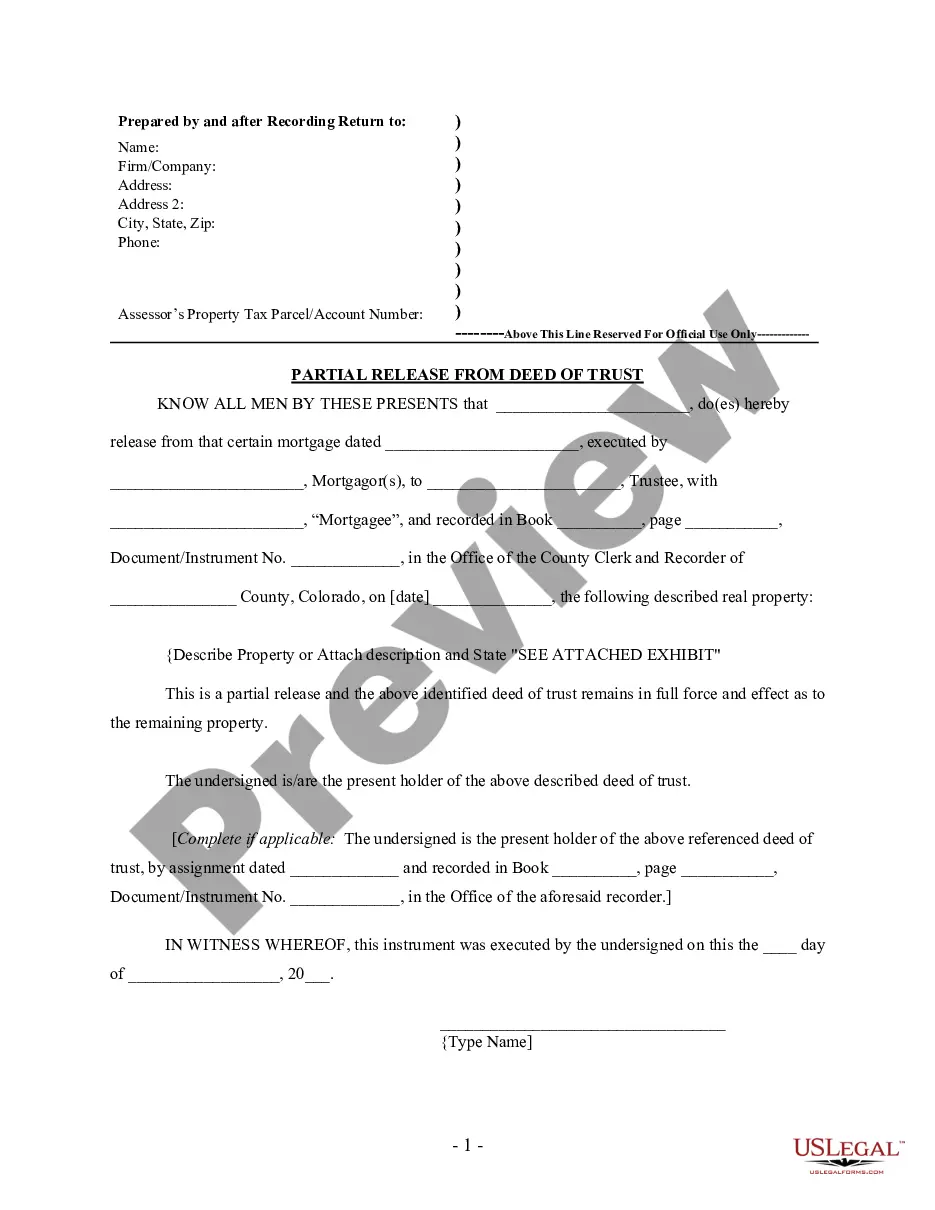
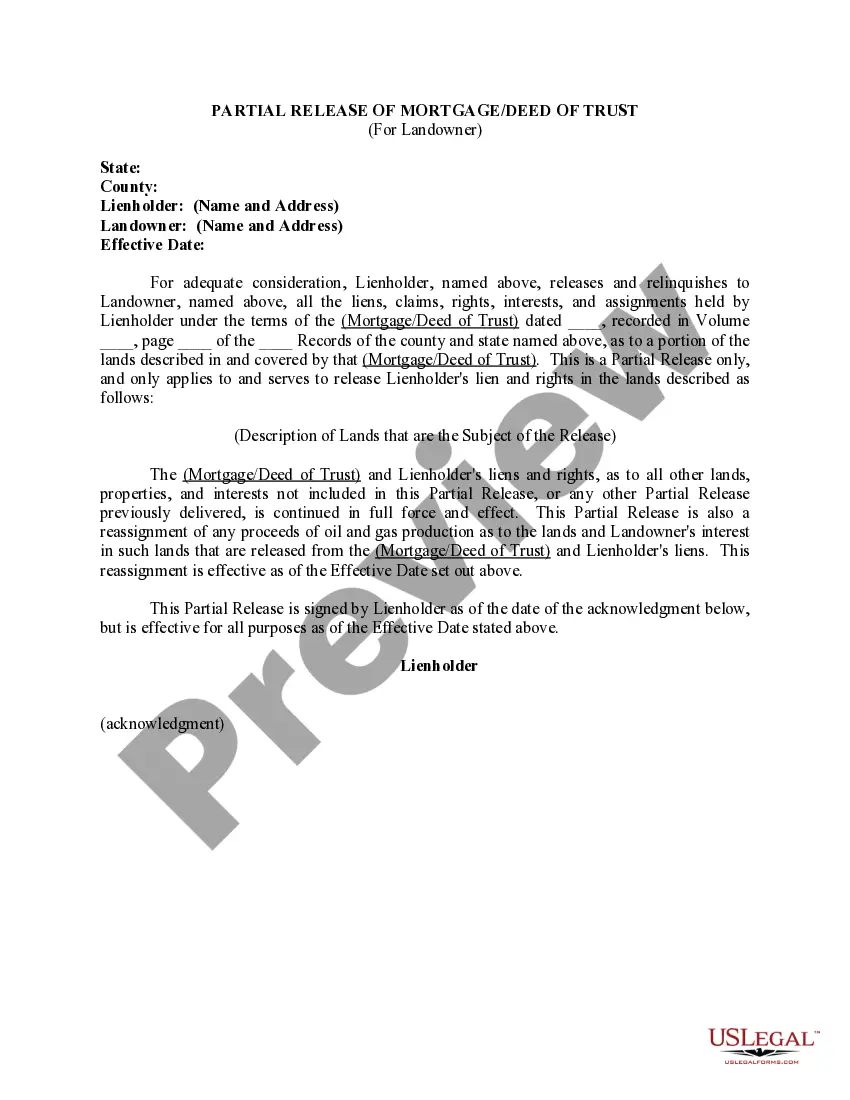
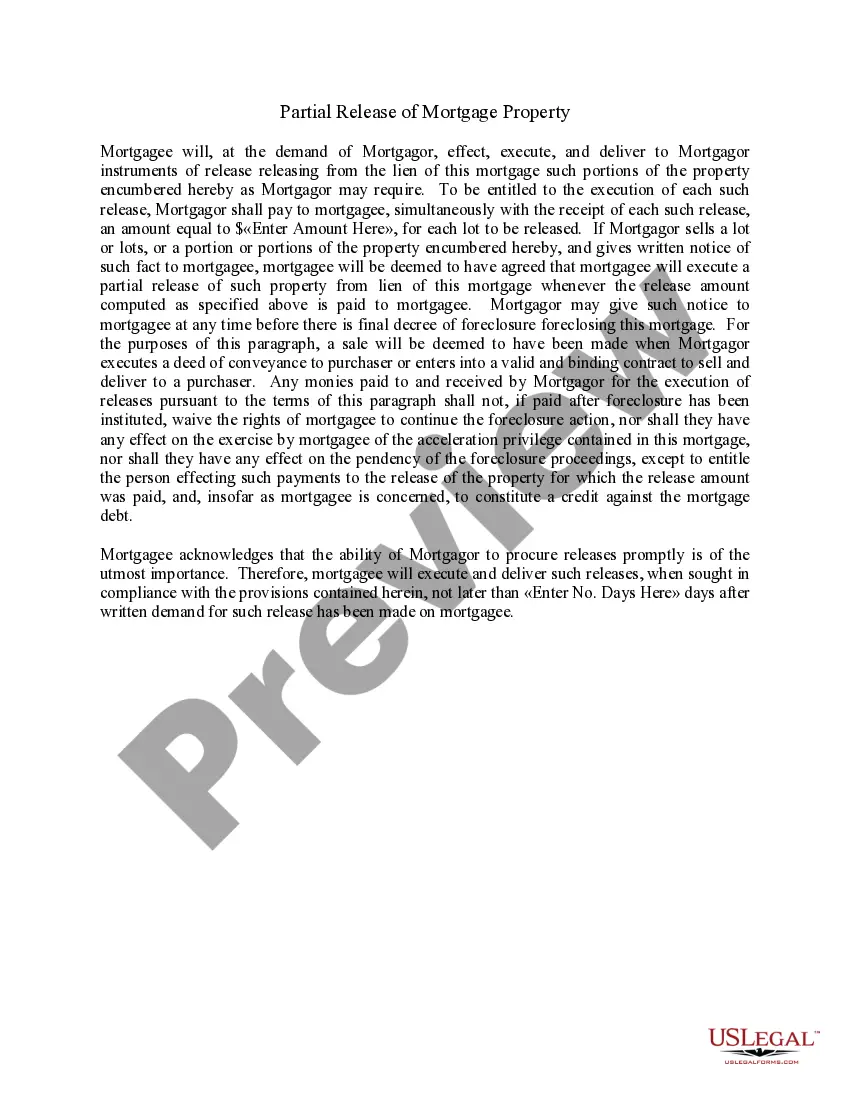
This Partial Release of Property From Deed of Trust for Individual form allows a holder of a deed of trust or mortgage to release a portion of the real property that serves as collateral. Unlike a full release, this form keeps the existing deed of trust intact for the remaining property, ensuring that the associated security remains effective. This form is essential when a property owner needs to release part of their real estate from a mortgage obligation while retaining ownership of the rest.
Form components explained
- Identification of property to be released, including a description or reference to an attached exhibit.
- Statement confirming the remaining property is still secured by the original deed of trust.
- Details about the current holder of the deed of trust, including any assignments.
- Signature line for the current holder and space for a witness.
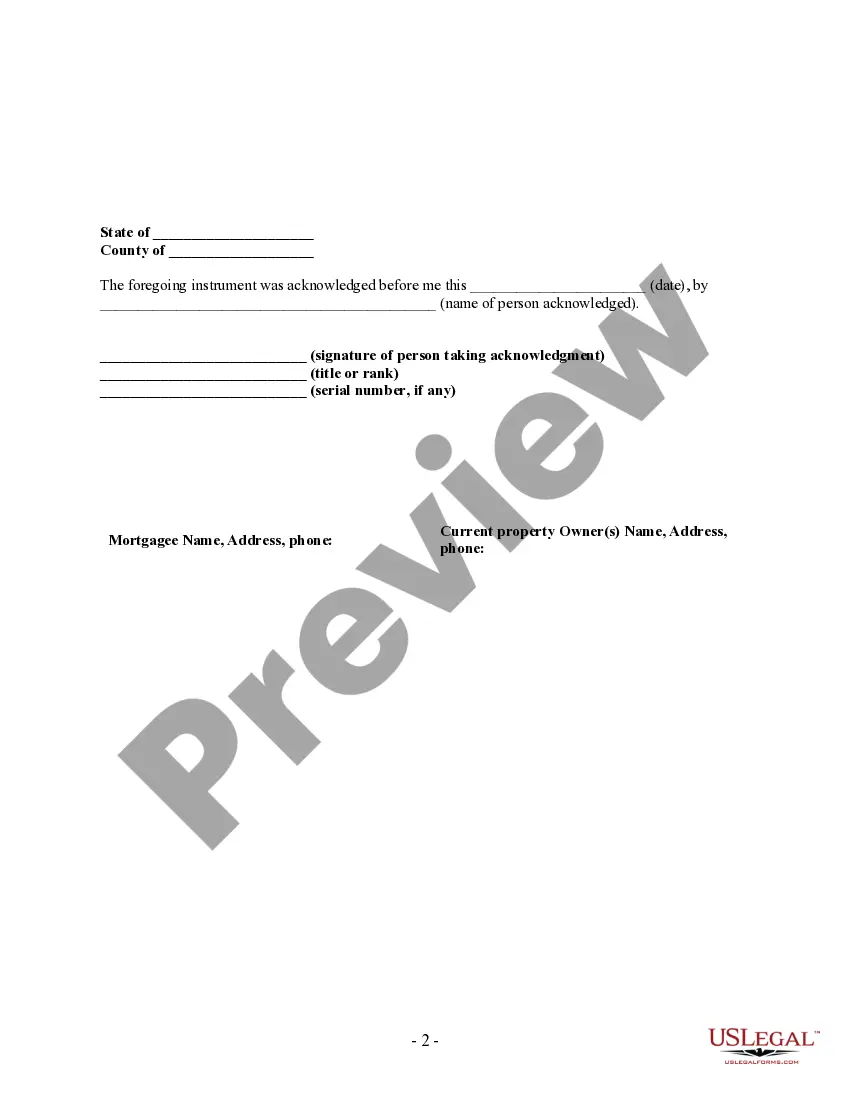
- Notary acknowledgment section for verification of signatures.


Common use cases
This form is needed when a property owner wants to sell or transfer part of their property that is currently secured by a deed of trust or mortgage. For instance, if the owner wishes to release a parcel of land while maintaining the mortgage on the remaining parcels, this form effectively documents that transaction. It's also suitable for situations involving partial ownership transfers or refinances that require collateral adjustment.
Who needs this form
- Property owners looking to release part of their property from a deed of trust.
- Mortgage holders intending to document the partial release of collateral.
- Real estate professionals facilitating property transactions involving partial releases.
Completing this form step by step
- Identify the property to be partially released, providing a detailed description or reference an attached exhibit.
- Confirm that the deed of trust remains in full force as to the remaining property.
- Provide details about the current holder of the deed, including any prior assignments.
- Sign and date the form in the specified area, ensuring proper witness signatures if required.
- If applicable, take the form to a notary for acknowledgment of signatures.
Notarization requirements for this form
Notarization is required for this form to take effect. Our online notarization service, powered by Notarize, lets you verify and sign documents remotely through an encrypted video session, available 24/7.
Get your form ready online
Our built-in tools help you complete, sign, share, and store your documents in one place.
Make edits, fill in missing information, and update formatting in US Legal Forms—just like you would in MS Word.
Download a copy, print it, send it by email, or mail it via USPS—whatever works best for your next step.
Sign and collect signatures with our SignNow integration. Send to multiple recipients, set reminders, and more. Go Premium to unlock E-Sign.
If this form requires notarization, complete it online through a secure video call—no need to meet a notary in person or wait for an appointment.
We protect your documents and personal data by following strict security and privacy standards.

Make edits, fill in missing information, and update formatting in US Legal Forms—just like you would in MS Word.

Download a copy, print it, send it by email, or mail it via USPS—whatever works best for your next step.

Sign and collect signatures with our SignNow integration. Send to multiple recipients, set reminders, and more. Go Premium to unlock E-Sign.

If this form requires notarization, complete it online through a secure video call—no need to meet a notary in person or wait for an appointment.

We protect your documents and personal data by following strict security and privacy standards.
Avoid these common issues
- Failing to include a complete description of the property being released.
- Not confirming that the deed of trust is still valid for the remaining property.
- Omitting signatures or dates, which can render the document invalid.
Advantages of online completion
- Convenient access to templates drafted by legal professionals.
- Editable forms that allow for quick adjustments before completion.
- Secure download and storage of legal documents for future reference.
Looking for another form?



Form popularity
FAQ
To release a deed of trust in Colorado, you begin by obtaining a release from the lender, which officially removes the lien on your property. You will need to complete and file the appropriate documentation with your local county clerk and recorder. If you are seeking a Colorado Partial Release of Property From Deed of Trust for Individuals, you can visit USLegalForms to find the necessary forms and guidance to ensure your release is processed correctly and efficiently.
A partial release of a deed of trust is a legal document that permits the release of a designated portion of the collateralized property while retaining the trust on the remaining property. This action can benefit individuals looking to divest part of their property without impacting the overall deed of trust. In Colorado, understanding the specific requirements for a Colorado Partial Release of Property From Deed of Trust for Individuals can streamline the process and help prevent future complications related to property ownership.
A partial reconveyance of deed of trust occurs when a lender agrees to release a portion of the property from the deed of trust, allowing the property owner to sell or refinance that specific portion. This process is particularly useful in Colorado as it provides flexibility for individuals looking to manage their property assets. By utilizing a Colorado Partial Release of Property From Deed of Trust for Individuals, you can navigate this process smoothly, ensuring that your interests are protected while maintaining compliance with local laws.
Getting out of a trust deed generally involves paying off the associated debt or arranging for a partial release. A Colorado Partial Release of Property From Deed of Trust for Individual can be particularly useful if you want to retain certain properties while reducing your obligations. Communicate closely with your lender, as they will provide the necessary steps and requirements. Additionally, seeking help from experts can guide you through the process more efficiently.
Releasing a deed of trust involves completing a formal process to remove the security interest the lender holds. Start by satisfying the debt secured by the trust deed; then, request a Colorado Partial Release of Property From Deed of Trust for Individual from your lender. Your lender may require specific documentation to process this release, so it’s vital to stay organized and proactive. Consulting platforms like uslegalforms can simplify your paperwork and keep everything on track.
A partial deed release is a legal action that removes one or more properties from a deed of trust while keeping the remaining properties under the original terms. This process often occurs in real estate transactions, where an owner wishes to sell one portion of their property. Engaging with a Colorado Partial Release of Property From Deed of Trust for Individual can help streamline this process. It ensures that both the owner and the lender understand the new property boundaries within the context of the original trust.
To exit a trust deed, you need to consider a Colorado Partial Release of Property From Deed of Trust for Individual, which allows the removal of specific properties. You can start by contacting your lender to discuss your options. In many cases, they will guide you through the necessary steps. Additionally, consulting with a legal expert can provide clarity on the process and ensure your best interests are protected.
Releasing a trust usually requires a formal process where all parties involved must agree to the terms. You'll typically start by reviewing the trust agreement and gathering any required documents. Once you understand the terms, you can proceed with drafting the necessary paperwork, including a partial release of property from the deed of trust for individual owners. For your convenience, US Legal Forms offers templates and resources to help you manage this process smoothly and in accordance with Colorado laws.