Colorado Conservation Easement
Overview of this form
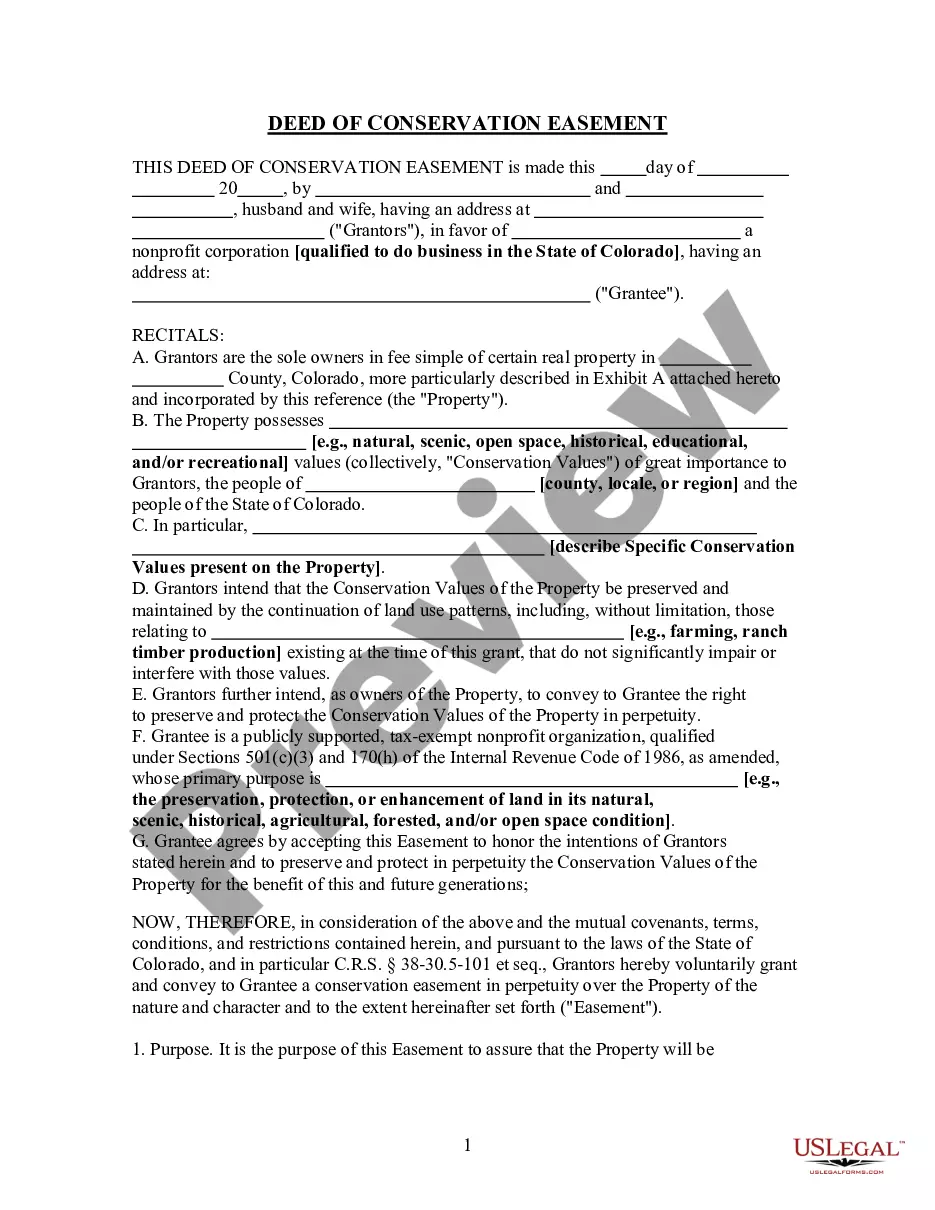
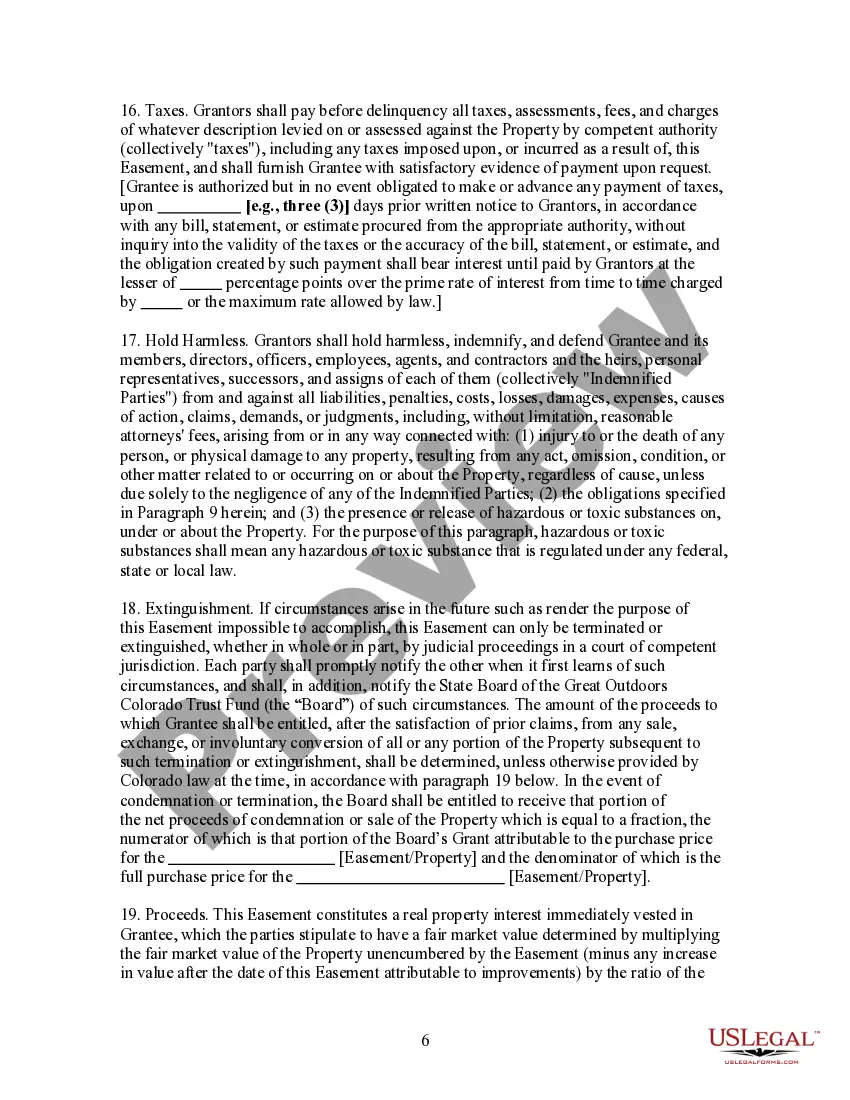
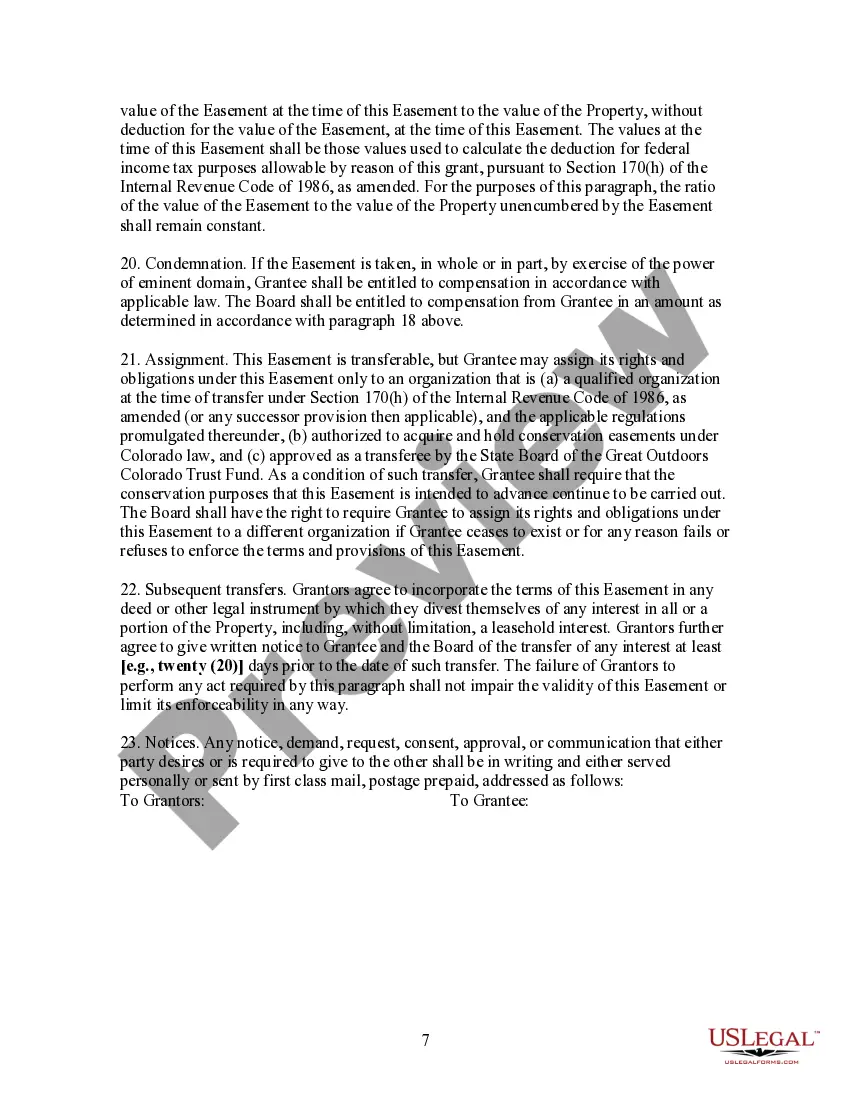
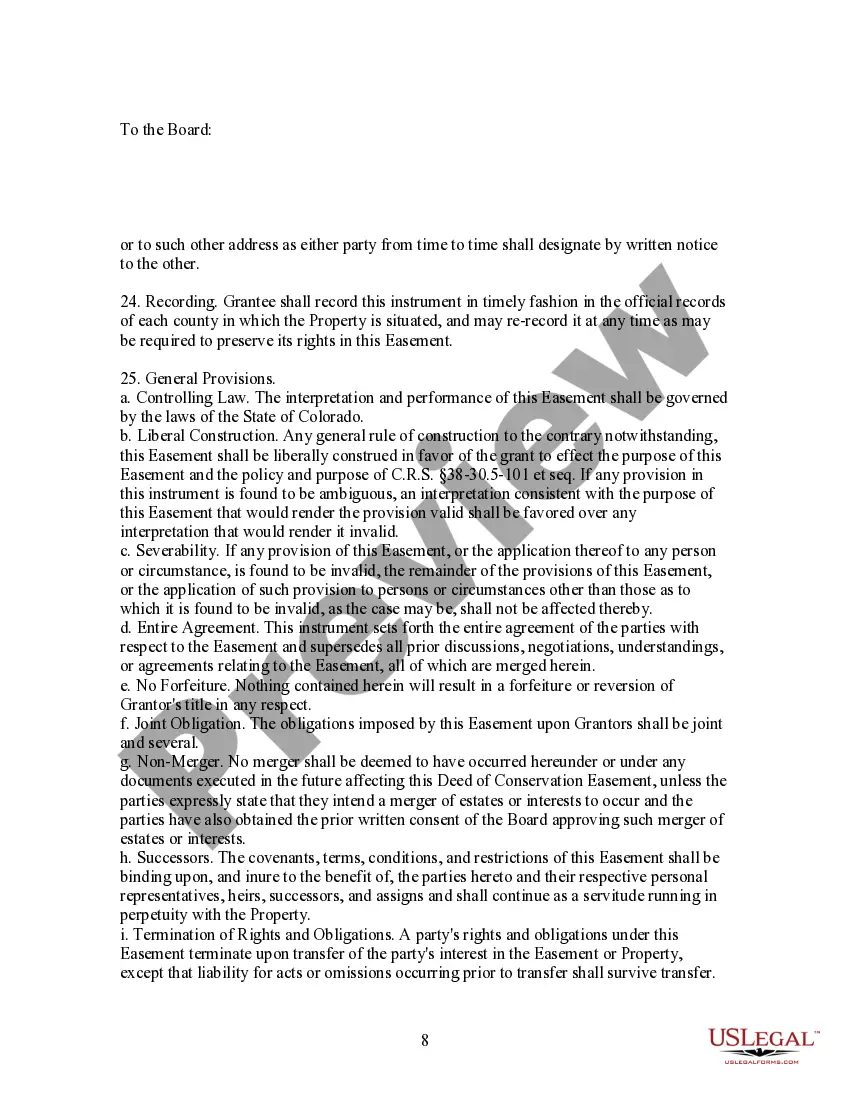
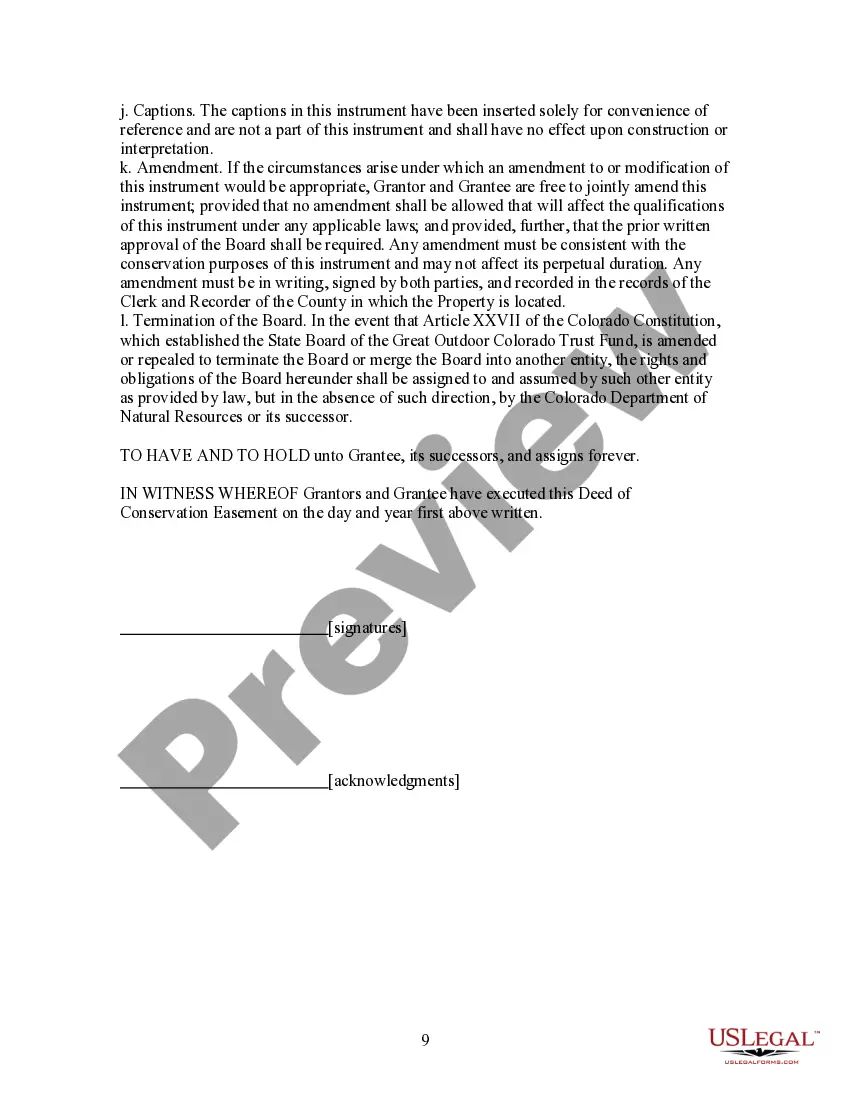
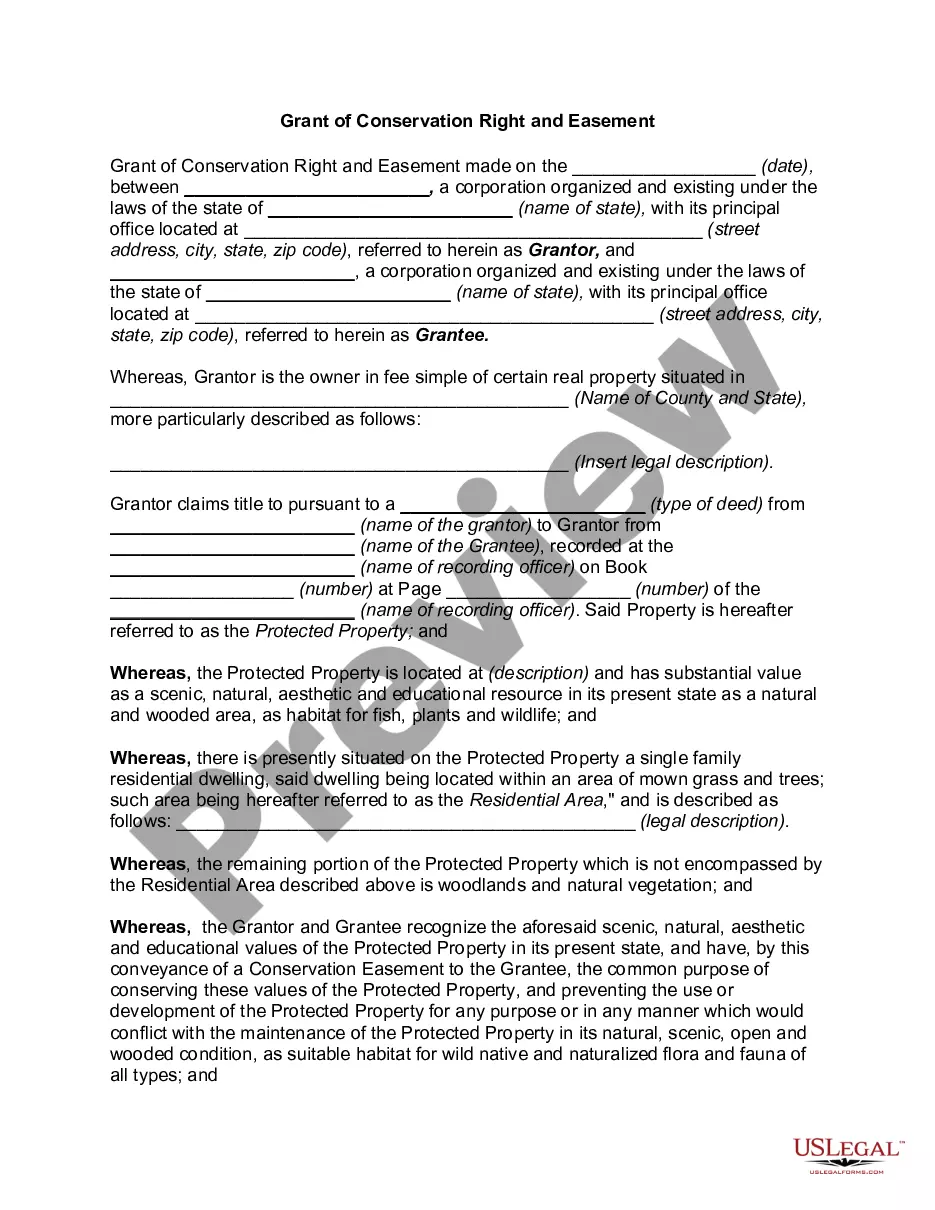
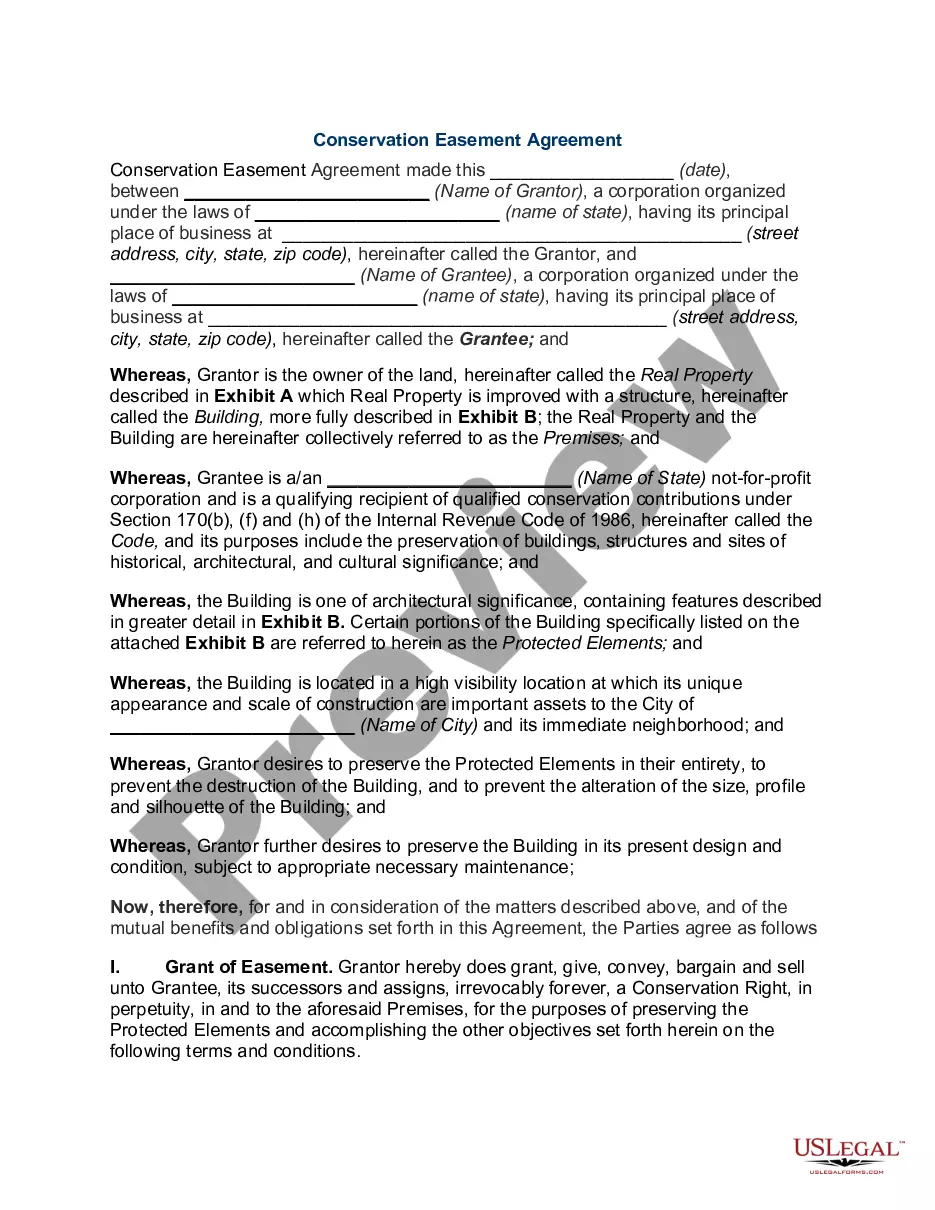
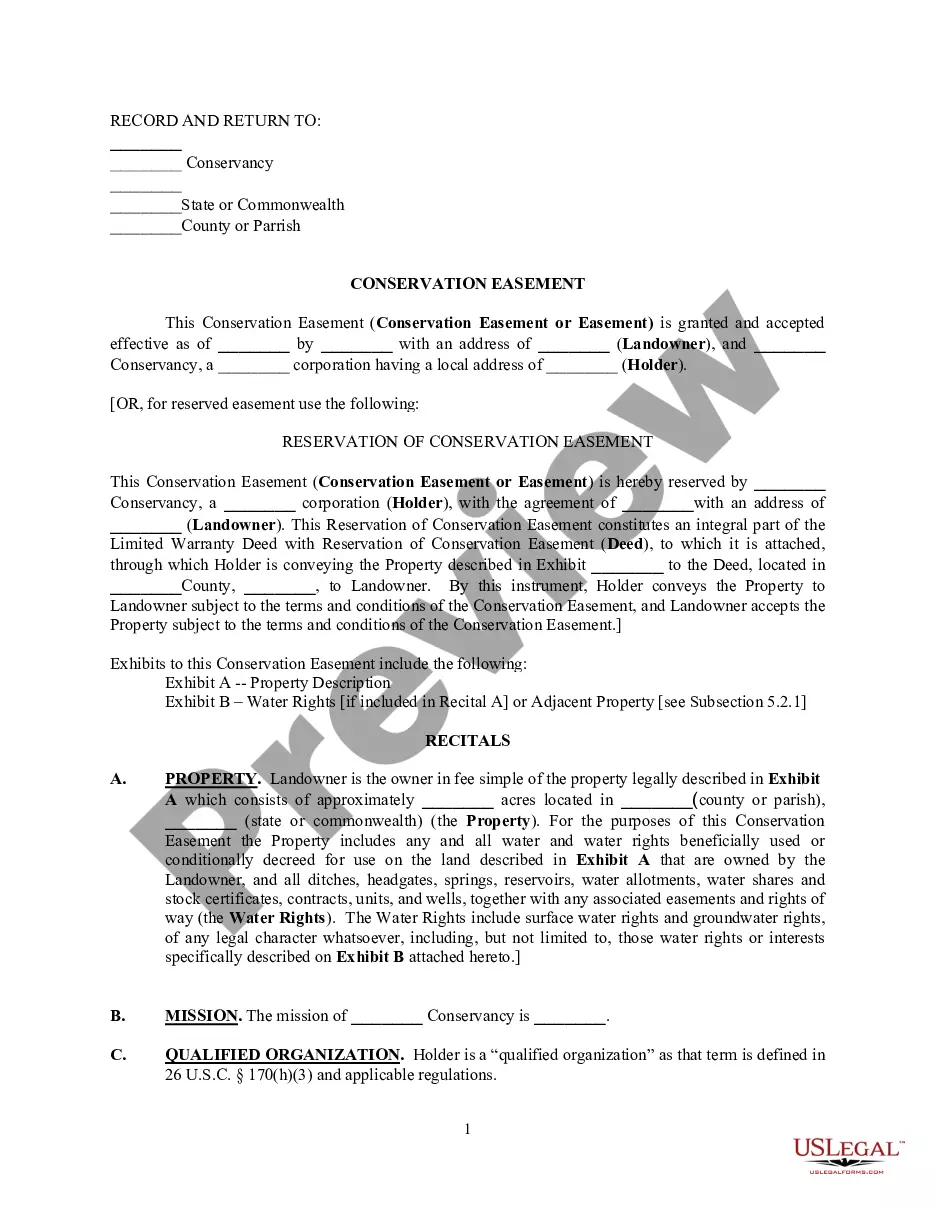
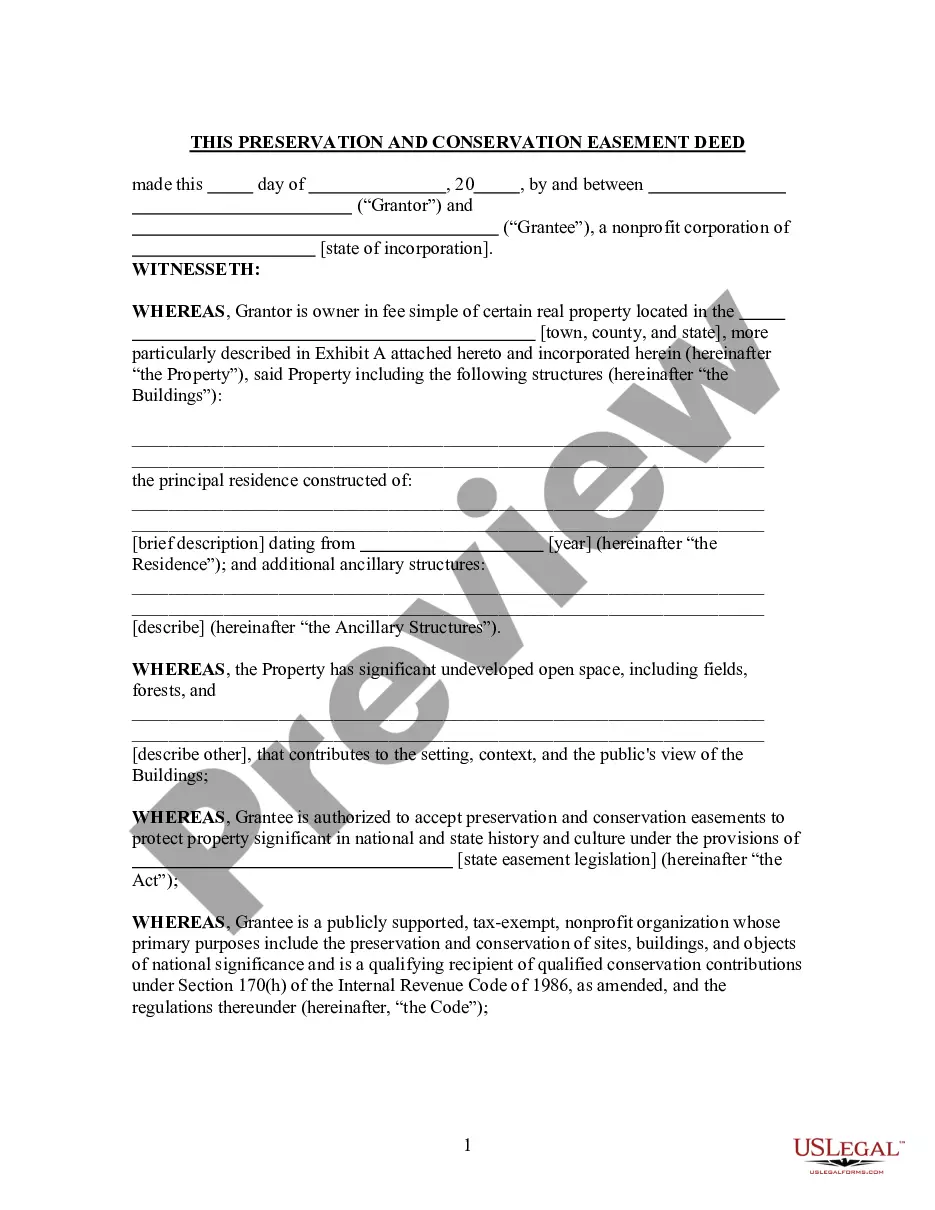
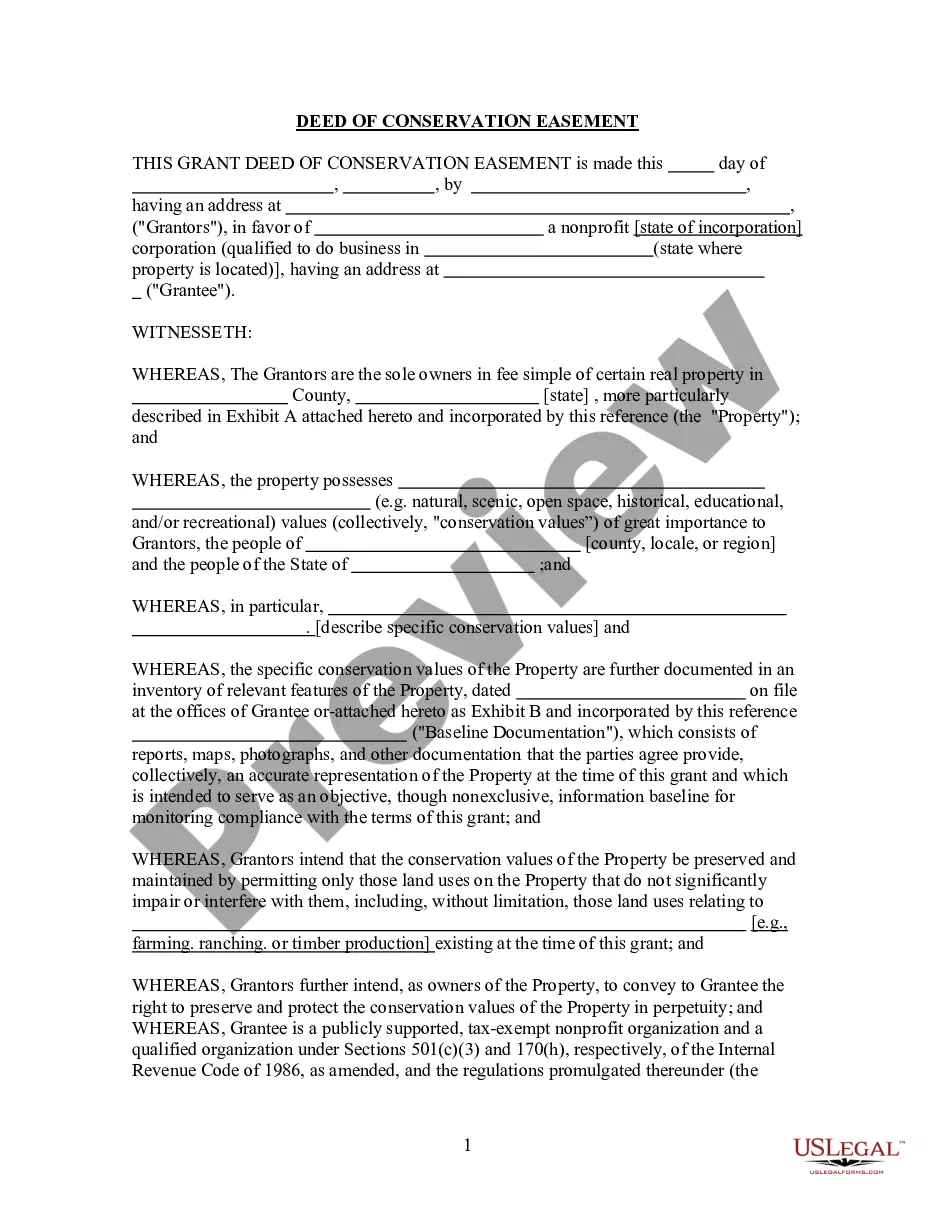
The Conservation Easement form is a legal document designed to protect and preserve the conservation values of a property in perpetuity. This form is particularly important for landowners who wish to restrict certain types of development or land use to maintain the property's environmental qualities. Unlike other property agreements, this easement focuses specifically on conservation and supports the long-term stewardship of the land.
Key components of this form
- Purpose: Ensures the property's conservation values are preserved.
- Rights of Grantee: Defines the authority of the nonprofit organization or government entity that will maintain the easement.
- Baseline Documentation Report: Requires an initial report documenting the property's condition.
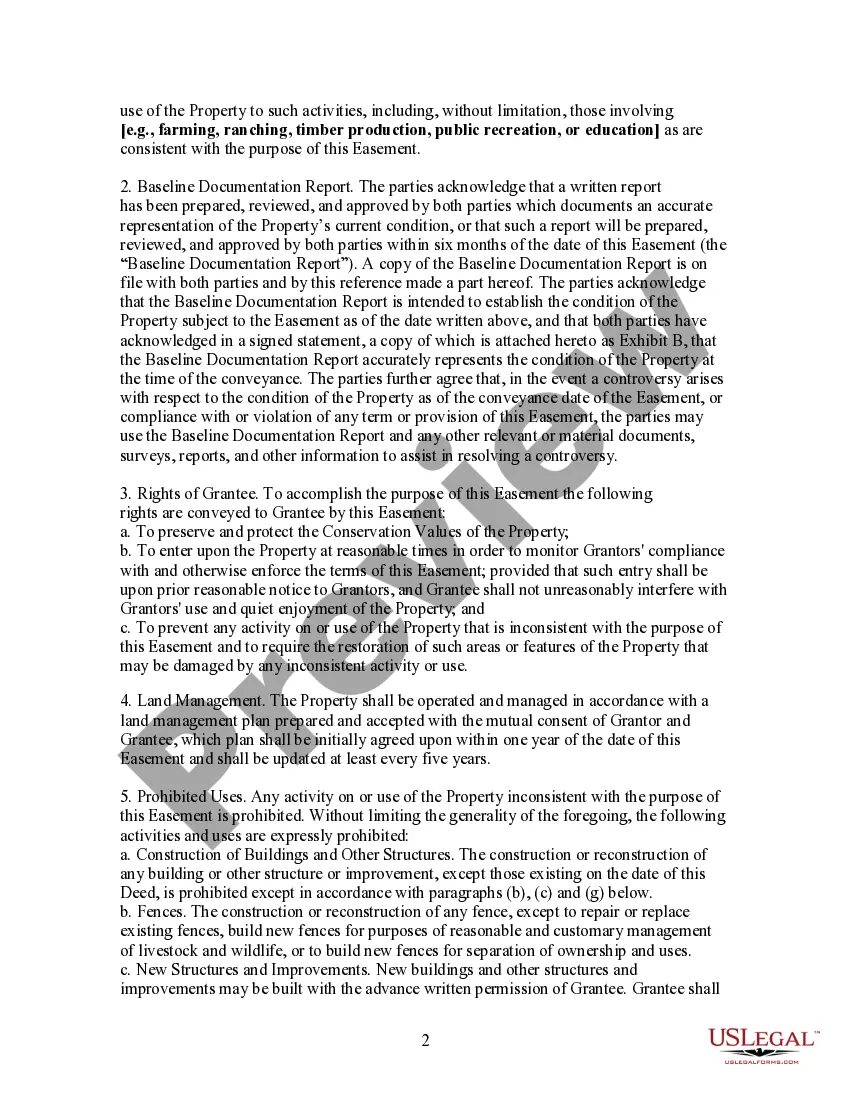
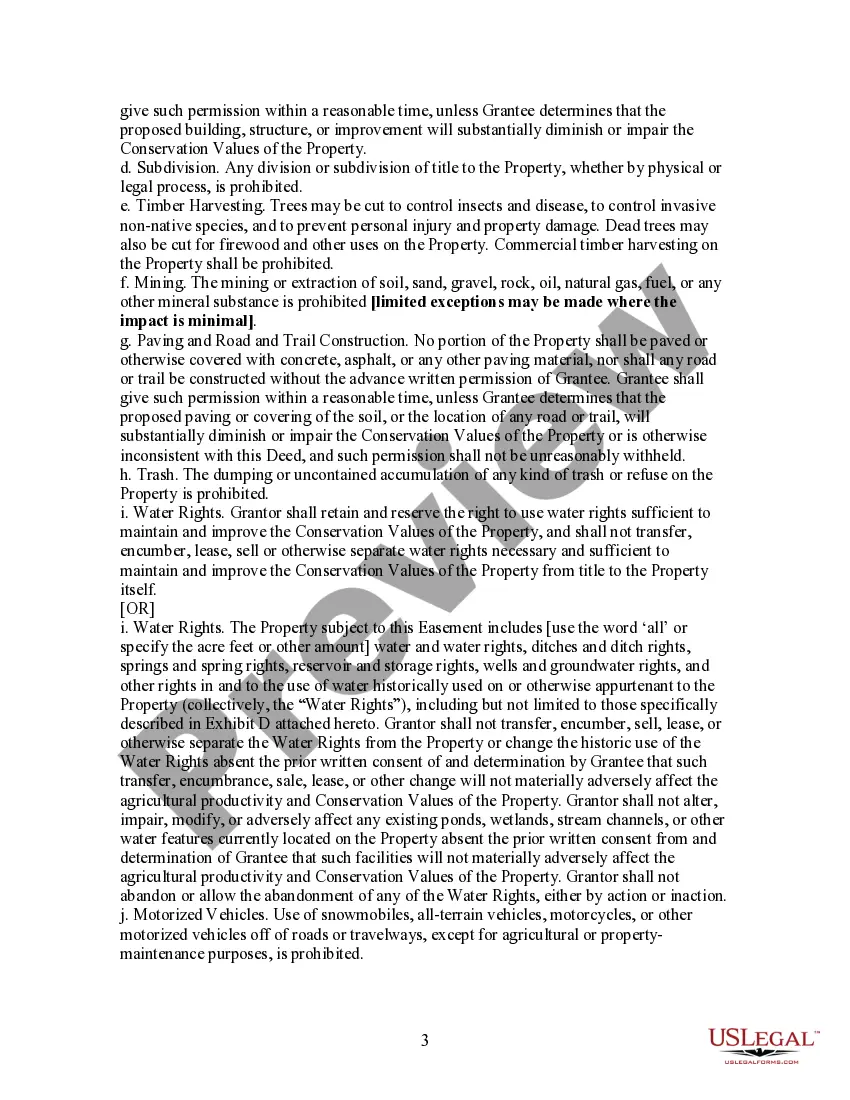
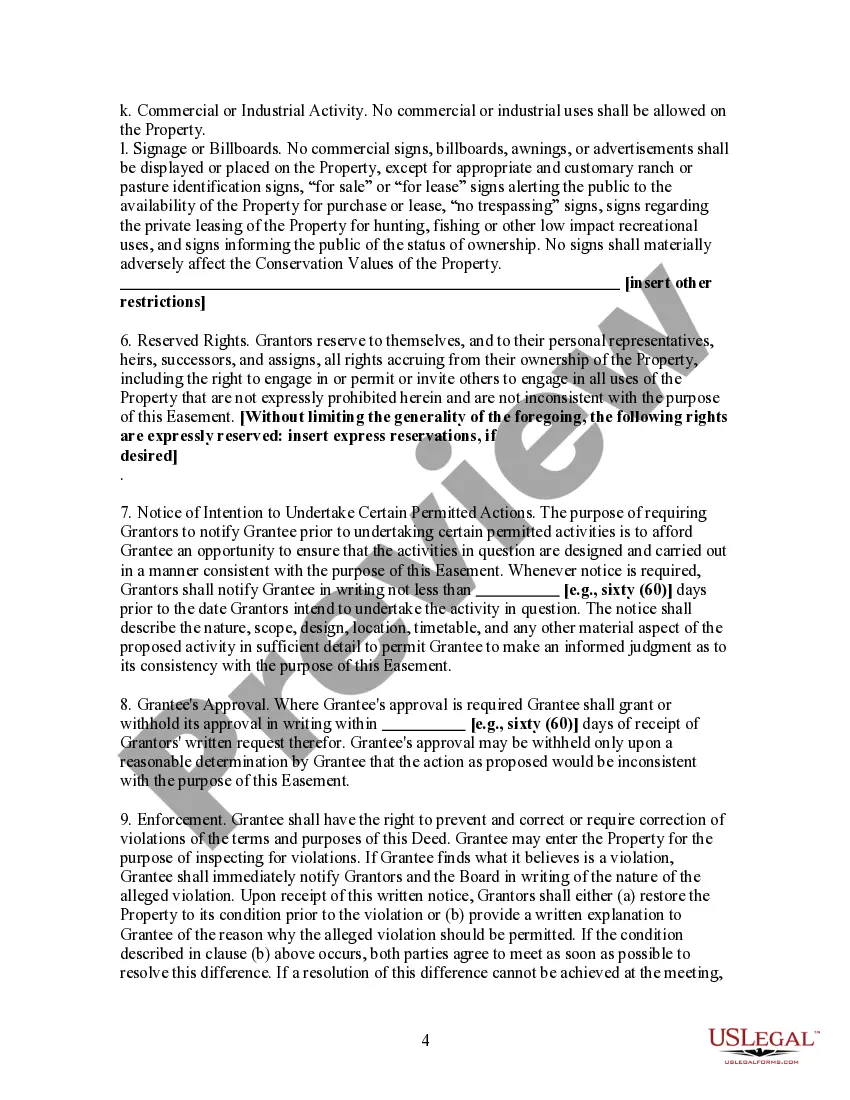
- Prohibited Uses: Lists activities that are not allowed on the property to protect its conservation values.
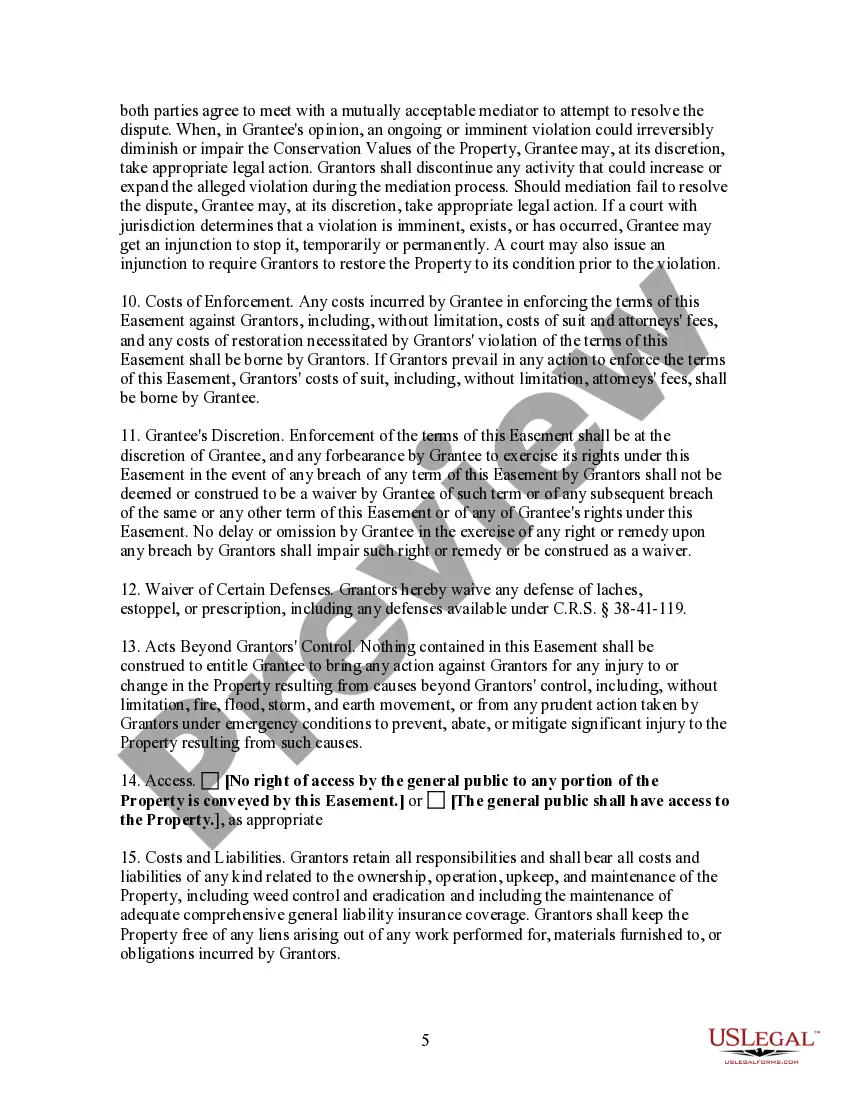
- Enforcement: Outlines rights and methods available to enforce the terms of the easement.
When to use this form
This form is ideal for property owners, such as individuals or organizations, who want to ensure that their land is used in a manner consistent with conserving its natural resources. It is particularly relevant for agricultural land, forests, wetlands, or areas with significant wildlife habitat. Additionally, it can be used when a property owner seeks potential tax benefits related to charitable contributions for conservation.
Who can use this document
This form is intended for:
- Private landowners interested in conserving their land.
- Nonprofit organizations focused on environmental protection.
- State or local government entities managing public lands.
- Trustees or guardians of land with conservation purposes.
How to complete this form
- Identify the parties involved: Clearly specify the grantor (landowner) and grantee (often a nonprofit or governmental entity).
- Describe the property: Provide detailed information about the property subject to the conservation easement.
- Specify the conservation values: Clearly outline the specific conservation goals intended to be protected.
- Include prohibited uses: List any activities or developments that will not be allowed on the property.
- Obtain necessary signatures: Ensure all parties sign the easement and have it notarized if required.
Notarization guidance
Yes, this form must be notarized to be legally valid. US Legal Forms offers integrated online notarization services, which provide 24/7 availability through secure video calls, ensuring your document is properly notarized without the need for in-person visits.
Get your form ready online
Our built-in tools help you complete, sign, share, and store your documents in one place.
Make edits, fill in missing information, and update formatting in US Legal Forms—just like you would in MS Word.
Download a copy, print it, send it by email, or mail it via USPS—whatever works best for your next step.
Sign and collect signatures with our SignNow integration. Send to multiple recipients, set reminders, and more. Go Premium to unlock E-Sign.
If this form requires notarization, complete it online through a secure video call—no need to meet a notary in person or wait for an appointment.
We protect your documents and personal data by following strict security and privacy standards.

Make edits, fill in missing information, and update formatting in US Legal Forms—just like you would in MS Word.

Download a copy, print it, send it by email, or mail it via USPS—whatever works best for your next step.

Sign and collect signatures with our SignNow integration. Send to multiple recipients, set reminders, and more. Go Premium to unlock E-Sign.

If this form requires notarization, complete it online through a secure video call—no need to meet a notary in person or wait for an appointment.

We protect your documents and personal data by following strict security and privacy standards.
Avoid these common issues
- Failing to document the property's current condition through a Baseline Documentation Report.
- Neglecting to specify prohibited uses clearly, leading to future disputes.
- Not obtaining all necessary signatures or omitting to have the document notarized if needed.
Why use this form online
- Convenience: Access and download the form anytime, saving time compared to traditional methods.
- Editability: Easily fill in details and make necessary changes before finalizing the document.
- Reliability: Legal forms are drafted by licensed attorneys, ensuring adherence to applicable laws.
Summary of main points
- A conservation easement protects specific land uses to maintain its ecological and conservation value.
- The agreement involves both grantors and grantees, with specific rights and restrictions outlined.
- Proper documentation and defining prohibited uses are critical to the effectiveness of the easement.
Looking for another form?
Form popularity
FAQ
Generally, it is quite difficult to remove land from a conservation easement, as these agreements are intended to be permanent. However, in certain circumstances, modifications may be possible through legal channels. Engaging with a knowledgeable attorney can help you navigate the complexities surrounding a Colorado Conservation Easement and its potential modifications.
Some downsides of a conservation easement include the potential reduction in property value and limited control over land use. Landowners might find these restrictions confining, especially if their plans change over time. Therefore, before entering a Colorado Conservation Easement, it's wise to consult with experts to understand all implications.
While conservation easements offer many benefits, they can also impose restrictions that limit a property owner's use of their land. These limitations may affect future development, resale potential, or land income opportunities. It is crucial for landowners to carefully weigh these disadvantages against the advantages provided by a Colorado Conservation Easement.
Removing land from a conservation easement is challenging and often requires a legal process. Generally, the easement is designed to be permanent, but if there are specific reasons, landowners may petition for its modification. Consulting legal experts familiar with Colorado Conservation Easement law can provide clarity and guidance on this matter.
Typically, a conservation easement is intended to be permanent, meaning it remains in effect even if the property changes ownership. This permanence helps ensure that the conservation values protected by the easement are upheld for generations. However, certain circumstances may lead to modifications or termination, so it's vital to understand the terms of your Colorado Conservation Easement.
While this question pertains to New Hampshire, it's important to note that Colorado Conservation Easements fall under different state laws. Each state has its own regulations, so it's advisable to consult a legal professional familiar with Colorado's specific statutes regarding conservation easements. If you're considering a conservation easement in Colorado, understanding these laws is crucial.
Colorado Conservation Easements are voluntary agreements between landowners and qualified organizations or government entities. These agreements limit certain property uses to preserve the land's conservation values, such as wildlife habitat or agricultural land. By granting a conservation easement, the landowner can also enjoy tax benefits while protecting their property for future generations.
In Colorado, a property owner generally cannot block an easement once it has been established legally. However, if there are specific terms or challenges regarding the easement's use, property owners may consult legal experts to explore their options. It's essential to understand the initial agreement and any applicable laws governing the Colorado Conservation Easement.
To report a Colorado Conservation Easement, you must first gather all documentation related to the easement. This includes legal descriptions, maps, and agreements with the land trust. Once your documents are ready, you can submit them to the appropriate state agency or local government. Using platforms like uslegalforms can simplify this process by providing the necessary forms and guidelines for successful reporting.
One significant disadvantage of a Colorado Conservation Easement is the permanent restriction it places on property use. Once you establish an easement, you cannot change its terms without the approval of the holder. This limitation can impact future land development plans, so careful consideration is essential. It’s vital to evaluate your long-term goals before proceeding.