Colorado Letter from Tenant to Landlord containing Notice to landlord to cease retaliatory decrease in services
What is this form?
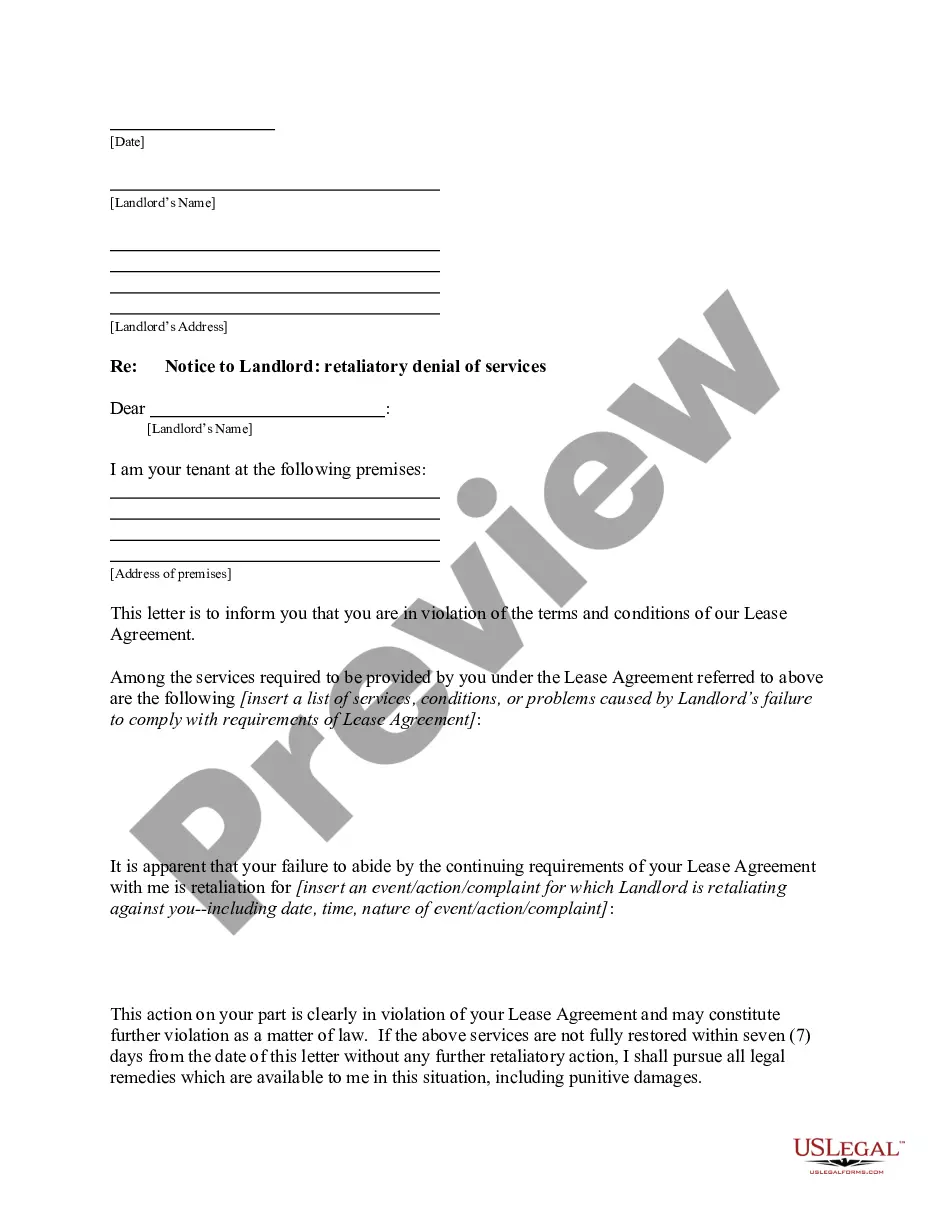
This form is a letter from a tenant to a landlord, formally requesting that the landlord cease any retaliatory decreases in services as outlined in the lease agreement. Its primary purpose is to inform the landlord that their actions may be in violation of the lease terms and could also breach rental laws. This letter serves as an essential notification and differs from other tenant-landlord communication by addressing retaliatory actions specifically tied to the tenant's rights under the lease agreement.
Key components of this form
- A clear statement identifying the tenant's request to the landlord.
- A list of specific services or conditions that the landlord is failing to provide.
- A reminder of the legal obligations as stated in the lease agreement.
- A declaration that the landlord's actions may be retaliatory and a breach of law.
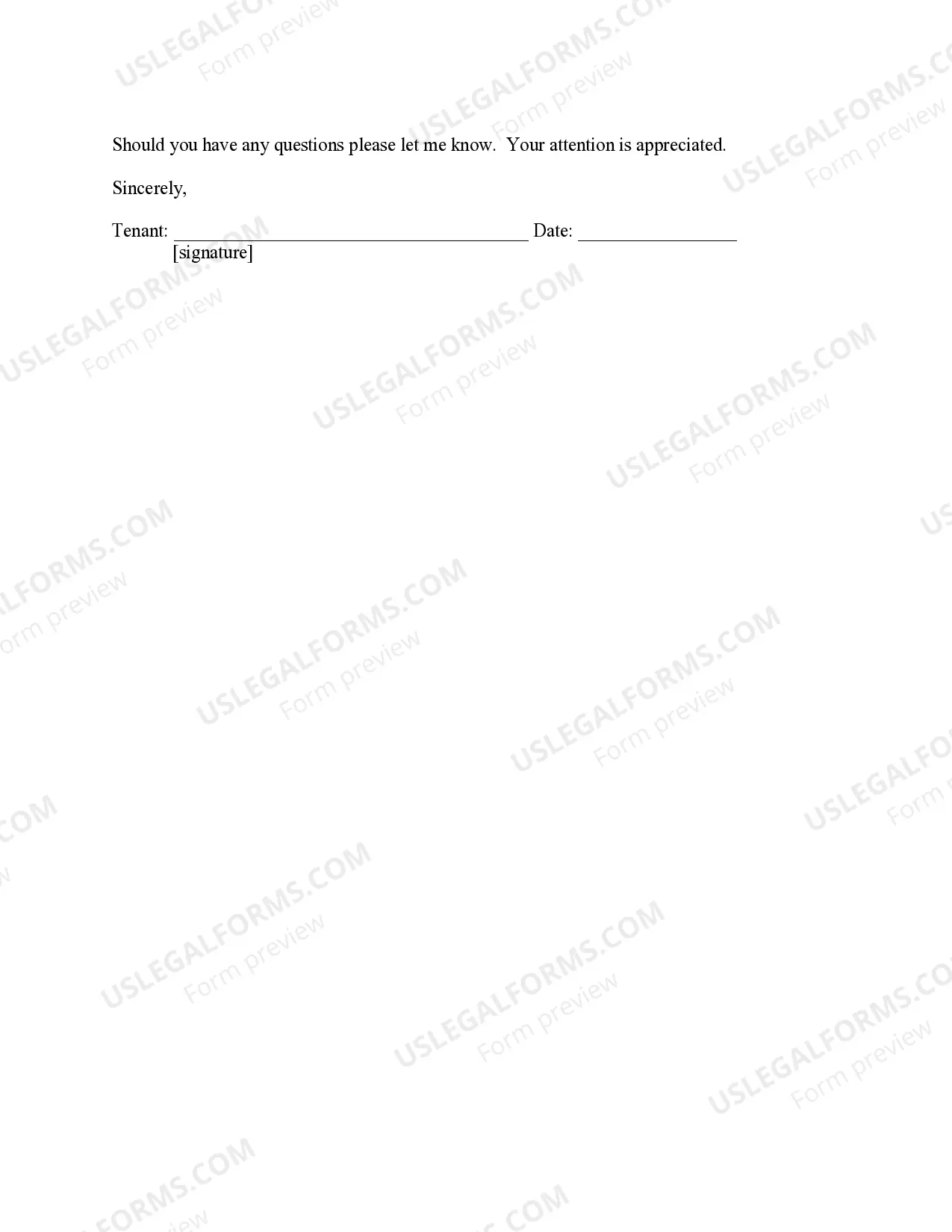
- Signature and date fields for the tenant to finalize the notice.


When to use this document
This letter should be used when a tenant believes that their landlord is reducing services due to retaliatory reasons, such as the tenant exercising their legal rights, complaining about conditions, or reporting the landlord for violations. It is a proactive step to formally address and document concerns before escalating matters legally.
Who can use this document
- Tenants who believe their landlord has retaliated against them by reducing agreed-upon services.
- Individuals residing in rental properties who want to assert their rights under the lease agreement.
- Renters seeking to document their concerns before pursuing further legal action.
Completing this form step by step
- Identify the parties involved, including the tenant's name and the landlord's name.
- Specify the property address where the lease agreement applies.
- List the specific services that the landlord is failing to provide.
- Include any relevant details or conditions related to the lease agreement.
- Sign and date the letter to formally notify the landlord.
Notarization requirements for this form
This form does not typically require notarization unless specified by local law. Tenants should check their local regulations to ensure compliance.
Get your form ready online
Our built-in tools help you complete, sign, share, and store your documents in one place.
Make edits, fill in missing information, and update formatting in US Legal Forms—just like you would in MS Word.
Download a copy, print it, send it by email, or mail it via USPS—whatever works best for your next step.
Sign and collect signatures with our SignNow integration. Send to multiple recipients, set reminders, and more. Go Premium to unlock E-Sign.
If this form requires notarization, complete it online through a secure video call—no need to meet a notary in person or wait for an appointment.
We protect your documents and personal data by following strict security and privacy standards.

Make edits, fill in missing information, and update formatting in US Legal Forms—just like you would in MS Word.

Download a copy, print it, send it by email, or mail it via USPS—whatever works best for your next step.

Sign and collect signatures with our SignNow integration. Send to multiple recipients, set reminders, and more. Go Premium to unlock E-Sign.

If this form requires notarization, complete it online through a secure video call—no need to meet a notary in person or wait for an appointment.

We protect your documents and personal data by following strict security and privacy standards.
Common mistakes to avoid
- Not listing specific services or conditions affected by the landlord's actions.
- Failing to include the date on the letter.
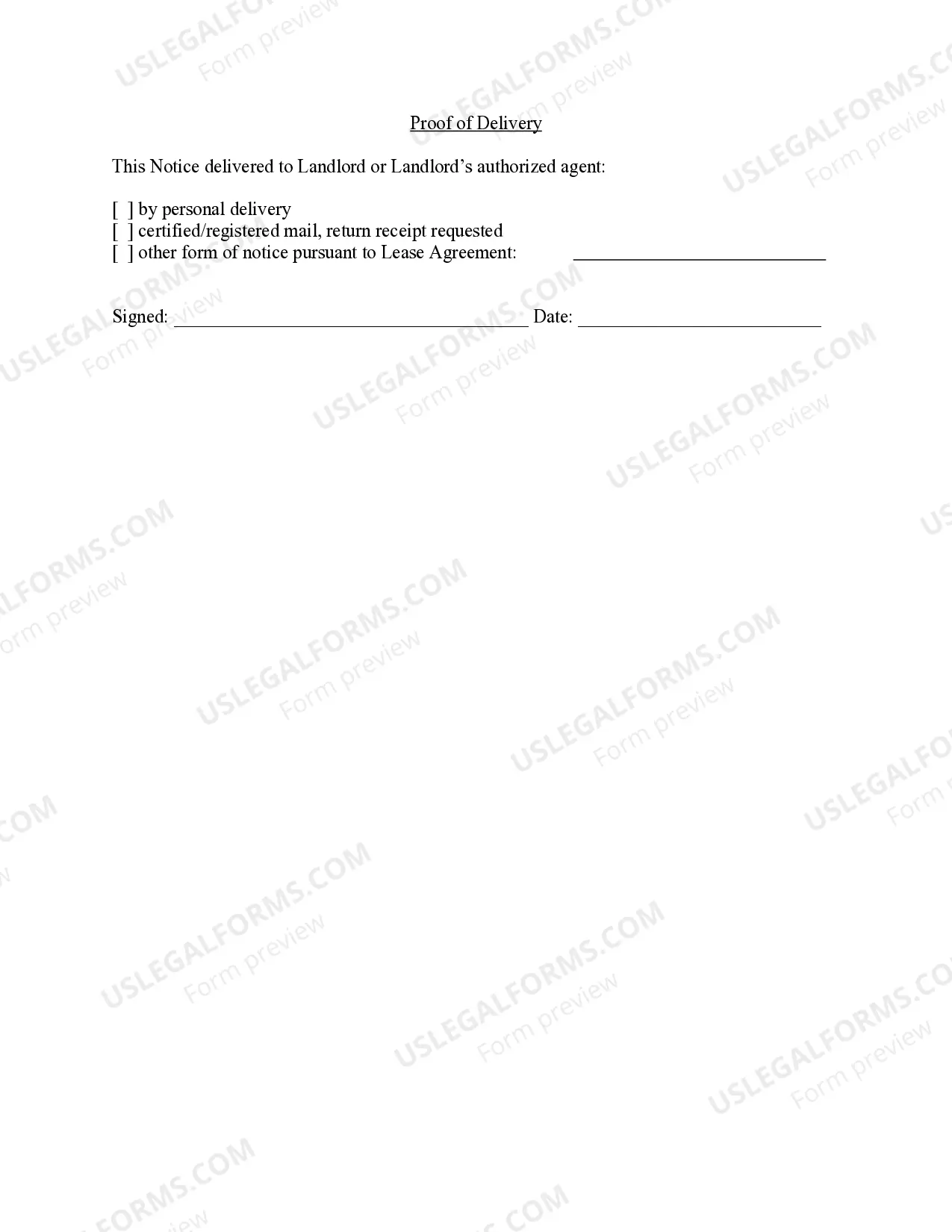
- Not providing a proper method of delivery to ensure the landlord receives the notice.
- Using vague language that does not clearly state the issue.
Why use this form online
- Convenience of downloading the form immediately after completion.
- Editable format to customize the letter to the tenant's specific situation.
- Access to legally drafted templates, ensuring the notice meets legal standards.
- Ability to save and keep records of all communications with the landlord.
Legal use & context
- This letter serves as an important document that can be used in legal proceedings to demonstrate the landlord's refusal to comply with the lease.
- Sending this notice preserves the tenant's rights and sets the groundwork for potential further action if the issue is not resolved.
- Itâs advisable to keep a copy of this letter and any responses for your records, as they may be beneficial in any future disputes.
Looking for another form?
Form popularity
FAQ
Retaliation eviction occurs when a landlord seeks to evict a tenant in response to the tenant exercising their legal rights, such as reporting health and safety violations. This type of eviction is illegal under Colorado law, aimed at protecting tenants from unfair treatment. If you believe you are facing retaliation, it's important to document the events and consider sending a Colorado Letter from Tenant to Landlord containing Notice to landlord to cease retaliatory decrease in services to assert your rights.
Recent laws in Colorado provide enhanced protections for renters, particularly in terms of eviction processes and legal notice requirements. These laws aim to reduce unjust evictions and ensure tenants can live safely without fear of retaliation. If you need clarity on how these changes affect you, a Colorado Letter from Tenant to Landlord containing Notice to landlord to cease retaliatory decrease in services can be a helpful tool in advocating for your rights.
Landlord harassment in Colorado can include actions intended to intimidate or coerce a tenant. Examples include excessive visits without notice, shutting off utilities, or making unreasonable demands. If you encounter such behavior, you may want to consider sending a Colorado Letter from Tenant to Landlord containing Notice to landlord to cease retaliatory decrease in services to formally address the issue and remind the landlord of their obligations.
Landlords commonly issue a notice to quit or a formal eviction when tenants breach the terms of their lease. This notice gives the tenant a specific time period to correct the issue or vacate the property. It is crucial for tenants to understand their rights and options, which is where a Colorado Letter from Tenant to Landlord containing Notice to landlord to cease retaliatory decrease in services can help articulate concerns about the landlord's actions.
The retaliation law in Colorado protects tenants from adverse actions by landlords when tenants exercise their legal rights. If a tenant exercises their rights regarding repairs or complaints, a landlord cannot retaliate by raising rent, reducing services, or evicting the tenant. If you feel that your landlord has retaliated against you, consider drafting a Colorado Letter from Tenant to Landlord containing Notice to landlord to cease retaliatory decrease in services to communicate your rights effectively.
To write a formal letter to your landlord, start by stating your name and address, followed by your landlord's name and address. Clearly outline the purpose of your letter, such as notifying them with a Colorado Letter from Tenant to Landlord containing Notice to landlord to cease retaliatory decrease in services. Be direct and respectful, ensuring you logically explain your concerns. Finally, include a polite closing statement, and remember to keep a copy for your records.
The most common landlord-tenant dispute often revolves around maintenance issues and the condition of the rental property. Tenants may feel that their landlord is not fulfilling their legal obligations to maintain a safe and habitable environment. Addressing these concerns in writing, using a Colorado Letter from Tenant to Landlord containing Notice to landlord to cease retaliatory decrease in services, can help clarify expectations and resolve disputes effectively.
Yes, you can sue your landlord for violating your lease. If your landlord fails to comply with the terms of the agreement, you may have grounds to file a lawsuit. Be sure to document all interactions and keep records, including a Colorado Letter from Tenant to Landlord containing Notice to landlord to cease retaliatory decrease in services, as this can strengthen your case.
To write a powerful complaint letter, begin with a clear description of the issue at hand, supported by facts and examples. Use a confident yet courteous tone, and avoid emotional language that might detract from your main points. Clearly state what resolution you are seeking, which will help guide the recipient toward addressing your concerns effectively.
An example of a letter from a tenant to a landlord might start with a formal salutation addressing the landlord by name. The body of the letter can clearly state the tenant's issue, such as the need for repairs or a request for a rent reduction. Including specific details and a polite closing can enhance the letter's effectiveness—creating a clear and professional communication.