California Living Trust for individual, Who is Single, Divorced or Widow (or Widower) with Children
Overview of this form
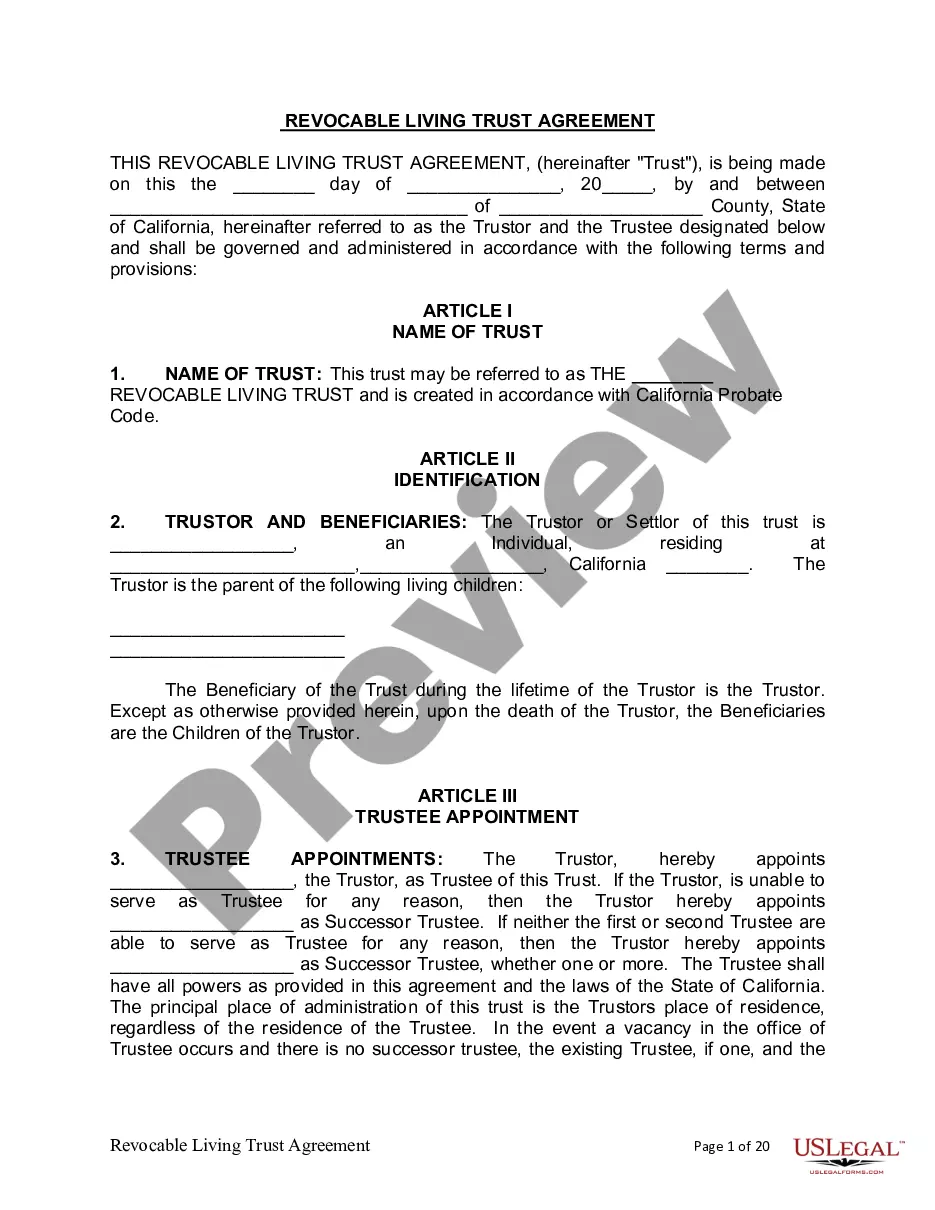
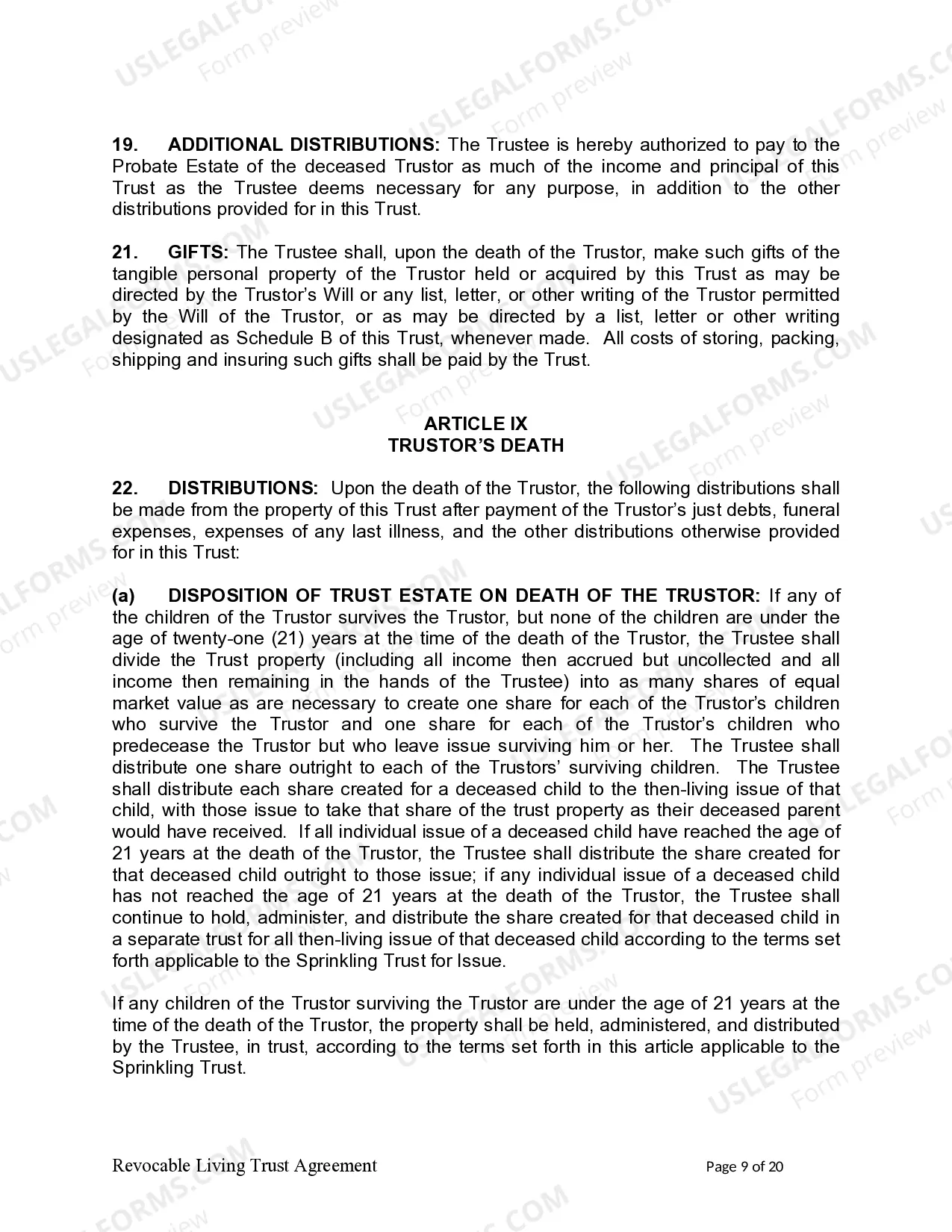
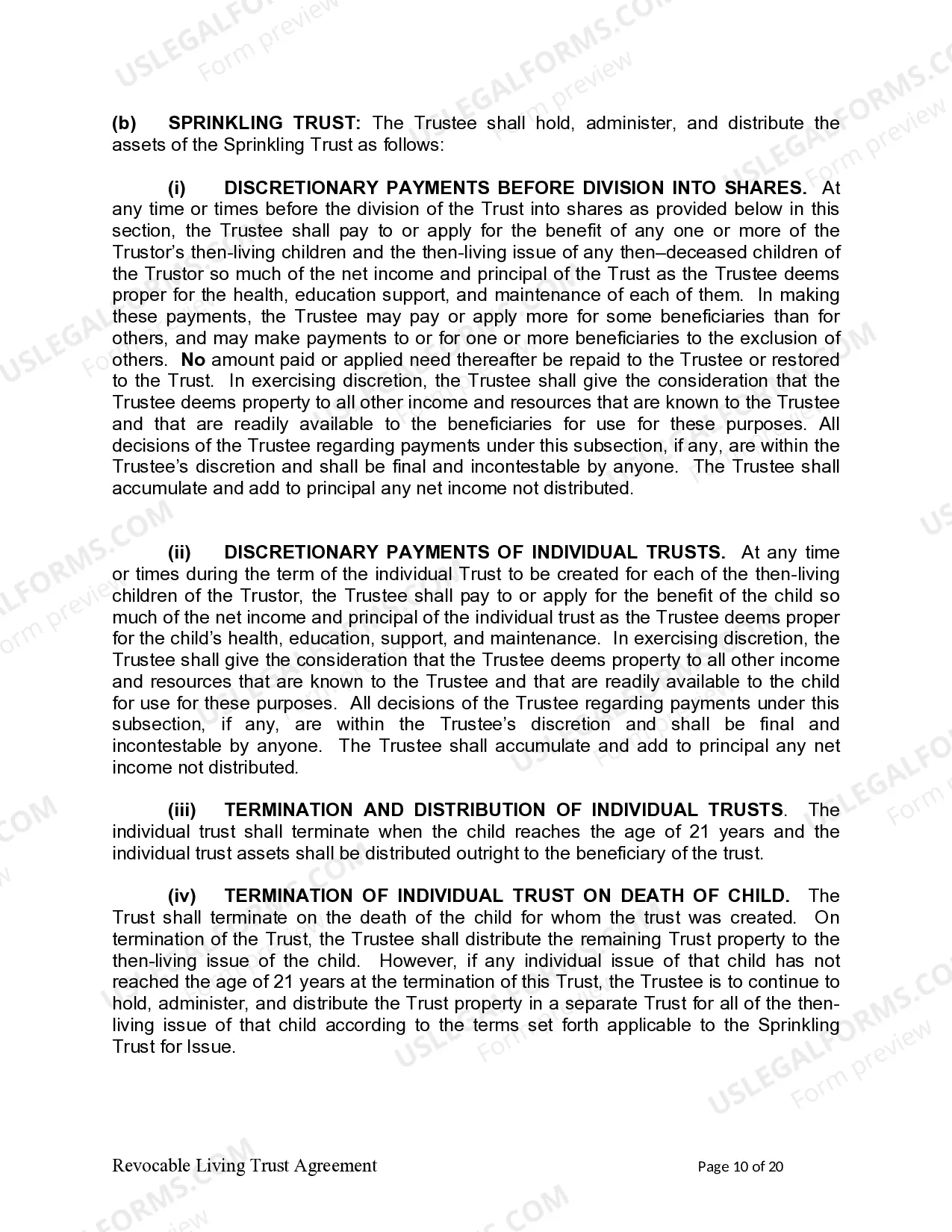
This form is a revocable living trust specifically designed for individuals who are single, divorced, or widowed and have children. A living trust allows you to manage your assets during your lifetime and ensures they are distributed according to your wishes after your death, avoiding the lengthy probate process. Unlike a will, which requires a court to enforce and administer, a living trust provides more control and privacy for your estate planning needs.
Key parts of this document
- Name of Trust: Identifies the trust and its legal name.
- Trustor and Beneficiaries: Lists the creator of the trust and outlines the beneficiaries, typically the children of the trustor.
- Trustee Appointment: Designates a trustee to manage the trust and provisions for successor trustees.
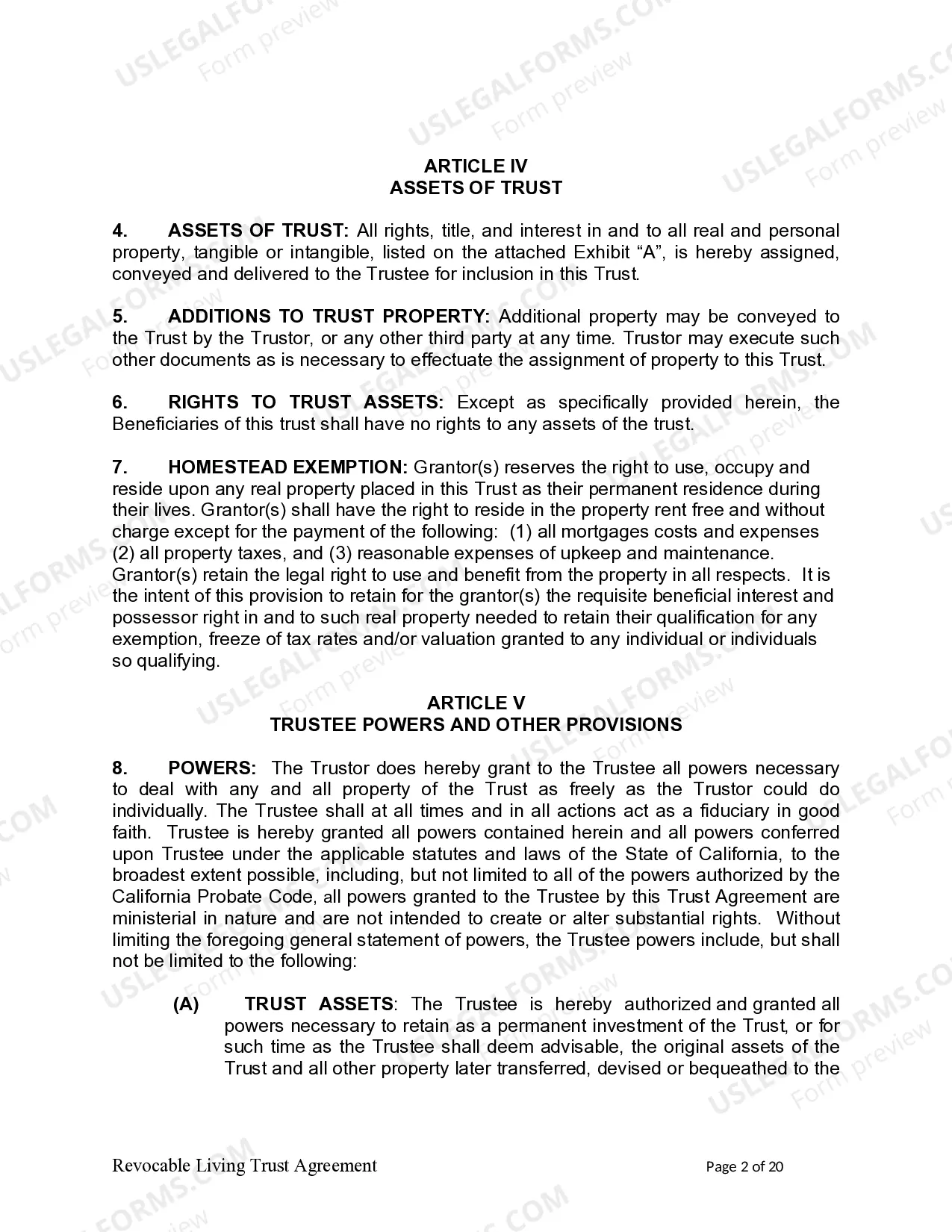
- Assets of Trust: Details the assets included in the trust and the process for adding more assets.
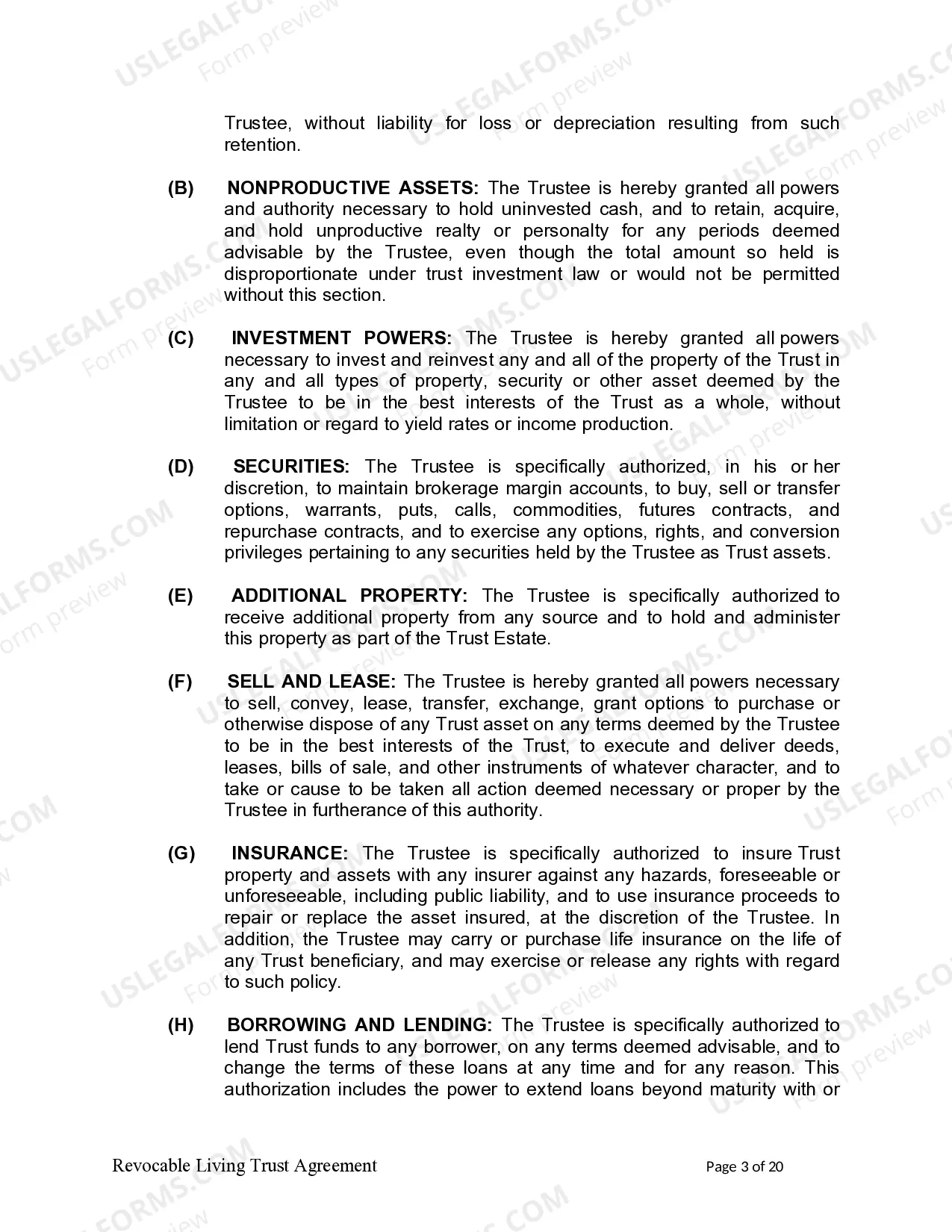
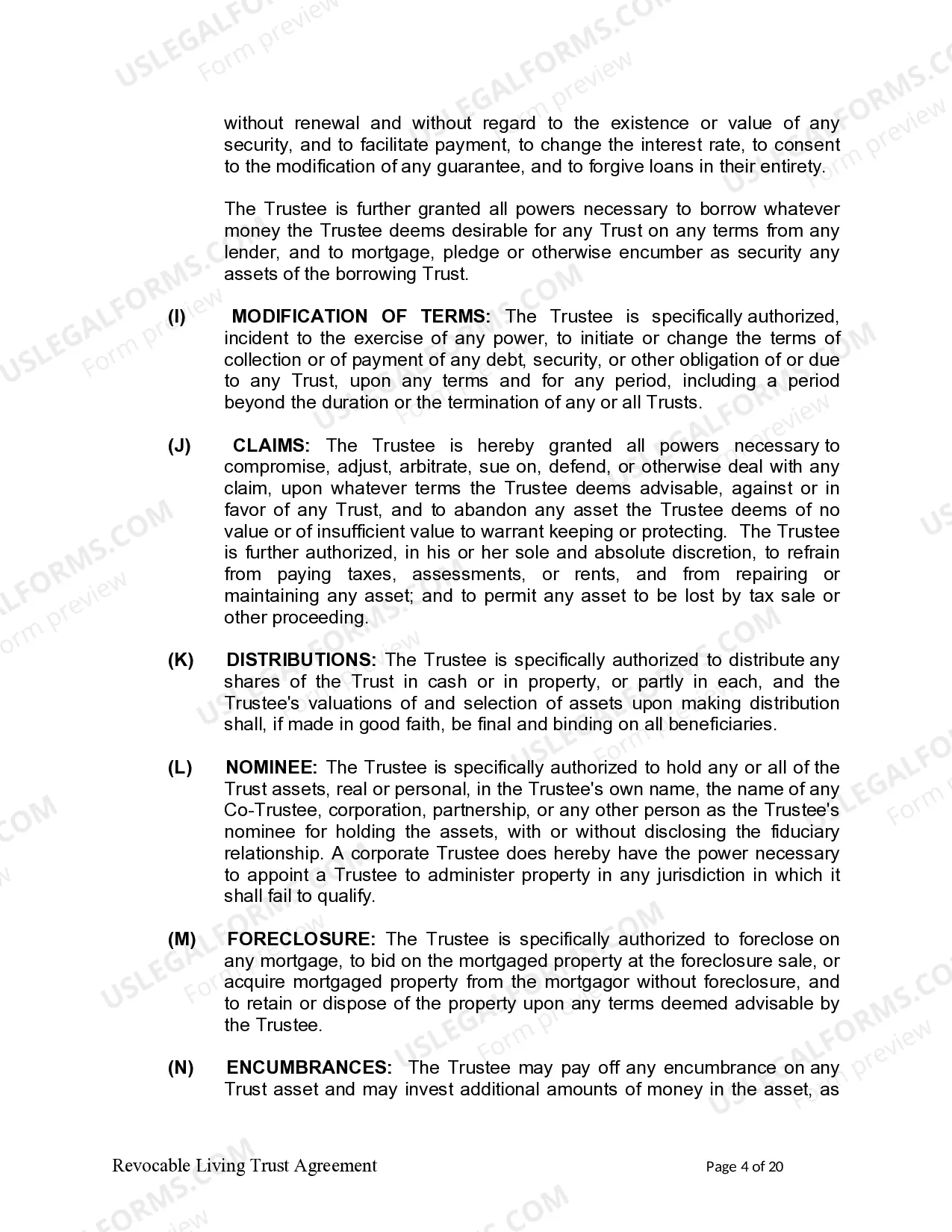
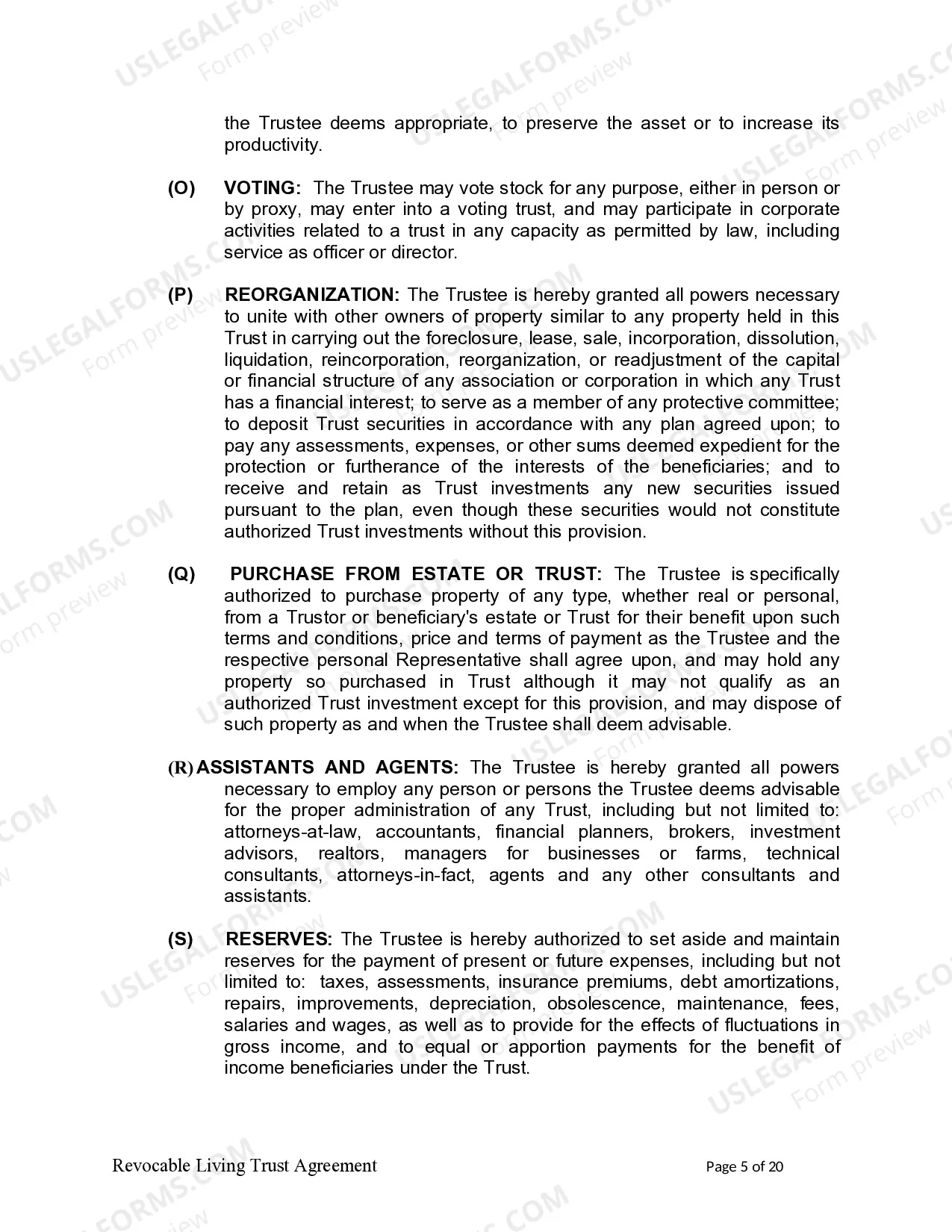
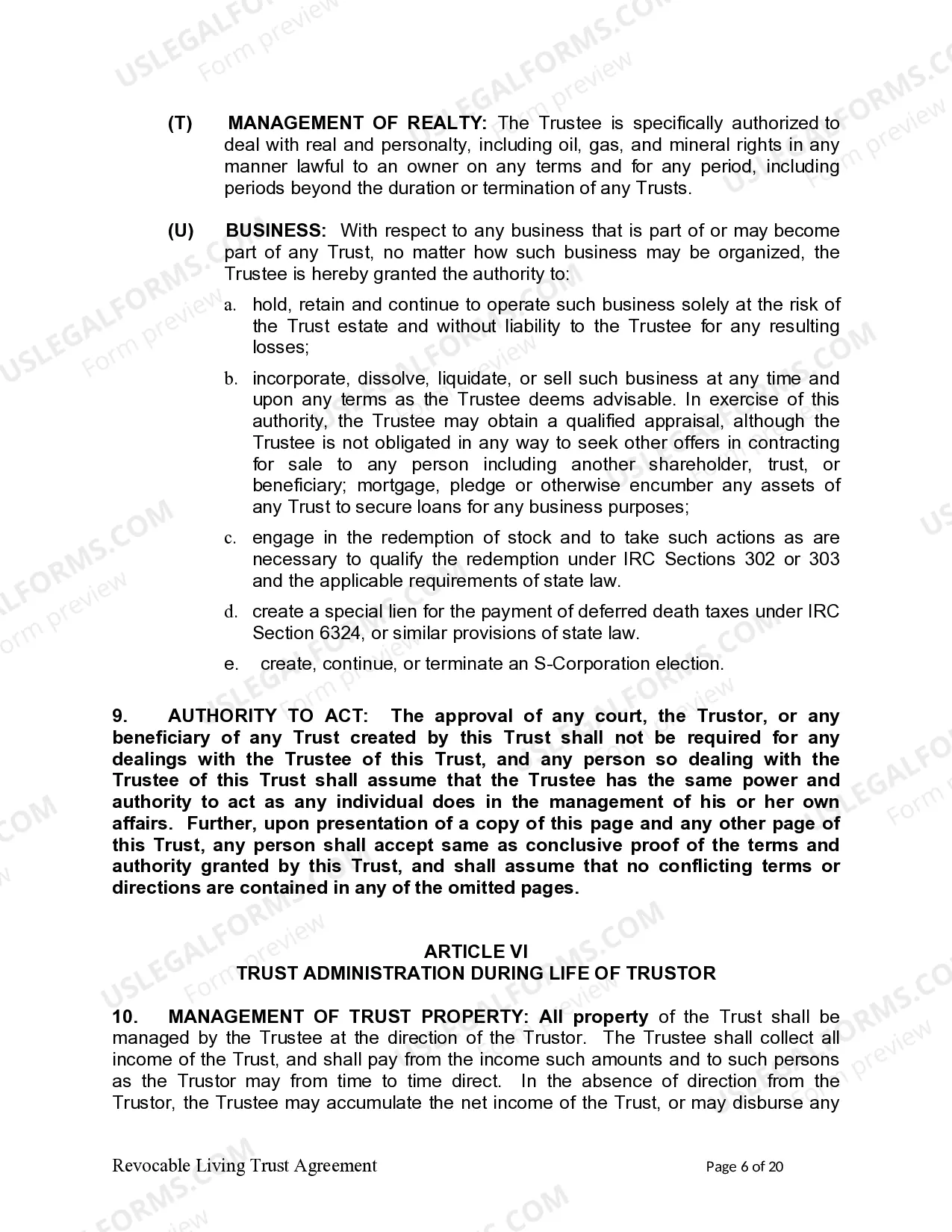
- Trustee Powers: Grants the trustee specific powers to manage trust assets effectively.
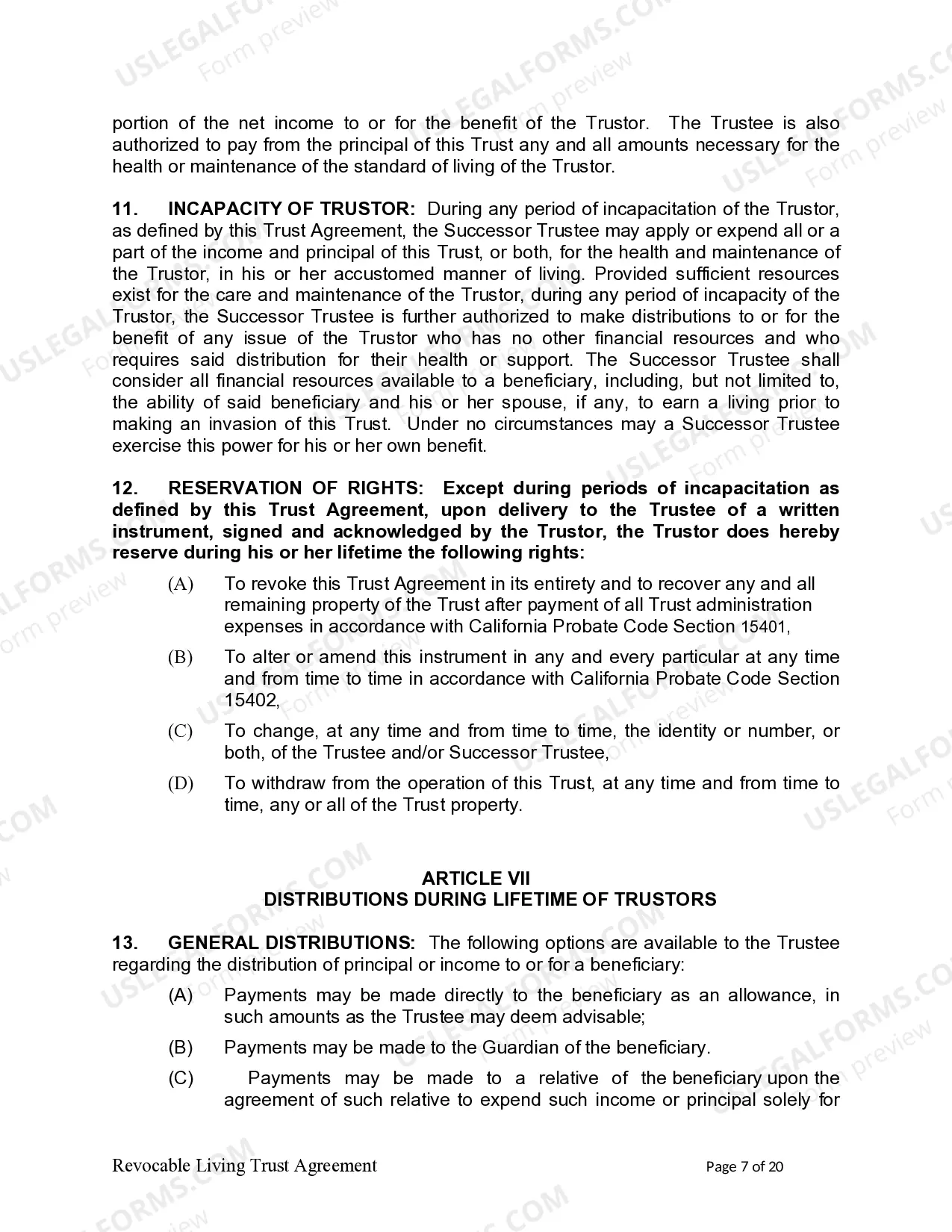
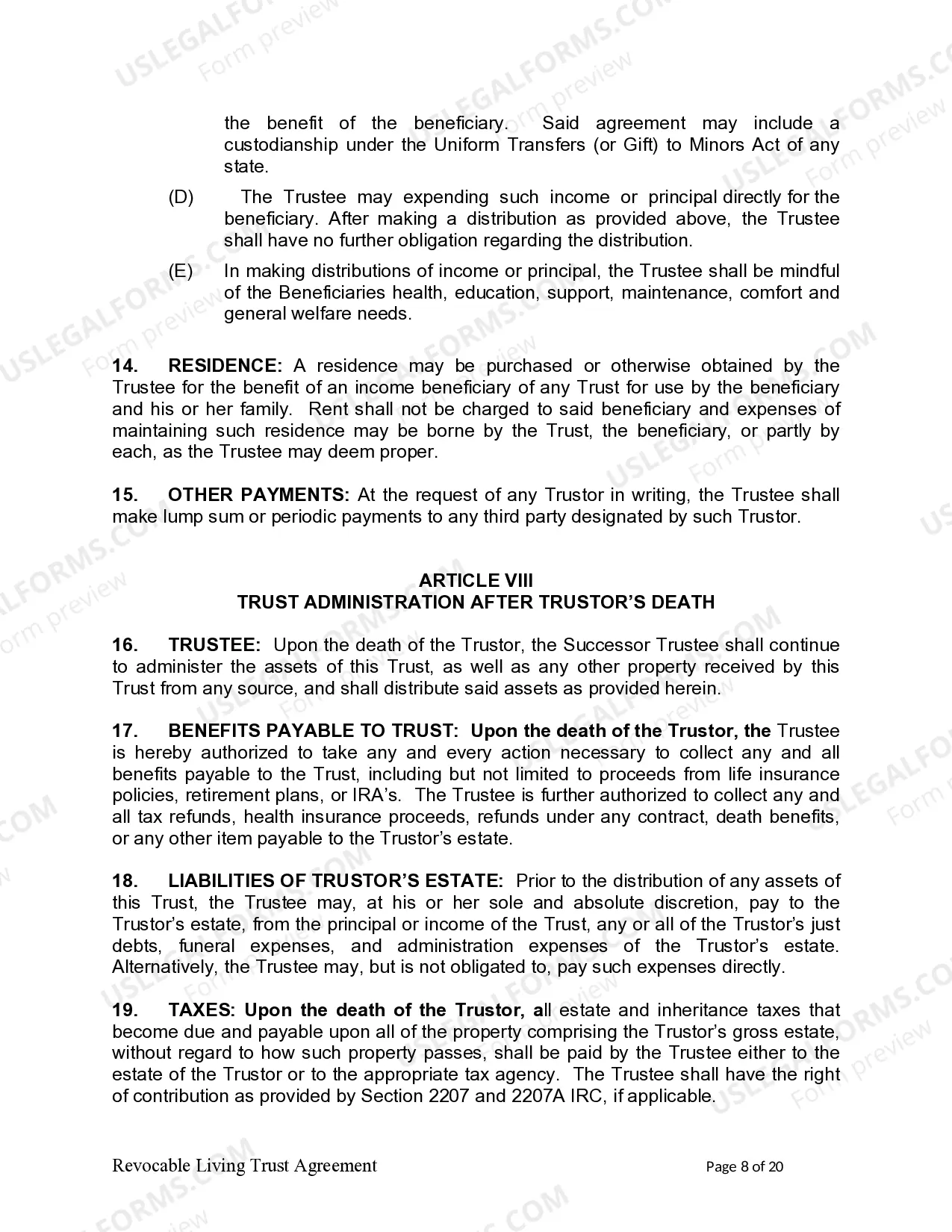
- Distributions: Outlines how and when assets will be distributed upon the trustor's death.





When to use this document
This form is ideal for individuals seeking to manage their estate while minimizing probate issues. You should consider using a living trust if you want to ensure your children are provided for after your passing, wish to maintain control over your assets, or seek to avoid the costs and delays associated with probate. This form is particularly important for those who may have complexities in their family arrangements, such as being divorced or widowed.
Intended users of this form
- Individuals who are single, divorced, or widowed.
- Parents with one or more children.
- Anyone looking to simplify their estate planning process and avoid probate.
- People who wish to retain full control over their assets during their lifetime.
How to complete this form
- Identify the trustor by entering your full name and address.
- Specify the name of the trust you are creating at the top of the form.
- List your children as beneficiaries of the trust.
- Designate yourself as the trustee and name any successor trustees if necessary.
- Detail the assets you wish to include in the trust, listing them clearly.
- Sign and date the document, ensuring it complies with local notarization requirements, if applicable.
Is notarization required?
This form does not typically require notarization to be legally valid. However, some jurisdictions or document types may still require it. US Legal Forms provides secure online notarization powered by Notarize, available 24/7 for added convenience.
Get your form ready online
Our built-in tools help you complete, sign, share, and store your documents in one place.
Make edits, fill in missing information, and update formatting in US Legal Forms—just like you would in MS Word.
Download a copy, print it, send it by email, or mail it via USPS—whatever works best for your next step.
Sign and collect signatures with our SignNow integration. Send to multiple recipients, set reminders, and more. Go Premium to unlock E-Sign.
If this form requires notarization, complete it online through a secure video call—no need to meet a notary in person or wait for an appointment.
We protect your documents and personal data by following strict security and privacy standards.

Make edits, fill in missing information, and update formatting in US Legal Forms—just like you would in MS Word.

Download a copy, print it, send it by email, or mail it via USPS—whatever works best for your next step.

Sign and collect signatures with our SignNow integration. Send to multiple recipients, set reminders, and more. Go Premium to unlock E-Sign.

If this form requires notarization, complete it online through a secure video call—no need to meet a notary in person or wait for an appointment.

We protect your documents and personal data by following strict security and privacy standards.
Common mistakes to avoid
- Failing to list all relevant assets that should be placed in the trust.
- Not designating a successor trustee, leading to complications if the initial trustee is unable to serve.
- Inadequately specifying how to manage and distribute trust assets.
- Not updating the trust after significant life events, such as marriage, divorce, or the birth of a child.
Why complete this form online
- Convenience of completing the form at your own pace and from home.
- Editable format that allows for adjustments as needed.
- Access to legal templates created by licensed attorneys, ensuring compliance with current laws.
- Easy storage and retrieval of your trust documentation when needed.
Summary of main points
- This Living Trust form is beneficial for single, divorced, or widowed individuals with children.
- The trust helps avoid probate, ensuring your wishes are followed with minimal delay after your passing.
- Make sure to accurately fill out all sections and ensure appropriate signatures are obtained.
Glossary of terms used in this form
- Trustor: The individual who creates the trust.
- Trustee: The person responsible for managing the trust assets as specified in the trust document.
- Beneficiary: The individual(s) designated to receive benefits from the trust after the trustor's death.
Looking for another form?

Form popularity
FAQ
It is a revocable living trust designed for individuals who are single, divorced, or widowed with children to manage assets during life and distribute them after death while avoiding probate. The trust names a trustee, lists beneficiaries (typically the children), and outlines how assets are titled and distributed. It’s funded by transferring assets into the trust.
While a trust can help avoid probate and provide control, it can be more costly to set up and maintain than a simple will. It requires funding by transferring assets into the trust and ongoing administration by the trustee, which can add complexity and burden for some families.
Divorce does not automatically dissolve the trust, but an ex-spouse may lose rights as a beneficiary or trustee depending on the trust terms. You should update the trust to remove the ex-spouse as beneficiary and ensure your children remain the intended beneficiaries, and adjust distributions or successor trustees if needed.
In California, a revocable living trust may require careful funding and asset transfers to avoid probate. Setup and ongoing administration can cost more than a simple will, and assets not titled in the trust may still go through probate. This form helps plan distributions and asset management for your children, but funding is essential.
There is no fixed net worth threshold for using this California Living Trust for Individual, Who Is Single, Divorced or Widow With Children. Even modest estates can benefit from probate avoidance and controlled distributions. The decision depends on your goals, assets, and family needs; consult a licensed attorney for tailored guidance.
This trust is revocable, allowing changes or revocation during life, and it provides privacy and probate avoidance by transferring assets into the trust and naming a trustee and distributions. A will typically goes through probate, is public, and does not manage assets during the trustor’s lifetime.