California Notice of Default in Payment of Rent as Warning Prior to Demand to Pay or Terminate for Nonresidential or Commercial Property
What is this form?
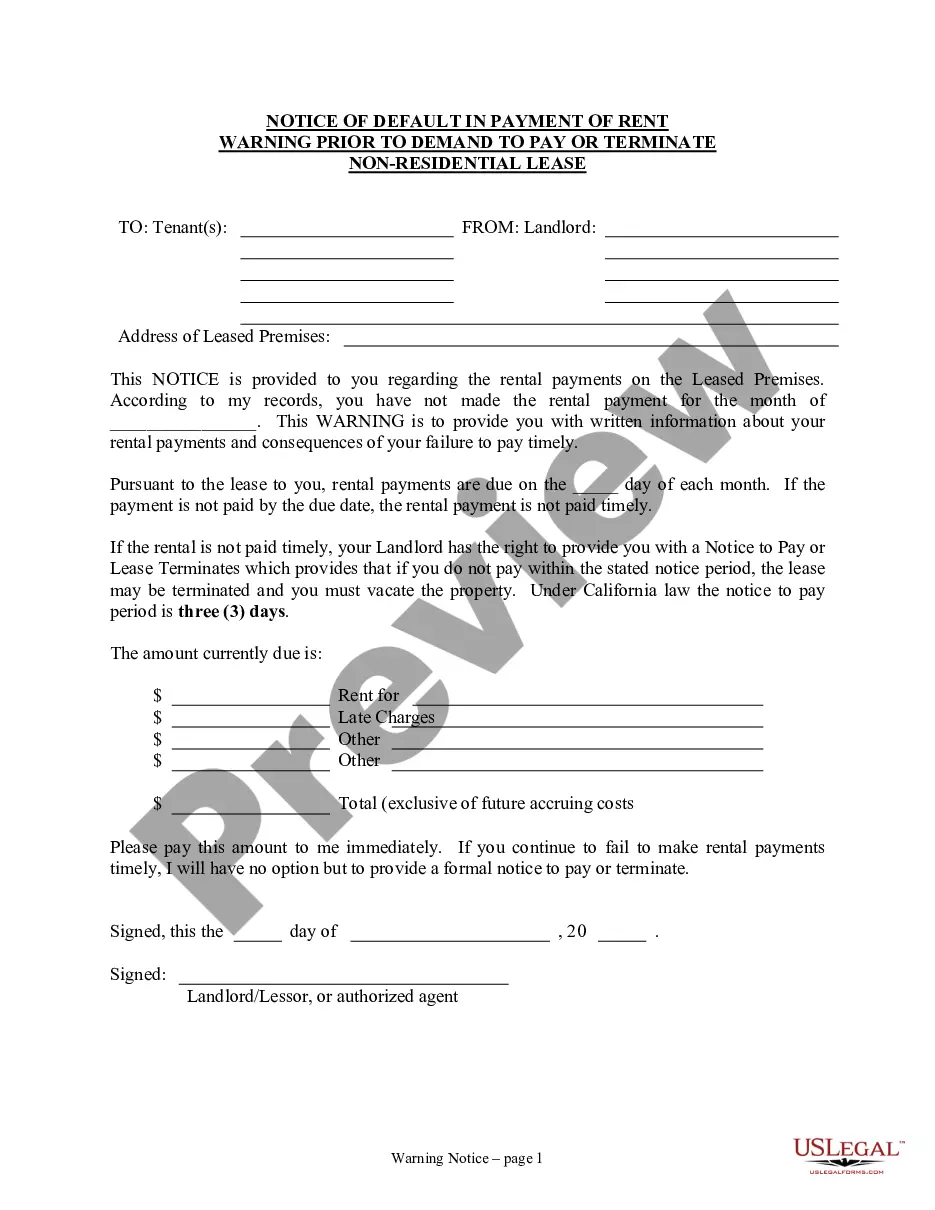
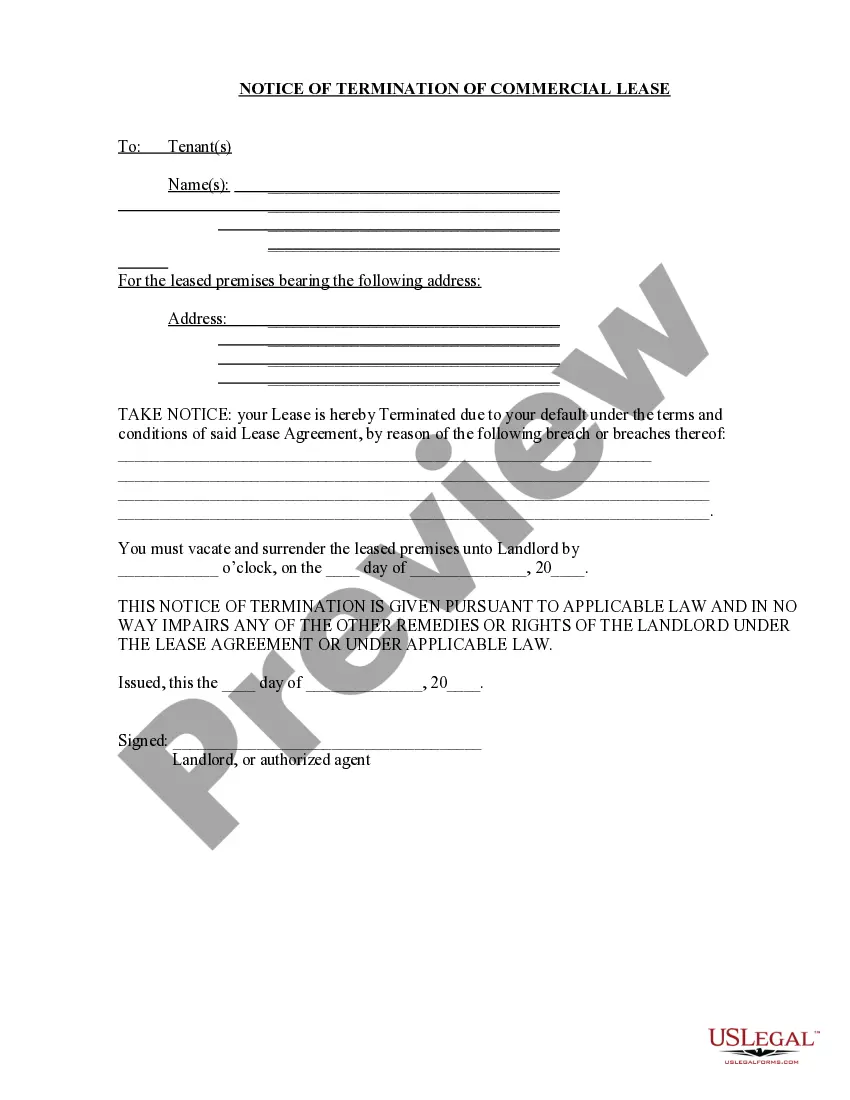
The Notice of Default in Payment of Rent is a legal document used by landlords to inform tenants of their failure to pay rent on time for non-residential or commercial properties. This form serves as a warning before issuing a formal demand to pay rent or terminate the lease. By notifying the tenant about the missed payment and the subsequent consequences, this notice aims to encourage timely payment and clarify the lease terms.
Main sections of this form
- Information about the tenant and landlord.
- Details regarding the leased property.
- Specification of the unpaid rent amount and due dates.
- Statement of consequences if rent is not paid, including potential termination of the lease.
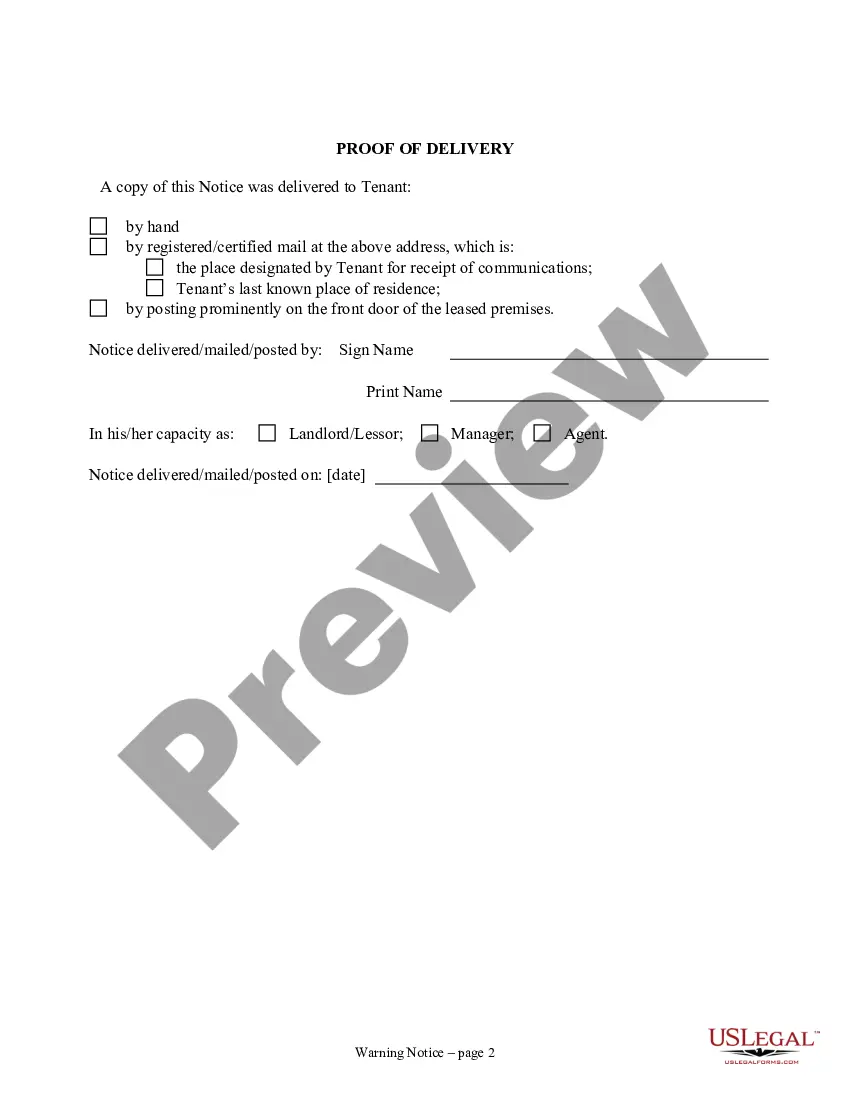
- Proof of delivery section to verify notice receipt.


When this form is needed
This form should be used when a landlord needs to formally notify a tenant about their default in rent payment. It is particularly useful when the landlord wants to remind the tenant of specific payment terms before escalating to a formal demand for payment or lease termination. This can help prevent potential eviction proceedings by providing the tenant an opportunity to resolve the payment issue.
Who should use this form
- Landlords of commercial or non-residential properties.
- Property managers acting on behalf of landlords.
- Anyone involved in a leasing agreement for non-residential properties who needs to enforce rental payment terms.
Completing this form step by step
- Identify the parties by including the landlord's and tenant's full names and addresses.
- Specify the address of the leased premises for clarity.
- Fill in the month and year for which the rent payment is due.
- Clearly state the amount due, including any late charges.
- Sign and date the notice to validate it.
Does this form need to be notarized?
This form usually doesn’t need to be notarized. However, local laws or specific transactions may require it. Our online notarization service, powered by Notarize, lets you complete it remotely through a secure video session, available 24/7.
Get your form ready online
Our built-in tools help you complete, sign, share, and store your documents in one place.
Make edits, fill in missing information, and update formatting in US Legal Forms—just like you would in MS Word.
Download a copy, print it, send it by email, or mail it via USPS—whatever works best for your next step.
Sign and collect signatures with our SignNow integration. Send to multiple recipients, set reminders, and more. Go Premium to unlock E-Sign.
If this form requires notarization, complete it online through a secure video call—no need to meet a notary in person or wait for an appointment.
We protect your documents and personal data by following strict security and privacy standards.

Make edits, fill in missing information, and update formatting in US Legal Forms—just like you would in MS Word.

Download a copy, print it, send it by email, or mail it via USPS—whatever works best for your next step.

Sign and collect signatures with our SignNow integration. Send to multiple recipients, set reminders, and more. Go Premium to unlock E-Sign.

If this form requires notarization, complete it online through a secure video call—no need to meet a notary in person or wait for an appointment.

We protect your documents and personal data by following strict security and privacy standards.
Typical mistakes to avoid
- Failing to provide accurate details of the unpaid rent or due dates.
- Not delivering the notice in a manner that is legally recognized.
- Forgetting to sign the notice, which is essential for its validity.
Advantages of online completion
- Convenient access and download from any device.
- Editability to customize the form according to specific situations.
- Reliability, as forms are drafted by licensed attorneys to ensure legal compliance.
Legal use & context
- This form serves as an official warning to tenants and is an important step in the eviction process.
- Using this form may strengthen the landlord's position if further legal action is necessary.
- Compliance with state-specific laws enhances its enforceability in court.
What to keep in mind
- The Notice of Default in Payment of Rent is a critical document for landlords managing non-residential properties.
- It allows landlords to formally notify tenants of unpaid rent and the consequences of continued default.
- Understanding the steps to complete and deliver this form properly can help in maintaining legal rights under the lease agreement.
Looking for another form?
Form popularity
FAQ
Renters in South Carolina have rights that protect them from unfair treatment. These rights include the right to a habitable living space, the right to privacy, and protection against retaliation for exercising their rights. If you encounter issues such as lack of repairs or harassment, it’s advisable to document everything and consult resources like uslegalforms to understand and enforce your rights effectively.
In California, the notice period required to vacate a commercial property typically depends on the lease agreement. Generally, a 30-day notice is standard for month-to-month leases. However, if your lease specifies a different term, you must adhere to that. Always review the lease terms and consider consulting with uslegalforms for guidance on notice requirements.
In a total condemnation the lease is terminated as soon as the condemning party takes possession of the property. This occurs because there is no longer any property to lease. In a partial condemnation, typically both the landlord and the tenant have the option to terminate the lease, usually with 30 days notice.
No. California law allows an owner to terminate a month-to-month tenancy on 30 or 60 days' notice WITHOUT providing a reason.
The rules differ depending on which type of rental agreement exists between landlord and tenant. Under California state law, a landlord can terminate a month-to-month tenancy by serving a 30-day written notice if the tenancy has lasted less than one year, or a 60-day notice if the tenancy has lasted more than one year.
In California now, landlords can evict tenants at the end of their lease without specifying any reason, as long as they give advance notice of 60 days.In fact, many landlords fear what might be more cumbersome evictions in the coming year.
Notice for Termination With Cause. A landlord can terminate a California tenancy early and evict the tenant for a variety of reasons, including failure to pay rent, violating the lease or rental agreement, or committing an illegal act. Before terminating the tenancy, the landlord must give the tenant written notice.
Even if you don't have a lease, a California landlord can't kick you to a curb without warning. If the landlord wants you gone, he's required to give you at least 30 days' notice on a month-to-month tenancy. There are exceptions, though -- circumstances in which the landlord can give you just three days to get out.
Typically, a condemnation clause permits a landlord or a tenant to either terminate the lease or abate the rent in the event of a government "taking" of the leased property.First, the government's action must have a severe economic impact on the premises.
Notice Requirements for California Landlords A landlord can simply give you a written notice to move, allowing you 30 days (60 days if you've lived in the rental a year or more) as required by California law and specifying the date on which your tenancy will end.