California Assignment of Deed of Trust by Corporate Mortgage Holder
Understanding this form
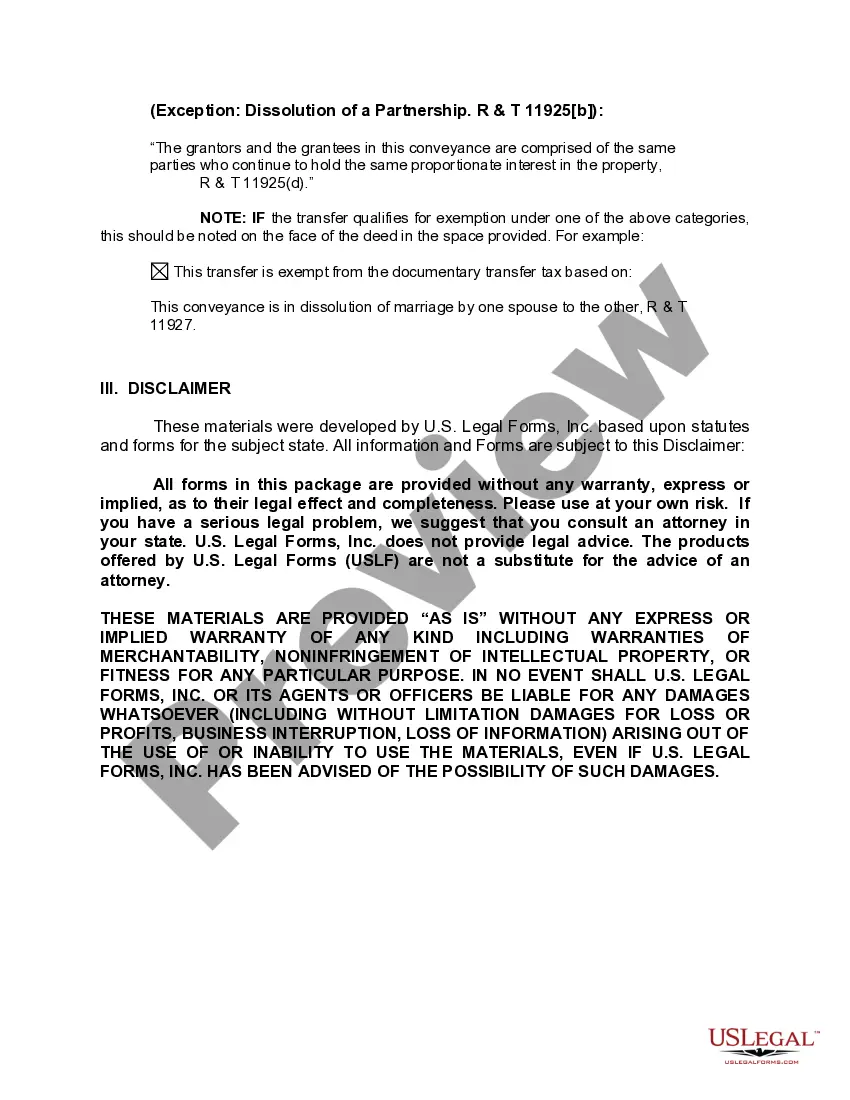
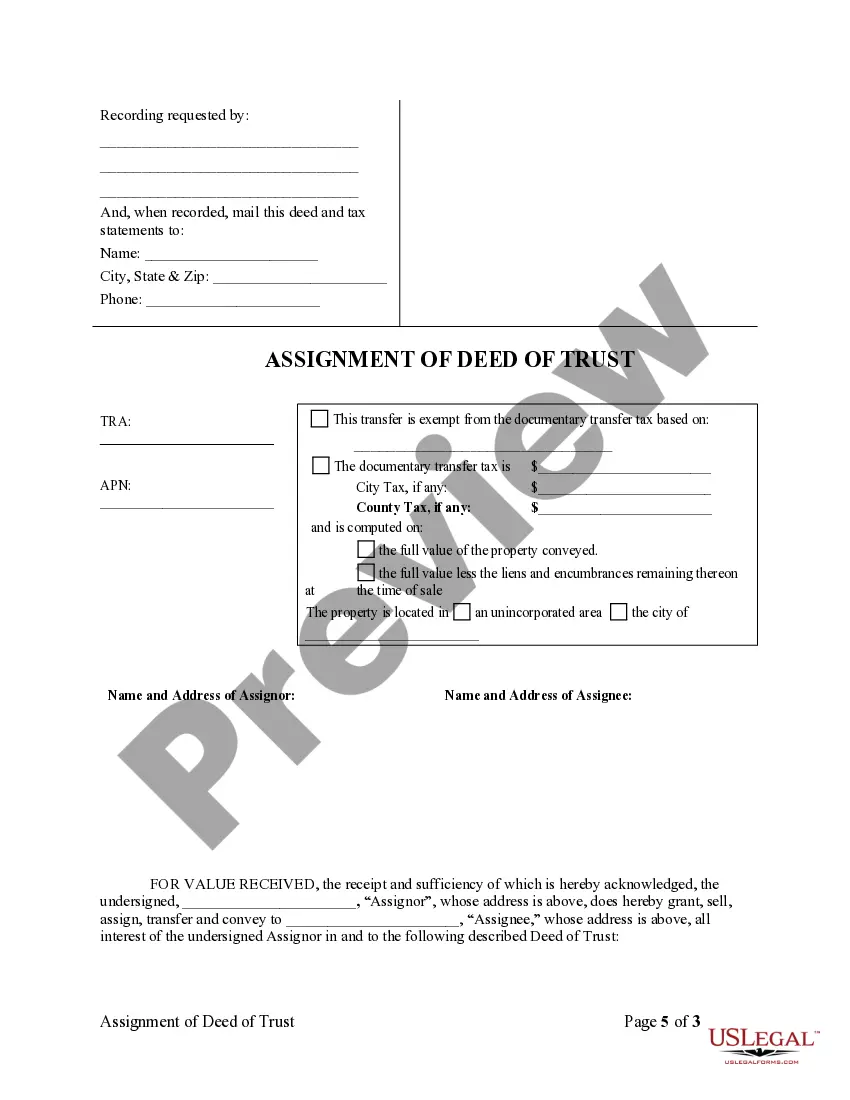
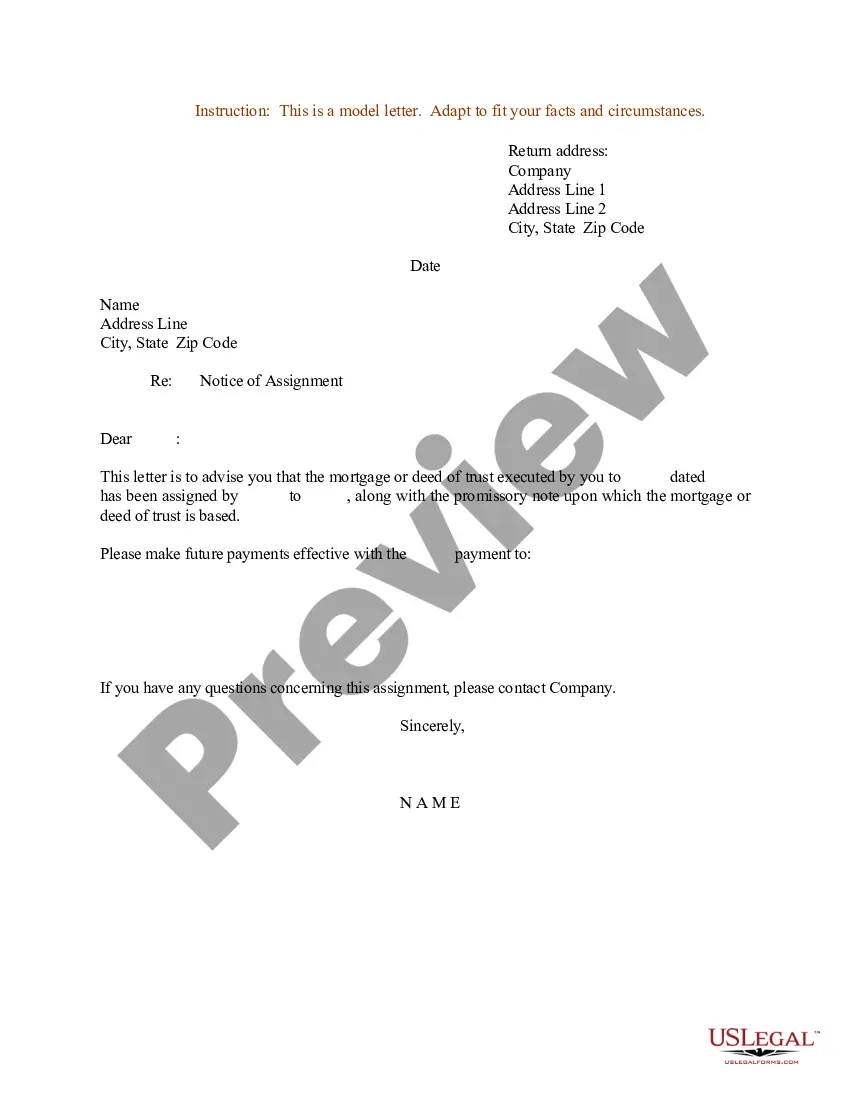
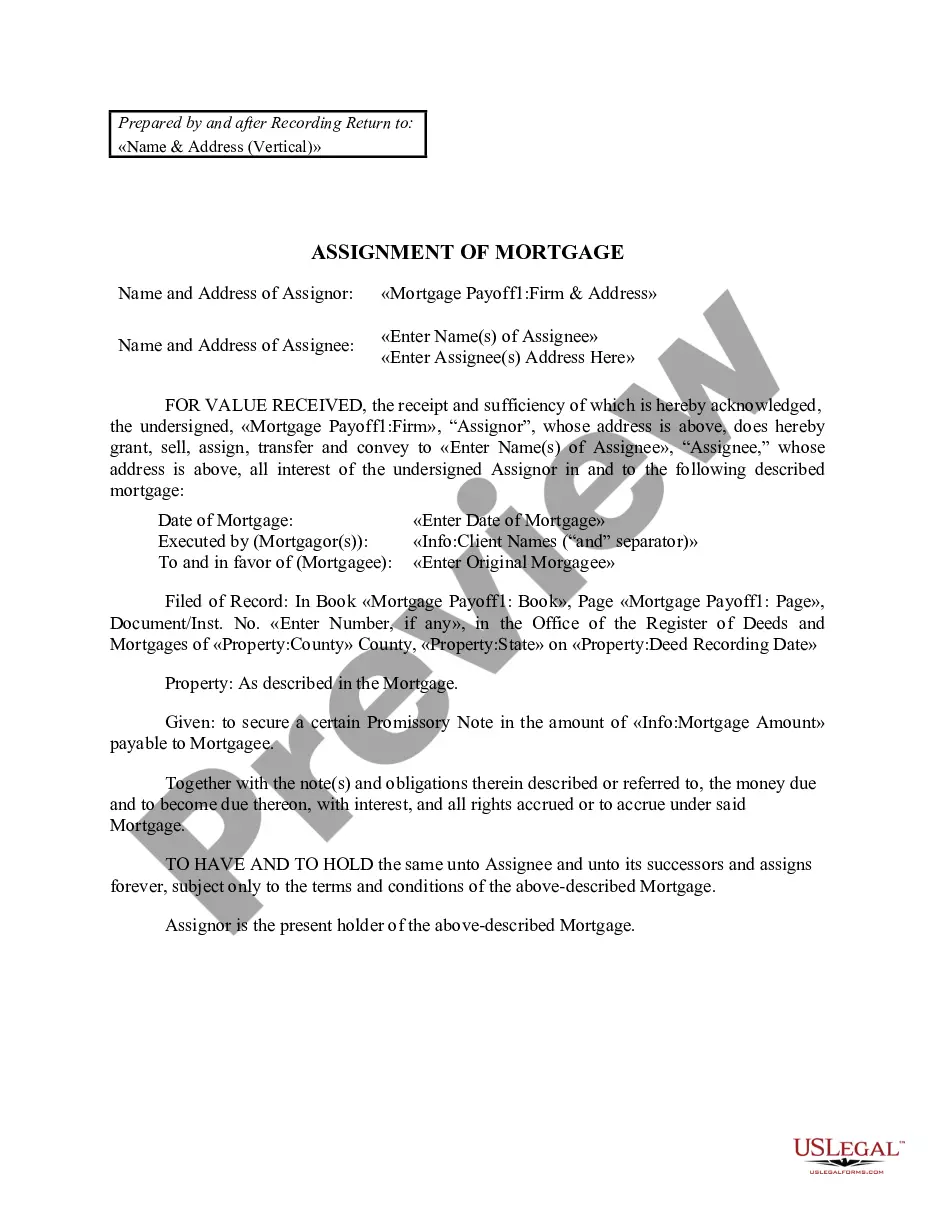
The Assignment of Deed of Trust by Corporate Mortgage Holder is a legal document where a corporation, the holder of a deed of trust or mortgage, assigns its interest in the property to a third party. This form serves the purpose of transferring rights without requiring a sale of the property, differentiating it from other transfer documents that may involve sales or other transactions.
Form components explained
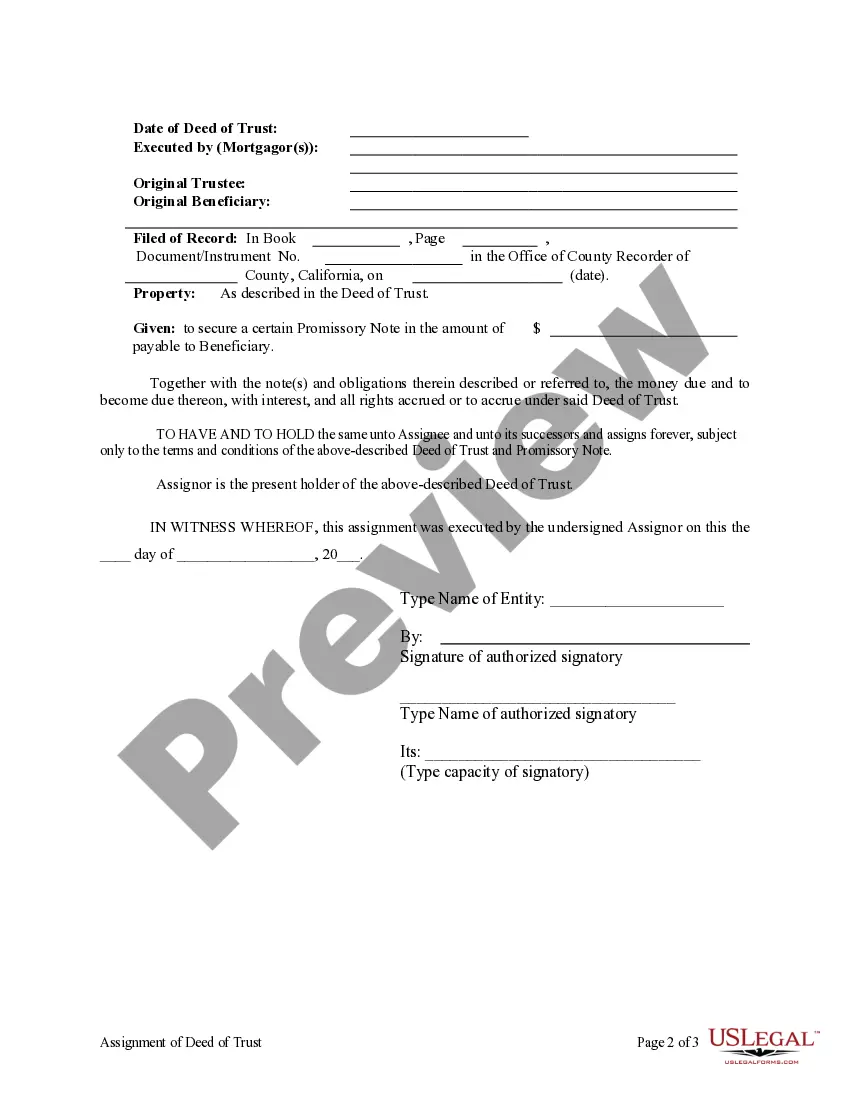
- Identification of parties: Names and addresses of the assignor (current holder) and assignee (new holder).
- Description of the property: Specific details about the property being assigned.
- Effective date: The date when the assignment becomes effective.
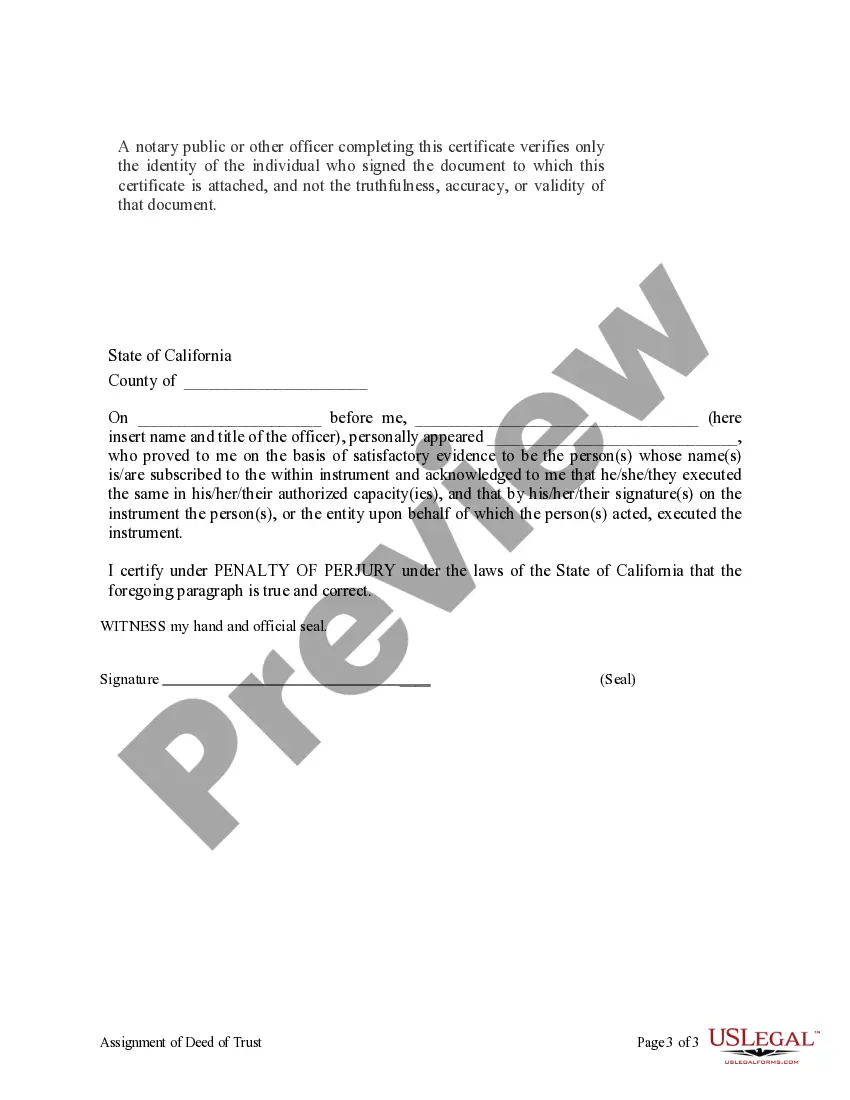
- Signatures: Signatures of the assignor and a notary public, if required.
- Statement of assignment: A clause that states the transfer of rights from the assignor to the assignee.

When to use this document
This form should be used when a corporate holder of a deed of trust needs to assign its rights or interests to another party. Common scenarios include financing arrangements, portfolio management changes, or compliance with corporate restructuring. It is particularly useful in real estate transactions where a clear assignment of interest is necessary.
Who should use this form
This form is intended for:
- Corporate entities that hold a deed of trust or mortgage.
- Real estate investors looking to transfer mortgage interests.
- Attorneys representing corporate clients in real estate transactions.
How to complete this form
- Identify the parties involved by entering the names and addresses of both the assignor and assignee.
- Describe the property by providing the legal description or address of the property involved.
- Specify the effective date of the transfer.
- Have the assignor sign the form, ensuring their details are correctly filled in.
- If required by local laws, have the form notarized to ensure legal validity.
Does this document require notarization?
This form needs to be notarized to ensure legal validity. US Legal Forms provides secure online notarization powered by Notarize, allowing you to complete the process through a verified video call, available anytime.
Get your form ready online
Our built-in tools help you complete, sign, share, and store your documents in one place.
Make edits, fill in missing information, and update formatting in US Legal Forms—just like you would in MS Word.
Download a copy, print it, send it by email, or mail it via USPS—whatever works best for your next step.
Sign and collect signatures with our SignNow integration. Send to multiple recipients, set reminders, and more. Go Premium to unlock E-Sign.
If this form requires notarization, complete it online through a secure video call—no need to meet a notary in person or wait for an appointment.
We protect your documents and personal data by following strict security and privacy standards.

Make edits, fill in missing information, and update formatting in US Legal Forms—just like you would in MS Word.

Download a copy, print it, send it by email, or mail it via USPS—whatever works best for your next step.

Sign and collect signatures with our SignNow integration. Send to multiple recipients, set reminders, and more. Go Premium to unlock E-Sign.

If this form requires notarization, complete it online through a secure video call—no need to meet a notary in person or wait for an appointment.

We protect your documents and personal data by following strict security and privacy standards.
Common mistakes to avoid
- Failing to include the effective date of the assignment.
- Providing incorrect property descriptions that do not match public records.
- Not obtaining the necessary signatures, especially the assignor's.
- Neglecting to have the document notarized when required.
Why use this form online
- Convenience of downloading and filling out the form at your own pace.
- Editability allows for easy corrections and updates before final submission.
- Access to templates drafted by licensed attorneys, ensuring legal accuracy and reliability.
Looking for another form?
Form popularity
FAQ
To obtain a copy of your deed of trust in California, you can visit the county recorder’s office where your property is located. Alternatively, you can request a copy online through various public records platforms. It's important to have your property details handy to expedite the search process. If you need assistance with the procedures or navigating legal documents, consider using resources like US Legal Forms, which can help clarify issues related to the California Assignment of Deed of Trust by Corporate Mortgage Holder.
California predominantly uses deeds of trust rather than traditional mortgages. This approach benefits lenders by facilitating a more efficient foreclosure process, which includes non-judicial foreclosures. As a borrower or a corporate mortgage holder, understanding this key distinction is vital when navigating lending agreements in California. Many find that familiarizing themselves with the California Assignment of Deed of Trust by Corporate Mortgage Holder greatly enhances their real estate experience.
In the United States, some states primarily use deeds of trust, while others use mortgages for property financing. States like California, Arizona, and Nevada favor deeds of trust, which allow for faster foreclosure processes. Conversely, states such as New York and Florida typically utilize mortgages. Understanding these distinctions can help borrowers navigate the complexities of property financing, especially concerning the California Assignment of Deed of Trust by Corporate Mortgage Holder.
Yes, in California, a trust deed must be recorded to protect the lender’s interests and establish priority. Recording the trust deed creates a public record, ensuring it is enforceable against third parties. Therefore, always file the trust deed with the appropriate county recorder's office promptly after execution. US Legal Forms can assist you with this process by providing the necessary forms and clear instructions for the California Assignment of Deed of Trust by Corporate Mortgage Holder.
To file a deed of trust in California, first, obtain the correct form and fill it out with accurate property details and borrower information. It is essential that all parties involved sign the document in front of a notary public. Afterward, file the completed deed of trust with the county recorder’s office to make it official. For additional help, explore the US Legal Forms platform, which simplifies the process and includes resources for the California Assignment of Deed of Trust by Corporate Mortgage Holder.
To file a deed in California, start by completing the deed form, ensuring it complies with state requirements. After filling out the deed, you must sign it in front of a notary public to validate your signature. Once notarized, you can file the deed with the county recorder’s office where the property is located. For convenience, consider using the US Legal Forms platform, which offers the necessary forms and guidance for the California Assignment of Deed of Trust by Corporate Mortgage Holder.
Typically, the Assignment of a deed of trust must be signed by the original lender, also known as the mortgage holder. In the case of a California Assignment of Deed of Trust by Corporate Mortgage Holder, an authorized representative from the corporation must also provide their signature. Ensuring that all required signatures are present is vital to uphold the validity of the assignment. You can turn to uslegalforms for guidance on proper signing protocols.
To be valid in California, a trust must have the intent to create one, a clear subject matter, and a designated beneficiary. It also needs a trustee who can manage the trust assets and is competent to fulfill that role. Following these guidelines ensures that the trust is legally recognized. If you are involved in a California Assignment of Deed of Trust by Corporate Mortgage Holder, having a valid trust can streamline the process.
A trust can become invalid in California due to lack of proper execution, absence of a clear intent to create the trust, or if it violates the rules set by state law. Additionally, if the trust fails to comply with formalities such as having a designated trustee or beneficiary, it may be deemed invalid. Understanding these aspects is essential when navigating a California Assignment of Deed of Trust by Corporate Mortgage Holder. Uslegalforms can provide resources to ensure your trust stands strong.
In California, a deed must be in writing, clearly identify the parties involved, and describe the property being conveyed. Additionally, it must include the necessary signatures, usually from the grantor, and should be notarized to ensure its validity. A valid deed is crucial for a legitimate transfer of property ownership. When dealing with a California Assignment of Deed of Trust by Corporate Mortgage Holder, confirming validity ensures a smooth transaction.