California Discovery Interrogatories for Divorce Proceeding for either Plaintiff or Defendant - Another Form
Understanding this form
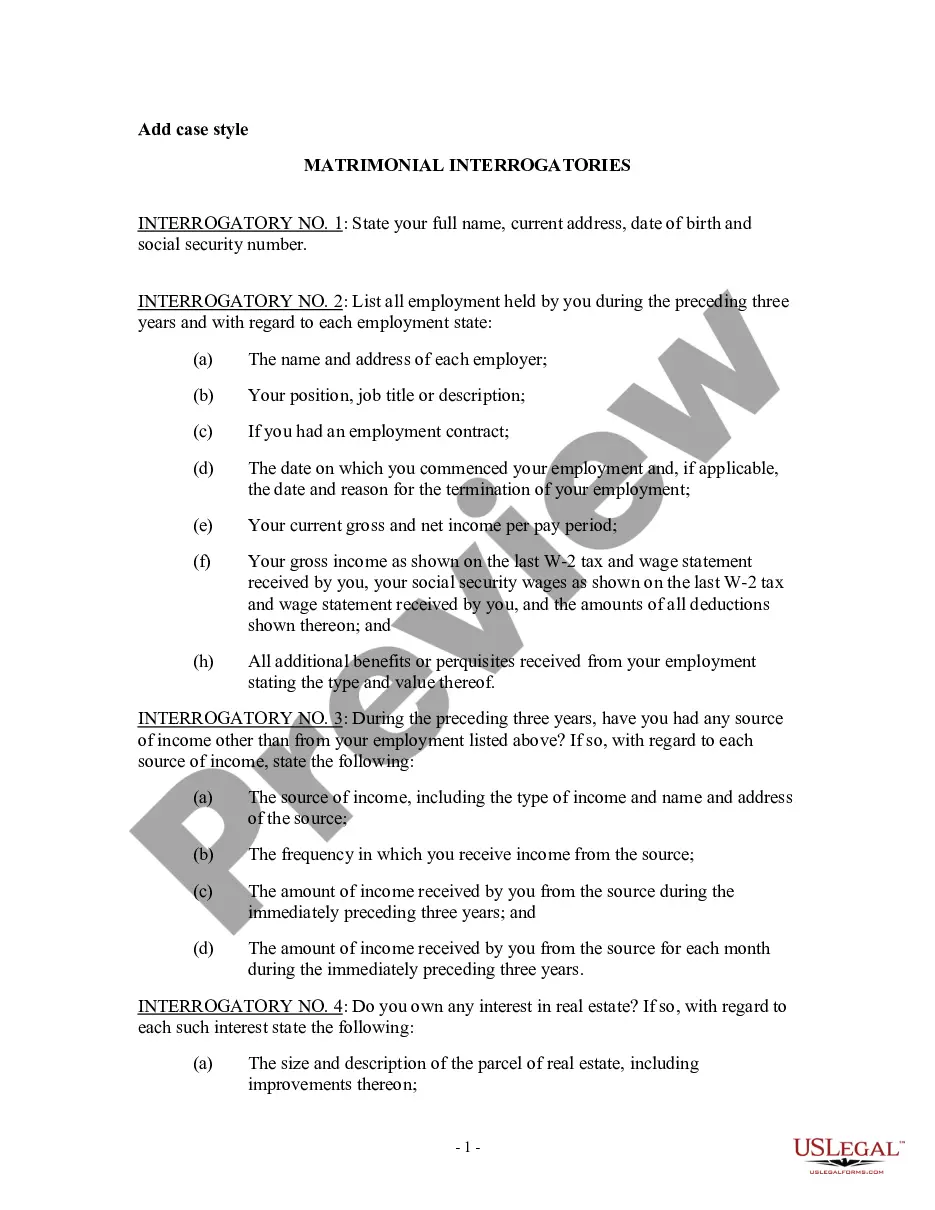
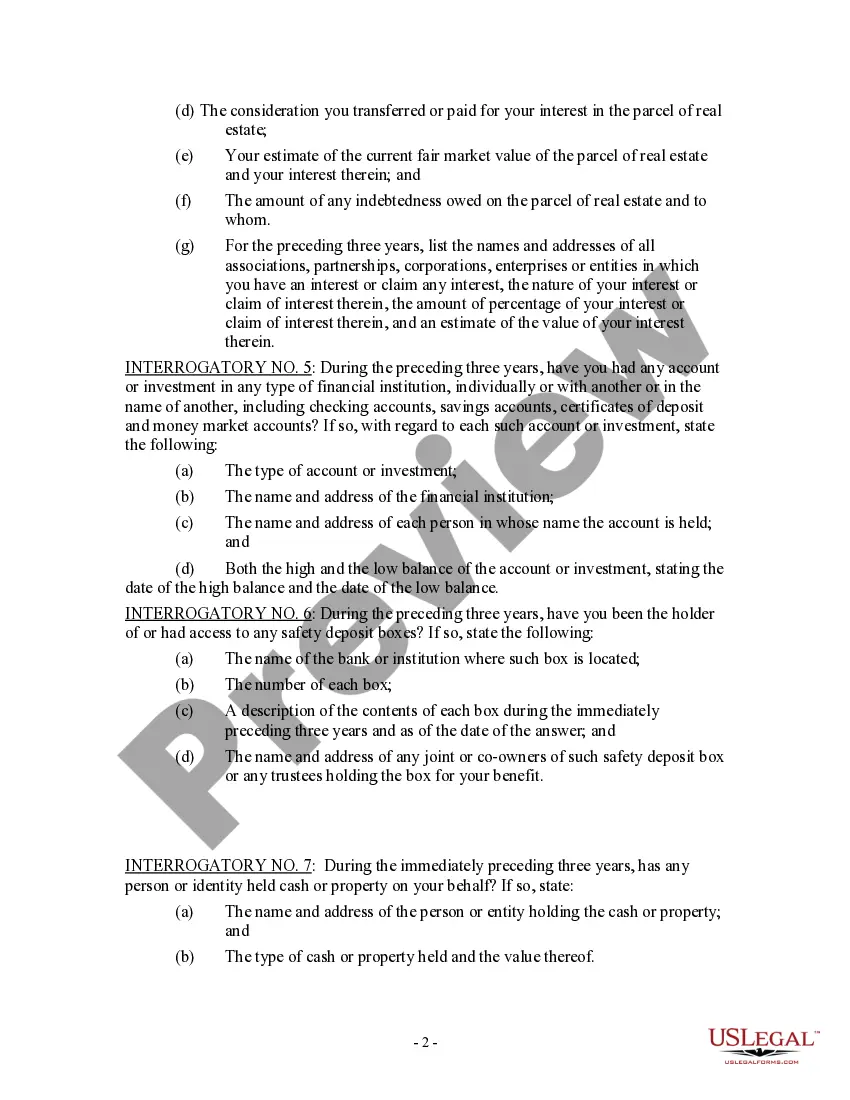
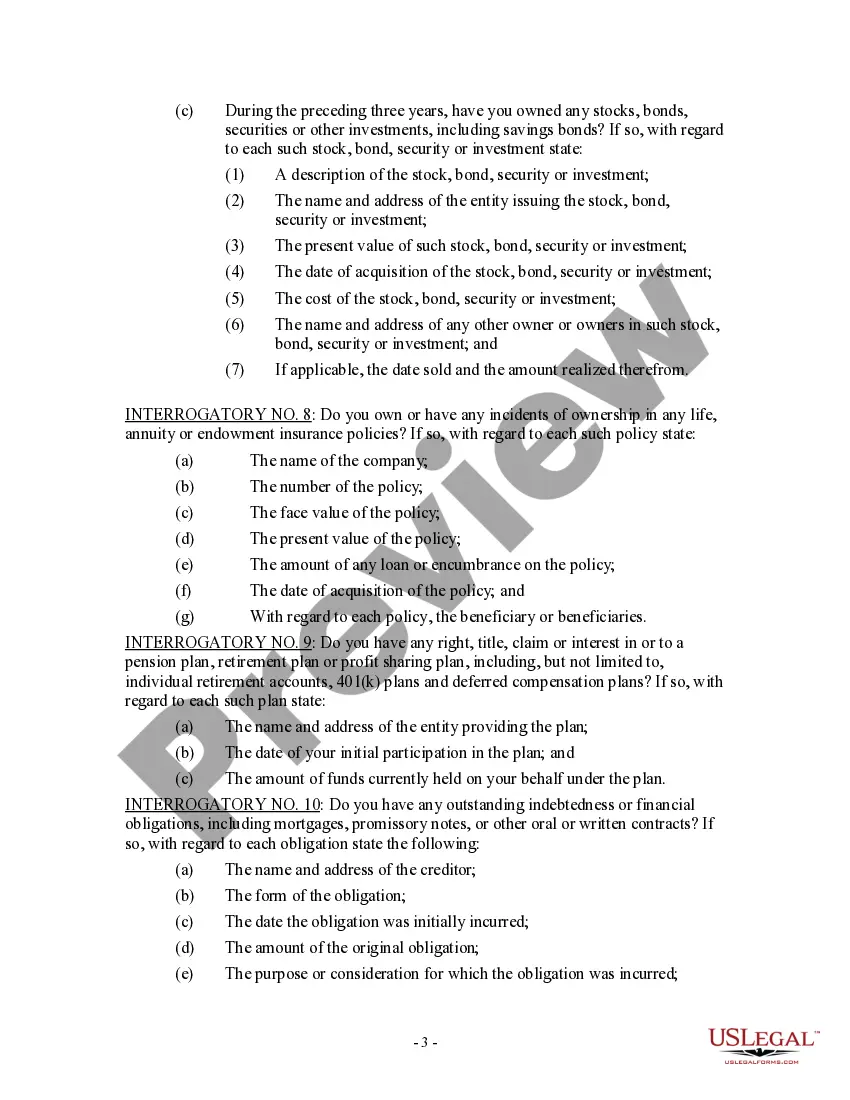
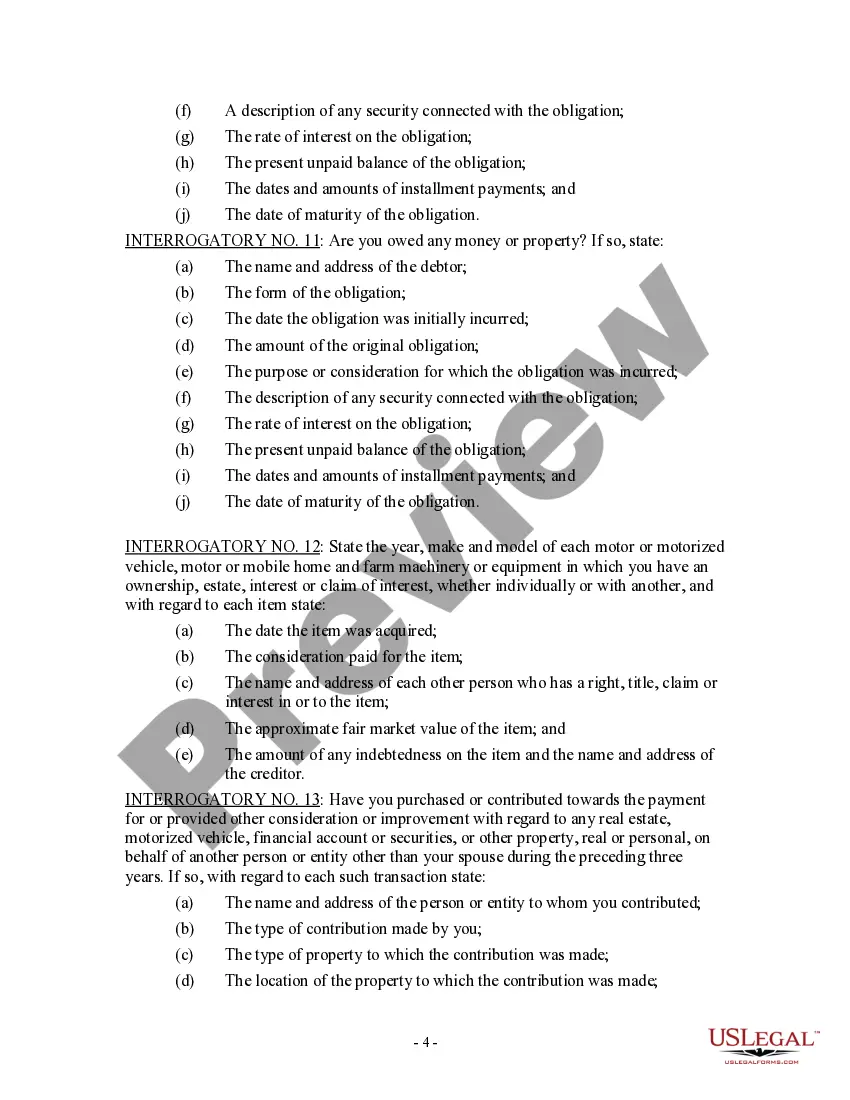
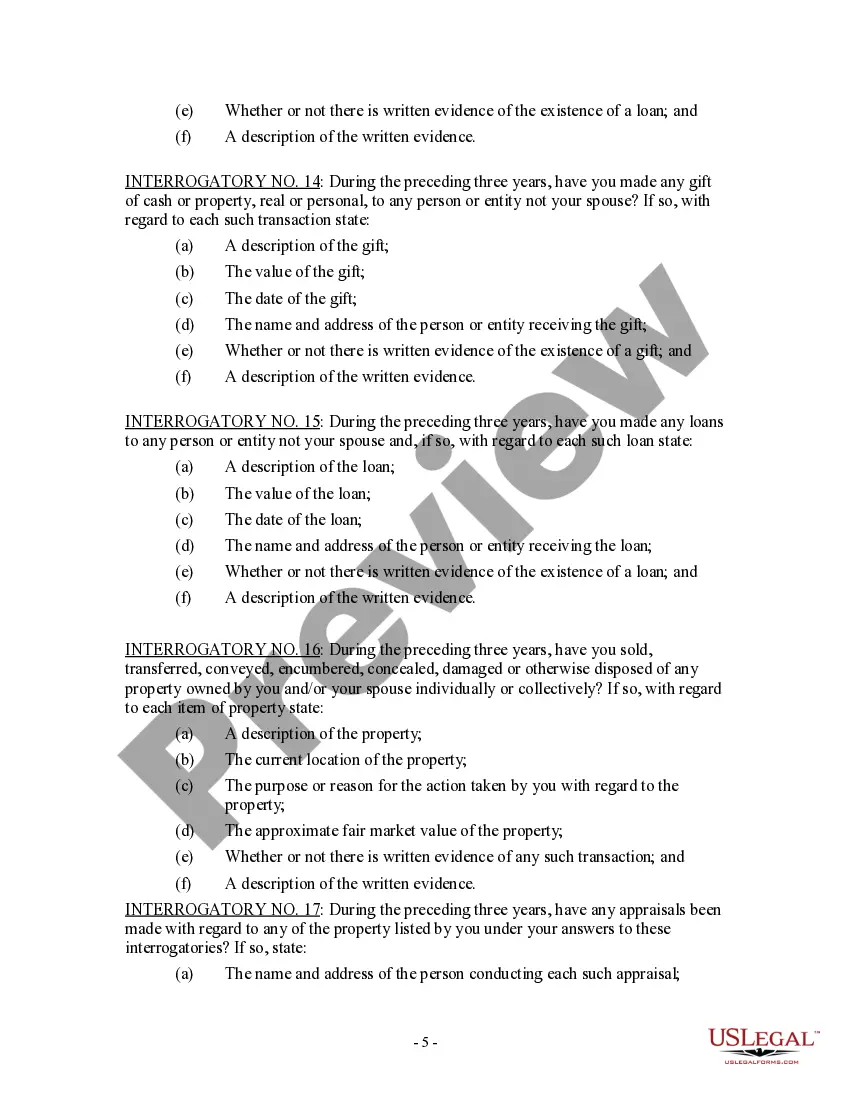
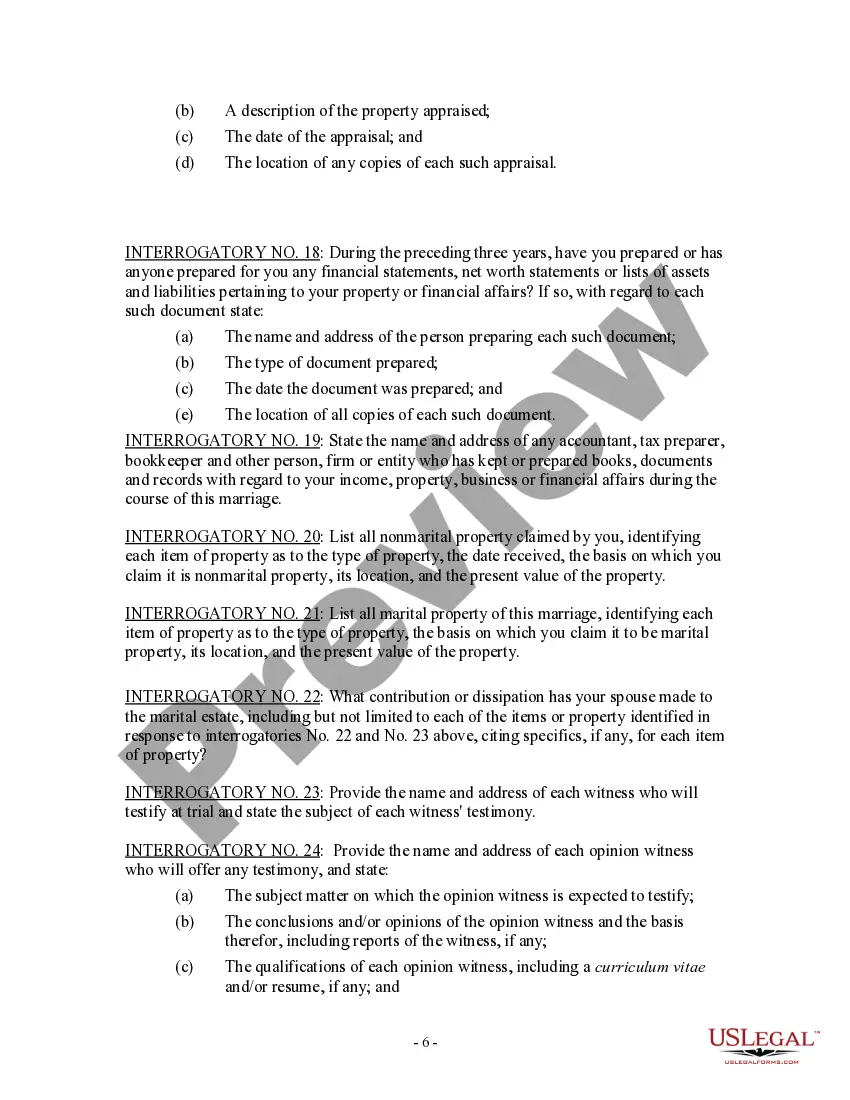
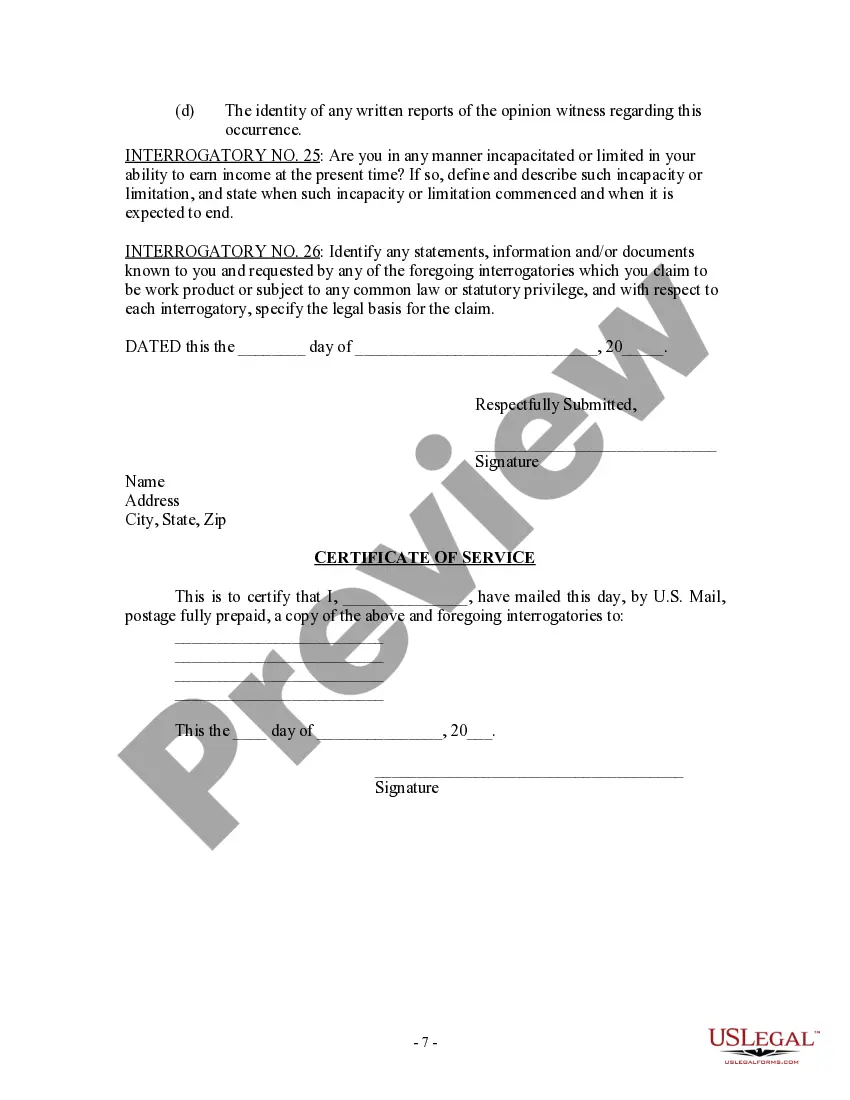
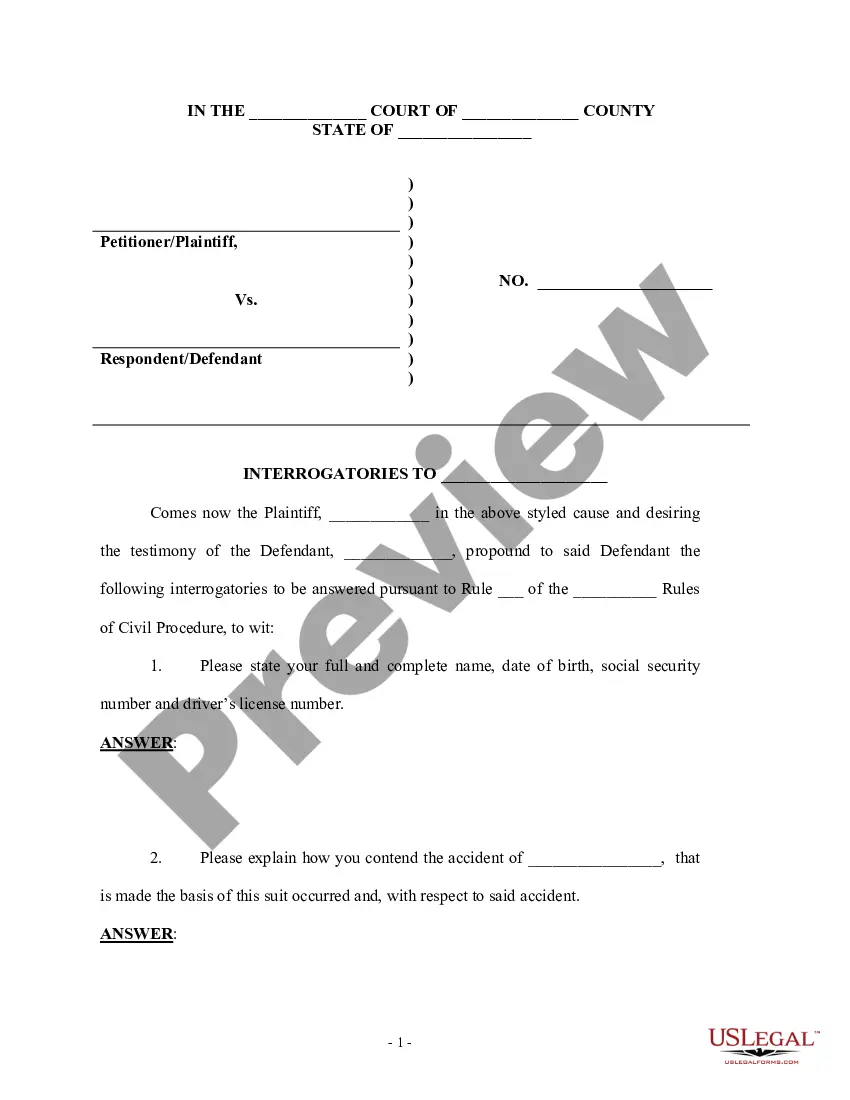
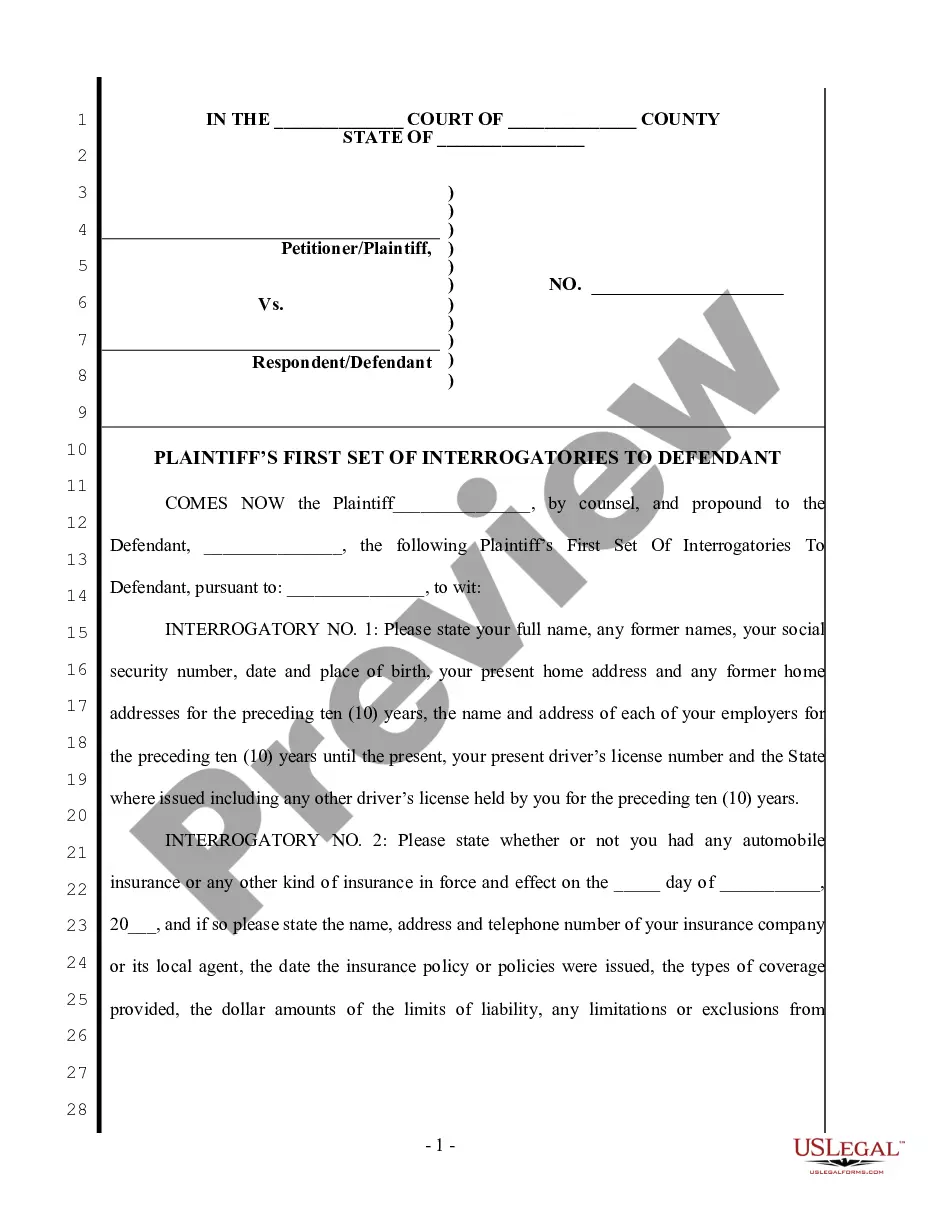
The Discovery Interrogatories for Divorce Proceeding is a legal document used by the Plaintiff to gather pertinent information from the Defendant in a divorce case. This form is designed to outline specific inquiries and requests for documents that pertain to the financial and personal circumstances of the parties involved. Unlike other forms, this interrogatory format allows for tailored questions relevant to the individual case, facilitating a clearer understanding of each party's position and assets in the divorce process.
Form components explained
- Identification of parties, including names, addresses, and relevant personal details.
- Details about employment history, income sources, and financial contributions.
- Information regarding assets, including real estate, vehicles, and investments.
- Documentation of gifts, loans, and financial obligations.
- Witnesses and expert opinions to be provided during trial.
- Notice of Service for filing with the court.
Situations where this form applies
This form should be used during divorce proceedings when the Plaintiff needs to obtain detailed information from the Defendant. It is particularly useful for establishing financial disclosures, understanding asset ownership, and resolving disputes about marital and nonmarital properties. Use this form when preparing for court or negotiations regarding division of assets, debts, and financial responsibilities associated with the divorce.
Who this form is for
This form is intended for:
- Plaintiffs initiating a divorce who need information from the Defendant.
- Individuals seeking to clarify financial matters during divorce proceedings.
- Lawyers and legal representatives handling divorce cases.
Instructions for completing this form
- Identify and enter the names and addresses of both parties involved in the divorce.
- Fill out each interrogatory question with accurate and truthful information relevant to your financial and personal circumstances.
- Include any additional questions particular to the facts of your case that may aid in clarifying issues with the Defendant.
- Sign and date the form to validate your responses.
- Serve the interrogatories to the Defendant and file a Notice of Service with the court.
Does this form need to be notarized?
Notarization is not commonly needed for this form. However, certain documents or local rules may make it necessary. Our notarization service, powered by Notarize, allows you to finalize it securely online anytime, day or night.
Get your form ready online
Our built-in tools help you complete, sign, share, and store your documents in one place.
Make edits, fill in missing information, and update formatting in US Legal Forms—just like you would in MS Word.
Download a copy, print it, send it by email, or mail it via USPS—whatever works best for your next step.
Sign and collect signatures with our SignNow integration. Send to multiple recipients, set reminders, and more. Go Premium to unlock E-Sign.
If this form requires notarization, complete it online through a secure video call—no need to meet a notary in person or wait for an appointment.
We protect your documents and personal data by following strict security and privacy standards.
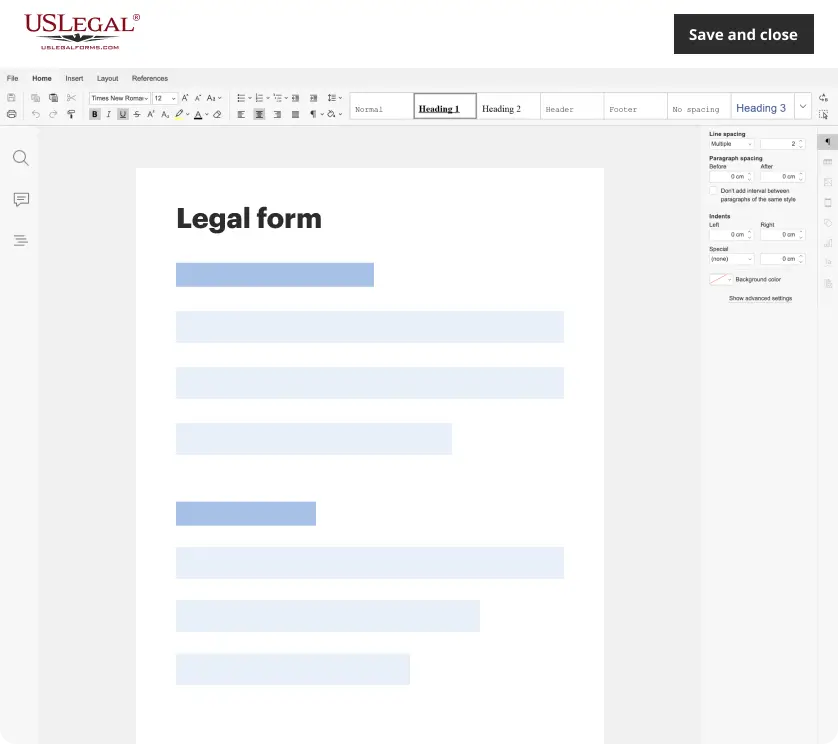
Make edits, fill in missing information, and update formatting in US Legal Forms—just like you would in MS Word.
Download a copy, print it, send it by email, or mail it via USPS—whatever works best for your next step.
Sign and collect signatures with our SignNow integration. Send to multiple recipients, set reminders, and more. Go Premium to unlock E-Sign.

If this form requires notarization, complete it online through a secure video call—no need to meet a notary in person or wait for an appointment.
We protect your documents and personal data by following strict security and privacy standards.
Common mistakes
- Failing to include all necessary details in responses.
- Not personalizing the interrogatories to fit the specific case.
- Incomplete or vague answers that do not fully address the questions.
- Missing the deadline for serving the interrogatories.
Advantages of online completion
- Convenience of filling out the form from home at your own pace.
- Editability to customize questions relevant to your specific situation.
- Quick access to legal form templates prepared by licensed attorneys.
- Secure document storage and retrieval options.
Legal use & context
- This form is used to ensure both parties disclose relevant financial information during divorce proceedings.
- It helps to create a clear picture of the marital estate for equitable distribution.
- Responses to interrogatories can be used as evidence in court if disputes arise.
What to keep in mind
- The form assists in collecting critical information for divorce proceedings.
- Customization is encouraged to address specific case facts.
- Timely and complete responses are essential for effective legal proceedings.
Looking for another form?
Form popularity
FAQ
The FL-145 form, also known as the California Discovery Interrogatories for Divorce Proceeding for either Plaintiff or Defendant - Another Form, is a legal document used in divorce cases. This form allows parties to request specific information from one another, ensuring that both sides have access to necessary details for the case. It helps clarify positions, supports fair exchange of information, and promotes transparency during the divorce process. Utilizing the FL-145 can be an effective tool for achieving a comprehensive understanding of the issues at hand.
When dealing with California Discovery Interrogatories for Divorce Proceeding for either Plaintiff or Defendant - Another Form, it is important to understand the filing process. Generally, you do not file form interrogatories with the court; instead, you serve them to the opposing party. Filing happens through requests for responses, which ensures that both parties engage in the discovery process. If you seek clarity or assistance in this process, consider using the resources available on the US Legal Forms platform.
The key difference between form and special interrogatories is their structure and application. Form interrogatories consist of established questions applicable in generic situations, while special interrogatories are designed to target specific issues in your case. Knowing when to use each type is essential for effectively handling California Discovery Interrogatories for Divorce Proceeding for either Plaintiff or Defendant - Another Form.
Form interrogatories are pre-approved questions standardized by California law, while special interrogatories are customized questions created for a specific case. The distinction lies in their format and purpose; the former aims to simplify the discovery process, while the latter seeks to address unique elements of your case. Understanding this difference enhances your approach to California Discovery Interrogatories for Divorce Proceeding for either Plaintiff or Defendant - Another Form.
Serving form interrogatories in California is a straightforward process. You must complete the interrogatories and then serve them to the other party, either by mail or personal delivery. It is crucial to follow the rules of service to ensure the response is valid, thereby supporting the California Discovery Interrogatories for Divorce Proceeding for either Plaintiff or Defendant - Another Form.
The FL 145 form is a legal document used in California family law proceedings, particularly in divorce cases. This form provides essential declarations regarding discovery, including information relevant to California Discovery Interrogatories for Divorce Proceeding for either Plaintiff or Defendant - Another Form. Using FL 145 helps in organizing critical details that affect your case.
The two types of interrogatories are form interrogatories and special interrogatories. Form interrogatories are standardized questions outlined in California law, while special interrogatories are specific questions tailored to the case. Both types aim to gather essential information during the California Discovery Interrogatories for Divorce Proceeding for either Plaintiff or Defendant - Another Form.
To answer interrogatories in a divorce case, approach each question thoughtfully and respond in a complete manner. It's vital to reference factual details and documents that support your statements, particularly for California Discovery Interrogatories for Divorce Proceeding for either Plaintiff or Defendant - Another Form. Remember, the integrity of your responses can significantly impact your case, so take the time needed to ensure accuracy.
Filling out a California interrogatories form requires attention to detail. Start by carefully following the instructions that accompany the form, ensuring that all sections are completed. When you work with California Discovery Interrogatories for Divorce Proceeding for either Plaintiff or Defendant - Another Form, it's paramount to provide complete and accurate information to avoid any complications in your case.
Family law form interrogatories in California are pre-set questions that parties in a divorce case must respond to regarding financial matters, custody, and other pertinent details. These tools are designed to streamline the discovery process, making it easier for parties to gather essential information. Utilizing California Discovery Interrogatories for Divorce Proceeding for either Plaintiff or Defendant - Another Form can provide clarity during legal proceedings.