California Painting Contract for Contractor
What this document covers
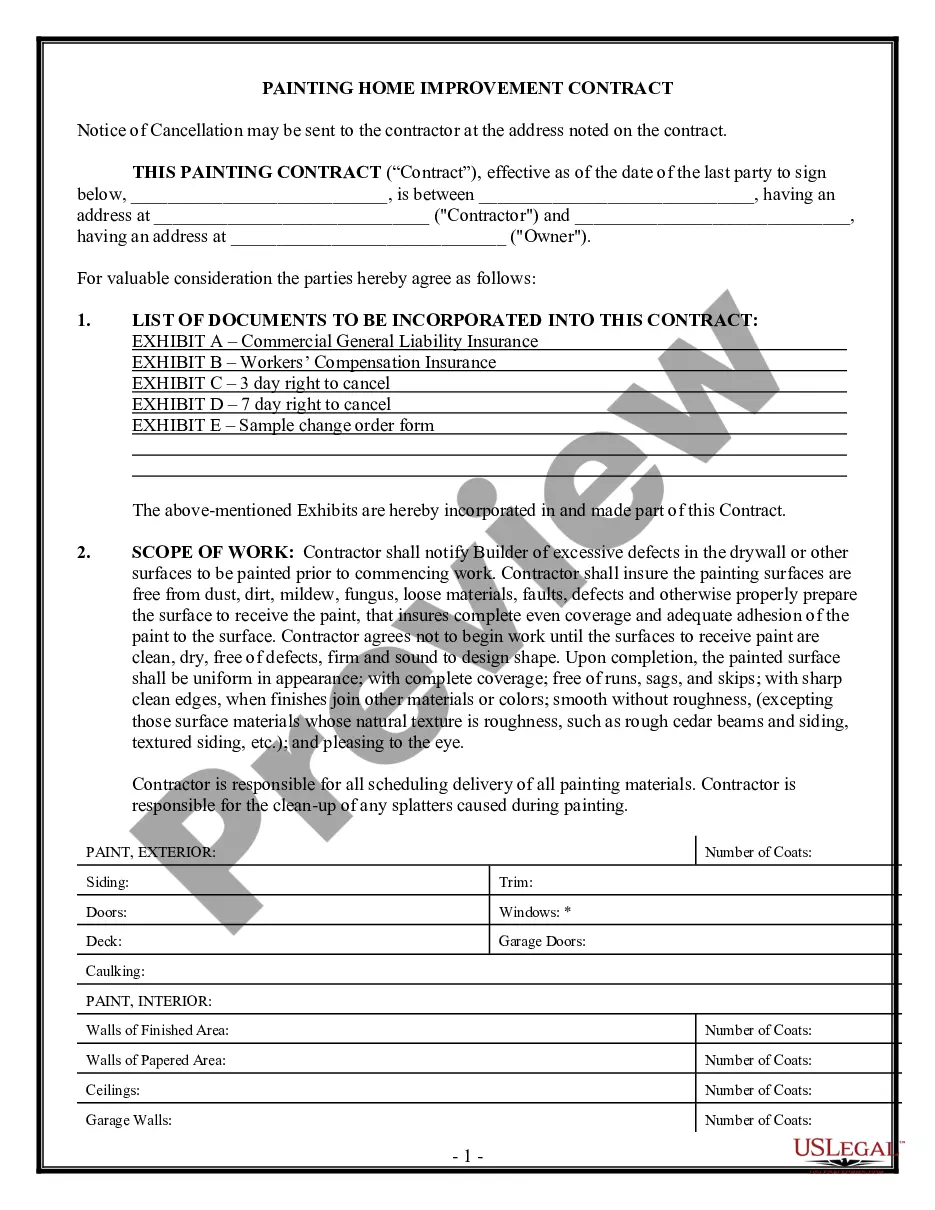
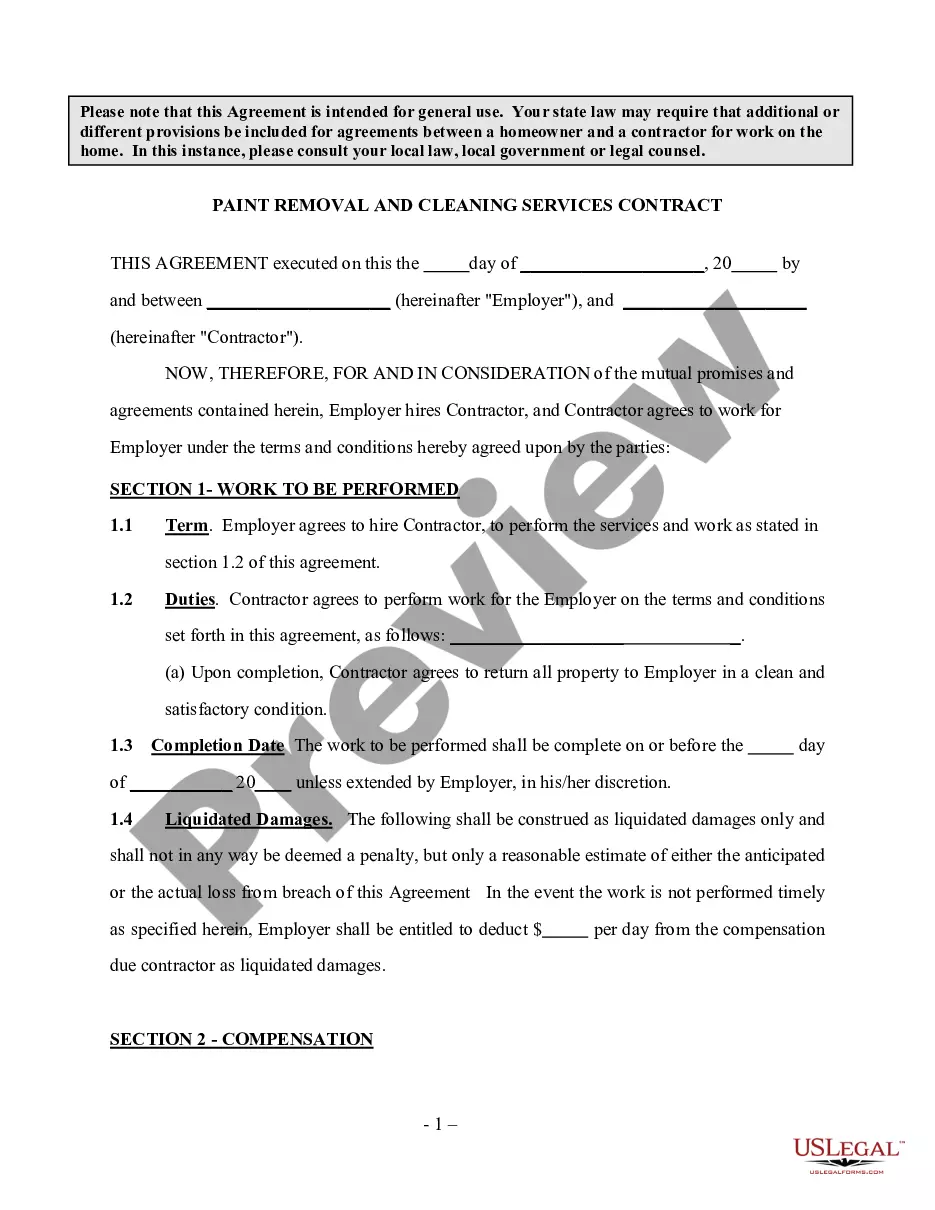
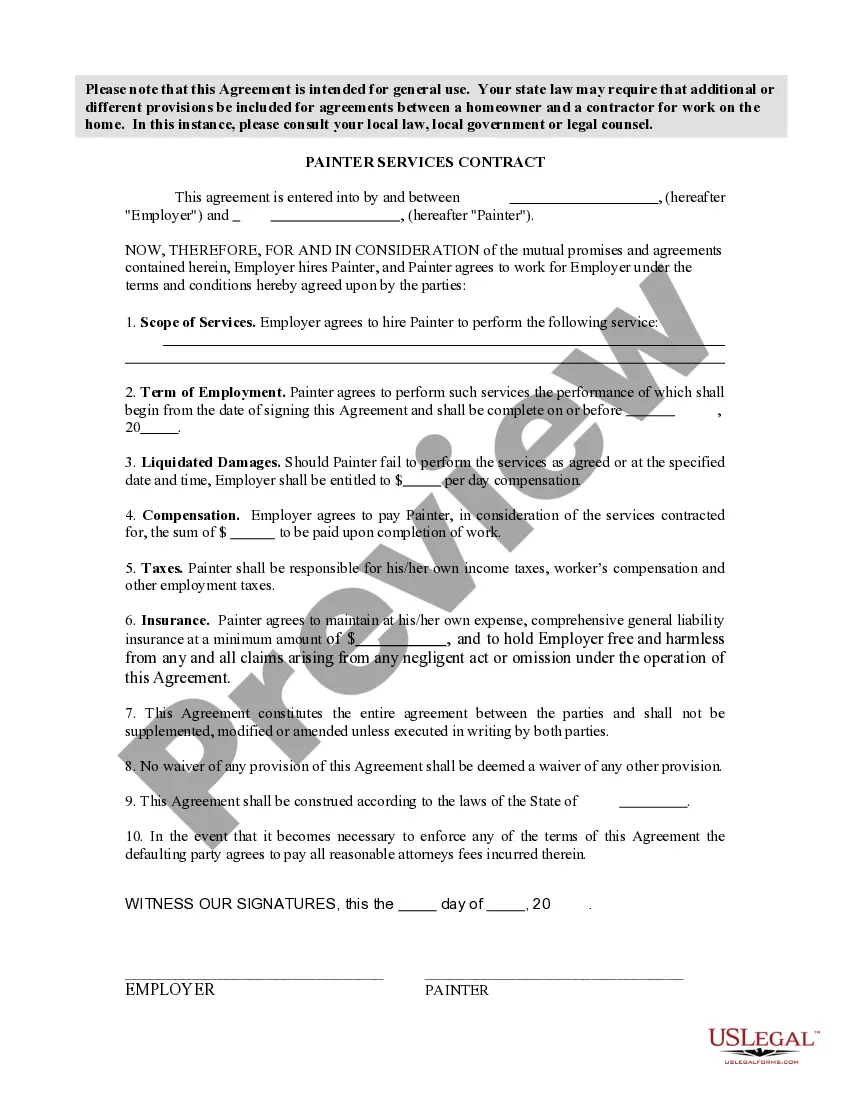
The Painting Contract for Contractor is a legal document that outlines the agreement between a painting contractor and a property owner. This contract can accommodate a cost-plus or fixed fee payment structure and includes essential provisions regarding worksite information, change orders, warranties, and insurance. Unlike generic contracts, this form is specifically tailored to comply with the laws of California, ensuring legal protection for both parties involved in the painting project.
Main sections of this form
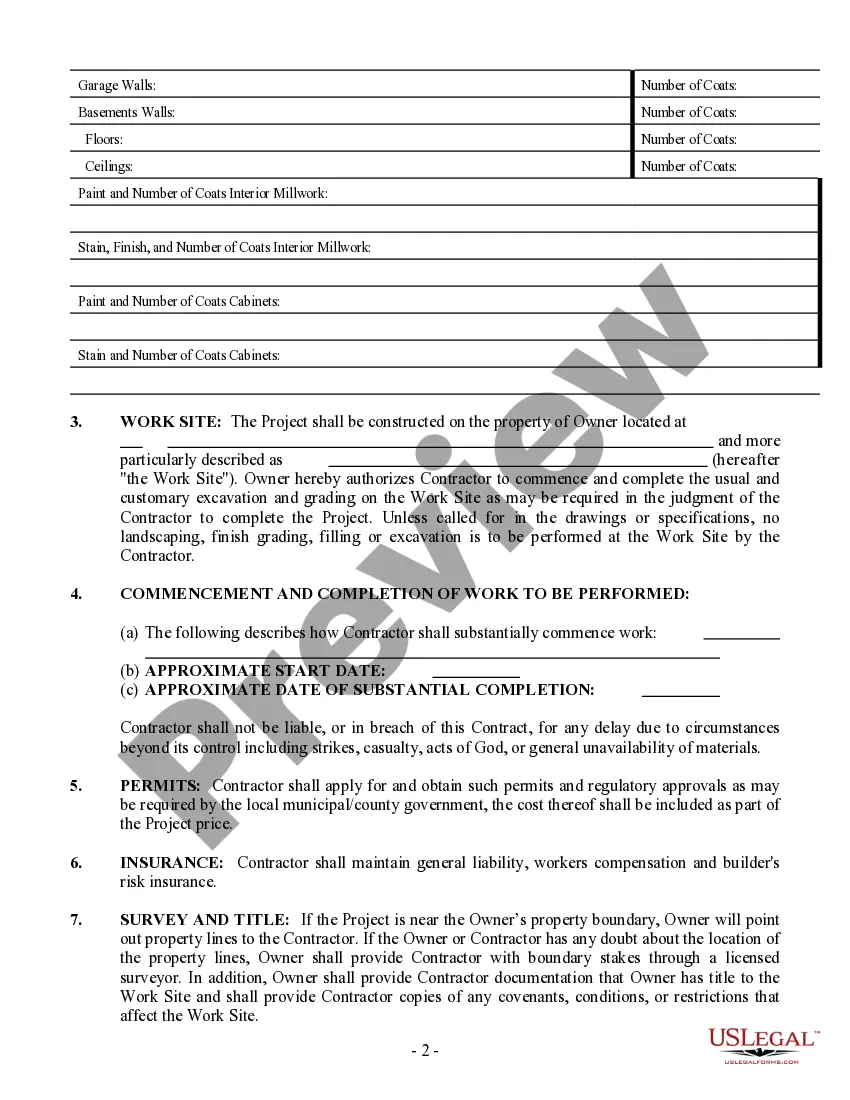
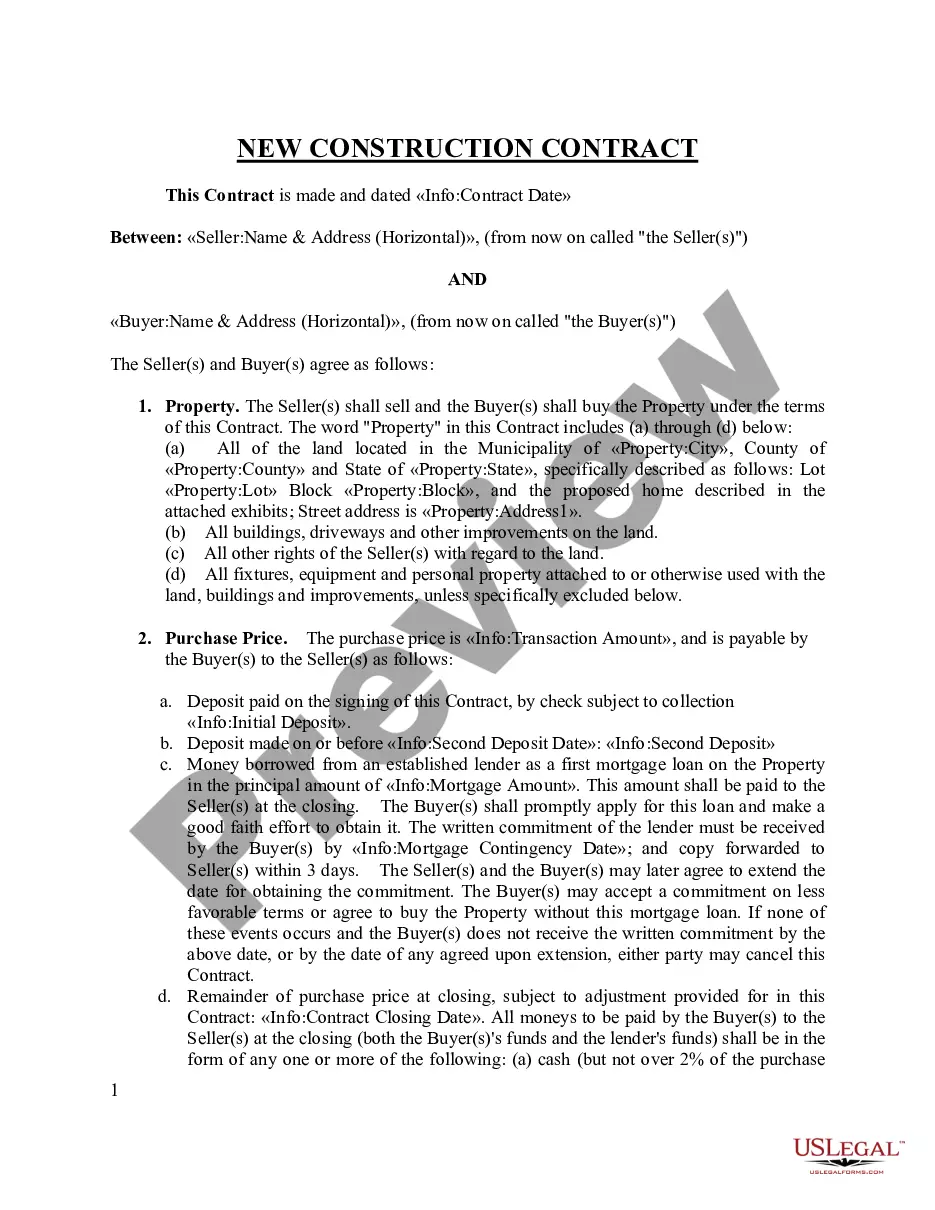
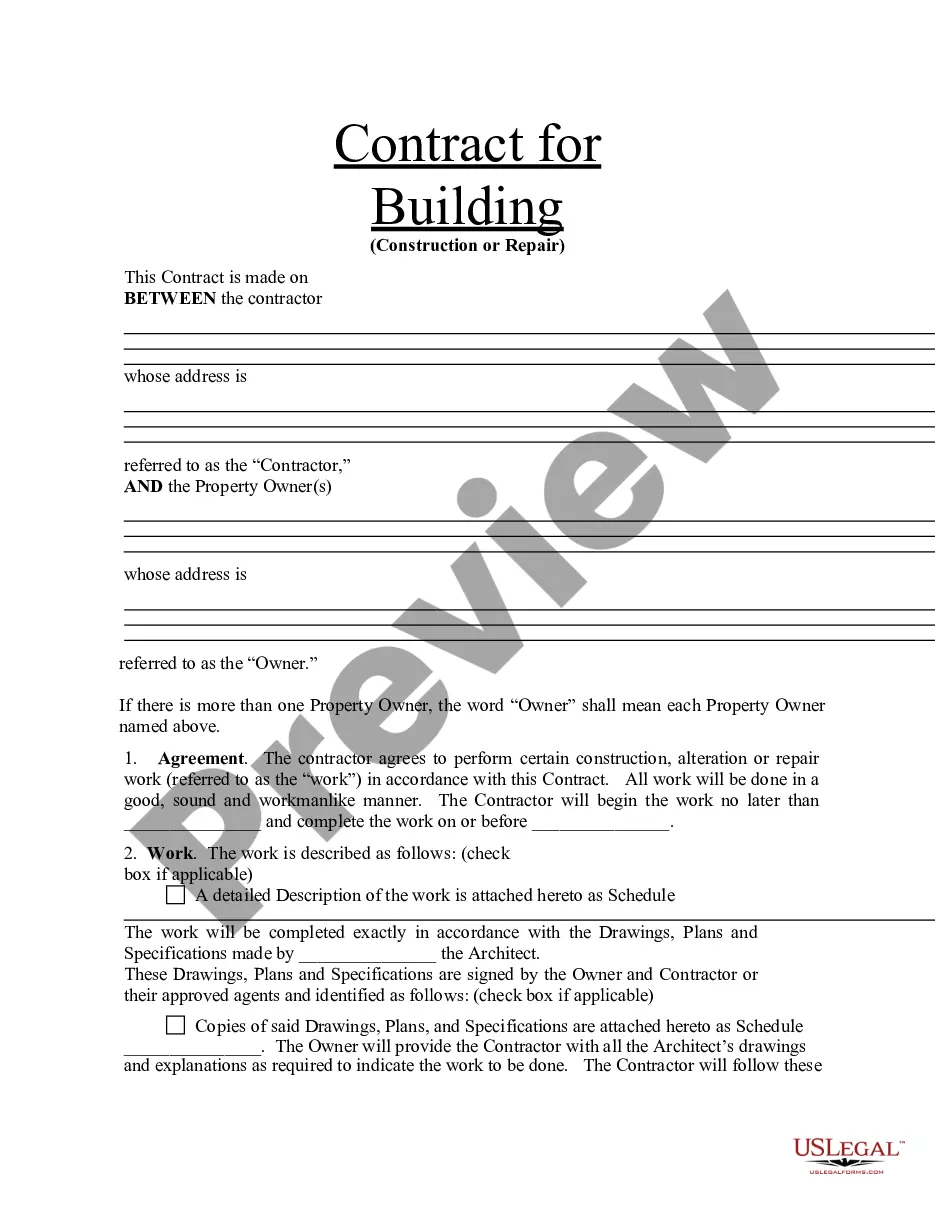
- Identification of parties involved: contractor and property owner details.
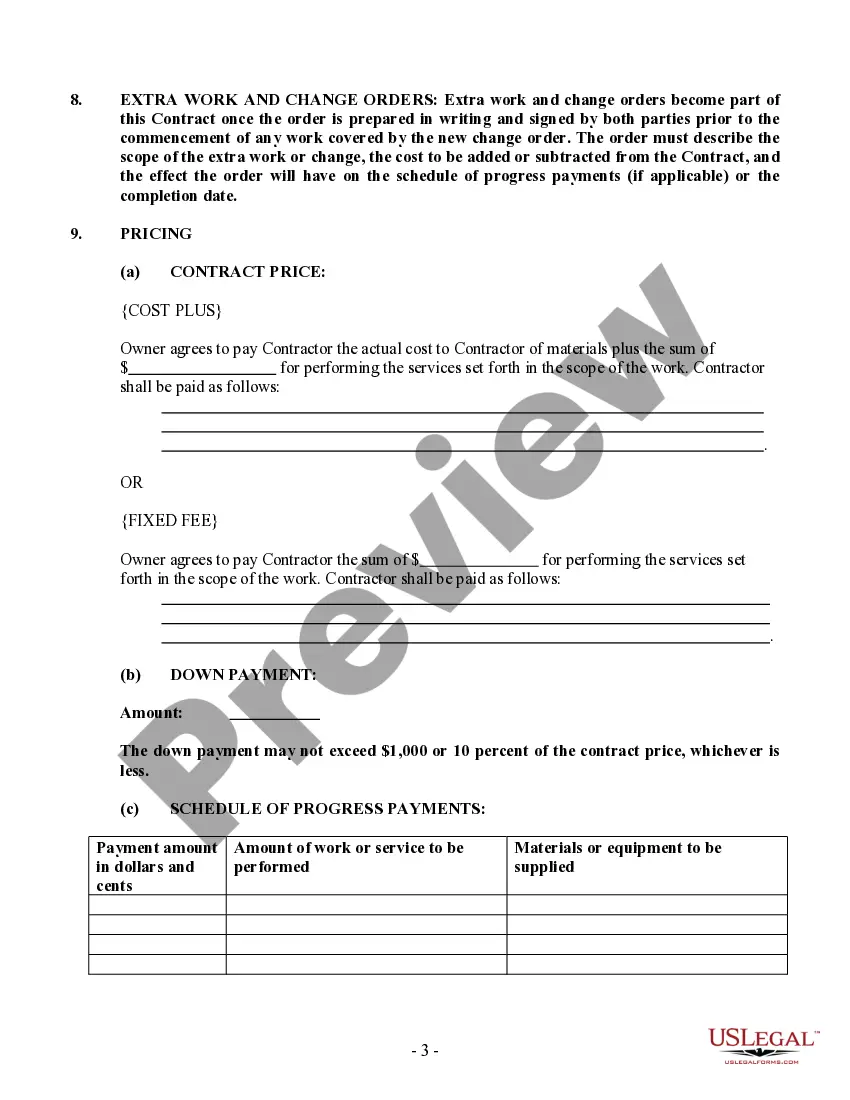
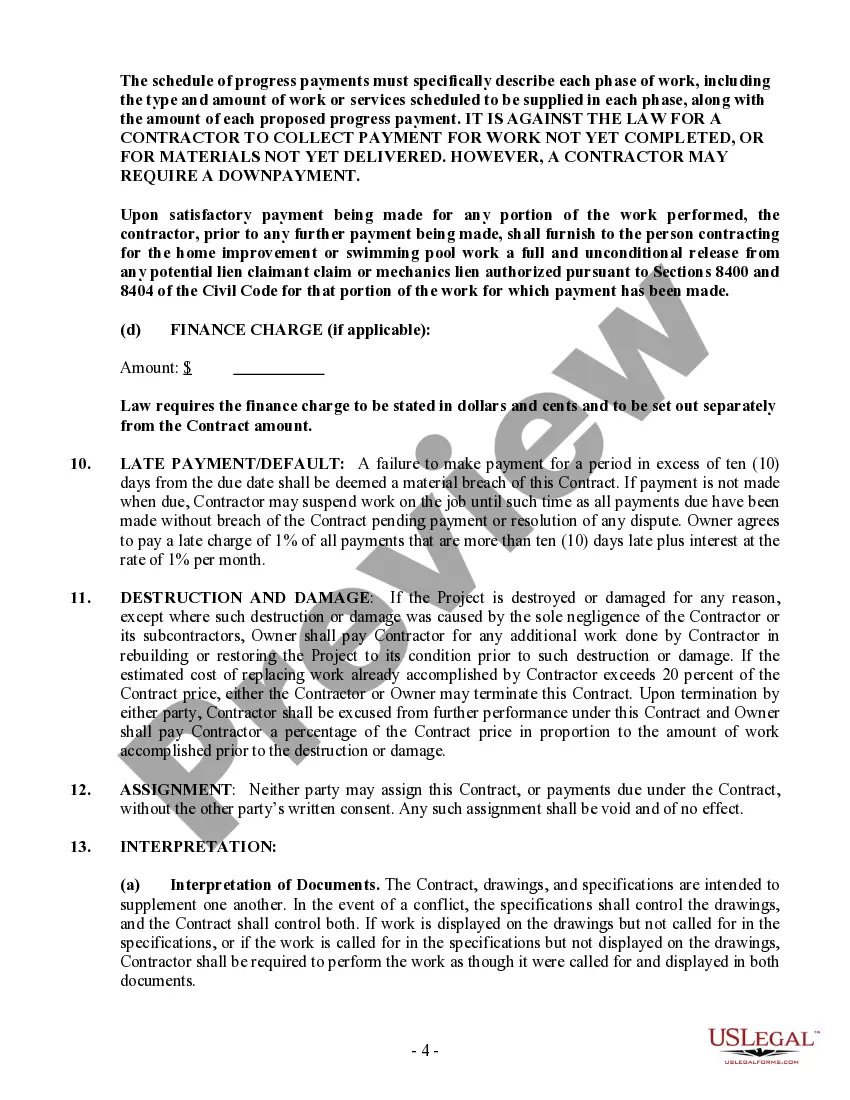
- Payment structure: options for cost-plus or fixed fee arrangements.
- Scope of work: clear details on the painting services to be provided.
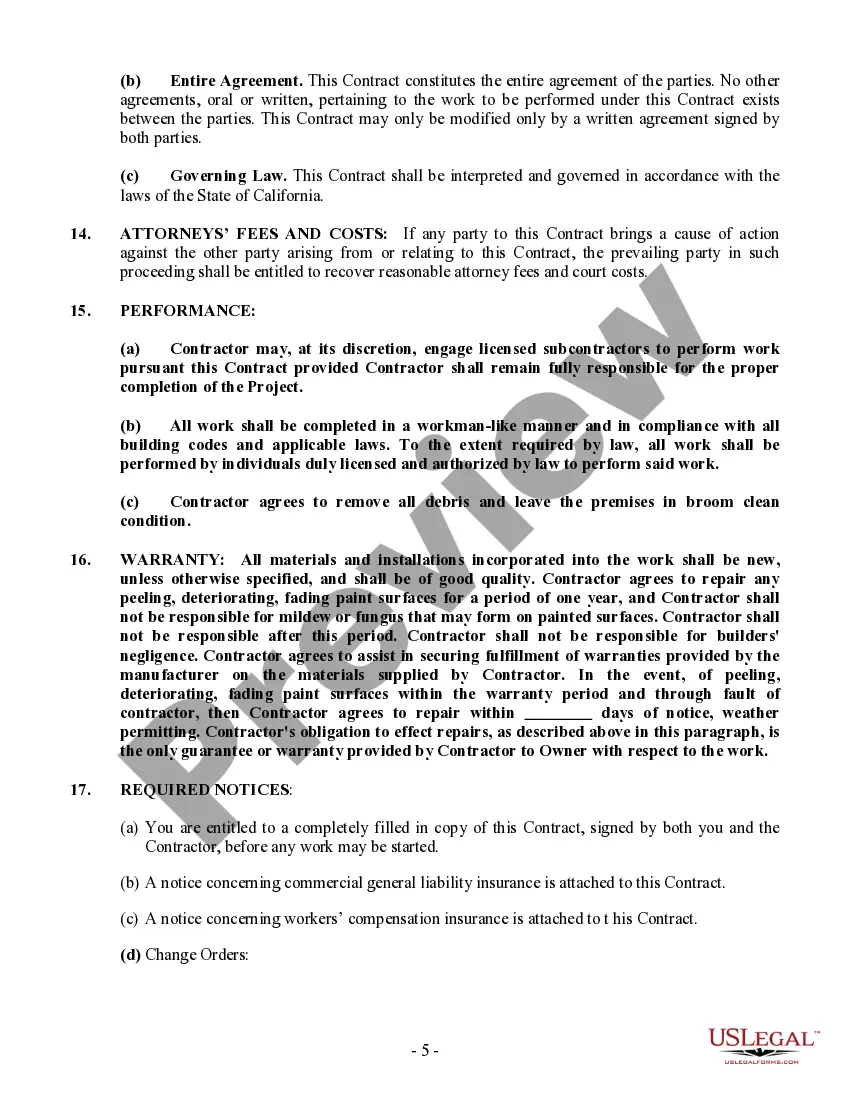
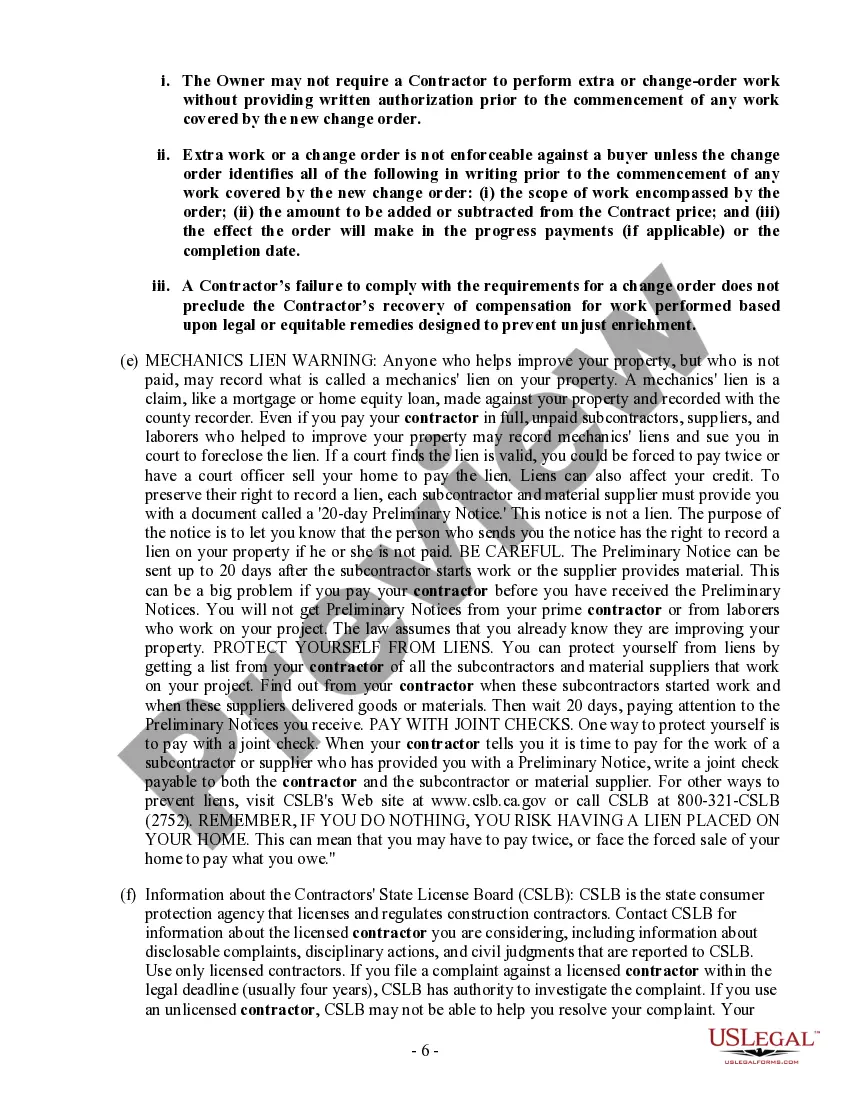
- Change order provisions: guidelines for modifications to the original contract.
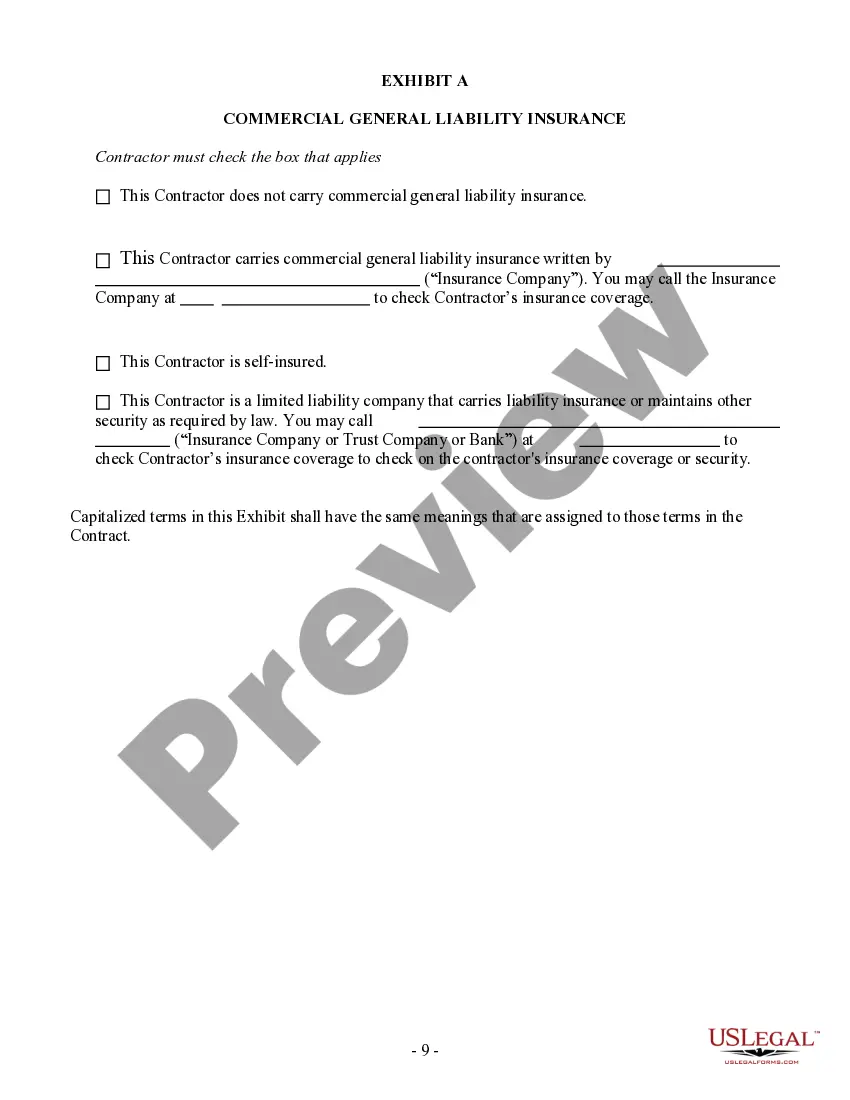
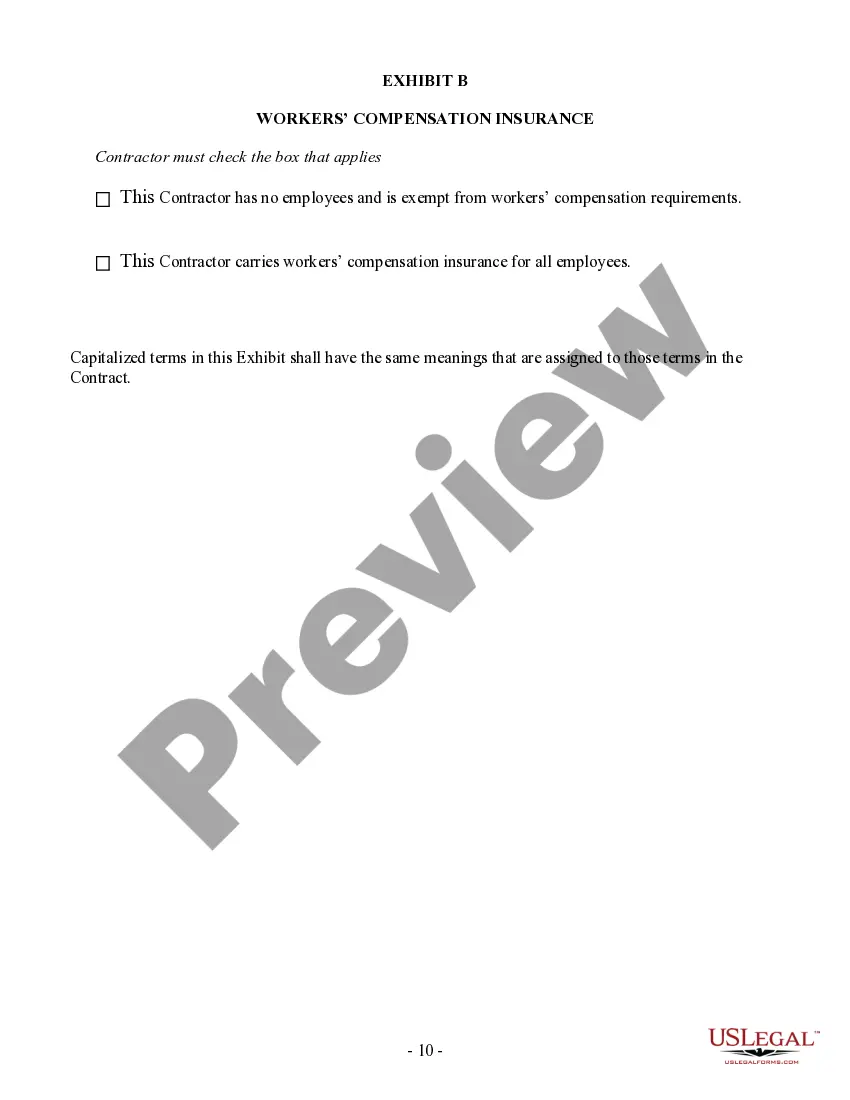
- Insurance requirements: mandates for general liability and workers' compensation insurance.
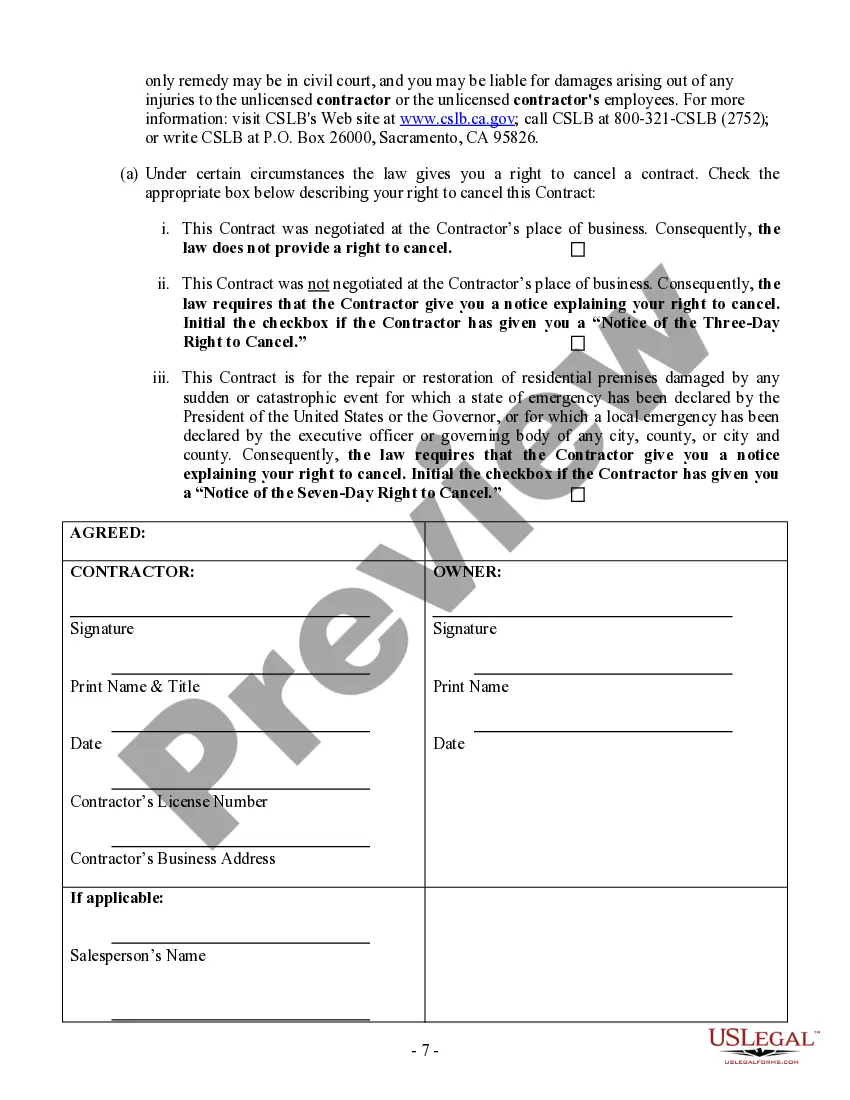
- Cancellation rights: information on the owner's right to cancel the contract under specific conditions.



Common use cases
This form should be used when a property owner wants to engage the services of a painting contractor for a project. It is appropriate for both residential and commercial properties where detailed agreements about the scope of work, payment methods, and responsibilities are necessary to ensure a successful outcome. This contract will help clarify expectations and legal obligations, reducing the risk of disputes.
Who needs this form
- Property owners needing to hire painting services for residential or commercial spaces.
- Painting contractors looking for a structured agreement to use with clients.
- Individuals seeking a legally compliant contract specific to the state of California.
Steps to complete this form
- Identify the parties: fill in the contractorâs and owner's names and addresses.
- Specify the payment arrangement: choose between cost-plus or fixed fee and detail any progress payment schedules.
- Outline the scope of work: describe the painting services to be performed.
- Include insurance details: provide proof of general liability and workers' compensation insurance if applicable.
- Sign and date the contract: ensure both parties sign to validate the agreement.
Notarization guidance
This form does not typically require notarization unless specified by local law. However, it is advisable to keep a signed copy for all parties involved to ensure clarity and legal backing.
Get your form ready online
Our built-in tools help you complete, sign, share, and store your documents in one place.
Make edits, fill in missing information, and update formatting in US Legal Forms—just like you would in MS Word.
Download a copy, print it, send it by email, or mail it via USPS—whatever works best for your next step.
Sign and collect signatures with our SignNow integration. Send to multiple recipients, set reminders, and more. Go Premium to unlock E-Sign.
If this form requires notarization, complete it online through a secure video call—no need to meet a notary in person or wait for an appointment.
We protect your documents and personal data by following strict security and privacy standards.

Make edits, fill in missing information, and update formatting in US Legal Forms—just like you would in MS Word.

Download a copy, print it, send it by email, or mail it via USPS—whatever works best for your next step.

Sign and collect signatures with our SignNow integration. Send to multiple recipients, set reminders, and more. Go Premium to unlock E-Sign.

If this form requires notarization, complete it online through a secure video call—no need to meet a notary in person or wait for an appointment.

We protect your documents and personal data by following strict security and privacy standards.
Mistakes to watch out for
- Failing to specify the scope of work, leading to misunderstandings about the project.
- Not detailing payment terms, which may result in disputes over costs.
- Neglecting to include required insurance documentation.
- Overlooking the change order procedure, causing complications if modifications are needed.
Benefits of completing this form online
- Convenience: easily download and fill out the contract at your own pace.
- Editability: customize specific sections to fit your unique project requirements.
- Reliability: all forms are drafted by licensed attorneys to ensure legal compliance.
Legal use & context:
- This contract provides a clear framework for legal obligations between the contractor and the owner.
- Failure to comply with contract terms could result in legal disputes, necessitating court involvement.
Main things to remember
Key takeaways:
- The Painting Contract provides a structured, legally compliant method for managing painting projects in California.
- Clear identification of roles, responsibilities, and payment terms can prevent disputes.
- Properly completed contracts protect both parties and uphold their rights.
Looking for another form?



Form popularity
FAQ
The California Painting Contract for Contractor is a California-specific legal agreement between a painting contractor and a property owner. It supports either a cost-plus or fixed-fee payment structure and sets clear terms for worksite information, change orders, warranties, and insurance. By aligning with California law, the form helps protect both parties and reduce disputes on painting projects.
A painting contract should clearly identify the parties, specify a payment structure (cost-plus or fixed fee), describe the scope of work, include change order provisions, require appropriate insurance (general liability and workers’ compensation), and outline the owner's cancellation rights. This California-specific form ensures these essential elements are included and enforceable.
Common red flags include an unclear or missing scope of work, no documented change order process, and no proof of necessary insurance or workers’ compensation. The California Painting Contract for Contractor addresses these risks by requiring a defined scope, documented change orders, and mandated insurance to protect both owner and contractor.
A common contractor mistake is failing to include a detailed scope and a formal change-order process. The California Painting Contract for Contractor counters this by specifying the scope of work, change order provisions, and clear payment terms, helping prevent disputes over unlisted work or unauthorized changes.
An example is omitting essential terms like the scope of work or payment terms. The California Painting Contract for Contractor fixes this by explicitly including scope, payment structure, change orders, insurance, and cancellation rights, reducing ambiguity and strengthening enforceability.
This form is tailored to California law, incorporating payment options (cost-plus or fixed fee), defined change order procedures, required insurance, and owner cancellation rights. It provides a state-specific framework for painting projects that generic contracts may not address.