Arkansas Warranty Deed for Fiduciary
Understanding this form
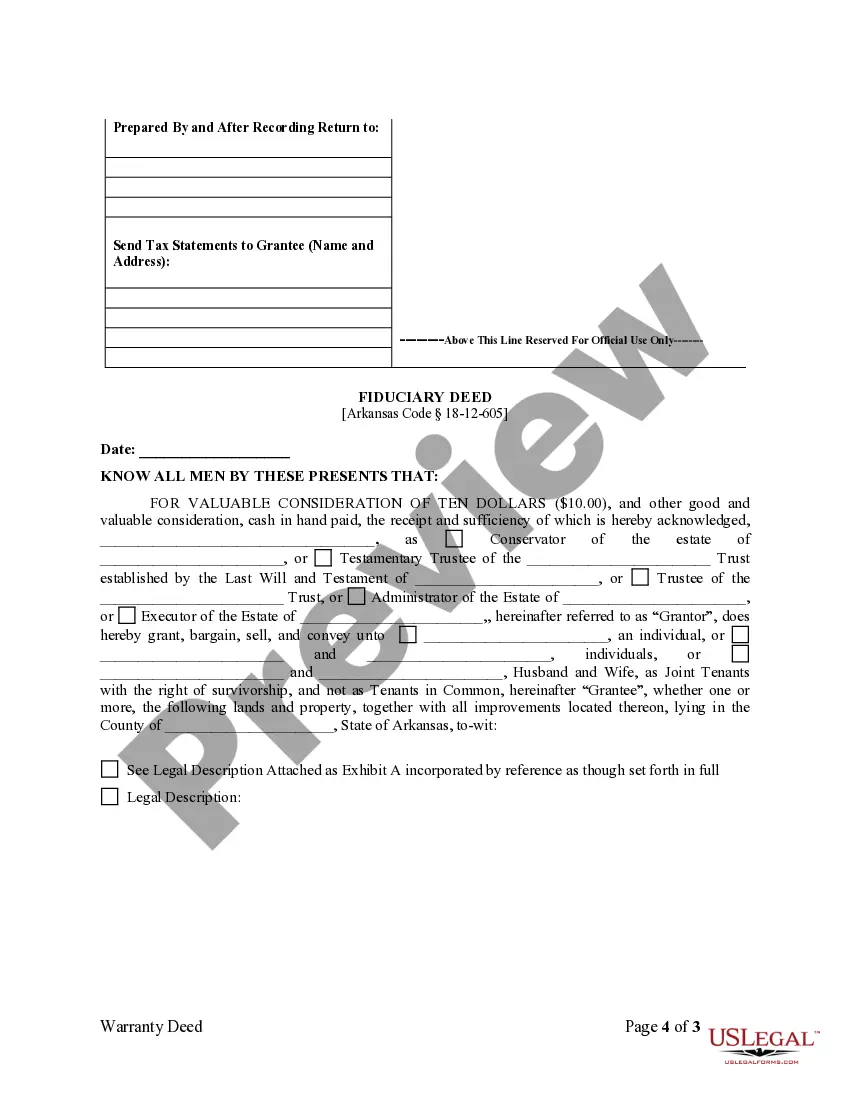
The Warranty Deed for Fiduciary is a legal document used to transfer property ownership from a fiduciary, such as an executor, trustee, guardian, or conservator, to another party. Unlike standard transfer forms, this deed is specific to situations where the grantor is acting in an official capacity on behalf of a deceased or incapacitated person, ensuring the property transfer is legally binding and recognized by the court system.
Key parts of this document
- Identifies the grantor and grantee, specifying their roles as fiduciaries.
- Describes the property being transferred, including its legal description.
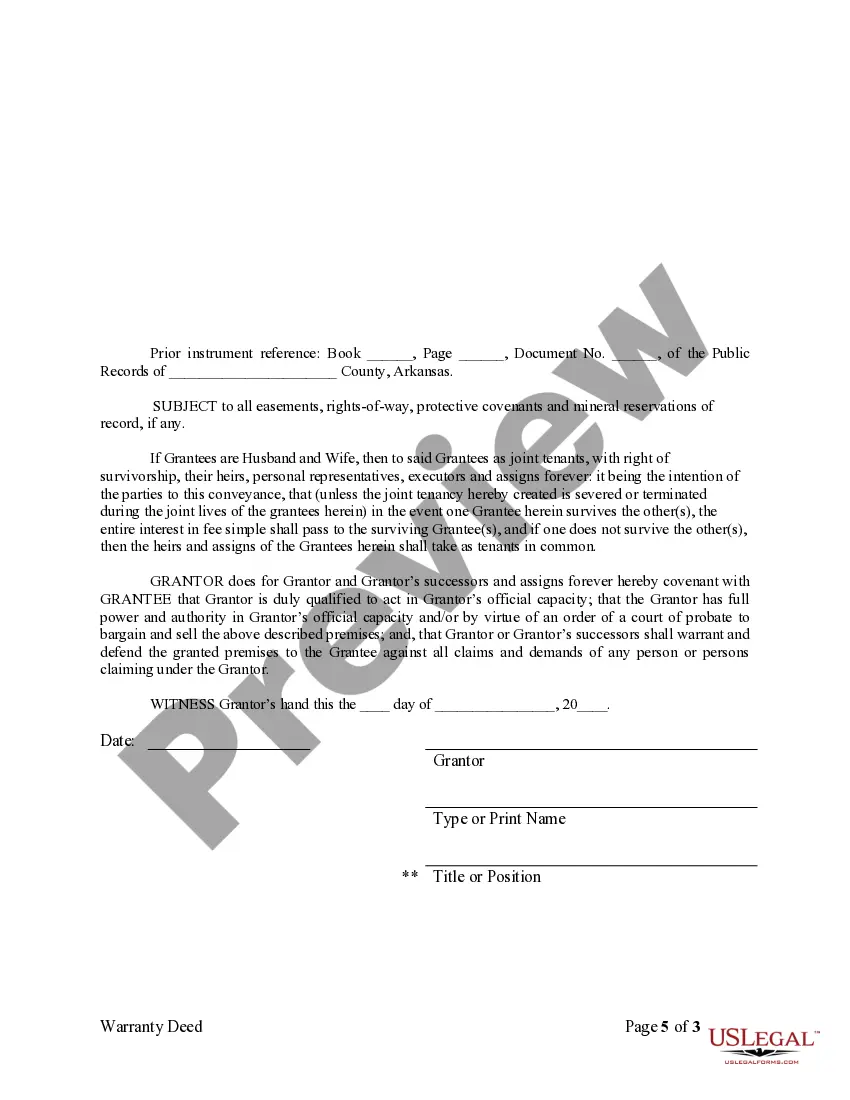
- Covenants from the grantor affirming their authority to execute the deed.
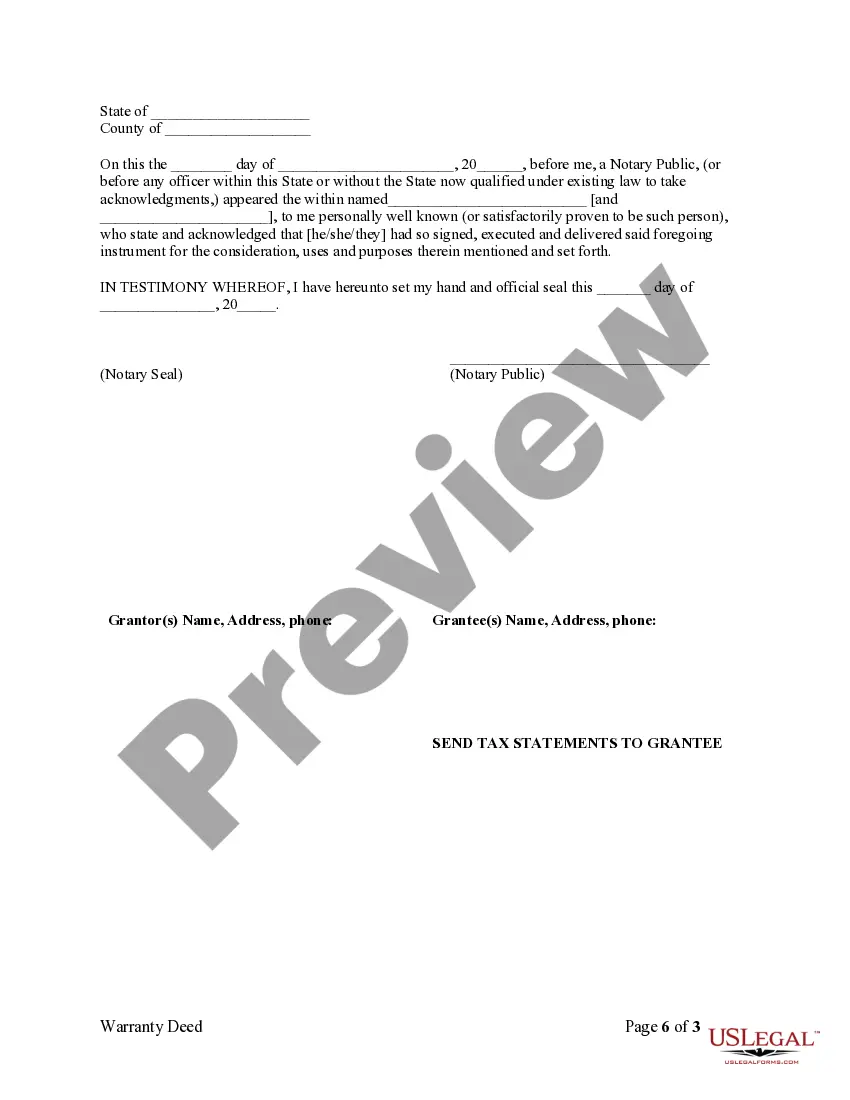
- Signatures and acknowledgments required for validity.
- Provisions for the rights of joint tenants if applicable.





When this form is needed
This form should be used when a fiduciary is transferring property as part of their duties to manage assets for someone else's benefit. Common scenarios include executing a will to convey real estate to heirs, managing trust assets, or transferring property on behalf of a minor or incapacitated individual.
Who this form is for
- Executors appointed to manage the estate of a deceased person.
- Trustees managing a trust's property.
- Guardians or conservators acting on behalf of minors or individuals deemed incapacitated.
- Administrators assigned by the court to oversee the distribution of an estate.
How to complete this form
- Identify the grantor (fiduciary) and the grantee (recipient of the property).
- Provide a complete description of the property being transferred.
- Include any necessary provisions regarding joint tenancy if applicable.
- Enter the date of execution and sign the document as required.
- Ensure any required witnesses or notarizations are completed, if needed.
Does this document require notarization?
This form does not typically require notarization unless specified by local law. However, it is advisable to check state-specific requirements to ensure compliance.
Get your form ready online
Our built-in tools help you complete, sign, share, and store your documents in one place.
Make edits, fill in missing information, and update formatting in US Legal Forms—just like you would in MS Word.
Download a copy, print it, send it by email, or mail it via USPS—whatever works best for your next step.
Sign and collect signatures with our SignNow integration. Send to multiple recipients, set reminders, and more. Go Premium to unlock E-Sign.
If this form requires notarization, complete it online through a secure video call—no need to meet a notary in person or wait for an appointment.
We protect your documents and personal data by following strict security and privacy standards.

Make edits, fill in missing information, and update formatting in US Legal Forms—just like you would in MS Word.

Download a copy, print it, send it by email, or mail it via USPS—whatever works best for your next step.

Sign and collect signatures with our SignNow integration. Send to multiple recipients, set reminders, and more. Go Premium to unlock E-Sign.

If this form requires notarization, complete it online through a secure video call—no need to meet a notary in person or wait for an appointment.

We protect your documents and personal data by following strict security and privacy standards.
Avoid these common issues
- Failing to include the complete legal description of the property.
- Not properly signing or having the document witnessed or notarized.
- Using the form without confirming the grantor's authority to act.
- Neglecting to read local statutes that may affect the validity of the deed.
Benefits of using this form online
- Convenience in downloading and completing the form from home.
- Editability allows for clear and accurate form completion.
- Reliability, as the forms are drafted by licensed attorneys to ensure legal compliance.
Looking for another form?



Form popularity
FAQ
An Arkansas Warranty Deed for Fiduciary typically includes essential elements such as the names of the parties involved, a detailed description of the property, and the signatures of the grantor and witnesses. It conveys clear title to the property, assuring the buyer that there are no hidden claims. Generally, the document will also include the date of transfer and any covenants made by the grantor regarding the property. To simplify the process of preparing this document, you can explore resources available on the US Legal Forms platform.
Yes, a transfer on death deed is legal in Arkansas and allows property owners to transfer their property to beneficiaries upon their death without going through probate. This deed must be correctly executed and recorded to ensure its validity. Utilizing an Arkansas Warranty Deed for Fiduciary can help ensure a smooth transfer process as part of estate management. For more information and assistance with such deeds, uslegalforms offers valuable resources.
The primary difference between a quitclaim deed and a warranty deed in Arkansas lies in the guarantees provided. A quitclaim deed transfers whatever interest the seller has, without any guarantees about the property title. In contrast, a warranty deed, especially the Arkansas Warranty Deed for Fiduciary, offers assurances regarding a clear title and the right to sell. Understanding these distinctions is crucial for your property transactions, and uslegalforms can provide clarity and templates for both types of deeds.
To transfer ownership of a property in Arkansas, you typically complete a legal document known as a deed, such as a warranty deed. In this process, you must ensure that all necessary information, including the names of the buyer and seller, is correctly filled out. Using the Arkansas Warranty Deed for Fiduciary is beneficial for a smooth transfer, particularly when managing an estate. You can find reliable templates and guidance through uslegalforms to make this process easier.
A fiduciary of an estate is a person appointed to manage the assets and liabilities of a deceased person's estate. This individual must act in the best interests of the beneficiaries while adhering to legal and ethical standards. They ensure proper handling and distribution of property, including the execution of any necessary legal documents, such as an Arkansas Warranty Deed for Fiduciary. If you need assistance in understanding this role further, you can explore resources available on platforms like uslegalforms.
A quitclaim deed in Arkansas transfers any interest the grantor has in the property without warranties or guarantees. This means that if the grantor has no ownership or a flawed title, the grantee receives nothing. For situations requiring more assurance, exploring an Arkansas Warranty Deed for Fiduciary responsibilities might be a more reliable choice.
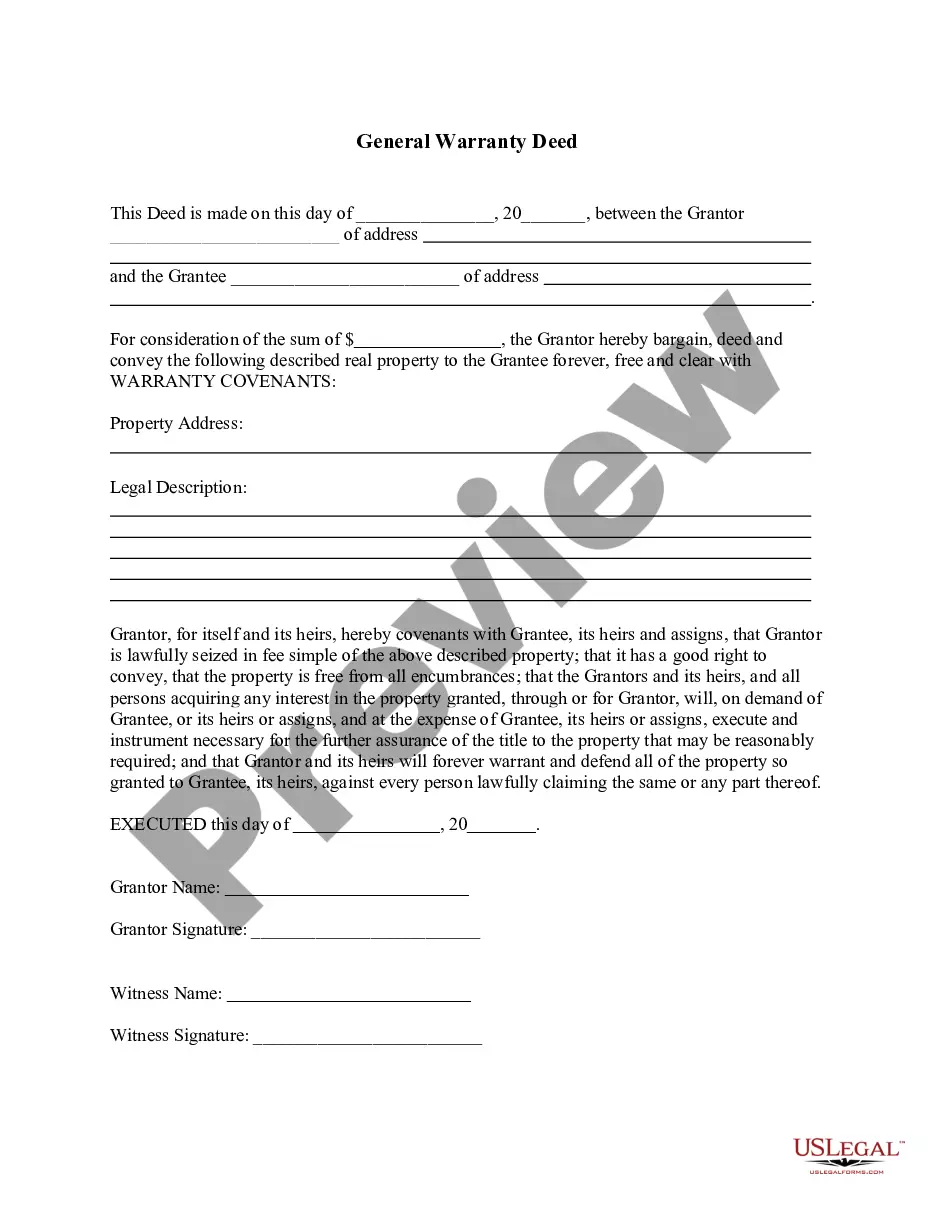
The strongest form of deed is generally considered to be a general warranty deed. This deed offers full protection to the grantee, guaranteeing that the grantor will defend against any claims to the title that arise. For those exploring options in Arkansas, an Arkansas Warranty Deed for Fiduciary purposes often provides similar security, ensuring both parties are protected.
A special warranty deed is a type of deed that provides some assurances to the buyer, but only for the time that the seller owned the property. It guarantees that the property has not been encumbered during the owner’s period of possession. When dealing with estate matters or fiduciary responsibilities, understanding the implications of a special warranty deed can complement the Arkansas Warranty Deed for Fiduciary.
The best deed to transfer property often depends on the circumstances. In many cases, a warranty deed is preferred due to its comprehensive guarantees about the title. This type of deed provides protection to the buyer, which is critical when using an Arkansas Warranty Deed for Fiduciary purposes. Always evaluate your specific situation to determine the best option.
An Arkansas warranty deed must include specific elements, such as the names of the grantor and grantee, a legal description of the property, and a statement of the grantor's warranty of title. It's also important to have the document signed in the presence of a notary public. Following these requirements ensures the effectiveness of an Arkansas Warranty Deed for Fiduciary functions.