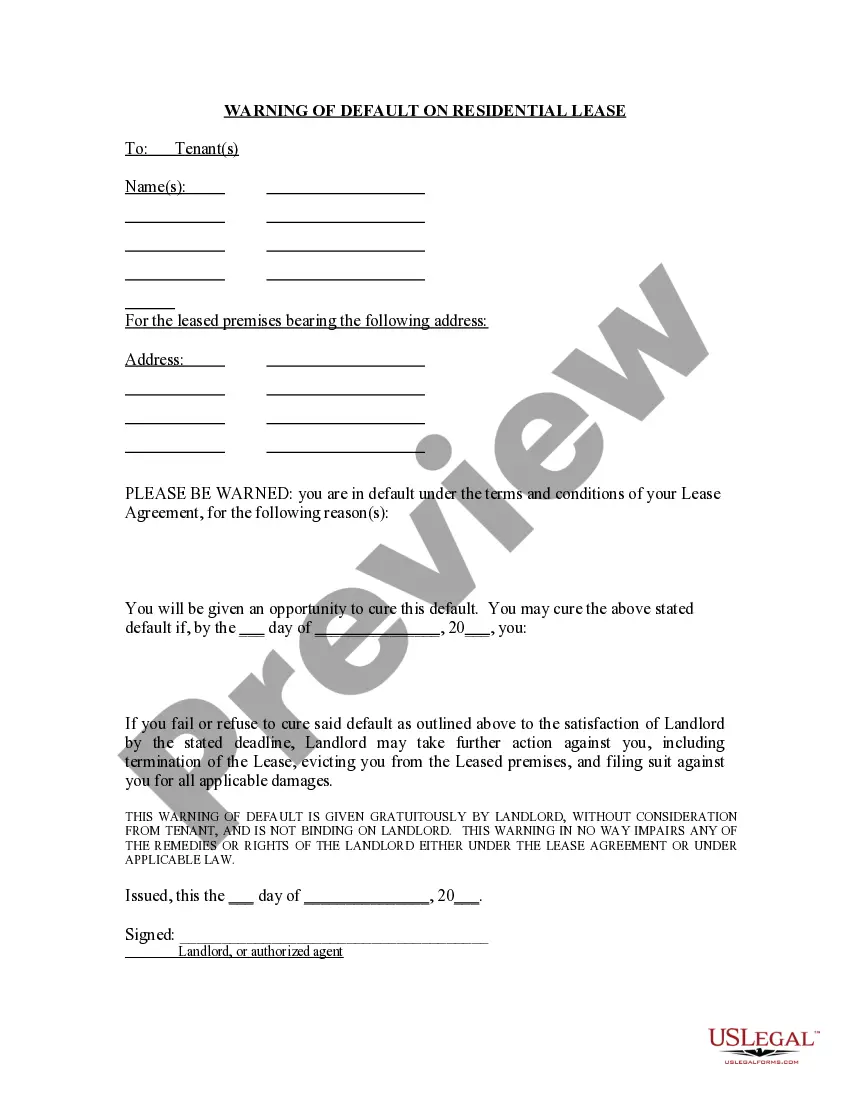
Arkansas Warning of Default on Residential Lease
Understanding this form
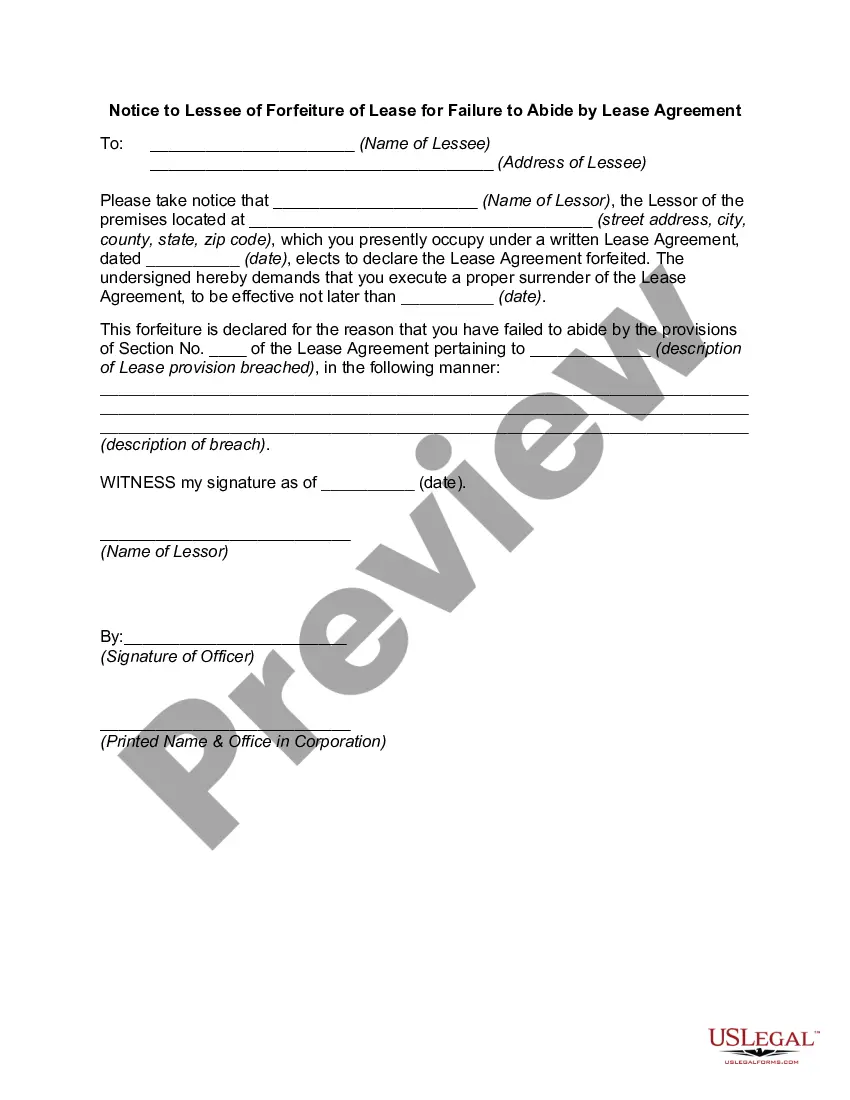
The Warning of Default on Residential Lease is a notice from a landlord to a tenant indicating potential lease violations. This form serves to inform the tenant that failure to remedy specific concerns may lead to a default under the lease agreement. Unlike other lease-related documents, this warning does not impose binding obligations on the landlord and simply serves as a cautionary notice to the tenant.
Main sections of this form
- Identification of the issuing landlord or authorized agent.
- Clear statement that the warning is given without consideration and is non-binding.
- Specific mention of potential lease violations that necessitate this warning.
- Date of issue to establish a timeline for the notice.
- Space for the landlord's signature to validate the warning.


Situations where this form applies
This form should be used when a landlord notices that a tenant may be in violation of their lease terms. Common scenarios include late rent payments, unauthorized alterations to the rental property, or failure to maintain cleanliness. Issuing this warning provides the tenant a chance to address the issues before more severe actions, such as eviction, are taken.
Who can use this document
- Landlords who manage residential rental properties.
- Property managers acting on behalf of property owners.
- Those who want to formally document a warning to tenants regarding lease violations.
Instructions for completing this form
- Identify the landlordâs name or the name of the authorized agent.
- Specify the date of the warning to establish a timeline.
- Clearly describe the lease violations prompting this warning.
- Sign the document to validate its issuance.
Is notarization required?
This form does not typically require notarization unless specified by local law. Ensure compliance with your jurisdictionâs regulations regarding lease agreements.
Get your form ready online
Our built-in tools help you complete, sign, share, and store your documents in one place.
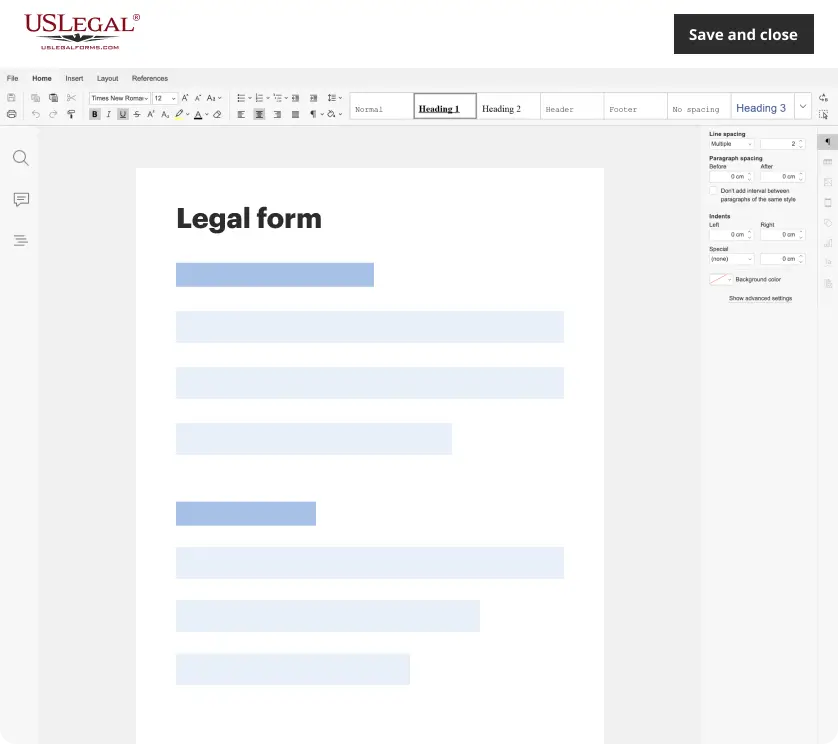
Make edits, fill in missing information, and update formatting in US Legal Forms—just like you would in MS Word.
Download a copy, print it, send it by email, or mail it via USPS—whatever works best for your next step.
Sign and collect signatures with our SignNow integration. Send to multiple recipients, set reminders, and more. Go Premium to unlock E-Sign.
If this form requires notarization, complete it online through a secure video call—no need to meet a notary in person or wait for an appointment.
We protect your documents and personal data by following strict security and privacy standards.
Make edits, fill in missing information, and update formatting in US Legal Forms—just like you would in MS Word.
Download a copy, print it, send it by email, or mail it via USPS—whatever works best for your next step.
Sign and collect signatures with our SignNow integration. Send to multiple recipients, set reminders, and more. Go Premium to unlock E-Sign.
If this form requires notarization, complete it online through a secure video call—no need to meet a notary in person or wait for an appointment.
We protect your documents and personal data by following strict security and privacy standards.
Avoid these common issues
- Failing to specify the lease violations clearly.
- Not putting a date on the warning, which can create confusion about timelines.
- Omitting the landlord's signature, which is essential for authenticity.
Why use this form online
- Convenient access to professionally drafted legal forms.
- Editable templates allow for customization to fit specific needs.
- Reliable formatting ensures compliance with legal standards.
Legal use & context
- This warning serves to formally notify the tenant of specific defaults, allowing them the opportunity to rectify the situation.
- Failure to respond or correct the issues may lead to further legal actions, including eviction.
Key takeaways
- A Warning of Default is a critical step for landlords before taking legal action.
- Completing the form accurately ensures its effectiveness and legal standing.
- Always consider local laws when issuing a warning to ensure compliance.
Looking for another form?
Form popularity
FAQ
Red flags in a lease agreement could include unclear language, excessive fees, or lack of maintenance responsibilities for the landlord. It's crucial to thoroughly review any lease before signing, as these issues can lead to default situations. Familiarizing yourself with the Arkansas Warning of Default on Residential Lease can help you identify these potential pitfalls and encourage a fair lease experience.
If you default on a leased car, the leasing company can take possession of the vehicle and may also hold you responsible for any remaining payments. Additional charges, like early termination fees, might apply. Knowing the implications of default through resources like the Arkansas Warning of Default on Residential Lease can help you manage lease agreements more effectively and avoid financial setbacks.
The default duration of a lease does not refer to a specific time frame but rather the conditions under which a tenant can be declared in default. Generally, this involves a timeline for addressing lease violations, like a notice period for paying overdue rent. Knowledge of the Arkansas Warning of Default on Residential Lease can help clarify the timeline and your responsibilities as a tenant.
An event of default occurs when a tenant fails to comply with a key term in the lease. This could include not paying rent on time or causing significant property damage. Understanding the Arkansas Warning of Default on Residential Lease can help tenants identify these events early and address them promptly.
To default on a lease typically involves failing to meet the agreed-upon terms, such as missing rent payments or breaching specific lease obligations. It's important to understand that default can lead to serious ramifications, including eviction. You can minimize risks by familiarizing yourself with the Arkansas Warning of Default on Residential Lease, which highlights the steps landlords take when a tenant defaults.
Default tenancy refers to a situation where a tenant is in violation of their lease terms, triggering a potential eviction process. This might stem from repeated late payments or significant lease violations. The Arkansas Warning of Default on Residential Lease can guide renters on how to rectify these situations before facing further consequences.
A lease violation warning is a formal notice issued by a landlord to a tenant indicating a breach of lease terms. Typically, this notice outlines the specific violation, such as late rent payments or damage to property. Receiving an Arkansas Warning of Default on Residential Lease can be a crucial step for both landlords and tenants to understand their rights and obligations moving forward.
To write a violation notice, begin by stating the violation clearly, including specific lease terms and dates. Provide the tenant with a timeframe to remedy the situation and mention any consequences they may face. Understanding the Arkansas Warning of Default on Residential Lease provides insight into the processes involved and helps shape your approach to the notice.
Writing a lease violation involves recording the specific terms that were broken and the date they occurred. Clearly state the violation and include any evidence that supports your claim. In the context of the Arkansas Warning of Default on Residential Lease, ensure you follow legal guidelines to protect your interests.
If a landlord violates a lease agreement, you should first communicate your concerns directly to them in writing. If unresolved, consider reaching out to local housing authorities or seeking legal advice. Knowing about the Arkansas Warning of Default on Residential Lease can guide your actions and protect your rights as a tenant.