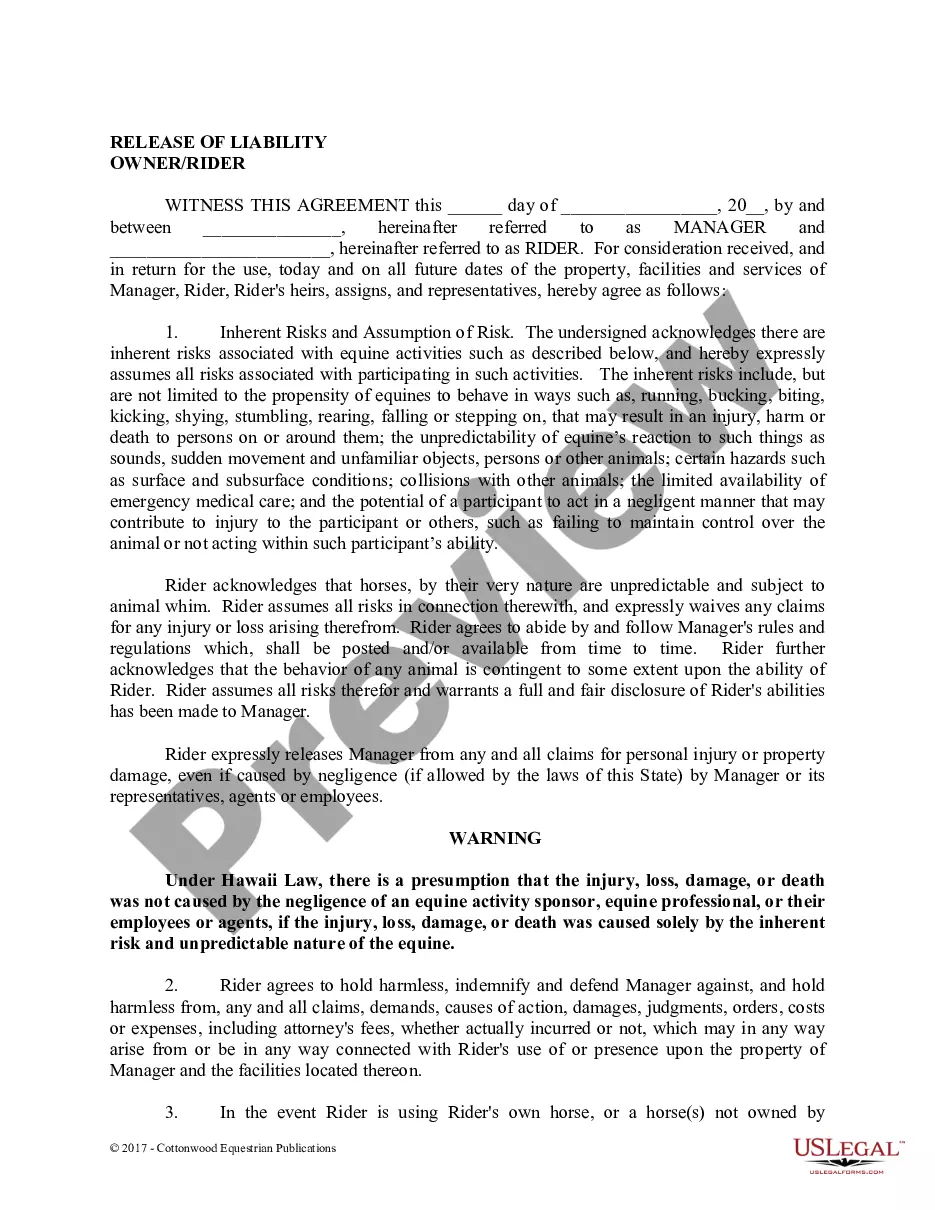
Alabama Last Will for a Widow or Widower with no Children
About this form
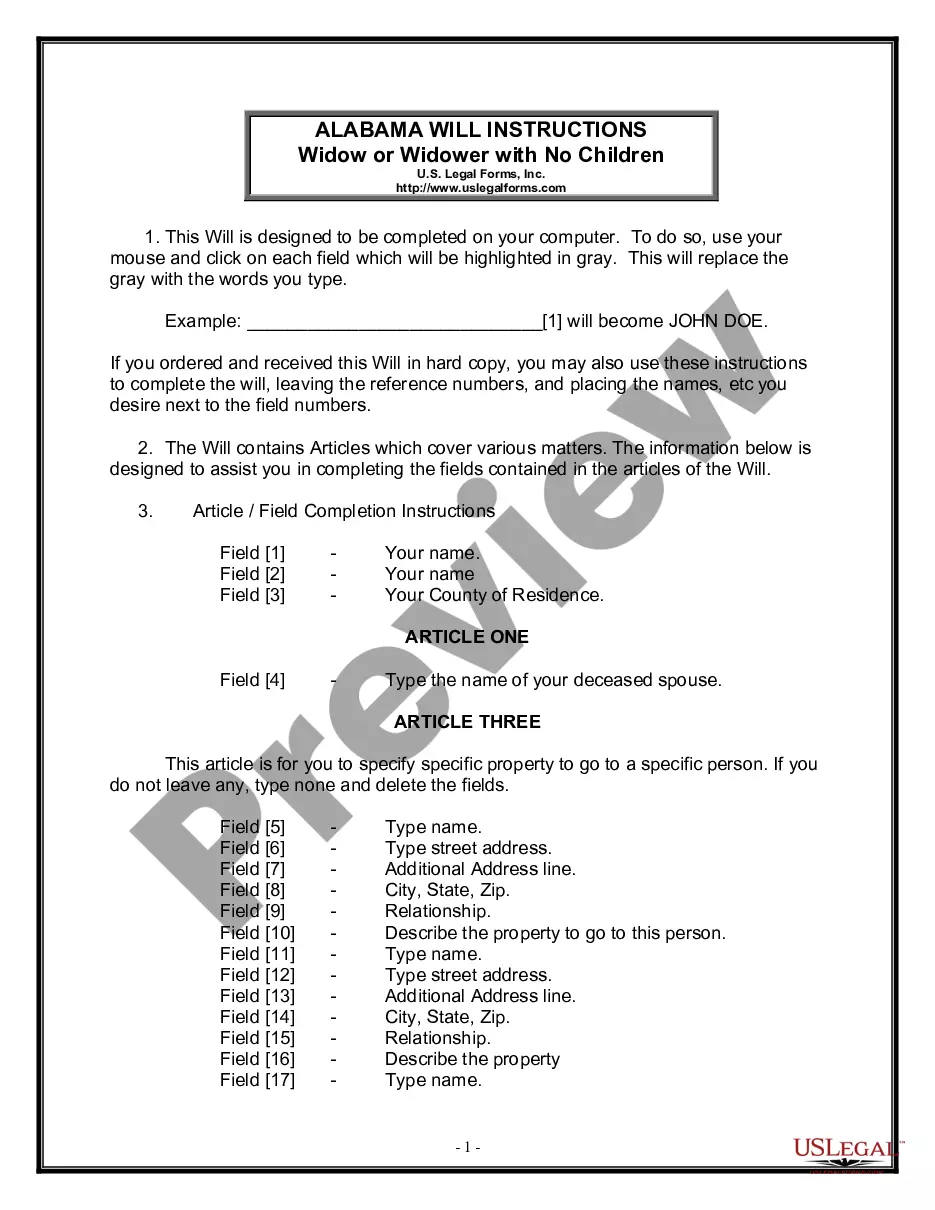
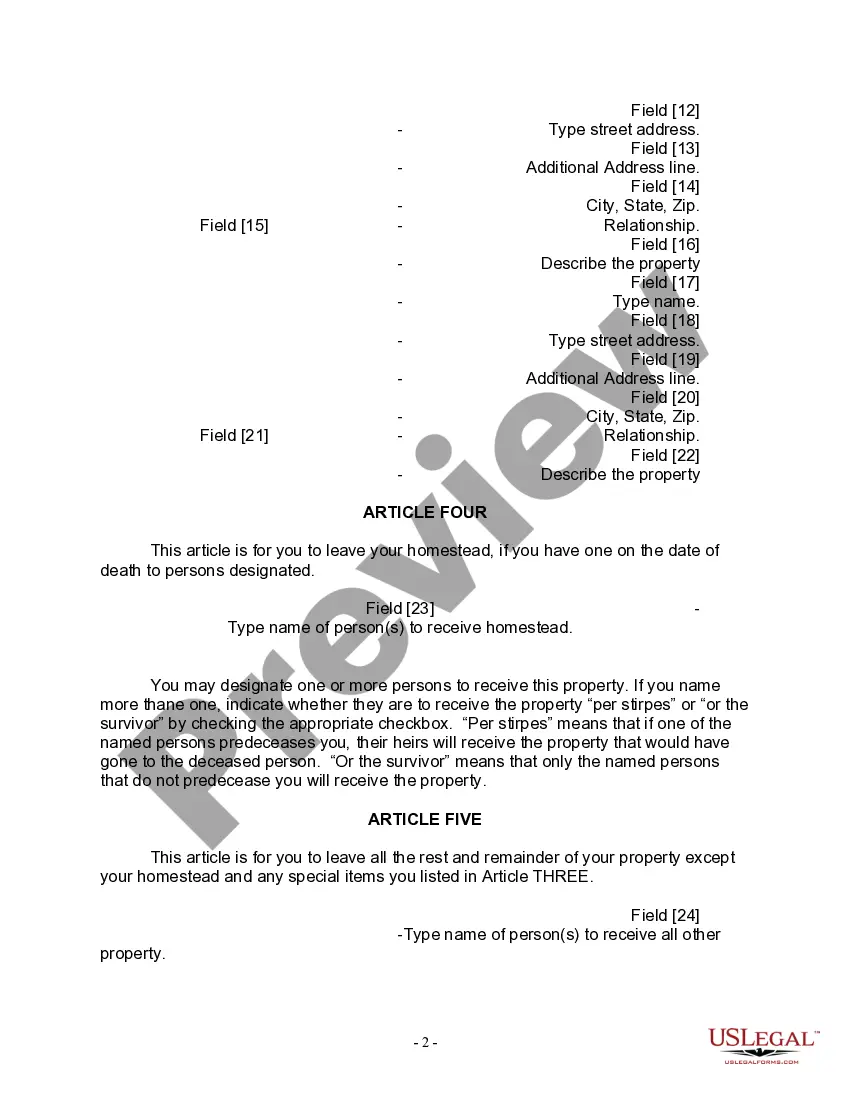
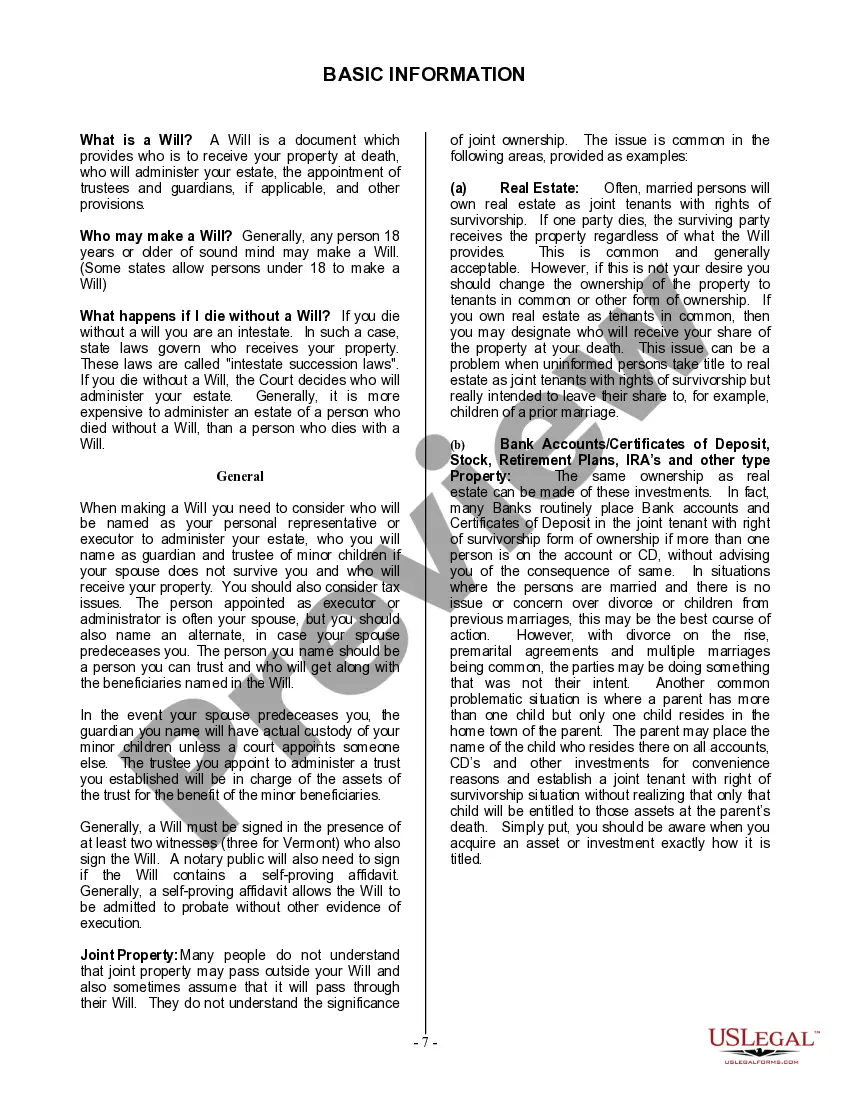
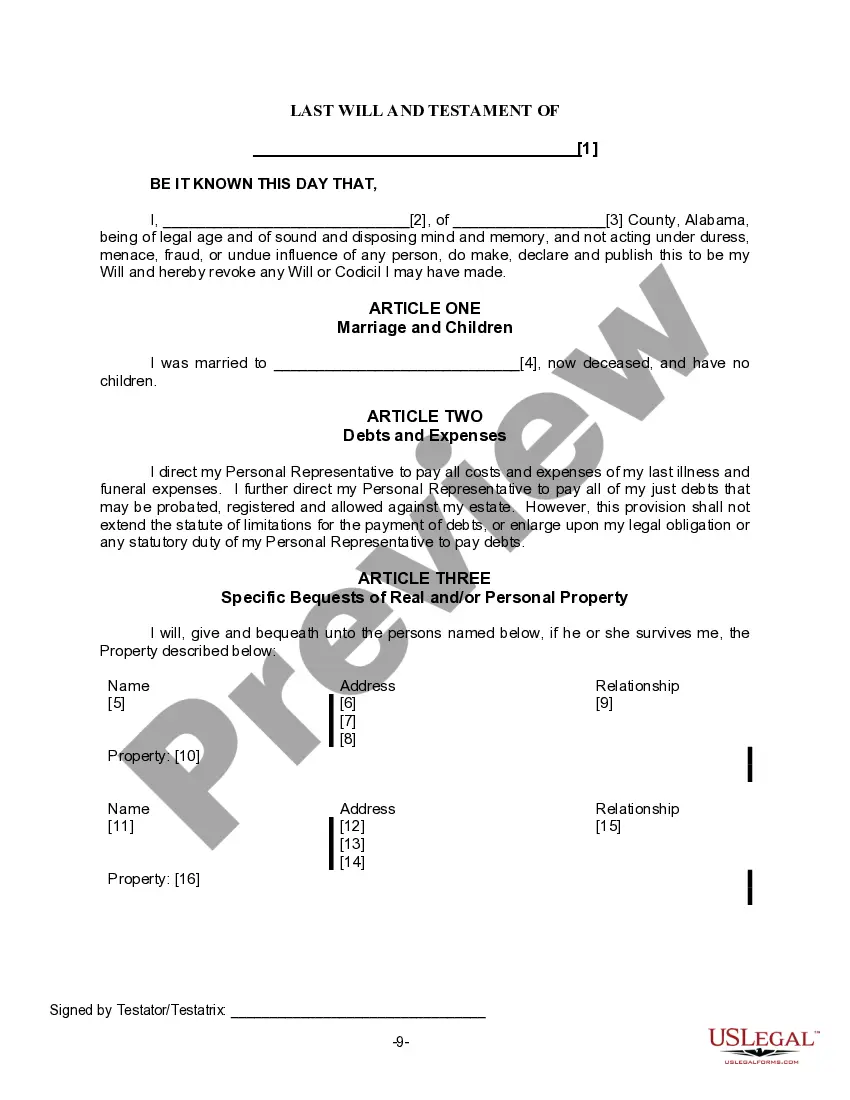
This Last Will for a Widow or Widower with No Children is a legal document designed to outline how your estate will be distributed after your passing. It caters specifically to widowed individuals without children, allowing them to designate beneficiaries, appoint a personal representative, and provide for the distribution of their property. Unlike standard wills, this form addresses the unique circumstances of a surviving spouse, ensuring that wishes are clearly stated and legally binding.
Main sections of this form
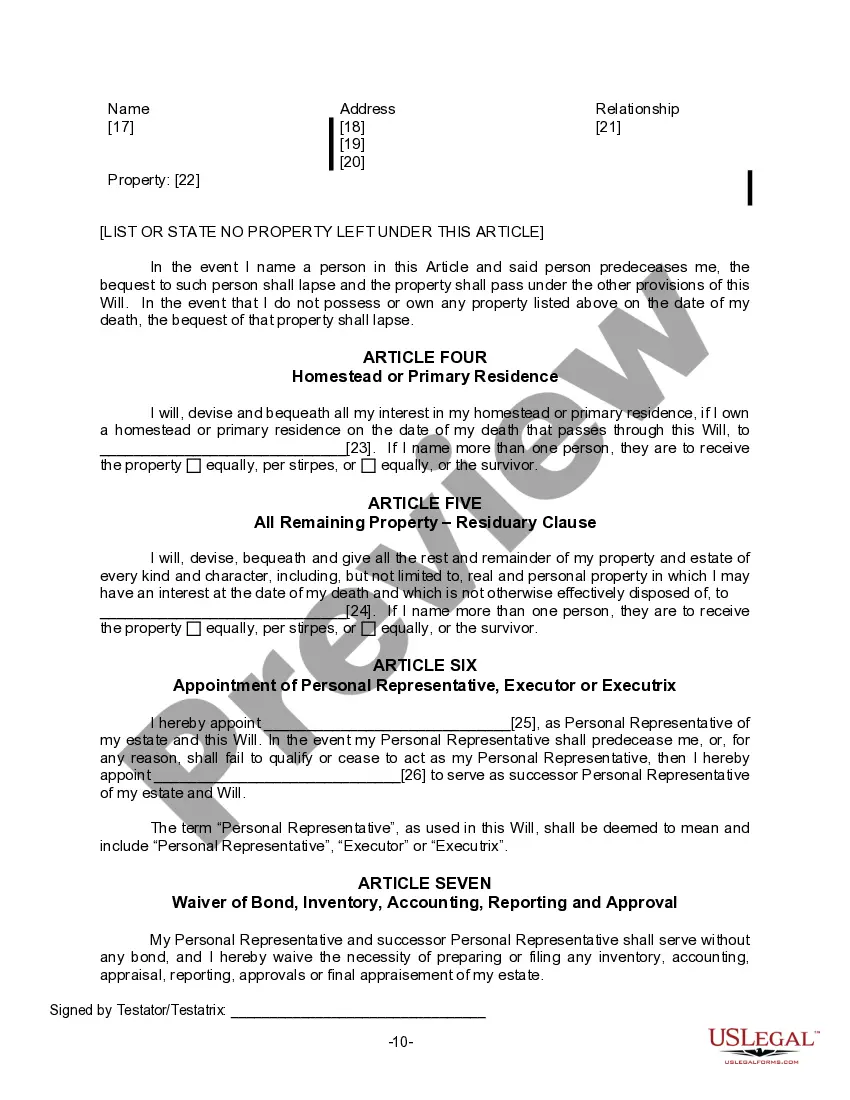
- Personal representative appointment: Designate an executor to manage your estate.
- Property distribution: Specify who will receive your property and any specific bequests.
- Homestead allocation: Clearly indicates who will receive your primary residence.
- Debt and expense instructions: Provides guidelines for settling debts and final expenses.
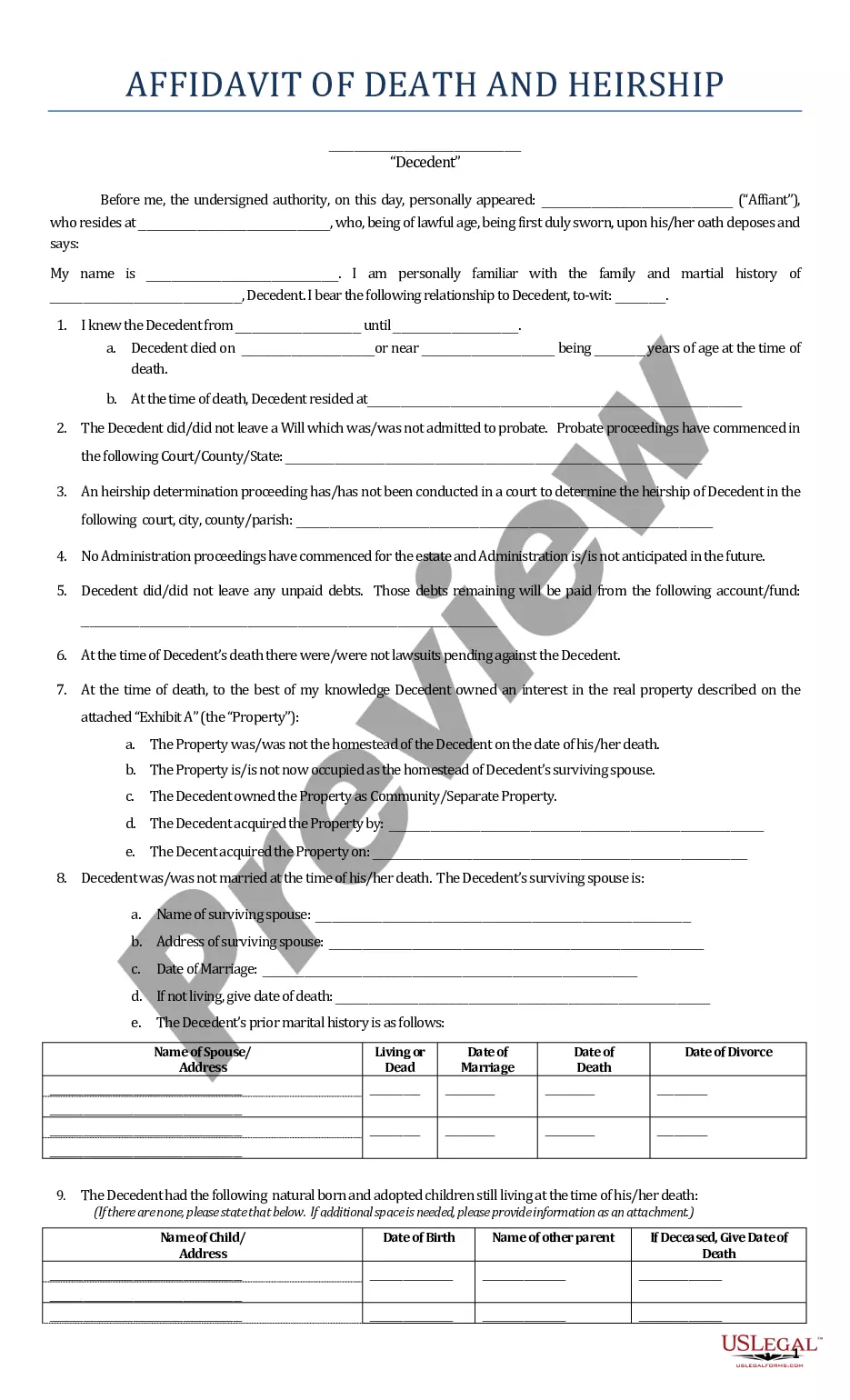
- Self-proving affidavit: Optionally validates the will for smoother probate proceedings.
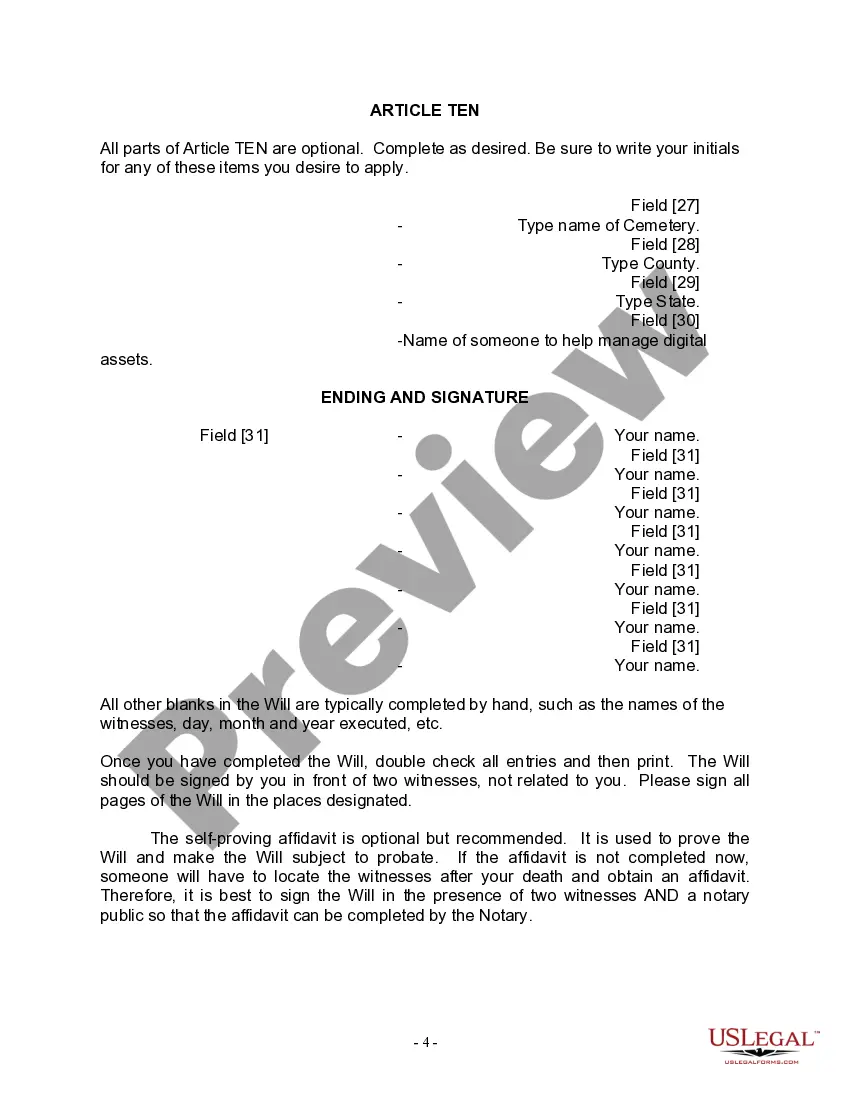
- Signature requirements: Outlines the need for two witnesses during the signing process.



When to use this form
This form is essential when a widow or widower with no children wants to ensure their assets are distributed according to their wishes after death. It is particularly useful for those who have specific intentions regarding who should inherit their property and wish to avoid potential disputes among family members. If you want to clearly express your wishes and have them legally documented, this Last Will is the appropriate choice.
Who this form is for
- Widows and widowers with no children.
- Individuals wanting to specify the distribution of their estate after death.
- Those seeking to designate a trusted person as their estate executor.
- People with specific items or property they want to pass on to others.
How to prepare this document
- Start with your name and county of residence in the designated fields.
- Enter the name of your deceased spouse in the appropriate article.
- Specify each beneficiary's details, including their name, address, and relationship to you.
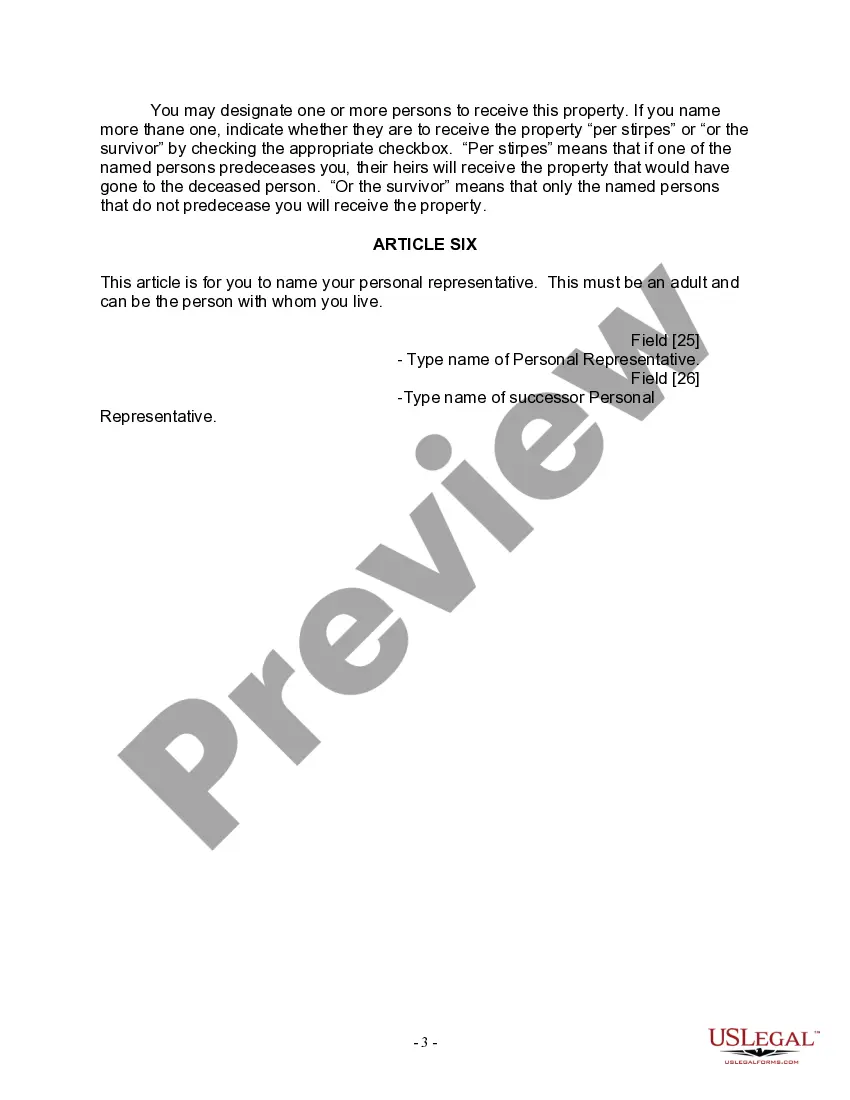
- Designate your personal representative and any successor representatives.
- Sign the will in front of two witnesses, ensuring they are not mentioned in the will.
- Consider employing a notary public to sign the self-proving affidavit, if applicable.
Notarization guidance
This form must be notarized to be legally valid. US Legal Forms provides secure online notarization powered by Notarize, allowing you to complete the process through a verified video call.
Get your form ready online
Our built-in tools help you complete, sign, share, and store your documents in one place.
Make edits, fill in missing information, and update formatting in US Legal Forms—just like you would in MS Word.
Download a copy, print it, send it by email, or mail it via USPS—whatever works best for your next step.
Sign and collect signatures with our SignNow integration. Send to multiple recipients, set reminders, and more. Go Premium to unlock E-Sign.
If this form requires notarization, complete it online through a secure video call—no need to meet a notary in person or wait for an appointment.
We protect your documents and personal data by following strict security and privacy standards.

Make edits, fill in missing information, and update formatting in US Legal Forms—just like you would in MS Word.

Download a copy, print it, send it by email, or mail it via USPS—whatever works best for your next step.

Sign and collect signatures with our SignNow integration. Send to multiple recipients, set reminders, and more. Go Premium to unlock E-Sign.

If this form requires notarization, complete it online through a secure video call—no need to meet a notary in person or wait for an appointment.

We protect your documents and personal data by following strict security and privacy standards.
Common mistakes
- Not having the will signed in front of the required witnesses.
- Failing to include a self-proving affidavit when applicable.
- Leaving out key beneficiaries or failing to specify property allocation clearly.
- Not storing the completed will in a safe, accessible location.
Why complete this form online
- Convenience: Complete the form at your own pace from home.
- Editability: Easily make changes and updates as needed.
- Reliable legal formatting: Ensure compliance with typical legal requirements.
Quick recap
- This Last Will is tailored for widows and widowers without children.
- It allows you to designate beneficiaries and manage your estate effectively.
- Ensure the document is properly witnessed to avoid potential legal issues.
Looking for another form?

Form popularity
FAQ
When a homeowner dies without a will in Alabama, the home will generally be subject to the state's intestacy laws. The distribution of the property will depend on the deceased’s surviving relatives. As a widow or widower with no children, you may inherit the home outright, but it’s essential to follow the legal steps to ensure a proper transition. For assistance, consider US Legal Forms, which offers resources to help guide you through the process of settling such estates.
In the absence of a will, Alabama law appoints an administrator for the estate, usually a family member or a close relative. This individual is responsible for managing the estate's assets, paying debts, and distributing property according to intestacy laws. If you are a widow or widower without children, you may have the first right to serve as the administrator. Exploring the services of US Legal Forms can equip you with the tools needed to navigate this appointment efficiently.
To get heir property in your name in Alabama without a will, you will need to establish your rights as an heir under state intestacy laws. This may involve gathering documents that prove your relationship to the deceased. You can then file for a partition action in court to have the property legally recognized in your name. Utilizing US Legal Forms can simplify this process, providing you with the necessary forms and guidance.
In Alabama, if a person dies without a will, their property is distributed according to state intestacy laws. This means the property will pass to the nearest relatives, such as parents, siblings, or other relatives, depending on the family structure. If you are a widow or widower with no children, you may receive the entire estate, but it is crucial to ensure the proper legal steps are taken. For a seamless process, consider using a platform like US Legal Forms, which provides essential resources to navigate property transfer.
A widow's pension in Alabama refers to financial support available to widows from certain pension plans or government benefits. Eligibility often depends on the deceased spouse's employment history and contributions. To effectively manage the distribution of these financial assets, having an Alabama Last Will for a Widow or Widower with no Children is advisable, ensuring clear intentions are established.
Yes, when a husband dies, the wife can receive survivor benefits from programs such as social security or a pension plan. These benefits offer important financial support and may help stabilize her situation. Establishing an Alabama Last Will for a Widow or Widower with no Children can further secure her interests regarding any assets or inheritances.
Widow benefits in Alabama typically include financial assistance through programs like social security, pension plans, and veterans' benefits. These benefits aim to provide economic support after the loss of a spouse. Understanding these benefits is crucial, and creating an Alabama Last Will for a Widow or Widower with no Children can help clarify how these resources will be managed.
A widow in Alabama may be entitled to various benefits, including social security survivor benefits and a share of the deceased spouse's estate. These benefits can provide financial support during a challenging time. It is essential to understand your rights and consider creating an Alabama Last Will for a Widow or Widower with no Children to ensure clear distribution of assets.
To create a valid Alabama Last Will for a Widow or Widower with no Children, you must be at least 18 years old and mentally competent. The will should be in writing and signed by you, along with the signatures of two witnesses. Importantly, the witnesses cannot be beneficiaries of the will. Meeting these requirements ensures your wishes are honored.
The order of inheritance in Alabama begins with the surviving spouse. If there are no children, the spouse typically receives everything. If there are children, the spouse shares the estate with them. Other relatives, such as parents and siblings, come next in line only if there is no surviving spouse. For an efficient distribution process, consider preparing an Alabama Last Will for a Widow or Widower with no Children.