Alabama Letter from Tenant to Landlord about Landlord's refusal to allow sublease is unreasonable
Overview of this form
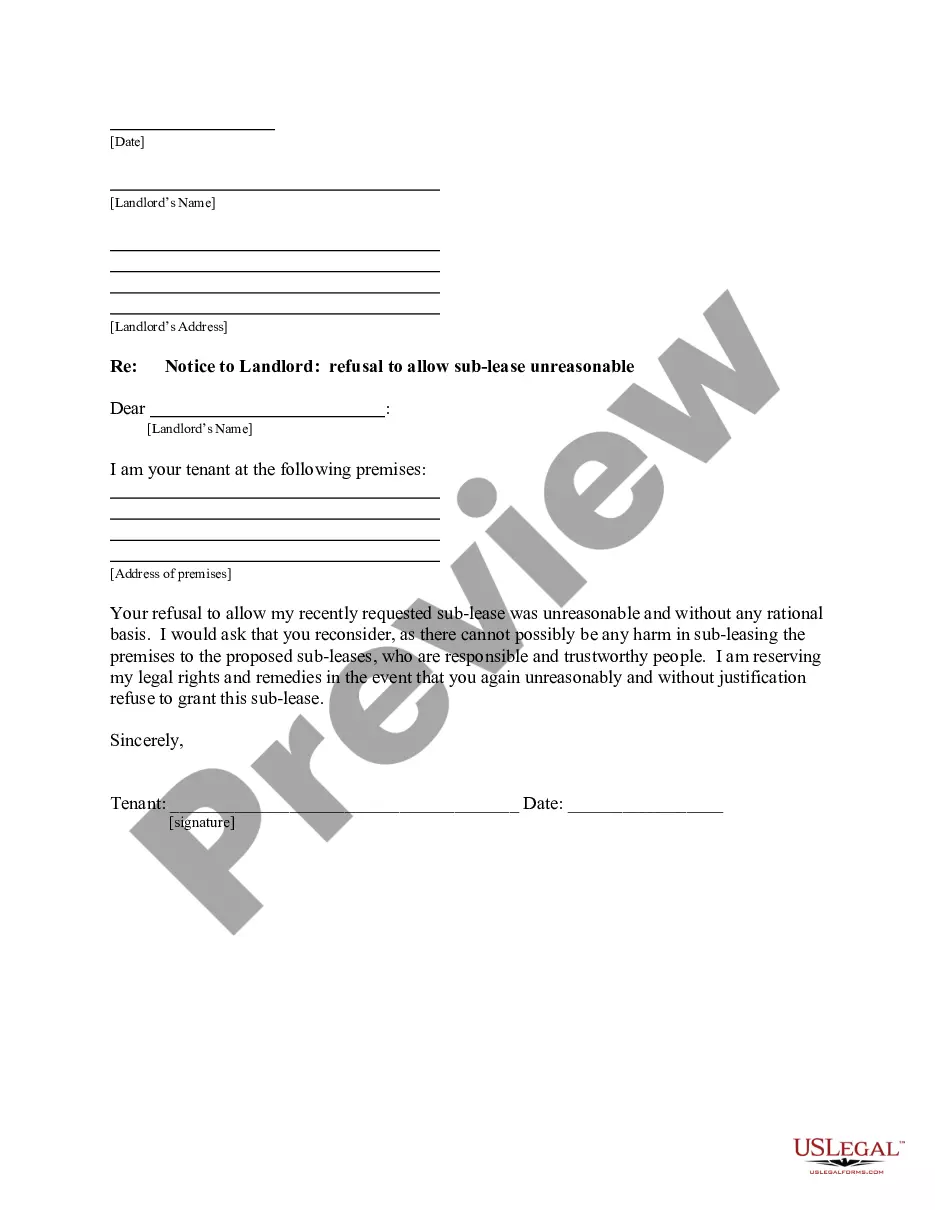
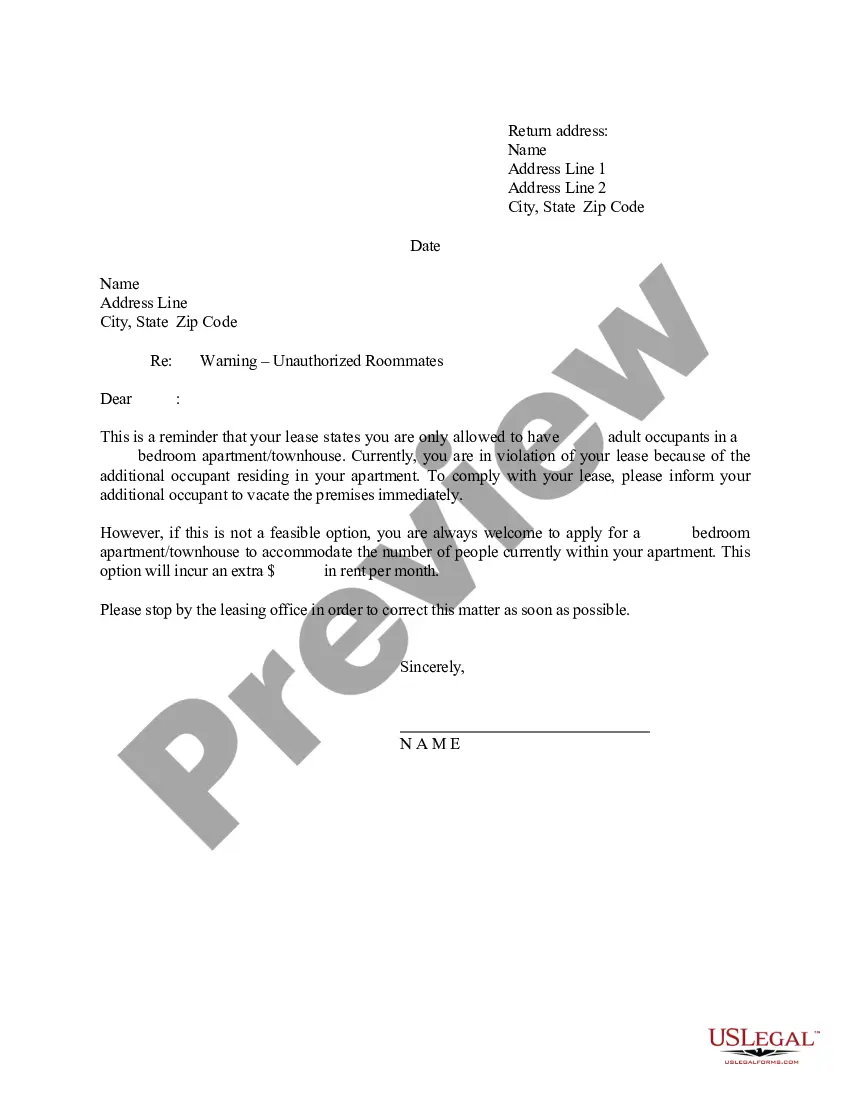
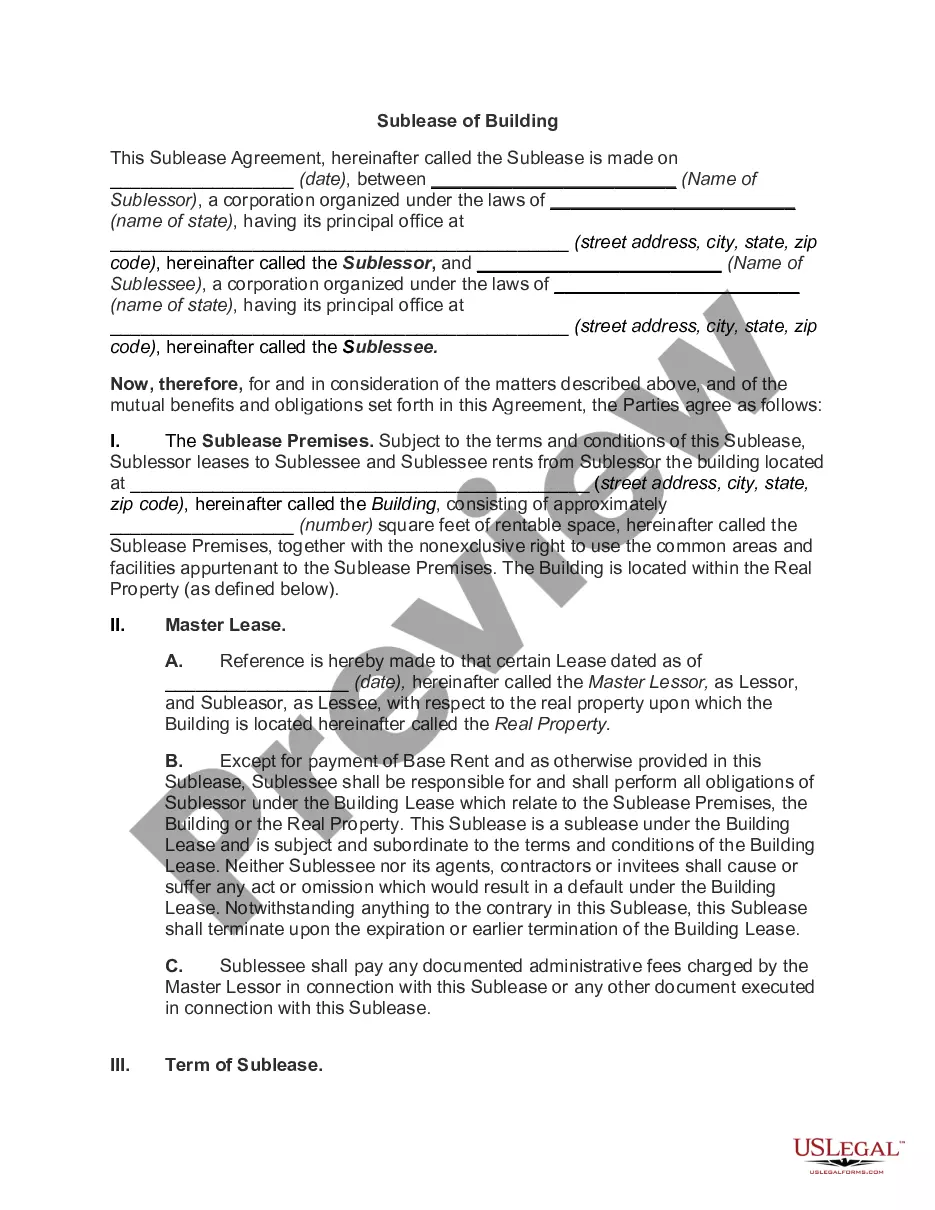
This Letter from Tenant to Landlord about Landlord's refusal to allow sublease is unreasonable is a formal notice from a tenant to their landlord. It addresses the landlord's denial of the tenant's request to sublease the rental property. This letter serves to communicate the tenant's intentions to reserve their legal rights and remedies should the landlord's refusal continue. Unlike other tenant-landlord communications, this letter explicitly mentions the potential legal implications of denying subleasing rights.
Key parts of this document
- Tenant's name and address
- Landlord's name and address
- Date of the letter
- Clear statement of the refusal to allow sublease
- Statement reserving legal rights and remedies
- Signature of the tenant

When to use this form
This form is particularly useful when a tenant wishes to formally document their disagreement with a landlord's refusal to allow subleasing of the rental unit. Situations may include the tenant needing to relocate temporarily, financial difficulties requiring a subtenant, or finding a responsible individual to take over the lease. Using this letter can clarify the tenant's legal stance and help in future disputes.
Who should use this form
- Tenants who have received a refusal from their landlord to allow subleasing
- Individuals looking to reserve their legal rights regarding the landlord's decision
- Renters striving to maintain open communication with their landlord about subleasing issues
How to complete this form
- Identify the parties by entering your name as the tenant and the landlordâs name.
- Specify your address, including the rental unit in question.
- Enter the date of the letter to indicate when it was sent.
- Clearly state the landlord's refusal to allow the sublease and the reasons, if applicable.
- Include a statement reserving your rights and remedies regarding the landlordâs decision.
- Sign the letter and ensure you keep a copy for your records.
Is notarization required?
This form does not typically require notarization unless specified by local law. However, having a notarized version can provide additional legal weight in disputes.
Get your form ready online
Our built-in tools help you complete, sign, share, and store your documents in one place.
Make edits, fill in missing information, and update formatting in US Legal Forms—just like you would in MS Word.
Download a copy, print it, send it by email, or mail it via USPS—whatever works best for your next step.
Sign and collect signatures with our SignNow integration. Send to multiple recipients, set reminders, and more. Go Premium to unlock E-Sign.
If this form requires notarization, complete it online through a secure video call—no need to meet a notary in person or wait for an appointment.
We protect your documents and personal data by following strict security and privacy standards.

Make edits, fill in missing information, and update formatting in US Legal Forms—just like you would in MS Word.

Download a copy, print it, send it by email, or mail it via USPS—whatever works best for your next step.

Sign and collect signatures with our SignNow integration. Send to multiple recipients, set reminders, and more. Go Premium to unlock E-Sign.

If this form requires notarization, complete it online through a secure video call—no need to meet a notary in person or wait for an appointment.

We protect your documents and personal data by following strict security and privacy standards.
Typical mistakes to avoid
- Failing to include the date of the letter.
- Not addressing the landlord correctly by their full name.
- Leaving out the statement reserving legal rights.
- Neglecting to sign the letter before sending.
Benefits of using this form online
- Convenient access to the form at any time, allowing for quick completion.
- Editability to customize the letter to fit specific circumstances.
- Reliable legal language crafted by licensed attorneys, ensuring compliance.
Legal use & context
- This letter can serve as a record of communication if the disagreement escalates to legal proceedings.
- Documenting the tenant's position may support claims if the landlord's refusal leads to issues with the tenant's lease.
Key takeaways
- Utilize this form to formally communicate disagreement with a landlord's refusal to permit a sublease.
- The form helps protect the tenant's legal interests and clarify communication with the landlord.
- Ensure completion is thorough to prevent common mistakes that could undermine the letterâs effectiveness.
Looking for another form?
Form popularity
FAQ
As a tenant, you have the right to live in a safe, secure and quiet environment that is managed in accordance with the law. You also have a responsibility to take good care of the property, pay the rent on time, and adhere to the terms of your tenancy agreement.
All private tenants have some basic legal rights.This includes a right to a minimum tenancy term of six months, unless a shorter term has been agreed in the written contract, and a right to have the landlord be responsible for certain repairs.
Tenants in the state of Alabama have the right to freedom from discrimination in housing-related activities. However, unlike most states, there is no statewide fair housing law that specifically protects tenants in Alabama. Instead, Alabama tenants must rely on protection under the Federal Fair Housing Act.
Although renters must abide by the Homeowners' Association rules, they still have rights under the law. The property owner must also follow their home state's Landlord-Tenant Laws that include the Fair Housing Act and Fair Credit Reporting Act.
A landlord cannot evict a tenant without an adequately obtained eviction notice and sufficient time. A landlord cannot retaliate against a tenant for a complaint. A landlord cannot forego completing necessary repairs or force a tenant to do their own repairs.A landlord cannot remove a tenant's personal belongings.
Alabama. The last on this list of landlord-friendly states to invest in is Alabama. First, a rental license is not required to be a landlord and rent out a property. According to NOLO, Alabama state law does not cover late rent fees.
If your landlord fails to make repairs which he is required to make, you may be able to break the lease. Give your landlord a written demand to make repairs that he is supposed to make under the lease or Alabama law.If the landlord doesn't make the repairs, turn your key in when you move.
Tenants in the state of Alabama have the right to freedom from discrimination in housing-related activities. However, unlike most states, there is no statewide fair housing law that specifically protects tenants in Alabama. Instead, Alabama tenants must rely on protection under the Federal Fair Housing Act.
Alabama tenants are protected under Alabama's Uniform Residential Landlord and Tenant Act.Landlords can enter the premises, but only after giving notice in most cases. A landlord must generally provide tenants with at least two days' notice before entering a rental unit, according to the Alabama code.