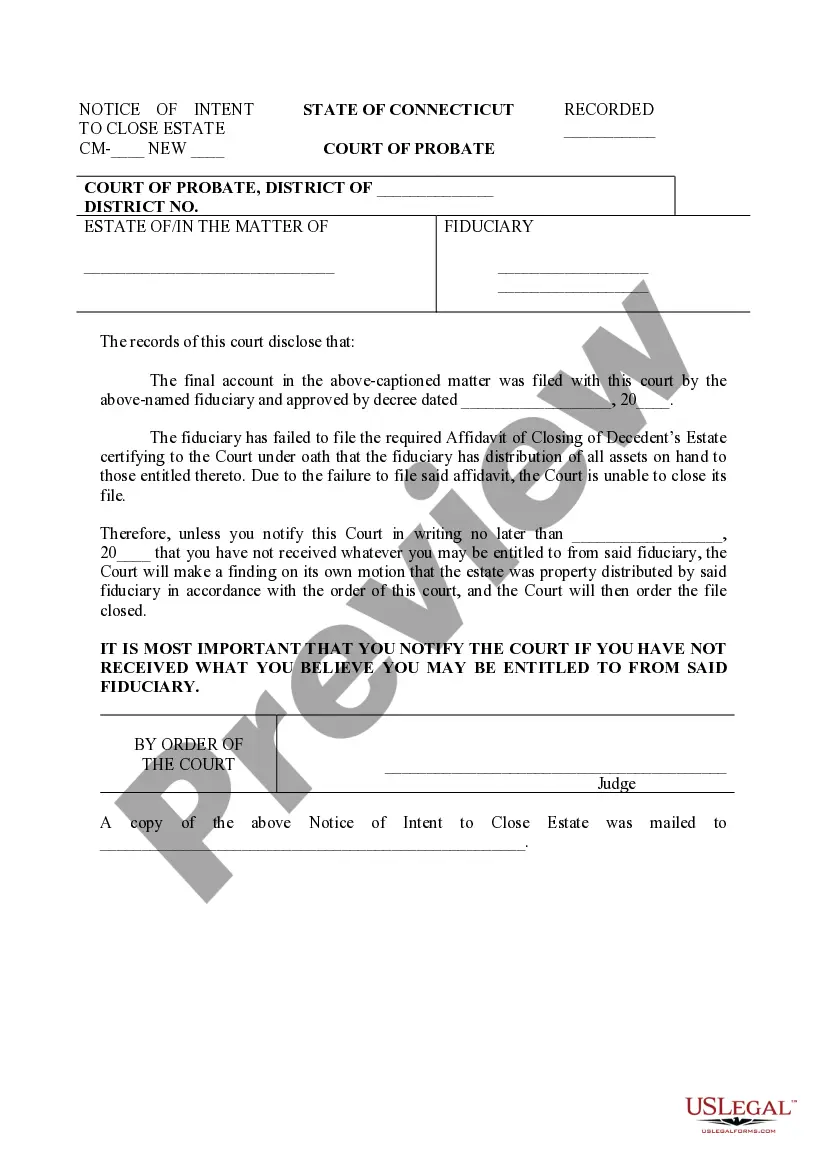
Alabama Renunciation and Disclaimer of Property received by Intestate Succession
Understanding this form
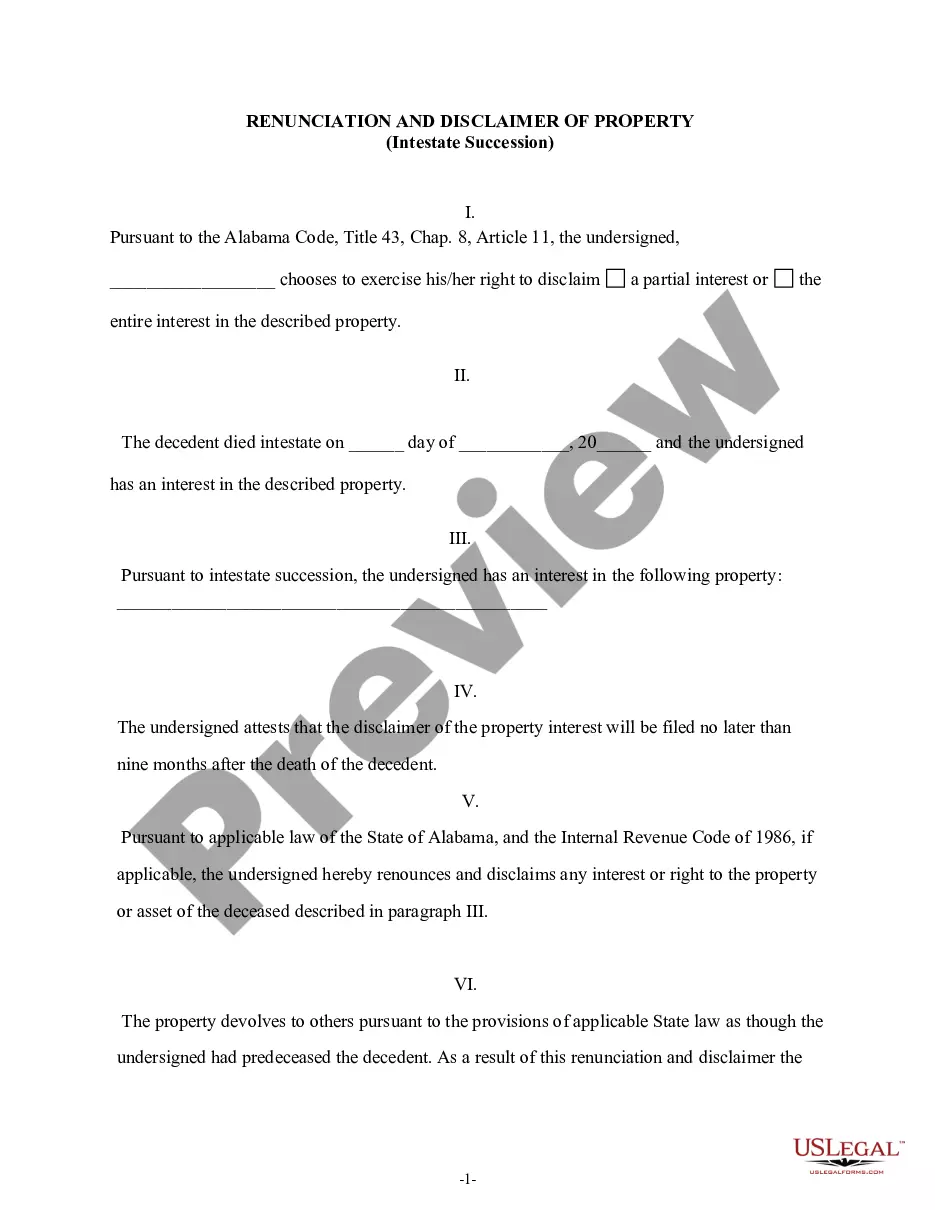
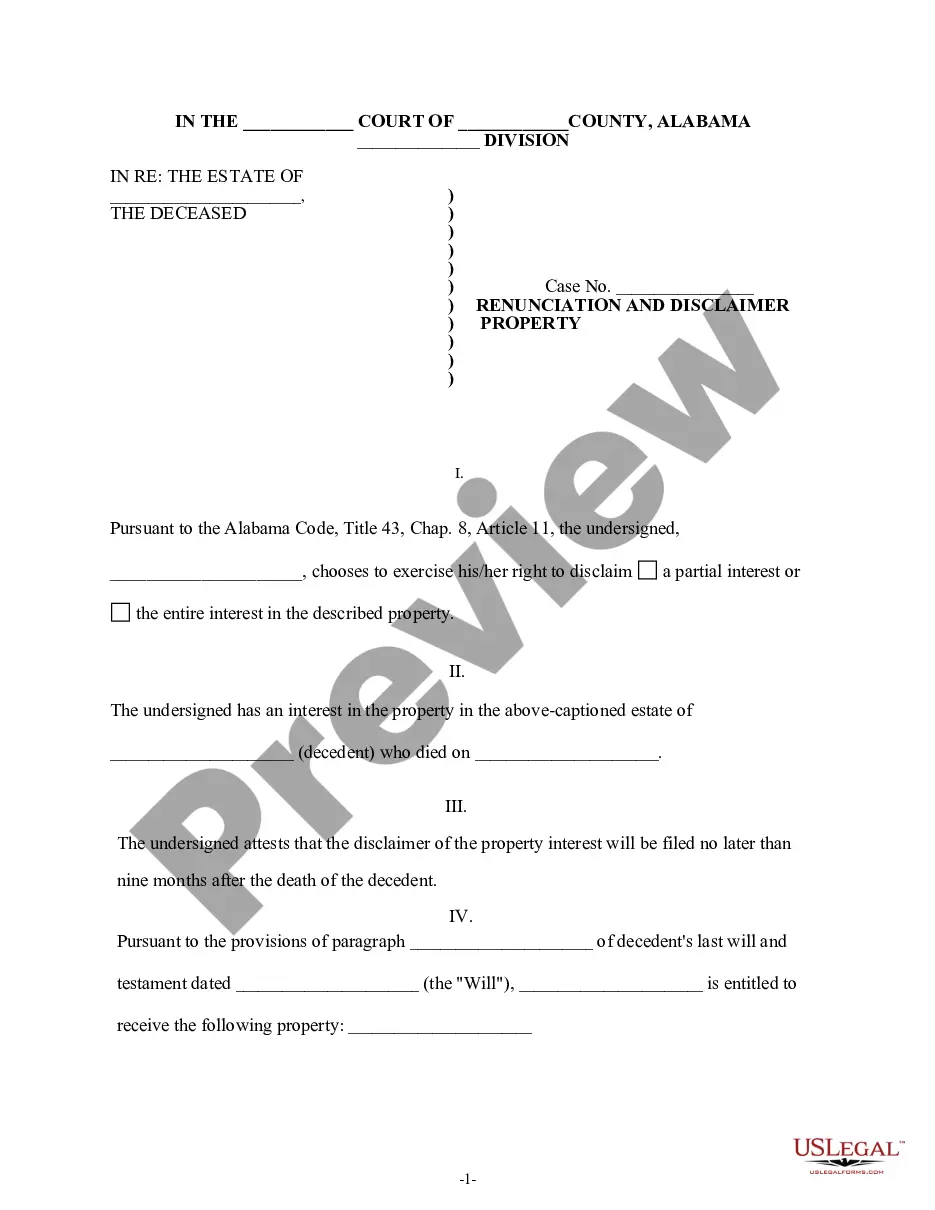
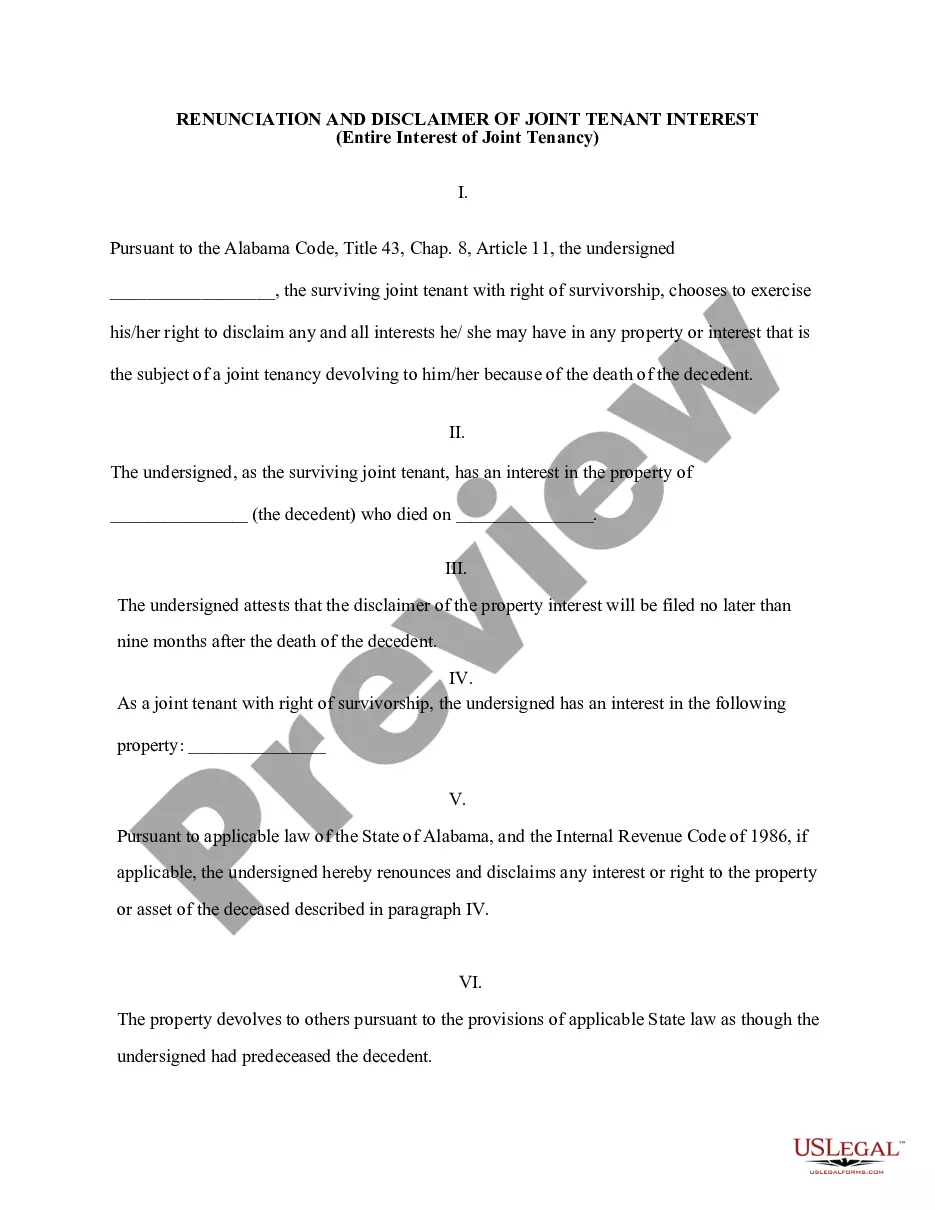
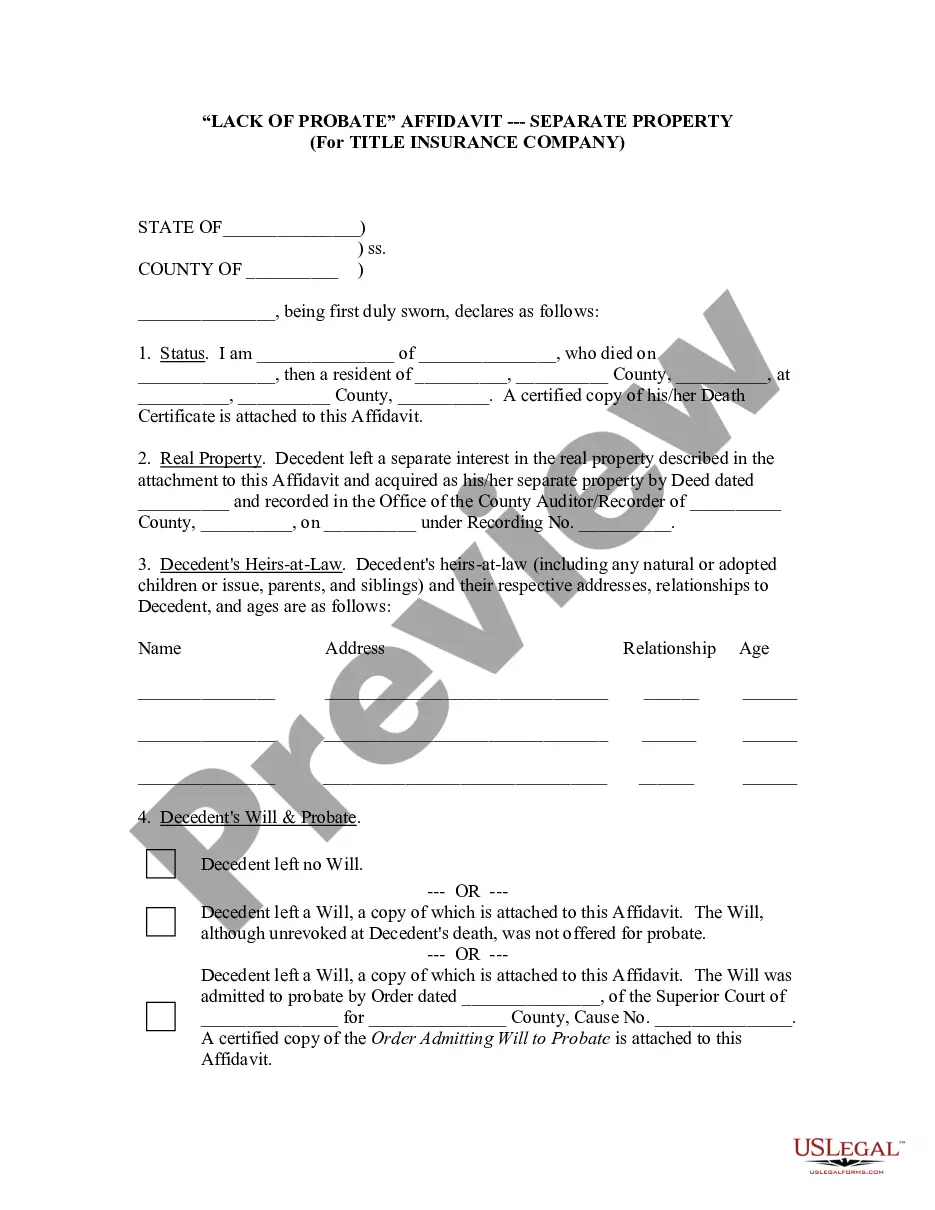
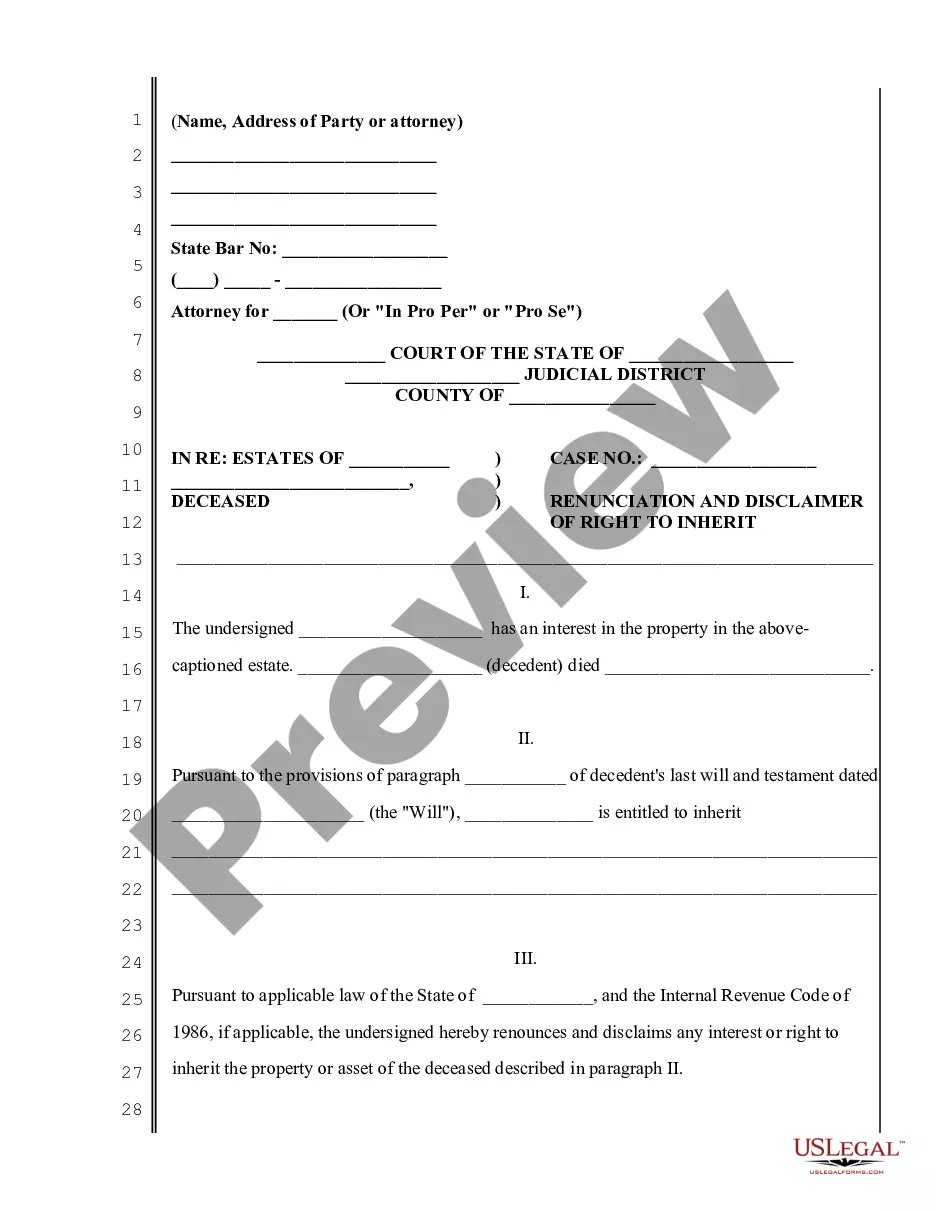
The Alabama Renunciation and Disclaimer of Property received by intestate succession is a legal document that allows a beneficiary to forego their right to inherit property from a deceased individual who did not leave a will. This form is specific to Alabama law, and it empowers the beneficiary to renounce any interest they might have in the inherited property, either in full or partially. By completing this form, the beneficiary effectively declines ownership, allowing the property to be redistributed according to Alabama's intestate succession laws.
Key parts of this document
- Identification of the beneficiary renouncing their interest in the property.
- Details regarding the decedent, including the date of death.
- Description of the property subject to the disclaimer.
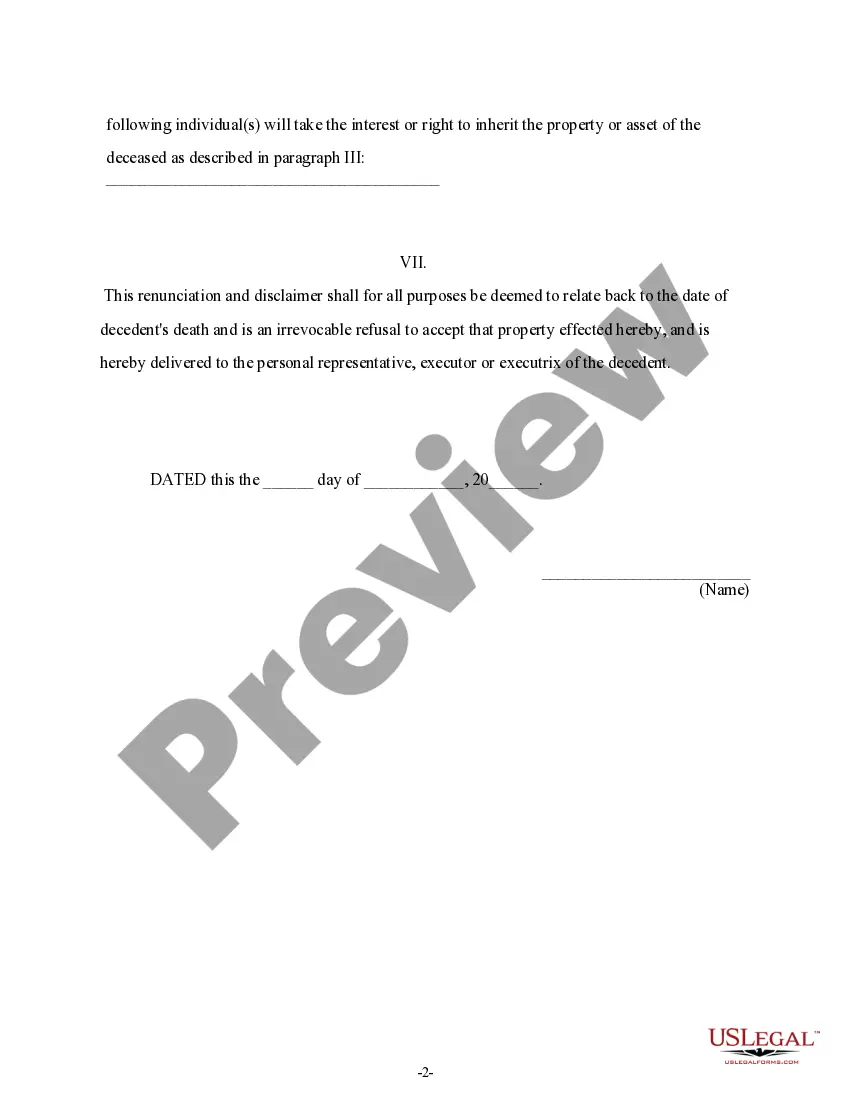
- Attestation that the disclaimer will be filed within nine months of the decedent's death.
- Statement of irrevocable refusal to accept the property.
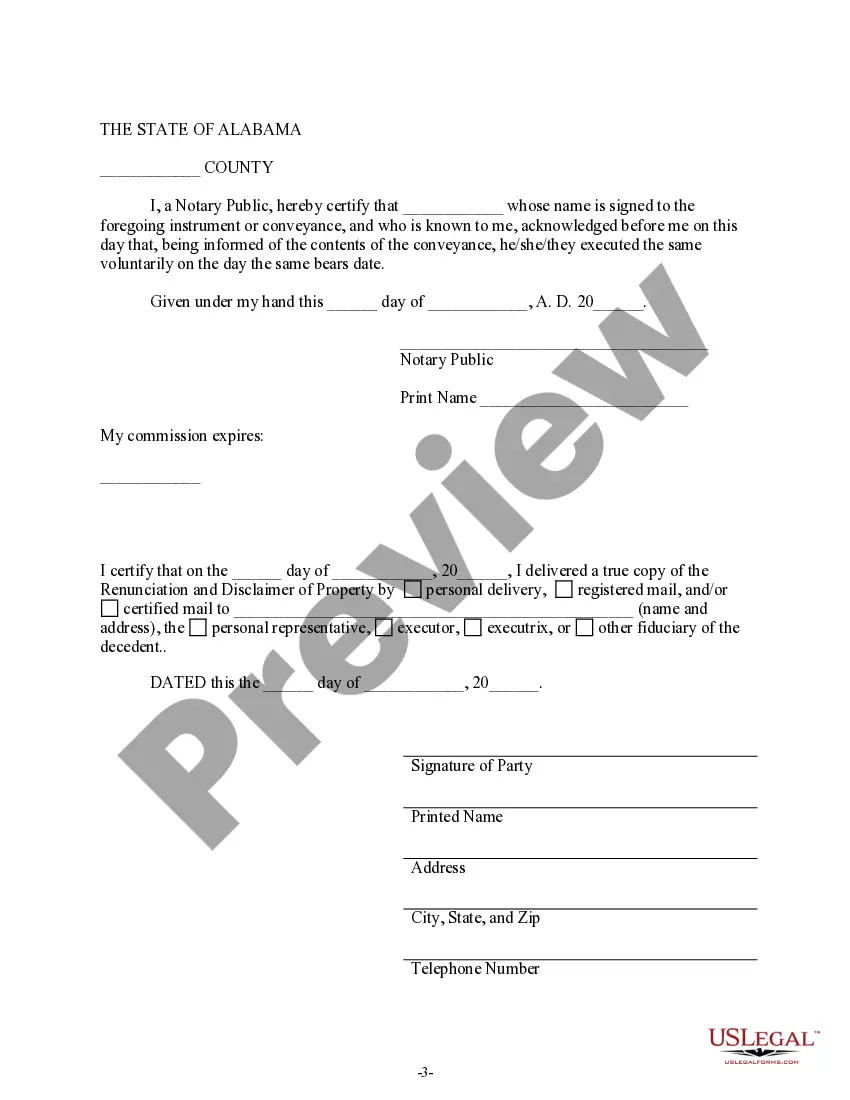
- Notary acknowledgment for authenticity.

When to use this document
This form should be used when a beneficiary has received an interest in property as a result of a deceased person's intestate succession and wishes to legally renounce that interest. Ideal scenarios include when the beneficiary has decided that they do not want to take possession of the property or when accepting the property would cause financial or legal complications.
Who should use this form
- Beneficiaries who have inherited property from a decedent who died intestate.
- Individuals looking to refuse an inheritance to avoid tax or liability issues.
- People needing to transfer their rights in an estate to other eligible heirs.
Steps to complete this form
- Fill in the beneficiary's name who is renouncing their interest.
- Enter the date of the decedent's death.
- Provide a clear description of the property being disclaimed.
- Sign the document, affirming that the disclaimer will be filed timely.
- Have the form notarized to ensure its legal validity.
Notarization guidance
Yes, this form must be notarized to be legally valid. US Legal Forms provides integrated online notarization, available 24/7 through secure video calls, ensuring your document is legally executed without the need for travel.
Get your form ready online
Our built-in tools help you complete, sign, share, and store your documents in one place.
Make edits, fill in missing information, and update formatting in US Legal Forms—just like you would in MS Word.
Download a copy, print it, send it by email, or mail it via USPS—whatever works best for your next step.
Sign and collect signatures with our SignNow integration. Send to multiple recipients, set reminders, and more. Go Premium to unlock E-Sign.
If this form requires notarization, complete it online through a secure video call—no need to meet a notary in person or wait for an appointment.
We protect your documents and personal data by following strict security and privacy standards.

Make edits, fill in missing information, and update formatting in US Legal Forms—just like you would in MS Word.

Download a copy, print it, send it by email, or mail it via USPS—whatever works best for your next step.

Sign and collect signatures with our SignNow integration. Send to multiple recipients, set reminders, and more. Go Premium to unlock E-Sign.

If this form requires notarization, complete it online through a secure video call—no need to meet a notary in person or wait for an appointment.

We protect your documents and personal data by following strict security and privacy standards.
Typical mistakes to avoid
- Failing to file the disclaimer within the nine-month period.
- Not providing a complete and accurate description of the property.
- Omitting signatures or the notary acknowledgment.
- Not understanding the implications of renouncing an inheritance.
Benefits of using this form online
- Convenient access to the form for immediate download.
- Editable format allows for easy customization to fit your specific situation.
- Reliable templates drafted by licensed attorneys ensure legal compliance.
What to keep in mind
- The form allows beneficiaries to renounce their inheritance from a decedent who died intestate.
- Timely filing within nine months is crucial for legal validity.
- The form must accurately fill out to avoid common mistakes and ensure proper processing.
Looking for another form?
Form popularity
FAQ
By law, the probate of an estate in Alabama will take at least six months. This period gives creditors and others with a claim on the estate time to receive notice that the estate is being probated and to submit a claim.
How Is Next of Kin Determined? To determine next of kin in California, go down the list until someone exists in the category listed.For example, if decedent had no surviving spouse or registered domestic partner, but was survived by adult children, then the adult children would be next of kin.
If you don't, then your spouse inherits all of your intestate property. If you do, they and your spouse will share your intestate property as follows: If you die with parents but no children. Your surviving spouse inherits the first $100,000 of your intestate property, plus 1/2 of the balance.
If you die in Alabama without a will, your assets will go to your closest relatives. Not all assets are involved only those that would have passed through a will are affected by Alabama's intestate succession laws.If you die with a spouse but no children Spouse inherits everything.
Children - if there is no surviving married or civil partner If there is no surviving partner, the children of a person who has died without leaving a will inherit the whole estate. This applies however much the estate is worth. If there are two or more children, the estate will be divided equally between them.
If you die in Alabama without a will, your assets will go to your closest relatives. Not all assets are involved only those that would have passed through a will are affected by Alabama's intestate succession laws.If you die with a spouse but no children Spouse inherits everything.
Generally, an executor has 12 months from the date of death to distribute the estate. This is known as 'the executor's year'. However, for various reasons the executor may have been delayed and has not distributed the estate within this time frame.
Is Probate Required in Alabama? Probate is necessary in Alabama except when the property passes straight to another person. However, you have the possibility of a small estate probate, which is simpler than the full probate process.
If there is no surviving partner, the children of a person who has died without leaving a will inherit the whole estate. This applies however much the estate is worth. If there are two or more children, the estate will be divided equally between them.