Alabama Warranty Deed from Corporation to Two Individuals
About this form
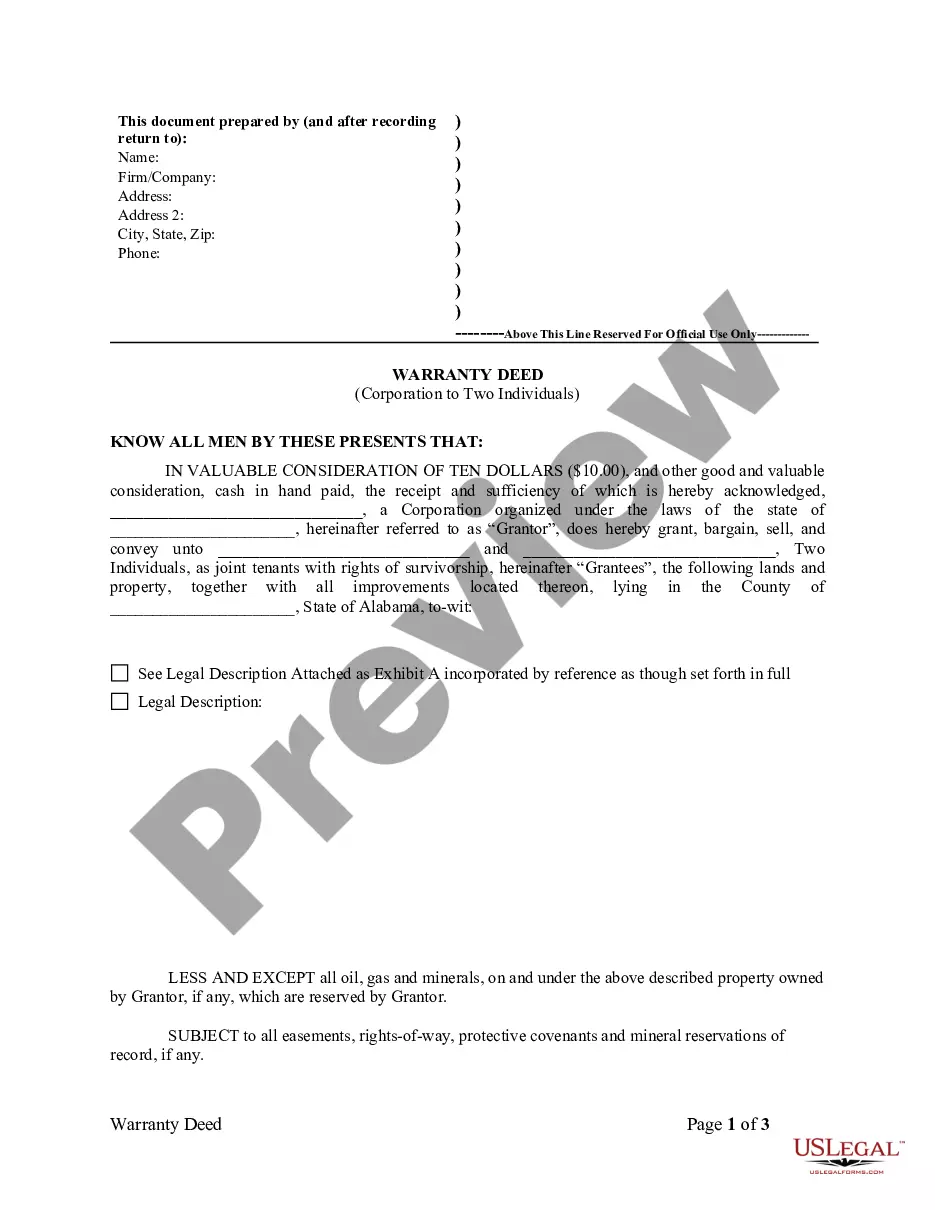
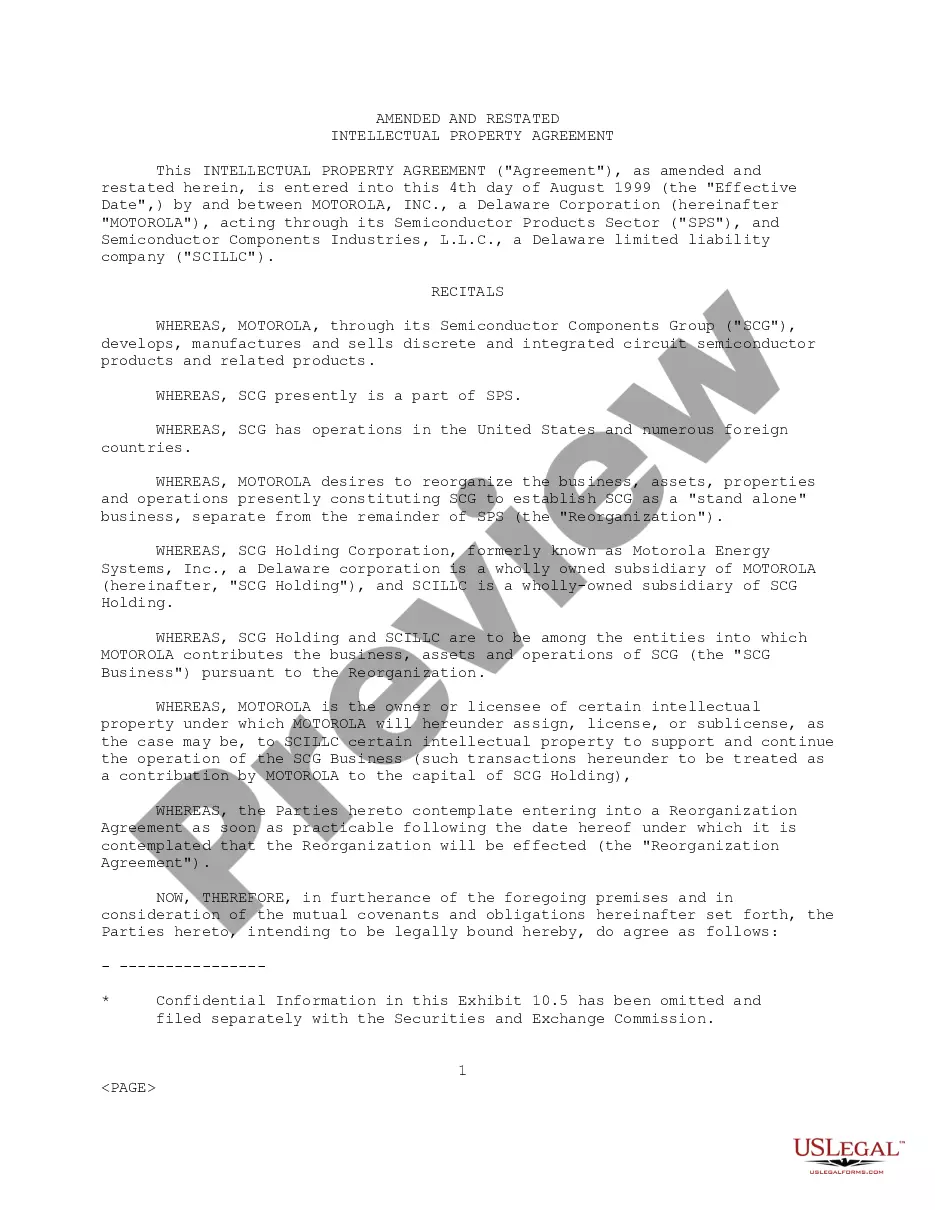
The Warranty Deed from Corporation to Two Individuals is a legal document that facilitates the transfer of property ownership from a corporation (the Grantor) to two individual parties (the Grantees). This form provides assurance that the Grantor legally holds the property title, conveys it without encumbrances, and includes specific reservations regarding minerals. Unlike general warranty deeds, this version specifically addresses terms concerning a corporate entity. This form complies with relevant state laws to ensure legal validity.
Key parts of this document
- Identification of parties: Includes the names and details of the Grantor (corporation) and Grantees (two individuals).
- Legal description: A detailed description of the property being conveyed.
- Covenants: Assurance that the Grantor has the legal right to sell and will defend the title against claims.
- Mineral rights reservation: Statement specifying that certain mineral rights are reserved by the Grantor.
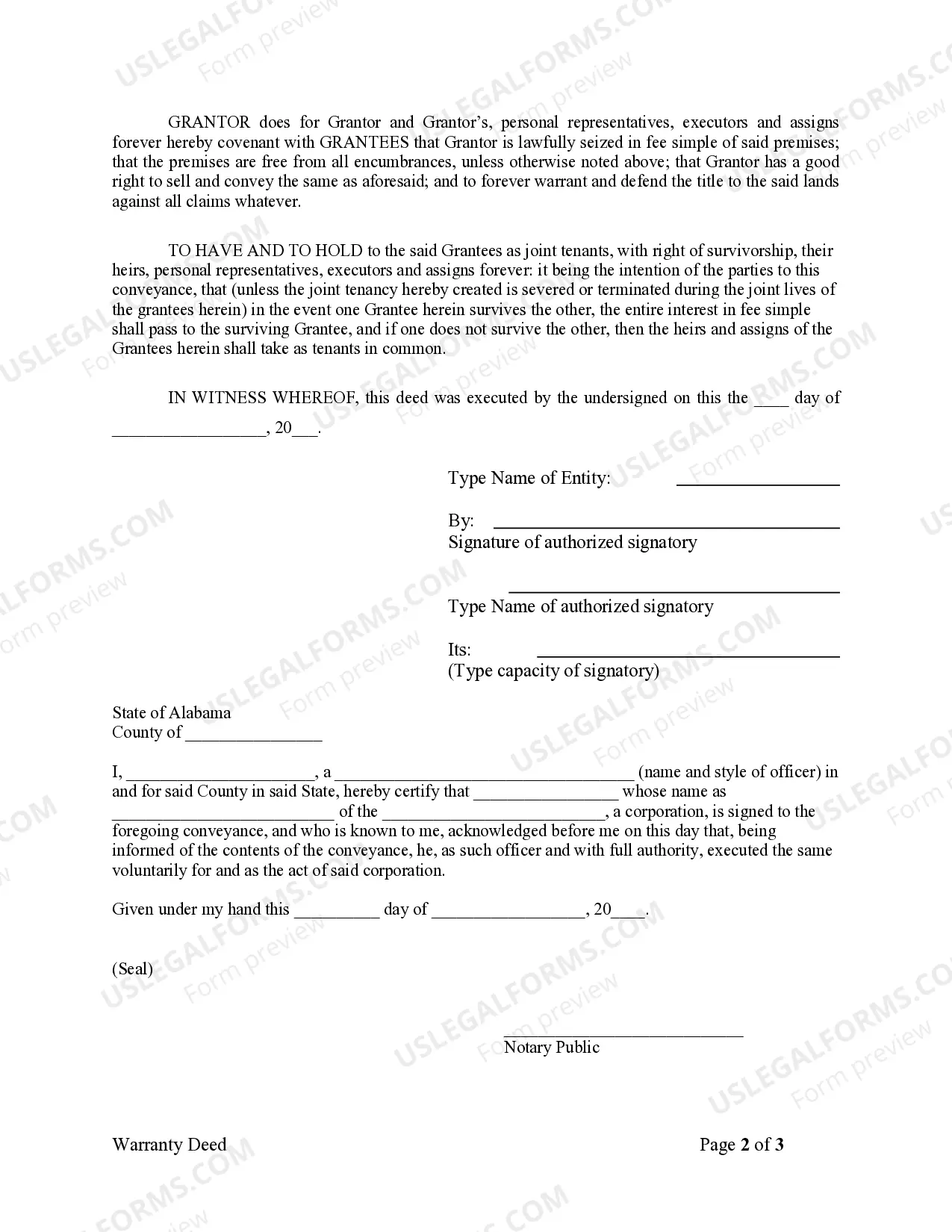
- Notary section: Area for notarization to validate the deed.


When to use this form
This warranty deed should be used when a corporation is transferring property ownership to two individuals. It is appropriate in scenarios such as real estate transactions, property gifting, or inheritance distributions involving a corporate entity. This form ensures that both parties have a clear understanding of property rights and any conditions attached to the transfer.
Who can use this document
This form is intended for:
- Corporations looking to transfer property to individuals.
- Individuals receiving property from a corporation.
- Legal professionals assisting in property transfers involving corporate entities.
Instructions for completing this form
- Identify the Grantor and Grantees: Enter the full legal names and addresses of the corporation and the two individuals receiving the property.
- Provide the legal description: Attach or clearly state the property's legal description as required.
- State any reservations: Specify any exceptions regarding mineral rights or other encumbrances.
- Sign the document: Ensure that the authorized representative from the corporation signs the deed in the presence of a notary.
- Obtain notarization: Have a notary public sign and seal the document to validate it legally.
Notarization guidance
This form needs to be notarized to ensure legal validity. US Legal Forms provides secure online notarization powered by Notarize, allowing you to complete the process through a verified video call, available anytime.
Get your form ready online
Our built-in tools help you complete, sign, share, and store your documents in one place.
Make edits, fill in missing information, and update formatting in US Legal Forms—just like you would in MS Word.
Download a copy, print it, send it by email, or mail it via USPS—whatever works best for your next step.
Sign and collect signatures with our SignNow integration. Send to multiple recipients, set reminders, and more. Go Premium to unlock E-Sign.
If this form requires notarization, complete it online through a secure video call—no need to meet a notary in person or wait for an appointment.
We protect your documents and personal data by following strict security and privacy standards.

Make edits, fill in missing information, and update formatting in US Legal Forms—just like you would in MS Word.

Download a copy, print it, send it by email, or mail it via USPS—whatever works best for your next step.

Sign and collect signatures with our SignNow integration. Send to multiple recipients, set reminders, and more. Go Premium to unlock E-Sign.

If this form requires notarization, complete it online through a secure video call—no need to meet a notary in person or wait for an appointment.

We protect your documents and personal data by following strict security and privacy standards.
Common mistakes to avoid
- Failing to accurately identify the legal description of the property.
- Omitting mineral rights reservations when they apply.
- Not obtaining notarization, leading to the document being deemed invalid.
- Using outdated or incorrect versions of the form.
Benefits of using this form online
- Convenience: Easily download and complete the form from anywhere.
- Editability: Make necessary changes before finalizing the document.
- Reliability: Access up-to-date forms drafted by licensed attorneys to ensure compliance with state laws.
Legal use & context
- This Warranty Deed is enforceable as a legal document once executed and notarized.
- It protects the rights of both the Grantor and the Grantees in the property transfer.
- Understanding local laws regarding property transfers is essential to avoid complications.
Summary of main points
- The Warranty Deed from Corporation to Two Individuals ensures a clear title transfer.
- Accurate completion and notarization are crucial for the form's validity.
- This form is ideal for transactions involving corporate property being given to individuals.
Looking for another form?
Form popularity
FAQ
The Difference Between A Title And A Deed A deed is an official written document declaring a person's legal ownership of a property, while a title refers to the concept of ownership rights.
Three basic types of deeds commonly used are the grant deed, the quitclaim deed, and the warranty deed. A sample grant deed. the property he or she is transferring is implied from such language.
When committing to a general warranty deed, the seller is promising there are no liens against the property, and if there were, the seller would compensate the buyer for those claims. Mainly for this reason, general warranty deeds are the most commonly used type of deed in real estate sales.
California mainly uses two types of deeds: the grant deed and the quitclaim deed. Most other deeds you will see, such as the common interspousal transfer deed, are versions of grant or quitclaim deeds customized for specific circumstances.
What is worst type of deed for a new homeowner to obtain and why?One of the riskiest and worst types of deeds is the quitclaim deed. Quitclaim deeds are those in which the grantor claims no interest in the property or transfers whatever interest they have to another (Liuzzo 2015).
When you own a home, you own both the deed and title for that property. In real estate, title means you have ownership and a right to use the property.The deed is the physical legal document that transfers ownership. It shows who you bought your house from, and when you sell it, it shows who you sold it to.
Quitclaim Deed. Deed of Trust. Warranty Deed. Grant Deed. Bargain and Sale Deed. Mortgage Deed.
The purpose of a deed is to transfer a title, a legal document proving ownership of a property or asset, to another person. For the document to be binding in a court of law, it must be filed in the public record by a local government official tasked with maintaining documents.