Colorado Statutory Equivalent of Living Will or Declaration
What this document covers
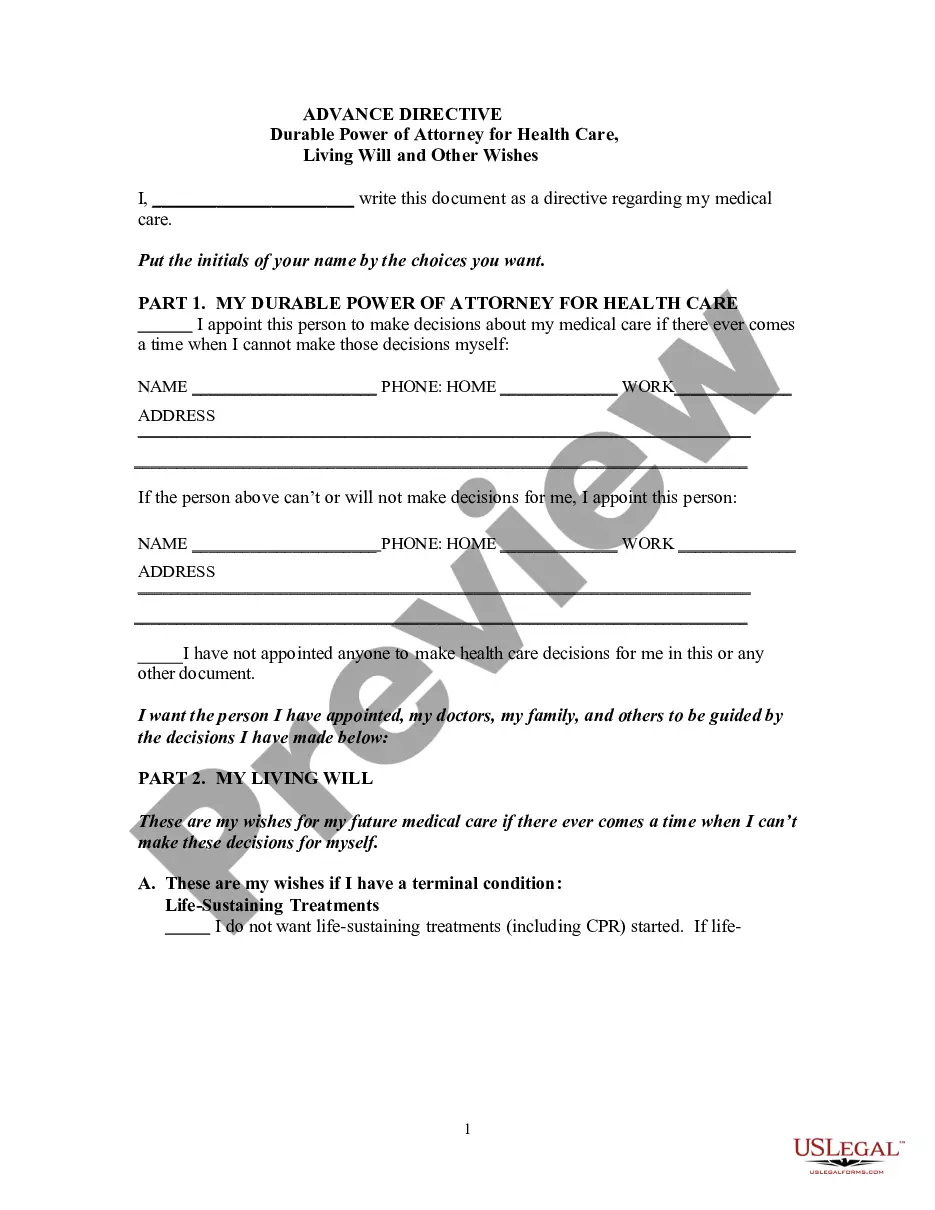
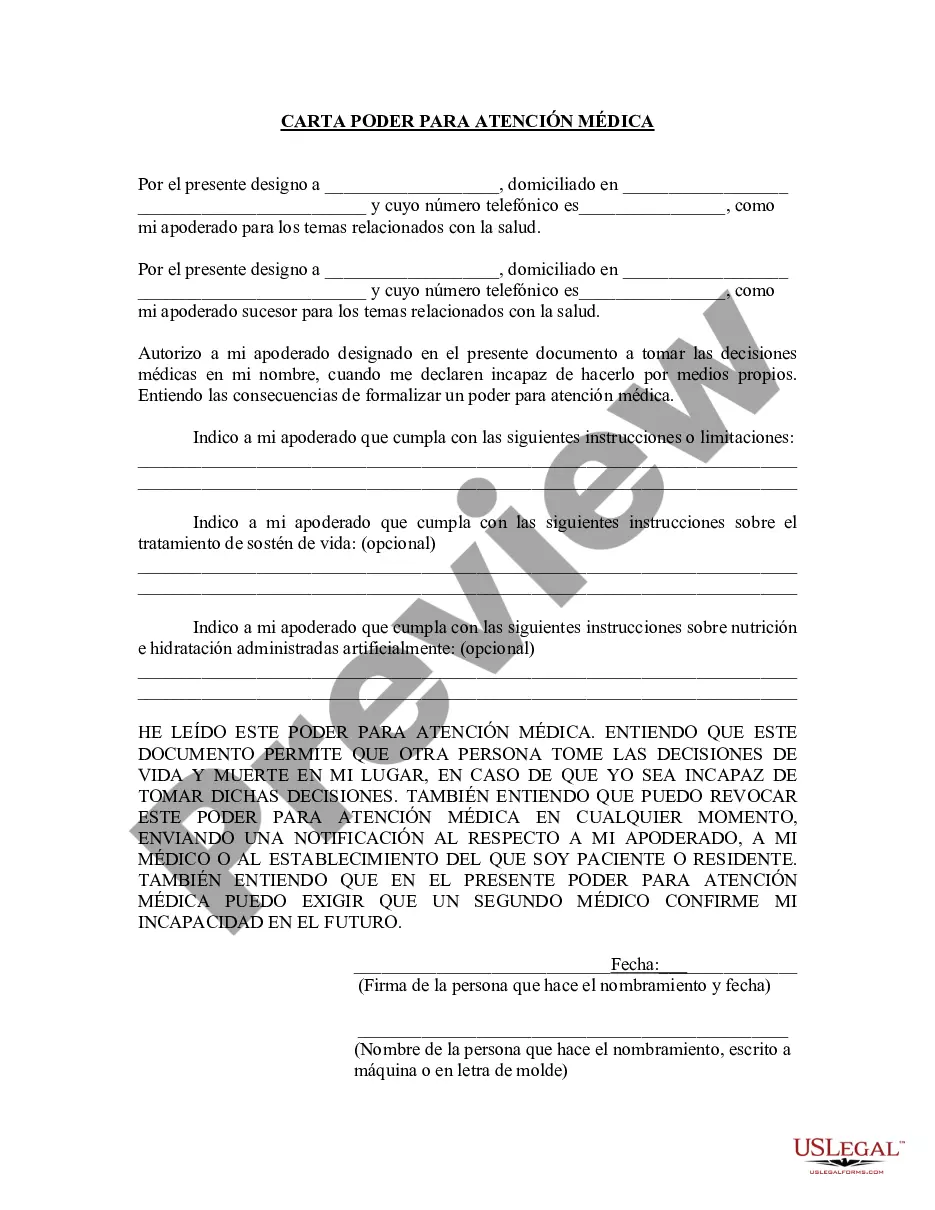
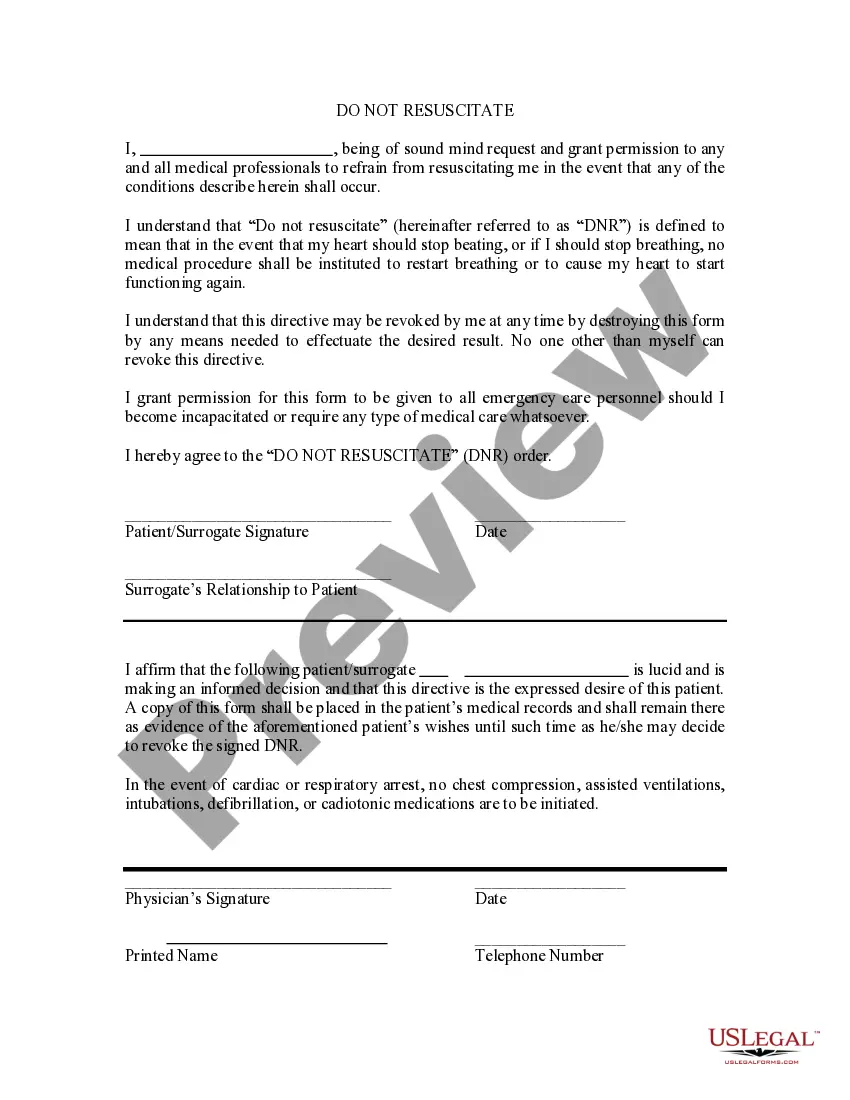
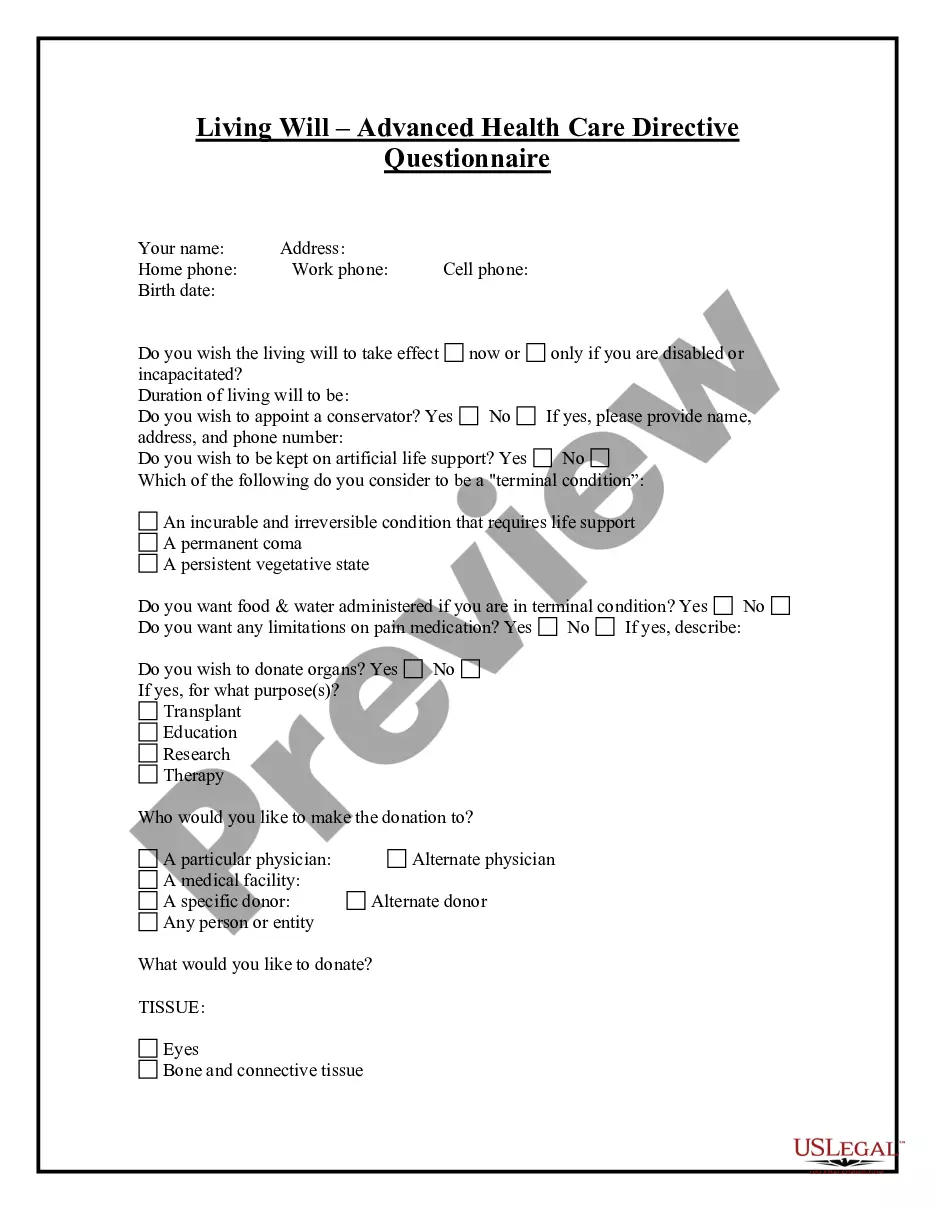
The statutory equivalent of a living will or declaration, also known as the Colorado Medical Orders for Scope of Treatment (MOST), is a legal document that allows an individual to specify their medical treatment preferences in cases where they cannot communicate their wishes. This form is completed by a health care professional based on the patient's preferences and medical circumstances. Unlike a standard living will, the MOST focuses specifically on medical orders and requires signatures from qualified medical personnel to be valid.
Main sections of this form
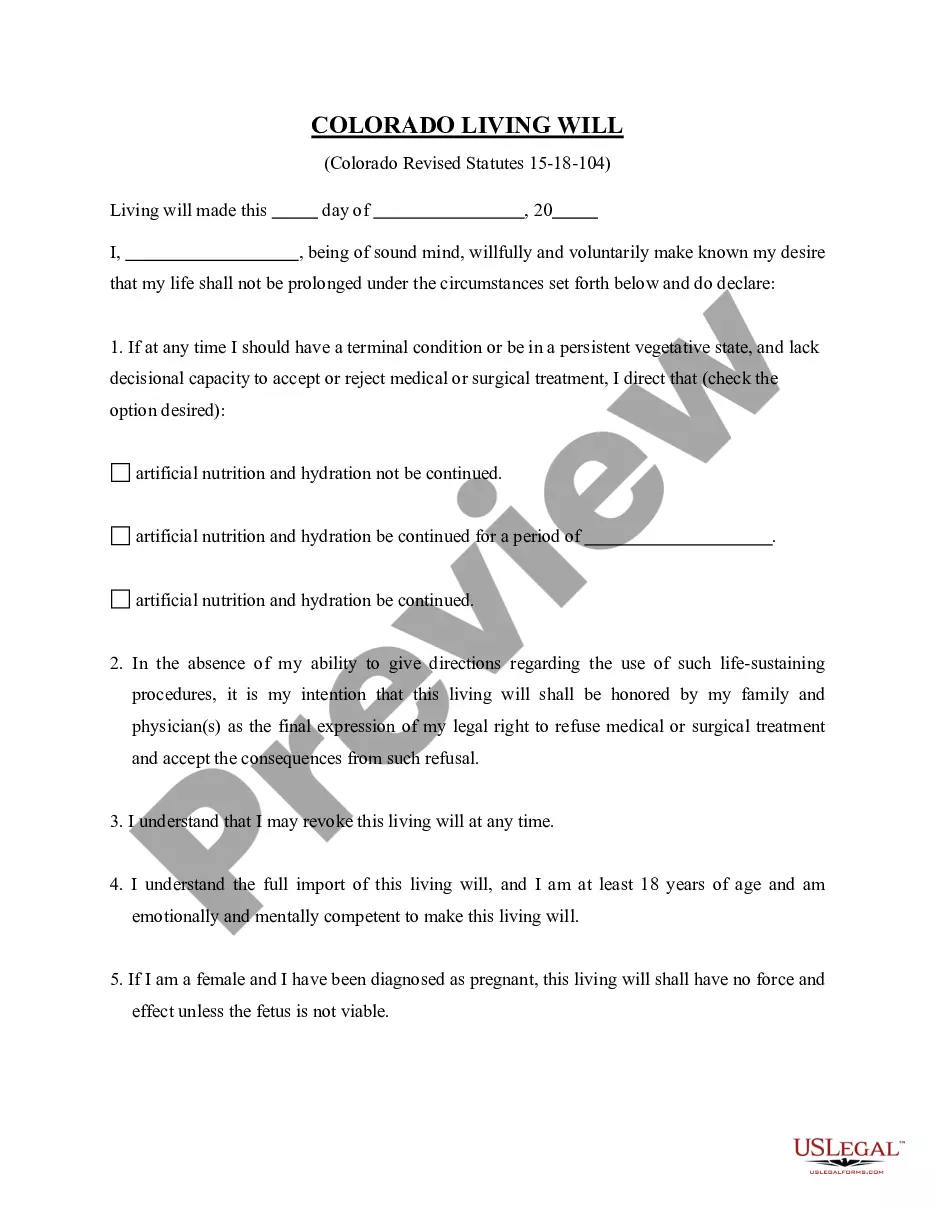
- Directive for artificial nutrition and hydration based on terminal conditions or vegetative states.
- Statement of intent that the living will be honored by family and physicians.
- Provision for revocation of the living will at any time by the declarant.
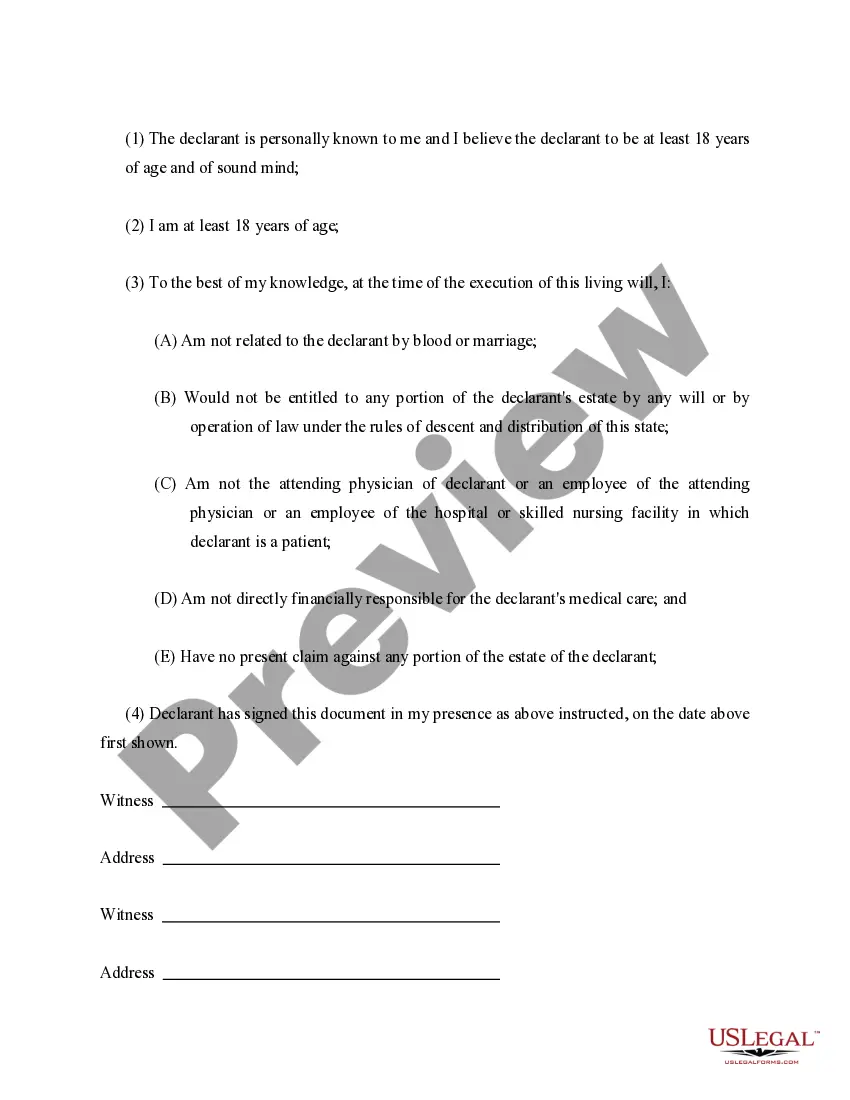
- Confirmation of age and mental competence of the declarant.
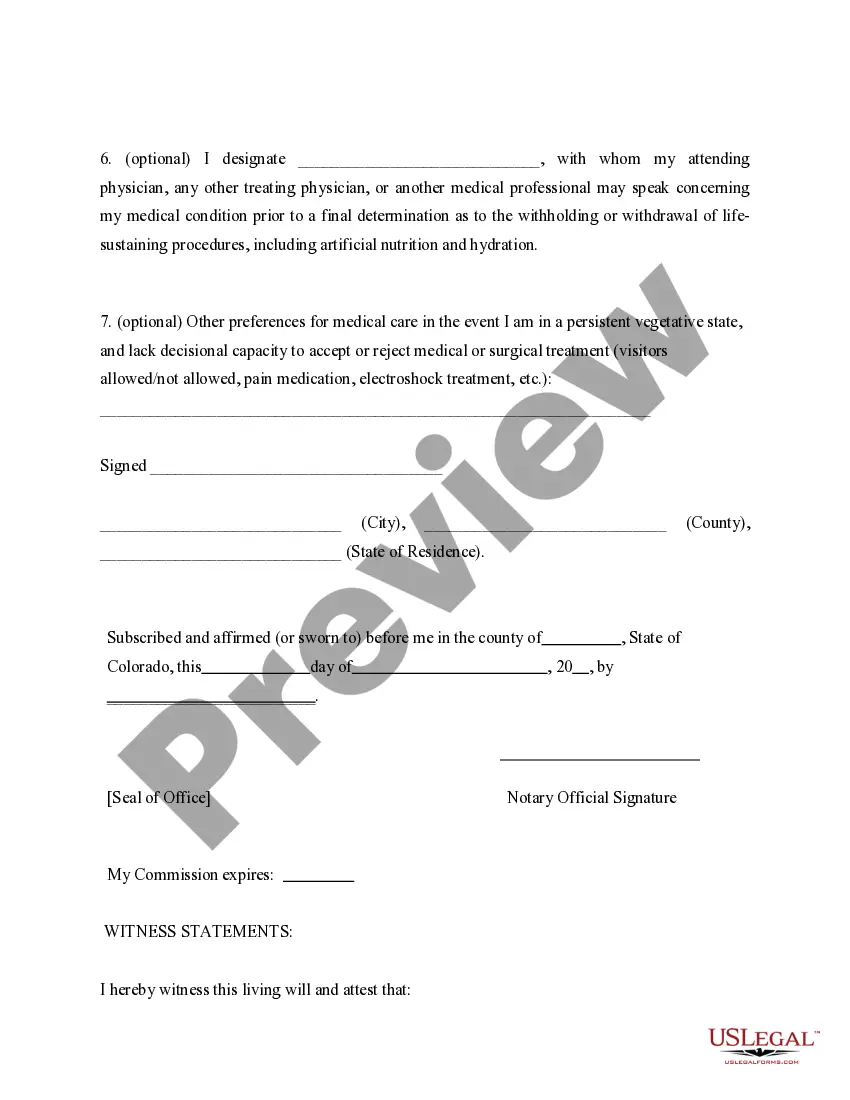
- Optional designation of a contact person for medical discussions.
- Optional preferences for medical care procedures and visitors.
Situations where this form applies
This form should be used when an individual wishes to outline their medical treatment preferences in the event they are unable to make decisions due to a terminal illness or persistent vegetative state. It is particularly useful for those wanting to ensure their healthcare providers and family members are aware of their wishes regarding life-sustaining treatments, including nutrition and hydration. This form can also be beneficial during hospital stays or when entering skilled nursing facilities.
Who this form is for
- Individuals in Colorado who wish to document their medical treatment preferences.
- Adults who are at least 18 years of age and competent to make medical decisions.
- Those diagnosed with a terminal condition or facing decisions about life-sustaining treatments.
Completing this form step by step
- Review the available options for artificial nutrition and hydration and select your preferences.
- Understand that this living will reflects your legal right to refuse medical treatment.
- Designate a contact person for your medical condition, if desired.
- Complete all required sections ensuring clarity in your instructions.
- Sign the document in the presence of a witness, ensuring the witness meets the criteria outlined in the form.
Notarization requirements for this form
This form does not typically require notarization to be legally valid. However, some jurisdictions or document types may still require it. US Legal Forms provides secure online notarization powered by Notarize, available 24/7 for added convenience.
Get your form ready online
Our built-in tools help you complete, sign, share, and store your documents in one place.
Make edits, fill in missing information, and update formatting in US Legal Forms—just like you would in MS Word.
Download a copy, print it, send it by email, or mail it via USPS—whatever works best for your next step.
Sign and collect signatures with our SignNow integration. Send to multiple recipients, set reminders, and more. Go Premium to unlock E-Sign.
If this form requires notarization, complete it online through a secure video call—no need to meet a notary in person or wait for an appointment.
We protect your documents and personal data by following strict security and privacy standards.

Make edits, fill in missing information, and update formatting in US Legal Forms—just like you would in MS Word.

Download a copy, print it, send it by email, or mail it via USPS—whatever works best for your next step.

Sign and collect signatures with our SignNow integration. Send to multiple recipients, set reminders, and more. Go Premium to unlock E-Sign.

If this form requires notarization, complete it online through a secure video call—no need to meet a notary in person or wait for an appointment.

We protect your documents and personal data by following strict security and privacy standards.
Common mistakes to avoid
- Not signing the form in the presence of a qualifying witness or healthcare professional.
- Failing to specify clear preferences regarding life-sustaining treatments.
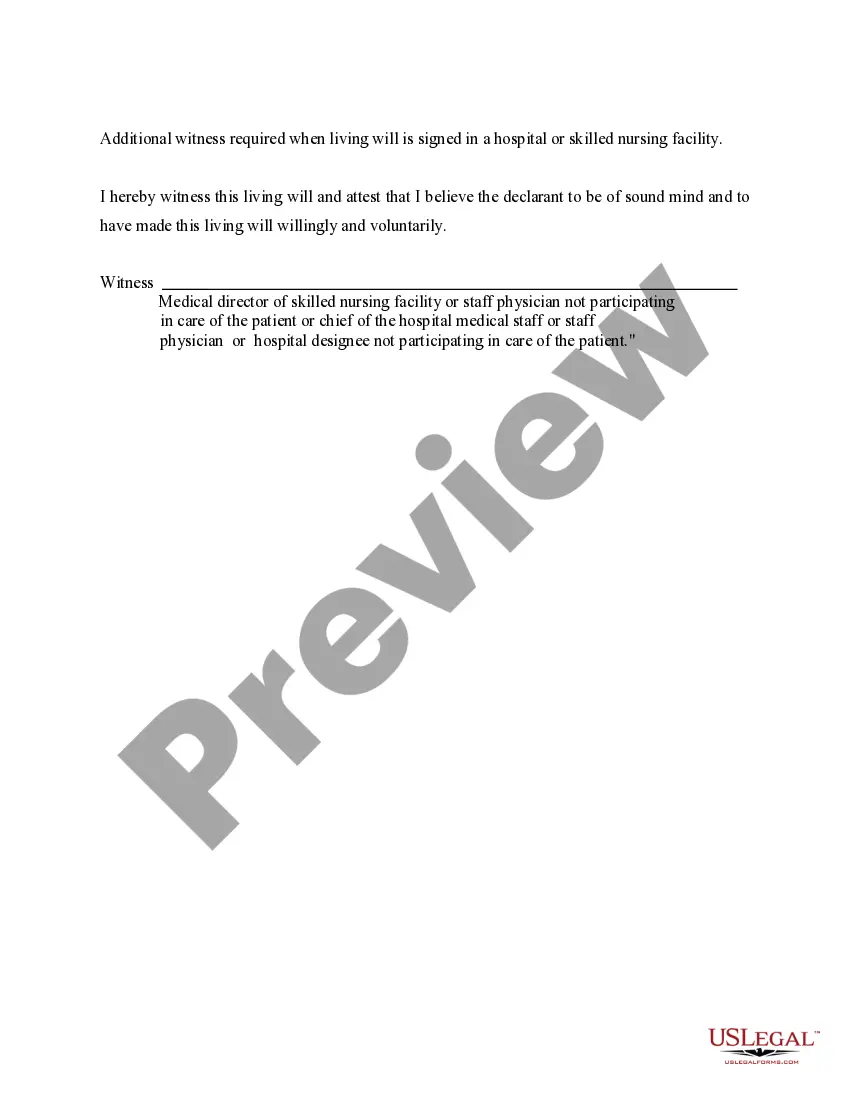
- Overlooking the requirement for additional witnesses when signing in a medical facility.
Why complete this form online
- Convenient access to legal templates anytime, allowing for immediate completion.
- Editability of the form ensures that all medical preferences can be accurately outlined.
- Secure and reliable templates drafted by licensed attorneys, providing peace of mind.
Main things to remember
- The Statutory Equivalent of Living Will or Declaration allows individuals to express their medical treatment preferences.
- It must be completed and signed by a healthcare professional to be valid.
- This document can relieve family members from making difficult healthcare decisions in crises.
Looking for another form?

Form popularity
FAQ
Another name for a living will is an advanced healthcare directive. This term is commonly used to describe the Colorado Statutory Equivalent of Living Will or Declaration. Both terms refer to a legal document that outlines your healthcare choices and preferences, providing peace of mind for you and your loved ones.
The term 'living will declaration' refers to a document that specifies an individual's preferences regarding medical treatment in situations where they cannot express their wishes. This document is often referred to as the Colorado Statutory Equivalent of Living Will or Declaration. It's essential for ensuring that your healthcare preferences are respected even when you are unable to communicate them.
A living declaration is a legal document that outlines your healthcare preferences if you become unable to communicate your wishes. In Colorado, this is closely related to the Colorado Statutory Equivalent of Living Will or Declaration, where you specify the type of medical treatment you desire. Essentially, it serves as a guide for medical professionals and your loved ones during critical moments.
Filling out a living will in Colorado involves several straightforward steps. First, you need to download the Colorado Statutory Equivalent of Living Will or Declaration form from a reputable source, like USLegalForms. After that, clearly indicate your wishes regarding medical treatments in the document. Finally, ensure you date and sign the form, making it legally binding.
In general, a Power of Attorney (POA) can have the authority to override advance directives if they conflict with each other. It’s crucial that the person you appoint as your POA fully understands your wishes outlined in your advance directive. To maintain clarity and consistency, consider integrating both documents when planning your healthcare strategy, specifically through the Colorado Statutory Equivalent of Living Will or Declaration.
An alternative to advance directives is appointing a healthcare proxy or durable power of attorney for healthcare decisions. This person can make decisions on your behalf when you are unable to do so. This option can provide more flexibility than traditional advance directives. However, you should also consider the Colorado Statutory Equivalent of Living Will or Declaration to ensure all aspects of your healthcare preferences are addressed.
Choosing between an advance directive and a living will depends on your personal situation. An advance directive often encompasses broader healthcare choices, whereas a living will focuses specifically on end-of-life preferences. Evaluating your needs will help you determine which document aligns better with your healthcare goals, reinforcing the importance of the Colorado Statutory Equivalent of Living Will or Declaration.
In Colorado, a living will does not require notarization; however, it must be either witnessed by two adults or signed in the presence of a notary public. This ensures that your document holds legal weight and clearly reflects your intentions. When preparing your Colorado Statutory Equivalent of Living Will or Declaration, consider consulting legal resources like USLegalForms to navigate the requirements easily.
A declaration and a living will often refer to the same legal document within the context of healthcare decisions. Both serve to express your preferences regarding medical treatment in case you become unable to communicate. When creating your Colorado Statutory Equivalent of Living Will or Declaration, it’s important to ensure the document meets all legal standards for clarity and intent.
Advance directives, while beneficial, do have some drawbacks. They may not cover all possible medical scenarios, leaving some decisions open to interpretation or dispute. Additionally, changes in personal circumstances or medical advancements may render an advance directive obsolete. Therefore, it’s crucial to regularly review and update your Colorado Statutory Equivalent of Living Will or Declaration to reflect your current wishes.