Alabama Electrical Contract for Contractor
What is this form?
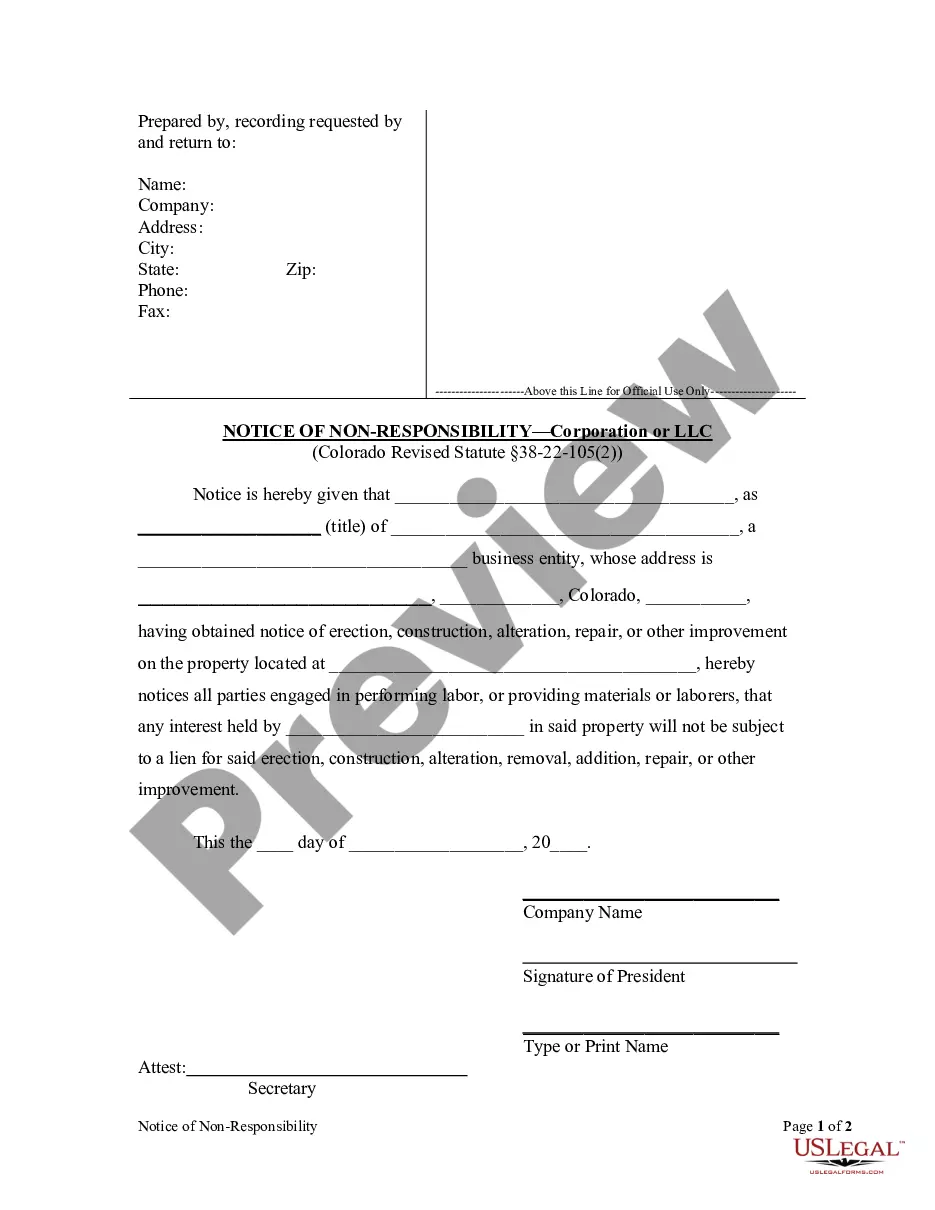
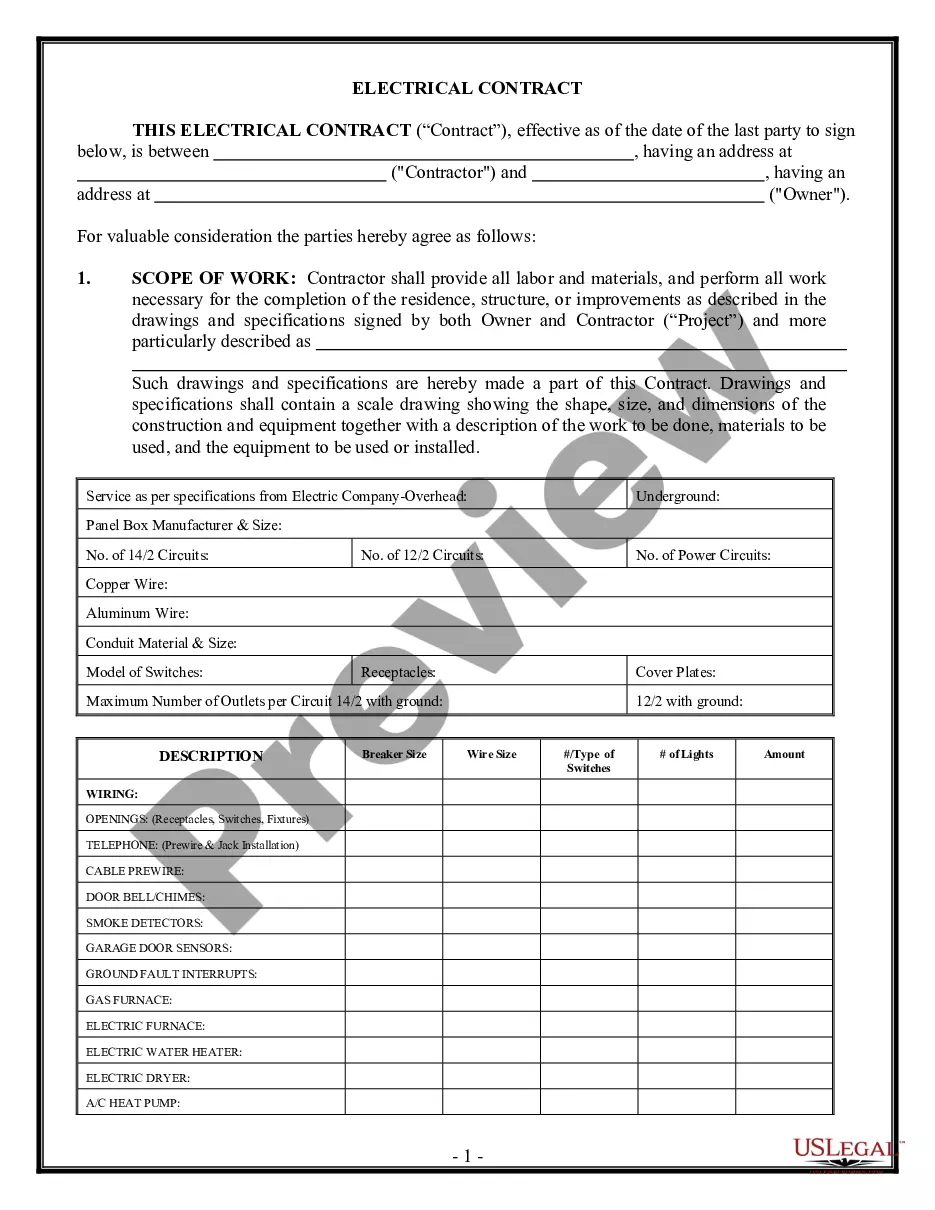
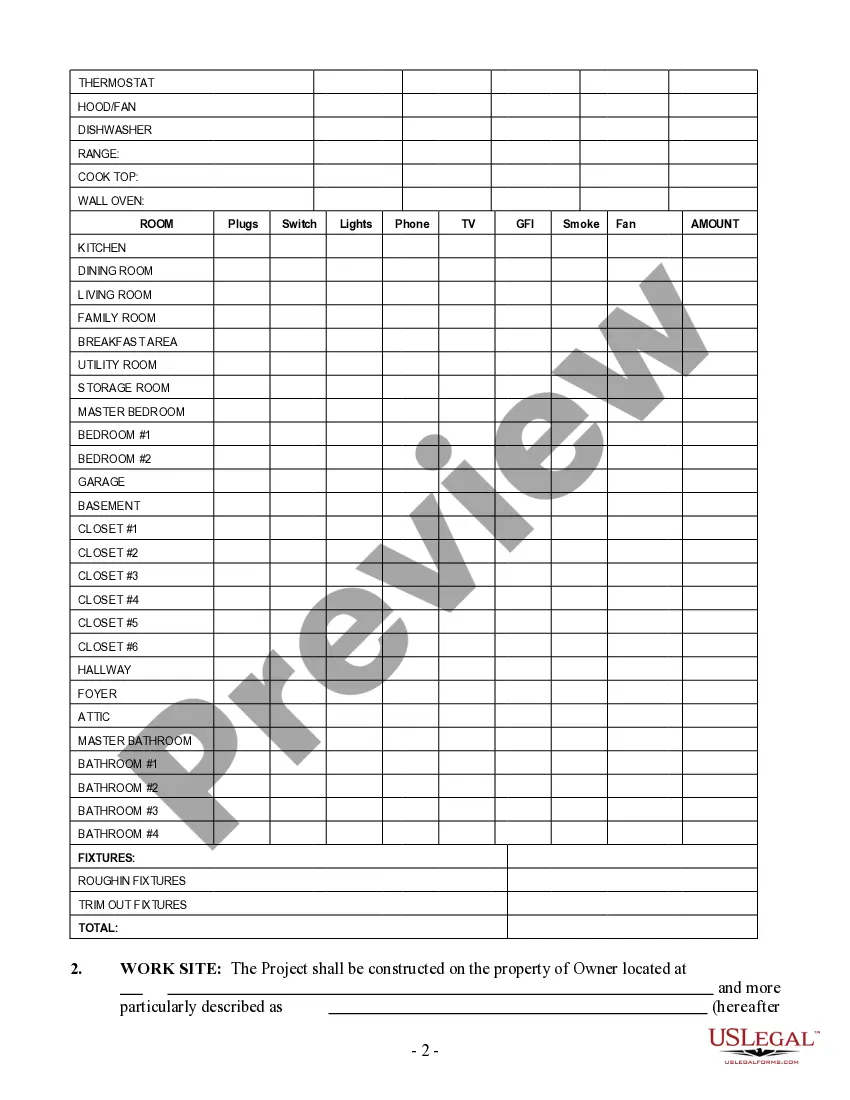
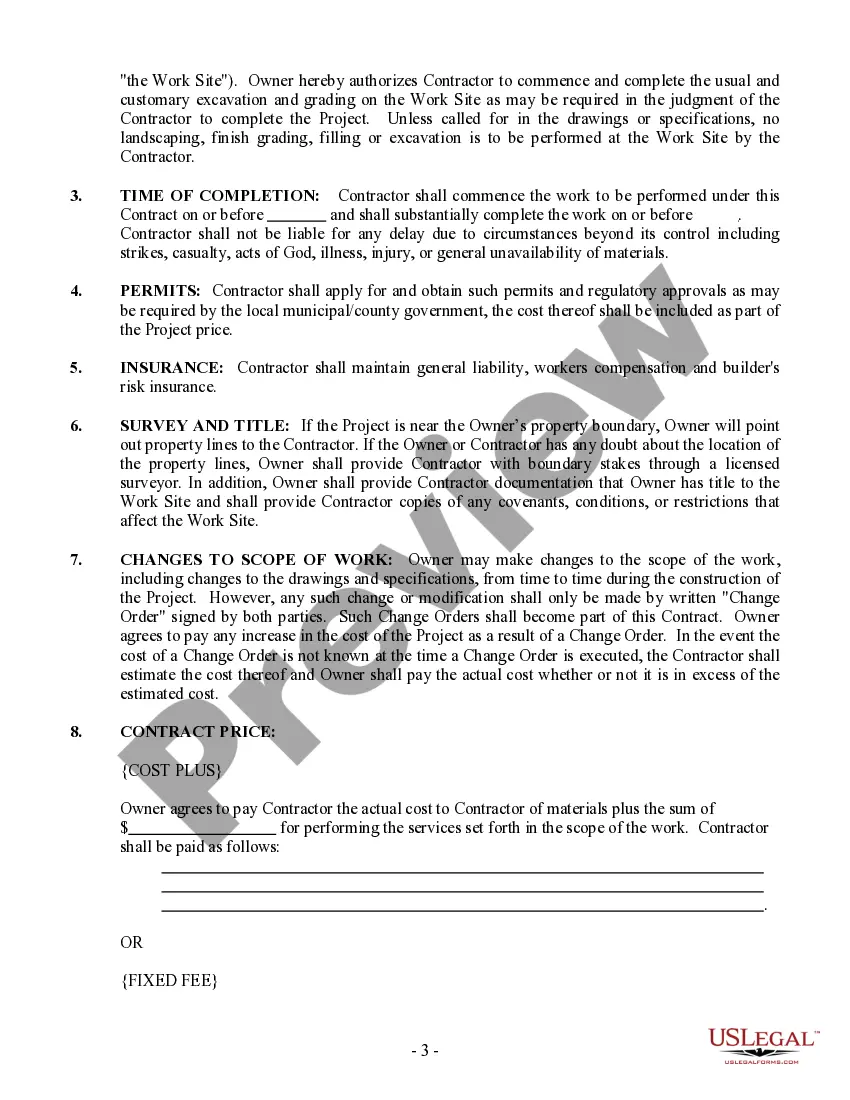
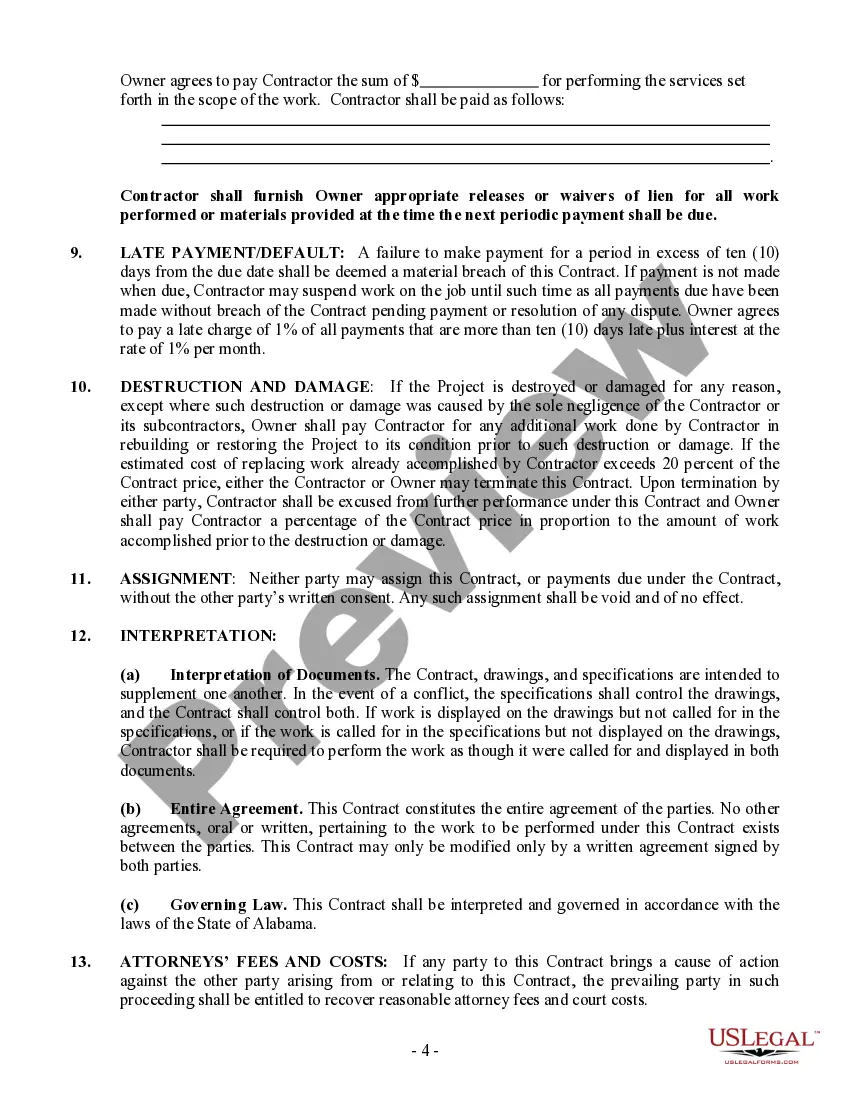
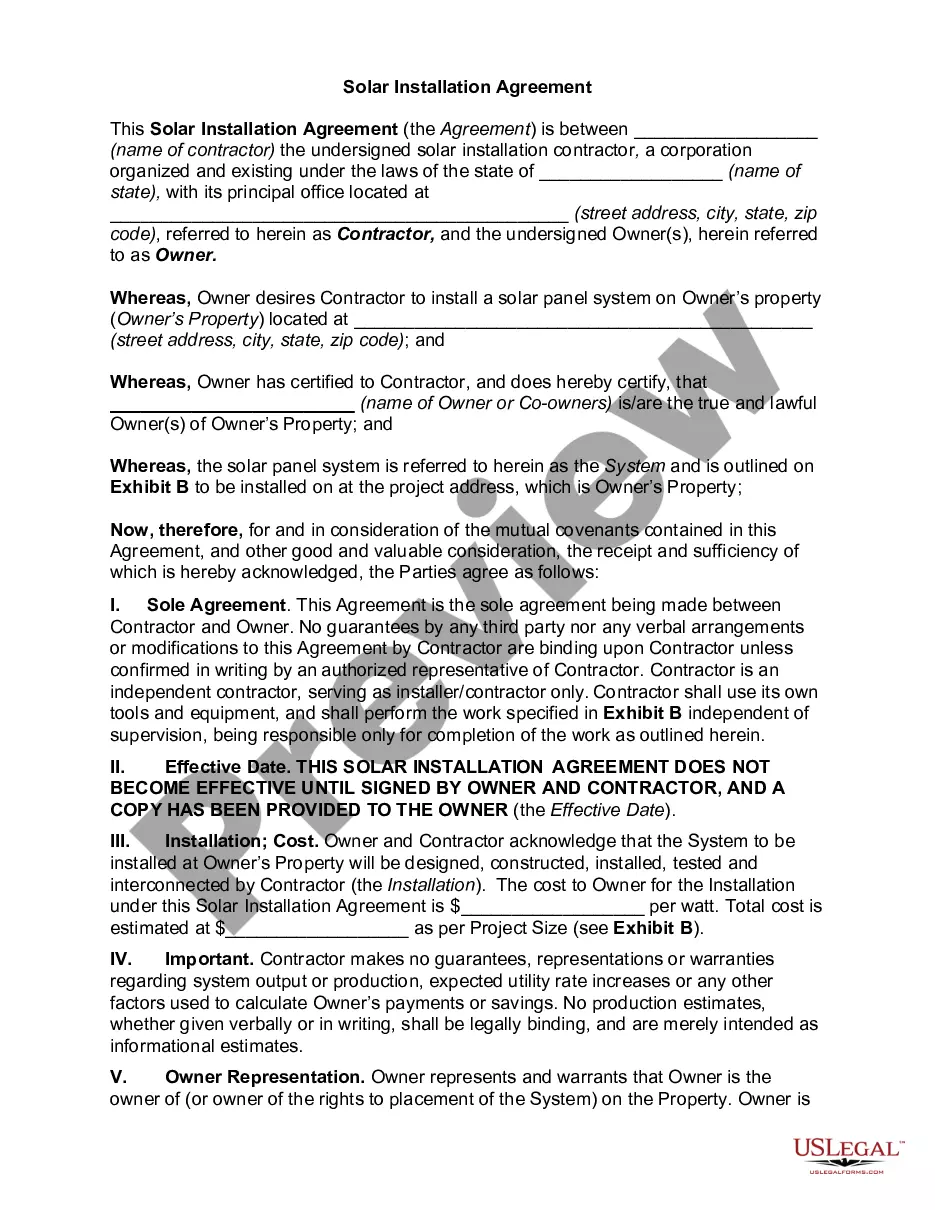
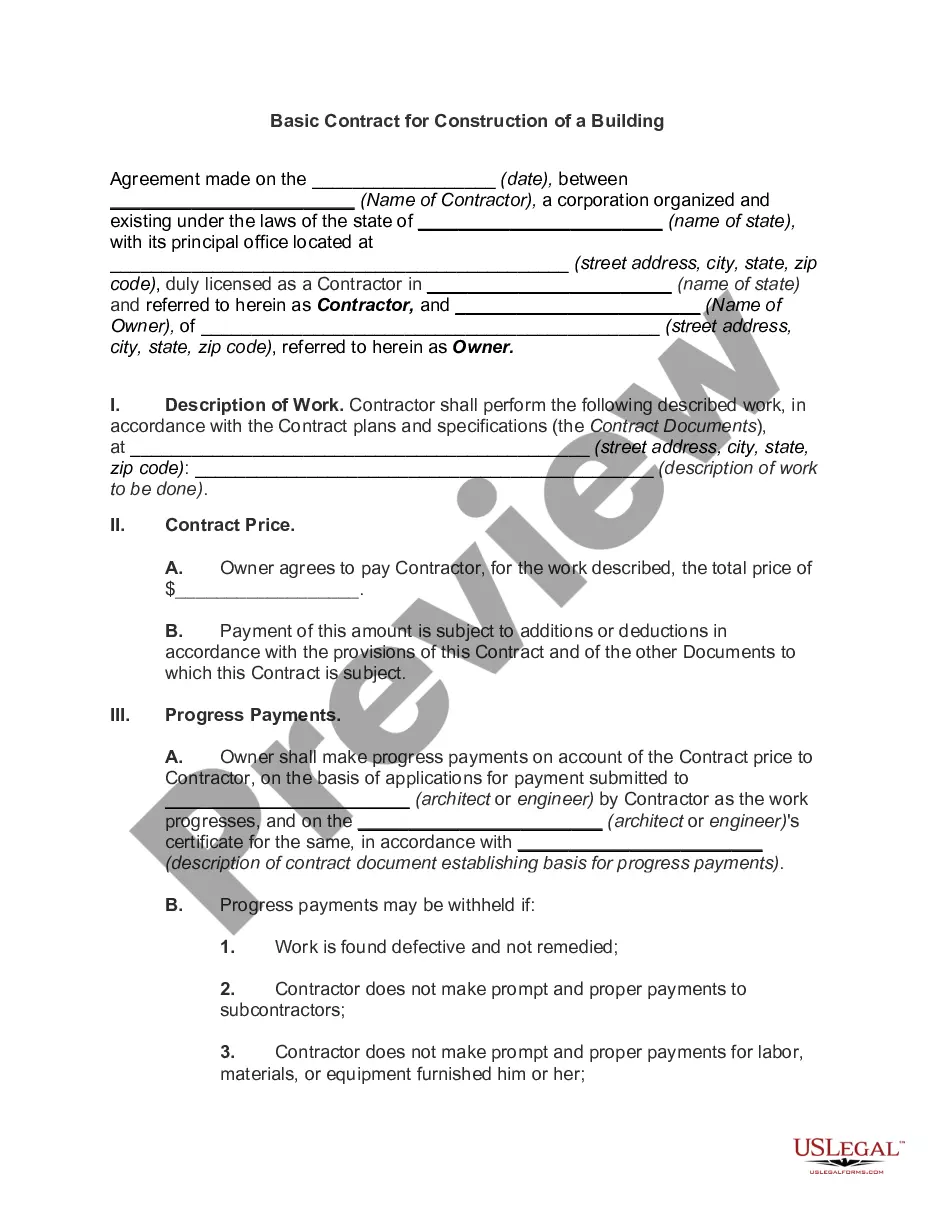
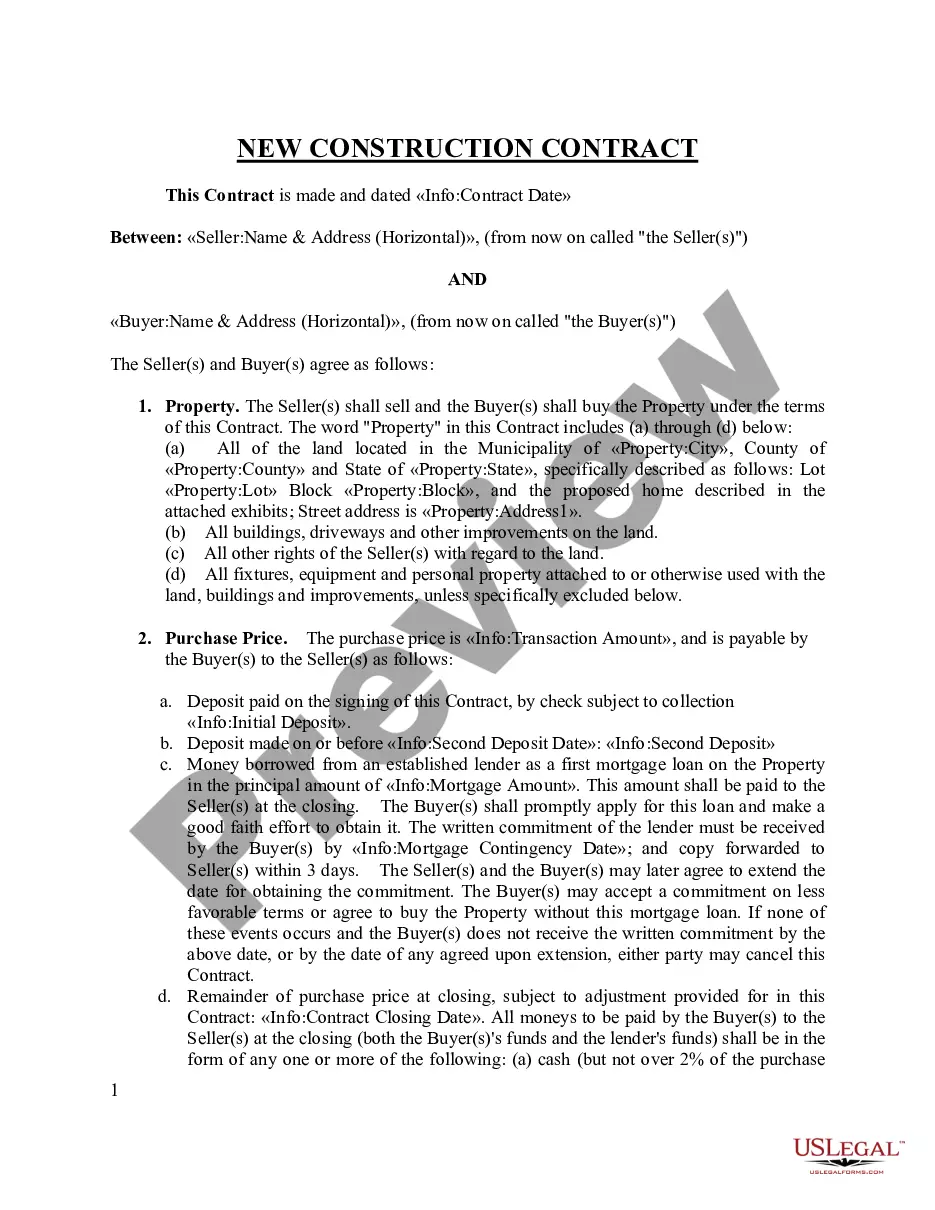
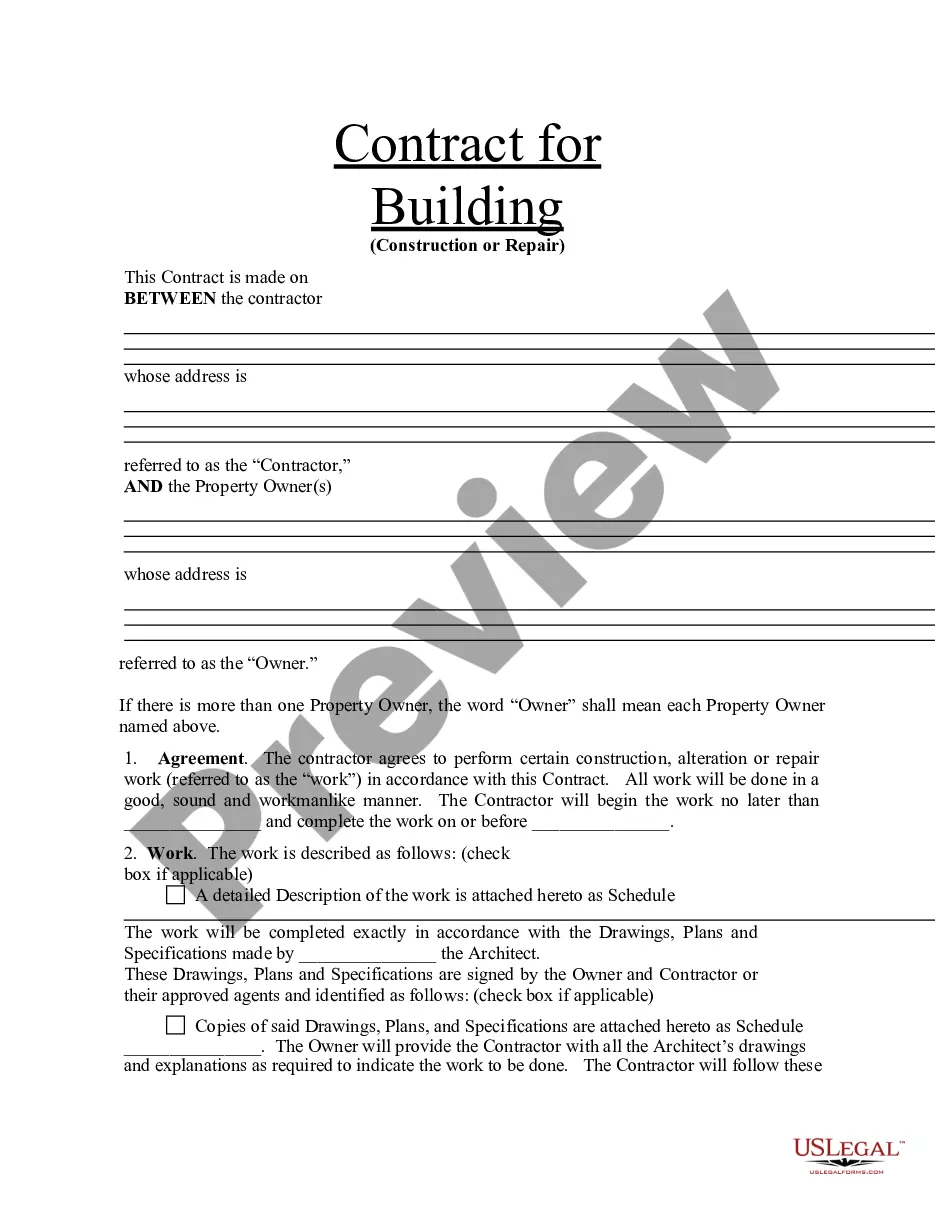
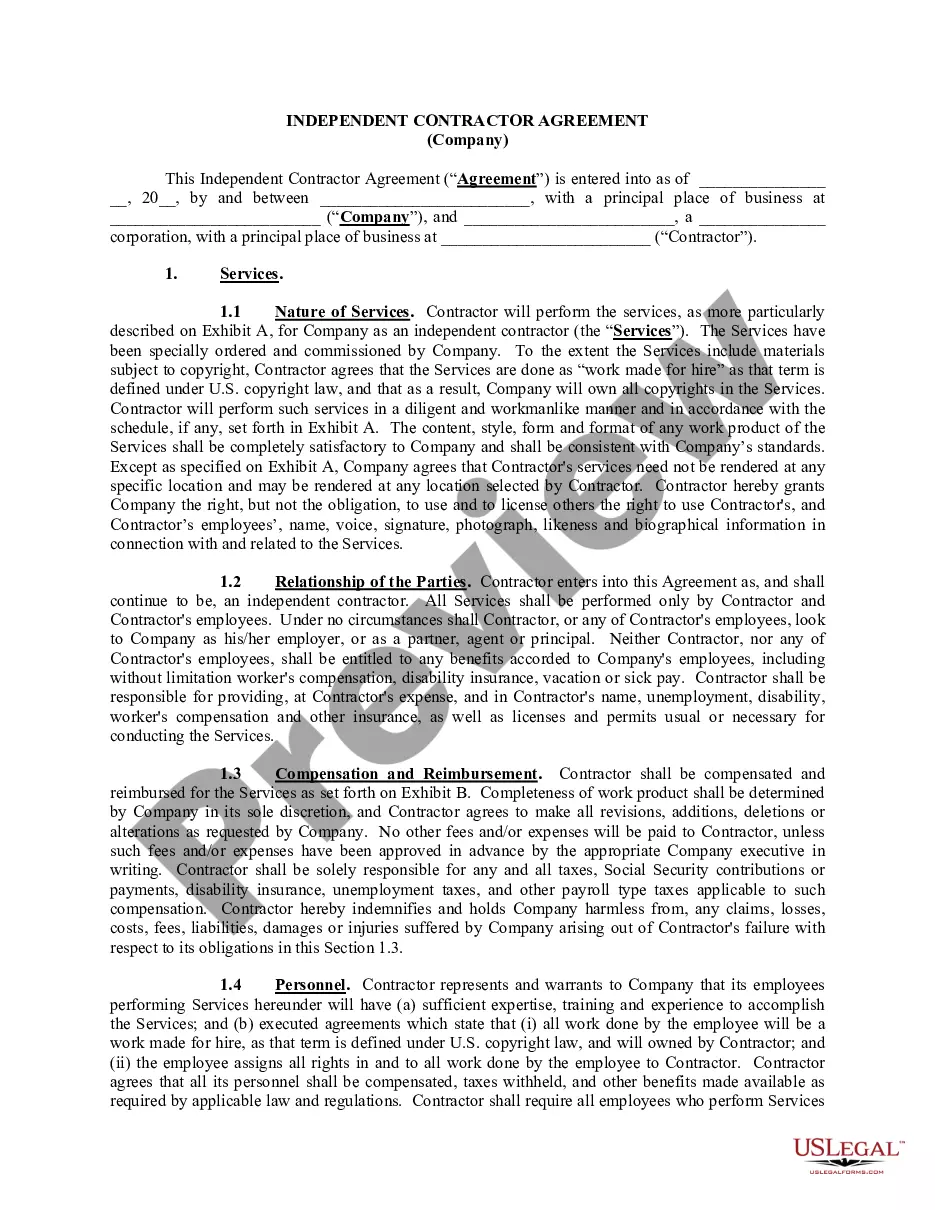
The Electrical Contract for Contractor is a legal document that establishes an agreement between an electrical contractor and a property owner. This contract outlines the terms of service, including payment arrangementsâeither cost plus or fixed feeâalong with essential elements such as change orders, work site information, warranties, and insurance. This form is specifically drafted to comply with the laws of the State of Alabama, ensuring proper legal backing for both parties involved.
Key parts of this document
- Identification of the parties involved
- Description of services to be provided by the contractor
- Payment terms, specifying either cost plus or fixed fee arrangements
- Conditions for change orders and how they should be managed
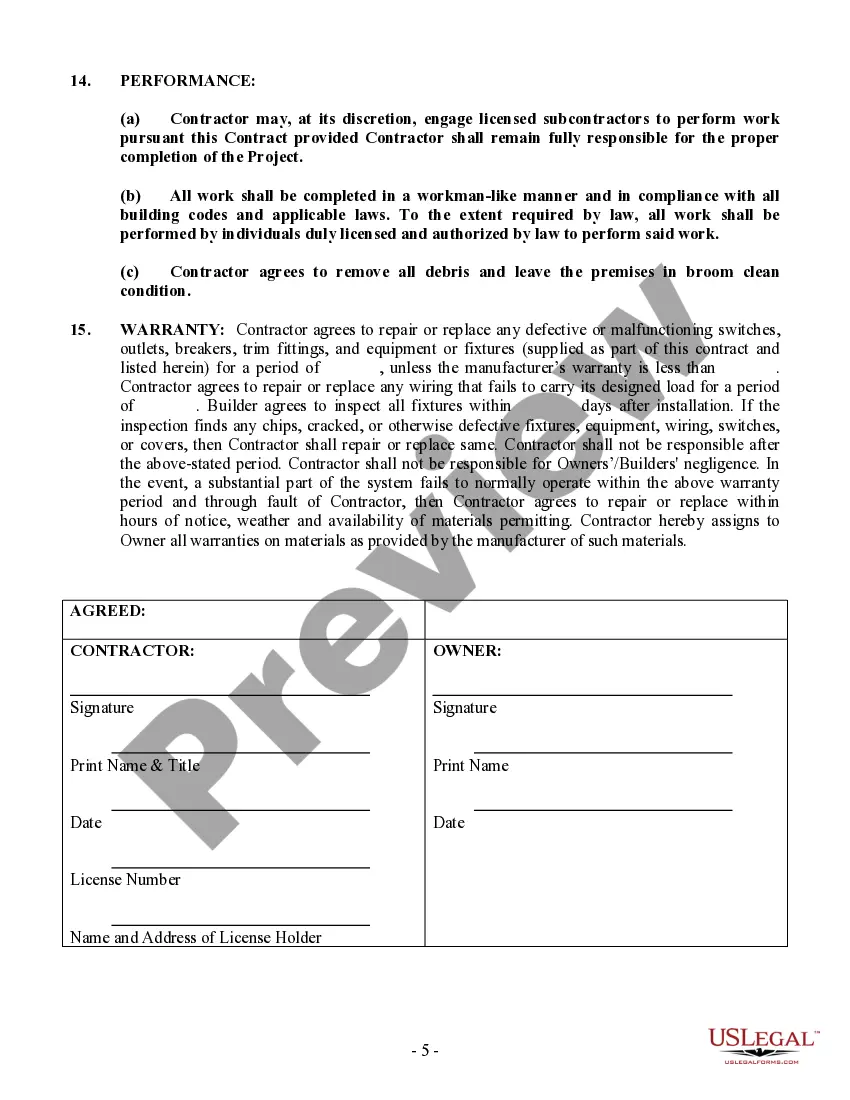
- Warranty details for the work performed
- Insurance requirements for the contractor

When to use this form
This Electrical Contract for Contractor should be utilized when an electrical contractor is hired to perform work on a property. It is essential for clarifying expectations and responsibilities between the contractor and the property owner. Use this form in situations such as new electrical installations, repairs, or modifications to existing systems where formal agreement is necessary to protect both partiesâ interests.
Who this form is for
- Electrical contractors seeking to formalize agreements with property owners
- Property owners hiring electrical contractors for projects
- Businesses or individuals requiring electrical work and who wish to establish clear terms
- Anyone in the State of Alabama engaging in electrical services and wanting to ensure legal compliance
Steps to complete this form
- Identify the parties involved in the contract (electrical contractor and property owner).
- Specify the scope of the electrical work to be performed.
- Choose between a cost plus or fixed fee payment arrangement.
- Include details of warranty and insurance requirements.
- Ensure both parties sign and date the contract to validate the agreement.
Notarization guidance
This form does not typically require notarization unless specified by local law. It is advisable to check local regulations or consult with legal counsel to ensure compliance with any specific requirements.
Get your form ready online
Our built-in tools help you complete, sign, share, and store your documents in one place.
Make edits, fill in missing information, and update formatting in US Legal Forms—just like you would in MS Word.
Download a copy, print it, send it by email, or mail it via USPS—whatever works best for your next step.
Sign and collect signatures with our SignNow integration. Send to multiple recipients, set reminders, and more. Go Premium to unlock E-Sign.
If this form requires notarization, complete it online through a secure video call—no need to meet a notary in person or wait for an appointment.
We protect your documents and personal data by following strict security and privacy standards.

Make edits, fill in missing information, and update formatting in US Legal Forms—just like you would in MS Word.

Download a copy, print it, send it by email, or mail it via USPS—whatever works best for your next step.

Sign and collect signatures with our SignNow integration. Send to multiple recipients, set reminders, and more. Go Premium to unlock E-Sign.

If this form requires notarization, complete it online through a secure video call—no need to meet a notary in person or wait for an appointment.

We protect your documents and personal data by following strict security and privacy standards.
Common mistakes to avoid
- Not clearly defining the scope of work, leading to misunderstandings.
- Failing to address change order processes, which can complicate modifications later.
- Neglecting to confirm insurance and warranty requirements.
- Not obtaining signatures from both parties before commencing work.
Why complete this form online
- Immediate access to a professionally created legal document.
- Easy editability to tailor the contract according to specific needs.
- Convenience of downloading and printing the form instantly.
- Reliability of using a form compliant with Alabama state laws.
Main things to remember
- The Electrical Contract for Contractor is essential for defining responsibilities and obligations in electrical work.
- Using this form helps avoid disputes by clearly outlining payment terms and project scope.
- It is specifically tailored to comply with Alabama law, ensuring legal enforceability.
Looking for another form?




Form popularity
FAQ
It's a four-year course, which involves both on-the-job and off-the-job training. Completing the Cert III allows you to become an electrician or electrical tradesperson in Australia. It's also a handy pathway to the Diploma of Electrical Engineering, which will open up a higher paying career area.
To be eligible for an electrical contractor license, you will need to work 8,000 hours as a journeyman electrician. You will need trade experience as well as managerial experience. Unfortunately, any hours spent doing maintenance will not count towards your license. and pay a $165 fee to schedule your exam.
An electrical contractor is different from an electrician; an electrician is an individual tradesman and an electrical contractor is a business person or company that employs electricians.Electricians may work for an electrical contractor, or directly for individuals or companies.
An electrical engineer makes around $93,000 every year. On the other hand, electricians make about $53,000.For example, a project electrical engineer can go up to more than $100,000, while electrical electronic engineers earn around $75,000.
You Could Make Six Figures According to PayScale, the average annual salary for electricians is $55,477. Per the BLS, the highest 10% of electricians earn more than $90,420.Electricians who join unions can make more than those who do not.
Need of a License: Electrical contractors and state-wide journeyman electricians need a license to work in Alabama.A candidate for electrical contractor can substitute up to 2,000 hours of the 8,000 hour requirement with approved education or apprenticeship programs.
Yes. State laws allows property owners to work on their own electrical, HVAC, and plumbing system. However, only the property owner(s) of record can perform the work, with no help or assistance from anyone other than a licensed contractor. Permits and inspections will still be required, no matter who performs the work.