Wisconsin Real Estate Restrictive Covenants Form
Description



Form popularity
FAQ
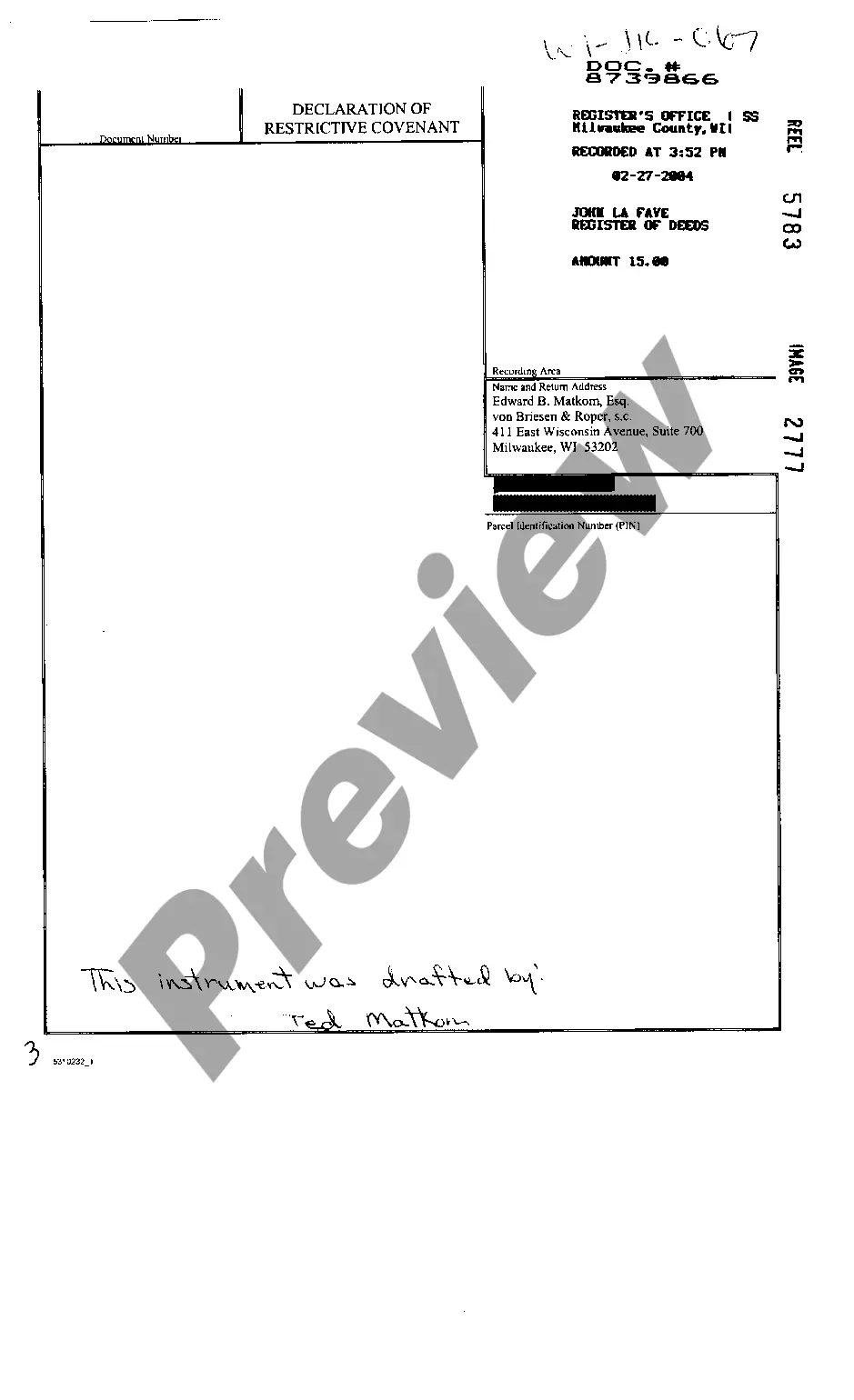
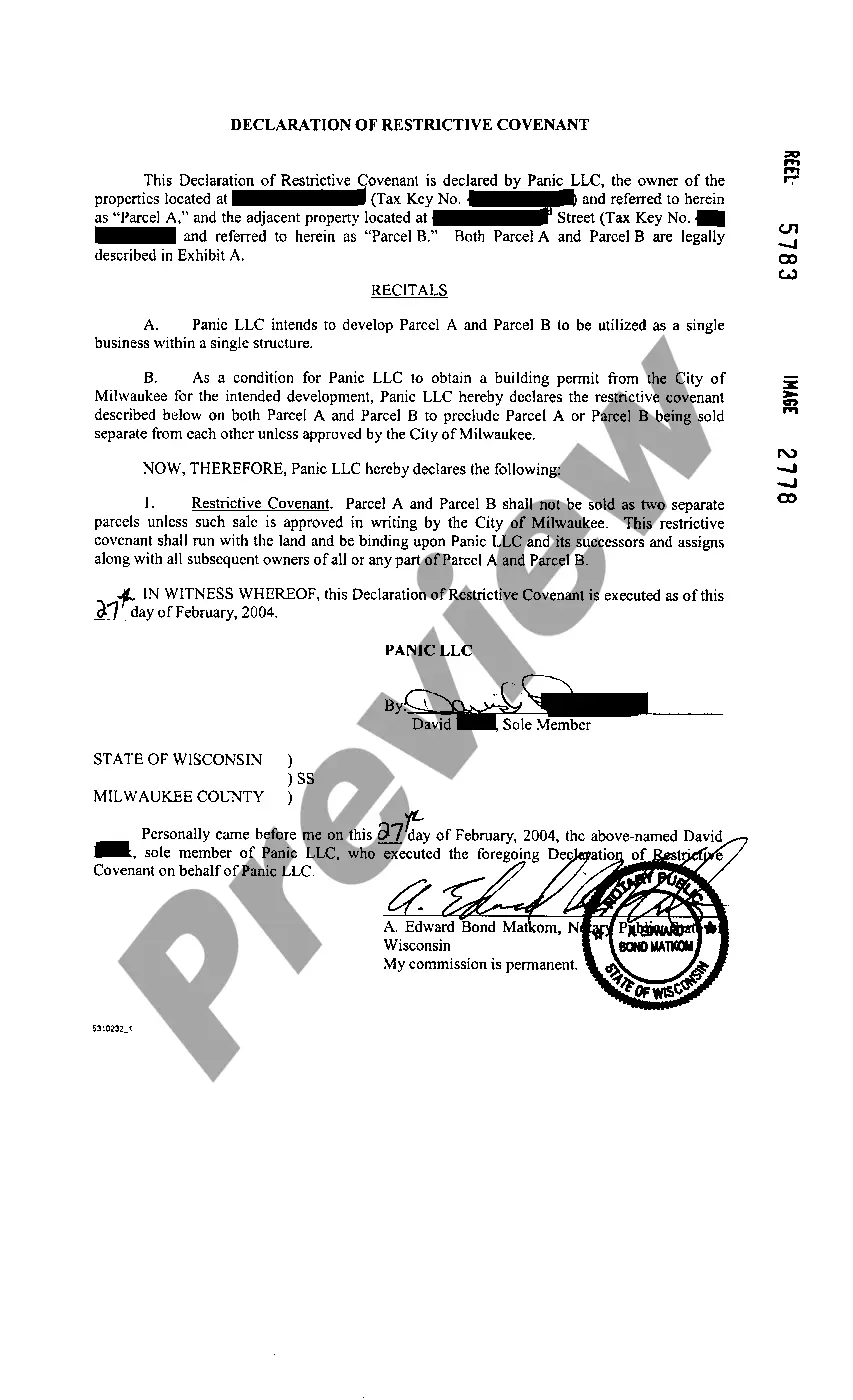
In Wisconsin, restrictive covenants are legally binding agreements that dictate how property can be used. They play a crucial role in maintaining neighborhood standards and property values. To establish or modify these agreements, utilizing a Wisconsin real estate restrictive covenants form is essential to ensure adherence to state laws and community expectations.
The most prevalent restrictive covenant usually concerns property usage, especially with respect to the type of structures homeowners can build. For instance, you might find rules against erecting certain outbuildings. By selecting the appropriate Wisconsin real estate restrictive covenants form, homeowners can address these regulations effectively.
One common example of a restrictive covenant is a rule that forbids commercial activities in a residential community. This maintains the residential character of the area and safeguards property values. If you're looking to draft or enforce such rules, consider using a Wisconsin real estate restrictive covenants form for clarity and compliance.
An example of a restrictive covenant could include a provision that prohibits homeowners from painting their houses in certain colors or from building fences over a specific height. Such covenants aim to maintain a certain aesthetic within a neighborhood. To create or modify these provisions, interested parties can utilize a Wisconsin real estate restrictive covenants form.
Restrictive covenants generally fall into three categories: residential, commercial, and agricultural. Each category serves a specific purpose in defining how a property can be used. By utilizing a Wisconsin real estate restrictive covenants form, property owners can ensure their interests are protected and enforced effectively.
Examples of restrictive covenants include rules prohibiting certain types of commercial activities, restrictions on building height, or requirements for specific architectural styles. Homeowners associations often enforce such covenants within communities to uphold a certain aesthetic or atmosphere. Creating a comprehensive Wisconsin real estate restrictive covenants form can help clarify these rules for all parties involved. This promotes understanding and adherence among residents.
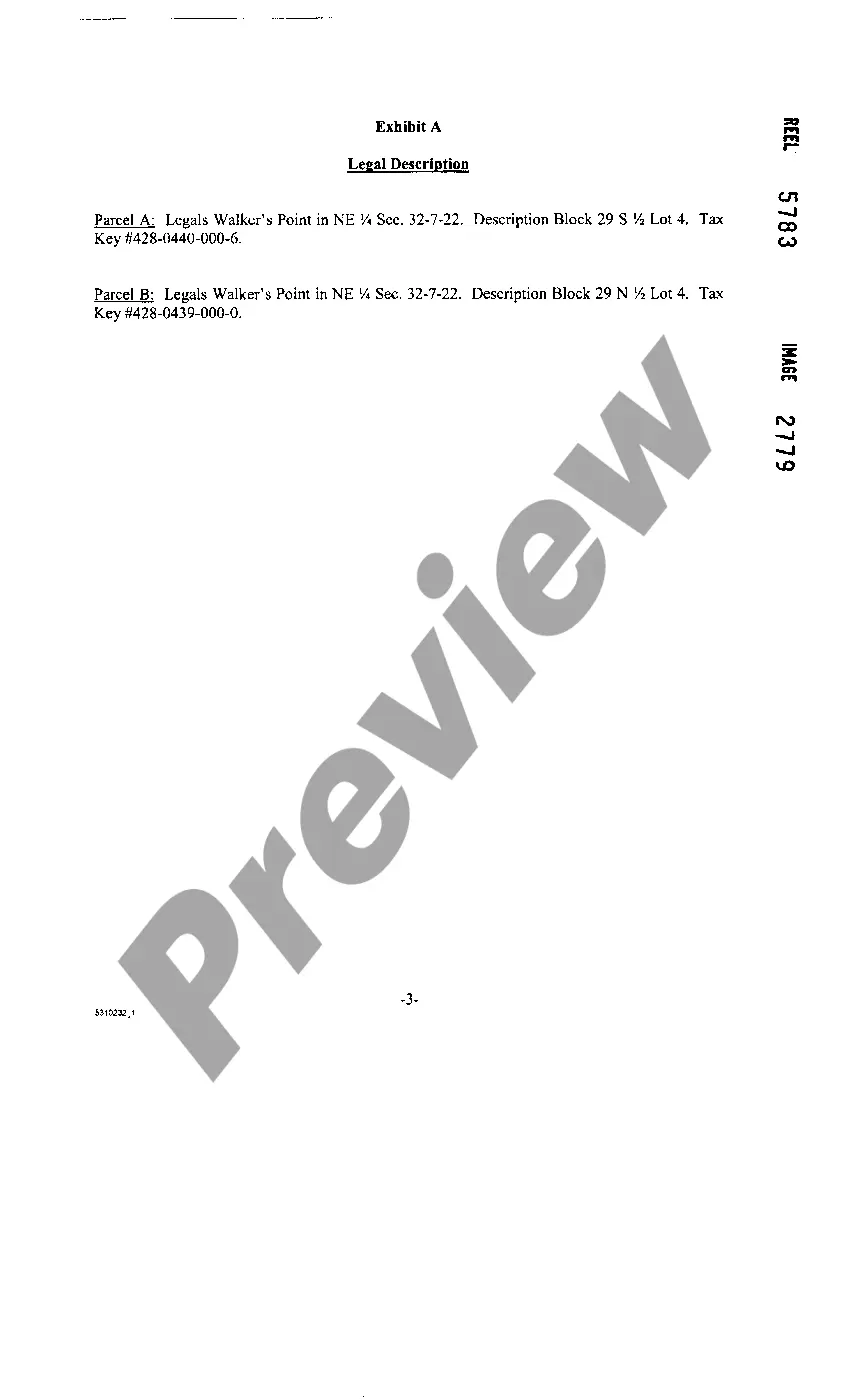
A restrictive covenant document outlines specific limitations on property use and development. This legal document specifies what property owners can or cannot do with their land. Utilizing a Wisconsin real estate restrictive covenants form ensures that these restrictions are properly recorded and enforceable under Wisconsin law. This helps protect homeowners and maintain the integrity of the neighborhood.
The six primary covenants of real estate include the covenant of seisin, the covenant of right to convey, the covenant against encumbrances, the covenant for quiet enjoyment, the covenant of warranty, and the covenant for further assurances. Understanding these covenants is vital for any property transaction in Wisconsin. Using a Wisconsin real estate restrictive covenants form can help you enforce these rights and protections effectively. Always familiarize yourself with these covenants to ensure a smooth real estate process.
Restrictive covenants in Wisconsin are rules that limit how property owners can use their land. These may include restrictions on building types, property use, and maintenance standards. Enforcing these covenants is essential for maintaining community standards and property values. A Wisconsin real estate restrictive covenants form can help property owners clearly articulate and document these rules.
To make restrictive covenants enforceable, you must ensure they are clearly defined, reasonable, and not contrary to public policy. Additionally, these covenants should be documented in a legally binding Wisconsin real estate restrictive covenants form. Recording the form with the appropriate local government agency is crucial as it puts the public on notice of the covenants. Always consult a legal expert to help draft and review your documents.