Llc Ltd
Description

Get your form ready online
Our built-in tools help you complete, sign, share, and store your documents in one place.
Make edits, fill in missing information, and update formatting in US Legal Forms—just like you would in MS Word.
Download a copy, print it, send it by email, or mail it via USPS—whatever works best for your next step.
Sign and collect signatures with our SignNow integration. Send to multiple recipients, set reminders, and more. Go Premium to unlock E-Sign.
If this form requires notarization, complete it online through a secure video call—no need to meet a notary in person or wait for an appointment.
We protect your documents and personal data by following strict security and privacy standards.

Make edits, fill in missing information, and update formatting in US Legal Forms—just like you would in MS Word.

Download a copy, print it, send it by email, or mail it via USPS—whatever works best for your next step.

Sign and collect signatures with our SignNow integration. Send to multiple recipients, set reminders, and more. Go Premium to unlock E-Sign.

If this form requires notarization, complete it online through a secure video call—no need to meet a notary in person or wait for an appointment.

We protect your documents and personal data by following strict security and privacy standards.
Looking for another form?

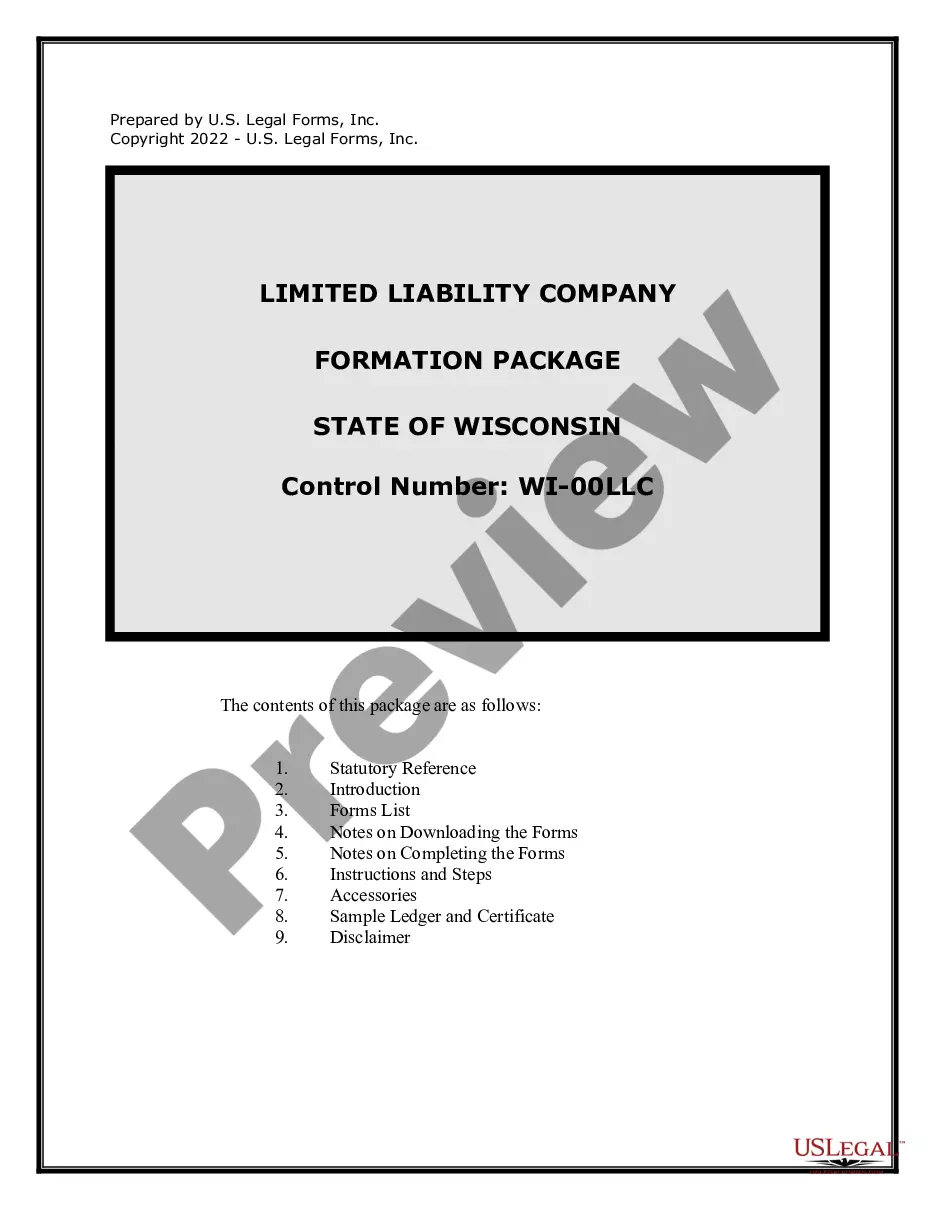
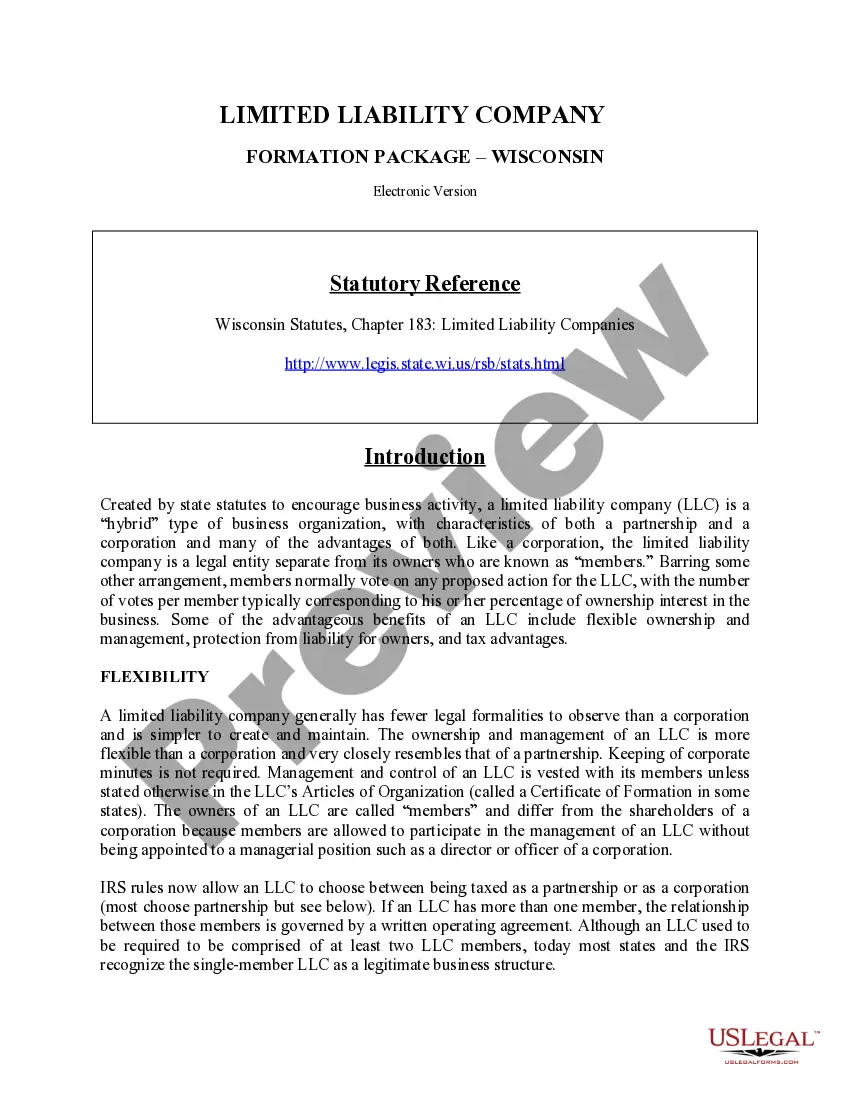
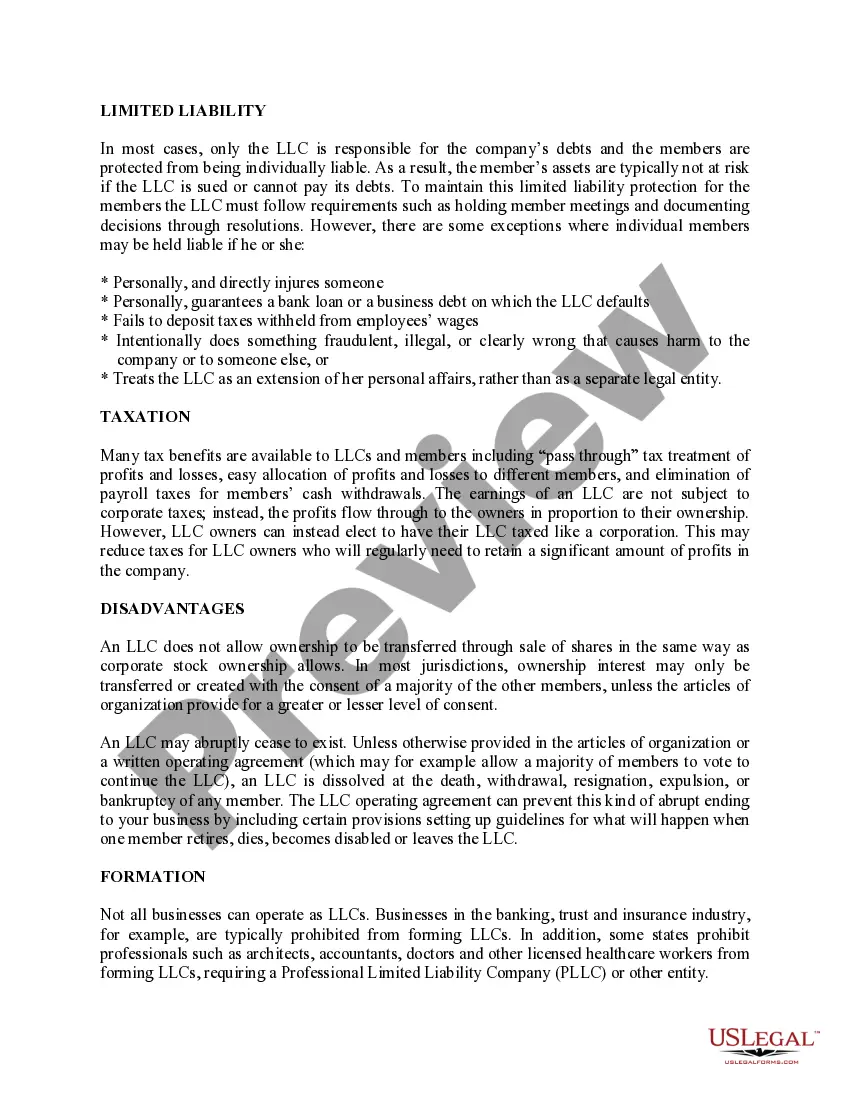
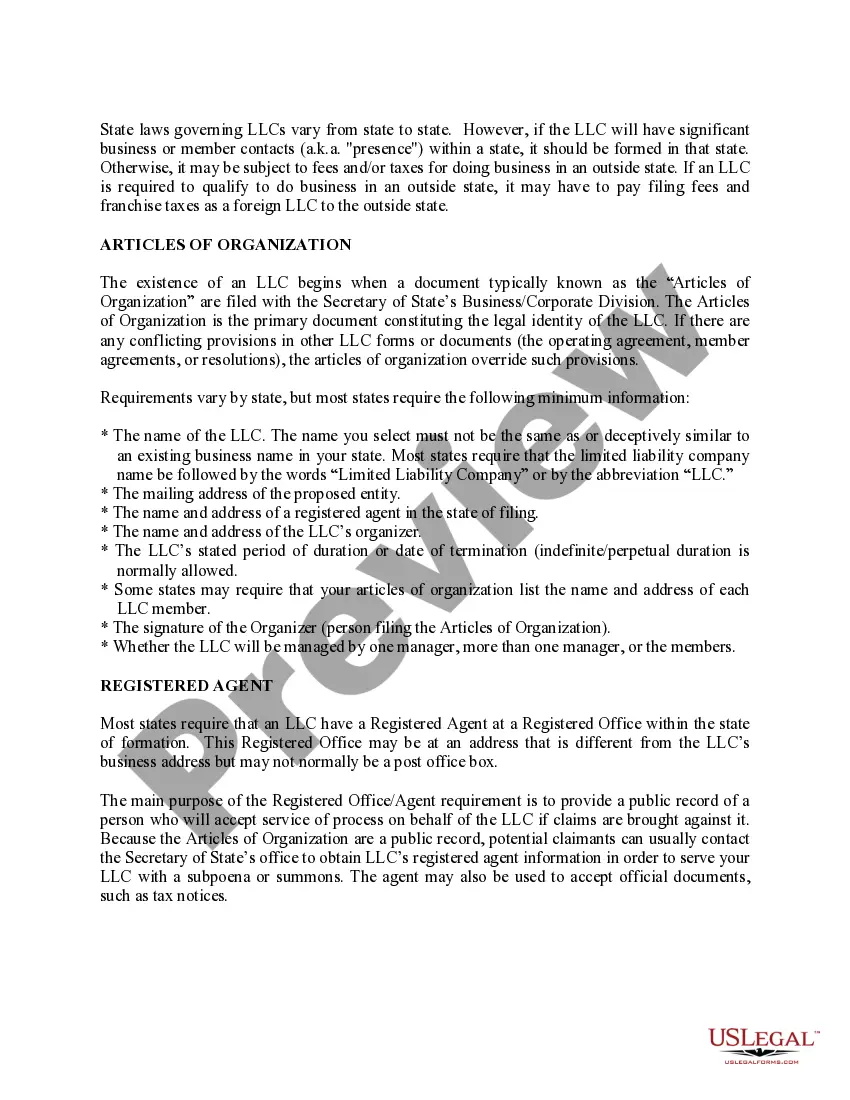
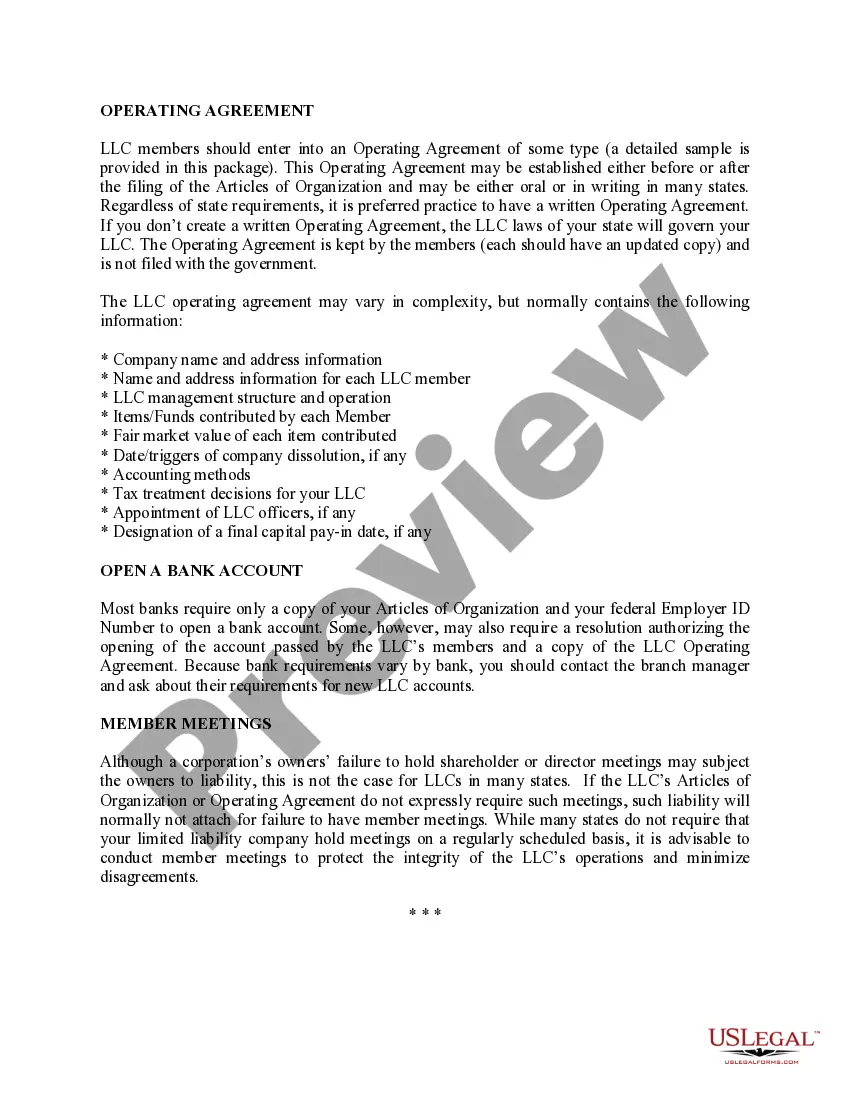
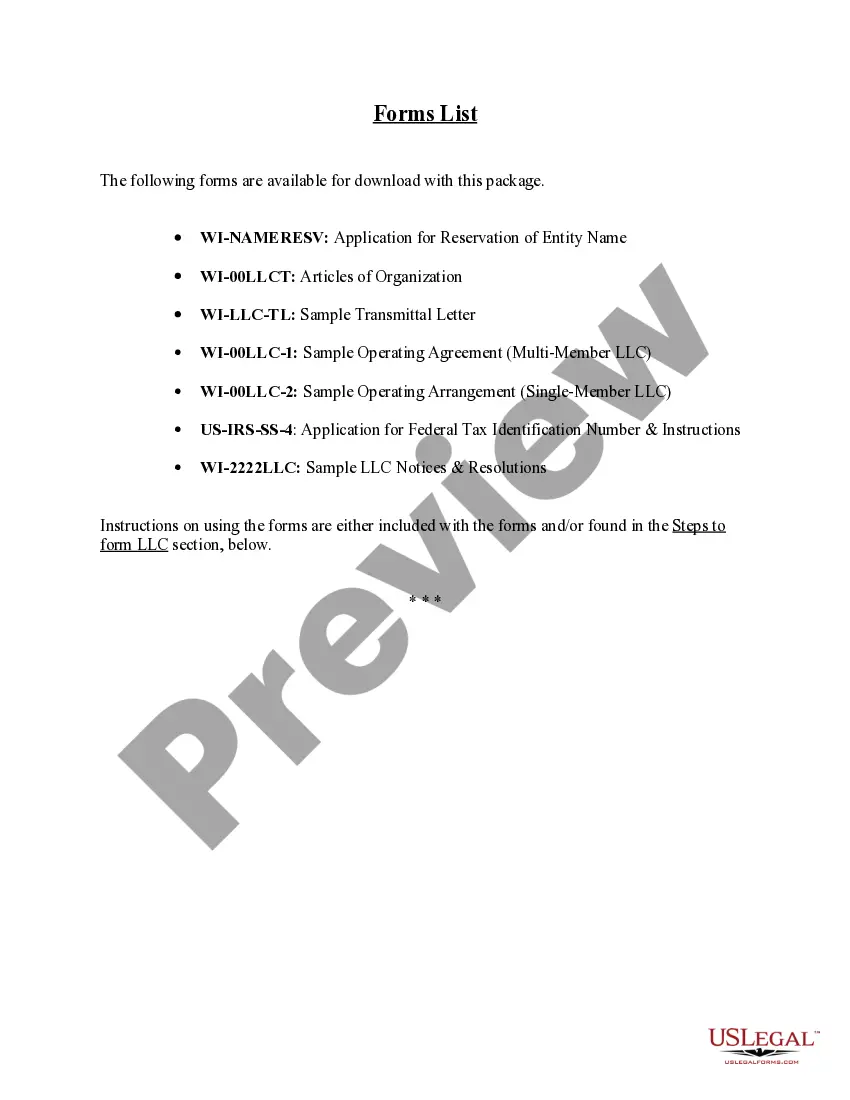
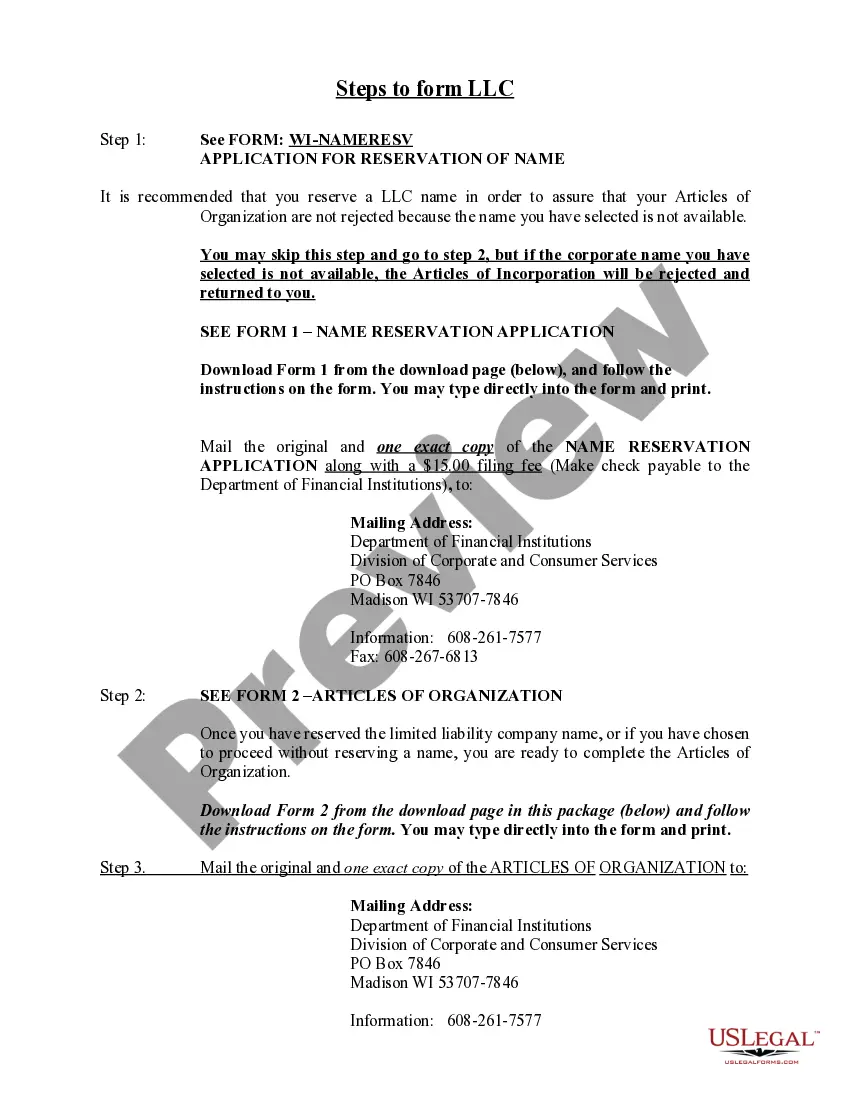
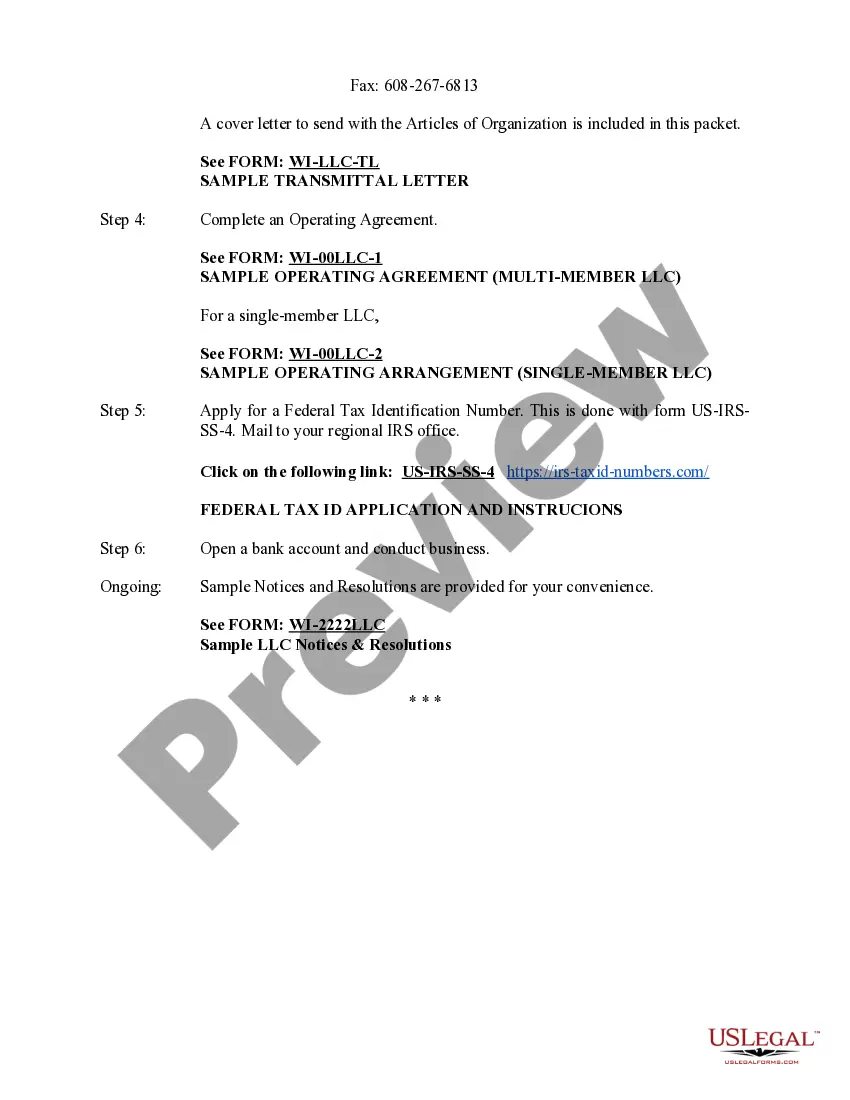
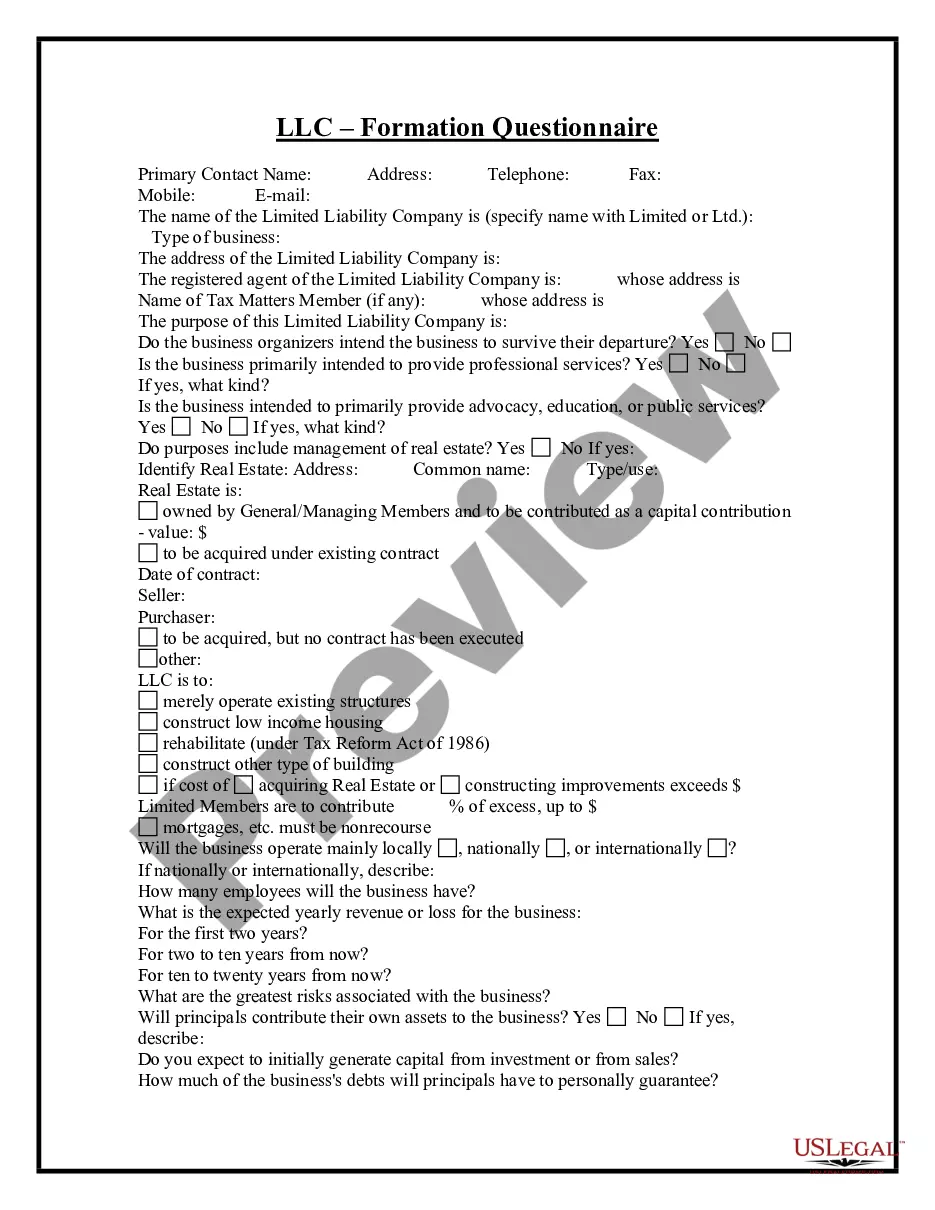
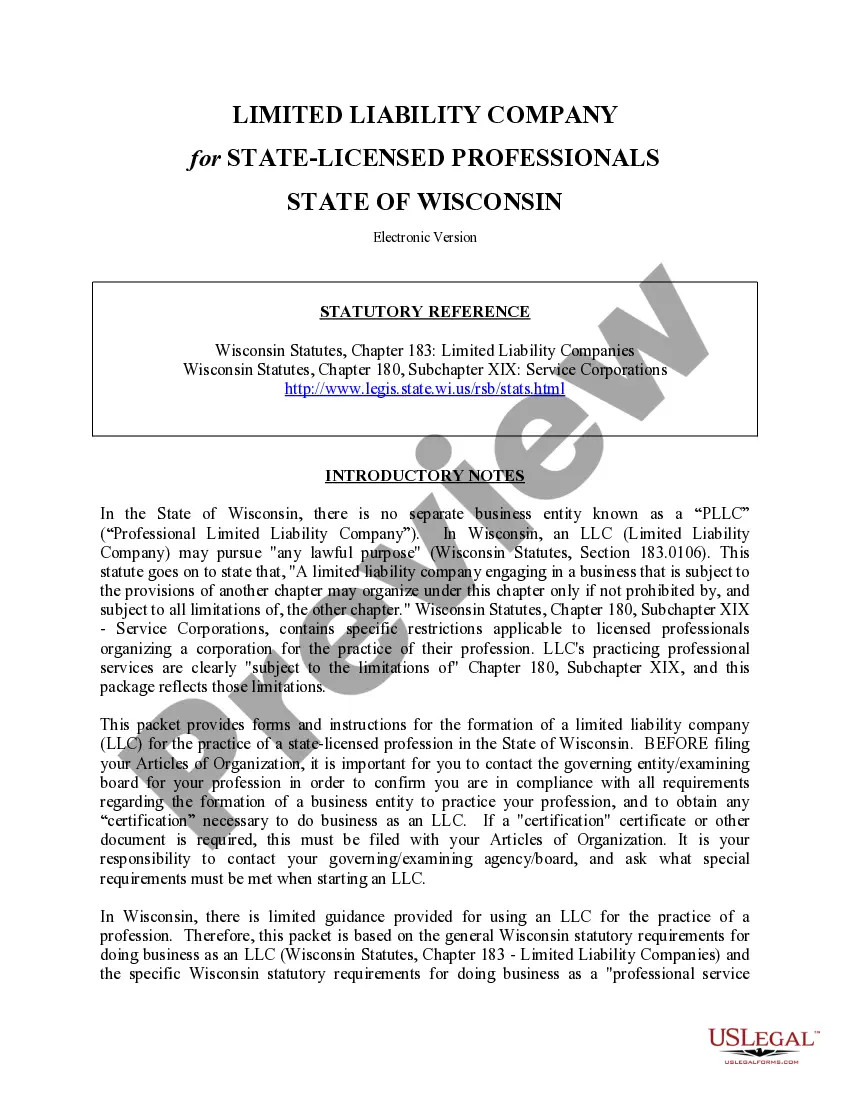
How to fill out Wisconsin Limited Liability Company LLC Formation Package?
- Log in to your account at US Legal Forms to access previously used templates. Ensure your subscription is active; renew if necessary.
- If you're a new user, start by browsing the extensive form collection. Check the preview to confirm it meets your legal needs and aligns with your jurisdiction.
- Utilize the search feature to find additional forms if your initial selection isn’t suitable.
- Click the 'Buy Now' button to purchase the selected form, and choose your desired subscription plan.
- Complete your order by entering your payment information through credit card or PayPal.
- Download the completed form directly to your device. Access it anytime from the 'My Forms' menu in your profile.
US Legal Forms stands out with its robust collection of over 85,000 fillable legal documents, more than any competitor at similar prices. The platform not only simplifies form acquisition but also offers access to premium experts who can assist in precise completion.
Empower yourself with legally sound documents today. Visit US Legal Forms and start your journey toward hassle-free legal compliance.
Form popularity
FAQ
No, you cannot use Ltd instead of LLC in the United States. Each designation carries specific legal implications and operating structures. An LLC provides essential benefits like personal liability protection and flexible taxation options, which are not available with a business labeled as Ltd. It's crucial to choose the right designation for your business to avoid legal complications.
Yes, you can file your LLC on your own, but the process requires careful attention to detail. Filing involves specific forms, fees, and adherence to your state’s requirements. If you’re unsure, using platforms like uslegalforms can simplify the process and help ensure that you are compliant with all necessary regulations.
Using LTD for an LLC is generally not permissible because LTD signals a different type of company structure. In the US, LLCs are registered specifically as Limited Liability Companies. It’s essential to adhere to state naming guidelines to avoid confusion and ensure your business is recognized correctly. Always check with your state regulations when selecting a name.
A private limited company and an LLC are similar in that they both provide limited liability protection to their owners. However, they operate under different legal frameworks. In the US, an LLC functions according to state laws, while a private limited company is often relevant to other countries. Understanding these differences can help you choose the right structure for your business needs.
Entities that need an Employer Identification Number (EIN) include corporations, partnerships, LLCs, and trusts. If your business has employees, operates as a corporation, or meets certain IRS thresholds, you will require an EIN. Additionally, certain tax-exempt organizations must also obtain one. If you are unsure whether your entity needs an EIN, consult US Legal Forms for guidance tailored to your business structure.
Yes, an irrevocable trust needs an Employer Identification Number (EIN) to report income and file tax returns. Once a trust is irrevocable, the creator relinquishes control, and the trust becomes a separate legal entity. The IRS requires trusts to have an EIN to maintain accurate records for tax purposes. Utilizing platforms like US Legal Forms can simplify the process of obtaining an EIN for your irrevocable trust.
An Ltd typically requires an Employer Identification Number (EIN) when it has employees or files specific tax returns. Moreover, an EIN serves as a unique identifier for your business, similar to a social security number. Even if your Ltd does not have employees, having an EIN can simplify banking and tax reporting processes. Consider using US Legal Forms for a streamlined EIN application process.
Yes, you can have an LLC without an Employer Identification Number (EIN), but it is often recommended to obtain one. An EIN helps with opening a business bank account, hiring employees, and filing taxes. Furthermore, while single-member LLCs can use their social security number for tax purposes, obtaining an EIN adds a layer of professionalism and identity to your LLC. US Legal Forms can help you apply for an EIN easily.
Typically, an Ltd does not need a 1099 form unless it is reporting specific payments made to vendors or contractors. If your Ltd pays for services exceeding $600 to an independent contractor, you will need to issue a 1099 form. It's crucial to keep accurate financial records to ensure compliance with tax regulations. For more information on tax obligations, consider consulting with a tax professional.
While both LLC and Ltd offer limited liability protection, they are distinct entities. An LLC, or Limited Liability Company, is commonly used in the United States, while Ltd, short for Limited, is prevalent in the UK and other countries. Both structures protect owners' personal assets, but their formation, taxation, and regulations vary. Understanding these differences is essential when deciding between an LLC or Ltd.