Employee Personnel File With No Objection
Description
Get your form ready online
Our built-in tools help you complete, sign, share, and store your documents in one place.
Make edits, fill in missing information, and update formatting in US Legal Forms—just like you would in MS Word.
Download a copy, print it, send it by email, or mail it via USPS—whatever works best for your next step.
Sign and collect signatures with our SignNow integration. Send to multiple recipients, set reminders, and more. Go Premium to unlock E-Sign.
If this form requires notarization, complete it online through a secure video call—no need to meet a notary in person or wait for an appointment.
We protect your documents and personal data by following strict security and privacy standards.

Make edits, fill in missing information, and update formatting in US Legal Forms—just like you would in MS Word.

Download a copy, print it, send it by email, or mail it via USPS—whatever works best for your next step.

Sign and collect signatures with our SignNow integration. Send to multiple recipients, set reminders, and more. Go Premium to unlock E-Sign.

If this form requires notarization, complete it online through a secure video call—no need to meet a notary in person or wait for an appointment.

We protect your documents and personal data by following strict security and privacy standards.
Looking for another form?





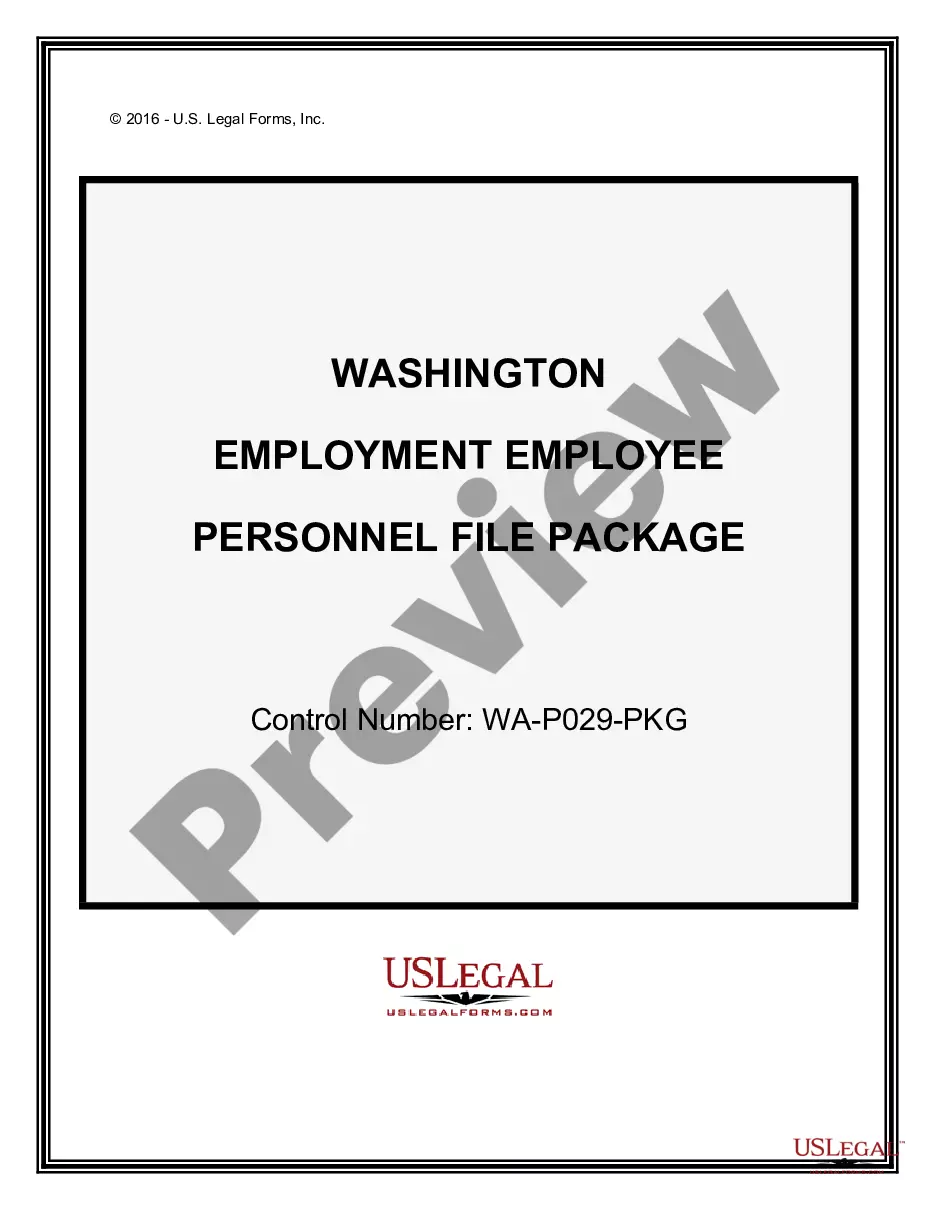
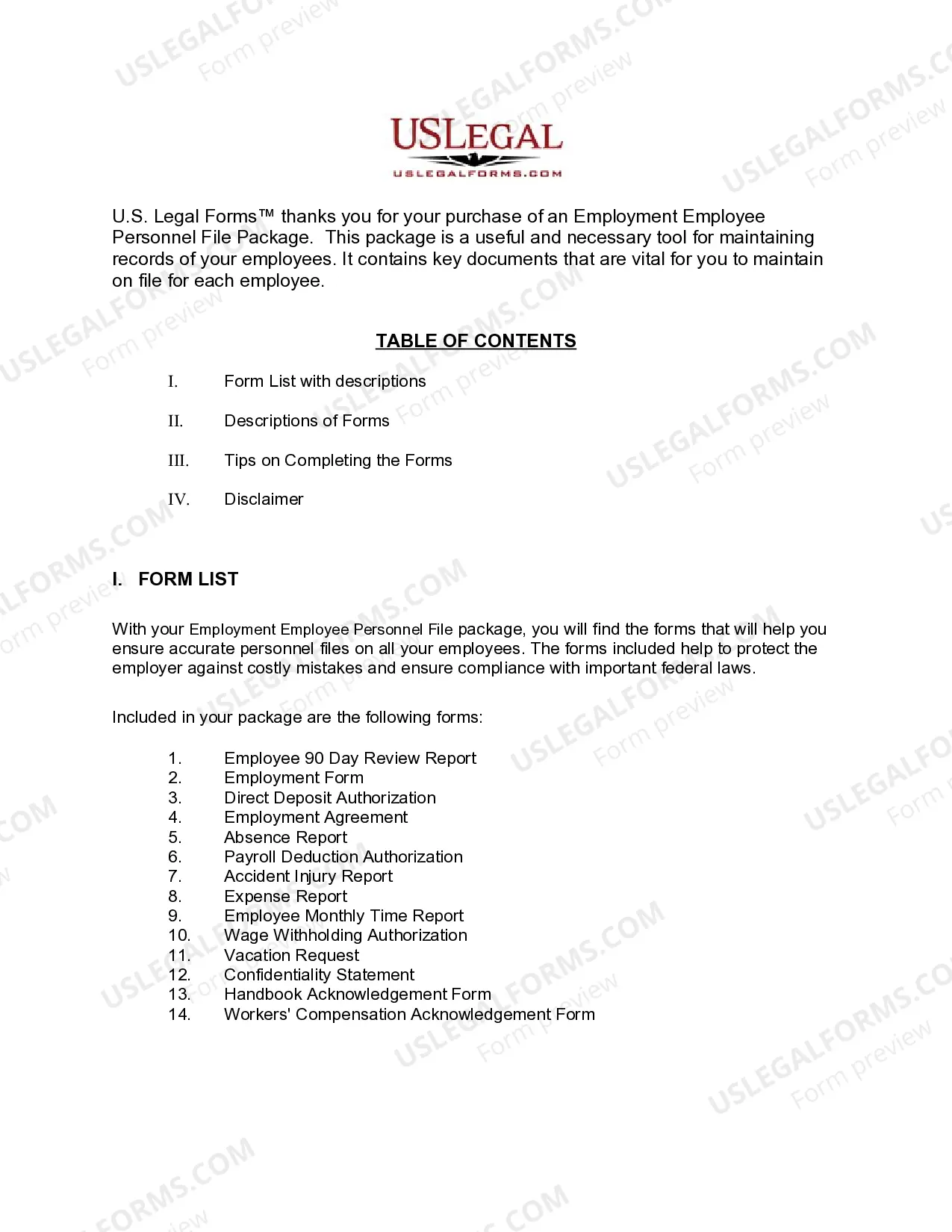
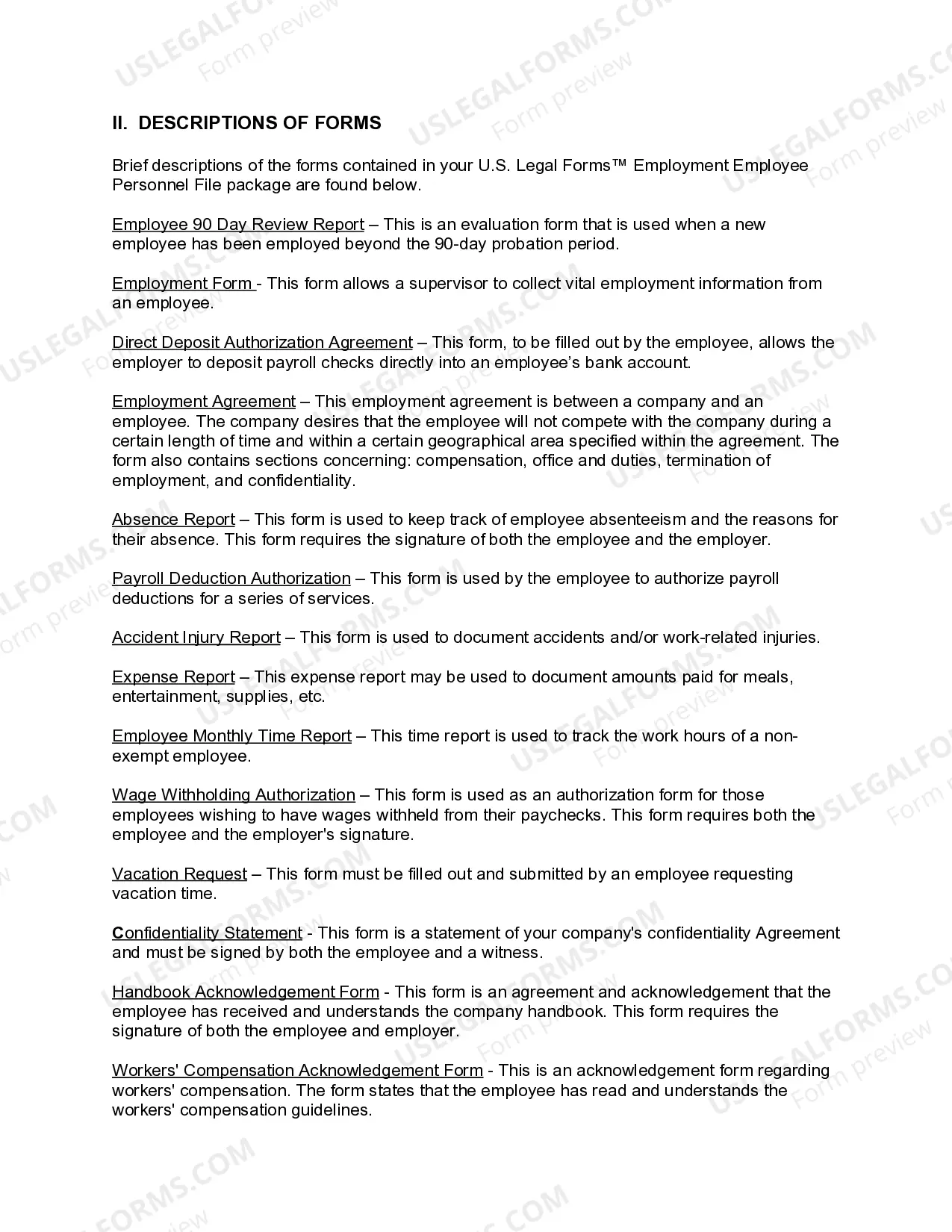
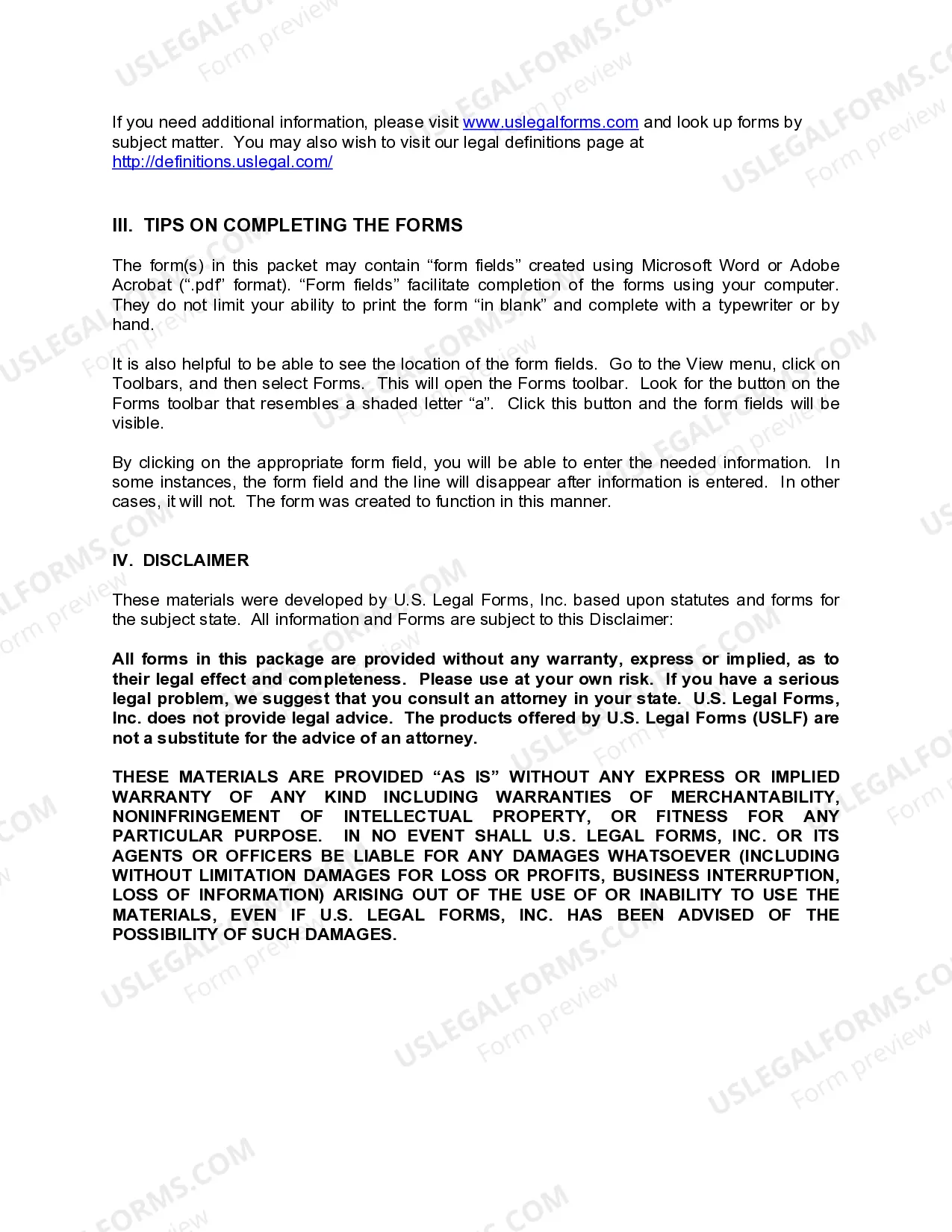
How to fill out Washington Employment Employee Personnel File Package?
- Log into your account on US Legal Forms. If you haven't registered yet, create an account to access a vast collection of forms.
- Browse through the library and check the Preview mode of the Employee Personnel File template you need. Make sure it aligns with your specific requirements and local laws.
- If the file doesn't meet your needs, use the Search tab to find an alternative template that fits your criteria.
- Choose your desired subscription plan by clicking the Buy Now button, and then follow the prompts to register your account to access the full resources.
- Complete your purchase by entering your payment details through credit card or PayPal.
- Download the employee personnel file to your device, ensuring you can fill it out as necessary and revisit it under the My Forms section of your profile.
Once you complete these steps, you’ll have a comprehensive employee personnel file ready for use, all while enjoying the benefits offered by US Legal Forms.
Take the first step towards efficient legal documentation today and explore the resources available at US Legal Forms.
Form popularity
FAQ
Setting up employee personnel files involves creating a standard structure for documentation and keeping everything organized. Begin by gathering essential information, such as contracts, performance evaluations, and any disciplinary actions. Platforms like US Legal Forms can help you digitalize and streamline the employee personnel file with no objection for efficient management and accessibility.
To set up employee personnel files, start by determining the specific documents you need to include, such as employment agreements, performance reviews, and training records. Utilize a secure digital system, like US Legal Forms, to organize and manage these files effectively. This way, you ensure that every employee personnel file with no objection is correctly maintained and easily accessible when needed.
You should avoid keeping sensitive personal information in the personnel file that is not relevant to an employee's job performance, such as medical records or personal opinions. Instead, it is best to maintain an organized employee personnel file with no objection that focuses solely on job-related documentation. This practice not only protects privacy but also keeps the file compliant with legal regulations.
Yes, employment files are generally considered confidential and should be treated as such. This includes the employee personnel file with no objection, which has sensitive information about an employee's performance and personal details. Maintaining confidentiality helps build trust between employees and management and complies with various employment laws.
Access to HR personnel files should be limited to authorized individuals, such as HR staff and direct supervisors, to maintain confidentiality and protect sensitive information. It is crucial to have a clear policy in place outlining who can access the employee personnel file with no objection. Limiting access helps safeguard employee privacy and maintains trust within the workplace.
A personal file typically contains personal information about an employee, such as their contact details and emergency contacts, while a personnel file contains all official records related to an employee's job. This includes the employee personnel file with no objection, performance reviews, disciplinary actions, and training records. Understanding the distinction helps ensure that you keep the right information organized and secure.
The best way to organize HR files is to create a structured system that allows for easy access and management. You can categorize files into various sections such as employee personnel file, benefits documentation, and performance evaluations. Using a digital platform, like US Legal Forms, can streamline this process and provide a central location for all documents while ensuring you have your employee personnel file with no objection.
Sensitive information such as personal medical records, Social Security numbers, and any documentation of discrimination complaints should not be included in an employee personnel file with no objection. Excluding these items helps safeguard employee privacy and comply with various legal standards. To further assist in organizing personnel documents, consider using platforms like USLegalForms to ensure compliance and streamline processes.
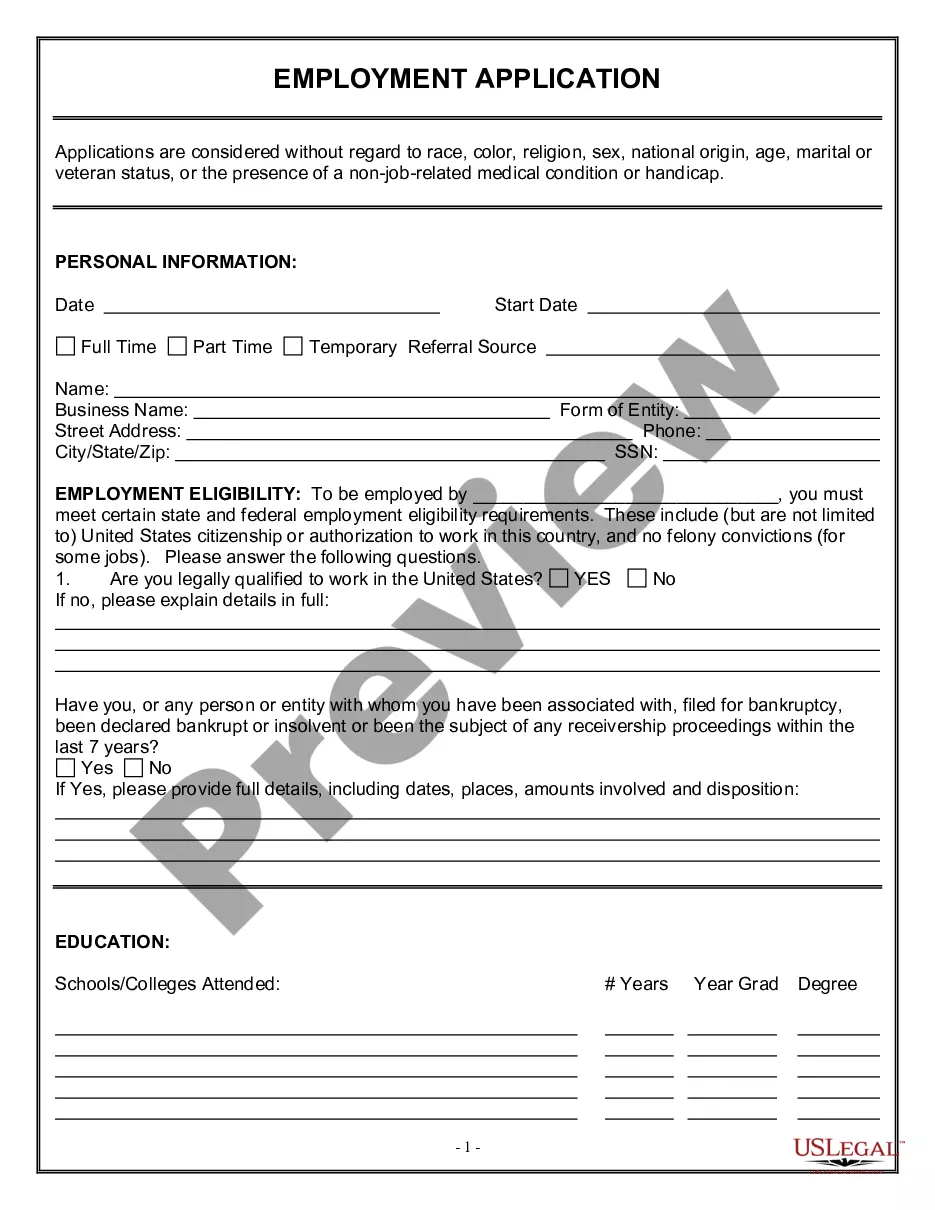
An employee personnel file with no objection should contain essential documents such as the employee's job application, performance evaluations, disciplinary records, and any signed agreements like offer letters. These records provide a comprehensive view of the employee's history within the organization. Keeping these documents organized benefits both the employee and the employer by ensuring clarity and transparency.
An employee personnel file with no objection typically does not include records related to an employee's medical history, unless there is a specific job-related reason. This exclusion helps to maintain privacy and ensures compliance with healthcare regulations. It is essential to keep such sensitive documents separate to protect the employee's rights and confidentiality.