Written Property Landlord For Rent
Description
Get your form ready online
Our built-in tools help you complete, sign, share, and store your documents in one place.
Make edits, fill in missing information, and update formatting in US Legal Forms—just like you would in MS Word.
Download a copy, print it, send it by email, or mail it via USPS—whatever works best for your next step.
Sign and collect signatures with our SignNow integration. Send to multiple recipients, set reminders, and more. Go Premium to unlock E-Sign.
If this form requires notarization, complete it online through a secure video call—no need to meet a notary in person or wait for an appointment.
We protect your documents and personal data by following strict security and privacy standards.

Make edits, fill in missing information, and update formatting in US Legal Forms—just like you would in MS Word.

Download a copy, print it, send it by email, or mail it via USPS—whatever works best for your next step.

Sign and collect signatures with our SignNow integration. Send to multiple recipients, set reminders, and more. Go Premium to unlock E-Sign.

If this form requires notarization, complete it online through a secure video call—no need to meet a notary in person or wait for an appointment.

We protect your documents and personal data by following strict security and privacy standards.
Looking for another form?








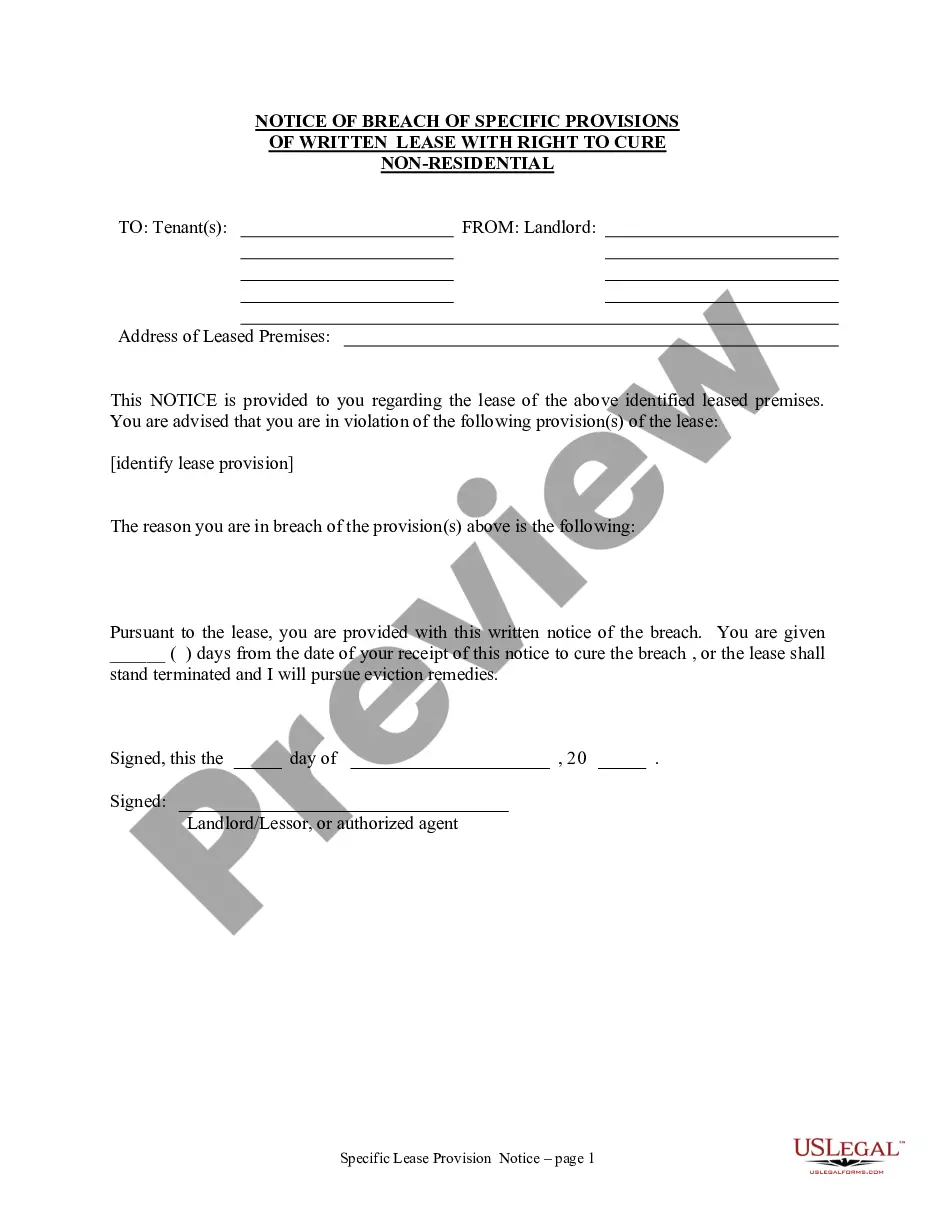
How to fill out Washington Notice Of Breach Of Written Lease For Violating Specific Provisions Of Lease With Right To Cure For Nonresidential Property From Landlord To Tenant?
- If you're an existing user, log into your account to access the desired form. Ensure your subscription is active; renew if necessary.
- For first-time users, start by exploring the Preview mode and form specifications. Make sure it aligns with your legal requirements and local jurisdiction.
- If there are discrepancies, utilize the Search tab to locate alternative templates that better suit your needs.
- Once you find the correct document, click on the Buy Now button, then select a subscription plan that fits you best. You will need to create an account for full access.
- Proceed to checkout by entering your credit card information or connecting your PayPal account for payment.
- After purchasing, download your form to your device. You can also find it later in the My Forms section of your profile.
In conclusion, using US Legal Forms ensures that you have the necessary legal documentation at your fingertips. Their user-friendly platform and extensive collection help streamline the process of securing legal forms efficiently.
Start your journey today and empower yourself with the right tools to manage your rental properties effectively!
Form popularity
FAQ
In New York, landlords must adhere to specific laws that protect tenants. It is illegal for a landlord to discriminate against potential tenants based on race, religion, or other protected characteristics. Additionally, landlords cannot retaliate against tenants for exercising their rights or evict them without following proper legal procedures. Understanding these rights helps ensure you choose the right written property for rent.
To ensure a private landlord is legitimate, perform thorough background checks and read online reviews. Ask for references from current or past tenants to gain insights into their experiences. You can also request to see the written property for rent before any agreements. Engaging in open dialogue with the landlord can reveal their professionalism and commitment to fair renting practices.
The best place to find a private landlord often includes online rental platforms, community bulletin boards, and social media groups where property listings are shared. Specialized websites that focus on rentals can also be beneficial. By navigating these resources, you can come across written properties for rent posted directly by landlords, allowing for potentially direct negotiations.
Finding reputable private landlords can involve several strategies. Networking within your community can reveal hidden gems that may not be listed in major rental platforms. Websites dedicated to rentals and classified ads often list private landlords offering written properties for rent. Always verify references, and don't hesitate to ask the landlord questions before signing a lease.
To find a reputable landlord, start by researching online reviews and testimonials from current and former tenants. Consider asking friends or family for recommendations, as personal experiences often lead to trustworthy connections. It helps to look for landlords who provide a written property for rent with clear terms and standards. A good landlord will be transparent and responsive to inquiries.
Most landlords post rentals online through websites like Zillow, Craigslist, and Apartments. These platforms allow landlords to showcase their written property for rent and reach a wide audience. Additionally, local classified ads and social media groups can be useful. By exploring various listings, you can find a suitable property that meets your needs.
To fill out a landlord application, provide accurate details about yourself, including your financial information and rental history. Be prepared to supply references that confirm your reliability as a tenant. A complete and honest application can enhance your chances of securing the rental property you desire.
When requesting rent assistance, start your letter with a clear explanation of your current financial situation. Indicate your need for assistance and provide relevant details, such as the reason and duration of your hardship. Organizations may require specific information, so check with your landlord or outside resources for guidance on what to include.
When writing a property description for rent, focus on key features that highlight the benefits of the rental unit. Include essential details such as the number of bedrooms, bathrooms, and any amenities offered. Using engaging language will help attract potential tenants and encourage them to consider the property.
To avoid eviction, write a persuasive letter to your landlord outlining your situation. Be honest about any financial difficulties you face, and propose a payment plan or request a temporary rent reduction. Maintaining a respectful and cooperative tone can go a long way in facilitating negotiations with your landlord.