Written Property Landlord For Enter
Description

Get your form ready online
Our built-in tools help you complete, sign, share, and store your documents in one place.
Make edits, fill in missing information, and update formatting in US Legal Forms—just like you would in MS Word.
Download a copy, print it, send it by email, or mail it via USPS—whatever works best for your next step.
Sign and collect signatures with our SignNow integration. Send to multiple recipients, set reminders, and more. Go Premium to unlock E-Sign.
If this form requires notarization, complete it online through a secure video call—no need to meet a notary in person or wait for an appointment.
We protect your documents and personal data by following strict security and privacy standards.

Make edits, fill in missing information, and update formatting in US Legal Forms—just like you would in MS Word.

Download a copy, print it, send it by email, or mail it via USPS—whatever works best for your next step.

Sign and collect signatures with our SignNow integration. Send to multiple recipients, set reminders, and more. Go Premium to unlock E-Sign.

If this form requires notarization, complete it online through a secure video call—no need to meet a notary in person or wait for an appointment.

We protect your documents and personal data by following strict security and privacy standards.
Looking for another form?








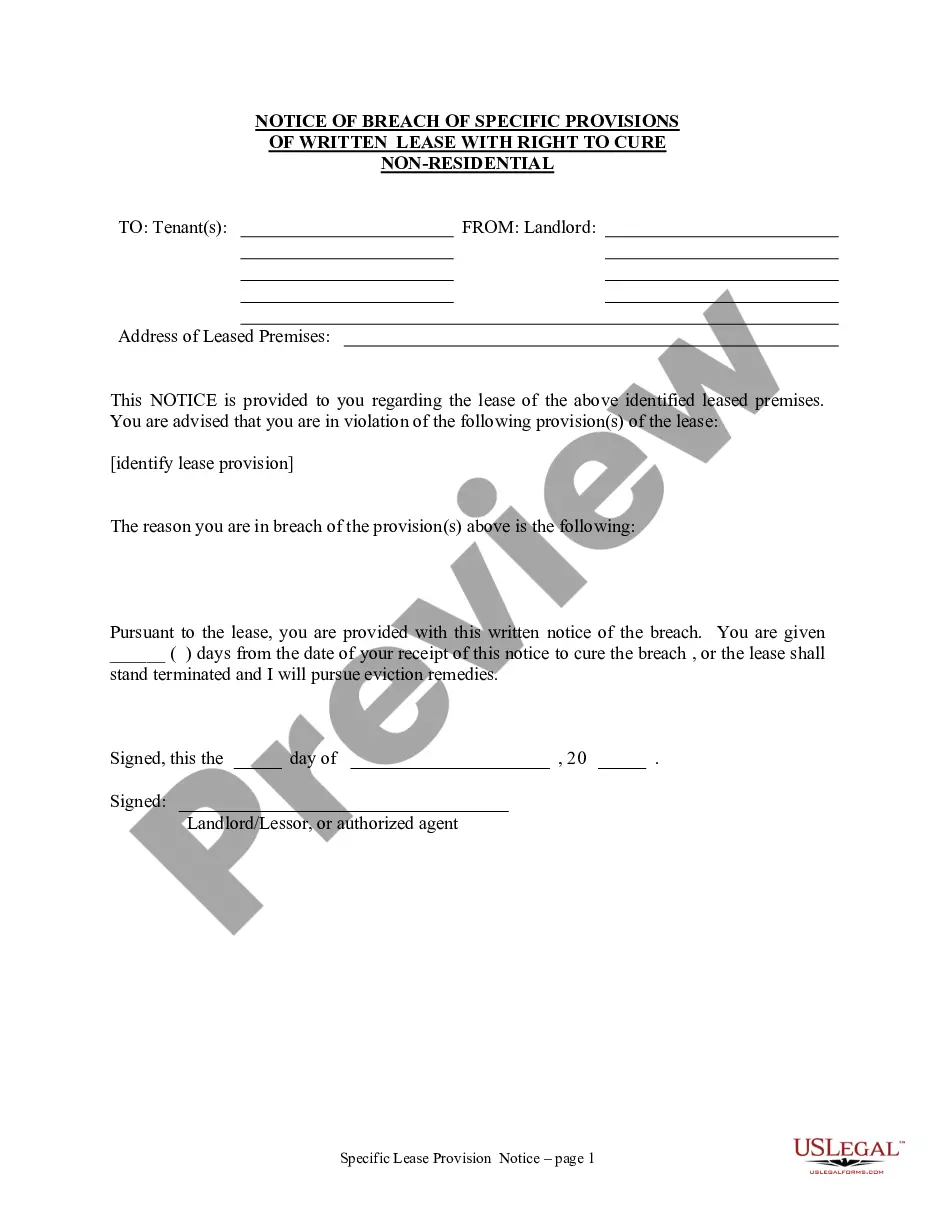
How to fill out Washington Notice Of Breach Of Written Lease For Violating Specific Provisions Of Lease With Right To Cure For Nonresidential Property From Landlord To Tenant?
- Log in to your existing US Legal Forms account. Ensure that your subscription is active; renew it if necessary to access the forms.
- In the Preview mode, carefully review the form description. Select the template that best fits your needs and complies with your local jurisdiction.
- If the chosen template does not meet your requirements, use the Search tab to find another suitable form.
- Once you find the correct document, click on the Buy Now button and select a subscription plan that aligns with your needs. Create an account for complete access.
- Proceed to payment by entering your credit card information or using your PayPal account to finalize your subscription.
- After completing the payment, download the document to your device. You can access this template anytime under the My Forms menu in your profile.
US Legal Forms empowers individuals and attorneys to effortlessly draft and execute legal documents with an extensive library of over 85,000 forms. The platform ensures that you have the right documents at your fingertips, providing tools to make the process straightforward.
Start your journey with US Legal Forms today and simplify your property management tasks. Access the necessary legal forms with ease and ensure that your documentation is always up to date!
Form popularity
FAQ
In most cases, a landlord cannot enter a rental property without permission in Minnesota. They must provide a written notice at least 24 hours in advance, except in emergencies. This law is designed to protect tenant privacy and ensure a respectful living environment. Using a written property landlord for enter can help solidify these expectations and avoid potential conflicts.
A tenant can deny entry to a landlord if the landlord has not followed the notice requirement set by Minnesota law. It's essential for both parties to communicate clearly about entry times to avoid misunderstandings. A written property landlord for enter can serve as a useful tool in establishing and maintaining this communication, ensuring that all parties remain informed.
Yes, a tenant can refuse entry to a landlord in Minnesota if proper notice has not been given. Landlords must respect a tenant's privacy, which means adhering to the 24-hour notice rule. If a landlord attempts to enter without notice, the tenant has the right to deny access. Emphasizing a written property landlord for enter establishes guidelines that respect both tenant and landlord rights.
Renters in Minnesota have several important rights that protect their living conditions. These include the right to a habitable home, privacy, and a written lease agreement. Additionally, Minnesota law requires landlords to provide proper notice before entering the rented property. Understanding these rights can empower you as a tenant; utilizing written property landlord for enter can help clarify these rights.
Filling out a rental verification form involves providing specific information about your rental history, including your previous addresses and landlord contact information. Ensure you include accurate details regarding your tenancy, such as dates of occupancy and rent payments. This form is essential for your future applications, assisting landlords in evaluating your rental credentials. For streamlined processes, consider using the written property landlord for enter to ensure completeness.
In Minnesota, a landlord must provide a written notice at least 24 hours before entering the rental property. This notice should specify the purpose and time of the visit. It's important for landlords to respect this notice requirement, as it protects the rights of tenants, ensuring they feel secure in their home. Utilizing a written property landlord for enter helps facilitate clear communication.
A landlord must provide a minimum of 24 hours' notice before entering a tenant's property in Michigan. This notice is necessary for routine inspections or repairs and should ideally be documented for clarity. To protect your rights and manage expectations, consider establishing a written property landlord for enter agreement that specifically outlines the notice requirements. This approach promotes transparency and helps maintain a healthy landlord-tenant relationship.
Michigan law requires landlords to give at least 24 hours' notice before entering a rental property for non-emergency reasons. This notice can be verbal or written, but it is always best to have it documented to avoid misunderstandings. Having a written property landlord for enter agreement ensures both parties are clear on the rules and obligations regarding property access. Don't hesitate to confirm these details with your landlord.
In general, landlords in Michigan cannot enter a rental property without notice unless it is an emergency. Emergencies may include situations like gas leaks or fire hazards, which require immediate attention. For all other instances, landlords are obligated to provide proper advance notice as stipulated in your lease or rental agreement. Always make sure to have a written property landlord for enter agreement to outline these conditions.
Yes, you can refuse entry to your landlord, but it depends on the circumstances. If your landlord does not provide adequate notice or an acceptable reason for entering your home, you have the right to deny access. However, be aware that consistent refusal can lead to conflicts, so clear communication is vital. Always refer to a written property landlord for enter agreement to understand your rights.