Title Transfer In Washington State
Description
Get your form ready online
Our built-in tools help you complete, sign, share, and store your documents in one place.
Make edits, fill in missing information, and update formatting in US Legal Forms—just like you would in MS Word.
Download a copy, print it, send it by email, or mail it via USPS—whatever works best for your next step.
Sign and collect signatures with our SignNow integration. Send to multiple recipients, set reminders, and more. Go Premium to unlock E-Sign.
If this form requires notarization, complete it online through a secure video call—no need to meet a notary in person or wait for an appointment.
We protect your documents and personal data by following strict security and privacy standards.

Make edits, fill in missing information, and update formatting in US Legal Forms—just like you would in MS Word.

Download a copy, print it, send it by email, or mail it via USPS—whatever works best for your next step.

Sign and collect signatures with our SignNow integration. Send to multiple recipients, set reminders, and more. Go Premium to unlock E-Sign.

If this form requires notarization, complete it online through a secure video call—no need to meet a notary in person or wait for an appointment.

We protect your documents and personal data by following strict security and privacy standards.
Looking for another form?


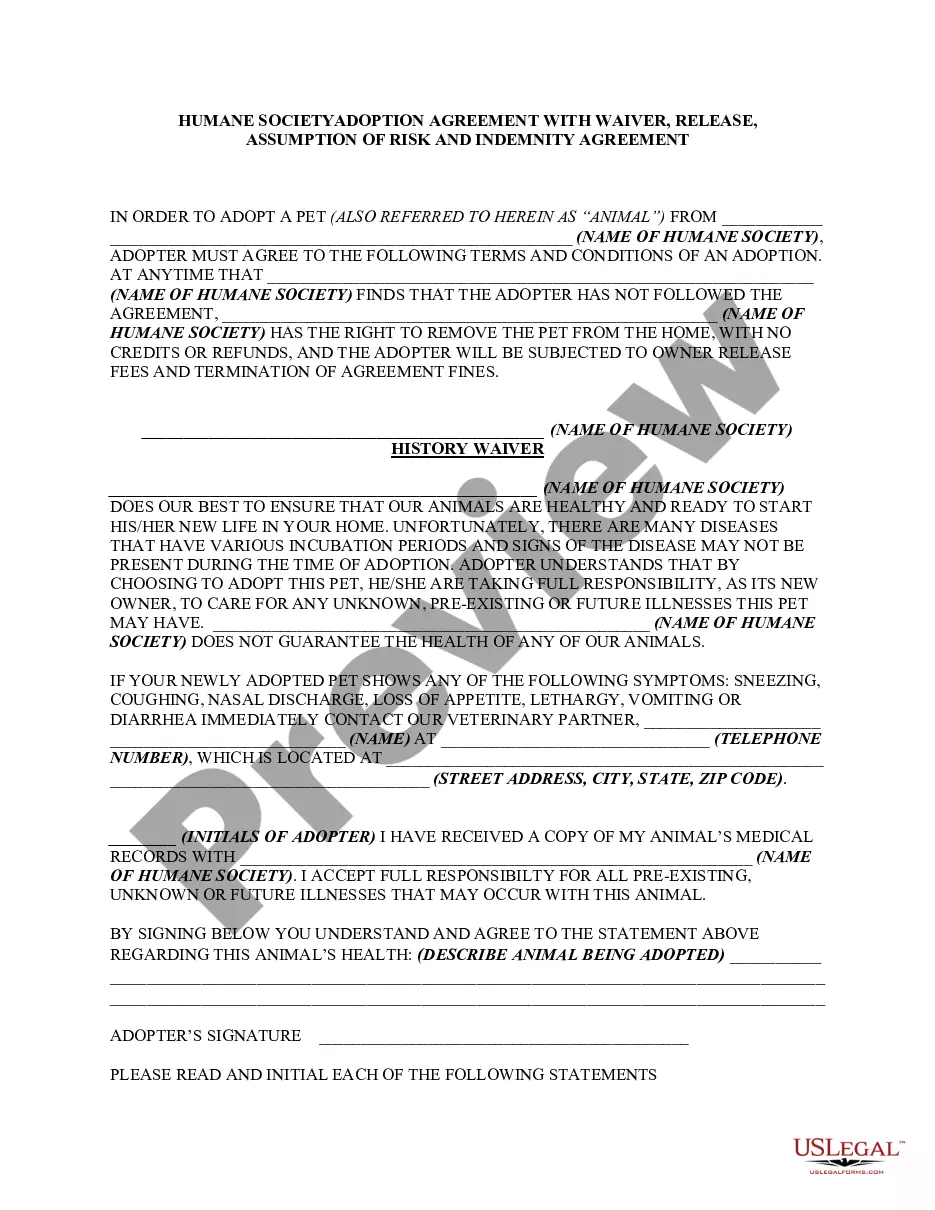




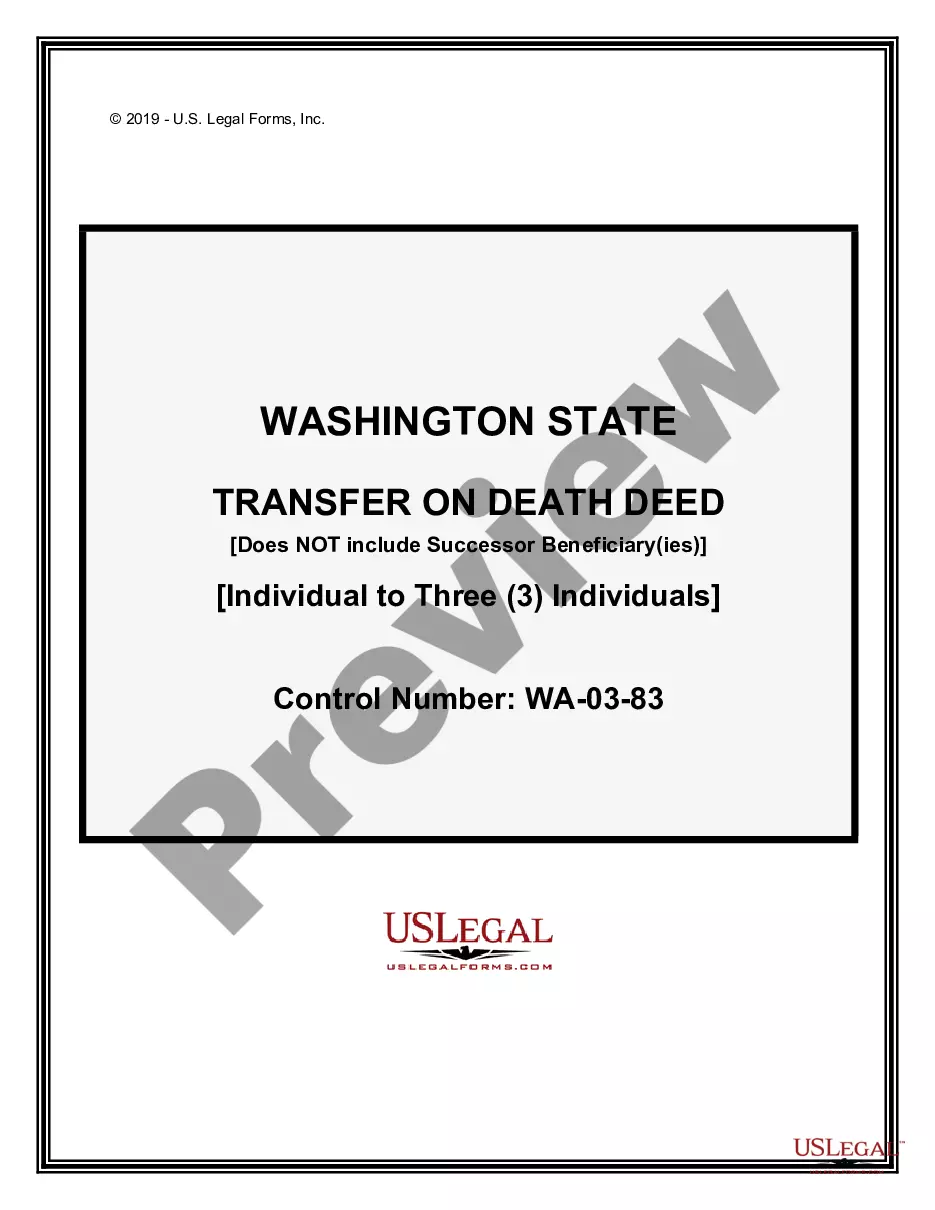
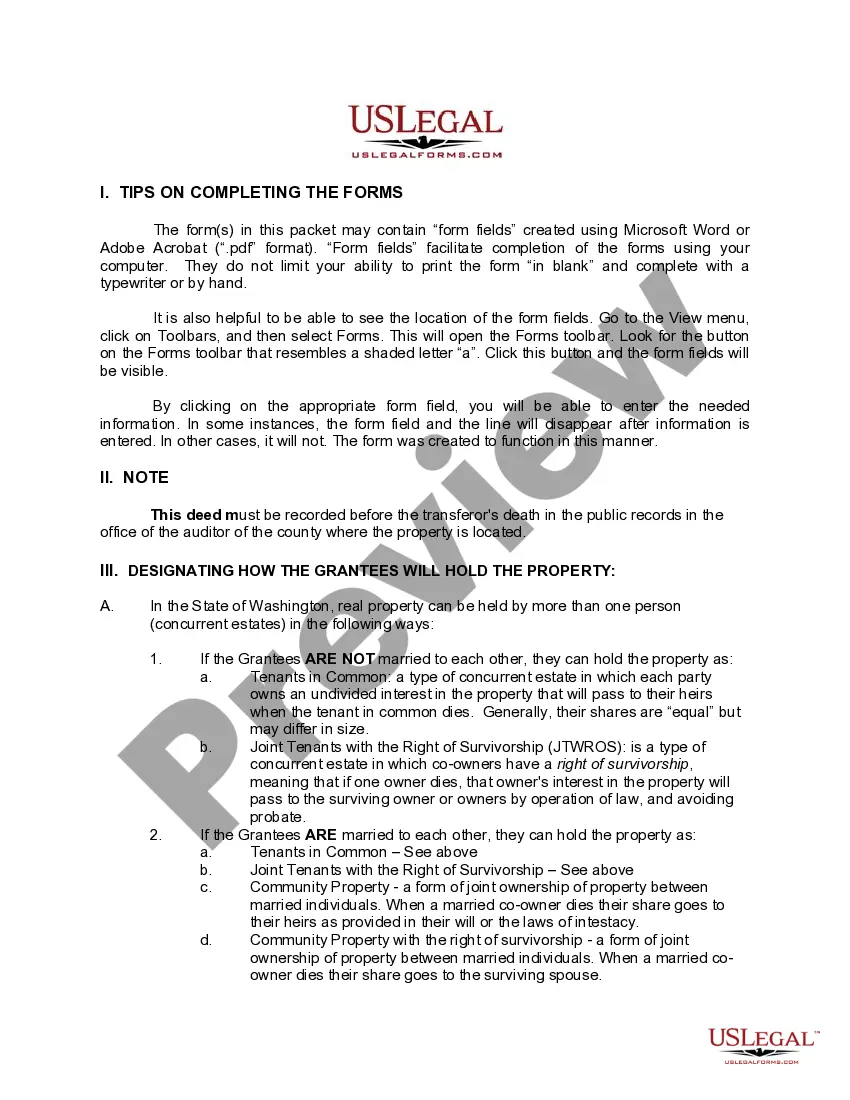
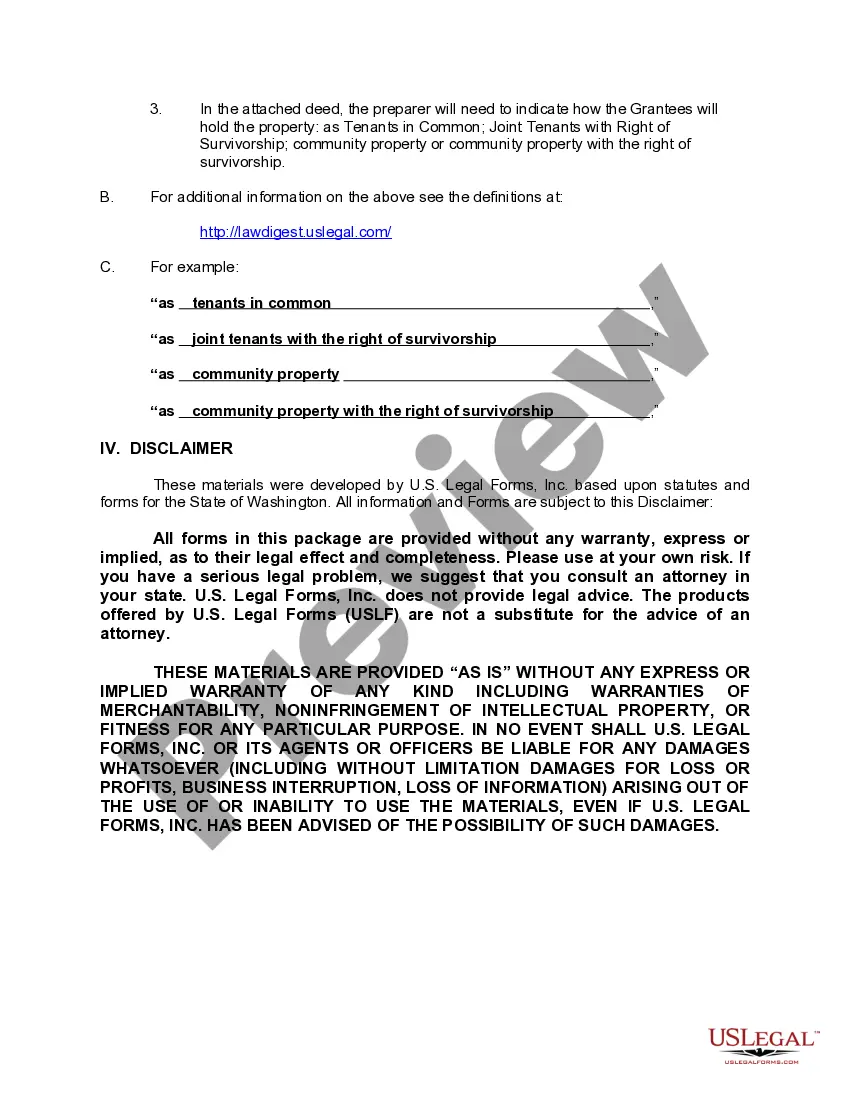
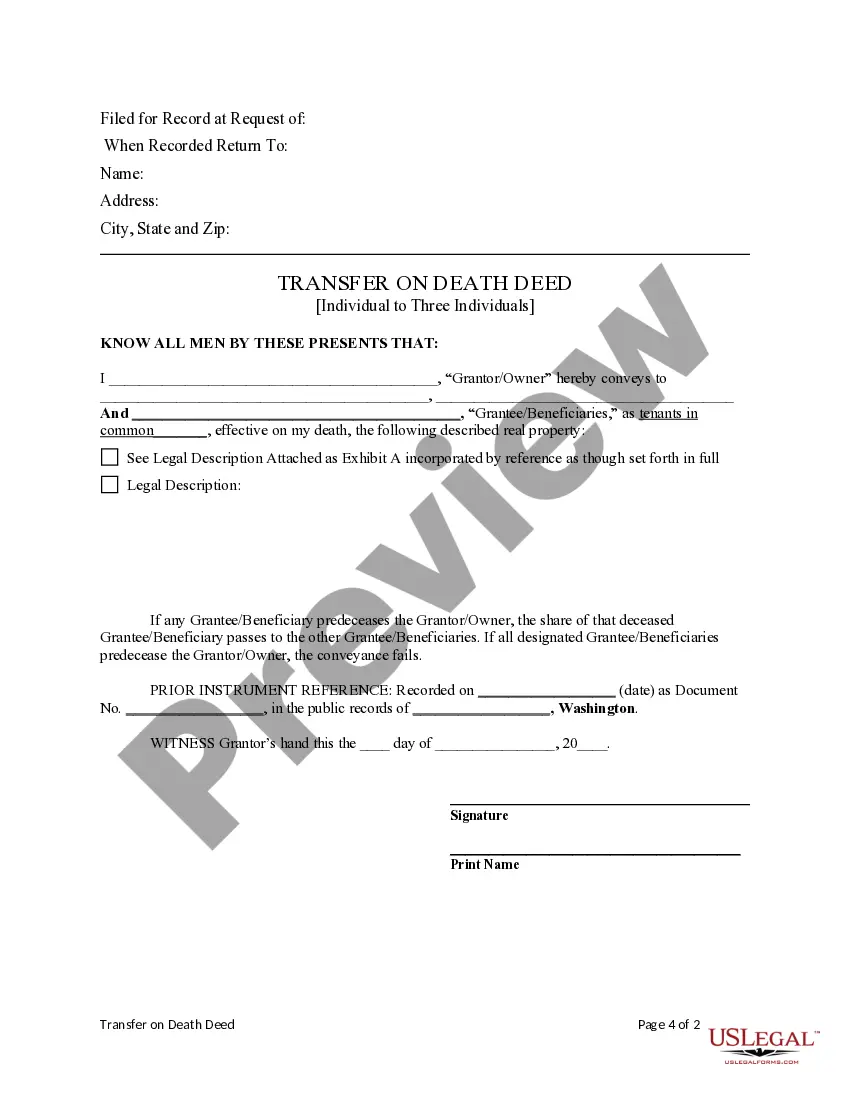
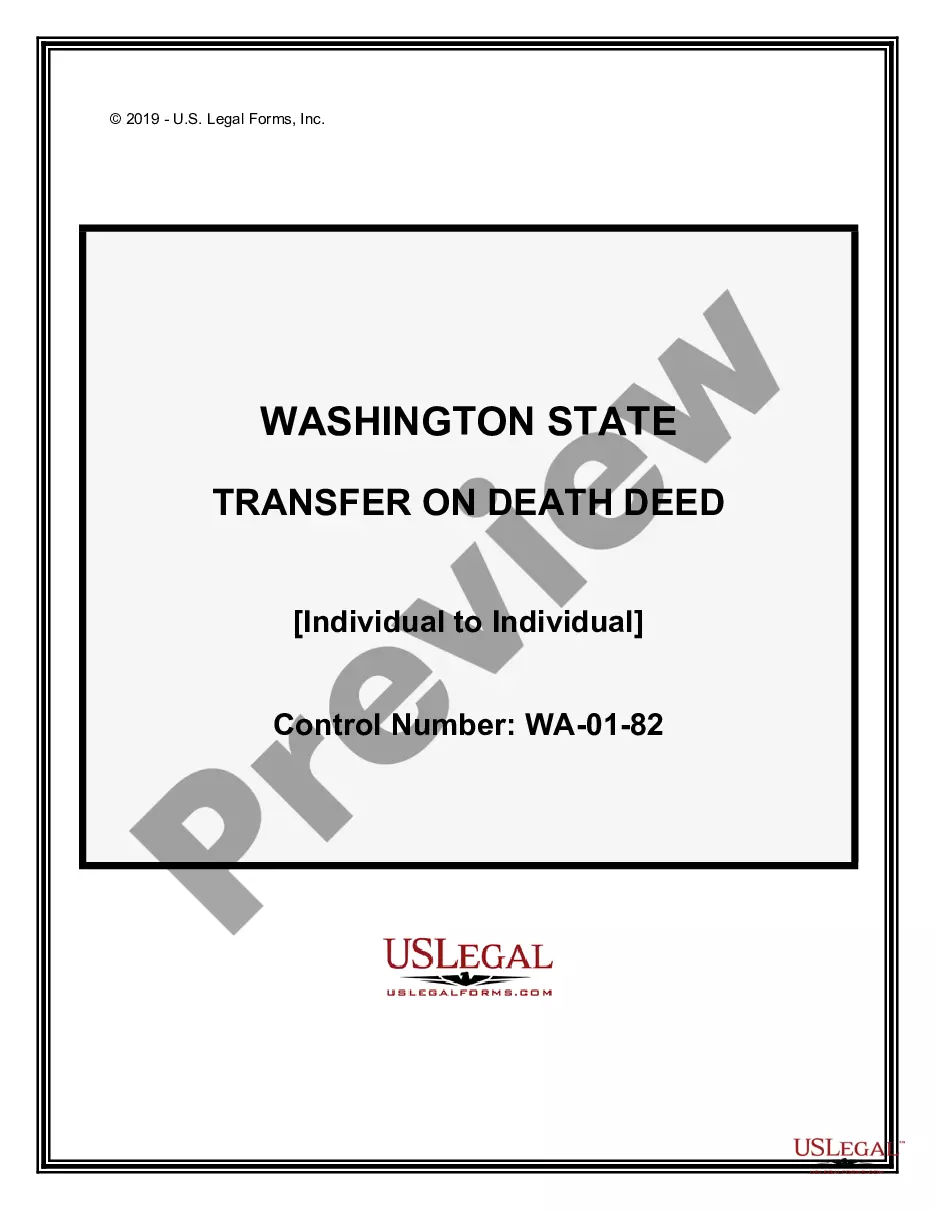
How to fill out Washington Transfer On Death Deed - Individual To Three Individuals - Does NOT Include Alternate Beneficiaries.?
Regardless of whether it's for professional reasons or personal matters, everyone must confront legal issues at some stage in their lives.
Completing legal documentation requires meticulous care, starting from selecting the appropriate form template.
After saving it, you can fill in the form using editing software or print it out and fill it in by hand. With an extensive US Legal Forms catalog available, there's no need to waste time searching for the correct template online. Make use of the library’s straightforward navigation to locate the suitable template for any circumstance.
- Obtain the template you need by using the search bar or browsing the catalog.
- Review the form’s details to ensure it aligns with your specific situation, state, and locality.
- Click on the form’s preview to take a look at it.
- If it’s not the correct document, return to the search feature to find the Title Transfer In Washington State form you require.
- Acquire the document when it fits your requirements.
- If you possess a US Legal Forms account, simply click Log in to retrieve previously saved documents in My documents.
- If you don’t have an account yet, you can download the document by clicking Buy now.
- Select the suitable pricing option.
- Complete the account registration form.
- Choose your payment method: use a credit card or PayPal account.
- Select the file format you desire and download the Title Transfer In Washington State.
Form popularity
FAQ
To successfully complete a title transfer in Washington state, you will need several essential documents. First, ensure you have the vehicle's current title assigned to you; the seller or current owner must sign the title. Additionally, you must provide a completed Bill of Sale, and if applicable, vehicle registration documents. Using a platform like US Legal Forms can streamline this process, helping you access the necessary forms and guides to simplify your title transfer in Washington state.
To privately sell a car in Washington state, start by gathering necessary documentation, including the vehicle title and maintenance records. Advertise clearly on platforms where buyers look, providing vehicle specifics to attract interest. Once you secure a buyer, complete the title transfer in Washington state by filling out the title accurately and following state regulations to ensure a legal sale.
When filling out a Washington state vehicle title for a sale, you need to provide specific information. Start by writing the sale date, the buyer's name, and their address in the appropriate sections. Ensure you complete the odometer disclosure accurately. Finally, both you and the buyer should sign the title, completing the title transfer in Washington state.
To transfer a car title in Washington state, you will need the vehicle's current title, a completed title application, and identification, such as a driver's license. It's important for both the seller and buyer to provide necessary information and signatures on the title. If you prefer a simple solution, consider using the USLegalForms platform, which provides templates and guidance for a smooth title transfer in Washington state.
Transferring ownership of a car in Washington state involves a few straightforward steps. First, the seller must sign the title over to the buyer. The buyer will then need to present the signed title, along with the completed title application and payment for fees, to their local Department of Licensing. By following these steps, you can successfully complete a title transfer in Washington state.
To transfer the title of a car in Washington state, you need to complete the title application. Start by filling out the appropriate form, which you can find on the Washington Department of Licensing website. After that, both the seller and buyer must sign the title, and the buyer needs to submit the title application along with any applicable fees to their local licensing office. This process ensures a smooth title transfer in Washington state.
Sales tax is not applicable on gift transactions if proof is submitted that shows the previous owner already paid Washington sales tax. However, a vehicle may not be gifted twice in a row with a tax benefit.
Is a Bill of Sale required for selling a car in Washington? Yes. The buyer will need a Bill of Sale, signed by the seller, in order to apply for a new title and pay the required fees and taxes on the vehicle. Additionally, it's a good idea for you as the seller to keep a Bill of Sale for your own records.
Title Transfers Proof of Ownership: Manufactured Statement of Origin (for brand new vehicles) ... Proper Identification: Valid Washington Driver's License. Bill of Sale. Odometer Disclosure - Only for vehicles 9 years old or newer. ... Title Application:
Petition a Washington State superior court or district court to have us remove the lienholder and issue you a clear title. You'll need to show the court proof that you've paid the lienholder in full. The court order will need to identify your vehicle by year, make, model, and vehicle identification number (VIN).