Signing A Transfer Deed
Description
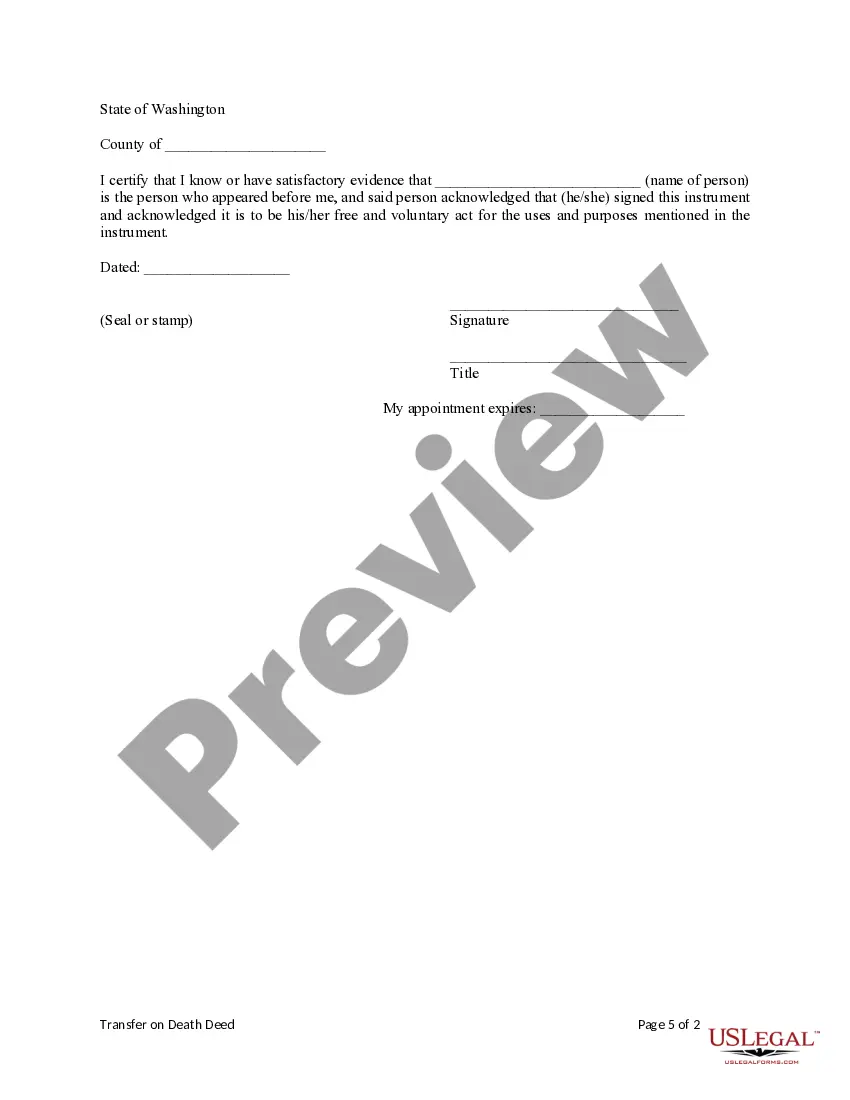
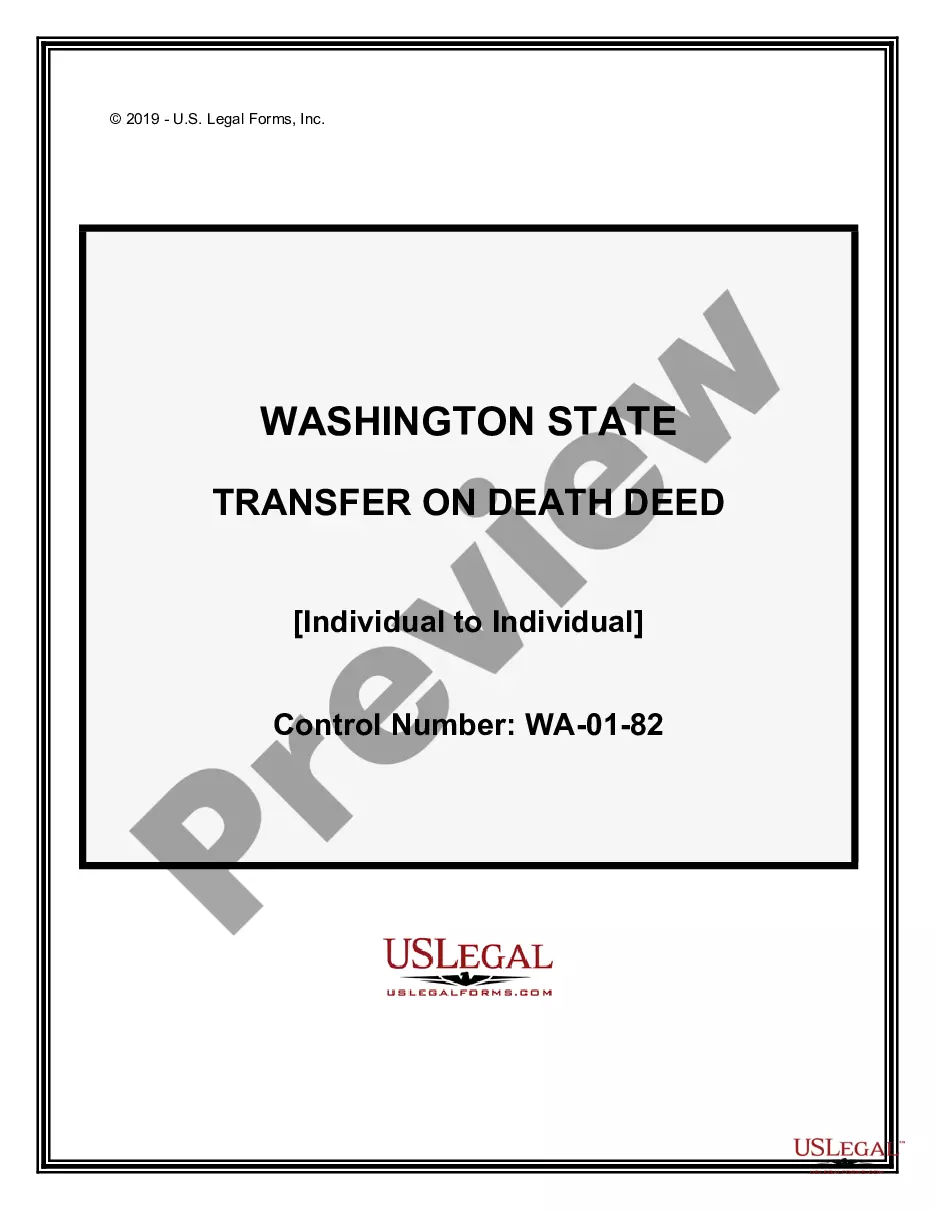
Get your form ready online
Our built-in tools help you complete, sign, share, and store your documents in one place.
Make edits, fill in missing information, and update formatting in US Legal Forms—just like you would in MS Word.
Download a copy, print it, send it by email, or mail it via USPS—whatever works best for your next step.
Sign and collect signatures with our SignNow integration. Send to multiple recipients, set reminders, and more. Go Premium to unlock E-Sign.
If this form requires notarization, complete it online through a secure video call—no need to meet a notary in person or wait for an appointment.
We protect your documents and personal data by following strict security and privacy standards.

Make edits, fill in missing information, and update formatting in US Legal Forms—just like you would in MS Word.

Download a copy, print it, send it by email, or mail it via USPS—whatever works best for your next step.

Sign and collect signatures with our SignNow integration. Send to multiple recipients, set reminders, and more. Go Premium to unlock E-Sign.

If this form requires notarization, complete it online through a secure video call—no need to meet a notary in person or wait for an appointment.

We protect your documents and personal data by following strict security and privacy standards.
Looking for another form?








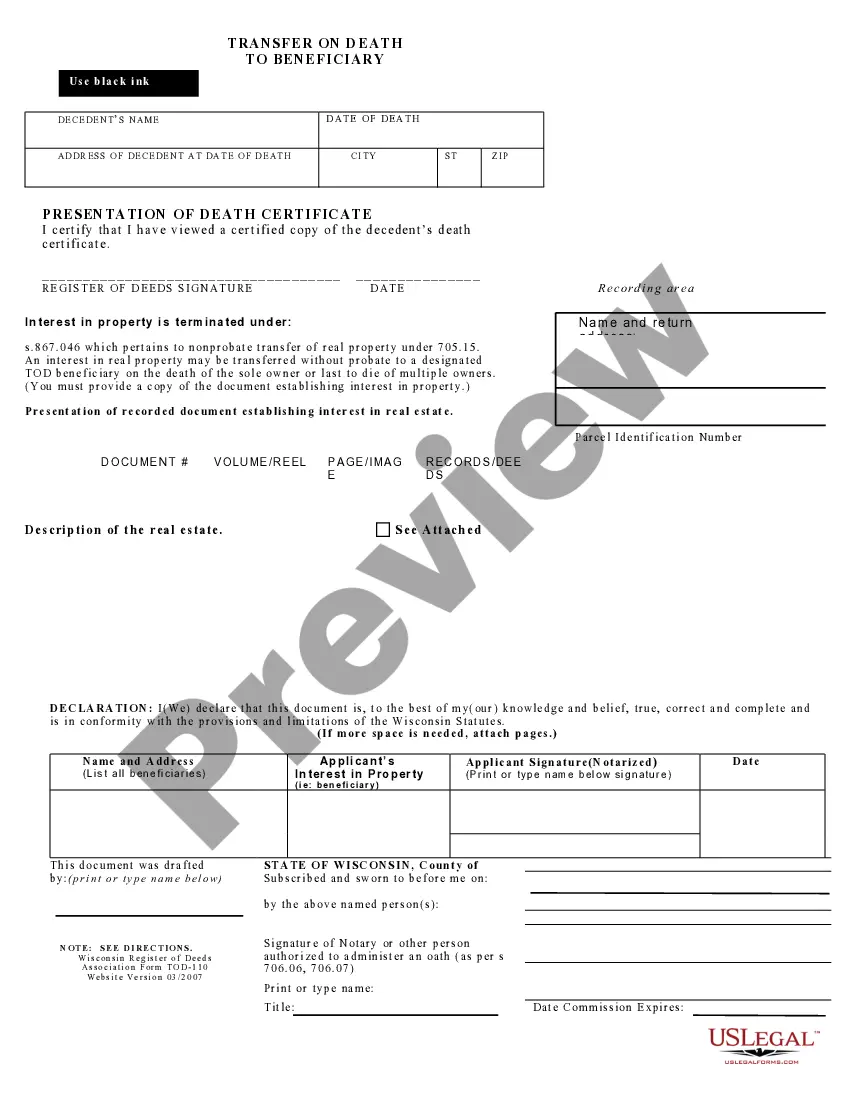
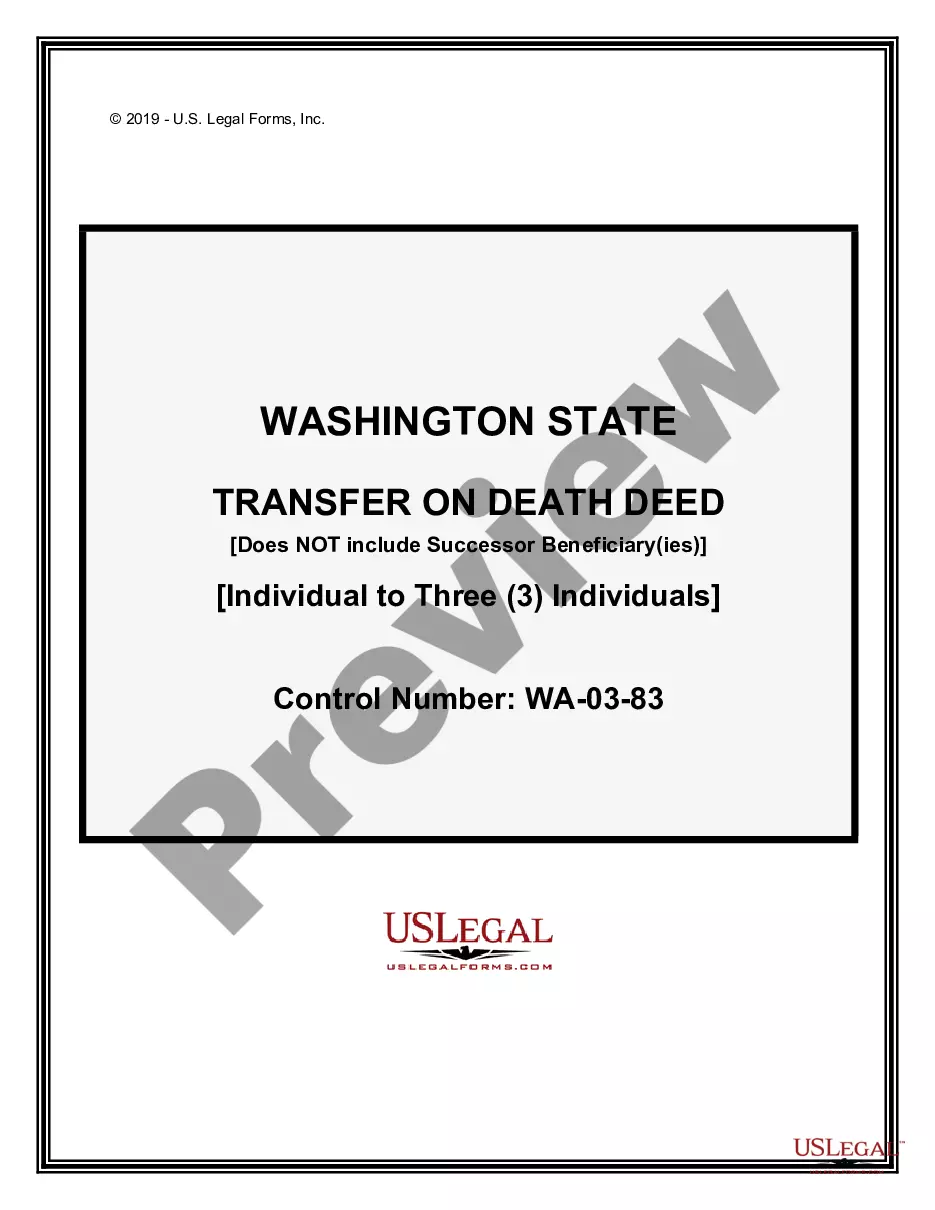
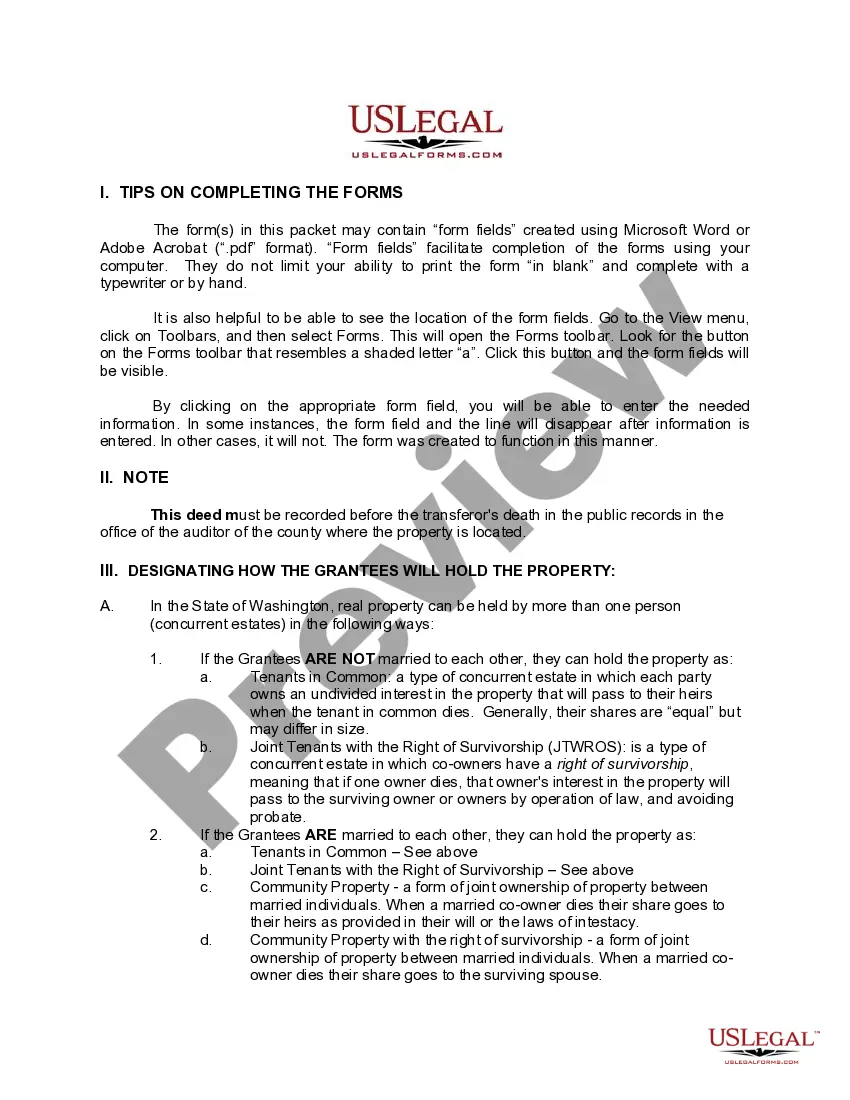
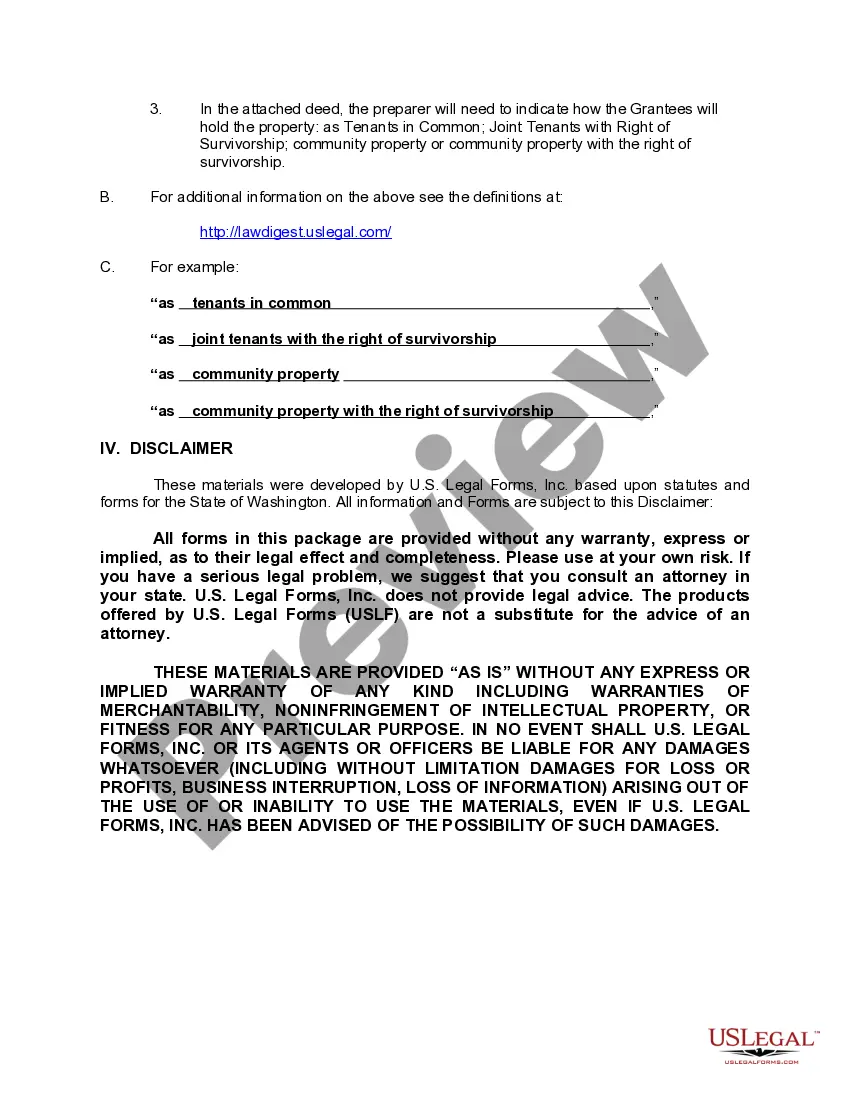
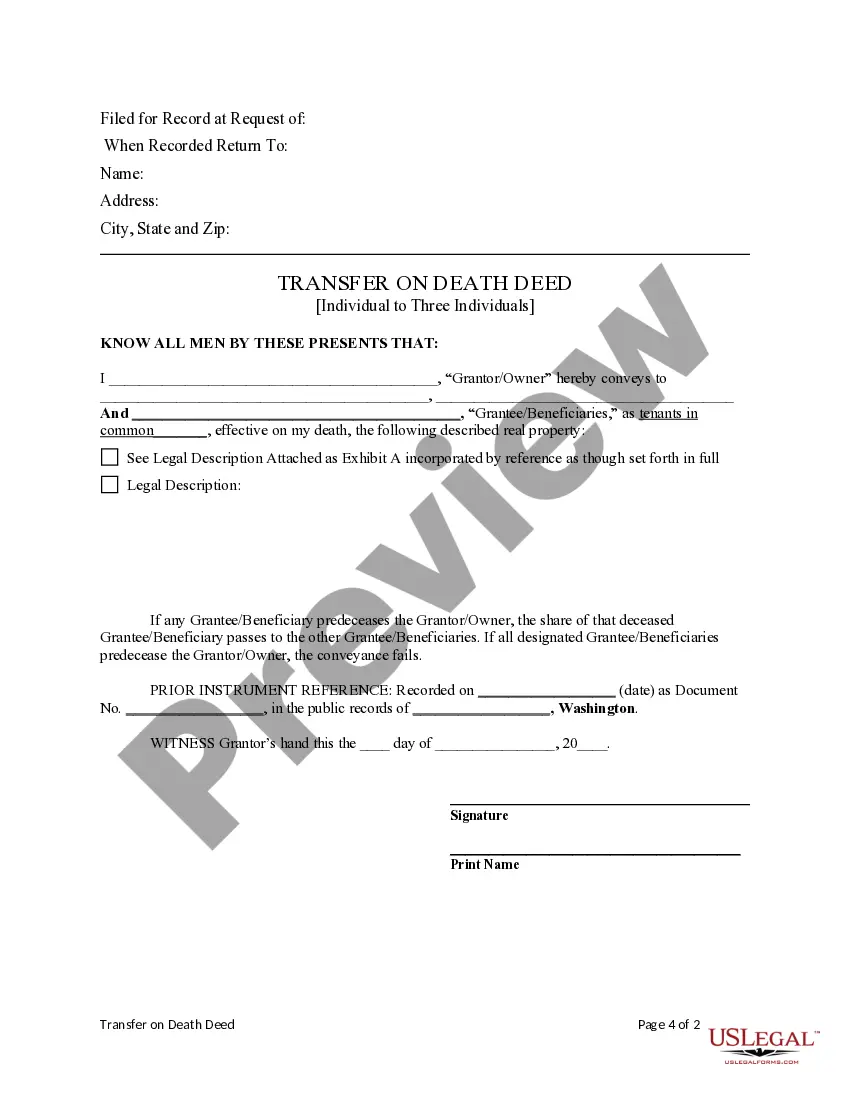
How to fill out Washington Transfer On Death Deed - Individual To Three Individuals - Does NOT Include Alternate Beneficiaries.?
The Execution of a Transfer Document you observe on this page is a reusable official template composed by expert attorneys in accordance with national and local laws.
For over 25 years, US Legal Forms has assisted individuals, businesses, and lawyers with more than 85,000 authenticated, state-specific forms for any professional and personal event. It’s the quickest, easiest, and most reliable method to acquire the documents you need, as the service ensures bank-level data protection and anti-malware security.
Select the format you desire for your Execution of a Transfer Document (PDF, DOCX, RTF) and save the template on your device.
- Search for the required document and examine it.
- Browse through the template you searched for and preview it or review the form description to ensure it meets your requirements. If it doesn’t, utilize the search feature to find the correct one. Click Buy Now once you have identified the template you need.
- Select and Log Into your account.
- Choose the pricing plan that fits your needs and create an account. Use PayPal or a credit card for a quick payment. If you already possess an account, Log In and verify your subscription to continue.
- Receive the editable template.
Form popularity
FAQ
To sign a deed, you need to follow specific legal requirements, which may vary by state. Generally, both the grantor and grantee must be identifiable and in agreement about the transfer. Importantly, signing a transfer deed typically requires witnesses or notarization to validate the document. Using services like USLegalForms can help ensure that you meet all the necessary requirements, making the process smoother for everyone involved.
The purpose of a transfer deed is to legally document the transfer of property ownership from one party to another. This deed outlines the specifics of the transaction, ensuring clarity and legal protection for both parties. By signing a transfer deed, you maintain a public record of the transaction, which can be crucial for future legal matters. Essentially, it serves as proof that the property has changed hands.
The best way to transfer a property to a family member is often through a transfer deed. This legal document officially changes the ownership while establishing clear intentions. You can streamline the process by using templates available on platforms like USLegalForms, which ensure that all necessary information is included. By signing a transfer deed, you can provide security and peace of mind for both you and your family member.
To add validity to the signing of a deed, it must be witnessed. Generally, a neutral third party who is not directly involved in the transaction can act as a witness. Trusted friends, family, or even notaries public are suitable choices. Ensuring you have a qualified witness present when signing a transfer deed is crucial for the legality of the document.
The quickest way to transfer a deed is to follow a streamlined process, starting with gathering necessary documents and forms. Utilizing online services, like US Legal Forms, allows you to access ready-made templates that you can fill out and execute without delay. By preparing all paperwork correctly ahead of time, you can expedite signing a transfer deed and complete your transaction swiftly.
While having a lawyer is not strictly necessary to transfer a deed, it can be beneficial. A lawyer can provide guidance on legal complexities and safeguard your interests during the process. If you are confident and informed, you can prepare everything needed for signing a transfer deed without legal representation by using tools available at US Legal Forms.
The preparation of a transfer deed can be done by various parties, but typically, it is the responsibility of the seller or their attorney. However, many people choose to use services like US Legal Forms to create a legally compliant transfer deed quickly and easily. This way, you can ensure that all legal requirements are met when signing a transfer deed.
To ensure a valid property transfer, you must complete a few key steps. First, both the buyer and seller must agree on terms and conditions. Then, you will need to create a transfer deed that clearly outlines the details of the property being transferred. Lastly, signing a transfer deed in the presence of a qualified witness is essential to validate the transaction.
The best way to transfer property between family members is typically through a signed transfer deed. This method provides clear documentation of the transfer and can help avoid any disputes in the future. It is also advisable to consult with a legal professional to assess any tax implications involved. Using resources like U.S. Legal Forms can help you create a transfer deed that reflects your family's needs.
To sign a document as a deed, you should first ensure it's labeled as a 'deed' at the top of the document. The signing requires the grantor's signature, and it’s important that you include the date of signing. For certain deeds, such as a transfer deed, having a witness or a notary public sign can further validate the document. This process marks the agreement as formal and binding.