Vermont Landlord Sanitary With A Fire
Description


Get your form ready online
Our built-in tools help you complete, sign, share, and store your documents in one place.
Make edits, fill in missing information, and update formatting in US Legal Forms—just like you would in MS Word.
Download a copy, print it, send it by email, or mail it via USPS—whatever works best for your next step.
Sign and collect signatures with our SignNow integration. Send to multiple recipients, set reminders, and more. Go Premium to unlock E-Sign.
If this form requires notarization, complete it online through a secure video call—no need to meet a notary in person or wait for an appointment.
We protect your documents and personal data by following strict security and privacy standards.

Make edits, fill in missing information, and update formatting in US Legal Forms—just like you would in MS Word.

Download a copy, print it, send it by email, or mail it via USPS—whatever works best for your next step.

Sign and collect signatures with our SignNow integration. Send to multiple recipients, set reminders, and more. Go Premium to unlock E-Sign.

If this form requires notarization, complete it online through a secure video call—no need to meet a notary in person or wait for an appointment.

We protect your documents and personal data by following strict security and privacy standards.
Looking for another form?

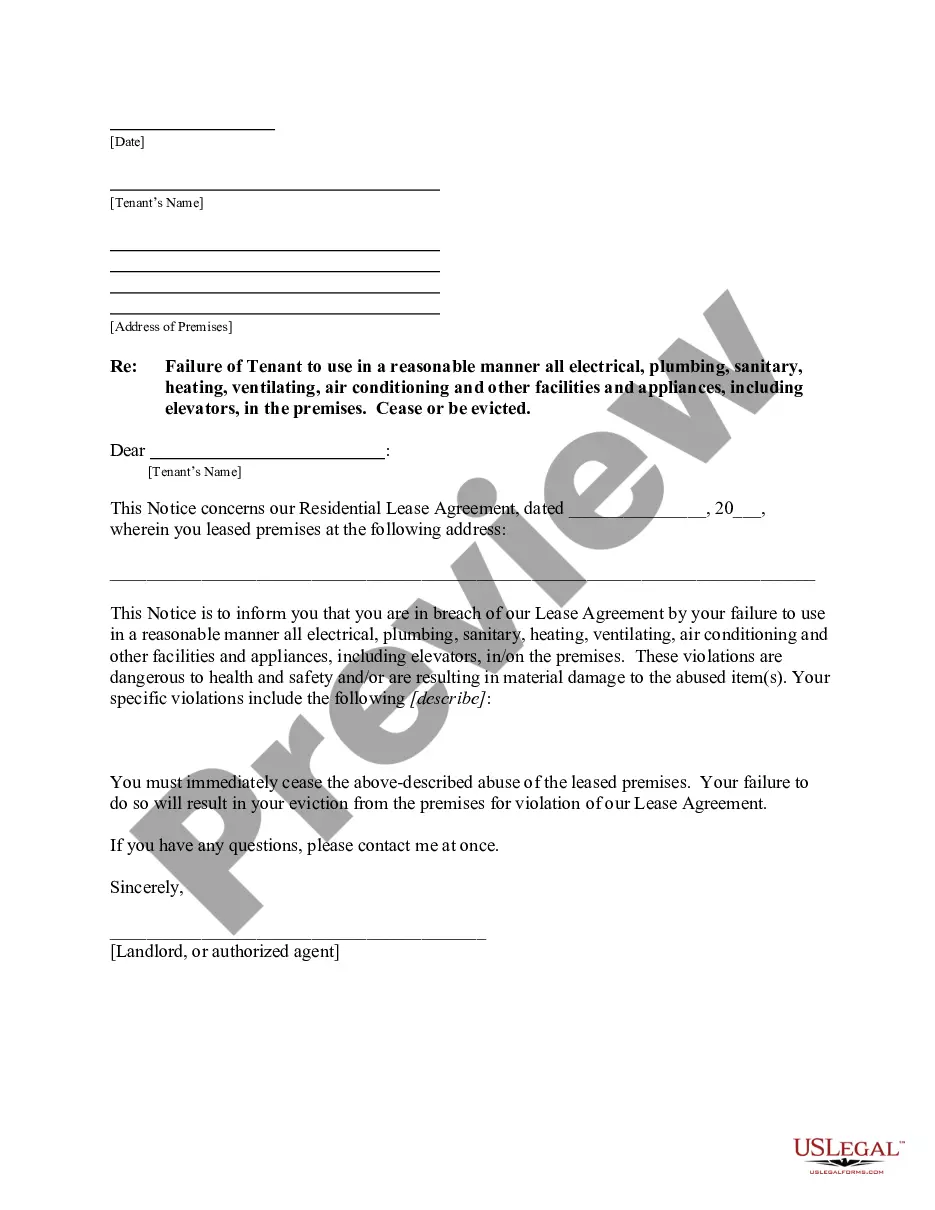
How to fill out Vermont Letter From Landlord To Tenant For Failure To Use Electrical, Plumbing, Sanitary, Heating, Ventilating, Air Conditioning And Other Facilities In A Reasonable Manner?
- First, log into your US Legal Forms account. Ensure your subscription is active for uninterrupted access.
- If you're new to the service, start by previewing the available forms. Confirm the selected form aligns with Vermont's legal requirements.
- Utilize the search feature if necessary. This will help you find the exact document that meets your specific needs.
- Once you have the correct document, click 'Buy Now' and choose a subscription plan that best suits you.
- Complete your purchase securely using a credit card or PayPal, ensuring your payment information is accurate.
- Finally, download the form onto your device. Access it anytime from the 'My Forms' section of your profile.
By following these easy steps, you can ensure that your legal setups are handled efficiently and in accordance with Vermont laws. US Legal Forms provides a robust collection of forms, superior to many competitors, making legal compliance accessible for landlords.
Now is the time to take charge of your legal documentation! Visit US Legal Forms today and ensure your forms are ready to protect your interests as a Vermont landlord.
Form popularity
FAQ
Vermont has its specific rules regarding landlord-tenant relationships, making it essential for landlords to understand their rights and responsibilities. While some might argue that Vermont leans more towards tenant protection, it is crucial to note that landlords still maintain significant rights in many areas, including property management and eviction processes. As a landlord, knowing the sanitary requirements, especially when dealing with fire safety regulations, can aid in ensuring the property meets legal standards. For those navigating the complexities of Vermont landlord sanitary with a fire, UsLegalForms offers resources that can help streamline your understanding and compliance with these regulations.
Yes, a Vermont landlord can sue a tenant for fire damage if the tenant is found responsible for the fire. This responsibility might stem from negligence, such as failing to follow safety guidelines. In such a scenario, the landlord may seek to recover costs associated with repairing property damage caused by the fire. It is essential for both landlords and tenants to understand their rights and obligations in cases involving fire damage, and uslegalforms can help clarify these legal frameworks.
The obligations of a landlord in Vermont include ensuring that the rental property complies with health and safety standards, making timely repairs, and providing essential services. They must also respect tenants' rights, including privacy and peaceful enjoyment of the property. By fulfilling these obligations, a Vermont landlord sanitary with a fire supports a healthy tenant-landlord relationship.
Yes, a landlord in Vermont can request first and last month’s rent along with a security deposit before the tenant moves in. This practice is common as it helps secure the landlord's interests while providing tenants with a clear understanding of their financial obligations. Remember, keeping a Vermont landlord sanitary with a fire strengthens trust between both parties.
When interacting with a landlord, it is wise to avoid demanding language or making accusations. Phrases that could be seen as confrontational, such as 'You must fix this immediately,' may strain the relationship. Instead, approach discussions with a collaborative mindset to ensure a Vermont landlord sanitary with a fire and effective communication.
Landlords in Vermont have various duties, including maintaining the property in a habitable condition, ensuring adequate sanitation, and complying with health regulations. They must also respect tenant privacy by providing proper notice before entering the rental unit. A Vermont landlord sanitary with a fire takes these responsibilities seriously to foster a positive living environment.
A landlord in Vermont is generally not responsible for issues that arise from tenant misuse or neglect of the rental property. For example, if a tenant causes damage beyond normal wear and tear, the landlord is not liable for those repairs. However, a Vermont landlord sanitary with a fire must address health and safety concerns, ensuring the property is habitable for tenants.
In Vermont, a landlord must provide written notice to the tenant before they can move out. For a monthly lease, the notice period is typically 30 days. This ensures that both parties have adequate time to prepare for a transition, which maintains a Vermont landlord sanitary with a fire. It is essential to document this process to avoid any misunderstandings.
Statute 4467 in Vermont outlines the responsibilities of landlords regarding the maintenance of rental properties. This law emphasizes that landlords must provide and maintain a sanitary and secure living environment. When situations arise, such as a Vermont landlord sanitary with a fire, this statute becomes crucial in enforcing tenant rights. It's important for both landlords and tenants to be familiar with this law to promote a fair rental experience.
The habitability of a house refers to its suitability for living, which includes safety, cleanliness, and access to essential services. A house must meet specific health and safety standards, ensuring comfort for its occupants. Issues affecting habitability, like those presented by a Vermont landlord sanitary with a fire, should be addressed immediately to uphold these standards. Understanding these factors helps you ensure your living space remains secure.